Facebook advertising offers businesses immense reach, but also opportunities for scammers. A common ploy promotes electric bikes at unbelievable prices to drive traffic to shady ecommerce sites. This guide will uncover how the ‘$39.99 electric bike’ Facebook scam operates, red flags to spot it, and tips to avoid falling victim.
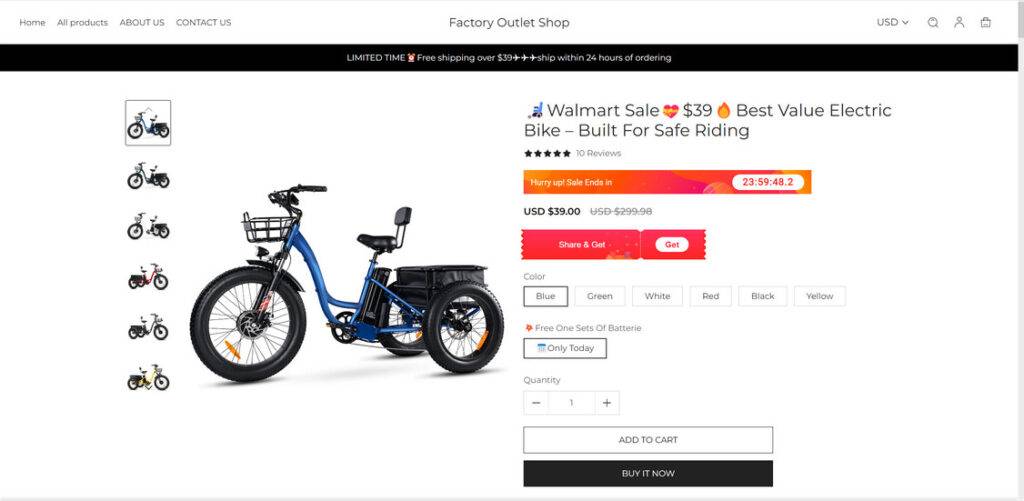
Overview of the $39.99 Electric Bike Scam
The scam typically begins with Facebook advertisements promoting electric bicycles for shockingly low prices starting around $39.99. The ads feature high-quality product images and glowing customer reviews to appear legitimate.
When users click for more information, they are taken to elaborate store websites also offering steep discounts on ebikes. However, these sites are completely fraudulent. Any submitted customer and payment details are harvested by scammers rather than fulfilling orders.
In some cases, victims receive a worthless product like a photo of a bike or small trinket to technically fulfill the sale. Credit cards can also be repeatedly charged hidden monthly fees after making a purchase.
By utilizing Facebook’s marketing systems and creating convincing storefront sites, scammers can reach millions with their fraudulent deals generating huge volumes of stolen financial and personal data.
How the $39.99 Electric Bike Scam Works
The electric bike scam follows a five stage process to effectively siphon money and details from victims under the guise of too-good-to-be-true deals:
1. Enticing Facebook Ads
Scam ads leverage Facebook’s self-serve ad platform and interest targeting to reach users most likely to engage with cycling-related promotions. Creative ads highlight products, prices, and fake endorsements to build trust.
2. Clickbait Websites
Clicking the ad leads to an independent website detailing amazing sales on electric bikes and related gear. Sophisticated design adds legitimacy with product images, videos, and reviews.
3. Harvesting User Details
As you browse the site looking to buy, embedded scripts record your activities. Order forms capture names, addresses, phone numbers, and payment info if you proceed to purchase a product.
4. Fraudulent Credit Card Charges
Entering payment information results in an unauthorized small charge to verify the card is active. Victims may also be signed up for monthly subscription plans with recurring charges.
5. No Products Delivered
No electric bikes or other physical products are ever shipped. At best, victims receive throwaway items like stickers to technically fulfill the order under false pretenses.
This sequence turns standard ecommerce into an exploitative money extraction scheme. The only defences are recognizing the deception and exercising extreme caution when encountering deals that seem too good to be true online.
5 Red Flags to Identify the Electric Bike Scam
While the ads and websites promote professional looking deals, a few key indicators can reveal their fraudulent nature:
1. Prices Too Good to Be True
Quality electric bikes cost over $1000, not $39.99. Unbelievably low prices are a clear sign of a scam.
2. Stock Photos of Products
Site images are generic stock photos copied from other sites rather than unique product pictures.
3. Website Registration Details Hidden
Scam sites mask identifying details on WHOIS domain lookups to hide their true operators.
4. Overwhelmingly Positive Reviews
Reviews on the site are all glowing without any negative feedback, a sign they are fake.
5. Credit Card Security Issues
Site does not use adequate encryption or violates PCI compliance for safely handling payments.
With vigilance, consumers can recognize the obvious red flags of these fraudulent businesses and avoid being deceived by their claims. If an offer seems suspiciously amazing, it very likely is.
Practicing smart web habits provides the best defence against ebike scams and other online fraud:
- Research sellers – Search the company name plus words like “scam” or “fake” to uncover complaints.
- Check site security – Ensure sites use HTTPS encryption and display trust badges.
- Avoid public WiFi – When shopping online, don’t use unsecured public networks that can expose your data.
- Trace seller address – Lookup their posted business address to see if it matches legitimate stores.
- Use credit cards – Never shop online with direct bank transfers which lack fraud protections of credit cards.
With sound judgement and safety best practices, consumers can largely avoid falling victim to nefarious ecommerce scams.
What To Do If You Are Scammed
If you suspect you have fallen prey to an electric bike purchase scam, immediately take these steps to limit damages:
- Call bank to halt payments – Notify your credit card provider or bank to stop any pending or recurring transaction with the fraudulent seller.
- Place fraud alert – Contact credit bureaus to request increased monitoring and alerts for any suspicious activity involving your identity.
- Change account passwords – Update passwords on any online accounts that utilized the same password as what you entered on the scam site.
- Watch for secondary scams – Be alert for any followup phishing attempts or calls claiming to assist with your complaint.
- Report the ad – Flag the Facebook ad as a scam to get it removed from circulation.
- File complaints – Submit reports about the scam to the FTC, state attorneys general, and BBB to aid investigations.
Quick action to contain financial and personal losses is crucial when online purchase scams succeed at first. Be proactive monitoring for any ongoing impacts as well.
Consumers can take the following proactive measures to avoid getting duped by fraudulent social media bicycle retailers:
- Beware unbelievable prices – Discounted electric bikes that cost 80% less than normal rates are too good to be true.
- Read ads closely – Fake promotions use excessive emojis, overclaim limited inventory, or omit key product details.
- Hover over links – Preview site URLs in ads to ensure they match legitimate businesses.
- Never buy via social media – Avoid purchasing directly through social platforms. Vet sites independently instead.
- Use secure payment methods – Never pay by direct bank transfer, gift card, or cryptocurrency which lack fraud protections.
Skepticism and sound judgement are your best defenses when shopping online. If you avoid jumping at deals that seem suspiciously amazing, you can steer clear of deceitful sellers misrepresenting their inventory and prices.
The Bottom Line – Key Takeaways to Avoid This Scam
The ‘$39.99 electric bike’ scam leverages Facebook advertising to drive traffic to fraudulent stores and steal user payment details under the false pretense of huge discounts. Protect yourself using these key learnings:
- Unbelievably low prices on expensive items like ebikes are telltale indicators of a scam.
- Research unfamiliar sellers thoroughly before providing any personal or financial information.
- Independently verify ecommerce sites outside of social media for signs of fakery.
- Stick to secure mainstream payment methods that limit fraud liability.
- If scammed, act swiftly to halt charges and contain potential identity theft fallout.
Stay vigilant for unbelievable deals online and exercise sound judgement when asked to provide sensitive user data. Avoid becoming a victim by recognizing the underlying tricks of viral Facebook scams.
Frequently Asked Questions
Why do people fall for the electric bike scam?
Desire to save money drives engagement with these ads. Scammers exploit this weakness by promoting unrealistic prices that compromise critical thinking and cause people to ignore red flags.
How do scammers advertise on Facebook?
Scam ads either utilize compromised business accounts or falsely pose as legitimate sellers to buy ads. Facebook’s self-serve ad system makes it easy to promote unauthorized content.
What should I do if I provided credit card details to a scam website?
Immediately contact your credit card company to halt any pending or recurring charges from the site. Also request increased fraud monitoring in case your card details are sold online.
Can I get my money back if I was scammed?
If you used a credit card, you can request a chargeback for any fraudulent transactions. Debit cards and direct transfers however provide little recourse for recovering lost funds.
Are the ads promoting $39 ebikes legal?
No, scam ads violate many consumer protection and advertising regulations. However the anonymous nature of online scams makes enforcement challenging.
How can Facebook allow these scam bike ads?
Billions of ads make manual review impractical. Scammers also regularly change identities and domains to avoid detection. Facebook tries to quickly remove reported scam promotions.
Final Thoughts
Electric bike discounts can certainly be enticing. But unbelievable prices should always raise skepticism rather than blind trust. Applying critical thinking and confirming seller legitimacy is crucial when encountering social media deals that appear too amazing to be true.
This guide provided comprehensive insight into the ‘$39.99 Electric Bike’ Facebook scam to highlight the manipulative tactics scammers deploy against unwitting shoppers. Hopefully the knowledge empowers you to recognize deceitful advertisements and websites, avoid providing personal details, and steer clear of fraudulent deals promoting steep discounts on expensive products.
Please share this article to help others protect themselves as well. Let’s prevent scammers from continuously profiting off these exploitative schemes. With increased vigilance and awareness, we can keep our online shopping experiences safe.
Advertisements


Join the discussion
0 commentsShare your experience or ask a question about this article.
Discussion
Start the conversation
Have a question or something useful to share? Add the first comment.