

OnlineHealthMart.com falsely claims to be a legitimate online pharmacy selling prescription medications. In reality, it is an elaborate scam operation targeting desperate patients with fake deals and stealing their personal and financial information. This in-depth article will uncover how this deceitful website cons its victims.
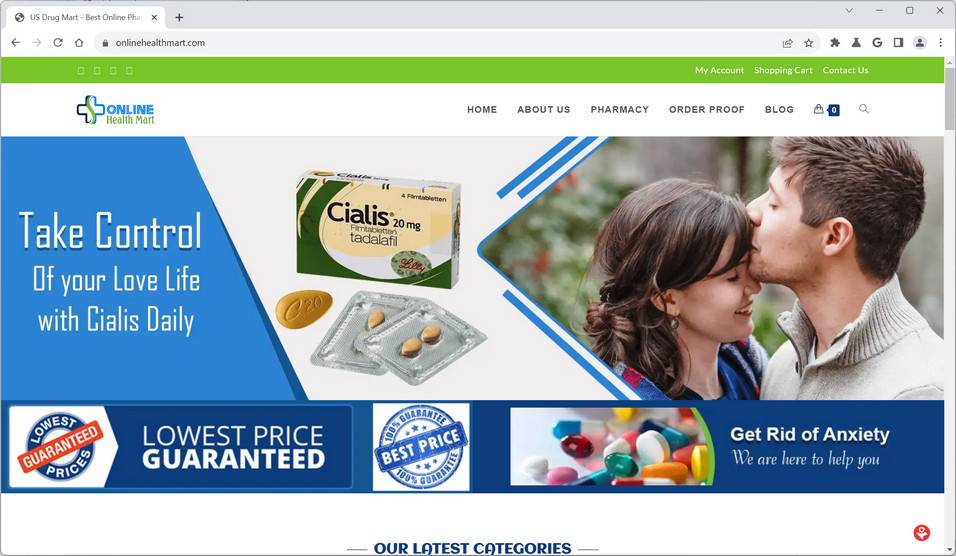
OnlineHealthMart Scam Overview
At first glance, OnlineHealthMart.com looks convincingly like a real online pharmacy. The site claims to sell major prescription medications like Adderall, Oxycontin, Vicodin, Viagra, and more at low prices without requiring a valid prescription from a doctor. However, in truth, this website is an intricately designed scam operation aimed at tricking patients and stealing sensitive personal and financial information.
Here’s an overview of how this deceitful scheme works:
- Fabricated Discounts & Claims – The site touts fake discounts and medical promises to convince potential victims the deals are authentic.
- No Prescription Required – Medications that normally require a valid prescription can supposedly be purchased on the site without any doctor’s approval.
- Unsafe Checkout – Entered payment and personal data is at high risk of theft and misuse.
- No Products Delivered – After processing payments, no medications whatsoever are shipped to the eager customers.
- Data Theft & Misuse – All information collected during transactions is leveraged to commit identity fraud against the victims.
- No Accountability – With no real location or customer service channels, the crooks behind the scam remain untraceable and cannot be contacted.
Recognizing these deceitful tactics can help patients avoid the financial and medical dangers posed by this criminal website and other copycats.
How the OnlineHealthMart.com Online Pharmacy Scam Actually Works
OnlineHealthMart.com relies on a number of underhanded techniques to successfully manipulate victims and profit from their stolen data:
1. Drive Traffic Through Social Media Ads
The scam starts with funneling visitors to the fraudulent pharmacy website. The scammers behind OnlineHealthMart.com run Facebook, Instagram, and TikTok ads for prescription medications at deep discounts without requiring prescriptions. These compelling ads target users who may genuinely need the promoted medicines. Clicking the ads leads directly to the scam site.
2. Dupe Visitors with Enticing Product Pages
The website features convincing product pages describing medications like Viagra and Oxycontin in detail. Fake patient testimonials and stock photos are used to further reinforce that the drugs can be purchased legally without a prescription. This tricks victims into believing the site is legitimate.
3. Trap Victims with Deceptive Discounts
Discounts up to 90% off are touted throughout the site along with other false medical claims. These unrealistic low prices on prescription medications coerce victims into placing orders despite the clear red flags.
4. Collect Sensitive Data During Checkout
To “purchase” the promoted drugs, unsuspecting customers must enter their full name, home address, phone number, email address, medical history and credit card information into an unsecured checkout form. No prescription is required, putting the victims’ health at risk.
5. Take Payments But Never Fulfill Orders
After checkout, victims anxiously await arrival of their deeply discounted medications. But the crooks behind the website have no intent to ship anything. They simply collect as many payments as possible while sending nothing to the defrauded customers.
6. Commit Further Fraud Using Stolen Information
The sensitive personal and financial data harvested during the scam is then used to commit medical identity theft, financial account theft, and additional targeted frauds against the victims. This can result in massive financial and health damages.
Understanding each of these predatory steps can help consumers recognize and avoid becoming victims of OnlineHealthMart.com and similar sham pharmacy websites.
Red Flags: Warning Signs of the OnlineHealthMart.com Scam
While OnlineHealthMart.com appears convincing at first glance, careful analysis exposes multiple red flags that reveal it as an illegal pharmacy scam:
- Part of a Scam Network – Research indicates OnlineHealthMart.com is part of an interconnected scam network run out of China managing numerous pharmacy scam sites.
- Plagiarized Legal Pages – The Terms of Service, Privacy Policy, and other legal pages are copied from known scam sites instead of being professionally written for this site specifically.
- Fake Contact Information – The phone number and address listed are completely fake and non-functional. Any testimonials are fabricated as well.
- No Transparency – Provides absolutely no verified details about who owns or operates this suspicious “pharmacy” website.
- No Pharmacy Credentials – Includes no verifiable pharmacy licenses, certifications, physician information, or credentials of any kind.
- Prescriptions Not Required – Sells prescription medications illegally without requiring a valid prescription from a medical professional.
- Unrealistically Low Prices – Promotes fake discounts up to 90% off to lure victims despite prescription drugs not following typical retail pricing.
- No Customer Service – Does not provide a legitimate phone number, email, or other ways to contact the company with concerns.
- No Social Media Presence – No Facebook or Instagram profiles could be found to establish the “pharmacy” as a real business.
- Product Images Stolen – All product photos appear lifted from legitimate websites without permission.
With numerous clear warning signs like these, patients can more easily identify OnlineHealthMart.com and similar sites as fraudulent operators and avoid being scammed.
What to Do If You Are a Victim of OnlineHealthMart.com
If you made a purchase or entered personal information this website, acting quickly can help you minimize financial loss, secure your accounts, and prevent further misuse of your data. Follow these steps carefully:
- Contact your bank or payment provider immediately
If you paid with a credit or debit card, call your bank’s customer service line and explain that you placed an order on a website that may be fraudulent. Request to dispute the transaction or initiate a chargeback.
If you used PayPal or another payment processor, file a dispute through their resolution center and provide order confirmations, emails, or screenshots as supporting evidence.
Fast action gives you the best chance of recovering your money and preventing additional unauthorized charges. - Freeze or replace your payment method
If your card or account details were entered on this website, it’s safest to have your bank or provider issue a replacement card. This prevents future unauthorized transactions and protects your financial accounts.
Some banks may also offer temporary holds or fraud alerts, ensuring no additional transactions can be made without your consent. - Run a personal data removal scan
Fraudulent websites often collect personal information such as names, phone numbers, addresses, and emails. This data may be shared with third parties or added to marketing and phishing lists.
A trusted service such as Malwarebytes Personal Data Remover can identify where your information is listed across data broker networks and help you request its removal. - Check your digital footprint
Even if you didn’t lose money, your personal data could already be circulating online. Running a digital footprint scan can help reveal whether your email address, phone number, or other personal information is present in leaks or broker databases.
This allows you to take proactive measures such as changing credentials, monitoring accounts, or setting up alerts before your data is misused. - Change your passwords and enable 2FA
If the same email or password used during checkout is also used on other websites or services, update those credentials immediately.
Choose strong, unique passwords and enable two-factor authentication (2FA) on all important accounts, especially your primary email, banking apps, and social media. This extra security layer makes unauthorized access significantly harder. - Scan your device for potential threats
Many fraudulent sites contain hidden tracking scripts, phishing pop-ups, or files designed to compromise your security.
Run a full system scan using a trusted security solution such as Malwarebytes Free or ESET Online Scanner to make sure your device hasn’t been exposed to malware or spyware during the visit.
If any suspicious files are found, remove them and restart your device. - Check your accounts and statements regularly
Monitor your bank and credit card statements closely for any unauthorized activity. Look for unfamiliar charges, subscription renewals, or repeated small test transactions.
Also review your email inbox and online accounts for password reset notices or sign-in alerts you didn’t initiate. Report anything unusual to your bank or account provider immediately. - Report the incident to the appropriate authorities
Reporting helps law enforcement track fraudulent websites and can support your claim if needed.- In the U.S., file a report with FTC ReportFraud.ftc.gov.
- In the EU, contact Europol or your national cybercrime unit.
- Globally, you can also submit the site to ScamAdviser to help warn other consumers.
Providing the website URL, order details, and communications increases the impact of your report.
- Save all evidence and communication
Keep copies of order confirmations, emails, payment records, chat logs, and screenshots of the website. This documentation can be crucial for supporting your chargeback request, reporting the case, or pursuing legal remedies if needed.
Store everything in one secure folder so you can easily provide it to your bank or relevant agencies. - Be cautious of follow-up contact
After incidents like this, affected individuals may receive fake refund messages, phishing emails, or phone calls pretending to offer “assistance.”
Do not click on unsolicited links, download attachments, or provide additional personal information. If you receive any message related to this website, verify its authenticity directly through your bank or official payment provider channels.
How to Spot and Avoid the OnlineHealthMart.com Scam
While scam sites like OnlineHealthMart.com are designed to look legitimate, there are ways to detect and avoid these dangerous online pharmacy scams:
- Research Before Buying – Don’t make rushed decisions based on social media ads. Thoroughly vet any unfamiliar online pharmacies before placing orders. Search for complaints and reviews.
- Verify Licenses and Credentials – Legitimate pharmacies will prominently display their licenses, certifications, physician information. Verify these are valid.
- Look for Proper Contact Information – Real pharmacies will include a verifiable phone number, email, and physical address you can use to contact them with questions.
- Check Prescription Requirements – Any pharmacy offering to sell controlled, prescription medications without requiring a valid prescription is a huge red flag of a scam.
- Avoid “Too Good to Be True” Pricing – Extreme low prices, deep discounts, and sketchy promotions are tricks scammers use to lure in victims while selling nothing of value.
- Never Enter Personal Information – Don’t submit any personal, medical or payment information to websites showing major red flags of a scam. Protect your identity.
- Use Official Pharmacy Verification Tools – Check the NABP’s verified pharmacy listings and utilization the LegitScript pharmacy verification tool.
- Look for Secure Checkout – Legitimate pharmacies will use SSL encryption and other security measures to protect your data during checkout.
Staying vigilant and using these tips when buying medications online will help patients securely find legitimate pharmacies and avoid the serious risks of scams like OnlineHealthMart.com.
Frequently Asked Questions
For more information on recognizing and responding to the OnlineHealthMart.com scam, here are some common questions:
Is OnlineHealthMart.com a real pharmacy?
No. OnlineHealthMart.com is a scam website masquerading as an online pharmacy to defraud customers. No legitimate medications will be dispensed and payment info is at risk.
Can I buy prescription drugs without a prescription on OnlineHealthMart.com?
No, that is medically dangerous and illegal. The site falsely claims medicine can be purchased without a valid doctor’s prescription to trick victims. No real pharmacy would allow this.
Are the prices and discounts on OnlineHealthMart.com legitimate?
No. The website promotes fake discounts of up to 90% off to entice victims. These false savings are a deceitful sales tactic commonly used by scam sites.
Should I provide my personal and medical information to OnlineHealthMart.com?
No. Entering any sensitive personal, financial, or medical data on this scam website puts you at very high risk of fraud and identity theft.
Is it safe to enter my credit card on OnlineHealthMart.com?
Absolutely not. The site’s checkout page lacks encryption, allowing scammers to easily steal and misuse any payment information entered. Never enter payment details on unsecured pages.
How can I get my money back if I paid OnlineHealthMart.com?
Immediately contact your bank or credit card company, report the charges as fraudulent, and request a chargeback to reverse the payments. Monitor closely for any signs of misuse of your information as well.
Conclusion
Online pharmacy scams like OnlineHealthMart.com are elaborately designed to deceive patients into providing sensitive personal information and payments, only to never ship any actual medications. These criminal schemes put victims at huge risk of fraud, identity theft, and financial loss.
Spotting the numerous red flags like fake discounts, lack of pharmacy credentials, suspicious contact info, and unsecured checkout can help consumers avoid getting swindled. If you did fall victim already, immediately contact your bank, monitor for misuse of your information, change passwords, and report the site to authorities.
When looking to safely purchase medications online, take time to thoroughly research pharmacies, verify their licenses, check for legitimate business details, and only use sites with qualified health professionals involved. Your health identity and finances are too important to put at risk with sketchy websites like OnlineHealthMart.com. By exerting caution and avoiding impulse buys from social media ads, potential victims can protect themselves from predatory online pharmacy scammers.








