

Facebook and Instagram ads promising unbelievable deals on high-end products are enticing, but often turn out to be fronts for an elaborate scam. A pervasive racket known as the “Warehouse Clearance Sale” scam has been running rampant, bilking unsuspecting social media users through deceptive ads and websites. This comprehensive guide will uncover how this scam works, how to identify it, and what to do if you’ve fallen victim.
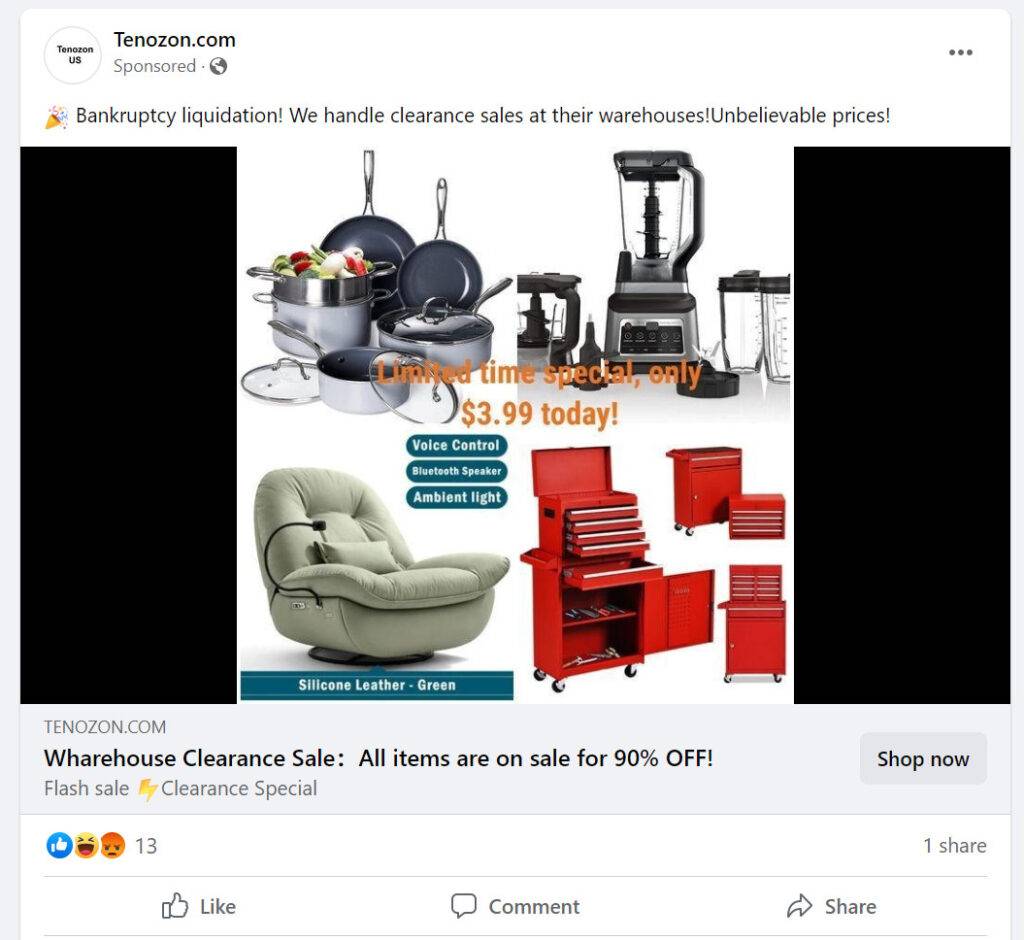
Warehouse Clearance Sale Scam Overview
The Warehouse Clearance Sale scam operates by creating fake shopping websites offering deep discounts on expensive items like electric bikes, headphones, watches, and apparel. They run targeted ads on Facebook and Instagram using scam tactics to lure people to their sites and hastily make purchases before realizing it’s a fraud.
The scam websites are essentially phantom shells hastily thrown together with stolen product images, fake discounts, and limited purchase windows. They’ll quickly take your money before shutting down, never delivering anything or sending low-quality knockoff items.
Some telltale signs it’s a Warehouse Clearance Sale scam:
- Suspiciously deep discounts like 80% off retail prices
- High-value products like electric bikes for under $200
- Recently registered domain names
- No company information or physical address
- Limited purchase windows creating false urgency
- Email-only customer service support
Looking into the domain registry reveals the scam websites are often registered for only one year. Searching online surfaces no legitimate social media presence or satisfied customers, just more scam victims.
How the Warehouse Clearance Sale Scam Works
The Warehouse Clearance Sale scam is a deceptive operation that preys on people’s desire to get unbelievable deals. It starts with eye-catching ads on Facebook or Instagram advertising things like high-tech electric bikes for only $200 or premium athletic apparel for 80% off.
The ads use FOMO (fear of missing out) tactics, claiming the deals are only for a “limited time” or while supplies last. This creates a false sense of urgency to entice people to click through to their website before the deals expire.
Once you arrive at the scam website, like acpttdem.com or efdau.com, you’ll notice some red flags. The website itself looks hastily thrown together – often just a basic templated site with stock photos and descriptions. There’s no “About Us” page or company information, just an email address.
You won’t find these scammers on social media or anywhere else online, they exist solely as phantom pop-up ads. The lack of an online presence beyond the ads should raise suspicions.
As for the deals themselves, they seem almost too good to be true. Electric bikes for 80-90% off retail prices, high-end shoes for $20, luxury watches for hundreds less than normal. Everything on the site is discounted to an unbelievable degree.
Of course, the point is to get your money before you have time to think through whether a $200 electric bike could really be a top-of-the-line model. The “limited time only” pressure distracts from judicious evaluation.
Once you place an order by inputting your credit card or other payment information, one of two things will happen. Either your item will never arrive and the website will vanish into thin air, or you’ll receive a cheap knock-off product from China weeks later that barely resembles what was pictured online.
By the time you get the fake product you ordered or realize you’ve been scammed with no product at all, there’s no way to get your money back or even track down the scammers. The website domain has already been taken down, the email addresses don’t work, and there are no operators or customer service numbers to call for a refund.
Some victims have managed to issue chargebacks via their credit card company, but most are simply out the money for good. The scammers have already laundered and withdrawn any payments, leaving no recourse for the poor customers they fleeced.
How to Spot This Scam
- Prices that seem impossibly low, like 80%+ off retail.
- High-value products are advertised at huge discounts.
- Website registered very recently just to run this scam.
- No company information or physical address listed.
- Countdown timers or “limited time only” pressures.
- Payment only via credit card or wire transfer.
- Email customer service through non-company domains.
- No social media presence except for ads.
- Unable to find reviews or complaints on the site.
What To Do If You Are A Victim
If you made a purchase or entered personal information this website, acting quickly can help you minimize financial loss, secure your accounts, and prevent further misuse of your data. Follow these steps carefully:
- Contact your bank or payment provider immediately
If you paid with a credit or debit card, call your bank’s customer service line and explain that you placed an order on a website that may be fraudulent. Request to dispute the transaction or initiate a chargeback.
If you used PayPal or another payment processor, file a dispute through their resolution center and provide order confirmations, emails, or screenshots as supporting evidence.
Fast action gives you the best chance of recovering your money and preventing additional unauthorized charges. - Freeze or replace your payment method
If your card or account details were entered on this website, it’s safest to have your bank or provider issue a replacement card. This prevents future unauthorized transactions and protects your financial accounts.
Some banks may also offer temporary holds or fraud alerts, ensuring no additional transactions can be made without your consent. - Run a personal data removal scan
Fraudulent websites often collect personal information such as names, phone numbers, addresses, and emails. This data may be shared with third parties or added to marketing and phishing lists.
A trusted service such as Malwarebytes Personal Data Remover can identify where your information is listed across data broker networks and help you request its removal. - Check your digital footprint
Even if you didn’t lose money, your personal data could already be circulating online. Running a digital footprint scan can help reveal whether your email address, phone number, or other personal information is present in leaks or broker databases.
This allows you to take proactive measures such as changing credentials, monitoring accounts, or setting up alerts before your data is misused. - Change your passwords and enable 2FA
If the same email or password used during checkout is also used on other websites or services, update those credentials immediately.
Choose strong, unique passwords and enable two-factor authentication (2FA) on all important accounts, especially your primary email, banking apps, and social media. This extra security layer makes unauthorized access significantly harder. - Scan your device for potential threats
Many fraudulent sites contain hidden tracking scripts, phishing pop-ups, or files designed to compromise your security.
Run a full system scan using a trusted security solution such as Malwarebytes Free or ESET Online Scanner to make sure your device hasn’t been exposed to malware or spyware during the visit.
If any suspicious files are found, remove them and restart your device. - Check your accounts and statements regularly
Monitor your bank and credit card statements closely for any unauthorized activity. Look for unfamiliar charges, subscription renewals, or repeated small test transactions.
Also review your email inbox and online accounts for password reset notices or sign-in alerts you didn’t initiate. Report anything unusual to your bank or account provider immediately. - Report the incident to the appropriate authorities
Reporting helps law enforcement track fraudulent websites and can support your claim if needed.- In the U.S., file a report with FTC ReportFraud.ftc.gov.
- In the EU, contact Europol or your national cybercrime unit.
- Globally, you can also submit the site to ScamAdviser to help warn other consumers.
Providing the website URL, order details, and communications increases the impact of your report.
- Save all evidence and communication
Keep copies of order confirmations, emails, payment records, chat logs, and screenshots of the website. This documentation can be crucial for supporting your chargeback request, reporting the case, or pursuing legal remedies if needed.
Store everything in one secure folder so you can easily provide it to your bank or relevant agencies. - Be cautious of follow-up contact
After incidents like this, affected individuals may receive fake refund messages, phishing emails, or phone calls pretending to offer “assistance.”
Do not click on unsolicited links, download attachments, or provide additional personal information. If you receive any message related to this website, verify its authenticity directly through your bank or official payment provider channels.
Warehouse Clearance Sale Scam FAQ
What is the Warehouse Clearance Sale scam?
The Warehouse Clearance Sale scam is a fraudulent scheme that uses fake shopping websites and social media ads to lure people into buying deeply discounted products that never arrive.
How does the Warehouse Clearance Sale scam work?
The scam creates convincing looking websites advertising unbelievable deals on expensive items. Targeted social media ads drive traffic to these sites. Once victims purchase, they either receive nothing or a cheap knockoff product.
What are some red flags of the Warehouse Clearance Sale scam?
Red flags include too-good-to-be-true prices, recently registered domains, no company information, limited purchase windows, and contact only via dubious emails.
Can I get my money back if I fell for the scam?
You can request a chargeback from your credit card company or payment provider. File complaints with the FTC, BBB, and IC3 to document the fraud as well.
How can I avoid the Warehouse Clearance Sale scam?
Be wary of unbelievable discounts, do research on unfamiliar sites, avoid direct bank transfers, use protected payment methods, and tighten social media privacy settings.
Conclusion
The Warehouse Clearance Sale is an ingenious social media scam that plays off people’s desire for unbelievable deals and fear of missing out. The scam banks on plausibly realistic websites and enticing ads promising jaw-dropping discounts on expensive items.
Always be wary of deals that seem too good to be true from websites you can’t verify or find any history about. With vigilance and some fraud prevention savvy, you can avoid falling victim and steer clear of scams like the infamous Warehouse Clearance Sale.

Join the discussion
0 commentsShare your experience or ask a question about this article.
Discussion
Start the conversation
Have a question or something useful to share? Add the first comment.