

Paramount Plus subscribers are being targeted by a new email scam that aims to steal sensitive information and money. This fraudulent email claims to be from Paramount Plus support and contains an invoice for an automatic subscription renewal. However, it is not actually from Paramount Plus and should not be trusted.
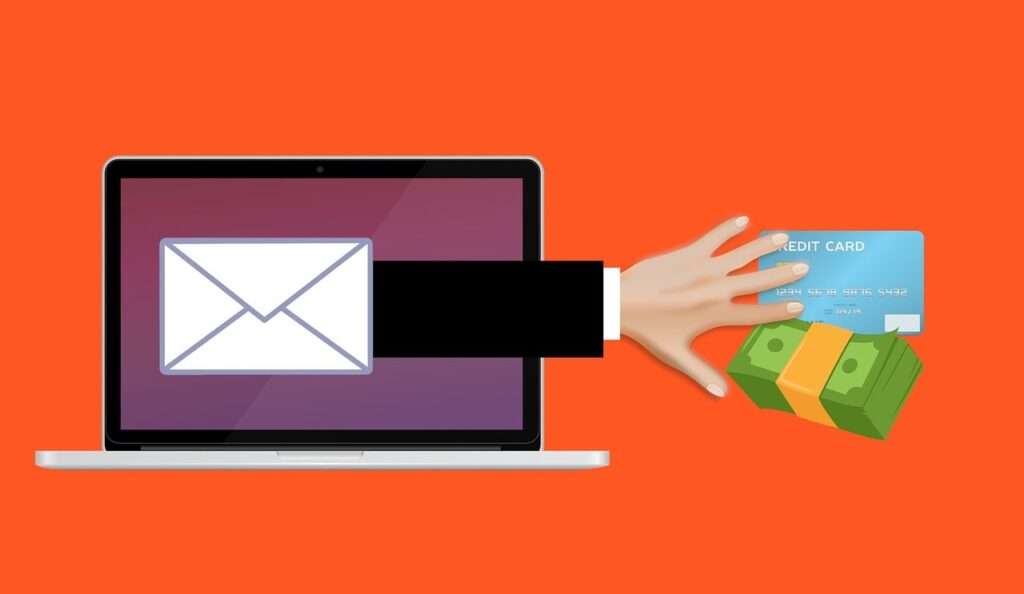
Overview of the Paramount Plus Email Scam
This scam email claims to be from the Paramount Plus support team with details about renewing your subscription plan. It states that your membership will be automatically renewed using the same payment information you used to sign up initially.
An invoice is attached that supposedly contains your subscription details and the customer service phone number. You are told to call the number if you need any help.
However, this is a phishing scam designed to steal your personal and financial information. The email address does not actually belong to Paramount Plus, despite appearing that way.
How the Scam Email Looks
The scam email is made to mimic a legitimate message from Paramount Plus support. The from address shown is support@paramountplus.com, which closely resembles the real support email.
The email greets you and explains that your Paramount Plus subscription is about to renew. It states that you will continue having access to all the same movies and shows.
Along with these details, an invoice is attached as a PDF or DOC. This invoice claims to contain your subscription and payment information.
Goal of the Scammers
The scammers aim to steal sensitive personal and financial information using this scam email. If you click on links within the email, you may be directed to a fake Paramount Plus login page.
Entering your username and password on this phishing site gives the scammers direct access to your account. They can then access any payment information you have stored.
The attached invoice PDF/DOC file may also contain malware or viruses. Opening this can lead to your device becoming infected.
Ultimately, the scammers want to gather your personal information, account login details, and credit card numbers. This gives them the ability to steal your identity and make fraudulent purchases or charges.
Here is how the Paramount Plus phishing email scam looks:
Your membership plan ParamountTV will be paid and activated shortly! After that you will be able to sign in to your ParamountTV account with an email address that you have mentioned throughout the registration process, and get an access to the most popular movies and shows. Also right now, Paramount television is available in the Panasonic TV App Store for download. Users can follow the on-screen prompts to sign in through the mobile or web experience.
Your Paramount+ subscription is going to be automatically prolonged with the same payment information that has been used to sign up for free trial every next month.
We are thankful you decided to continue with Paramount TV.
In the invoice below you will be able to find all the details regarding your subscription and our customer care phone number. Please call us anytime, we will be happy to help you with your subscription.
Use ParamountTV on any number of devices. However, you are limited to the number of simultaneous streams at any time.
Sincerely,
Paramount team
How the Paramount Plus Email Scam Works
The scammers carrying out this scam are very strategic in how they target potential victims. Here is how the Paramount Plus phishing email scam typically works:
1. Scammers Obtain Email Lists
The first step is for the scammers to gather lists of email addresses to target. There are a few ways they can do this:
- Buying email lists on the dark web
- Hacking company databases and stealing client info
- Using email scraping tools to harvest addresses online
Email lists connected to streaming services like Paramount Plus are valuable targets.
2. Spoof the Sender Email Address
Even if the scammers don’t have an exact list of Paramount Plus subscribers, they can make their scam email appear convincing. The scammers use spoofing techniques to mimic the real Paramount Plus support address.
The from address shown – support@paramountplus.com – looks legitimate. But in reality, the message is sent from the scammer’s own account.
3. Craft the Phishing Email Content
With the spoofed sender address ready, the scammers craft the content of their phishing email. They make it appear like a routine renewal notice from Paramount Plus.
The email includes verifying details like your subscription plan name and payment method used. This makes the message look authentic and tricks victims.
4. Send the Scam Email to Mass Targets
Using their list of target email addresses, the scammers send out huge volumes of their Paramount Plus phishing scam email. The goal is to reach as many potential victims as possible.
Even if only a small percentage of recipients fall for the scam, it gives scammers access to thousands of accounts.
5. Direct Victims to Fake Paramount Plus Sites
When a target opens the scam email, they are prompted to either click links or download attached fake invoices.
The links lead to convincing, but completely fake, Paramount Plus login pages. If victims enter their account credentials, the scammers capture them.
Similarly, opening invoice attachments can trigger downloads of malware onto the victim’s device. This gives scammers remote access and control.
6. Steal Personal and Financial Information
With access to Paramount Plus accounts, the scammers can see and steal personal info, saved payment methods, and more. They may also install keylogging malware to capture any other account passwords entered by the victim.
The end result is massive identity theft, allowing the scammers to make fraudulent purchases and charges using stolen credit card details. Victims’ accounts and finances are completely compromised.
7. Disable and Cash Out Accounts
Once they have gotten all the valuable information they can from a compromised Paramount Plus account, the scammers move on. They will disable and delete the accounts they now control.
Any financial accounts or credit cards are cashed out quickly through large purchases and transfers. The scammers attempt to make as much fraudulent profit as possible.
8. Share and Sell Data
Lastly, the scammers may sell on or share the stolen Paramount Plus account data and credit card numbers. This is sold on dark web marketplaces to be used by others for identity theft and financial fraud.
All of this stems completely from the initial phishing email that victims unknowingly opened, revealing just how dangerous these scams can be.
How to Spot the Paramount Plus Email Scam
While scammers are constantly evolving their tactics, there are some telltale signs you can watch for to avoid falling victim to the Paramount Plus email phishing scam.
Sender Email Address Looks Suspicious
Take a close look at the address the email is actually coming from. Scammers often use slight variations to impersonate companies. For example, support@paramountplus.co instead of .com. If anything looks off, it’s a red flag.
Generic Greeting Used
Legitimate messages from Paramount Plus would address you directly by name. Scam emails often start generically with just “Dear user” or something similar. This indicates the scammers don’t have your specific details.
Details About Plan Type Are Wrong
While scammers may include some accurate information, details like your subscription plan type or number of users allowed may not match your actual Paramount Plus account. This is a sign it’s not real.
Links Do Not Match Displayed URLs
Hover your mouse over any links before clicking. The web address that pops up should match what the link text says. If not, it’s a scam attempt to hide the shady URL.
Poor Grammar and Spelling
Look for obvious typos, grammar mistakes, or other formatting issues within the email. This suggests scammers quickly copying from a template, not an official communication.
Downloads Required Without Reason
No legitimate companies will ever send unsolicited downloads or attachments that must be opened, especially for routine notices. Delete any email with a random invoice file attached before it can infect your device with malware.
Unknown Service Number Provided
If an unknown customer support number is listed, that is another clear scam indicator. Only call numbers listed directly on the official Paramount Plus website when reaching out.
Requests Account Details or Payment Info
Paramount Plus would never ask you to directly provide sensitive login credentials or financial information over email. Any message making such requests is always a scam.
Staying vigilant for these types of common characteristics found in scam emails can help you confidently identify and avoid the vast majority of Paramount Plus phishing attempts. Trust your instincts if an email just doesn’t look right and delete it.
What to Do if You Get the Paramount Plus Email Scam
If you receive an email appearing to be from Paramount Plus support about renewing your subscription, use extreme caution before reacting. There are steps you should take to identify if it is legitimate or a scam attempt:
Closely Inspect the Sender’s Email Address
Even though the email may seem to be from support@paramountplus.com at first glance, look more closely at the actual sender address. Scammers often rely on slight typos or variations to spoof major companies.
For example, the scam email may actually be coming from support@paramountplus.co instead of .com. If anything looks suspicious, it is safest to assume it is fraudulent.
Hover Over Links Before Clicking
Rather than instantly clicking, hover your mouse cursor over any links within the email first. This should reveal the actual URL destination, which scammers try to hide behind false text.
If you see a completely random or unfamiliar web address, you will know those links are phishing links and not real Paramount Plus sites. Avoid clicking anything.
Do Not Open Attachments
Never open or download any attachments that come with unsolicited or suspicious emails. Scammers commonly attach infected invoices and other files that can release malware.
Deleting the email itself is the safest option. If you already saved a suspicious attachment, delete it right away.
Check Your Account Directly
The details in a scam email may seem accurate and make you question if it is real. Always log into your Paramount Plus account separately by manually typing paramountplus.com in your browser.
Check your subscription status under account settings. If you actually are nearing a renewal date, you will see a notice.
Contact Paramount Plus Support
If you remain unsure about the legitimacy of an email, reach out to the real Paramount Plus support team directly. You can find contact options on the official Paramount Plus website.
Explain you received a suspicious notice and want to confirm whether it was real. But make sure you visit the real website yourself, not through any links.
Use Strong Email Security Measures
Ensure you use up-to-date antivirus software, spam filters, and email encryption to stop most phishing scams from ever reaching your inbox. Never enter your Paramount Plus credentials unless you initiate the login yourself.
Enabling multi-factor authentication on your account also minimizes the potential damage if your password did get phished. You will receive an alert about unrecognized logins.
What to Do if You Fell for the Paramount Plus Email Scam
If you submitted any sensitive personal, account, or financial information through a scam Paramount Plus email, take action immediately to secure yourself and contain the damage:
Reset Your Paramount Plus Password
First, log into your real Paramount Plus account and reset your password. Make it long, complex, and unique from other accounts. This prevents scammers from accessing it any further.
Turn on two-factor authentication as well if available. Linking a mobile authentication app or phone number adds extra account security.
Check Your Subscription Status
Look for any signs of unauthorized changes made to your Paramount Plus account by scammers. Make sure your subscription, plan details, and payment methods all look as expected.
If you see any unknown changes or charges, begin disputing them with Paramount Plus customer service right away.
Monitor Your Credit and Accounts Closely
Carefully monitor bank, credit card, and other financial accounts that may have been connected to your Paramount Plus account over the next few weeks.
Watch out for any fraudulent purchases or transfers made using your payment information and dispute them promptly with your providers.
Report Stolen Identity/Credit Card
If scammers gained access to extensive personal information like Social Security numbers, you may want to place a freeze on your credit. This prevents anyone from opening new credit cards or loans in your name.
You can also file identity theft reports with the FTC and major credit bureaus to flag your accounts if compromised.
Run Security Scans
If you downloaded any suspicious invoice attachments or other files, run full system scans using updated malware/antivirus software. Quarantine or delete anything flagged as a threat.
Scans can uncover keylogger or info-stealing malware that may have been installed without you noticing. Removing these quickly prevents further damage.
Change Other Account Passwords
Think of any other sensitive accounts that used the same or similar password as your Paramount Plus account. These may also now be compromised.
Promptly change these passwords as well to unrelated, complex passwords that would be difficult for scammers to guess.
Frequently Asked Questions About the Paramount Plus Email Scam
The Paramount Plus email scam has many subscribers concerned and confused about protecting themselves. Here are answers to some of the most common questions asked about this phishing scam.
What is the Paramount Plus email scam?
This is a phishing scam where fraudsters send out fake emails pretending to be from Paramount Plus support. The emails claim your subscription is about to be renewed and contain an invoice attachment. They are intended to steal sensitive personal and financial information from victims.
How does the Paramount Plus scam email work?
The scammers spoof the sender address so it appears as if the email comes from support@paramountplus.com. The message states your subscription will auto-renew and has an invoice for your records. If you click links or download attachments, malware infects your device or steals your info.
What does the fake Paramount Plus email look like?
The scam email looks very similar to a legitimate message from Paramount Plus. It comes from an address like support@paramountplus.com and mentions renewing your subscription plan. Details like the plan name you joined with may be included to look authentic.
What is the goal of the Paramount Plus phishing scam?
The scammers aim to steal personal information, account credentials, and payment details by tricking people into clicking links or opening invoice attachments. This allows them to break into Paramount Plus accounts, steal identities, and make fraudulent purchases.
What should I do if I get the suspicious email?
Do not click any links or open attachments within the email. Check the actual sender address carefully for any typos or variations. Log into your account separately to view your renewal status. Contact Paramount Plus if unsure. Delete the scam email.
Could I get malware from the fake Paramount Plus invoice?
Yes, invoice attachments commonly contain malware, viruses, or ransomware. Opening them infects your device and gives scammers access. If you opened an attachment, delete it immediately and run antivirus scans.
How can I avoid falling for the Paramount Plus scam?
Closely inspect all emails before reacting and enable security tools like spam filters. Never enter your Paramount Plus login credentials unless on the real paramountplus.com site that you typed in manually. Use strong unique passwords and multi-factor authentication as well.
What should I do if I fell for the scam email already?
If you clicked links or entered any account info, change your Paramount Plus password immediately and enable two-factor authentication if possible. Monitor all connected financial accounts closely for fraudulent activity and freeze your credit if needed. Run security scans on your device.
How can I report the Paramount Plus phishing scam?
If you receive a suspicious email appearing to be from Paramount Plus, forward it to phishing@paramount.com. You can also report it to the Anti-Phishing Working Group and the FTC to aid investigations into these scams.
How can I stay updated on new Paramount Plus phishing scam emails?
Check Paramount Plus’s security warnings page regularly for alerts about new phishing scams targeting subscribers. You can also follow reputable cybersecurity firms and experts that regularly share details on current streaming service scams on social media.
Is Your Device Infected? Run a Free Malware Scan
Slow performance, constant pop-ups, or strange behavior? These are classic signs of a malware infection. The fastest way to find out is to scan your device with Malwarebytes Free — one of the most trusted malware removal tools available.
The free version detects and removes the most common threats, including:
- Adware — the cause of those annoying pop-ups
- Browser hijackers — unwanted redirects and changed homepages
- Trojans and spyware — hidden programs stealing your data
- Potentially unwanted programs (PUPs) — software you never asked for
👉 Select your device below — Windows, Mac, or Android — then follow the simple steps to download Malwarebytes, scan your system, and remove any threats it finds. The scan usually takes 5 to 20 minutes.
Run a Malware Scan with Malwarebytes for Windows
Malwarebytes is one of the most popular and trusted anti-malware tools for Windows — and it’s completely free for removing infections. It catches threats that many antivirus programs miss, including adware, browser hijackers, and trojans. Follow the steps below to scan and clean your PC in just a few minutes.
Download Malwarebytes
Click the button below to download the latest version of Malwarebytes for Windows from the official source. The free version is all you need — it will scan your computer and remove adware, browser hijackers, and other malicious software at no cost.
Download MalwarebytesOfficial installer for Windows 11 and 10. Your download starts right away.Want real-time protection? See Malwarebytes Premium Malwarebytes Free for WindowsScans and removes malware at no cost
-
Install Malwarebytes
When the download finishes, open your Downloads folder and double-click the MBSetup file. If Windows shows a User Account Control pop-up, click “Yes” to allow the installation.
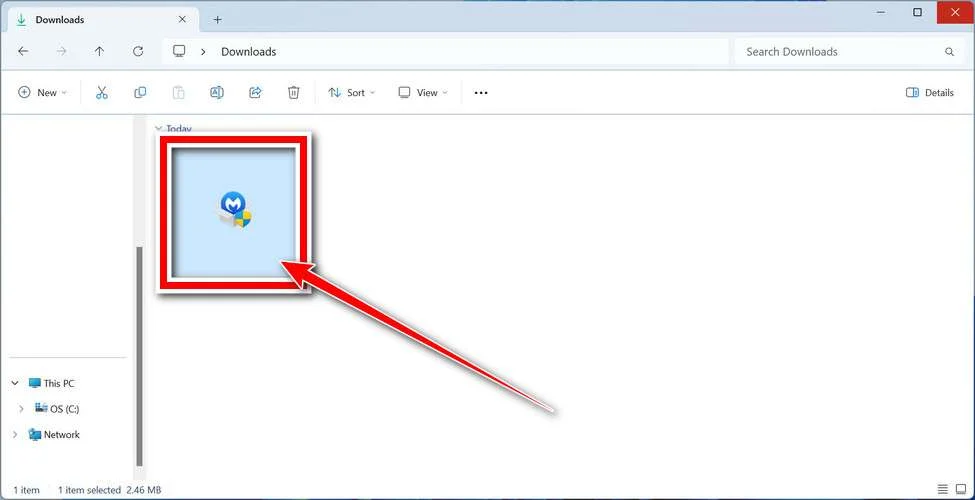
Follow the On-Screen Prompts to Install Malwarebytes
The setup wizard will walk you through a few quick screens:
-
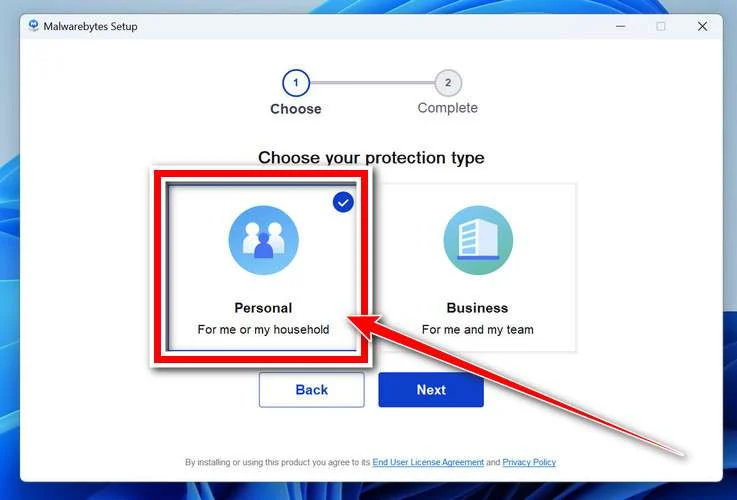
Choose where you’re installing the program — “Personal Computer” or “Work Computer” — then click Next.
-
Malwarebytes will now install on your device. This usually takes under a minute.

-
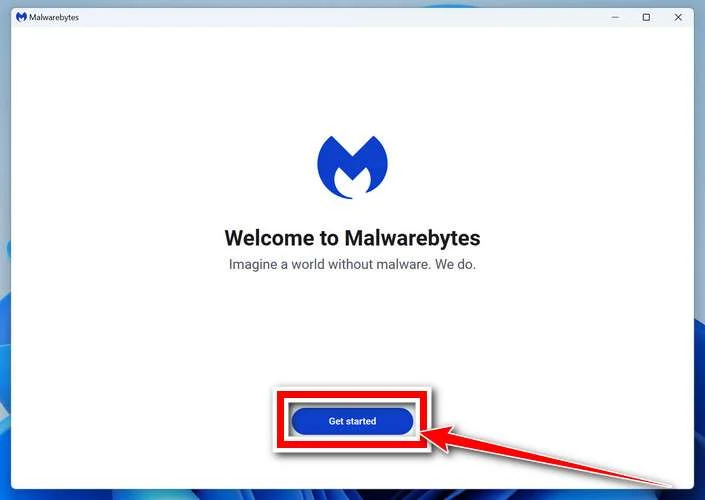
When installation is complete, the “Welcome to Malwarebytes” screen will open automatically.
-
On the final screen, click Open Malwarebytes to launch the program.

-
Enable “Scan for Rootkits”
Before scanning, turn on rootkit detection so Malwarebytes can find even the most hidden threats. Click the Settings gear icon on the left side of the screen.
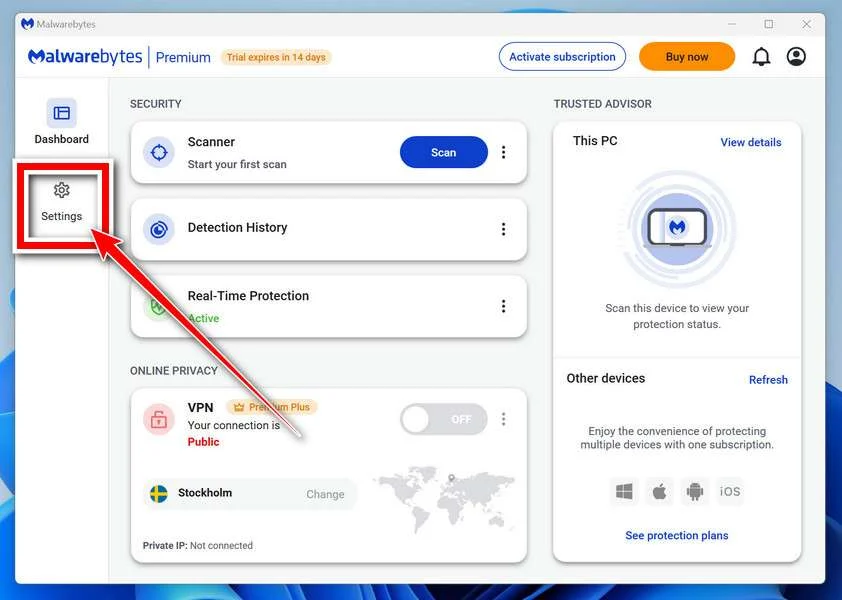
In the settings menu, find “Scan for rootkits” and click the toggle so it turns blue.

Done? Click “Dashboard” in the left pane to return to the main screen.
Start the Scan
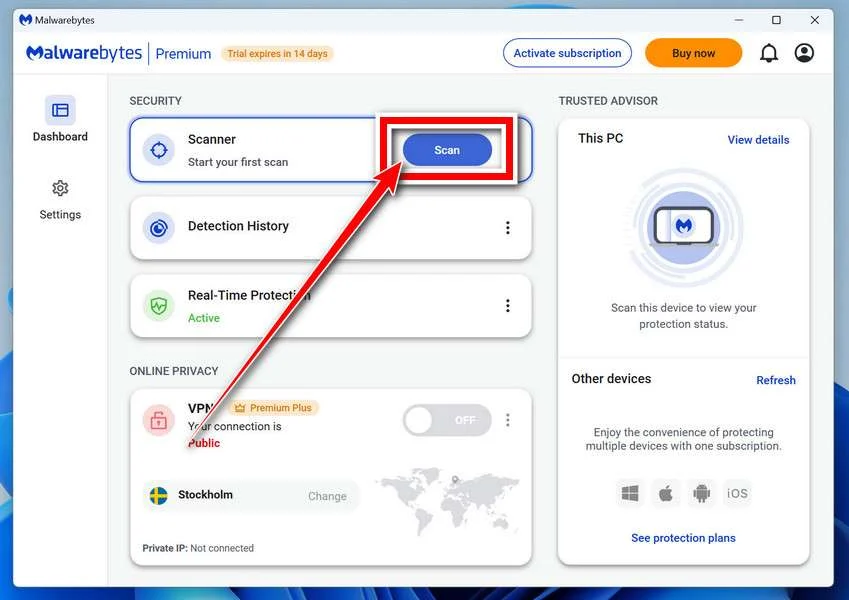
Click the blue Scan button. Malwarebytes will automatically update its virus database and start checking your computer for malware.
-
Wait for the Scan to Finish
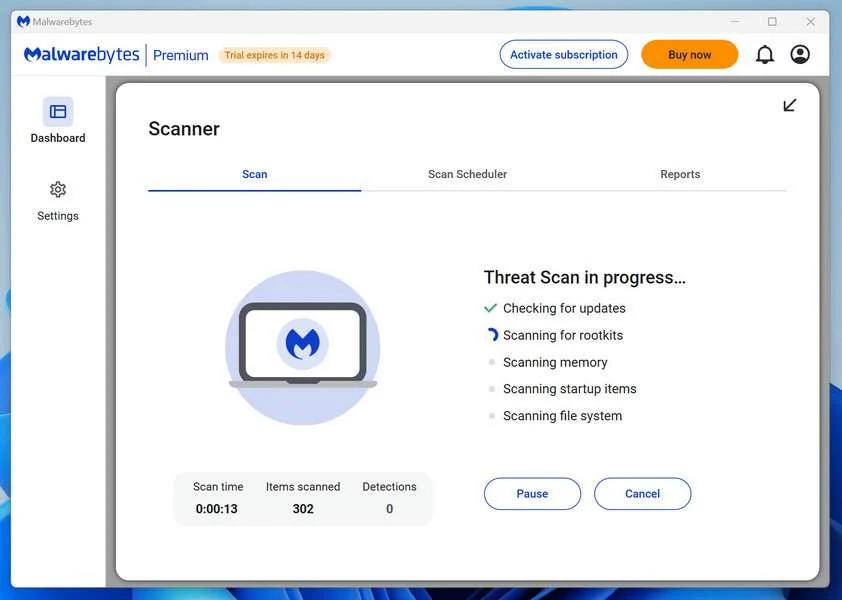
The scan checks your entire system for browser hijackers and other malicious programs, so it can take 5 to 20 minutes depending on your computer. Feel free to do something else — just check back occasionally to see the progress.
-
Quarantine the Detected Threats
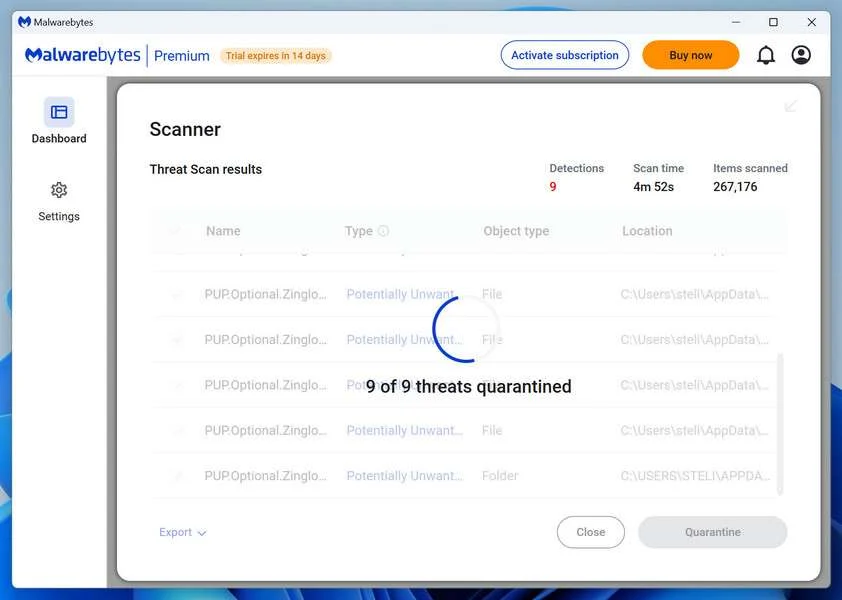
When the scan is done, you’ll see a list of everything Malwarebytes found — malware, adware, and potentially unwanted programs. Click the “Quarantine” button to remove all of them at once.
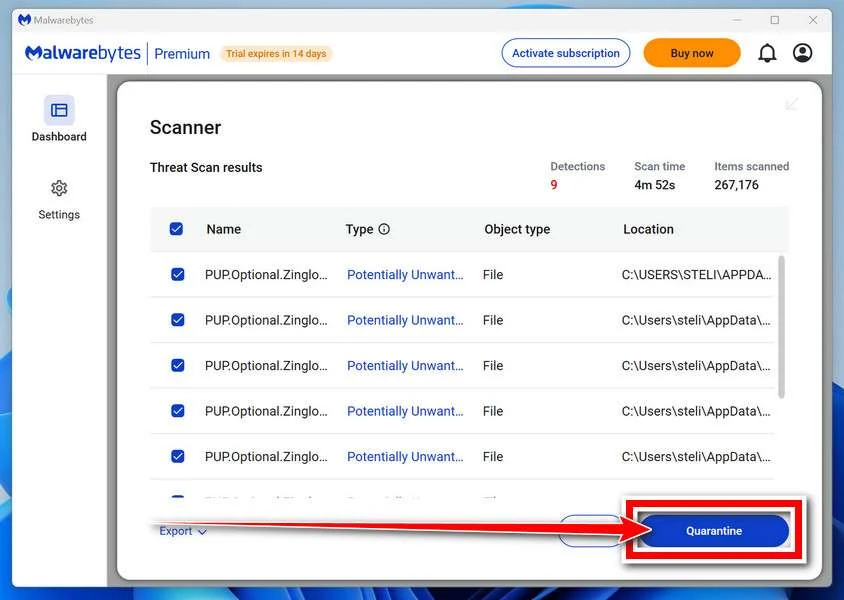
Malwarebytes will now remove the malicious files and registry entries and move them safely into quarantine.
-
Restart Your Computer
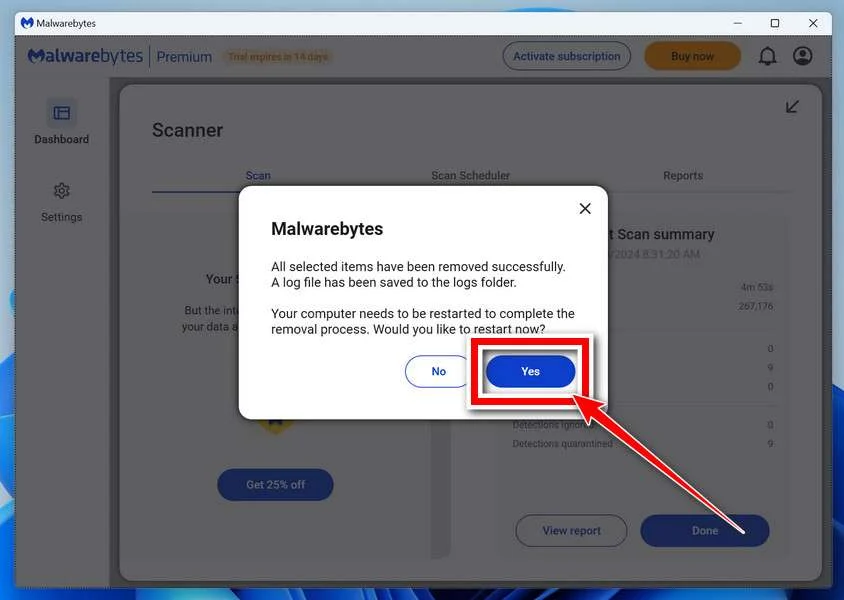
Some threats can only be fully removed after a reboot. If Malwarebytes asks you to restart, click Yes. Once you’re logged back in, Malwarebytes has finished removing the threats it found.
That’s it — your Windows PC is now clean of trojans, adware, and other malware, and should be back to running smoothly.
If you are still having problems with your computer after completing these instructions, then please follow one of the steps:
- Run a computer scan with ESET Online Scanner
- Ask for help in our Windows Malware Removal Help & Support forum.
Run a Malware Scan with Malwarebytes for Mac
Malwarebytes for Mac is a free on-demand scanner that removes the malware other security software tends to miss — adware, browser hijackers, and unwanted programs included. Cleaning an infected Mac with Malwarebytes has always been completely free, and it’s our go-to recommendation. Follow the steps below to scan and clean your Mac in just a few minutes.
-
Download Malwarebytes for Mac
Click the button below to download the latest version of Malwarebytes for Mac.
Download MalwarebytesOfficial installer for macOS. Your download starts right away.Want real-time protection? See Malwarebytes PremiumMalwarebytes Free for MacScans and removes malware at no cost -
Open the Malwarebytes setup file
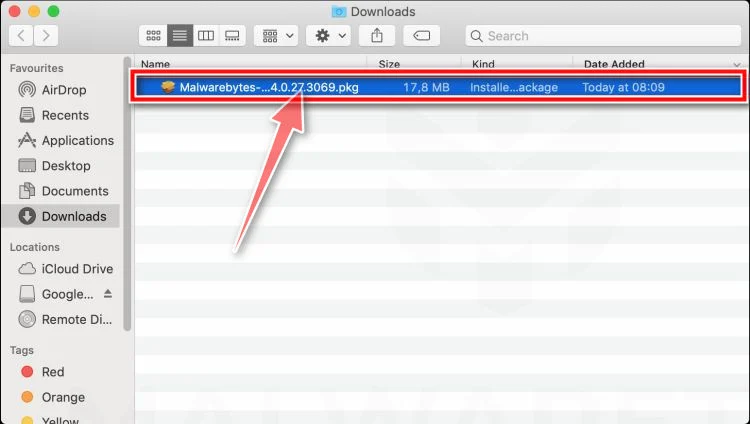
When the download finishes, open your Downloads folder and double-click the setup file to begin the installation.
-
Follow the On-Screen Prompts to Install Malwarebytes
The Malwarebytes for Mac Installer will guide you through a few quick screens. Click “Continue” and keep following the prompts until the installation completes.
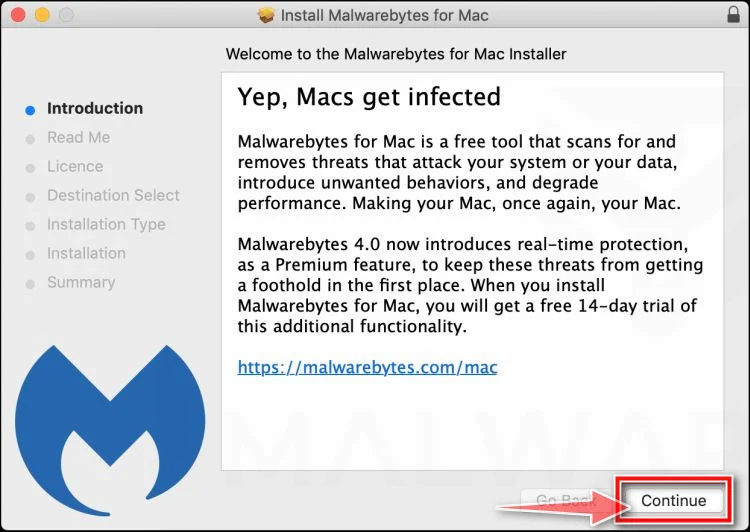
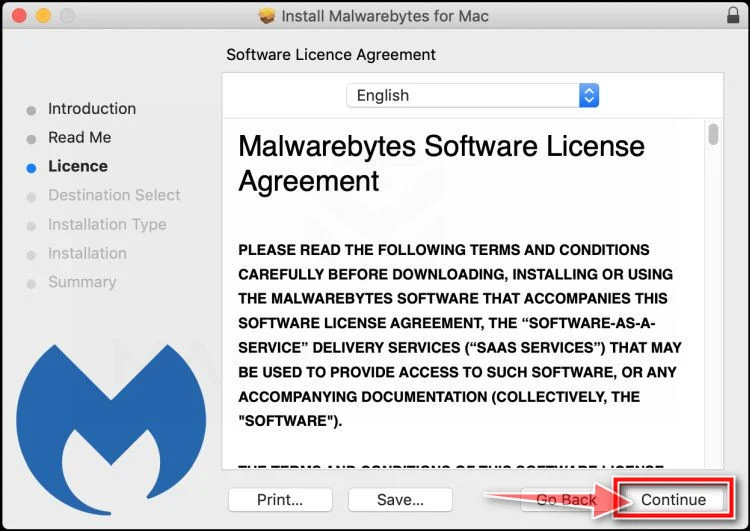
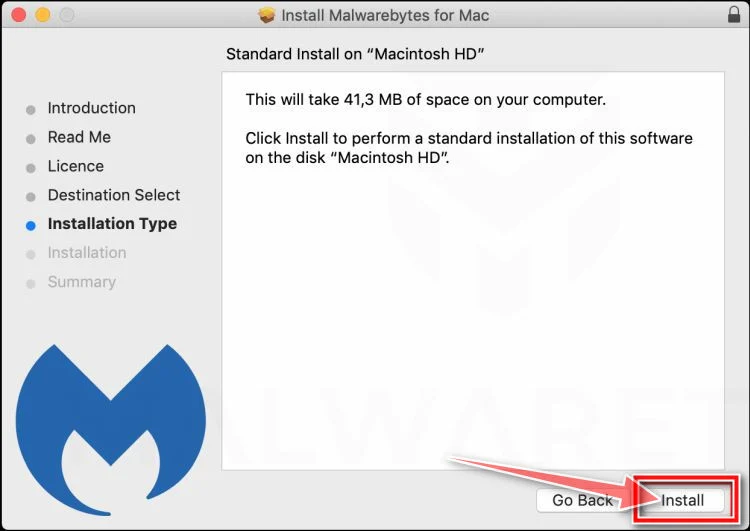
When the installation is complete, Malwarebytes opens to the Welcome to Malwarebytes screen. Click “Get started“.
-
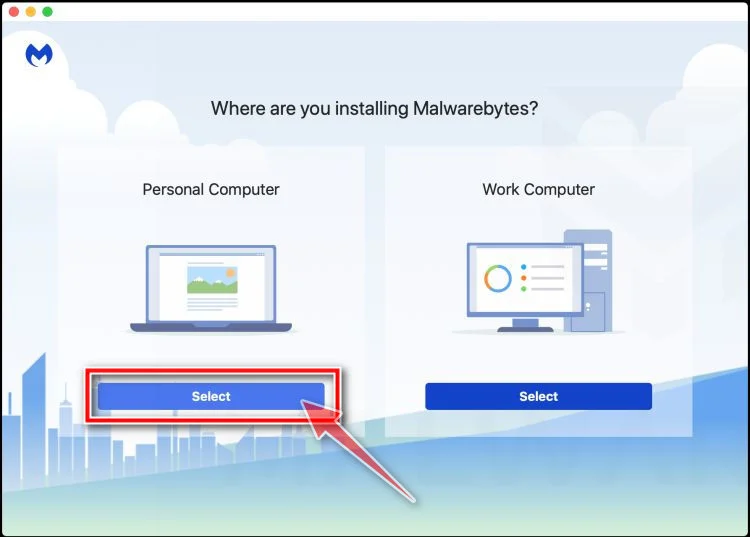
Select “Personal Computer” or “Work Computer”
Malwarebytes will ask what type of computer you’re installing it on. Click either Personal Computer or Work Computer, whichever applies.
-
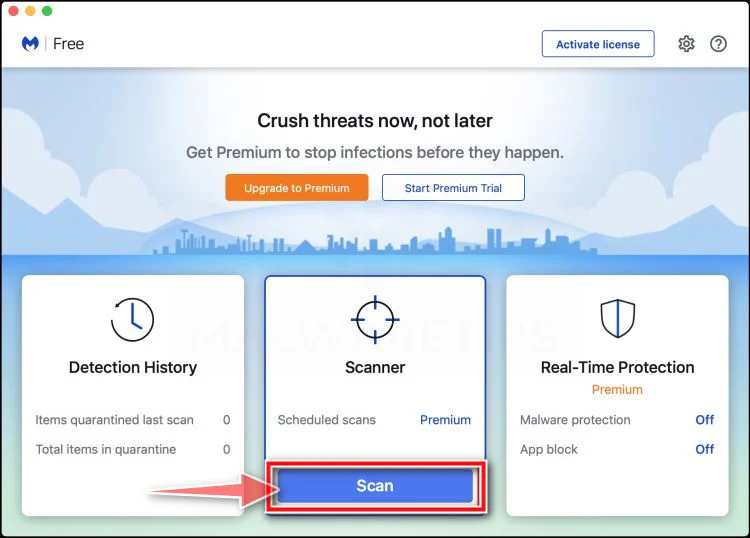
Start the Scan
Click the “Scan” button. Malwarebytes will automatically update its detection database and begin checking your Mac for malware.
-
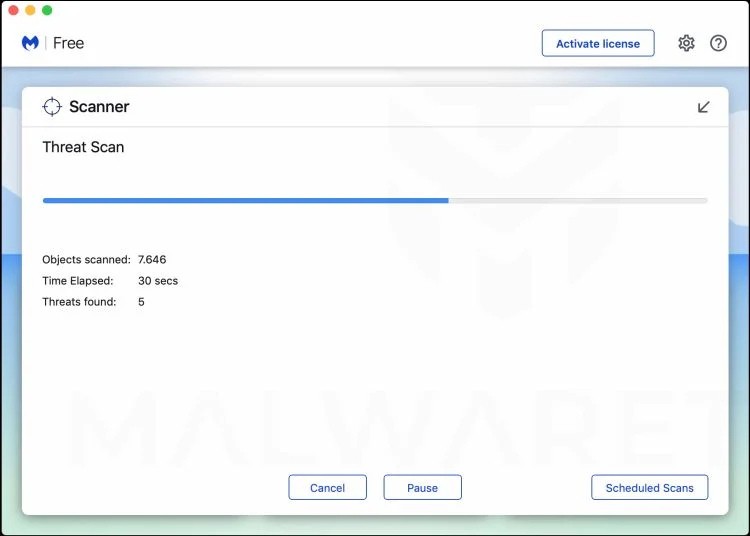
Wait for the Scan to Finish
Malwarebytes will scan your Mac for adware, browser hijackers, and other malicious programs. This can take a few minutes, so feel free to do something else — just check back occasionally to see the progress.
-
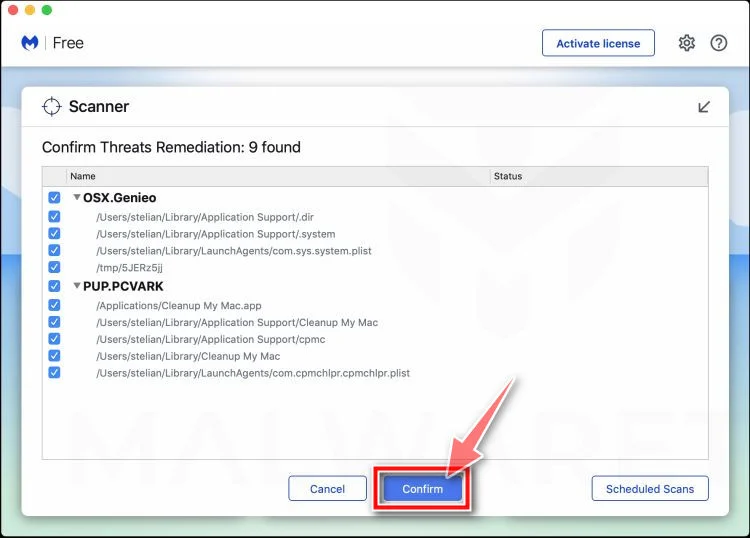
Quarantine the Detected Threats
When the scan is done, you’ll see a list of everything Malwarebytes found. Click the “Quarantine” button to remove all the threats at once.
-
Restart Your Mac
Malwarebytes will now remove all the malicious files it found. Some threats can only be fully removed after a reboot — if Malwarebytes asks you to restart, allow it. Once you’re logged back in, your Mac is clean.
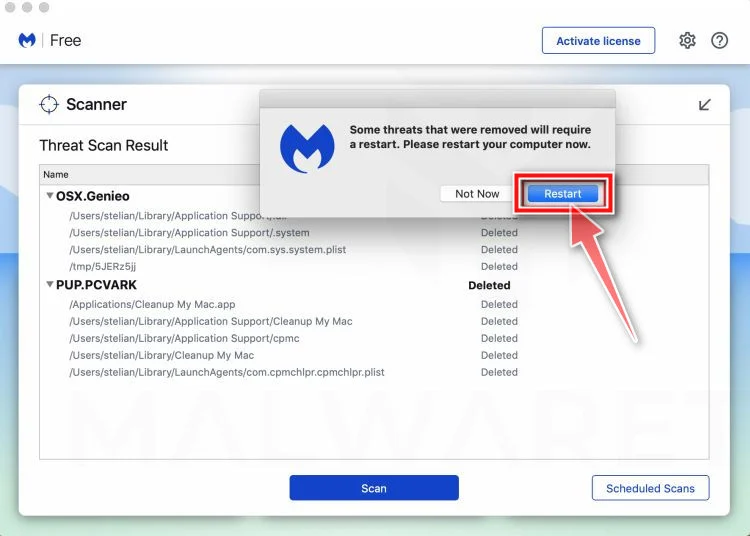
That’s it — your Mac is now free of adware, rogue browser extensions, and other potentially harmful software.
If you are still experiencing problems while trying to remove a malicious program from your computer, please ask for help in our Mac Malware Removal Help & Support forum.
Run a Malware Scan with Malwarebytes for Android
Malwarebytes for Android automatically detects and removes dangerous threats like malware and ransomware so you don’t have to worry about your most-used device being compromised. Aggressive detection of adware and potentially unwanted programs keeps your Android phone or tablet running smooth.
-
Download Malwarebytes for Android.
You can download Malwarebytes for Android by clicking the link below.
Get Malwarebytes for AndroidOpens Google Play in a new tab.Want real-time protection? See Malwarebytes Premium for AndroidMalwarebytes for AndroidScans your phone and removes malware at no cost -
Install Malwarebytes for Android on your phone.
In the Google Play Store, tap “Install” to install Malwarebytes for Android on your device.

When the installation process has finished, tap “Open” to begin using Malwarebytes for Android. You can also open Malwarebytes by tapping on its icon in your phone menu or home screen.

-
Follow the on-screen prompts to complete the setup process
When Malwarebytes will open, you will see the Malwarebytes Setup Wizard which will guide you through a series of permissions and other setup options.
This is the first of two screens that explain the difference between the Premium and Free versions. Swipe this screen to continue.
Tap on “Got it” to proceed to the next step.
Malwarebytes for Android will now ask for a set of permissions that are required to scan your device and protect it from malware. Tap on “Give permission” to continue.
Tap on “Allow” to permit Malwarebytes to access the files on your phone.
-
Update database and run a scan with Malwarebytes for Android
You will now be prompted to update the Malwarebytes database and run a full system scan.

Click on “Update database” to update the Malwarebytes for Android definitions to the latest version, then click on “Run full scan” to perform a system scan.

-
Wait for the Malwarebytes scan to complete.
Malwarebytes will now start scanning your phone for adware and other malicious apps. This process can take a few minutes, so we suggest you do something else and periodically check on the status of the scan to see when it is finished.

-
Click on “Remove Selected”.
When the scan has been completed, you will be presented with a screen showing the malware infections that Malwarebytes for Android has detected. To remove the malicious apps that Malwarebytes has found, tap on the “Remove Selected” button.

-
Restart your phone.
Malwarebytes for Android will now remove all the malicious apps that it has found. To complete the malware removal process, Malwarebytes may ask you to restart your device.
That’s it — your Android phone is now clean — no more malicious apps, adware, or browser redirects.
If you are still having problems with your phone after completing these instructions, then please follow one of the steps:
- Restore your phone to factory settings by going to Settings > General management > Reset > Factory data reset.
- Ask for help in our Mobile Malware Removal Help & Support forum.
Stay Protected: Block Ads and Malicious Sites
Now that your device is clean, keep it that way. Most infections start with a malicious ad or a fake download button — so blocking them at the source is your best defense.
We recommend AdGuard, which blocks malicious ads, phishing pages, and dangerous redirects before they can reach you.
👉 Download AdGuard and browse safely
The Bottom Line
This Paramount Plus invoice phishing scam highlights just how far scammers will go to deceive victims into surrendering valuable personal information. But being aware of the common tactics they use allows you to identify and avoid most scams.
Key points to remember include:
- Inspect all email addresses closely before clicking links or attachments. Anything from a slightly different sender address should be considered suspicious.
- Hover over links to reveal the actual destinations before clicking. Any unusual URLs are a red flag.
- Assume all unsolicited invoices, statements, or other attachments may contain malware. Do not download them.
- Instead of trusting email notices, independently log into your real Paramount Plus account to check renewal status.
- Enable as many security features on your accounts as possible, including strong unique passwords and multi-factor authentication.
- Act quickly to contain damage if any credentials or financial information have been exposed, by resetting passwords, freezing credit, and disputing charges.
Staying cautious and following these tips will help you avoid becoming another victim of the Paramount Plus invoice renewal scam threatening subscribers.

Join the discussion
0 commentsShare your experience or ask a question about this article.
Discussion
Start the conversation
Have a question or something useful to share? Add the first comment.