

A new phishing scam has emerged involving fraudulent PayPal invoices from a “Jennifer Davidson” for $499. The scam emails state this charge is due immediately and provide a (833) number to call with any issues. However, this phone number actually routes to deceitful scammers seeking your financial details.
This ruse combines PayPal’s brand recognition with a real sounding woman’s name and official invoice terminology to make the emails appear totally legitimate. But it’s just an elaborate con to hijack accounts, steal identities, install malware, and siphon funds from victims who fall for it.
In this comprehensive guide, we’ll outline how the Jennifer Davidson PayPal invoice scam operates, red flags to spot, and steps to take if you receive one of these deceitful emails. Insight into their manipulative tactics is key to avoiding becoming the next target.
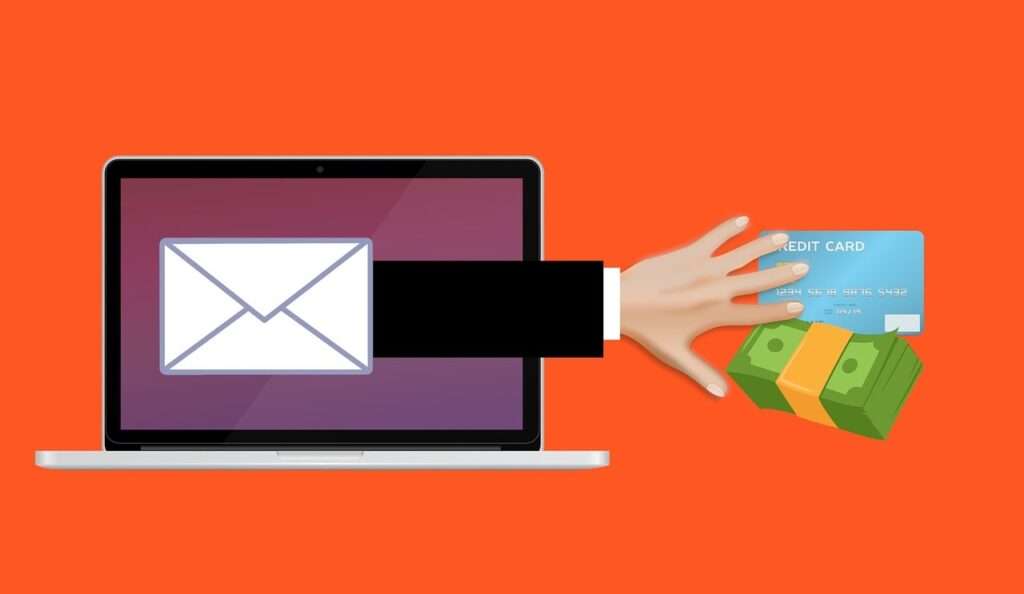
Overview of the Fake Jennifer Davidson PayPal Invoice Scam
While seemingly simple, successful execution requires meticulous planning and social engineering. Here’s an overview of how it typically operates:
- Scammers obtain target email lists from data breaches
- Fake invoices are crafted appearing to be from Jennifer Davidson via PayPal
- Invoices claim you owe $499 immediately
- Urgency is created to call the number provided with any “issues”
- Call recipients are manipulated into providing sensitive personal data
- Credit cards, account logins, SSNs, and gift cards are stolen
- Money is drained from accounts before victims can react
Here is how the Jennifer Davidson PayPal Invoice Scam email looks:
From: Jennifer Davidson <service@paypal.com>
Subject: Invoice from Jennifer Davidson (0002)
Hello,
Here’s your invoice
Jennifer Davidson sent you an invoice for $499.00 USD
Due on receipt.
Invoice details
Amount requested
$499.00 USD
Note from seller
If you have any issues, do let us know +1(833) 388-6329
Invoice number
0002
Now let’s examine the scam details and strategies in depth so you can recognize and avoid this attack.
How the Fake Jennifer Davidson PayPal Invoice Scam Works
The criminals rely on carefully orchestrated strategies to effectively manipulate recipients. Here is the step-by-step process:
1. Recipient Emails Are Compiled
Scammers likely obtain massive databases of target emails, names, numbers, and other personal info from data breaches or by purchasing stolen data on black markets.
2. Fake Invoices Are Created
Using official branding and templates, the scammers craft realistic looking fake PayPal invoices stating Jennifer Davidson is requesting $499 immediately.
3. Fake Invoices Are Sent En Masse
Leveraging the stolen email lists, the criminals blast out enormous batches of the phony PayPal invoices to inboxes globally.
4. Recipients Open and Review Invoices
Upon opening the emails, recipients are shocked to see they supposedly owe this Jennifer Davidson person $499 with no explanation why.
5. Victims Call the Scam Number
Fearing account drain or credit damage, many now urgently call the (833) or other number listed, hoping to resolve the issue.
6. Scammers Pose as PayPal Billing Agents
When victims call, the criminals answer posing convincingly as PayPal billing support agents, even referencing personal details to appear legitimate.
7. Scammers Request Remote Access
Claiming they must diagnose technical issues allowing the “unauthorized” invoice, the scammers request remote access to the victim’s computer.
8. Device Gets Compromised Once Access Is Granted
With remote access granted, the scammers can now deploy malware, steal data, and take full control of the victim’s computer.
9. Fake Services and Charges Occur
Alternately, the crooks may sell unnecessary “security” services, useless software, or completely fictional fees that must be paid immediately.
10. Financial and Personal Data Is Harvested
Using manipulative psychology, the scammers obtain credit cards, online banking logins, SSNs, and gift card codes from frightened call recipients.
11. Money Is Stolen and Laundered
The criminals swiftly drain bank accounts and launder the stolen funds through cryptocurrency exchanges before victims can react.
This shows how a single phishing email can lead to complete financial and identity theft with just one panicked phone call. Next we’ll cover recovery steps if you already contacted them.
What to Do if You’ve Been Scammed By This PayPal Con
If you already called the scammers and supplied payment or account info, take these steps right away:
1. End All Contact with the Scammers
If still on the call, hang up now. Block their number to stop further manipulation. Never contact them again for any reason.
2. Notify Your Bank and PayPal
Alert your bank and PayPal that your account details may be compromised. Freeze or close accounts if unauthorized charges occurred.
3. Reset ALL Passwords
Change the passwords on every online account, especially banking, email, and PayPal. Enable two-factor authentication for added security.
4. Run Malware Scans
Scan your devices with comprehensive antivirus and malware removal software to uncover anything covertly installed by the scammers during remote access.
5. Monitor Accounts Closely
Carefully monitor accounts for fraudulent charges and suspicious activity stemming from the stolen financial data.
6. File Police Reports
File detailed scam reports with local law enforcement and provide supporting documentation. This creates an official record of the crime.
7. Report Details to Relevant Institutions
Inform PayPal, affected banks, credit card companies, and government agencies about the scam to aid investigations and protect others.
Moving quickly following an attack limits damage and prevents further misuse of any compromised information. Don’t let fear of embarrassment prevent you from reporting scams immediately.
Is Your Device Infected? Run a Free Malware Scan
Slow performance, constant pop-ups, or strange behavior? These are classic signs of a malware infection. The fastest way to find out is to scan your device with Malwarebytes Free — one of the most trusted malware removal tools available.
The free version detects and removes the most common threats, including:
- Adware — the cause of those annoying pop-ups
- Browser hijackers — unwanted redirects and changed homepages
- Trojans and spyware — hidden programs stealing your data
- Potentially unwanted programs (PUPs) — software you never asked for
👉 Select your device below — Windows, Mac, or Android — then follow the simple steps to download Malwarebytes, scan your system, and remove any threats it finds. The scan usually takes 5 to 20 minutes.
Run a Malware Scan with Malwarebytes for Windows
Malwarebytes is one of the most popular and trusted anti-malware tools for Windows — and it’s completely free for removing infections. It catches threats that many antivirus programs miss, including adware, browser hijackers, and trojans. Follow the steps below to scan and clean your PC in just a few minutes.
Download Malwarebytes
Click the button below to download the latest version of Malwarebytes for Windows from the official source. The free version is all you need — it will scan your computer and remove adware, browser hijackers, and other malicious software at no cost.
Download MalwarebytesOfficial installer for Windows 11 and 10. Your download starts right away.Want real-time protection? See Malwarebytes Premium Malwarebytes Free for WindowsScans and removes malware at no cost
-
Install Malwarebytes
When the download finishes, open your Downloads folder and double-click the MBSetup file. If Windows shows a User Account Control pop-up, click “Yes” to allow the installation.
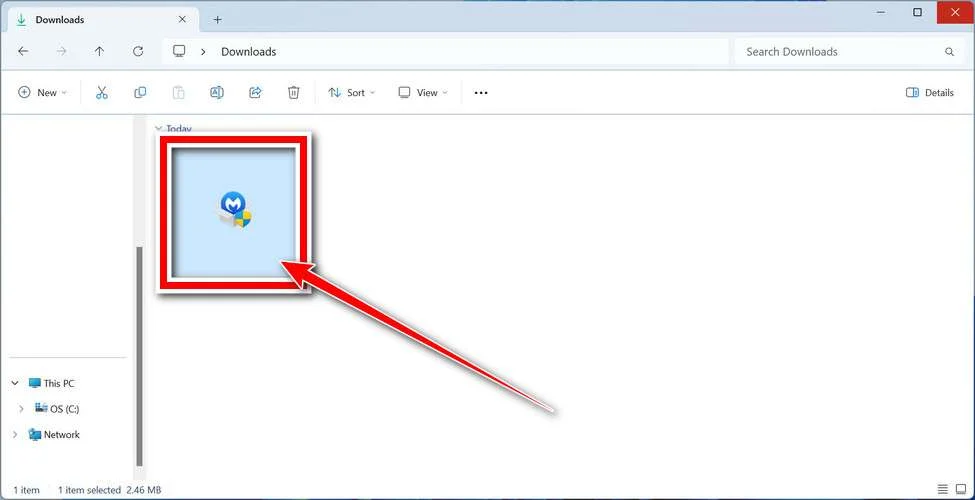
Follow the On-Screen Prompts to Install Malwarebytes
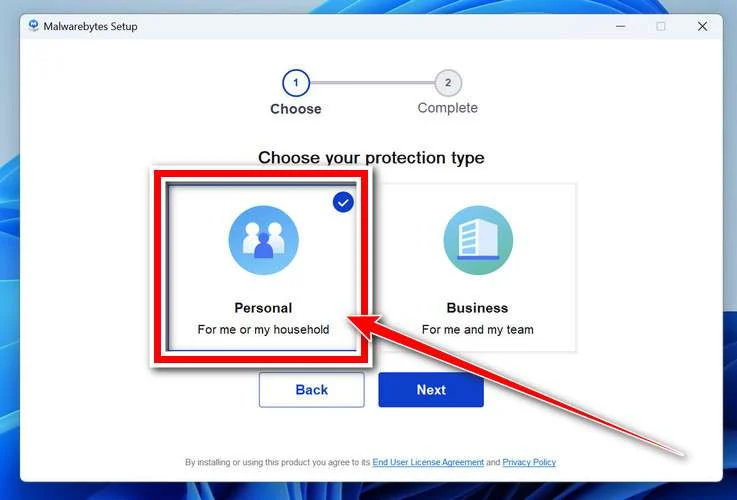
The setup wizard will walk you through a few quick screens:
-
Choose where you’re installing the program — “Personal Computer” or “Work Computer” — then click Next.
-
Malwarebytes will now install on your device. This usually takes under a minute.

-
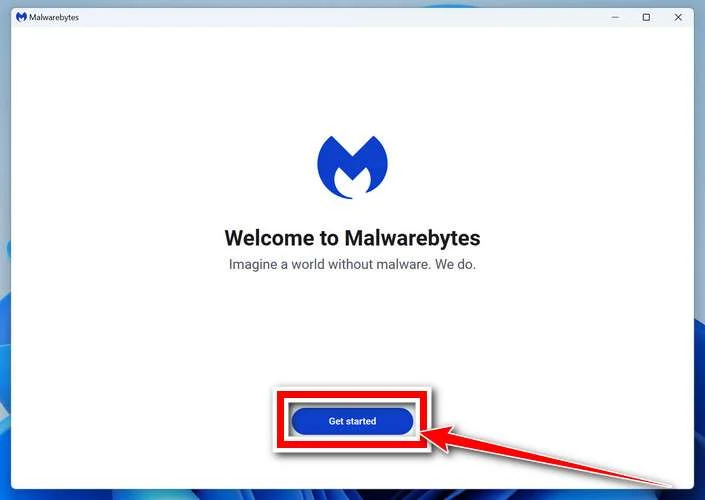
When installation is complete, the “Welcome to Malwarebytes” screen will open automatically.
-
On the final screen, click Open Malwarebytes to launch the program.

-
Enable “Scan for Rootkits”
Before scanning, turn on rootkit detection so Malwarebytes can find even the most hidden threats. Click the Settings gear icon on the left side of the screen.
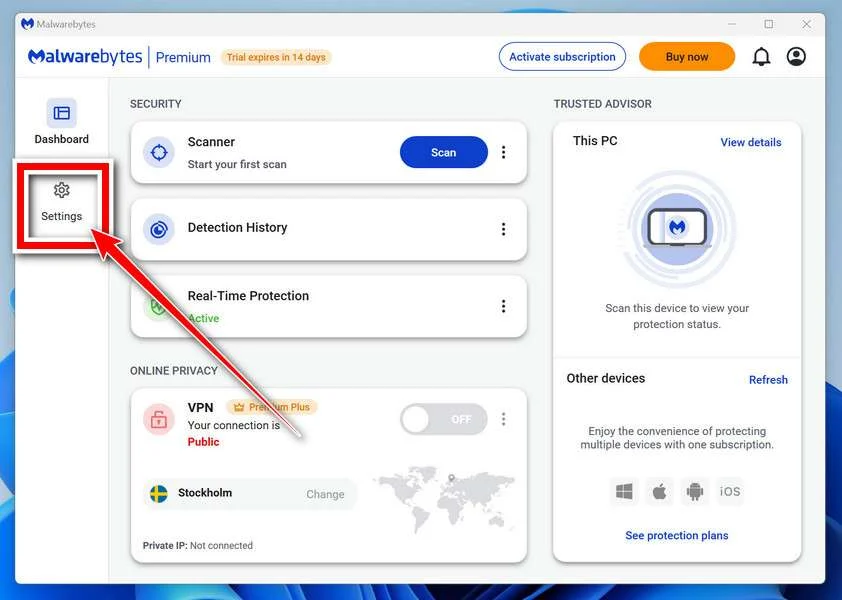
In the settings menu, find “Scan for rootkits” and click the toggle so it turns blue.

Done? Click “Dashboard” in the left pane to return to the main screen.
Start the Scan
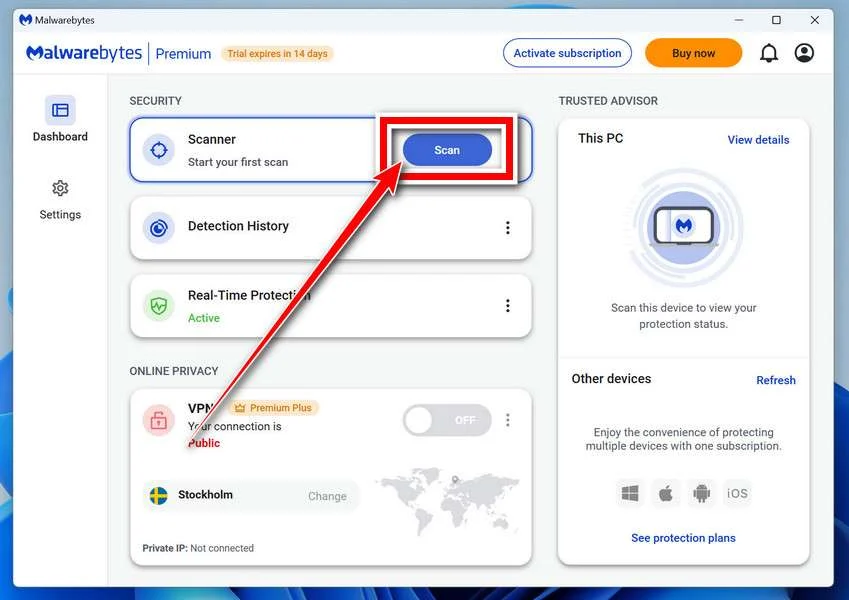
Click the blue Scan button. Malwarebytes will automatically update its virus database and start checking your computer for malware.
-
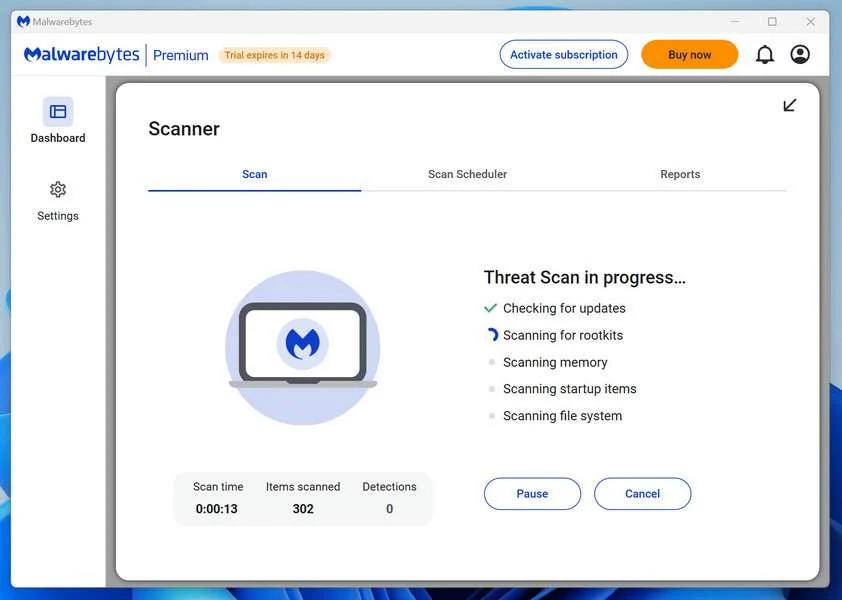
Wait for the Scan to Finish
The scan checks your entire system for browser hijackers and other malicious programs, so it can take 5 to 20 minutes depending on your computer. Feel free to do something else — just check back occasionally to see the progress.
-
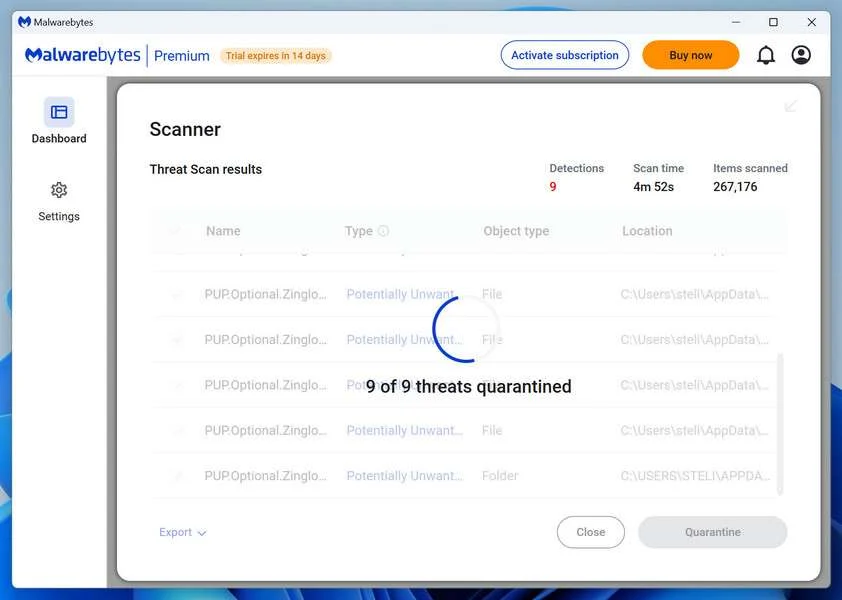
Quarantine the Detected Threats
When the scan is done, you’ll see a list of everything Malwarebytes found — malware, adware, and potentially unwanted programs. Click the “Quarantine” button to remove all of them at once.
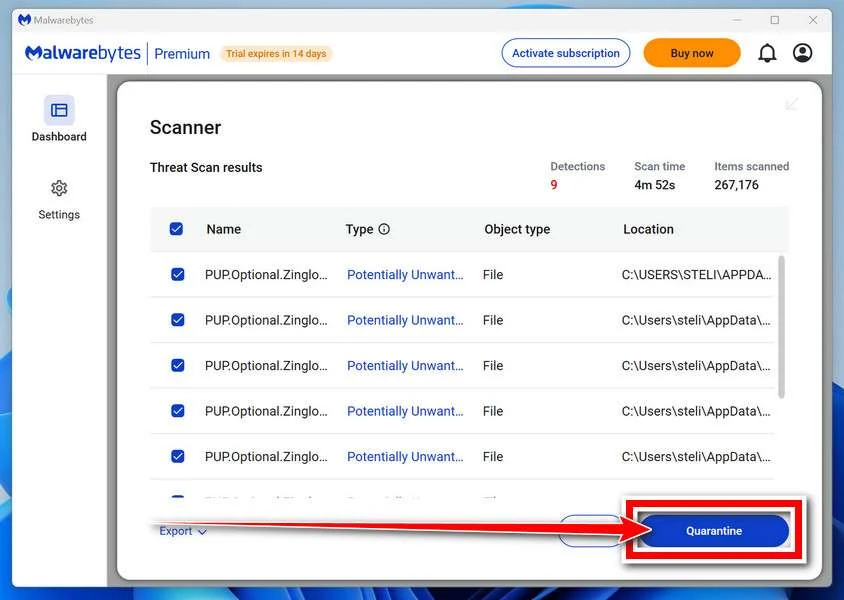
Malwarebytes will now remove the malicious files and registry entries and move them safely into quarantine.
-
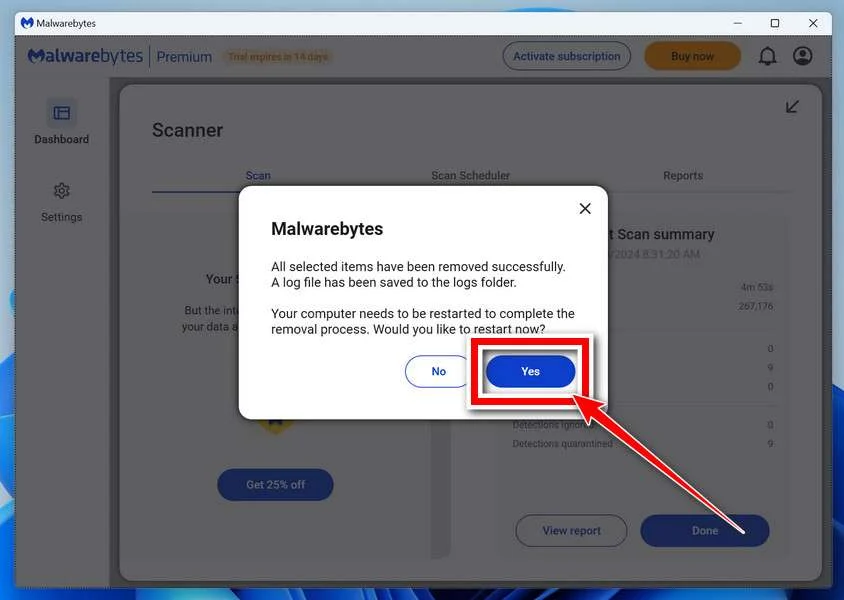
Restart Your Computer
Some threats can only be fully removed after a reboot. If Malwarebytes asks you to restart, click Yes. Once you’re logged back in, Malwarebytes has finished removing the threats it found.
That’s it — your Windows PC is now clean of trojans, adware, and other malware, and should be back to running smoothly.
If you are still having problems with your computer after completing these instructions, then please follow one of the steps:
- Run a computer scan with ESET Online Scanner
- Ask for help in our Windows Malware Removal Help & Support forum.
Run a Malware Scan with Malwarebytes for Mac
Malwarebytes for Mac is a free on-demand scanner that removes the malware other security software tends to miss — adware, browser hijackers, and unwanted programs included. Cleaning an infected Mac with Malwarebytes has always been completely free, and it’s our go-to recommendation. Follow the steps below to scan and clean your Mac in just a few minutes.
-
Download Malwarebytes for Mac
Click the button below to download the latest version of Malwarebytes for Mac.
Download MalwarebytesOfficial installer for macOS. Your download starts right away.Want real-time protection? See Malwarebytes PremiumMalwarebytes Free for MacScans and removes malware at no cost -
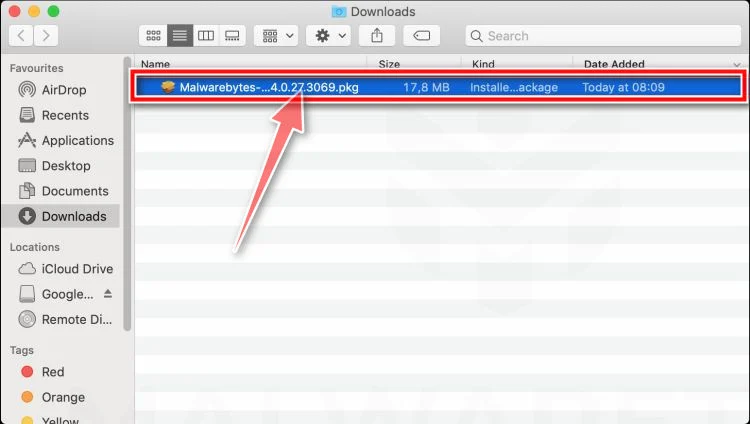
Open the Malwarebytes setup file
When the download finishes, open your Downloads folder and double-click the setup file to begin the installation.
-
Follow the On-Screen Prompts to Install Malwarebytes
The Malwarebytes for Mac Installer will guide you through a few quick screens. Click “Continue” and keep following the prompts until the installation completes.
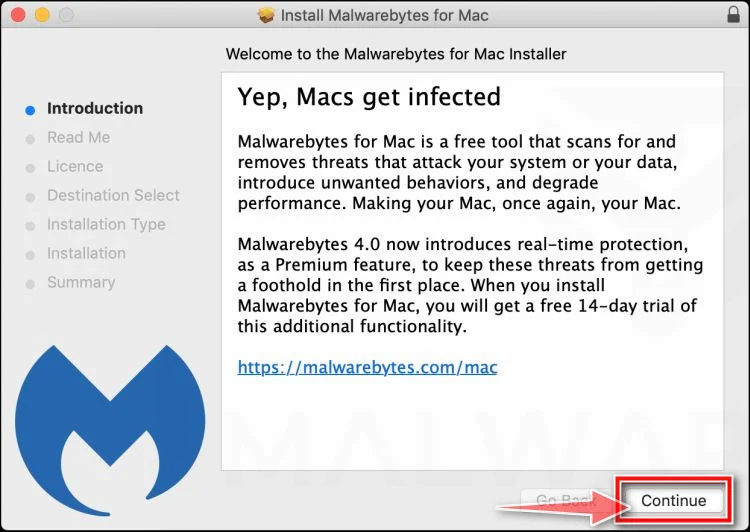
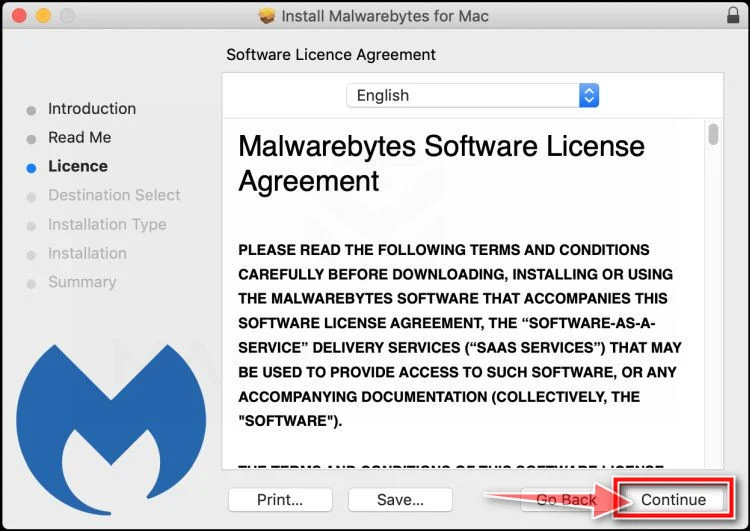
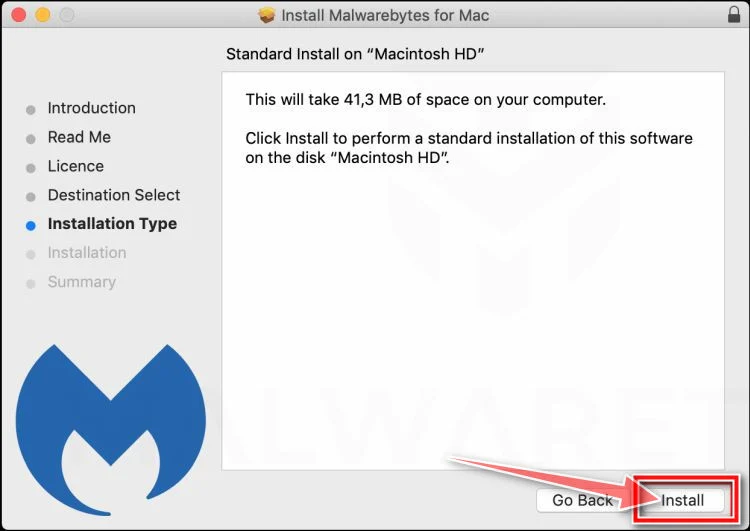
When the installation is complete, Malwarebytes opens to the Welcome to Malwarebytes screen. Click “Get started“.
-
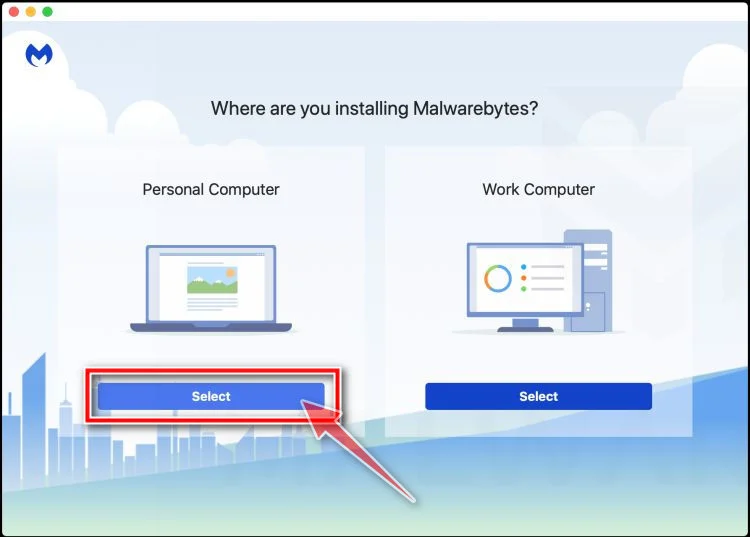
Select “Personal Computer” or “Work Computer”
Malwarebytes will ask what type of computer you’re installing it on. Click either Personal Computer or Work Computer, whichever applies.
-
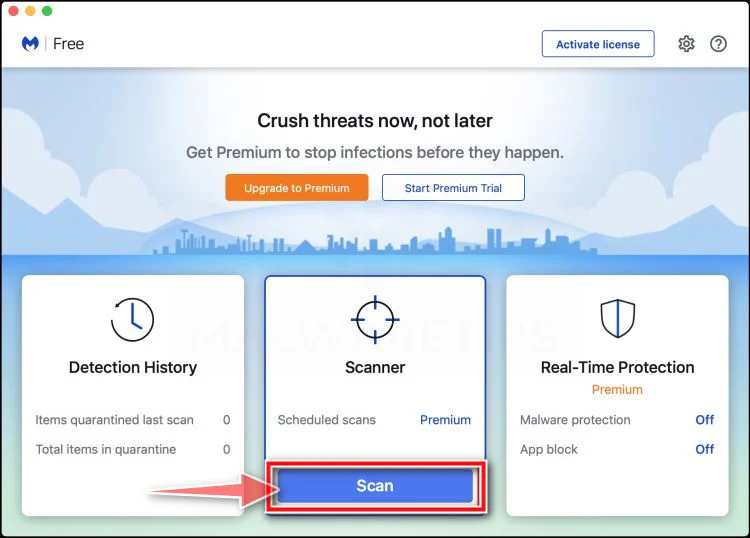
Start the Scan
Click the “Scan” button. Malwarebytes will automatically update its detection database and begin checking your Mac for malware.
-
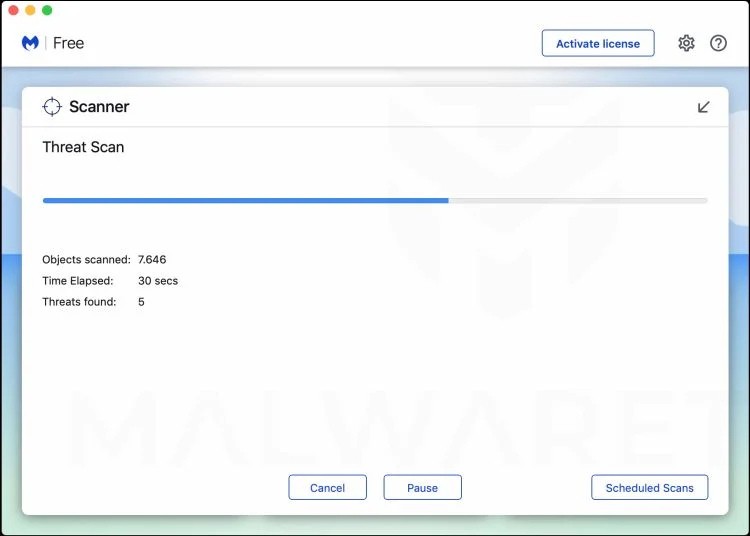
Wait for the Scan to Finish
Malwarebytes will scan your Mac for adware, browser hijackers, and other malicious programs. This can take a few minutes, so feel free to do something else — just check back occasionally to see the progress.
-
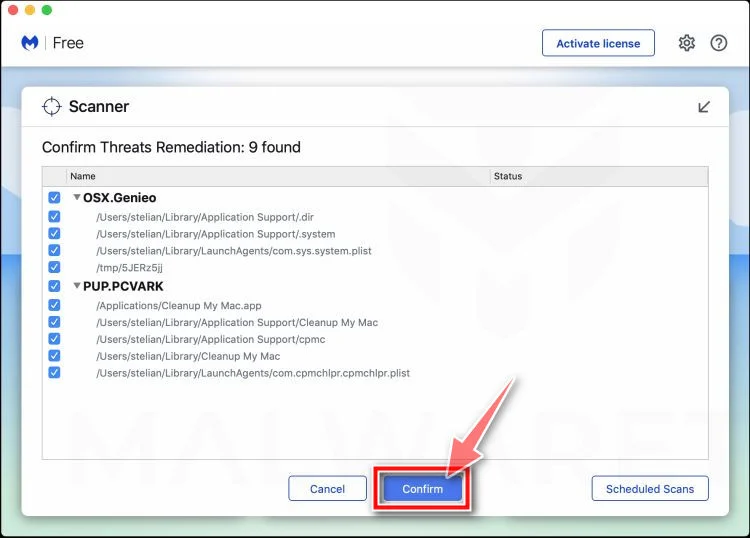
Quarantine the Detected Threats
When the scan is done, you’ll see a list of everything Malwarebytes found. Click the “Quarantine” button to remove all the threats at once.
-
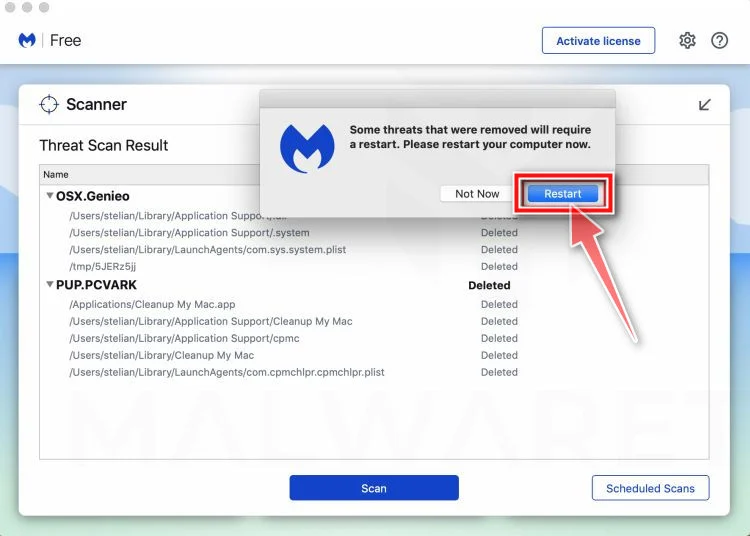
Restart Your Mac
Malwarebytes will now remove all the malicious files it found. Some threats can only be fully removed after a reboot — if Malwarebytes asks you to restart, allow it. Once you’re logged back in, your Mac is clean.
That’s it — your Mac is now free of adware, rogue browser extensions, and other potentially harmful software.
If you are still experiencing problems while trying to remove a malicious program from your computer, please ask for help in our Mac Malware Removal Help & Support forum.
Run a Malware Scan with Malwarebytes for Android
Malwarebytes for Android automatically detects and removes dangerous threats like malware and ransomware so you don’t have to worry about your most-used device being compromised. Aggressive detection of adware and potentially unwanted programs keeps your Android phone or tablet running smooth.
-
Download Malwarebytes for Android.
You can download Malwarebytes for Android by clicking the link below.
Get Malwarebytes for AndroidOpens Google Play in a new tab.Want real-time protection? See Malwarebytes Premium for AndroidMalwarebytes for AndroidScans your phone and removes malware at no cost -
Install Malwarebytes for Android on your phone.
In the Google Play Store, tap “Install” to install Malwarebytes for Android on your device.

When the installation process has finished, tap “Open” to begin using Malwarebytes for Android. You can also open Malwarebytes by tapping on its icon in your phone menu or home screen.

-
Follow the on-screen prompts to complete the setup process
When Malwarebytes will open, you will see the Malwarebytes Setup Wizard which will guide you through a series of permissions and other setup options.
This is the first of two screens that explain the difference between the Premium and Free versions. Swipe this screen to continue.
Tap on “Got it” to proceed to the next step.
Malwarebytes for Android will now ask for a set of permissions that are required to scan your device and protect it from malware. Tap on “Give permission” to continue.
Tap on “Allow” to permit Malwarebytes to access the files on your phone.
-
Update database and run a scan with Malwarebytes for Android
You will now be prompted to update the Malwarebytes database and run a full system scan.

Click on “Update database” to update the Malwarebytes for Android definitions to the latest version, then click on “Run full scan” to perform a system scan.

-
Wait for the Malwarebytes scan to complete.
Malwarebytes will now start scanning your phone for adware and other malicious apps. This process can take a few minutes, so we suggest you do something else and periodically check on the status of the scan to see when it is finished.

-
Click on “Remove Selected”.
When the scan has been completed, you will be presented with a screen showing the malware infections that Malwarebytes for Android has detected. To remove the malicious apps that Malwarebytes has found, tap on the “Remove Selected” button.

-
Restart your phone.
Malwarebytes for Android will now remove all the malicious apps that it has found. To complete the malware removal process, Malwarebytes may ask you to restart your device.
That’s it — your Android phone is now clean — no more malicious apps, adware, or browser redirects.
If you are still having problems with your phone after completing these instructions, then please follow one of the steps:
- Restore your phone to factory settings by going to Settings > General management > Reset > Factory data reset.
- Ask for help in our Mobile Malware Removal Help & Support forum.
Stay Protected: Block Ads and Malicious Sites
Now that your device is clean, keep it that way. Most infections start with a malicious ad or a fake download button — so blocking them at the source is your best defense.
We recommend AdGuard, which blocks malicious ads, phishing pages, and dangerous redirects before they can reach you.
👉 Download AdGuard and browse safely
Frequently Asked Questions About the Fake Jennifer Davidson PayPal Invoice Scam
1. What is the Jennifer Davidson PayPal invoice scam?
This is a phishing scam where scammers send counterfeit PayPal emails supposedly from a Jennifer Davidson requesting $499 immediately. The emails provide a number to call with any “issues”. But the number leads to criminals seeking your financial info.
2. How do the fake Jennifer Davidson invoices appear?
They use PayPal logos and billing codes. They claim you owe $499 to Jennifer Davidson urgently. They create panic to call quickly and supposedly resolve the fake invoice.
3. Why do they want me to call them?
By getting you on the phone, scammers can manipulate you into surrendering credit cards, account logins, SSNs, or remote computer access.
4. What techniques do the scammers use on the phone?
They may pretend to be PayPal agents, insist account verification is required to fix the invoice, warn your computer is infected, threaten account suspension, sell unnecessary services, use personal info to seem legitimate, or demand immediate payment of fictional fees.
5. What are the scammer’s ultimate goals?
They aim to steal enough sensitive personal and financial data to hijack your identity. This allows them to swiftly drain real bank accounts and open fraudulent new lines of credit before victims can react.
6. What should I do if I get a suspicious Jennifer Davidson invoice email?
Do NOT call the phone number provided. Report the fake invoice to PayPal as phishing. Check your PayPal account to confirm if you actually owe money. Delete the scam email immediately.
7. I already called the scammers. What now?
End all contact right away and block their number. Alert your bank and PayPal about potential account compromise. Reset all account passwords. Run malware scans on your devices. Monitor accounts closely and report the scam to authorities. Do NOT provide the scammers with any additional sensitive data or payments.
8. How can I avoid falling for this scam?
Use extreme caution with any unexpected invoices demanding immediate payment verification. Independently confirm bills through official company channels before calling random numbers or providing info to strangers.
9. How can I better secure my PayPal account?
Always use strong unique passwords. Enable two-factor authentication. Frequently check your account for unknown charges. Only link trusted payment sources to PayPal. Never share PayPal account credentials with anybody.
The Bottom Line
The fake Jennifer Davidson PayPal invoice phishing scam exploits PayPal’s reputation and official billing templates to trick recipients. By posing as a trusted online payment platform, the scammers aim to trigger panic and quick call-back compliance from recipients.
But with insight into their psychological tricks, this attack can be recognized before getting hooked. Use extreme caution with any unexpected invoices demanding immediate payment verification. Independently confirm bills are real through official channels only before calling random numbers or providing personal data to strangers.
Remember:
- Verify invoices by contacting the company through official channels only.
- Don’t trust urgent appeals for your private account or financial data.
- Never provide credit cards, account access, or personal information to unsolicited callers.
Stay vigilant against phishing and phone scams. End any questionable interactions right away. With knowledge, modern invoice and payment scams can be defeated. Don’t become another victim of the fake Jennifer Davidson PayPal invoice con.

Join the discussion
0 commentsShare your experience or ask a question about this article.
Discussion
Start the conversation
Have a question or something useful to share? Add the first comment.