

If you’ve ever ordered something online, especially from overseas marketplaces, chances are you’ve come across 17TRACK — a popular website and mobile app that lets users track packages from thousands of carriers around the world. It’s often recommended by sellers on platforms like AliExpress, Temu, and countless independent e-commerce stores. But as its name becomes more common, so do questions from buyers: Is 17TRACK actually legitimate? Is it safe to use? Why are there so many negative reviews online calling it a scam?
The truth is more nuanced than a simple “yes” or “no.” 17TRACK is not a shipping company, nor is it a seller. It’s a tracking aggregator — a tool that displays shipping information from carriers. However, its popularity has also made it a favorite among fraudulent sellers, who exploit the platform’s legitimate services to make their scams look convincing. This confusion often leads frustrated customers to blame 17TRACK for problems it didn’t create.
In this article, we’ll take an in-depth, fact-based look at 17TRACK, how it works, why it’s legitimate, how scammers use it, and most importantly — how to protect yourself when shopping online. If you’ve ever had a package “delivered” but never received it, this guide will help you understand why that happens and what to do next.
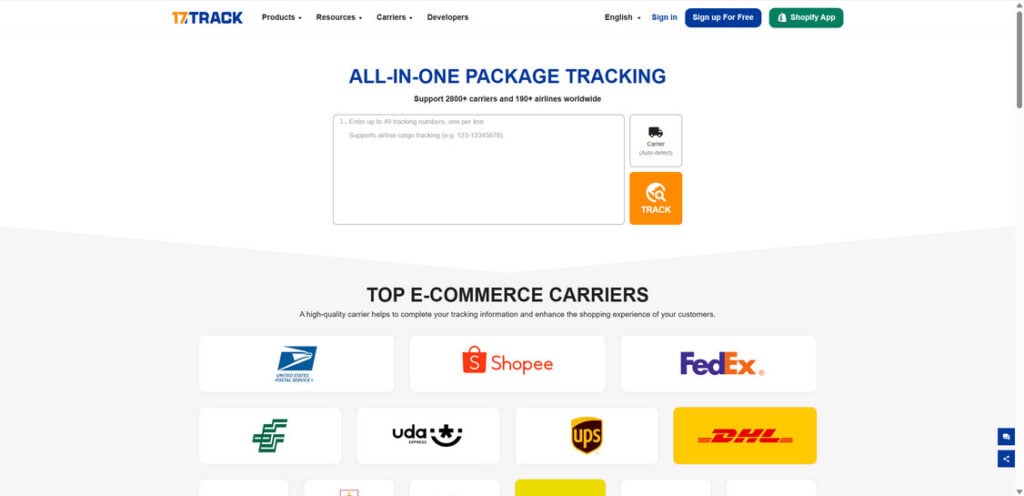
Overview
17TRACK is an online platform (and mobile app) that allows users to input one or multiple tracking numbers and view status updates from many different shipping carriers — domestic, international, postal services, express couriers, etc. According to the company, their service supports “2,800+ carriers” worldwide.
The Business Model
Rather than being a shipping company itself, 17TRACK acts as a tracking information aggregator. As they state on their website:
“We are an information provider specialised in shipment tracking.”
“We do not create any false tracking information … we synchronise from the official database of each carrier directly.”
In simpler terms:
- When a seller or courier generates a tracking number and the parcel is shipped, the carrier updates its internal systems with status information (e.g., “In transit”, “Out for delivery”, “Delivered”).
- 17TRACK collects and displays this information in one interface, so the user does not need to visit each carrier’s site.
- 17TRACK is not responsible for the actual shipping, delivery, or fulfilment of parcels. They clearly state they do not deliver parcels or sell goods.
Why It Exists
International e-commerce makes shipping more complex: different carriers, countries, forms of mail, customs, local postal services, etc. According to the company’s founder letter:
“The idea came out: what if we build a tool to display package info from different carriers and show them in one place?”
From a user’s point of view, this is very convenient: one site, many carriers, one place to check all your parcels.
Is 17TRACK Legitimate?
Evidence of Legitimacy
There are several factors pointing to 17TRACK being a legitimate service:
- Company statements and transparency
- Their “Who are we” letter clearly states their scope: they track; they do not ship.
- Their FAQ explicitly asks: “Is 17TRACK a FAKE/SCAM website?” and answers: “No, 17TRACK is a legit website.”
- They explain their business model: free for everyday users; advanced features (batch tracking, enterprise API) for business users.
- Long-standing presence and usage
The domain is older, the service is widely referenced in forums and e-commerce communities. For many buyers (especially overseas) it has become a default way to check shipment progress. - Integration with merchant platforms
For instance, 17TRACK has a Shopify app (“17TRACK Order Tracking”) that many merchants use to show their customers shipment status. On the Shopify App Store it has a high merchant rating (4.9 out of 5 from over 2,600 reviews) among merchant users.
The “But” Factor: Why Many Think It’s a Scam
Despite the legitimacy of the platform, there are many complaints and negative reviews. Key observations:
- On review aggregators:
- SiteJabber shows 1.5 out of 5 stars from 157 reviews.
- Trustpilot shows 1.6 out of 5 stars (with 8,652 reviews) and numerous complaints that “item never arrived” despite tracking showing “Delivered”.
- Reviews.io records a 1.2 rating and many users accusing 17TRACK of being a “scam”.
- From user forums: “17 track is a good tracking app, but be careful when buying anything from certain sellers!”
- From PayPal community:
“No, 17track isn’t a reputable website. They do not verify that any information provided to them is legitimate, so it is trivial for scammers to show items delivered that were never shipped.” - The common pattern in complaints: a seller sells cheap items, provides a tracking number; tracking (via 17TRACK) shows the parcel moving, then delivered — but the buyer never receives anything.
So: the platform is legitimate as a tool, but many users associate it with scams — often because they used it in a fraudulent transaction, or the seller misused the service to provide false tracking.
Conclusion on Legitimacy
In summary: Yes, 17TRACK is legitimate as a tracking aggregator. No, it does not guarantee delivery or protect you from a seller scam. Understanding this distinction is critical.
Why Users Get Confused: Tracking Good, Delivery Bad
Many of the complaints against 17TRACK stem from misunderstanding what the platform does — and what it doesn’t do. Here are the key factors that lead to confusion or dissatisfaction.
1. Tracking ≠ Delivery
Users often expect that if the tracking number says “Delivered” then the parcel has been delivered to them. But many things can go wrong:
- The parcel may have been dropped at a wrong address or left in a mailbox without notification.
- The seller may have generated the tracking number but not actually shipped the item. The tracking number is real (so shows up in 17TRACK) but the parcel was never sent or is fake.
- The carrier may mark “Delivered” prematurely (e.g., delivered to local courier, not final destination).
- For long overseas shipments: after customs the parcel may stall; local carrier may not provide updates or may lose it. 17TRACK shows “In transit” or “Delivered” based on carrier data, but that data may be delayed or incomplete.
For example, an expert on JustAnswer wrote:
“17 track is just a shipping aggregator and it is frequently used by fraudulent sellers to fake a shipment.”
2. Seller Responsibility vs. Tracking Service
Many negative reviews blame “17TRACK” for the parcel not arriving, when in fact the platform simply displayed what data the carrier provided. As 17TRACK themselves explain:
“The tracking information displayed on 17TRACK is not created by 17TRACK … If your package is not delivered, the best way is to contact your seller or the shipping company.”
Thus, when a parcel never arrives, the failure could be: the seller, the courier, customs, local delivery, or mis-scanning — not necessarily the tracking platform.
3. Abuse of the Platform by Scammers
Some sellers exploit the fact that 17TRACK is well known and trusted by buyers. They provide a valid tracking number, the tracking shows progress, and eventually “Delivered”. That gives the buyer confidence to not open a dispute, while in truth the item never arrives. When the buyer complains, they blame the tracker. Reviewers frequently describe this scenario.
4. Delay in Updates / Lack of Carrier Transparency
If the parcel is shipping internationally, through several carriers, the updates may come slowly, may be inconsistent, or may not show final delivery details (e.g., no “signed by” name, no time of delivery). Users may assume something is wrong when the tracker is slow. According to a JustAnswer discussion:
“Tracking shows delivered but the updates are coming from China… the carrier is not verifiable though tracking number yes.”
How to Use 17TRACK Safely and Effectively
To get the most out of 17TRACK — and to minimise risk of being misled — follow these practical tips.
Check the Seller Before You Buy
- Verify the seller’s reputation: reviews, feedback, how long they’ve been operating, return policy.
- Beware extremely low-price deals from unknown sites, especially overseas. Some of these use valid tracking numbers but fake shipments.
- If the seller insists you use 17TRACK only, be cautious: ask for official carrier and tracking number.
Use 17TRACK Properly
- Go to the correct domain: 17track.net (or official app) — avoid look-alike domains.
- Enter the tracking number without spaces or dashes (sometimes) — the site supports auto-detect of carrier. According to the PayPal Community: “You have to make sure you use 17track.net url so it will lead you to the correct website.”
- If you know the carrier, you can manually assign it for better accuracy.
- Check the carrier’s own website (once you identify the carrier) to cross-verify tracking details. 17TRACK itself says: “You can directly click and visit the official website of each carrier to verify the tracking information.”
Interpret the Tracking Status with Caution
- In transit: Still being shipped; international parcels may take several weeks.
- Arrived at destination country / handed to local carrier: good sign, but not final.
- Delivered: Does not always mean you have it in hand. Always check where/when delivered, by whom, drop-off location, if signature required.
- If status shows “Delivered” but you don’t have the parcel:
- Check your mailbox, side entrance, concierge, neighbours.
- Check if pickup at post office required.
- Contact the seller & local courier for proof of delivery.
- Consider opening a dispute with payment method if you suspect fraud.
Set Realistic Timeframes
- For domestic shipments, expect days to weeks.
- For international parcels (e.g., Chinese e-commerce), expect 2–6+ weeks depending on origin, customs, local delivery. If no update after 4–6 weeks, consider action.
- Keep payment and order records handy.
If Something Seems Off, Take Protective Action
- If tracking number appears valid (shows on 17TRACK) but you get repeated “Delivered” status and nothing arrives — this is a red flag of possible seller fraud.
- Document screenshots of tracking, seller communication, order details.
- Contact your bank or payment provider and file a dispute.
- Leave reviews to warn other buyers.
- Remember: 17TRACK does not guarantee delivery and cannot be held liable for lost or missing parcels (as they state).
Common Complaints and What They Mean
Below are some of the frequent complaints you’ll find online about 17TRACK — and our analysis of what they actually indicate.
Complaint: “Tracking says Delivered but I never got the item”
What this likely means:
- The seller provided a tracking number, it got scanned, and the system registered “Delivered”. But the item might have been delivered to the wrong address, dropped off without notice, or the tracking number was misused by the seller.
- 17TRACK displayed what the carrier reported — they didn’t invent it. If the carrier mis-scanned or mis-dropped, the tracker shows that.
- If the seller never shipped, they used a fake or reused tracking number to make it appear shipped. 17TRACK can’t verify whether the item physically moved — only that the tracker number produced status updates via carrier system.
Complaint: “17TRACK is a scam tracking service”
Analysis:
- Many frustrated buyers equate tracking problems (missing item) with the tracker being the problem. But often the problem lies in the seller, not the tracking service.
- As one reviewer from SiteJabber said: “It is a scam! … It gave a fake tracking number, we followed it daily…and it said Delivered but we never got anything.”
- The review reflects the buyer’s experience, but the fault may not be with 17TRACK, rather with the seller or delivery process. 17TRACK tries to clarify this on its FAQ.
Complaint: “17TRACK website is confusing/slow/outdated”
Analysis:
- Because it aggregates data from many carriers around the world, sometimes updates are delayed, inconsistently formatted, show cryptic source carriers, or do not provide local courier information.
- If you’re tracking a parcel from overseas, you may see the status update stops once it enters your country and local carrier handles it. That doesn’t mean the parcel stopped — just data is less transparent.
- As a merchant review of the app version notes: “The features and the support of this app are great … But the main issue is that as a tracking app, it just doesn’t work due to the fact it doesn’t show real-time results. There is a 3 to 6 hour de-sync from what the tracking on their main website.”
Complaint: “The seller told me ‘Track via 17TRACK’, so the seller must be legit”
Analysis:
- Some scammers use 17TRACK hyperlink in their order confirmation to give a veneer of legitimacy. However, detecting that the seller uses 17TRACK is not sufficient to trust the seller.
- Always check the seller’s reputation independently, shipping terms, return policy, and payment protections.
How 17TRACK Is Frequently Used by Scam Shopping Websites
While 17TRACK itself is a legitimate package tracking platform, it has also become a common tool in online shopping scams, especially those linked to low-quality or fraudulent Chinese e-commerce websites. Understanding this connection is key if you want to protect yourself as a buyer.
Why Scammers Use 17TRACK
Many scam shopping websites — particularly those based in or shipping from China — exploit the credibility of 17TRACK to make their fraudulent stores look more legitimate. These sites often sell extremely cheap products or make exaggerated claims about the quality and features of their items. Once a buyer places an order, the scammers provide a real tracking number that can be looked up on 17TRACK.
Because 17TRACK is a trusted global tracking platform, many buyers assume the tracking number itself proves the seller is real. But in reality, scammers may:
- Reuse old tracking numbers that show a “Delivered” status for an unrelated shipment.
- Ship extremely cheap or random items instead of what the buyer actually ordered.
- Provide fake or misleading tracking updates to delay chargebacks or disputes.
- Create a false sense of security so the buyer doesn’t act quickly.
Common Scam Pattern Using 17TRACK
- The buyer orders an item from a suspicious website.
- A few days later, the website emails a 17TRACK tracking number.
- The buyer enters the number on 17TRACK and sees the package is “in transit.”
- Weeks later, the tracking status changes to “Delivered.”
- The buyer receives either a worthless item or nothing at all, but the scammer now claims “proof of delivery.”
Why Chinese Scam Websites Love 17TRACK
- 17TRACK supports thousands of Chinese logistics companies, making it easy for sellers to generate tracking numbers that look legitimate.
- Many overseas buyers are unfamiliar with Chinese carriers and can’t verify the details easily.
- By showing tracking progress on 17TRACK, scammers make their fake online stores seem more professional and trustworthy.
- Buyers are less likely to file a dispute right away because they see “movement” on the tracker.
Important Reminder
17TRACK is not at fault for this. The platform only displays tracking information from shipping carriers. It doesn’t verify what was actually shipped or whether the seller is honest. But this very neutrality is why scammers use it: they rely on 17TRACK’s reputation to give their operations a layer of credibility.
Key TakeAway: Final Verdict
- 17TRACK is legitimate as a tracking information tool. It aggregates data from carriers and enables users to view shipment status in one place.
- However, the presence of a tracking number or updates on 17TRACK does not guarantee that your parcel will arrive, or that the seller is trustworthy.
- Many negative experiences revolve around sellers misusing valid tracking numbers (or re-used numbers) to create the illusion of shipping, or courier/last-mile failures. These are seller/courier issues, not the tracking platform’s fault.
- As a consumer, you should:
- Use 17TRACK as one tool among many (carrier website, seller history, payment protections).
- Be cautious with unknown sellers, especially those overseas offering very low prices and relying solely on “tracking shows delivered” as proof.
- Understand that when tracking says “Delivered” but you don’t have the item, you still need to act: contact seller, carrier, payment provider, keep records.
- For merchants and businesses: using 17TRACK (or its enterprise features) can improve customer experience, but you must still ensure you work with reliable shipping methods, provide clear communication, and handle issues when parcels go missing.
Frequently Asked Questions (FAQ)
Q1. If 17TRACK says “Delivered”, does that mean I got the package?
A1. Not necessarily. The “Delivered” status means that according to the carrier’s system the parcel was scanned as delivered (or handed off). It does not guarantee that you personally received it, or that the drop-off location was correct. You should still check locally, ask neighbours, check if signature was required, and verify with the carrier or seller.
Q2. Can I trust any seller who uses 17TRACK for their orders?
A2. No. The use of 17TRACK by a seller is neither a guarantee of credibility nor an assurance of successful delivery. It just means the seller provided a tracking number that is trackable. You still need to evaluate the seller’s reputation, payment protections, shipping terms, and guarantee policies.
Q3. What should I do if the tracking number works but I never get the parcel?
A3. Start by verifying with the carrier (via their website or customer service) to check how and where the parcel was delivered. Contact the seller for proof of delivery (signature, photo). If you paid via a protected method (credit card, PayPal) and waited a reasonable time (e.g., 4–6 weeks for international), consider opening a dispute or chargeback and provide documentation (order, tracking, screenshots, seller communication).
Q4. Does 17TRACK charge me to track a parcel?
A4. For most everyday users, no. 17TRACK offers free tracking for standard use. They also offer paid or enterprise features (batch tracking, API access) for business users.
Q5. Why do I sometimes see “No carrier found” or the tracking stops updating?
A5. Because 17TRACK relies on carrier data. If the parcel is handled by a lesser-known local courier, or if the tracking number has not been updated in the carrier system, the information may be missing or delayed. Also, once the item enters the destination country, updates may become less frequent. In those cases, you may need to contact the carrier or seller directly.
Final Thoughts
In an age where cross-border e-commerce is booming and shipping involves multiple carriers, tools like 17TRACK are incredibly useful. They provide transparency, convenience, and a central place to monitor your shipments. But they are not a panacea. They do not replace due diligence when buying online, particularly from unfamiliar sellers or overseas markets.
If you use 17TRACK with the correct expectations — as a tracking tool and not a guarantee — you’ll get real value from it. Just remember: delivery problems often originate with the seller or courier, not with the tracker. So, stay vigilant: check seller reputation, retain proof of purchase, monitor tracking, and act promptly if your item doesn’t arrive.
When you keep that perspective, you can safely and confidently use 17TRACK as part of your online-shopping workflow. And you’ll be informed enough to know when “tracking looks fine but nothing arrived” means you may be dealing with a seller problem — not just the platform.








