

If you’ve scrolled through TikTok or Instagram recently, chances are you’ve seen ads for the Mochi Phone™. With pastel clouds, dreamy backgrounds, and influencer-style videos showing people “taking a break” from their smartphones, it’s designed to appeal to Gen Z’s nostalgia for the Y2K era.
The marketing sounds ideal — a compact flip phone that connects to Wi-Fi, lets you stream music, browse social media, and still keeps you “offline enough” to feel free from the chaos of constant notifications.
However, as with many viral gadgets sold online, the real question is: what are you actually buying?
In this article, we’ll dive into what the Mochi Phone is, where it really comes from, how the operation works, and what you should do if you’ve already placed an order.
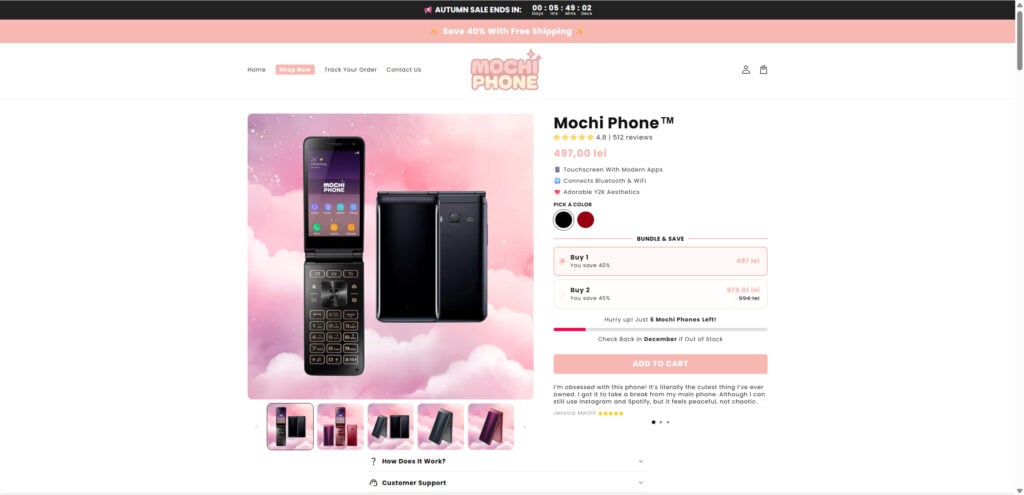
Mochi Phone Overview
The Mochi Phone™ website advertises the device as a minimalist yet powerful flip phone. It’s supposedly touchscreen-enabled, compatible with modern apps like Instagram, Spotify, and Google Maps, and offers Wi-Fi and Bluetooth connectivity. The sales pitch mixes nostalgia with practicality: “Touchscreen with Modern Apps — Adorable Y2K Aesthetics.”
The Promise
According to its official site (mochiphone.com), the product description emphasizes three selling points:
- Touchscreen + Physical Keypad Hybrid — Offering the best of both worlds: tactile satisfaction and a smartphone-like display.
- Connectivity Options — Claims to include Wi-Fi, Bluetooth, GPS, and 3G support.
- Android OS with Access to Google Play Store — Suggests that users can download and use apps such as Instagram, Spotify, and Google Maps.
It is marketed at around =≈ $110, sometimes “discounted” from a higher fake price, with a countdown timer creating urgency and banners such as “Save 40% + Free Shipping.”
On the surface, it sounds like a great deal — a fashionable device that does everything your main phone does, but with fewer distractions.
However, once we start analyzing the details, the story begins to fall apart.
1. The Design and Imagery
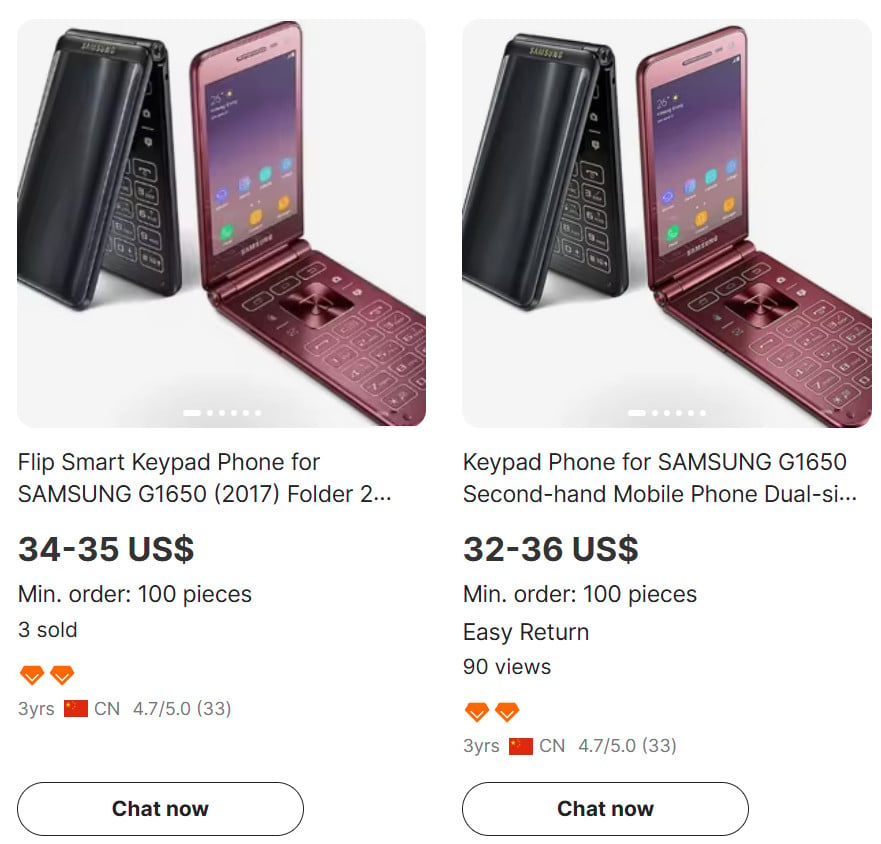
The Mochi Phone’s visuals look strikingly similar to an old Samsung flip smartphone — specifically the Samsung G1650 Folder 2 (2017 model). The resemblance isn’t coincidental.
A quick search on wholesale platforms like AliExpress or Alibaba reveals nearly identical phones listed under names like “Flip Smart Keypad Phone for Samsung G1650 (2017)” priced at $32–36 USD per unit, with minimum bulk orders of 100 pieces.
This indicates that the Mochi Phone is most likely a rebranded, refurbished, or copied version of that outdated model, being resold at over three times the price to Western consumers under a catchy name and pastel-themed marketing.
Even the product photos used on mochiphone.com appear copied or slightly altered versions of the images used on those wholesale listings, including the same angle, lighting, and background placement — a classic sign of dropshipping operations where sellers reuse stock photos rather than taking their own pictures of inventory.
2. Questionable Technical Specifications
The site claims that the Mochi Phone runs Android 8.1, has 2GB of RAM, 16GB of storage, GPS, compass, gyro sensor, FM radio, and a dual camera setup (8MP rear + 5MP front).
But no independent source — not a single verified reviewer, unboxing video, or tech blog — has been able to confirm any of these specs.
This lack of verifiable proof raises doubts:
- No sample photos or screenshots from the actual device are shown.
- The so-called “reviews” on the site are generic and likely fabricated.
- The app icons visible in product images are consistent with Android 5.1 or earlier, not Android 8.1.
In addition, the phone’s hardware (judging by identical models on Alibaba) suggests it’s an outdated 3G flip device that may not support Google Play Store or even stable Wi-Fi connections in modern networks.
3. Limited Company Information
A legitimate electronics brand typically provides at least:
- A business registration number or company name.
- A physical address (office or warehouse).
- A working phone number or chat support option.
- Verified social profiles with customer engagement.
MochiPhone.com lists none of these.
The only contact option is a single email address — support@mochiphone.com. No phone number, no physical address, no live chat, and no verifiable ownership details.
When websites avoid sharing company identity and rely on untraceable contact methods, that’s a strong indicator of a temporary, dropshipping-based e-commerce setup.
4. Marketing Red Flags
Scrolling through the website, several typical manipulative marketing tactics stand out:
- Fake Countdown Timers: “Autumn Sale Ends In 00:05:49:02.” These reset automatically every time you refresh or revisit the page — a clear psychological trick to rush buyers.
- Scarcity Claims: “Only 6 Mochi Phones Left!” — again, these are scripted to update dynamically and have no relation to real inventory.
- Discount Inflation: A 40% off banner that implies a fake “original price” to exaggerate the sale value.
- “Free 1-Year Warranty” and “30-Day Money Back” Guarantees: These are often unenforceable in dropshipping setups, since the seller does not control the supply chain or warranty terms of the product.
5. Lack of External Reviews
No trace of the Mochi Phone™ exists on:
- Trustpilot
- YouTube Tech Review Channels
- Facebook Verified Pages
- Independent Blogs or Forums
Every positive “review” shown on the MochiPhone website is most likely self-generated, using generic female names, identical phrasing, and AI-generated avatars.
The absence of any verified, independent customer feedback — despite claims that the phone is “the Internet’s new obsession” — is a significant warning sign.
6. Connection to Common Dropshipping Patterns
When comparing the Mochi Phone store structure with hundreds of known dropshipping sites, multiple similarities emerge:
- Shopify store template with minimal customization.
- Pink/neutral aesthetic used to appeal to younger audiences.
- Rebranded old products (usually from Alibaba) marketed with modern emotional hooks.
- “Bundle & Save” upsells and fake urgency pop-ups.
This combination is typical of short-lived viral stores that rely on impulsive TikTok traffic, cash out fast, and disappear within months.
7. Price Discrepancy and Product Source
Let’s put numbers into perspective.
- Alibaba Supplier Price: $32–35 USD per unit.
- Retail MochiPhone Price: ~$110 USD.
That’s a profit margin of over 200–250% per unit, excluding shipping. Such a high markup is standard in dropshipping, where sellers rely on emotional marketing rather than product innovation.
How The Operation Works
To understand why the Mochi Phone exists and why so many similar products flood social media, we must look at how the dropshipping system functions from behind the scenes.
Here’s a step-by-step breakdown of how operations like MochiPhone.com typically work.
Step 1: Identifying a Viral Niche
Dropshippers constantly monitor TikTok trends and Google keyword data to find niches that evoke emotion or nostalgia — like the Y2K aesthetic, digital detox, or retro flip phones.
They know that Gen Z users crave minimalism but still want stylish devices. Thus, they choose an old, cheap Android flip phone model from 2017 and rebrand it as a new, cute gadget with dreamy marketing.
Step 2: Sourcing from Alibaba or AliExpress
Instead of manufacturing anything, they go to wholesale sites like Alibaba. There, they find bulk listings of Samsung G1650 Folder 2 or refurbished copies made by generic Chinese factories.
These cost around $30–35 USD each, sometimes less if purchased in bulk.
Dropshippers order one or two units (for photography or influencer use) and set up an online store pretending to be an official brand.
Step 3: Building a Shopify Store
Next, they create a Shopify store under a catchy name — in this case, Mochi Phone™.
They use soft pastel colors, cute fonts, and calming imagery to appeal to young audiences.
They install plugins for:
- Countdown timers
- Fake reviews
- Pop-up sales notifications
- Urgency banners
All of these are designed to create trust and excitement, even though the brand itself has no verified existence.
Step 4: Copying Product Images and Descriptions
Because they don’t produce the phone, they take existing photos from the Alibaba listing — sometimes with the Samsung logo blurred or edited out.
The same product angles, same reflections, and even the same screen interface can be seen on both sites.
They then rewrite the product description in an emotional, aspirational tone, using buzzwords like “mindful living,” “Y2K vibes,” or “social media detox.”
Step 5: Inflating the Price and Creating Fake Discounts
A basic rule of dropshipping psychology: never sell at the real value.
Instead of listing it at $35 (true cost), they set it at $110 and claim a “40% OFF” discount, making it appear like a rare deal.
They also show fake “stock alerts” — for example, “Just 6 Mochi Phones Left!” — even though the supplier can produce thousands on demand.
Step 6: Launching Aggressive TikTok & Instagram Ads
Once the website looks polished, they invest in social-media advertising.
Short clips show young people unboxing the phone, often using royalty-free background music and captions like:
- “POV: You got the Mochi Phone for your social detox ✨”
- “This phone is so peaceful compared to my iPhone 🩷”
- “It has Wi-Fi, Spotify, and a touchscreen. I’m obsessed.”
These videos are designed to go viral organically, leveraging the aesthetics of calmness and nostalgia. In many cases, they even pay micro-influencers or run Spark Ads to make it look “real.”
Step 7: Processing Orders via Dropshipping Fulfillment
When someone buys a Mochi Phone from mochiphone.com, the store owner doesn’t ship anything themselves.
Instead, the order details are forwarded to a Chinese supplier (usually through AliExpress or CJ Dropshipping), who ships the phone directly to the customer.
This is why:
- Shipping times often exceed 2–4 weeks.
- There’s no real quality control.
- Returns are complicated or ignored.
The seller earns their profit instantly and rarely handles after-sales service.
Step 8: Customer Frustration and Return Barriers
Once buyers receive the phone, they often discover it’s:
- A refurbished 2017 device with outdated software.
- Missing promised features like Google Play Store or GPS.
- Preloaded with generic Chinese apps and limited language settings.
Trying to return it becomes an ordeal — the support email either ignores the request or offers only partial refunds after buyers cover expensive international return shipping.
Step 9: Website Disappears or Rebrands
After several months, once negative reviews begin to surface or chargebacks pile up, the store quietly disappears or rebrands.
Sometimes the same operators launch new stores under different names — Luna Phone, Yumi Flip, DreamFlip, or VintageSmart™ — recycling the same templates and ads.
This cycle repeats continuously in viral dropshipping trends.
Step 10: The Real Winners
The only people profiting significantly are:
- The dropshippers (who mark up cheap imports by 200–300%).
- The ad platforms (TikTok, Meta) hosting the campaigns.
- The Chinese wholesalers selling refurbished phones.
Consumers, on the other hand, are left with outdated devices, false expectations, and little to no customer protection.
What To Do If You Have Bought The Mochi Phone
If you’ve already purchased the Mochi Phone, don’t panic — but do take action quickly. Here’s a practical step-by-step guide to minimize loss and protect yourself.
1. Verify Your Order and Payment
Check your email for:
- An order confirmation.
- A transaction receipt showing the payment processor (Shopify Payments, Stripe, or PayPal).
- Any shipping or tracking updates.
If the email looks generic or lacks detailed contact information, that’s a sign of an unverified store.
2. Cancel the Payment (If Still Pending)
If your payment is still processing, immediately contact your bank or payment provider to cancel or dispute the transaction.
- For PayPal, go to Activity → Report a Problem → Item Not Received or Significantly Not as Described.
- For credit/debit cards, contact your bank’s fraud department and explain that you suspect the store is misrepresenting the product.
Banks often issue chargebacks within 60 days of the purchase if you act fast.
3. Document Everything
Take screenshots of:
- The product page (with price and description).
- All emails or messages exchanged.
- Any claims made by the seller (e.g., “30-Day Money-Back Guarantee”).
Keep these as evidence if you need to escalate to your card issuer or consumer-protection agency.
4. Track the Shipment (If Already Shipped)
Most dropshipping sellers provide a tracking number that links to Chinese logistics sites like 17track.net or Cainiao.
Be patient but realistic — shipping can take 2–5 weeks. If there’s no movement after 15 days, contact your payment provider to open a dispute.
5. Inspect the Product Upon Arrival
When (or if) the phone arrives:
- Check for branding differences. Does it actually say “Mochi Phone” or “Samsung Folder 2”?
- Verify whether it matches the promised specs — Android version, camera resolution, and storage.
- Note any defects, scratches, or packaging inconsistencies.
If it’s not what you expected, proceed to request a refund immediately through your payment method, not the seller’s website.
6. Request a Refund the Right Way
Avoid relying solely on the seller’s email support. Instead:
- File a formal complaint via PayPal Buyer Protection or your bank’s chargeback process.
- Mention that the product description was misleading and that the store provides no verifiable contact or return address.
- Attach photos of the received product as evidence.
If your payment provider sides with you, you’ll get your money back even if the seller never replies.
7. Report the Website
Help protect others by reporting mochiphone.com to:
- Scamwatch.gov (if you’re in Australia)
- FTC.gov/complaint (if in the U.S.)
- Europol or econsumer.gov (for EU buyers)
- Your local consumer-protection authority
You can also warn others by posting about your experience on Reddit (r/Scams) or Trustpilot.
8. Strengthen Your Online Shopping Awareness
To avoid similar traps in the future, always check for:
- Real company registration details.
- Verified customer reviews outside the website.
- Product availability on legitimate marketplaces (Amazon, Best Buy, official brand sites).
- Grammar and design quality — authentic brands rarely use countdowns or “Only 6 left” tactics.
The Bottom Line
So, should you buy the Mochi Phone?
Based on all available evidence — no.
The Mochi Phone™ is not a unique product — it’s a rebranded 2017-era flip smartphone being resold through dropshipping. While it might function as a basic phone, the marketing surrounding it is deceptive. The claims of a modern Android experience, GPS, and app support are unsubstantiated.
If you’re looking for a true minimalist or “digital detox” device, consider reputable brands such as:
- Light Phone II — designed specifically for mindful use.
- Nokia 2660 Flip or Nokia 2720 V Flip — genuine feature phones from recognized manufacturers.
These offer real warranty coverage, reliable support, and transparent specifications.
Conclusion
The Mochi Phone™ is a textbook example of viral dropshipping in 2025 — clever marketing, cute branding, emotional storytelling, and a huge markup on a cheap refurbished device.
While it’s not necessarily an outright scam (you may receive a physical phone), it fails to deliver on its promises and operates under deceptive advertising practices.
Before spending your money, always research the company behind viral gadgets. A few minutes of fact-checking can save you weeks of frustration and a wasted $100.
If you value peace of mind, reliability, and honest product descriptions, skip the Mochi Phone and choose a device from a verified manufacturer.








