

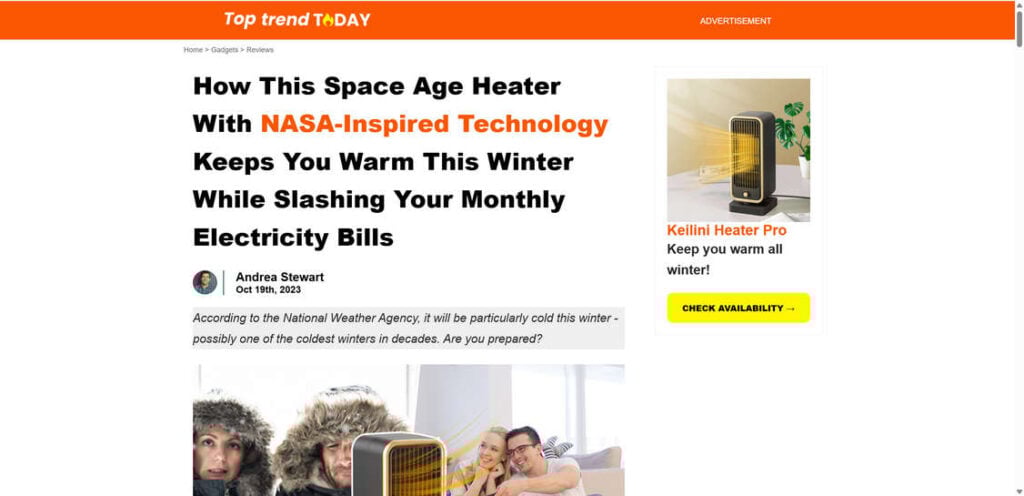
The Keilini Heater Pro has exploded across social media, online ads, and so-called “tech review” websites, promising to be the miracle plug-in heater that will warm your home instantly while cutting your energy bill to nearly zero. The claims sound almost too good to be true. But is it really a revolutionary product, or just another overhyped gadget riding the wave of aggressive marketing?
This article dives deep into what the Keilini Heater Pro actually is, how it works, the red flags behind its promotion, and what to do if you’ve already bought into the hype. By the end, you’ll have a clear picture of whether the Keilini Heater Pro is worth your money or something to avoid.
Overview of the Keilini Heater Pro
The Keilini Heater Pro is marketed as a compact, plug-in electric heater that uses ceramic heating elements to deliver “instant heat.” The sales pages often claim it can:
- Heat up any room in just 30 seconds.
- Cut your heating bills by up to 60%.
- Replace bulky home heating systems with a small, portable solution.
- Operate quietly, safely, and efficiently.
- Cost just pennies to run each month.
At first glance, these claims make it seem like the ultimate winter solution, especially for those struggling with rising energy costs. But let’s break it down.
Mass-Produced and Rebranded
The first major thing to understand is that Keilini Heater Pro is not a unique invention. The device itself is a generic plug-in space heater mass-produced in China. The exact same model, often without branding, is available on platforms like AliExpress, Alibaba, Temu, and Amazon for as little as $3–$10.
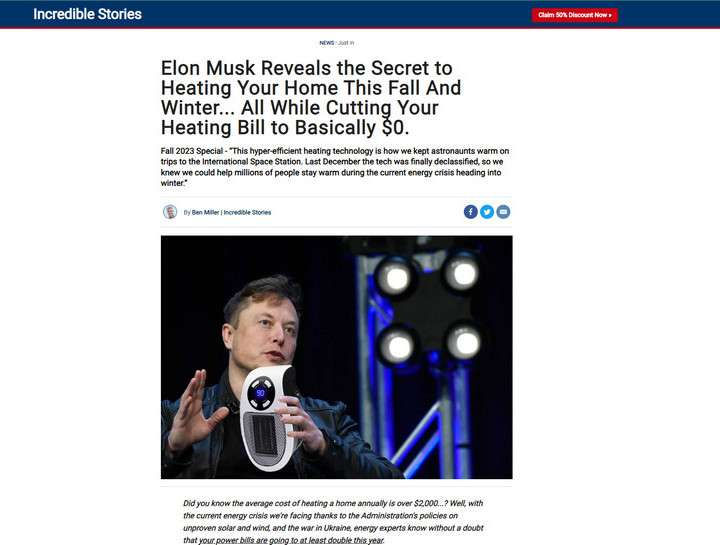
Dropshipping companies rebrand this product under names like Eco Heater, Ultra Heater, BlumeHeat Heater, HexaHeat Heater, InstaHeat, and more. They then create flashy marketing campaigns with AI-generated ads, fake testimonials, and even fabricated celebrity endorsements to sell it for $49–$99 or more.
The Illusion of Credibility
If you’ve seen the advertisements for Keilini Heater Pro, you’ve probably noticed:
- Fake endorsements claiming that Elon Musk, Joanna Gaines, or even NASA scientists are behind the product.
- Fear-driven copywriting pointing to rising energy costs and “greedy corporations.”
- Urgency tactics like “Only 85 units left” or “60% discount ends today.”
- Stock photos and AI-generated reviews made to look like authentic customer feedback.
These marketing tricks are carefully designed to create urgency and bypass skepticism.
What Keilini Heater Pro Really Is
In reality, the Keilini Heater Pro is nothing more than a small personal space heater. It works the same way any plug-in ceramic heater does. While it can provide localized warmth if you’re sitting close to it, it simply does not have the capacity to heat an entire room, let alone a whole house.
For comparison:
- A standard electric space heater for small rooms usually outputs 1,500 watts of power.
- The Keilini Heater Pro typically outputs 500–800 watts, which is not nearly enough to heat more than a few feet around the device.
That means the bold promises in the ads are technically impossible.
Reported Customer Experiences
Reviews across forums, Trustpilot, Reddit, and consumer complaint boards paint a consistent picture:
- Many customers say the heater barely warms the air immediately around it.
- Others report delayed shipping times, since products are often shipped directly from warehouses in China.
- Some have experienced issues with returns or refunds, as dropshipping companies often operate under vague or untraceable names.
- Complaints also highlight safety concerns, including overheating when left plugged in for long periods.
While you may receive a physical heater in the mail, it is unlikely to perform anywhere close to the claims advertised.
How This Dropshiping Operation Works
The Keilini Heater Pro operation follows a calculated deception playbook to overcharge consumers and suppress negative reviews. Here’s an in-depth look at the process.
Phase 1: Crafting Misleading Social Media Ads
The scam starts with carefully designed social media ads portraying Keilini Heater Pro as a remarkable room heating innovation. The scammers routinely run ads on platforms like Facebook, Instagram, YouTube, TikTok and more.
These compelling ads tout things like “rapid 2 minute heating” and use fake reviews, certification badges and urgency tactics to generate clicks to their sales funnels quickly.
Some examples of the dubious claims and techniques used in the ads include:
- “Heats up any room from top to bottom in just 2 minutes!” But real reviews reveal slow, modest warming.
- “Slash energy bills by 30%!” This vastly overstates any savings from running these units.
- Fake 5-star review snippets like “My new favorite purchase!” when its heating ability is mediocre.
- “50% off limited time deal!” and other countdown timers or scarcity claims urging immediate purchase.
- Showing people happily bundled up and warm near the heater – when it can’t heat nearly that much area effectively.
The goal is to present an extremely exaggerated depiction of Keilini Heater Pro’s abilities in order to generate a flood of clicks driven by hype.
Phase 2: Deceptive Sales Pages Confuse and Upsell
After clicking one of the misleading social media ads, consumers are funneled to shady sales pages with more dubious claims and high pressure sales tactics.
These pages utilize additional tricks like:
- Fake limited-time discounts like “50% off today only!” to panic buyers.
- Fake scarcity claims of “only 29 left!” to also urge hurried purchases.
- Aggressive upselling with options to buy 2, 3 or 5 Keilini Heater Pro units at once.
- Burying negative reviews and limiting Q&A sections to suppress research.
- Repeating the same exaggerated claims about fast heating, energy savings, safety, etc.
- No company information, address or contact details provided anywhere on the site.
The combative sales pages aim to limit research into the true source of the units while pushing impulse bundle purchases of multiple overpriced heaters.
Phase 3: Refusing Returns and Ignoring Complaints
Unfortunately, many consumers realize post-purchase they have been scammed. When attempting to return the underpowered Keilini Heater Pro units, common responses include:
- Ignoring emails or sending back automated responses only.
- Customer service numbers that hang up, disconnect or forward to unrelated companies.
- Refusing returns and claiming “you missed the 30 day refund window.”
- Rejecting credit card chargebacks by using fake shipping information and details.
- Forcing unwanted “exchanges” for the same dubious heaters, rather than refunds.
- No way to contact the company or people behind the scam.
This pattern of refusing returns and obscuring negative feedback is a key indicator of a fly-by-night scam operation with no real customer support after payments are collected. Legitimate businesses do not operate like this.works in the same way as countless other personal heaters on the market, only at a marked-up price.
Not the First Time: A Long Line of Rebranded Heaters
If Keilini Heater Pro feels familiar, that’s because it is. This is not the first time we’ve seen a small, underpowered plug-in heater marketed as a revolutionary solution to winter heating costs. The same device, or near-identical models from the same factories, have been rebranded and relaunched under countless names over the past several years.
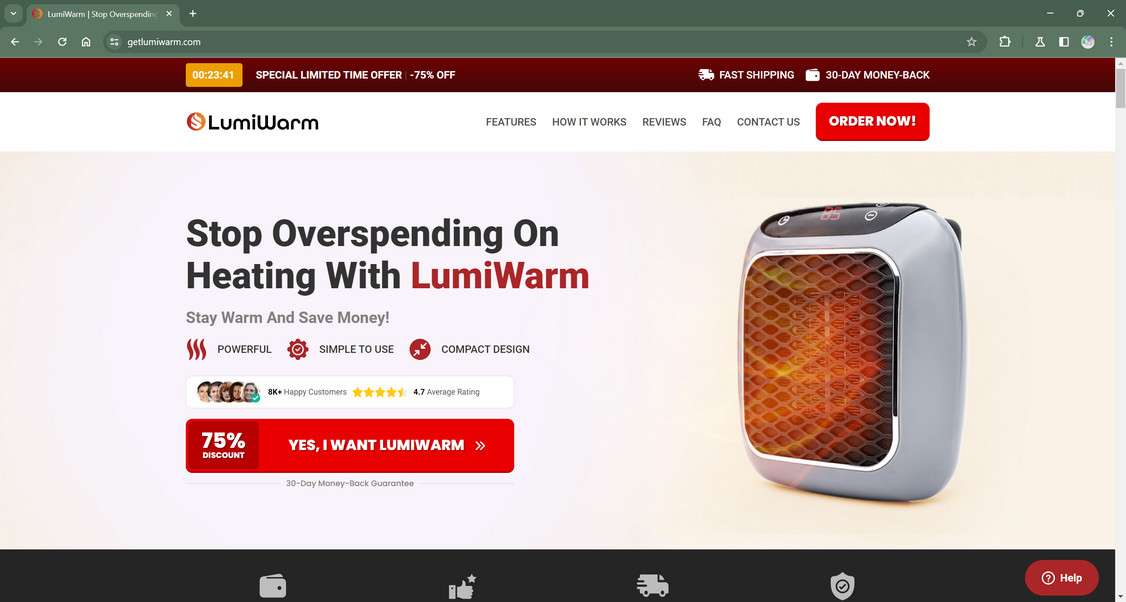
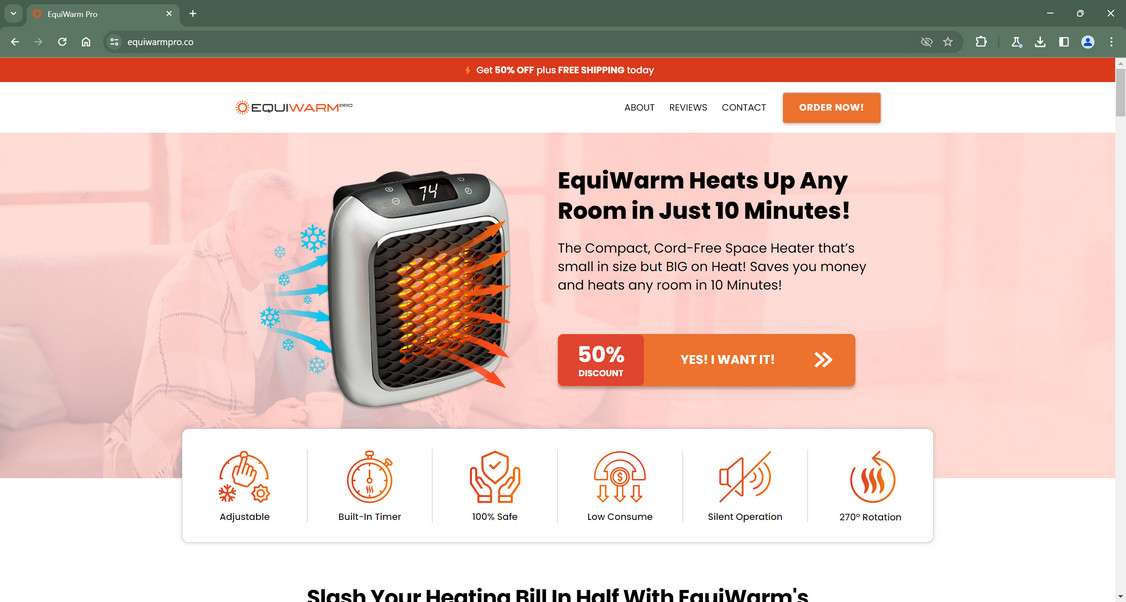
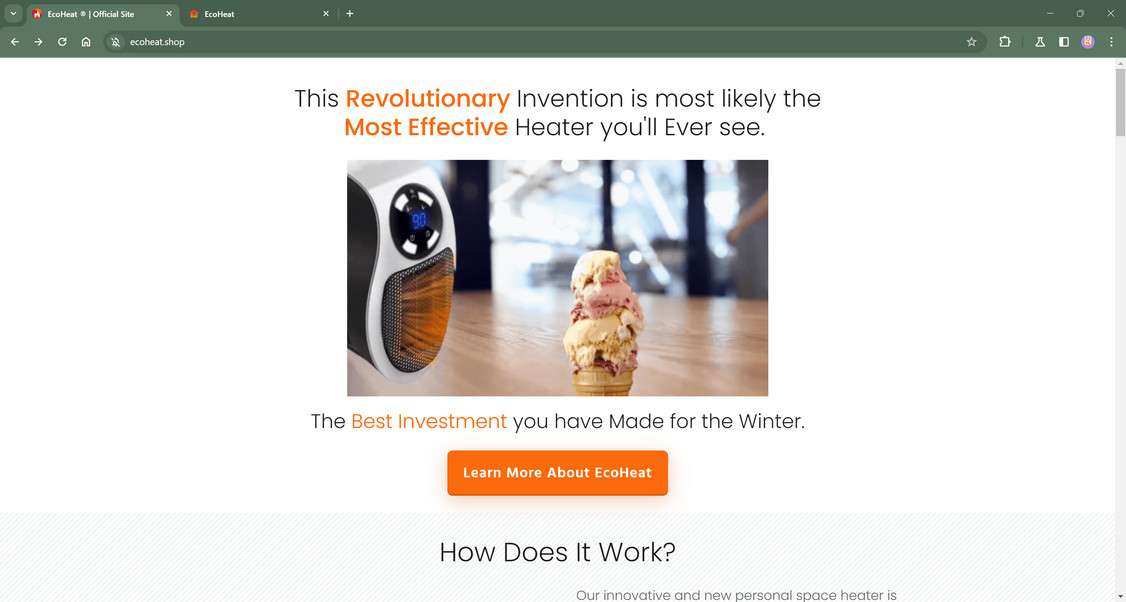
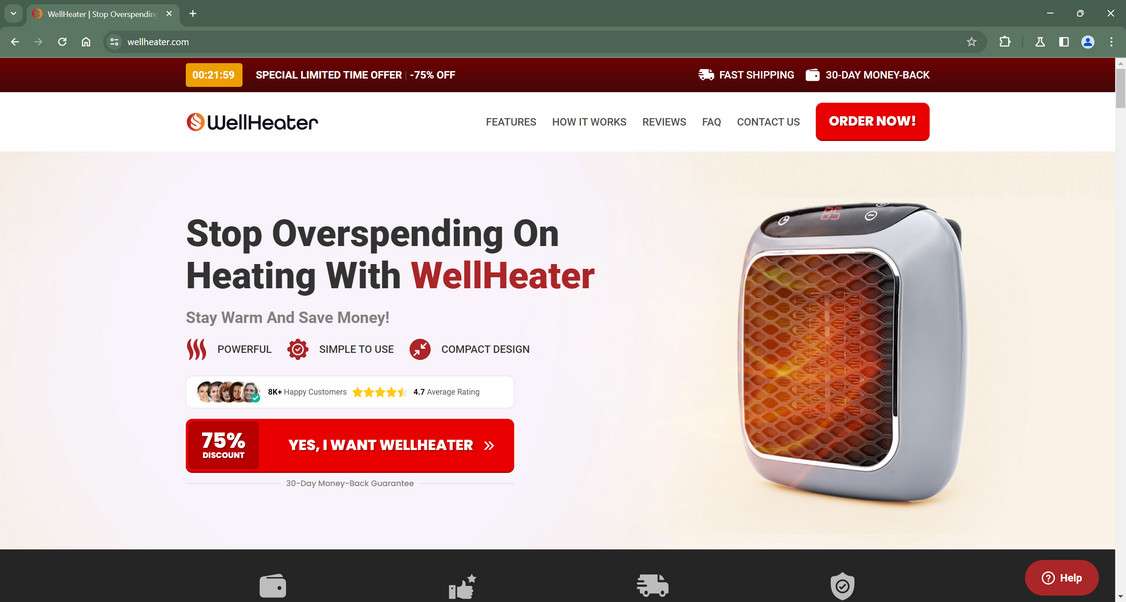
Brands like EcoHeat, Hot Amigo, Life Heater, Warmool Heater, and Cosmo Heater all followed the exact same formula:
- A single-product website filled with over-the-top promises.
- Countdown timers and “only a few left in stock” warnings.
- Claims of instant heat, huge energy savings, and advanced technology.
- Photoshopped celebrity endorsements and AI-generated testimonials.
Each time one name begins attracting too many negative reviews or consumer complaints, the operation simply shutters the site and relaunches with a fresh brand identity. The packaging may change, the name may sound new, but the core product is the same low-cost, generic plug-in heater.
This cycle of continuous rebranding is a hallmark of dropshipping scams. It allows sellers to outrun bad press, negative Trustpilot reviews, and refund requests, while keeping the funnel of new buyers wide open.
The pattern is clear:
- EcoHeat made waves a few winters ago with identical promises.
- When skepticism grew, Hot Amigo appeared with the same device under a new name.
- Then came Life Heater and Warmool Heater, marketed as the “latest innovation” in portable heating.
- Cosmo Heater surfaced more recently with the same exaggerated copywriting.
- Now, the same cycle repeats with Keilini Heater Pro.
The continuity is undeniable. If you’ve seen one, you’ve seen them all. These heaters may arrive in your mailbox, but they will not deliver on their bold claims. Instead, they represent the same recycled formula designed to lure in buyers before rebranding and repeating the process under yet another name.
What to Do If You’ve Fallen Victim to the Keilini Heater Pro Hype
If you’ve already purchased a Keilini Heater Pro and feel misled, you’re not alone. Here are steps you can take:
1. Request a Refund Immediately
- Contact the seller using the email or phone number provided in your order confirmation.
- Clearly state that the product does not perform as advertised.
- Use the phrase “not as described,” which can strengthen your case for a refund.
2. File a Chargeback with Your Bank or Credit Card
If the seller refuses to refund:
- Contact your bank or credit card provider.
- Explain that you were sold a product under false advertising claims.
- Request a chargeback to reverse the transaction.
3. Report the Seller
You can report misleading advertising practices to consumer protection organizations such as:
- The Federal Trade Commission (FTC) in the U.S.
- Action Fraud in the UK.
- Your local consumer rights authority if outside these regions.
4. Leave an Honest Review
Posting your experience online can help others avoid falling for the same trap. Use sites like:
- Trustpilot
- Reddit consumer forums
- Better Business Bureau (BBB)
5. Safer Alternatives
If you genuinely need a space heater:
- Purchase from trusted brands such as Lasko, Honeywell, or DeLonghi.
- Look for UL-certified products for guaranteed safety standards.
- Choose a heater with enough wattage (1,500 watts) for the room size you want to heat.
Frequently Asked Questions About Keilini Heater Pro
Is Keilini Heater Pro a scam?
Keilini Heater Pro is not technically a scam in the sense that you will usually receive a product in the mail. However, it is highly misleading. The marketing suggests that this small plug-in heater can warm an entire room in seconds and cut your energy bills by more than half. In reality, it is a low-powered personal heater that can only warm a small area directly in front of it. The exaggerated claims, fake endorsements, and inflated pricing are the real issue.
Does Keilini Heater Pro really work?
Yes, it works as a tiny ceramic fan heater, but not as advertised. It may provide a small amount of localized heat if you are sitting very close to it, such as at a desk. It will not:
- Heat a medium or large room.
- Warm your home in 30 seconds.
- Replace your central heating system.
If you expect it to perform like a full-sized heater, you will be disappointed.
How much electricity does Keilini Heater Pro use?
Keilini Heater Pro consumes electricity just like any other plug-in heater. Depending on the model, it uses between 500 to 800 watts per hour. This is not more efficient than other heaters. In fact, it’s less powerful than most standard space heaters, which typically run at 1,500 watts. There is no secret technology that makes it cheaper to run.
Why are there so many different names for the same heater?
This heater has been rebranded and resold under multiple names including EcoHeat, Hot Amigo, Life Heater, Warmool Heater, Cosmo Heater, and now Keilini Heater Pro. The reason is simple: once negative reviews and complaints pile up, the sellers launch the same product under a new name. This cycle allows them to avoid bad press while continuing to sell the same ineffective heater.
Is Keilini Heater Pro safe to use?
Most of these heaters claim to have safety features such as overheat protection and a cool-touch shell, but quality control is inconsistent. Since the device is mass-produced in China and rebranded by dropshipping companies, safety certifications are questionable. Many customers have reported that the heater gets very hot to the touch, which could be a fire hazard if left unattended. For safety, it is best to purchase heaters from reputable brands with verified UL or CE certifications.
Why does Keilini Heater Pro have so many positive reviews online?
The glowing reviews you see on Keilini Heater Pro websites are often fabricated or heavily manipulated. Many are AI-generated or copied from stock review templates. On independent sites like Trustpilot and Reddit, customer experiences are often negative, mentioning poor heating performance, long shipping times, and difficulty getting refunds.
How much does Keilini Heater Pro really cost?
On the official sales sites, Keilini Heater Pro is often priced at $49 to $99 per unit, with bundle deals offering “discounts.” However, the exact same unbranded heater is available on Amazon, Temu, or AliExpress for $10–$20. You are paying a huge markup for aggressive marketing rather than for a better product.
Can Keilini Heater Pro actually save money on energy bills?
No. This is one of the biggest false claims in the advertising. All plug-in heaters use the same principle of electrical resistance heating. They convert electricity into heat, and they all cost roughly the same to run per watt. Keilini Heater Pro cannot magically make heating cheaper. At best, it might reduce bills slightly if you use it for personal heating instead of running central heat, but so would any other small heater.
What should I do if I bought Keilini Heater Pro and feel scammed?
If you already purchased Keilini Heater Pro and are unhappy with it, here are steps you can take:
- Request a refund directly from the seller.
- If refused, file a chargeback with your bank or credit card provider.
- Report the seller to consumer protection agencies such as the FTC (in the U.S.) or Action Fraud (in the UK).
- Leave an honest review online to warn other consumers.
- For a replacement, buy a trusted space heater from a reputable retailer instead of these dropshipping operations.
Are there better alternatives to Keilini Heater Pro?
Yes. If you need a reliable heater, purchase from trusted brands like Lasko, Honeywell, DeLonghi, or Vornado. These companies produce heaters with proven performance, proper safety certifications, and warranty support. They cost more upfront than Keilini Heater Pro’s factory price, but they deliver actual results and long-term safety.
The Bottom Line
So, should you buy the Keilini Heater Pro?
The short answer is no. While it is a functioning product, it is not the miracle heater the ads promise. It is a basic personal heater, mass-produced in China, and resold at inflated prices using misleading marketing tactics.
You will receive a heater if you order one, but it will not:
- Heat an entire room in seconds.
- Save you significant money on energy bills.
- Provide performance better than a $15 heater from Amazon.
If you’re looking for localized warmth while sitting at a desk or on the couch, a small personal heater can be useful. But don’t overpay for a product like Keilini Heater Pro when equivalent or better options are widely available from reputable retailers.
The best defense is awareness. By understanding how dropshipping products like this operate, you can make smarter choices, avoid marketing traps, and ensure your money goes toward products that deliver real value.








