

You are scrolling, half-paying attention, and then a slick ad grabs you.
A tiny gadget called FuelSync promises what every driver wants to hear: save gas instantly, drive farther on every tank, and stop “wasting” fuel you already paid for.
The pitch is simple. Plug it into the 12V socket, wait a few seconds, and your car supposedly becomes more efficient. No mechanic. No tune-up. No lifestyle change. Just savings.
If you have seen the FuelSync device pop up in ads, sponsored posts, or “review” articles, you are not alone. These campaigns are designed to feel reassuring and mainstream, especially when they flash big numbers, “trust scores,” and familiar media logos.
But when you slow down and look closely at what FuelSync claims to do, how it is sold, and what the product actually appears to be, a very different story starts to show.
Scam Overview
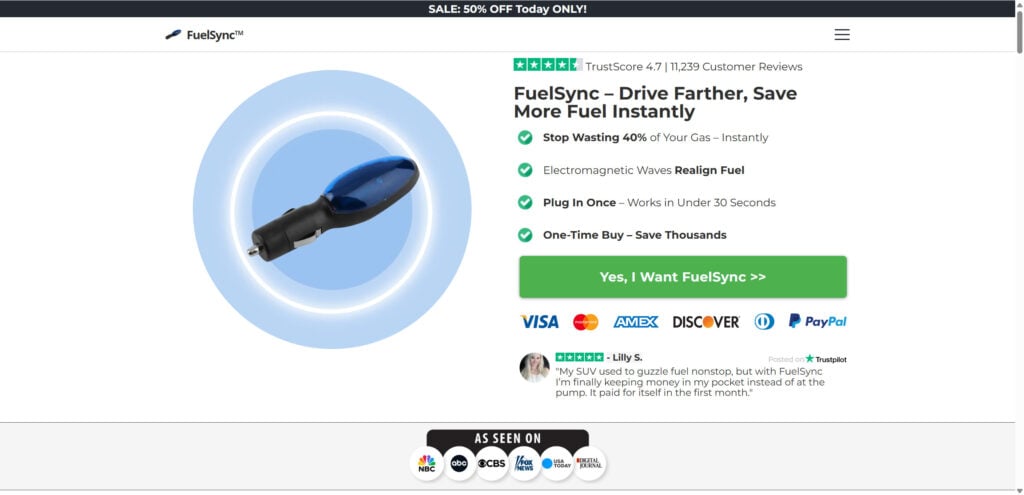
FuelSync is marketed as a plug-in “fuel saver” that can improve fuel efficiency immediately. The sales pages commonly lean on a few bold promises:
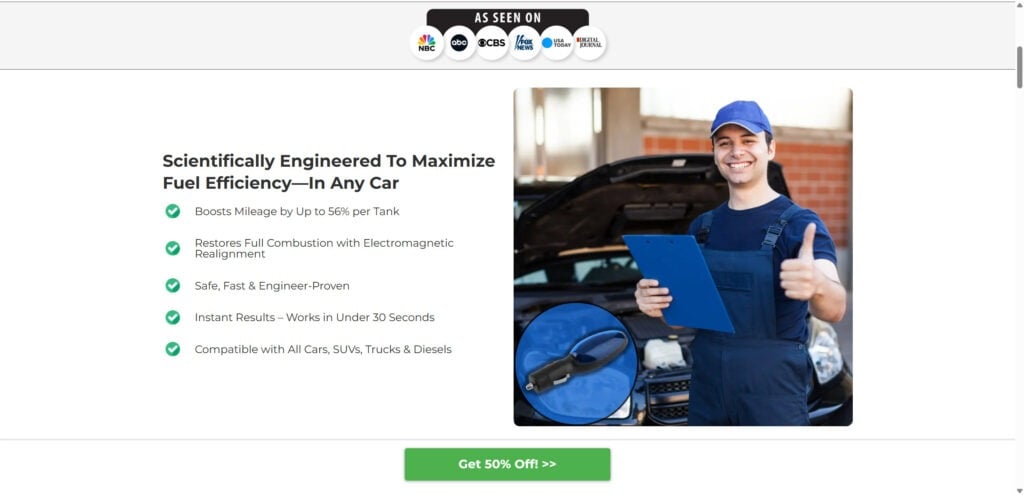
- “Stop wasting 40% of your gas instantly”
- “Electromagnetic waves realign fuel”
- “Plug in once, works in under 30 seconds”
- “One-time buy, save thousands”
- “Boost mileage by up to 56% per tank”
- “Compatible with all cars, SUVs, trucks, and diesels”
On the surface, it sounds like a breakthrough. In reality, the claims are a checklist of classic red flags seen in recurring “fuel saver device” promotions over many years.
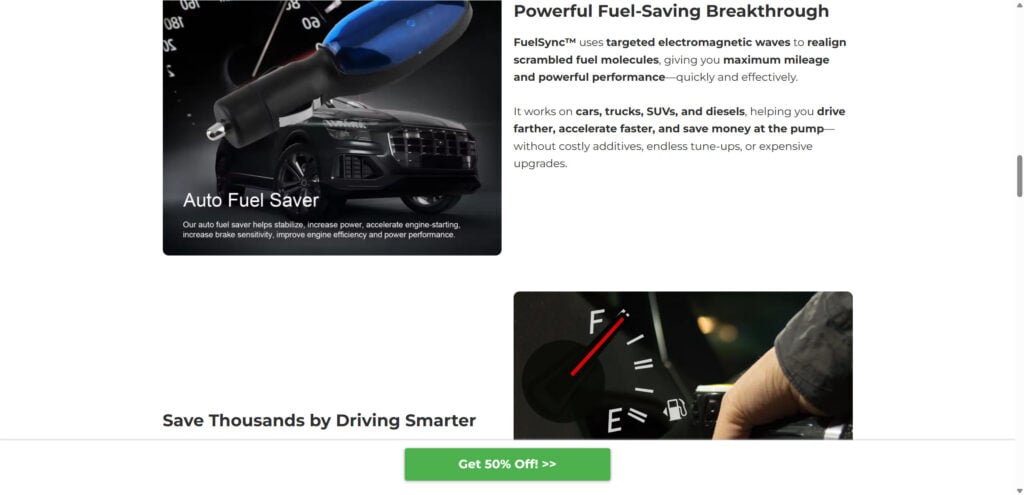
The core problem: the claim does not match how cars work
Fuel economy is mostly shaped by real, measurable factors:
- Engine efficiency and tuning
- Vehicle weight and load
- Aerodynamics
- Tire pressure and tire type
- Driving style (acceleration, speed, braking)
- Maintenance (filters, spark plugs, sensors, oil condition)
- Route conditions (traffic, hills, temperature)
A small gadget plugged into a 12V outlet does not have a direct pathway to change combustion, fuel atomization, injector timing, air-fuel ratio, or engine management logic. The cigarette lighter style socket is primarily a power source. It is not a control channel into the fuel system.
That basic mismatch is why products like FuelSync rely so heavily on vague technical language. Phrases like “electromagnetic realignment” are meant to sound scientific without providing testable details.
“Realign fuel molecules” is a telltale marketing phrase
Gasoline is a complex mixture of hydrocarbons, and modern engines already mix fuel and air inside carefully engineered systems. If a device genuinely “realigned” fuel in a way that improved combustion by anything close to 40% or 56%, it would be one of the biggest automotive efficiency breakthroughs in decades.
It would not be sold primarily through aggressive social media ads and “today only” discount pages.
It would show up in:
- Automaker partnerships
- Regulatory filings and standardized testing results
- Engineering documentation with measurable before-and-after data
- Broad coverage from credible automotive outlets that can replicate results
Instead, what you typically see are marketing pages that use impressive numbers, broad compatibility claims, and urgent calls to action.
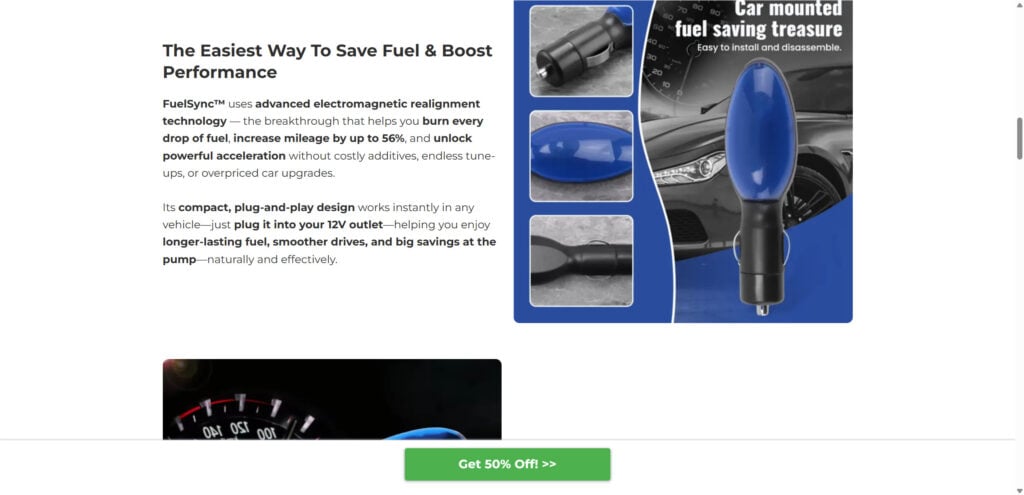
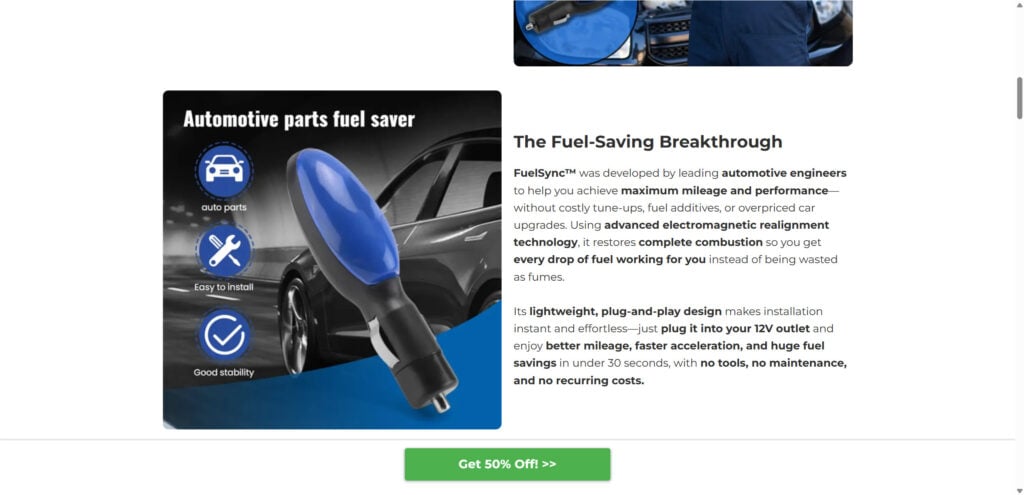
The product design shown in ads looks like a generic 12V accessory
FuelSync is presented as a smooth, plastic plug-in dongle. This style of device is widely sold under many names. Similar products are commonly listed on bulk marketplaces for well under a few dollars per unit, often with minimum order quantities like 100 pieces.
That matters because it suggests FuelSync is not a unique invention. It looks like a generic shell that can be rebranded quickly, which is common in short-lived product “brands” that appear, run heavy ads, then vanish or rename when complaints grow.
The “TrustScore” and review count are easy to fake and hard to verify
A common element on FuelSync-style sales pages is a “TrustScore” graphic, often shown as 4.7 out of 5 with a large review count (for example, 11,239 reviews). It is frequently displayed in a way that resembles well-known review platforms.
Here is the issue: a graphic on a sales page is not proof.
Even if a page uses the word “Trustpilot” or mimics the star style, it does not automatically mean the product has a legitimate, traceable review profile that you can verify independently. Scam-prone storefronts often:
- Use review widgets that are not connected to a real third-party platform
- Display cherry-picked testimonials with stock profile photos
- Inflate review counts to create “social proof”
- Add a small “posted on” label that implies verification without providing it
If the reviews cannot be traced to a legitimate, independently browsable listing, the score is marketing, not evidence.
Fake “As Seen On” media logos are another recurring tactic
FuelSync pages often show rows of familiar media logos like NBC, ABC, CBS, Fox News, USA Today, and Digital Journal. The goal is to borrow credibility at a glance.
But “as seen on” logo bars are extremely easy to paste onto a page, and they are widely abused. Unless the page links to real segments or published articles from those outlets that clearly mention the product, the logos are likely just decoration.
This is especially suspicious when:
- The page provides no direct citations
- The “coverage” cannot be found on the outlet’s site
- The product is unknown outside the ad ecosystem
The funnel is built on urgency, not transparency
FuelSync promotions frequently use pressure techniques:
- “Special offer live now”
- “Sale ends today”
- Big price drops like $79.98 down to $39.99
- Repeated “Get 50% off” buttons throughout the page
- “Risk-free” language paired with vague refund policies
Legitimate automotive products generally do not need to push you with a countdown timer to be credible. Scams and low-quality dropshipping products often do, because urgency reduces the chance you will research before buying.
The “modes” claim is a distraction
Some FuelSync pages advertise “3 performance modes” such as Eco, Standard, and Power mode, as if the dongle can switch your car into different efficiency profiles.
Think about what that would require.
To change driving modes in a real vehicle, a system must communicate with the car’s engine control unit and related modules. A 12V socket device is not an ECU interface. It is like plugging a phone charger into your car and expecting it to rewrite engine mapping.
The modes are mostly there to make the product feel more advanced and customizable.
Why this category is so common in scam marketing
“Fuel saver” gadgets are a perfect fit for deceptive campaigns:
- Everyone wants lower fuel costs
- The promise is easy to understand
- Results are hard to verify quickly for most people
- Marketing can blame “driving conditions” when results fail
- Sellers can cycle brands and domains quickly
A person might drive for a week, see normal variation in fuel economy, and wonder if it is “working.” Meanwhile, the seller already has the sale.
The biggest red flag: extraordinary savings with zero trade-offs
Any product that claims instant fuel savings of 40% to 56% without changing how you drive, without maintenance, and without interacting with engine management deserves maximum skepticism.
Even small, real efficiency gains are usually incremental and come with clear mechanisms, like improved aerodynamics or reduced rolling resistance. Huge gains require major system-level changes.
FuelSync is marketed as a tiny plug-in device that does not connect to the fuel system, does not connect to diagnostics, and does not modify vehicle software. That combination makes the headline claims effectively impossible.
Common buyer complaints associated with this kind of offer
While different sellers and sites may vary, promotions like FuelSync are frequently tied to patterns that frustrate buyers:
- The product arrives looking cheap and does not match the “engineered” marketing
- No measurable fuel savings are observed
- Support becomes unresponsive after delivery
- Refunds are difficult, delayed, or denied
- Returns may require shipping to China at the buyer’s expense
- Some buyers report being charged for multiple units or unexpected add-ons
- Some buyers report surprise monthly subscriptions or recurring charges that are difficult to cancel
Those last two are especially important. Many scam-prone checkout flows are designed to increase the total charge through “bundle” defaults, pre-checked boxes, or post-purchase upsells. In worse cases, the payment details are later used for recurring billing schemes.
In other words, the risk is not only that FuelSync does nothing. The risk is also the buying experience itself.
How The Scam Works
FuelSync is not just a product. It is usually part of a well-practiced marketing funnel that blends emotional ads, pseudo-science, and friction-heavy customer service. Here is how it typically plays out, step by step.
Step 1: The sponsored ad creates a personal story and a simple villain
Many FuelSync promotions start with a sponsored post that reads like a personal confession.
The ad often frames the problem like this:
- Gas costs are out of control
- The driver feels trapped, embarrassed, or stressed at the pump
- A “tiny device” changes everything
- The driver can suddenly go hundreds of miles farther
This story format is not accidental. It is designed to bypass technical thinking and trigger an emotional response: “I need this.”
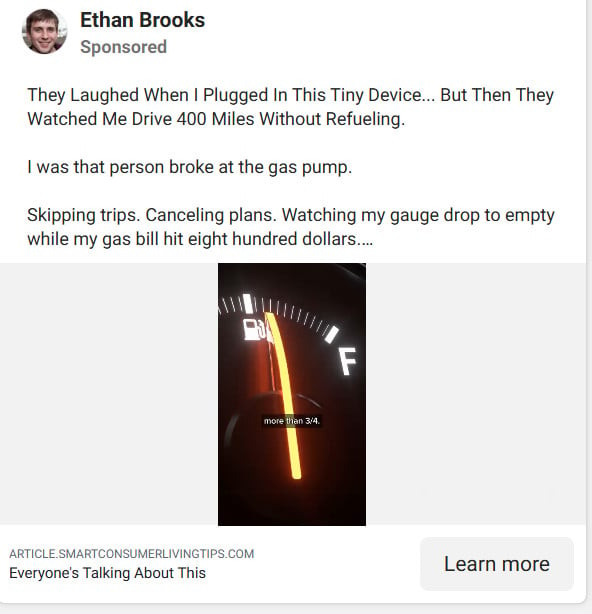
Sometimes the ad is paired with a casual video showing the device in someone’s hand, on a table, or near a car interior. The goal is to make it feel real and “already popular.”
Step 2: The click leads to a fake review page or an advertorial
Instead of taking you directly to a normal store product page, many FuelSync campaigns route you through a “review” article.
These pages often:
- Use generic lifestyle domain names
- Present themselves as consumer guides
- Pretend the product is trending everywhere
- Repeat the same claims found on the official sales page
- Include large “learn more” buttons that push you to buy
This layer acts like a credibility shield. If you are unsure, the “review” page gives you permission to trust it.
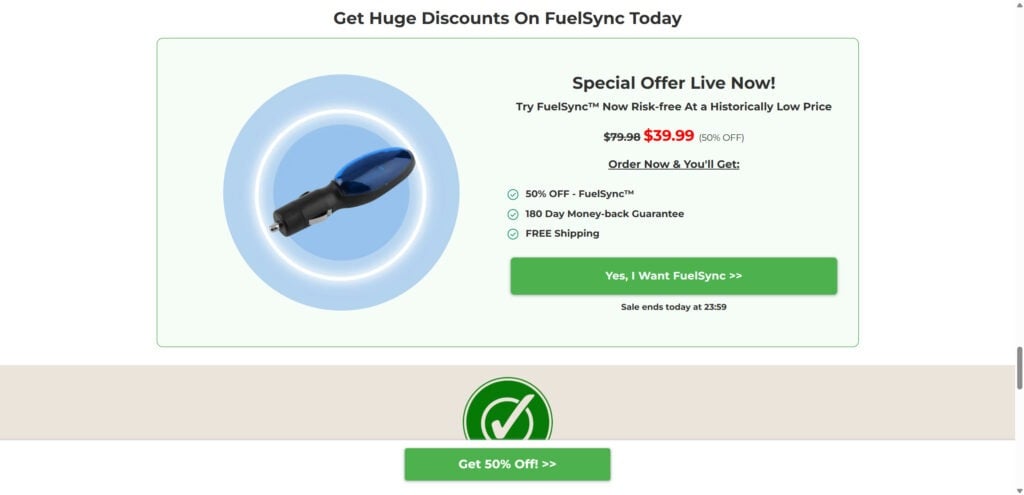
Step 3: The sales page uses authority props and big numbers
Once you land on the main sales page, the structure is usually very consistent.
You see:
- A bold headline promising instant fuel savings
- A “TrustScore” with a high rating and huge review count
- Payment brand logos like Visa, Mastercard, Amex, Discover, PayPal
- Media logos under “As Seen On”
- Repeated call-to-action buttons
This is all designed to answer your doubts before you ask them.
Even if none of the props are verifiable, they work psychologically. They create a sense of safety and popularity.
Step 4: The pseudo-science explanation sounds technical but stays vague
FuelSync pages often claim the device emits “electromagnetic waves” that “realign fuel molecules” and “restore complete combustion.”
Notice what is missing:
- Specific measurable outputs
- Independent lab test reports
- Vehicle test methodology
- The exact mechanism of action with engineering detail
- Any standards-based fuel economy testing data
Instead, you get an explanation that feels scientific because it uses scientific words.
This is a classic tactic in questionable product marketing: make the buyer feel like the product is “too advanced for me to fully understand,” while never offering proof.
Step 5: The “plug-and-play” angle removes effort and speeds up impulse buying
The pitch is always about convenience:
- Plug it into any 12V outlet
- Works in under 30 seconds
- Set it and forget it
- No tools, no maintenance
The easier it sounds, the more likely someone is to buy without researching.
Real fuel economy improvements usually take effort, like proper maintenance, tire pressure checks, and driving habit changes. FuelSync flips that truth on its head and sells the fantasy of effortless savings.
Step 6: The page repeats “today only” urgency to prevent research
Scam-prone pages rely on time pressure because research kills conversions.
Common urgency tools include:
- A “sale ends today” line
- A countdown timer
- Limited stock messaging
- Discount stacking and bonus claims
- Multiple “Get 50% off” buttons as you scroll
If you feel rushed, you are less likely to Google “FuelSync device scam” or “FuelSync reviews.”
Step 7: The checkout is optimized for higher charges, not clarity
When you go to buy, many campaigns push:
- Multi-unit bundles as the “best value”
- Upsells like “get 2 more for family”
- “Protection” add-ons
- Shipping upgrades
Some buyers report a worse outcome: unexpected charges, multiple units billed, or recurring billing that was not clearly disclosed.
This is where the risk can shift from “I wasted $39.99” to “I need to fight a charge.”
Step 8: The product arrives as a low-cost generic device
When a product is essentially a rebranded generic dongle, the unboxing can feel underwhelming:
- Lightweight plastic
- Minimal documentation
- No meaningful specifications
- No instructions beyond “plug it in”
Some versions may light up or display a small LED. That can make it feel “active,” even though lighting up is not proof of any fuel-saving effect.
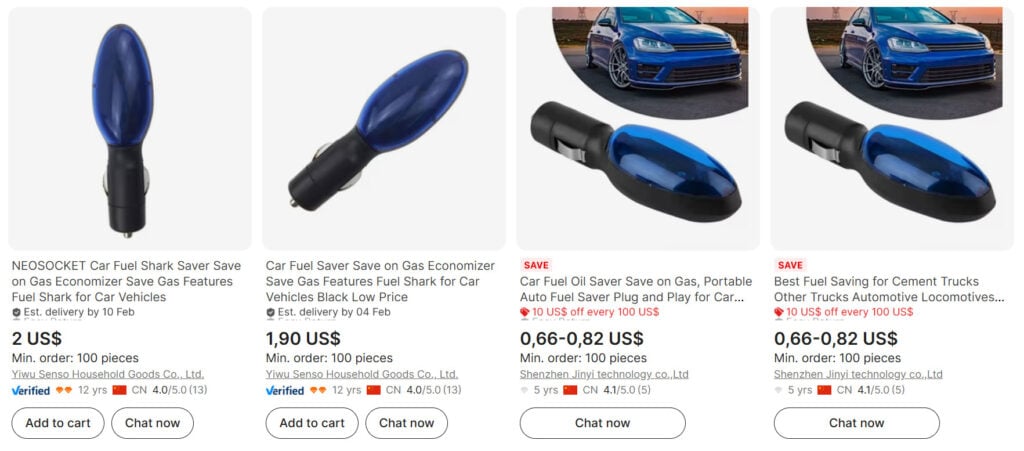
The device can be doing something as simple as drawing power and glowing.
Step 9: The buyer tests it, sees no difference, and starts doubting themselves
Fuel economy naturally varies.
One tank might look slightly better or slightly worse depending on:
- Traffic and idling
- Weather and temperature
- Highway versus city driving
- Tire pressure changes
- Load in the vehicle
- Short trips versus long trips
Because of this variability, some buyers spend longer than they should trying to “see” results. The marketing encourages that by claiming it works on all vehicles and starts instantly, but without giving a reliable way to measure.
This delay benefits the seller, because it pushes you closer to the end of the refund window.
Step 10: Refunds become difficult and support becomes slippery
When customers seek refunds, the experience often follows a familiar pattern:
- Slow replies or scripted responses
- Requests for videos, photos, or extra “proof”
- Offers of partial refunds to avoid returns
- Return addresses that are overseas
- Buyer pays return shipping
- Refund delayed until the return is received and processed
If the return requires shipping to China, the shipping cost can be high enough that many people give up. That is not a bug. It is part of the business model.
Step 11: The brand disappears or rebrands, and the cycle repeats
Because the underlying product is generic, the “brand” can be swapped quickly:
- New domain name
- New product name
- Same photos, same claims, same page structure
- Fresh ad creatives
This is why these fuel saver promotions seem to never die. Even when one version becomes widely criticized, another name takes its place.
Why FuelSync specifically fits the pattern
FuelSync checks multiple boxes that are strongly associated with deceptive product funnels:
- Big, instant savings claims that contradict real-world mechanics
- A 12V socket plug design that cannot plausibly control fuel delivery or combustion
- Vague pseudo-science language instead of evidence
- Inflated “trust score” graphics and unverifiable review counts
- “As seen on” media logos without verifiable sources
- Heavy urgency and repeated discount buttons
- Sold across multiple sites, often with overseas fulfillment and hard refunds
Put together, this is why FuelSync is widely viewed as almost certainly a scam, or at best a low-value gadget being sold with misleading claims.
What To Do If You Have Fallen Victim to This Scam
If you already bought FuelSync, the priority is to protect your money, your payment method, and your peace of mind. You do not need to panic. You just need a clear plan.
- Gather evidence right now
- Screenshot the sales page claims (fuel savings, refund promises, warranty length, “trust score,” and any countdown timers)
- Save the order confirmation email and receipt
- Screenshot the checkout page total, including any add-ons or bundles
- If you came through an advertorial, screenshot that page too
- Save the URL of the site you purchased from
- Check your card or PayPal transaction details
- Look for the merchant name that appears on your statement, which can differ from “FuelSync”
- Verify the exact amount charged
- Confirm whether you were billed for multiple units
- Watch for additional pending charges over the next few days
- Look for recurring billing or subscription language
- Review your confirmation email and the site’s terms for words like “subscription,” “membership,” “auto-ship,” “rebill,” or “monthly”
- If you see anything suspicious, treat it as urgent
- Email the seller and request a refund in writing
- Keep it short and direct
- Include your order number and the email used at checkout
- Ask for a full refund and cancellation of any recurring charges
- Ask for written confirmation
- Do not accept vague replies like “we will get back to you soon” without a ticket number or confirmation
- Do not rely on return shipping to solve the problem
- If they require expensive overseas shipping, weigh the cost carefully
- Some sellers use return shipping friction to discourage refunds
- If the return address is unclear or keeps changing, document that
- If you used a credit or debit card, contact your bank or card issuer
- Explain that the product appears to be marketed with misleading claims
- Mention unexpected charges if applicable
- Ask about dispute options and timelines
- If you suspect recurring billing, ask about blocking future merchant charges or issuing a new card number
- If you paid via PayPal, open a dispute if needed
- Use PayPal’s resolution process if the seller refuses to refund or the product is significantly not as described
- Provide screenshots of the claims and what you actually received
- Monitor your account for at least 30 days
- Check for small “test charges” or new transactions
- Watch for charges that do not clearly match your purchase
- If anything appears, report it immediately
- Report the ad and the site
- Report the sponsored ad on the platform where you saw it (Facebook, Instagram, etc.)
- If the page used fake media logos or deceptive claims, include that in the report
- You can also file consumer complaints with relevant agencies in your country
- If you feel embarrassed, remind yourself this was designed to fool people
- These funnels are built by experienced marketers who know how to push urgency and credibility triggers
- Falling for it does not mean you are careless
- What matters is taking action quickly and protecting your payment method
The Bottom Line
FuelSync is marketed as a revolutionary “save gas instantly” device, but the claims do not hold up to basic reality. A small dongle plugged into a 12V socket cannot “realign fuel molecules,” restore combustion, or deliver instant fuel savings of 40% to 56%.
When you combine the implausible promises with the generic device design, the unverifiable “trust score” style reviews, the fake-looking media logo strips, and the common complaints about refunds and unexpected charges, FuelSync looks like a textbook example of a misleading fuel saver device campaign.
If you already purchased it, focus on documentation, refund requests in writing, and protecting your card or PayPal account. If you are only considering buying it, the safest move is to skip it and stick to proven fuel-saving steps like tire pressure, smooth driving, and proper maintenance.
FAQ
What is the FuelSync device supposed to do?
FuelSync is marketed as a plug-in “fuel saver” that you insert into a car’s 12V outlet. The sales pages claim it can improve fuel economy quickly by using “electromagnetic waves” to “realign fuel” and improve combustion.
Does plugging a device into the 12V outlet actually improve gas mileage?
In practical terms, no. A 12V outlet is primarily a power source for accessories. A plug-in dongle cannot meaningfully control fuel injection, air-fuel ratio, timing, or combustion the way an engine control system would.
Can “electromagnetic realignment” of fuel increase efficiency?
This is a common marketing phrase used by many fuel saver gadgets. It is vague, not presented with reliable testing, and does not match how modern fuel systems and engine management operate.
Why do these sites claim savings like 40% or “up to 56% per tank”?
Huge numbers grab attention and drive impulse purchases. Fuel economy normally changes by small amounts unless you make major mechanical or driving changes. Claims of instant 40% to 56% savings are a major red flag.
If it does not work, why do some people think it helped?
Fuel economy naturally fluctuates due to traffic, weather, route, speed, idling, tire pressure, and load. A slightly better tank can happen by chance, which makes it easy for people to attribute improvement to the device.
Is FuelSync the same as other “fuel saver” gadgets like Fuel Shark or EcoFuel?
It appears to be part of the same long-running category of plug-in fuel saver products that get rebranded and sold under new names. The device design and marketing style are extremely similar across many versions.
Are the 4.7 out of 5 “TrustScore” ratings and thousands of reviews real?
Sometimes they are just graphics placed on a sales page. A high score displayed on a checkout page is not proof unless you can verify the reviews on a legitimate third-party platform with a traceable product listing.
What about the “As Seen On” logos like NBC, ABC, CBS, and Fox News?
Logo strips are often used as credibility props. Unless the page links to real coverage on those outlets that clearly mentions the product, the logos should be treated as marketing, not evidence.
Could FuelSync damage my car?
Most of these devices simply draw power from the outlet and may light up. That is unlikely to damage the engine. The bigger risks are wasted money, unexpected charges, and difficult refunds. If it gets hot, smells, or causes the outlet to behave oddly, unplug it.
I bought it and got charged for more than I expected. What should I do?
Act quickly:
- Take screenshots of your order page, receipt, and any upsells
- Check your statement for multiple charges
- Email the seller demanding a refund in writing
- Contact your card issuer or PayPal to dispute if the seller stalls or refuses
Can this purchase lead to unwanted subscriptions or recurring charges?
Some buyers report recurring billing or unexpected add-ons with products sold through aggressive funnels. Check your email receipt and terms for words like “subscription,” “rebill,” “membership,” or “auto-ship,” and monitor your statement for at least 30 days.
How do I maximize my chance of getting a refund?
- Request the refund immediately and keep everything in writing
- Save screenshots of the claims and refund promises
- Do not accept vague responses without confirmation
- If the return requires expensive overseas shipping, ask your card issuer about disputing as “not as described” or misleading marketing
What actually works to reduce fuel costs?
Proven steps include:
- Keep tires inflated to the recommended pressure
- Avoid aggressive acceleration and hard braking
- Reduce excess weight in the vehicle
- Keep up with maintenance (filters, spark plugs, sensors, oil)
- Use cruise control on steady highways when safe
How can I tell if a FuelSync site is a scam version?
Common warning signs:
- Huge instant savings claims
- Fake-looking review scores and “as seen on” logos
- Countdown timers and “today only” pressure
- Multiple “Get 50% off” buttons everywhere
- Vague refund policy, overseas return address, or no real company details
- Checkout upsells and bundle defaults that increase the total









I’m tired of YouTube pushing these scam products! It was very compelling personal confession of an older woman and a mechanic who left his dongle in her car after she drove it for a “week” getting 1000+ of miles, so I thought I should check for real reviews and after 2 dozen positive push sites & whatnot I came across this page & it broke it down really easy debunking the whole narrative being pushed! Thanks for the Truth! I appreciate your dedication to exposing the scammers! Have a good night.
Thank you, Shawn. The personal-confession format and the story about a mechanic accidentally leaving the device behind are reused because they make an impossible claim feel like an ordinary discovery. I am glad you kept searching past the promotional review sites and found the technical explanation before buying.
WOW! I love this. It is about time people calmly read and talk about these articles. Like life, most things are meant to be guides on how to live positively and maintain a reasonable awareness. Everything changes, and that should be enough of a positive and factual reason for humans to stay alert as much as humanly possible. It has improved through time, but it seems more like a method of ‘catch-up’ and ‘wake-up’ rather than stay alert and actually expect what might be coming up.
Thank you, I appreciate that.
That is exactly the goal: to help people slow down, look more carefully, and avoid getting caught by claims that sound good in the moment but do not hold up under scrutiny.