

Your eyes feel wrecked after screens all day.
So when you see Nolvy Eyerest Pro promising “spa-like relief” with heat, vibration, and massage in just minutes, it’s tempting to believe it.
But here’s the part most people miss: the product isn’t the only thing you’re buying.
Before you hit checkout, there are a few details on Nolvy’s pages that change the whole story.
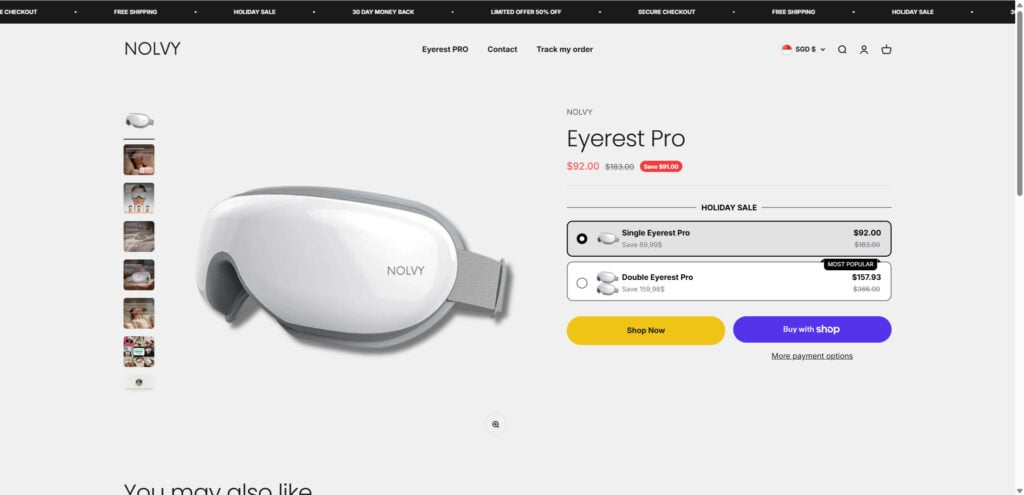
What Nolvy Eyerest Pro Claims to Do
On the surface, the idea is straightforward.
Eyerest Pro is positioned as a wearable eye mask that combines:
- Heat therapy (to relax the area around the eyes)
- Vibration and massage (to ease tension)
- A calming “spa ritual” experience (to help you unwind)
The marketing also leans heavily into cosmetic and lifestyle results, like looking brighter, reducing puffiness, helping with dark circles, and even improving sleep.
In theory, a warm compress and gentle massage can feel genuinely relaxing. Eye massagers are a real product category, and plenty of brands sell them.
The problem is not the concept.
The problem is how Nolvy sells the concept.
What Eye Massagers Can Realistically Do (and What They Cannot)
A heated eye mask can feel great after a long day.
Warmth can help you relax facial muscles, and many people find it soothing when their eyes feel strained. Some devices also include air pressure, vibration, or massage patterns that can be calming.
Mainstream beauty and wellness outlets regularly cover eye massagers as a comfort product, not as a miracle device.
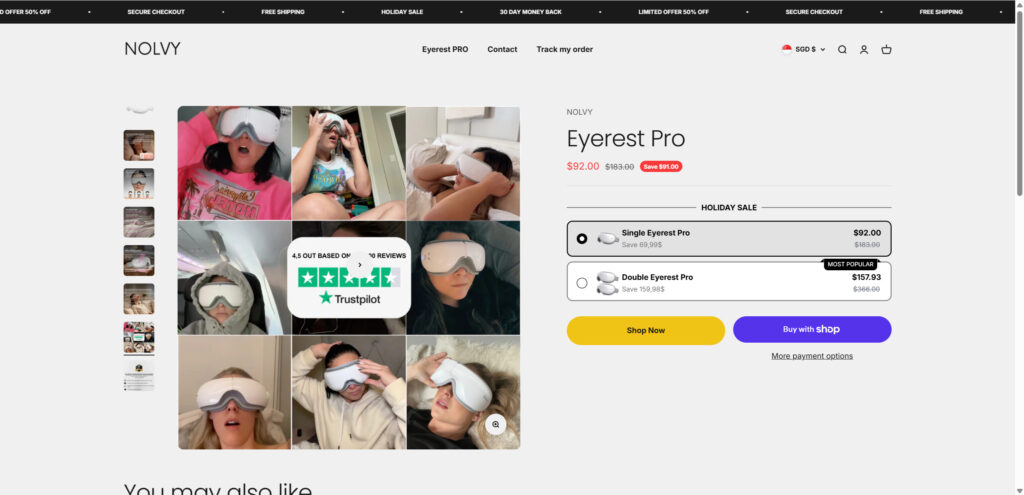
But there’s a line between “comfort” and “claims.”
Here’s where you should be cautious:
- Dark circles are often caused by genetics, pigmentation, or thin skin, not something a gadget can reliably fix in minutes.
- Puffiness can be fluid retention, sleep, allergies, salt intake, or anatomy. Temporary reduction can happen with cooling or massage, but permanent “change” is a different claim.
- Migraines and medical relief claims are serious. A relaxing mask might help some people unwind, but “stopping migraines” or implying medical-level outcomes should be backed by credible evidence, not testimonials.
When a brand sells a wellness gadget like it’s a clinical breakthrough, your skepticism should go up.
What We Checked (and Why)
To evaluate Nolvy Eyerest Pro like a careful buyer, we looked at:
- The sales page language and proof for major claims
- Whether “featured in” or “seen on” claims link to real coverage
- How the checkout is structured, including any recurring billing language
- Whether the product looks unique or like a common white-label device
- Price positioning compared to similar devices sold elsewhere
- The quality and credibility signals: specs, certifications, company transparency, and independent reviews
The Biggest Red Flags on Nolvy’s Pages
1. “Seen on” and magazine-style credibility without real proof
The Nolvy homepage includes a “Seen on:” section, presented like a credibility stamp.
That can be legitimate if a brand is actually covered by publications and provides links, press pages, or verifiable screenshots.
What raises concern is when “seen on” is used as a trust shortcut without any way to verify it.
If you’re truly featured in major outlets, you show receipts.
2. Testimonials that read like ad copy (and drift into medical claims)
The Nolvy homepage includes testimonials that go beyond “this feels relaxing.”
For example, it includes claims about headaches disappearing, “coworkers asked if I got Botox,” and even “NOLVY stops 80% of [migraines].”
Even if these are real customer stories, they are being used as marketing claims.
And when you’re implying migraine reduction or dramatic cosmetic changes, the burden of proof rises fast. A few glowing quotes are not proof.
This is a classic pattern in aggressive direct-to-consumer marketing: replace evidence with emotional storytelling.
3. A checkout disclosure that suggests recurring or deferred charges
This is one of the most important details we found.
On the Eyerest Pro product page, Nolvy includes a disclosure stating:
“This item is a recurring or deferred purchase…” and that by continuing you authorize charges at the prices, frequency, and dates listed until the order is fulfilled or you cancel, if permitted.
That language is not normal for a simple one-time purchase product page.
Sometimes brands use subscription tools for items that ship later, bundles, or “split shipments.”
But as a buyer, you should treat this as a bright red warning sign until you fully understand:
- Why it is “recurring”
- What the frequency is
- Whether you are opting into any subscription or follow-up billing
- Where the cancellation policy is spelled out clearly
If a product page is not crystal clear, assume you could be stepping into charges you did not intend.
4. Perpetual urgency: “Limited offer 50% off” everywhere
On Nolvy’s pages, the “limited offer 50% off” framing appears repeatedly in the site header.
Discounting is not automatically suspicious.
But “always on” discounts plus urgency language is one of the most common tactics used by low-trust ecommerce funnels. It creates pressure and makes people feel like they’re saving money, even if the “regular price” is inflated.
A real brand can run a sale without pretending it’s constantly about to end.
5. The product looks like a very common white-label device
The Eyerest Pro appears to match the same general design used across countless listings from global suppliers: a hard-shell eye mask with a strap, marketed with heat, vibration, air pressure, and sometimes Bluetooth audio.
You can find extremely similar devices listed by factories and wholesalers on marketplaces like Alibaba, described with the same feature set (heat compress, vibration, air pressure, music).
This does not prove Nolvy is a scam.
But it does suggest the product may not be a unique invention, despite being sold with premium, “exclusive” storytelling.
6. Price spread that looks like classic dropshipping economics
On Nolvy’s product page, Eyerest Pro is shown with pricing like a premium beauty device.
Meanwhile, supplier marketplaces show similar eye massagers priced dramatically lower at wholesale, sometimes under $10 to $20 depending on model and order size.
Again, brands can mark up products.
But when the marketing is built on luxury positioning and “featured in” credibility, yet the device appears to be a common template product, the price starts to look less like “quality” and more like “funnel markup.”
7. Missing details that trustworthy brands usually provide
When you’re putting a heated device on your face, you should be able to easily find details like:
- Exact temperature range and safety cutoff behavior
- Materials that contact skin (and whether they’re hypoallergenic)
- Certifications and compliance (varies by region)
- Clear warranty terms
- A transparent company identity and support structure
If those details are hard to find or buried, it’s not a great sign.
So, Is Nolvy Eyerest Pro Legit?
Here’s the most honest way to frame it:
- The product category is real. Heated eye massagers exist and can feel relaxing.
- Nolvy’s marketing raises multiple credibility concerns: “seen on” style claims without proof, overly dramatic testimonials that imply medical and cosmetic outcomes, constant urgency discounting, and a checkout disclosure that explicitly mentions recurring or deferred purchases.
- The device itself appears similar to common supplier listings, which suggests you might be paying premium pricing for a widely available product.
If your question is “Should I buy it?”
Based on what we found, it’s a high-risk purchase compared to buying a similar device from a well-known retailer with clear returns, transparent billing, and a long trail of independent reviews.
If You Want an Eye Massager, Here’s the Safer Way to Buy
If you like the idea of a heated eye massager, you can still get one, just reduce your risk.
Choose retailers with strong buyer protection
Look for:
- Clear return windows and simple return instructions
- Transparent shipping times
- No confusing subscription language
- A long history of independent customer reviews
For example, eye massagers with heat and compression are sold through major marketplaces like Amazon, where the return flow and review ecosystem is much easier to evaluate.
Prefer brands that under-promise
A trustworthy product page sounds like:
- “Helps you relax”
- “Comfort for tired eyes”
- “A soothing routine”
Not:
- “Fixes dark circles”
- “Looks like Botox”
- “Stops migraines”
Watch for subscription traps
Anytime you see language like “recurring purchase” or “authorize charges,” stop and read everything.
On Nolvy’s Eyerest Pro page, that recurring/deferred purchase disclosure is a big reason to be cautious.
Safety Notes (Important)
Eye massagers are comfort devices, not medical devices.
Use extra caution if you have:
- Eye conditions (like glaucoma)
- Recent eye surgery or LASIK recovery
- Severe dry eye disease
- Facial nerve issues or chronic migraine disorders
- Any pain, swelling, or unexplained symptoms around the eyes
If you’re unsure, ask an eye doctor. A gadget should never be your first line of defense for medical problems.
What To Do If You Already Bought Nolvy Eyerest Pro
If you’ve already placed an order, focus on control and documentation.
- Screenshot everything
Save the product page, price, any “money back” messaging, and your checkout confirmation. - Re-check your checkout language
Look for anything referencing recurring charges, deferred charges, subscriptions, Shop Pay installments, or post-purchase add-ons. The Eyerest Pro page includes recurring/deferred language, so this is worth taking seriously. - Search your email for keywords
Look for: “subscription,” “recurring,” “plan,” “next charge,” “membership,” “renewal,” “installment.” - If you used PayPal or a card, check for billing agreements
PayPal often shows “automatic payments” if you authorized them. Some cards show “merchant tokens” or recurring flags. - Contact support in writing
Keep it short: ask for cancellation confirmation and written confirmation of no future charges. - Monitor your statements
Watch for small test charges first, then larger follow-ups later. - If you see unexpected charges, dispute quickly
Use your card issuer or PayPal dispute process. Provide screenshots and point to any unclear billing terms.
FAQ
Does Nolvy Eyerest Pro actually work?
It may feel soothing, because heat and gentle pressure can be relaxing. But Nolvy’s stronger claims (dramatic cosmetic changes, migraine-level relief) are not backed by clear evidence on the sales pages, and the testimonials read more like marketing than proof.
Is it a scam or will I receive something?
It’s possible you receive a device. The bigger concern is that the product appears similar to common white-label eye massagers sold widely by suppliers, while being marketed at a premium price with heavy urgency tactics.
Why is the “recurring or deferred purchase” line a big deal?
Because it signals you may be authorizing charges beyond a simple one-time purchase. If the frequency and cancellation terms are not crystal clear, you’re taking on billing risk.
Are “Seen on” claims always fake?
No. Real brands do get featured. But trustworthy brands usually link to coverage or provide verifiable proof. Nolvy uses a “Seen on:” style section without obvious supporting links.
Can an eye massager reduce dark circles?
Sometimes massage and warmth can temporarily improve how the area looks, especially if puffiness is involved. But dark circles are often genetic or pigment-related, and devices rarely deliver consistent, lasting results.
Can it help with migraines?
Relaxation might help some people feel calmer, but claims like “stops 80% of migraines” are extremely strong and should be treated cautiously when presented as marketing testimonials.
Why do so many of these devices look the same?
Because many are sourced from the same factories and sold under different brand names. Supplier marketplaces list many eye massagers with the same features: heat, vibration, air pressure, music.
Is the price reasonable?
Compared to supplier listings for very similar devices, Nolvy’s pricing looks high. A markup is normal in retail, but combined with the marketing red flags, it becomes harder to justify.
What’s a safer alternative?
Buy an eye massager from a well-known retailer with clear return policies and lots of independent reviews. Eye massagers with similar feature sets are sold on Amazon and other large platforms.
What should I do if I suspect I signed up for recurring charges?
Check your order confirmation, look for subscription language, review PayPal automatic payments if used, and contact the merchant to cancel in writing. Keep screenshots and watch your statements.
Bottom Line
Nolvy Eyerest Pro is marketed like a premium, “featured” wellness breakthrough.
But the sales funnel shows multiple credibility issues: unverifiable “seen on” style trust signals, dramatic testimonial claims, constant urgency discounting, product similarity to common supplier listings, and a checkout disclosure that explicitly references recurring or deferred purchases.
If you want an eye massager, you can almost certainly find a similar device with less risk from a reputable retailer.
And if you still consider Nolvy, treat the billing language like a stop sign until you have absolute clarity on what you are authorizing.








