

If you have been seeing ads promising instant $6,000 to $7,000 casino bonuses, “CRUKS-free” play, and “no KYC” withdrawals, you are not alone.
Names like Gokvia777, 7000EuroBonus.com, 6000EuroBonus.com, and 6000eurobonus.org keep showing up in the same ecosystem: flashy social ads, “comparison” style landing pages, and a funnel that pushes European players toward offshore casinos that sit outside the protections most people assume exist.
On the surface, it looks like a shortcut.
Under the surface, it often looks like a carefully engineered trap.
This investigation breaks down what Gokvia777 appears to be, why these bonus sites keep switching domains, how the “no KYC” pitch is used as bait, and the specific patterns that show up again and again in casino scam networks.
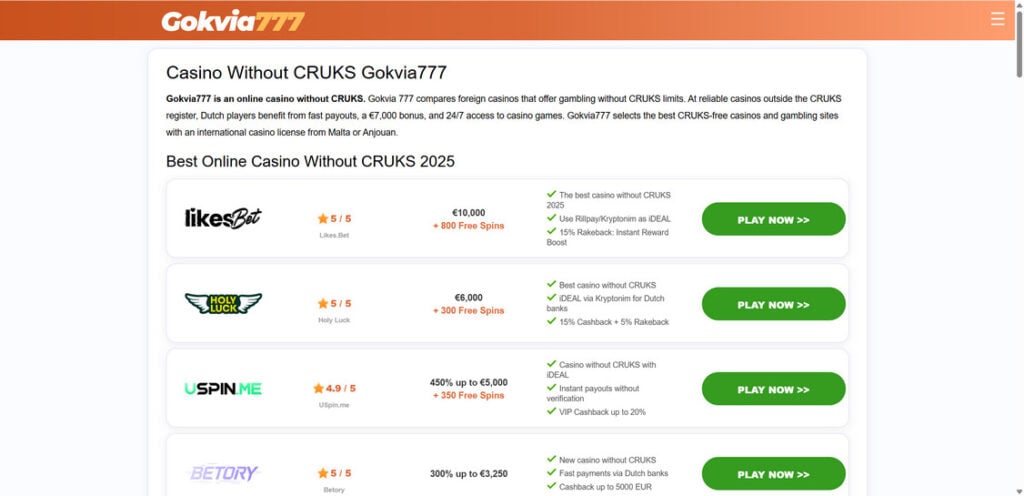
Scam Overview
Start with the simplest question: what is Gokvia777, exactly?
If a casino brand is legitimate, you can usually confirm a few basics quickly:
- The company behind it (legal entity, address, ownership)
- The gambling license (regulator name, license number, link to verification page)
- Responsible gambling controls (self-exclusion, deposit limits, support resources)
- Clear terms for bonuses and withdrawals
With Gokvia777, what you find online is messy, inconsistent, and full of affiliate-style language.
One of the clearest tells is that gokvia777.com has shown up as a parked domain page, rather than a transparent operating casino site with licensing and corporate disclosures.
At the same time, the “Gokvia777” name appears across pages that market themselves as “Casino zonder CRUKS” (casinos without CRUKS), explicitly targeting Dutch players looking to bypass the national self-exclusion system.
That matters, because CRUKS is not a random checkbox. In the Netherlands, licensed operators must check players against CRUKS and deny access to people who are registered.
So when you see “CRUKS-free” as a selling point, you are not looking at a normal bonus pitch.
You are looking at marketing that is built around avoiding safeguards.
Why the “CRUKS-free” angle is a giant warning sign
CRUKS exists to prevent harm, especially for people who have self-excluded or have been involuntarily excluded due to gambling-related damage. Licensed operators are expected to integrate CRUKS checks into access to gambling products.
A site that advertises “no CRUKS” is effectively saying: “We are outside that system.”
Sometimes, offshore casinos will argue they are legal somewhere else. But even if an operator has an offshore registration, that does not automatically mean:
- You are protected if they refuse to pay
- You can file an effective complaint
- A regulator will force a fair outcome
- The games are audited the way regulated markets require
That gap is the entire opportunity scammers exploit.
The “bonus comparison site” disguise
The bonus sites in this cluster often present themselves as neutral “comparison” resources.
That framing does two things:
- It lowers your defenses because it does not look like a casino asking for money.
- It creates plausible deniability because they can claim they are “just listing offers.”
Then the funnel begins. The site highlights a few “featured” casinos, pushes massive bonus numbers, and uses urgency language like “limited” or “today only.”
Some third-party posts explicitly describe these sites as resources for finding foreign casinos and large bonuses, framed for Dutch players seeking CRUKS-free options.
Even when that content is dressed up as helpful advice, it can still function as an affiliate pipeline that directs players to risky operators.
Unrealistic bonus numbers are not just marketing hype
A real welcome bonus has constraints because the casino is managing risk and complying with regulation.
That usually means:
- A maximum bonus amount tied to your deposit
- Wagering requirements
- Game restrictions
- Maximum cashout limits
- Verification requirements before withdrawal
When you see offers like $6,000 or $7,000 splashed as an easy headline, the fine print is where the truth lives.
And scam networks love this area because they can always “explain” why you cannot withdraw:
- “You did not meet wagering.”
- “Your account needs verification.”
- “You must pay a processing fee.”
- “You need a verification deposit.”
- “You need a VIP top-up.”
That “pay to withdraw” pattern is a classic hallmark of fraud, and it is not limited to casinos. It is common across many scam verticals because it flips the psychology: once you believe you are withdrawing winnings, paying an extra $100 to $500 feels “reasonable.”
KrebsOnSecurity has documented “slick online gaming sites” using a verification deposit stage where victims are told to deposit crypto to withdraw “winnings.”
The deepfake endorsement layer
These casino funnels are increasingly promoted with AI-manipulated endorsements, including celebrity faces and voices used to bait clicks.
This is not speculation. Meta’s Oversight Board has addressed an AI-manipulated video promoting gambling and said such content should have been rejected as an advertisement, specifically calling out the use of a famous person’s image as bait
Separately, scam watchdogs have warned that scammers use deepfake videos and clickbait ads to lure people into paying an initial deposit, then escalate the pressure.
If you are seeing celebrity-style endorsements tied to “CRUKS-free” bonuses, treat that as a high-risk signal, not social proof.
Why the domain switching keeps happening
A stable brand invests in a stable domain.
A high-risk affiliate network or scam operation does the opposite.
It rotates domains because domain switching helps them:
- outrun bad reviews and warning posts
- avoid ad account bans by re-routing traffic
- reset reputation signals in search results
- create the illusion of “new” and “exclusive”
- keep payment processors and complaint trails fragmented
In your case, the cluster includes multiple similar domains, with the same theme and same promises, all pointing toward the same kind of offshore casinos.
Even when you cannot immediately prove a single domain is malicious, the pattern is the point. Domain rotation plus unrealistic bonuses plus bypassing safeguards is the same recipe you see in many fraud systems.
A quick reality check: what legitimate operators must do
For comparison, here is what regulated operators in the Netherlands are expected to do:
- verify players (KYC) as part of responsible operation
- check players against CRUKS before allowing gambling
- comply with strict advertising rules and enforcement
Multiple sources describe CRUKS integration as mandatory for operators in the Dutch market and part of the legal framework around online gambling.
So when a site sells “no KYC” and “no CRUKS,” it is not offering convenience.
It is advertising a lack of accountability.
How The Scam Works
What follows is the most common step-by-step playbook used by unlicensed casino scam funnels and high-risk affiliate networks. Not every victim experiences every step, but the structure is remarkably consistent.
Step 1: The social ad hook
You see a short, punchy ad on social media:
- “Claim $7,000 bonus now”
- “No CRUKS”
- “No KYC”
- “Instant withdrawals”
- “Europe’s best secret casinos”
Sometimes it is framed as a “comparison site” rather than a casino.
Sometimes it uses a celebrity face or “news” style presentation.
This works because it targets three strong motivations:
- money (big bonus)
- speed (instant cashout)
- privacy (skip verification)
Deepfake endorsements amplify this because people assume, even subconsciously, that a familiar face equals legitimacy. Meta’s Oversight Board has explicitly called out AI-manipulated gambling promos as a fraud risk and said it should be removed.
Step 2: The pre-sell landing page
You click and land on a site like:
- 7000EuroBonus.com
- 6000EuroBonus.com
- 6000eurobonus.org
The page typically has:
- giant bonus numbers in headlines
- lists of “top” casinos
- simple call-to-action buttons
- claims like “trusted” or “verified”
- testimonials or star ratings
If the site is truly neutral, it should disclose how it makes money and who runs it.
But in this ecosystem, the goal is usually not to inform.
The goal is to push you to the next click.
Step 3: The redirect to the “featured” casino
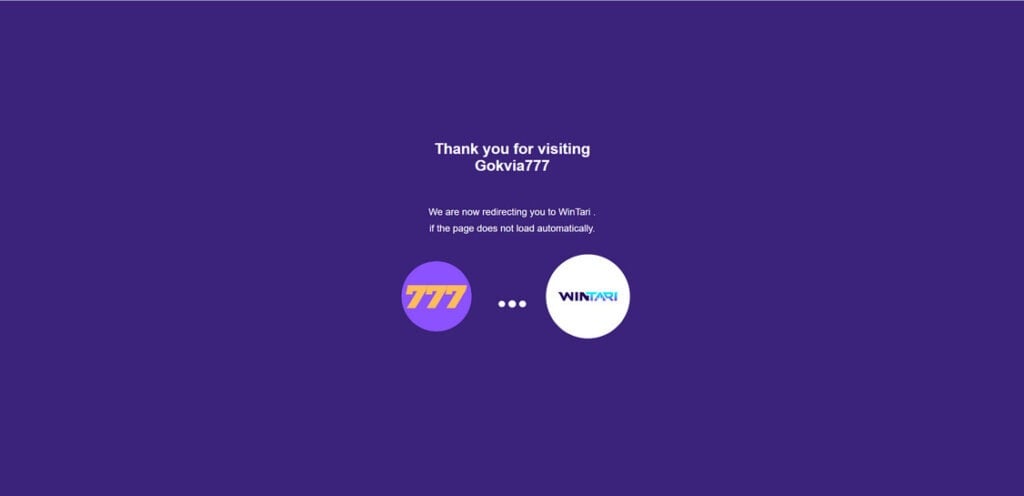
You click “claim bonus” and get redirected to the casino brand, often something offshore.
In the Gokvia777 ecosystem, the brand is presented as a CRUKS-free casino option for Dutch players across multiple pages.
At this stage, you are often pushed toward:
- crypto deposits
- third-party payment gateways
- methods that are difficult to reverse
Step 4: The frictionless signup and the “no KYC” promise
A common tell is how easy the account creation feels.
A regulated operator usually introduces friction because compliance requires it.
A scammy operator reduces friction because the goal is deposits, not long-term customers.
So you may be allowed to start playing with minimal info.
That feels like a perk.
It is also how they avoid creating a paper trail.
Step 5: The small deposit and the fast “wins” illusion
Many victims report the same emotional arc:
- deposit a small amount
- experience surprisingly good wins early
- see your balance jump fast
- start imagining a withdrawal
This is where rigging, manipulated game logic, or fake balance displays can appear.
You do not need to prove the RNG is rigged to treat this as dangerous.
Because the real trap usually comes next.
Step 6: The withdrawal attempt triggers the blockade
When you try to cash out, the casino flips from friendly to rigid.
You may see:
- “verification required”
- “withdrawal review”
- “anti-fraud check”
- “account upgrade required”
- “processing fee”
Legitimate operators can have withdrawal reviews, and delays can happen, especially around compliance. Even regulators discuss expectations around withdrawals and fair treatment of customers.
But the scam pattern is different.
The scam pattern asks you to pay to receive money.
Step 7: The “verification deposit” or “fee to unlock” scam
This is the most expensive step for many victims.
You are told something like:
- “Deposit $100 to verify your wallet”
- “Pay $250 to unlock withdrawals”
- “Pay $500 for VIP status”
- “Pay the tax / processing fee first”
KrebsOnSecurity documented gaming scam sites that explicitly use a “verification deposit” stage and generate unique crypto wallets per domain, making tracking harder.
Once you pay, one of three things typically happens:
- They ask for another payment (“one last step”).
- They stall and keep you in chat support loops.
- Your account gets restricted, closed, or ignored.
Step 8: Pressure tactics and emotional manipulation
If you hesitate, the messages often intensify:
- “Your funds will expire.”
- “Your bonus will be forfeited.”
- “You must act within 24 hours.”
- “Compliance requires it.”
This is not compliance. It is conversion.
The goal is to turn your hope of a payout into one more payment.
Step 9: The vanish, the pivot, and the next domain
After enough complaints, ad bans, or bad press, the funnel shifts:
- a new “bonus” domain appears
- the old one goes quiet or redirects
- the branding stays similar
- the casinos listed look familiar
- the cycle repeats
This is one reason domain stability and licensing transparency matter.
If you cannot tie the operation to a real accountable entity, you are not a customer.
You are a target.
Step 10: Why victims struggle to recover funds
Recovery is hard because:
- crypto transfers are usually irreversible
- offshore operators can ignore disputes
- chargebacks are harder if you used certain payment rails
- “support” is often just a script designed to delay you
And when people search for help, they can run into a second scam: fake “recovery agents” who promise to get the money back for a fee.
That is why the response plan matters.
What To Do If You Have Fallen Victim to This Scam
- Stop sending money immediately, even if they promise it is the “final verification.”
Any request to pay a fee or deposit to withdraw is a major red flag. Do not negotiate. Do not “finish the process.” Just stop. - Screenshot everything and save it in one folder.
Save the site URL(s), transaction IDs, chat logs, emails, bonus terms, and any error messages. If the domain later disappears, your evidence disappears with it. - Contact your bank or card issuer right away.
Ask for the fraud or disputes department. Explain that you deposited to an online casino you now believe is unlicensed or fraudulent, and that you were later asked to pay additional fees to withdraw.
If you paid by card, ask about chargeback options. If you used a bank transfer, ask if a recall is possible. - If you used crypto, contact the exchange or on-ramp you used to buy or send it.
Exchanges cannot magically reverse a blockchain transfer, but they can sometimes flag recipient addresses, help with compliance reports, and preserve records that support law enforcement. - Change passwords and enable 2FA on email and financial accounts.
Some of these funnels collect personal data and reuse it. Secure the accounts that could be used to reset other passwords, especially your email. - Run a basic device security check.
If you installed anything, downloaded “wallet verification” tools, or clicked unknown attachments, run a reputable antivirus scan and check browser extensions. - Report the ads and the pages.
Report the ad on the platform where you saw it. Report the domain to the registrar or hosting provider if you can identify them. Report payment addresses to the exchange used.
The goal is to reduce the next victim’s risk. - Report to your national cybercrime or consumer protection channel.
Even if you believe nothing will happen, reports help patterns get connected across borders. Include your evidence pack and the exact domains. - Watch out for recovery scams.
If someone contacts you claiming they can recover your gambling losses for a fee, assume it is another scam until proven otherwise. Never pay upfront to “unlock” recovery. - If gambling is starting to feel hard to control, reach for support early.
Even strong, careful people get pulled in by these offers. If you are in the Netherlands, CRUKS exists for a reason, and regulated support resources can help you reset without shame.
The Bottom Line
Is Gokvia777 a legit casino brand you should trust?
Based on what is publicly visible, it shows multiple high-risk signs that are consistent with affiliate-driven offshore gambling funnels and scam-adjacent ecosystems, including inconsistent web presence, promotion across repurposed domains, and marketing built around bypassing safeguards like CRUKS and KYC.
And the bonus sites pushing it, like 7000EuroBonus.com and 6000EuroBonus.com, fit neatly into a pattern where rotating domains and massive bonus headlines are used to move players toward operators that are difficult to hold accountable.








