

If you’ve been seeing Tap4Cash ads promising easy money from a few taps on your phone, you’re not alone. The pitch is simple on purpose: “tap to earn,” “cash out today,” “no experience needed,” and sometimes even weird “secret method” language designed to make it feel exclusive.
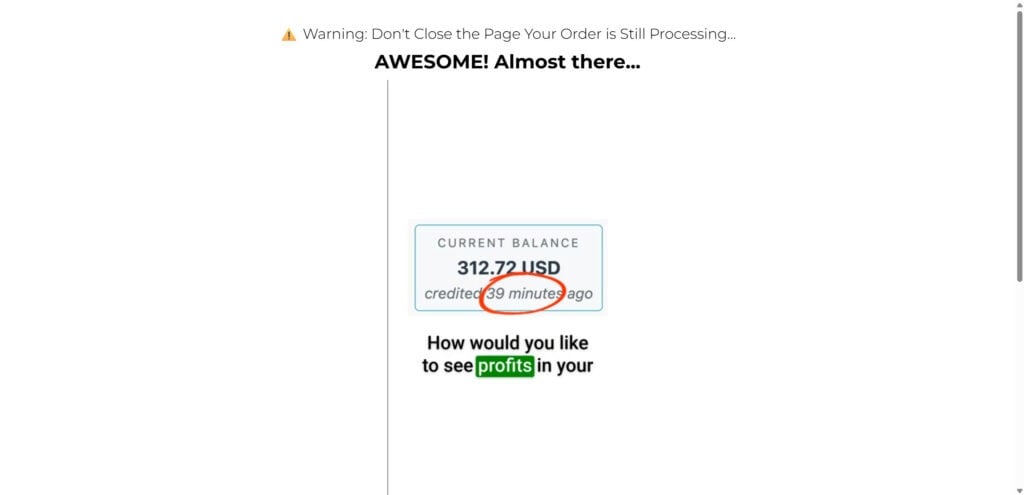
But once you land on the Tap4Cash sales page at gettap4cash.com, the tone shifts fast. You start seeing “order processing” warnings, “almost there” screens, and flashy “incoming payment” visuals that make it look like money is already on the way, even though you haven’t done anything yet.
This article breaks down what Tap4Cash is really selling, the biggest red flags on gettap4cash.com, and what to do if you already paid the $47 fee.
Scam Overview
Tap4Cash is promoted as a beginner-friendly online income system that claims anyone can make money by simply tapping on a phone or laptop. The marketing leans heavily on emotional triggers that work extremely well on social media.
First, it targets people who feel behind financially. The ads speak directly to anyone who wants “extra income,” “rent money,” or a second stream without having to learn complicated skills. Instead of saying “build a business,” it frames the opportunity as a shortcut you can do in minutes.
Second, it lowers your guard by pretending the “work” is almost nothing. The promise is not “learn affiliate marketing,” “build an audience,” or “set up ads.” It’s “tap a button,” “follow simple steps,” “no experience required.” That framing matters because it pushes impulse buying. If it sounds effortless, it feels low-risk to try.
Third, it uses visual proof designed to overwhelm logic. Tap4Cash promotions frequently show “incoming payments,” “current balance” boxes, progress bars, and cash-out screens. Those elements are not evidence of real earnings. They are persuasion tools.
One of the biggest red flags is the way Tap4Cash creates the illusion that money is already being credited to you. The site may show a “CURRENT BALANCE” style box, with a specific dollar amount marked as “credited” minutes ago, plus language suggesting your “new income stream” is already being set up.
That is not how legitimate income platforms work. Real companies do not credit strangers money simply because they watched a sales video. Real payouts require real activity: completed work, verified tracking, validated sales, or at minimum a confirmed user account created by the customer. When a website suggests funds are already waiting for you before you’ve even signed up, it’s usually a psychological trick meant to make you feel ownership of money you never earned.
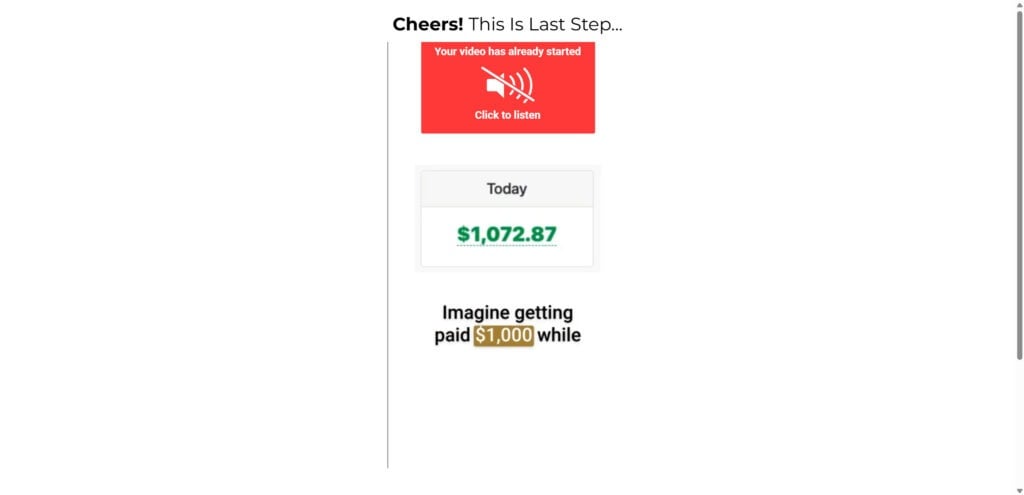
Another major red flag is the urgency and “process warnings.”
You’ll often see messaging like:
- “Warning: Don’t close the page, your order is still processing…”
- “Awesome! Almost there…”
- “Last step…”
These messages aren’t there to help you. They’re there to keep you from leaving and thinking. Scams and questionable offers use “don’t close this page” language because the spell breaks when people open a new tab and search “Tap4Cash reviews” or “Tap4Cash scam.”
Tap4Cash also appears to follow a common low-ticket entry pattern. The first payment is small enough to feel safe, often $47, but the real monetization often happens after purchase. That can include upsells, add-ons, “required upgrades,” or recurring billing disclosed only in fine print.
Not every low-ticket product is a scam. But when a low price is paired with fake cash visuals, unrealistic claims, and high-pressure language, it becomes a serious warning sign.
There’s also a credibility gap baked into the marketing. Tap4Cash implies you can earn quickly with no experience and no meaningful effort. Some ads even include dramatic “secret method” language, pushing the idea that you’re about to unlock a hidden shortcut.
Legitimate businesses don’t need conspiracy-style hooks to sell a real product. That style exists because it drives clicks and emotional engagement, not because it reflects how money is actually made.
If you scroll down far enough, you’ll often find disclaimers about earnings not being guaranteed and testimonials not being typical. Disclaimers don’t automatically mean something is a scam, but they often reveal the real intent.
If the headline screams “easy money,” but the fine print quietly walks everything back, you’re looking at a classic high-pressure marketing funnel.
This scam has been also investigated by Jordan Liles on his YouTube channel, where he offers a detailed video on the subject. We recommend watching his content for a comprehensive understanding of the scam.
Next, let’s break down exactly how scammers carry out this scam from start to finish.
How the Tap4Cash Scam Works
Even if Tap4Cash changes visuals over time, these funnels tend to follow the same structure.
Step 1: A social media ad hooks you with effortless income
Most people find Tap4Cash through TikTok, Facebook, or Instagram.
The ad usually shows:
- A phone screen with cash-out buttons
- A claim that you can earn quickly with no experience
- A simple action like tapping or clicking
- A “secret” vibe that makes it feel exclusive
The goal is not to explain a real business model.
The goal is to get you curious enough to click.
Step 2: You land on a page designed to hold your attention
Once you arrive on gettap4cash.com, you’re often pushed into a video-first experience.
These pages are typically built to:
- Keep you watching by limiting navigation
- Use big text and vague claims
- Delay the price reveal until you’re emotionally invested
- Avoid specifics that can be fact-checked
Step 3: The site creates instant “proof” with fake money visuals
This is the part that traps people.
Instead of providing verifiable proof like transparent terms, clear company info, or legitimate payment evidence, you see visuals such as:
- “Incoming $123.56 payment” with a progress bar
- “Current balance $312.72” credited minutes ago
- “Today” earnings shown in green
- “Almost there” and “processing” screens
These visuals are designed to trigger the same feeling as a slot machine win.
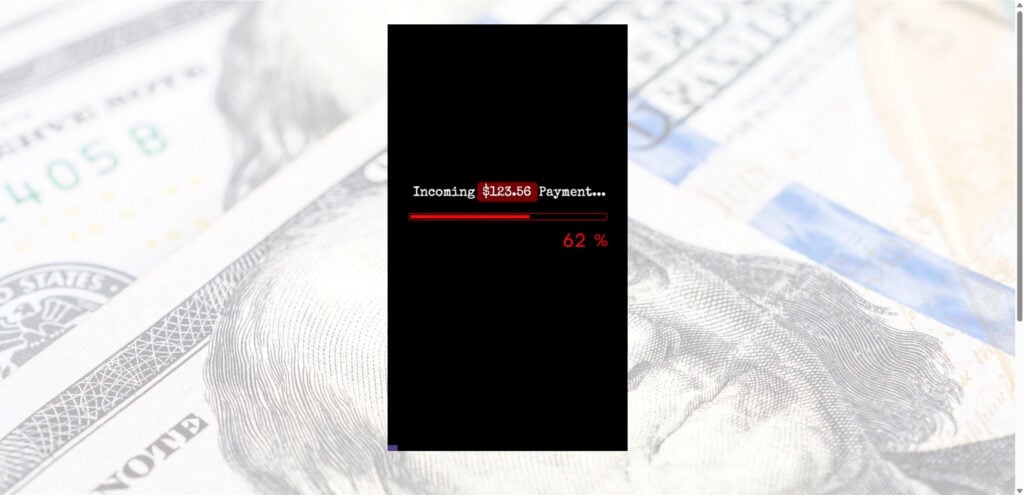
They create urgency and excitement, then push you into the checkout.
Step 4: “Don’t close the page” pressure stops you from researching
This language exists to keep you from doing the one thing that could protect you: looking up independent reviews.
It’s common for people to pause and search:
- Tap4Cash reviews
- Is Tap4Cash legit
- Tap4Cash scam or real
- gettap4cash.com refund
If a product generates that kind of panic-search behavior, it’s usually for a reason.
Step 5: The $47 payment is the entry point, not the end
The funnel often asks for a low buy-in amount like $47.
That price is carefully chosen:
- Low enough to feel like a “test”
- High enough to generate serious revenue at scale
- Easy to justify emotionally if you believe the income claims
After payment, you may be routed through a billing platform or gateway provider, and the charge name may not even say Tap4Cash on your statement.
Step 6: Upsells and “required upgrades” can appear after purchase
This is where many people lose more money.
Common upsell angles include:
- “Unlock bigger payouts”
- “Activate the automation”
- “Done-for-you setup”
- “Exclusive training”
- “VIP support”
If the base product truly worked as advertised, there wouldn’t be pressure to keep upgrading.
Step 7: The buyer realizes the system is not what the ad implied
Instead of a real “tap to earn” app, buyers often receive:
- A basic training course
- Generic affiliate marketing instructions
- A members area that doesn’t match the ad’s promises
- Steps that require real work and traffic
Making money online can be real.
But “tap and get paid” is a marketing fantasy.
Step 8: Refund friction and support runarounds
Once someone asks for a refund, common issues include:
- Delayed support responses
- Confusing instructions
- Being redirected to a third-party billing provider
- Refund denials based on technicalities
Even if a refund policy exists, the question is whether it’s honored quickly and consistently.
This Is Not the First Time This Scam Formula Has Appeared
One reason Tap4Cash raises alarms is because the structure is recycled.
The name changes. The visuals change. The “story” changes.
But the formula stays the same:
- A simple phone action claim (tap, scroll, click)
- Big earnings visuals without verifiable proof
- A video presentation built to pressure decisions
- A low entry price like $17, $47, or $67
- Upsells or recurring billing after checkout
You’ve probably seen similar pitches under other names, such as:
- “Phone hack” systems
- “Mini ATM” offers
- “Cash-out method” pages
- “3-step phone trick” funnels
- “Done-for-you phone profits” programs
When the branding is new but the playbook is identical, it’s usually not innovation.
It’s repackaging.
What to Do If You Have Fallen Victim to This Scam
If you already paid, don’t beat yourself up. These funnels are engineered to convert smart people quickly.
Here’s what to do next.
- Take screenshots and save everything
Capture the sales page, checkout page, receipts, emails, and any “balance” or “processing” screens. Save them in a folder. - Check your statement for the exact merchant name
The charge may not say Tap4Cash. Write down the merchant descriptor, date, and amount. - Look for extra charges or subscriptions
Check for additional charges beyond the initial $47, including monthly or recurring billing. - Cancel any recurring billing immediately
If there’s a cancel option inside the members area, use it. If not, contact the billing support listed in your receipt or site footer. - Request a refund in writing
Keep it short and clear: “I am requesting a refund. Please confirm cancellation and that no further billing will occur.” Save the reply. - Escalate to your bank or card issuer if support delays
If they stall or refuse, call your card issuer and ask about a chargeback. Provide your screenshots and receipts. - Change passwords if you created an account
If you reused passwords anywhere else, change them. Keep your accounts secure. - Report the ads
Report the Tap4Cash ads on TikTok, Facebook, or Instagram as misleading. - Do not pay more to “unlock” money
If the site shows a balance and asks for a fee to release it, stop. That’s a classic trap.
The Bottom Line
Tap4Cash is marketed as an easy “tap to earn” system, but the funnel uses classic red-flag tactics: fake payment visuals, urgency pressure, “almost there” manipulation, and an entry price designed to trigger impulse purchases.
If you’re researching Tap4Cash reviews because something feels off, trust that instinct. Real ways to earn online don’t require fake balances, mysterious processing warnings, or secret-method hype.
And if you already paid, focus on practical steps: document everything, stop recurring charges, request a refund in writing, and escalate to your bank if needed.
Tap4Cash FAQ
Is Tap4Cash legit or a scam?
Tap4Cash shows multiple red flags commonly associated with online income scams, including unrealistic earnings claims, “tap to earn” messaging with no verifiable business model, and cash-out style visuals that appear designed to create a false sense of proof. Legitimate earning platforms do not imply money is already “credited” to you before you complete real work or verified transactions.
What is Tap4Cash supposed to be?
Tap4Cash is promoted as a beginner-friendly system that claims you can make money by tapping your phone or laptop. Ads suggest it is a shortcut to instant income, often with “no experience” and “no skills” needed. In reality, these offers typically lead to a sales funnel pushing a paid product, training, or affiliate-style program that does not match the ad’s promise.
How does Tap4Cash claim you make money?
The pitch usually implies you earn by tapping, clicking, or following simple steps that trigger payouts. This is a major credibility gap. Real online income requires an actual source of revenue: selling products or services, affiliate commissions from real sales, paid work, or content monetization through legitimate platforms. “Tap to get paid” is not a real business model by itself.
Why does Tap4Cash show “incoming payments” and a “current balance” on the page?
Those visuals are commonly used as persuasion devices. Scams often display progress bars, “incoming payment” animations, or “credited minutes ago” balance boxes to make visitors feel like money is already flowing. This can create urgency and emotional commitment, encouraging people to pay before researching.
What is gettap4cash.com?
gettap4cash.com is the sales page domain frequently associated with Tap4Cash promotions. The exact page layout may change over time, but the typical structure involves a video presentation, urgency prompts, and a checkout flow. Domain names and page designs can be swapped quickly, which is why it helps to focus on the underlying tactics, not just the URL.
Why do Tap4Cash ads say “no experience” and “no tech skills required”?
Because it broadens the target audience and lowers skepticism. Scam-style offers often aim at people who feel overwhelmed by real online business models. “No experience” language is designed to remove friction and push fast decisions, especially on social media where people are scrolling quickly.
How much does Tap4Cash cost?
Many promotions mention a $47 entry fee, sometimes framed as a “one-time” payment. The bigger concern is what happens after purchase: some funnels push upgrades, add-ons, or additional charges that can increase the total cost. Always check your bank statement for the merchant name and look for unexpected recurring billing.
Can Tap4Cash charge more than the advertised amount?
It can happen with funnels like this, especially when upsells, add-ons, or recurring subscriptions are presented after the initial checkout. Sometimes the extra charges are disclosed in fine print, and sometimes buyers do not realize what they agreed to. If you paid, review your receipt and watch for additional charges in the days that follow.
Why does Tap4Cash say “don’t close the page” or “your order is still processing”?
That language is often used to prevent people from leaving the funnel and searching for reviews. It creates pressure, urgency, and the feeling that you are already in the middle of a process you should not interrupt. Legitimate companies do not rely on “don’t close this page” warnings to keep customers from researching.
Is there really an app called Tap4Cash?
Some promotions refer to an “app,” but many similar offers do not provide a real app in the traditional sense. Instead, buyers may receive access to a members area, a training portal, or a generic digital product. If an offer claims to be an app but does not provide a clear listing on official app stores or verifiable developer details, treat it with caution.








