

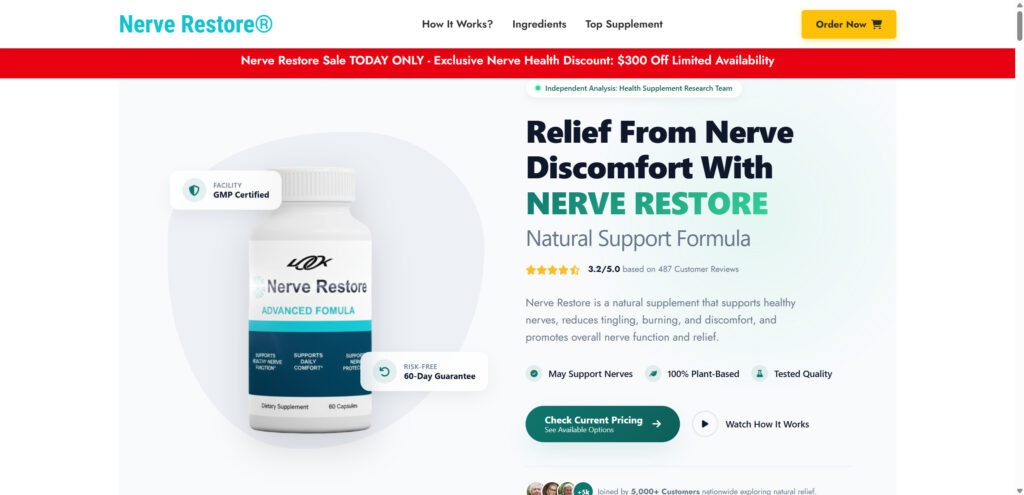
Nerve Restore is being promoted as a memory and “brain support” supplement, often packaged inside a dramatic story about Alzheimer’s, dementia, and “hidden causes” that doctors supposedly ignore.
The pages look polished. The claims sound urgent. The framing often imitates real medical news.
But the marketing pattern behind Nerve Restore-style campaigns is a repeatable template that shows up across many memory supplements, with the product name swapped out and the story slightly rewritten.
This article explains what these operations typically look like, why the promises are unreliable, how the funnel works step by step, and what to do if you already purchased and now have concerns.
This is not medical advice. If you are worried about memory changes, especially sudden or worsening symptoms, talk to a qualified healthcare professional.
Overview
Nerve Restore is usually sold as a “natural” solution for memory problems, brain fog, and age-related decline.
In many campaigns, it goes further and implies it can help with serious conditions like Alzheimer’s disease and dementia.
That is where the risk spikes.
These are high-stakes medical issues. They do not belong in “miracle shortcut” advertising.
The “breakthrough recipe” bait is the hook
A common starting point is a “secret” you are supposedly about to discover, such as:
- a “$12 golden honey recipe”
- a “Harvard doctor reveal”
- a “simple bedtime spoonful” ritual
- a “one weird trick” that targets the brain
- a “rare plant” used overseas that “big pharma hates”
This hook is designed to pull you in with curiosity and hope.
But the “recipe” is often vague, impractical, or never clearly provided.
Instead, it becomes a setup for the real goal: selling a bottle.

Fake authority is used to manufacture trust fast
A major red flag is credibility theater.
Credibility theater means the page looks authoritative without offering verifiable proof.
These memory funnels frequently use:
- news-style layouts that resemble CNN Health pages
- references to Harvard University or “Harvard doctors”
- “medical news” formatting, bylines, and date stamps
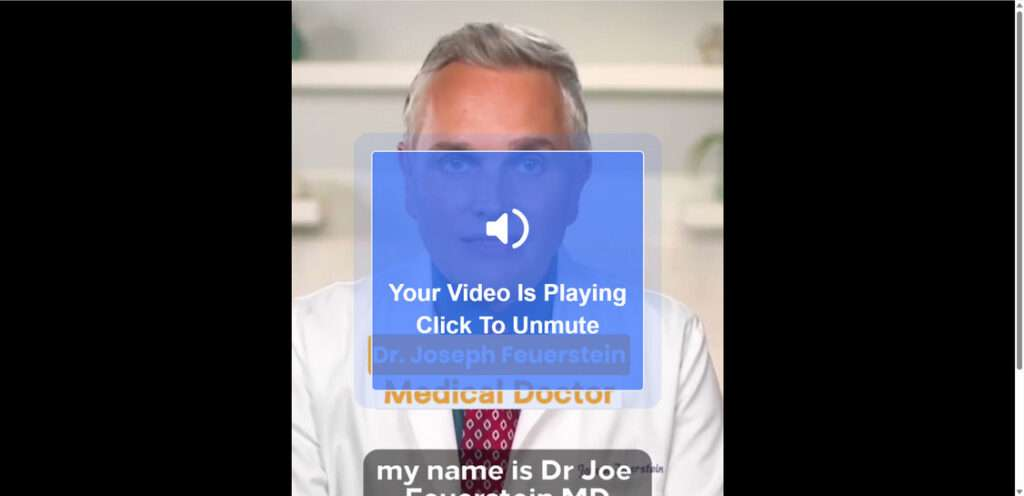
- stock photos of doctors in white coats
- “as seen on” logos without real coverage links
A logo is not an endorsement.
A “doctor” image is not a credential.
A page that looks like news is not news.
Why memory and dementia claims are especially dangerous
Memory decline is emotionally intense.
People are scared of losing independence. Families are scared of losing someone they love.
Scammy supplement funnels exploit that fear by promising:
- rapid improvements
- “reversal”
- fixes that sound simple and cheap
- a villain narrative (doctors hiding cures, pharma suppressing truth)
The goal is not careful education.
The goal is fast conversion.
The science language is often designed to sound real, not be real
These pages commonly use medical-sounding explanations, like:
- “plaques” and “toxins”
- “brain inflammation”
- “blocked blood flow”
- “insulin resistance in the brain”
- “mitochondrial repair”
- “neurogenesis activation”
Some of these terms can appear in legitimate research contexts.
But the funnel usually jumps from complex science to a simple conclusion: “Therefore, buy this bottle.”
If there is no independent evidence, no published clinical data, and no clear company transparency, the science language is being used as persuasion.
The most common complaint pattern
When memory supplement funnels are run like aggressive direct-response offers, people often report:
- unexpected upsells during checkout
- multiple bottles charged when they intended to buy one
- recurring billing or continuity programs buried in fine print
- support that is difficult to reach
- refund policies that sound easy but become slow and frustrating
Not every buyer experiences every problem.
But the combination of high-pressure ads, fake authority framing, and billing friction is a predictable risk profile.
The big takeaway
Nerve Restore-style marketing is usually not built around transparency.
It is built around urgency, emotional storytelling, and borrowed credibility.
If the product’s “proof” exists only inside its own sales page, that is not validation.
That is marketing.
How The Operation Works
Nerve Restore is rarely sold through a straightforward, normal e-commerce experience.
Most buyers are pushed through a multi-step funnel designed to reduce skepticism and speed up purchase decisions.
Step 1: The scroll-stopping ad appears
It starts with a paid ad on social media or a display network.
The ad aims at emotion first:
- fear of memory decline
- anxiety about dementia
- worry about aging
- guilt or urgency from family responsibility
- hope for a simple fix
Many ads are intentionally “casual” so they blend into a feed.
Some use implied celebrity authority or recognizable medical personalities to borrow trust.
Step 2: The click leads to a fake news-style article
After the click, you often land on an advertorial.
That is a sales page disguised as a news story.
Common signs:
- “BREAKTHROUGH” language in the headline
- a named “doctor” author with unclear credentials
- a clean medical-news layout
- brand logos and navigation that imitate real outlets
- a large embedded video that looks like a broadcast clip
The goal is to make you feel like you are consuming reporting, not advertising.

Step 3: The “golden recipe” is teased, then delayed
This is the bait stage.
The page hints that a simple recipe or ingredient “saved” someone from Alzheimer’s or restored memory fast.
But instead of giving clear, practical instructions, it stretches the story:
- “Watch this first”
- “Doctors are stunned”
- “The media won’t cover it”
- “Do this tonight”
- “Stay until the end”
The delay is not accidental.
It is a retention tactic.
Step 4: A long-form video locks attention and reframes the problem
The video typically follows a familiar script:
- describe a frightening brain-related threat
- introduce a hidden cause most people “miss”
- claim mainstream medicine focuses on symptoms
- tease a simple solution
- position the product as the real answer
Expect lots of:
- animated brain graphics
- simplified “plaque” explanations
- dramatic testimonials
- claims that sound clinical but are not verifiable
Step 5: Authority badges and regulatory language appear
Once you are emotionally invested, the page adds credibility signals:
- “clinically proven”
- “doctor recommended”
- “FDA approved”
- “GMP certified”
- “made in the USA”
- “patented formula”
These badges are often presented without documents, lab reports, or independent study links.
When verification is missing, treat these as marketing claims, not facts.
Step 6: Urgency and social proof pressure the purchase
Then the funnel pushes:
- countdown timers
- “limited stock” warnings
- “today only” discounts
- popups showing “recent purchases”
- “people watching now” counters
These are conversion tools.
They are not evidence of legitimacy.
Step 7: Bundles and “protocols” raise the ticket size
The offer section is usually structured to push multi-bottle orders:
- 1 bottle priced high
- 3 bottles “recommended”
- 6 bottles “best value”
- sometimes longer “treatment” bundles
This is classic pricing psychology: make the small choice feel irresponsible.
Step 8: Checkout friction and upsells create billing risk
This is where many complaints originate.
Common issues:
- pre-selected quantities
- upsells disguised as “required steps”
- “free bottle” language that still increases totals
- vague merchant descriptors on statements
- continuity terms in fine print
People often think they ordered one bottle and later discover a larger charge.
Step 9: Support friction reduces refunds
After purchase, the support experience may include:
- email-only contact
- slow replies
- unclear return instructions
- strict conditions and short windows
- long delays before refunds are processed
Even if a product arrives, the process can feel engineered to discourage returns.
Why the same story keeps reappearing under new names
Nerve Restore is one label.
The funnel is modular.
If one product name gets flagged or complaints rise, the operator can:
- switch domains
- rename the product
- swap the “recipe” angle
- run the same sales machine again
What To Do If You Have Bought This
If you purchased Nerve Restore and now feel uneasy, focus on practical steps.
1) Save evidence immediately
Create a folder and save:
- screenshots of the ad (if you can)
- the landing page URL
- the checkout totals
- your order confirmation email
- your receipt and order number
- screenshots of your bank or card statement
This matters if you need a dispute.
2) Check for recurring billing
Look for signs of continuity terms:
- a second charge days or weeks later
- language like autoship, membership, monthly, continuity
- emails about “next shipment”
If anything looks recurring, treat it as urgent.
3) Contact your card provider if billing looks wrong
Ask:
- whether you can dispute the charge
- how to block future charges from the same merchant
- whether replacing the card is recommended
If repeat charges appear, a replacement card can stop future billing.
4) Email the seller and make the request unambiguous
Send a short message with:
- your full name
- the email used for the order
- the order number
- “Cancel any subscription or autoship and do not charge me again”
- request written confirmation
Save the reply, or the lack of reply.
5) Monitor statements for at least 60 days
Watch for:
- new charges from unfamiliar names
- repeat billing around the same date monthly
- shipping fees you did not approve
6) Do not treat a supplement ad as a medical plan
If you or a family member has memory decline, dementia concerns, or new cognitive symptoms, do not rely on a supplement funnel for guidance.
If someone is taking prescription medication, consult a clinician or pharmacist before adding supplements.
If you noticed side effects, stop using it and seek medical advice.
7) Report the ad
Report it on the platform where you saw it.
Use categories like misleading content, scams, fake endorsements, or impersonation.
The Bottom Line
Nerve Restore is frequently promoted through a familiar scam-style supplement funnel that uses fake authority, emotional storytelling, and urgency tactics to sell a bottle.
The “breakthrough recipe” framing is usually a hook, not transparent medical guidance supported by independent evidence.
If you already bought it, focus on protection: document everything, watch for subscriptions, cancel in writing, and escalate through your bank if billing looks deceptive.
The key skill is recognizing the funnel pattern so you can spot it instantly when it reappears under a new memory supplement name.
FAQ
What is Nerve Restore?
Nerve Restore is marketed as a memory and “brain support” supplement, often positioned for brain fog, focus, and age-related cognitive decline. Some ads go further and imply help for Alzheimer’s or dementia.
Is Nerve Restore a treatment or cure for Alzheimer’s or dementia?
A supplement should not be treated as a treatment or cure for Alzheimer’s disease or dementia. If the marketing implies “reversal,” “stops Alzheimer’s,” or “restores memory fast,” treat that as a major red flag.
Are the “CNN Health” or “Harvard doctor” pages real?
Often, no. These funnels commonly use news-style layouts, logos, and “breakthrough” headlines to imitate trusted outlets or institutions. If you cannot verify the story on the real outlet’s website outside the sales page, assume it is an advertorial designed to sell.
What is the “golden honey recipe” angle and why is it used?
It is a hook. A “cheap recipe” or “secret ritual” sounds accessible and creates curiosity. In many funnels, the recipe is vague or delayed so the product becomes the real “solution” by the end.
Are the doctor in the video and the testimonials real?
Sometimes they are actors, stock footage, or AI-generated content. Even when a person is real, that does not prove licensing, expertise, or that results are typical. If claims cannot be verified independently, treat them as marketing.
Does Nerve Restore have clinical studies proving it works?
Many of these funnels use phrases like “clinically proven” without linking to published studies on the exact product and formula. If evidence exists only inside the sales page, that is not independent validation.
Is Nerve Restore FDA approved?
Dietary supplements are not “FDA approved” like prescription drugs. If you see “FDA approved” in a supplement funnel, assume it is being used to create trust unless there is clear, verifiable context.
Can Nerve Restore interact with medications?
It can. Older adults often take multiple prescriptions, and some supplement ingredients can interact with blood thinners, antidepressants, blood pressure meds, or other treatments. A pharmacist or clinician should review it before use.
What are the biggest red flags for a memory supplement funnel?
Fake news layout, implied endorsements, dramatic “breakthrough” claims, urgency timers, limited company details, and checkout flows with upsells or fine-print continuity terms are common warning signs.
Why do people report unexpected charges or multiple bottles?
Checkout pages may use pre-selected quantities, confusing “best value” bundles, and upsell steps that look mandatory. Fine print can also include continuity billing that buyers miss.
How do I check if I accidentally signed up for recurring billing?
Look for terms like autoship, membership, monthly, continuity, or “next shipment.” Monitor your card statement for repeat charges and check any confirmation emails for subscription language.
What should I do if I was charged again or charged more than expected?
Save screenshots and receipts, email the seller to cancel and request written confirmation, and contact your bank or card issuer to dispute unauthorized billing and block future charges if needed.
What if someone has new or worsening memory symptoms?
Treat it as a medical priority, not a supplement decision. Sudden or worsening confusion, memory loss, personality changes, or safety issues should be evaluated by a qualified healthcare professional promptly.
Where can I report misleading Nerve Restore ads?
Report the ad on the platform where you saw it (Facebook, YouTube, TikTok, etc.). If the funnel appears deceptive or impersonates media outlets, you can also report it to consumer protection agencies in your region.

Join the discussion
0 commentsShare your experience or ask a question about this article.
Discussion
Start the conversation
Have a question or something useful to share? Add the first comment.