

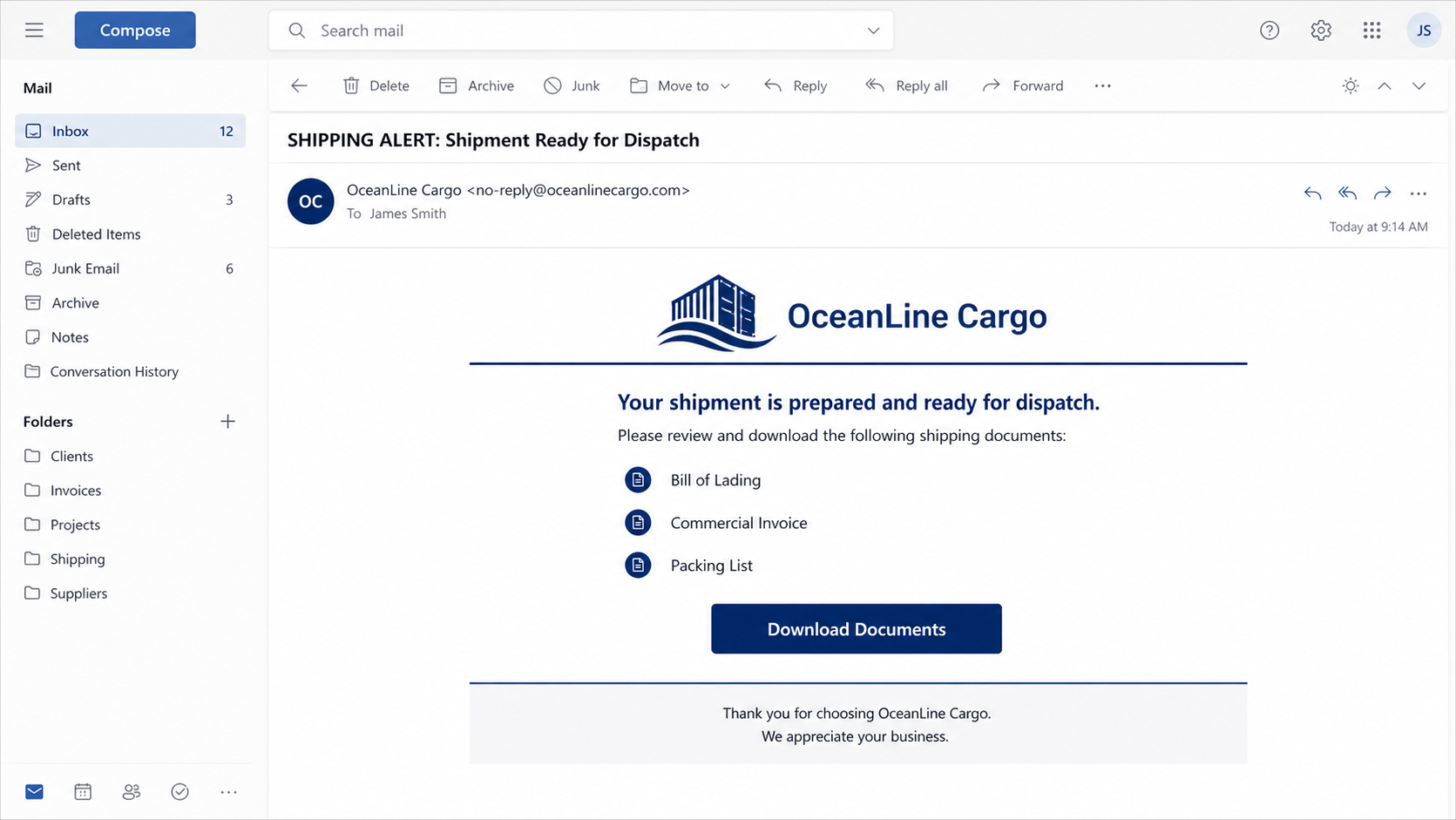
A shipping alert bearing the MAERSK name says a consignment is prepared for dispatch. Before it can move, the recipient must download a Bill of Lading, Commercial Invoice, and Packing List.
For someone working with imports, purchasing, or logistics, that request sounds entirely routine. Missing one customs document can delay a real shipment and create expensive problems.
The MAERSK Shipment Ready for Dispatch email scam exploits that workflow. Its document button opens a fake webmail sign-in page, where the supposed download becomes an attempt to steal the recipient’s email password.
Overview
The message copies a familiar shipping-document request
The email claims a shipment is ready and asks the consignee to confirm paperwork before dispatch. It names documents that genuinely matter in international trade, which gives the message a convincing business context.
A Bill of Lading describes the cargo and transport arrangement. A Commercial Invoice supports valuation and customs processing, while a Packing List records package contents. Mentioning all three makes the lure sound more knowledgeable than a vague parcel notice.
The campaign may use a MAERSK logo, blue corporate styling, and a signature such as “Delivery Assistance.” None of those elements establishes authenticity. Criminals can copy public branding and standard logistics terminology.
The download button leads to a copied webmail login
Clicking “Download Documents” may open a page styled like cPanel Webmail, Roundcube, Microsoft, or another mail service. The recipient’s email address can already be filled in, making the page appear connected to the message.
The form asks for the mailbox password before releasing the files. That is the core deception. A shipping company does not need the password to a customer’s email account in order to provide transport documents.
The page may collect:
- The complete business email address
- The current mailbox password
- A one-time authentication code
- Approval for an unfamiliar sign-in
- Recovery information requested in later messages
A compromised business inbox can expose payments and cargo
Shipping mailboxes contain supplier names, customer details, invoices, routes, container references, and payment conversations. An intruder can observe how the business communicates, then send believable instructions from the real account.
Attackers may create hidden forwarding rules, delete security alerts, or wait for a legitimate invoice discussion. They can then replace bank details or redirect a payment while appearing to be a known partner.
MAERSK is a real shipping company and has no connection to the fraudulent email. The brand is used without permission to give the phishing request authority.
Why Shipping Documents Make Effective Phishing Bait
The request reaches departments that handle valuable transactions
Purchasing, finance, customs, and logistics teams routinely exchange attachments with outside organizations. The recipient may not personally know every carrier employee, so an unfamiliar sender does not always look immediately wrong.
The documents also relate to goods and payments. That makes a compromised mailbox useful for business email compromise, invoice fraud, cargo diversion, and additional phishing against partners.
The email creates operational pressure
A delayed shipment can produce storage fees, missed production, unhappy customers, or customs trouble. The message asks for prompt confirmation and lets that commercial pressure replace careful verification.
Real urgency still permits independent checking. A recipient can open the known carrier portal, consult the internal shipment system, or contact the established representative using previously saved details.
The lack of a real shipment relationship is often hidden
Mass campaigns can reach companies that import goods even when no MAERSK shipment exists. More targeted messages may use addresses exposed on company websites or in earlier breaches.
A legitimate notice should connect to a recognizable booking, container, consignee, route, or account. Generic paperwork without a verifiable shipment reference deserves scrutiny.
How the MAERSK Shipment Ready for Dispatch Email Scam Works
Step 1: The phishing email reaches a business mailbox
Attackers send the lure to accounts such as sales, purchasing, accounts payable, imports, and general office addresses. One employee may forward it internally to someone who regularly handles shipments.
Forwarding can make the message seem safer because it now arrives from a colleague. The original sender and link still need to be examined.
Step 2: The subject announces a time-sensitive dispatch
Subjects such as “MAERSK SHIPPING ALERT” or “Shipment Ready for Dispatch” imply that cargo is already waiting. The recipient is placed in the role of the person holding up the next step.
The message may address “Dear Consignee” instead of naming a real customer. That generic wording allows one template to be distributed widely.
Step 3: Real document names build credibility
The body lists a Bill of Lading, Commercial Invoice, and Packing List. It asks the recipient to check accuracy, especially for customs purposes, before confirming dispatch.
Those details describe a plausible workflow but do not prove a shipment exists. Fraudsters need only basic industry knowledge to reproduce it.
Step 4: The document button sends the browser elsewhere
The visible button can conceal a domain unrelated to maersk.com. Redirects, compromised sites, and hosted pages may be used to obscure the final destination.
Do not test the link. Compare the request with the official customer portal or a known booking record instead.
Step 5: A fake mail portal requests the password
The destination claims the documents are protected and requires an email sign-in. Its design may change according to the recipient’s address so that it resembles the service their organization uses.
This is not normal document access. At most, a legitimate portal would request credentials belonging to that portal, not the password for an unrelated mailbox.
Step 6: Submitted credentials go to the criminals
When the form is submitted, the page records the address and password. It may report an incorrect password and ask again, helping the attackers capture an updated value if the first entry contained a typo.
A final redirect or blank document error can make the theft less obvious. The victim may blame a broken portal and return to work.
Step 7: Attackers enter the real inbox and establish access
The criminals test the credentials, review messages, and may add forwarding or deletion rules. If multi-factor authentication is enabled, they may send another prompt asking the victim to approve access.
Mailbox rules can conceal password-reset alerts and copy future correspondence to an external address even after the initial session ends.
Step 8: The compromised account supports further fraud
Attackers can impersonate the employee, target colleagues, or alter payment instructions in genuine supplier conversations. They may also reuse the password against cloud storage, accounting tools, or logistics portals.
The first visible email is therefore only the entry point. The most damaging activity can occur later through authentic-looking messages sent from the stolen account.
How to Check a Shipping Notice Safely
- Search the internal system for the booking or shipment instead of using the email button.
- Open the carrier portal from a saved bookmark or manually typed official address.
- Confirm with the known MAERSK representative using contact details already on file.
- Expand the sender address and compare its domain carefully.
- Ask why a shipping document would require a mailbox password.
- Inspect whether the consignee, route, container, booking, and customer details match real work.
- Report the message to the organization’s security team before forwarding it further.
What the Fake Login Page Is Trying to Hide
The browser address matters more than the design
A copied webmail page can reproduce familiar colors and logos almost perfectly. It cannot legitimately move itself onto the organization’s real sign-in domain. Read the hostname from right to left and identify the registered domain, not merely a reassuring word placed at the beginning.
A padlock only means the connection to that particular site is encrypted. Criminals can obtain HTTPS certificates for phishing pages, so the padlock does not establish that MAERSK, the recipient’s mail provider, or the employer owns the destination.
A prefilled address is not proof of account access
The phishing URL can carry the recipient’s email address as a parameter. The page then displays that address automatically, creating the impression that it already recognized the visitor through a secure document service.
In reality, the address may have been copied from the same mailing list used to send the lure. The page still needs the victim to supply the password.
An error message can be part of the theft
Some credential collectors deliberately reject the first password and ask for it again. This catches typing mistakes and makes the form feel connected to a real authentication system.
Do not interpret an “incorrect password” message as evidence that the page checked anything safely. If a password was submitted once, treat it as exposed and change it through the genuine provider.
Business Controls That Reduce This Risk
Companies can make shipping lures less effective by requiring employees to verify new document portals and payment changes through a second channel. A known telephone number, existing carrier portal, or internal shipment record is safer than replying to the message.
Mail administrators should enable multi-factor authentication, disable unnecessary legacy protocols, retain sign-in logs, and alert on external forwarding. Finance teams should require independent approval whenever supplier bank details change.
Employees also need a simple reporting route. A worker who is unsure should be able to send the message to security without being blamed for delaying a shipment. Quick reporting can protect every other recipient in the organization.
Organizations should also keep verified carrier contacts and portal bookmarks in a shared internal system. When an unexpected document request arrives, employees then have a fast, trusted way to compare the claim without touching the embedded link.
What to Do if You Have Fallen Victim to This Scam
- Change the mailbox password immediately. Use the provider’s official portal from a trusted device. Make the replacement unique and do not reuse a variation of the exposed password.
- End active sessions and review authentication methods. Sign out unfamiliar devices, remove unknown app passwords, revoke suspicious connected applications, and enable phishing-resistant multi-factor authentication where available.
- Inspect mailbox rules and forwarding. Look for rules that delete security warnings, hide replies, forward messages externally, or move invoice conversations. Check delegates, recovery addresses, and automatic replies as well.
- Notify the company’s IT or security team. Business administrators can review sign-in logs, preserve evidence, reset tokens, search for the same lure, and determine whether other employees were targeted.
- Protect current shipments and payments. Tell finance, logistics, suppliers, and customers that the mailbox may have been compromised. Independently confirm any recent changes to bank details, delivery instructions, or cargo release requests.
- Scan the device. If a file downloaded or the page asked you to install anything, run a full Malwarebytes scan. It can identify many credential stealers and other malware that may accompany a phishing campaign.
- Block repeat malicious destinations. AdGuard can prevent access to many known phishing and advertising domains. Continue verifying shipping requests independently because no filter catches every newly created page.
- Report and preserve the message. Save the original email with headers, the URL, screenshots, and access logs. Report suspected MAERSK impersonation through verified company channels and file an IC3 report if financial fraud occurred.
- Reject paid recovery offers. A stranger who promises to recover an inbox, payment, or shipment for an upfront fee may be another scammer using information from the first incident.
Is Your Device Infected? Run a Free Malware Scan
Slow performance, constant pop-ups, or strange behavior? These are classic signs of a malware infection. The fastest way to find out is to scan your device with Malwarebytes Free — one of the most trusted malware removal tools available.
The free version detects and removes the most common threats, including:
- Adware — the cause of those annoying pop-ups
- Browser hijackers — unwanted redirects and changed homepages
- Trojans and spyware — hidden programs stealing your data
- Potentially unwanted programs (PUPs) — software you never asked for
👉 Select your device below — Windows, Mac, or Android — then follow the simple steps to download Malwarebytes, scan your system, and remove any threats it finds. The scan usually takes 5 to 20 minutes.
Run a Malware Scan with Malwarebytes for Windows
Malwarebytes is one of the most popular and trusted anti-malware tools for Windows — and it’s completely free for removing infections. It catches threats that many antivirus programs miss, including adware, browser hijackers, and trojans. Follow the steps below to scan and clean your PC in just a few minutes.
Download Malwarebytes
Click the button below to download the latest version of Malwarebytes for Windows from the official source. The free version is all you need — it will scan your computer and remove adware, browser hijackers, and other malicious software at no cost.
Download MalwarebytesOfficial installer for Windows 11 and 10. Your download starts right away.Want real-time protection? See Malwarebytes Premium Malwarebytes Free for WindowsScans and removes malware at no cost
-
Install Malwarebytes
When the download finishes, open your Downloads folder and double-click the MBSetup file. If Windows shows a User Account Control pop-up, click “Yes” to allow the installation.
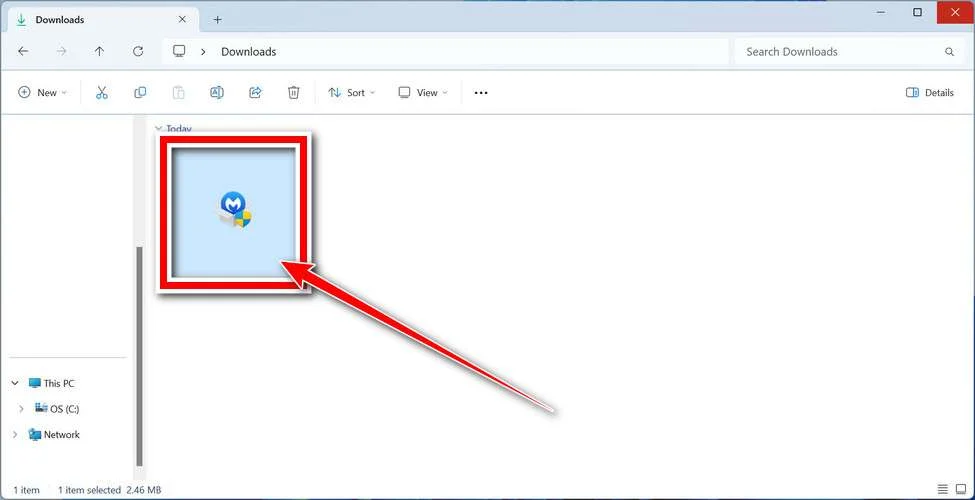
Follow the On-Screen Prompts to Install Malwarebytes
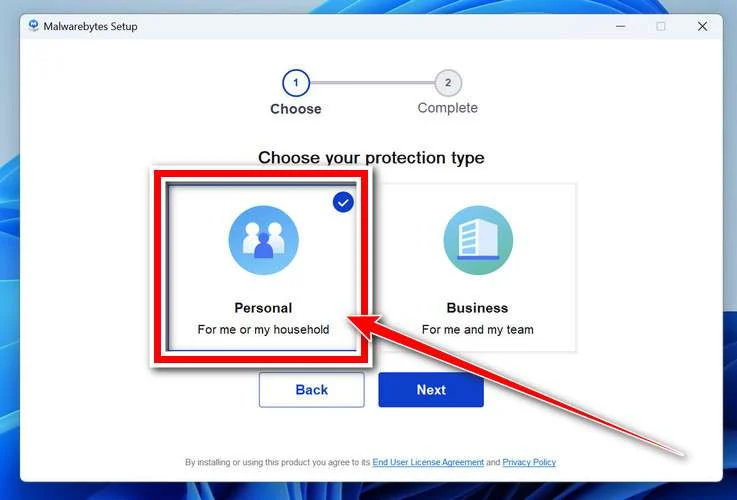
The setup wizard will walk you through a few quick screens:
-
Choose where you’re installing the program — “Personal Computer” or “Work Computer” — then click Next.
-
Malwarebytes will now install on your device. This usually takes under a minute.

-
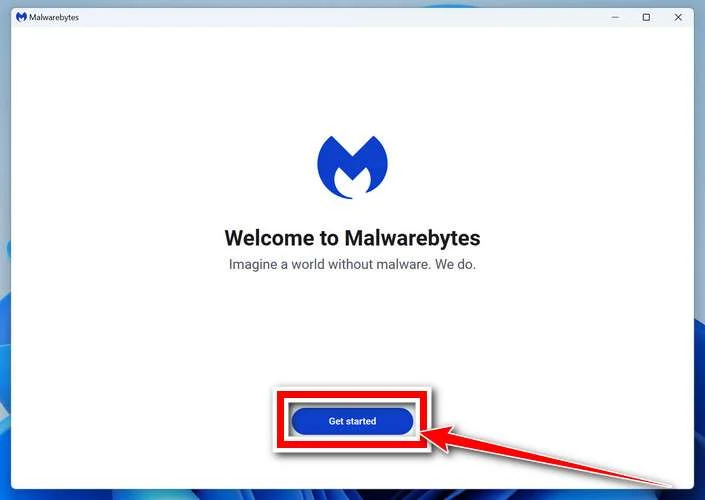
When installation is complete, the “Welcome to Malwarebytes” screen will open automatically.
-
On the final screen, click Open Malwarebytes to launch the program.

-
Enable “Scan for Rootkits”
Before scanning, turn on rootkit detection so Malwarebytes can find even the most hidden threats. Click the Settings gear icon on the left side of the screen.
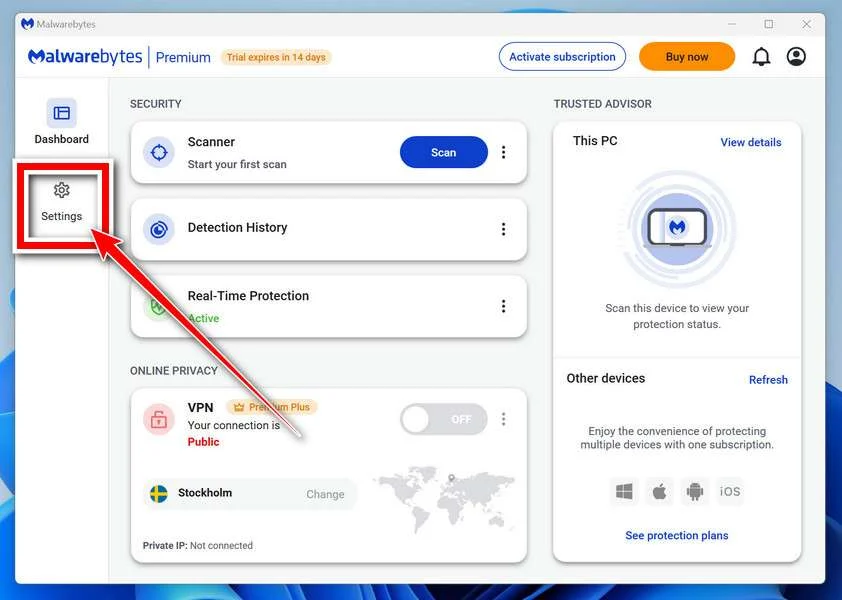
In the settings menu, find “Scan for rootkits” and click the toggle so it turns blue.

Done? Click “Dashboard” in the left pane to return to the main screen.
Start the Scan
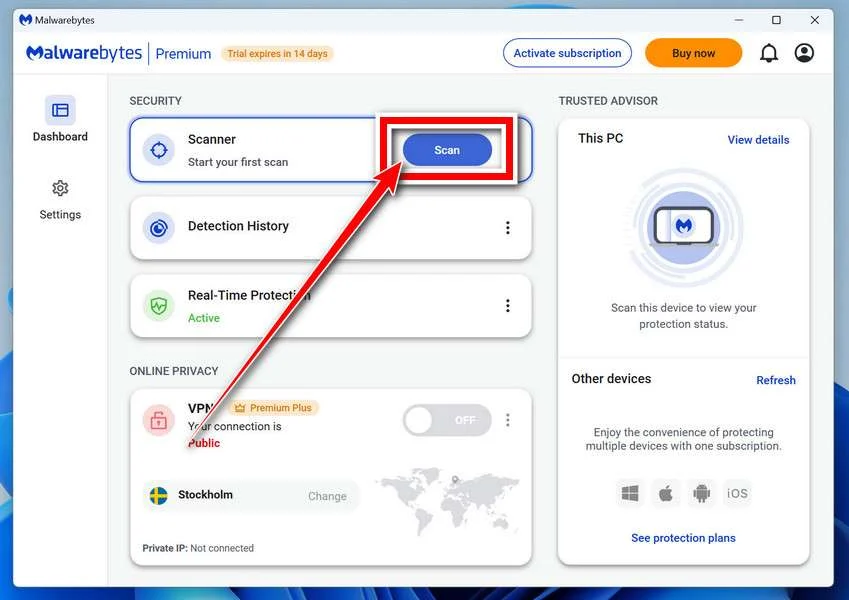
Click the blue Scan button. Malwarebytes will automatically update its virus database and start checking your computer for malware.
-
Wait for the Scan to Finish
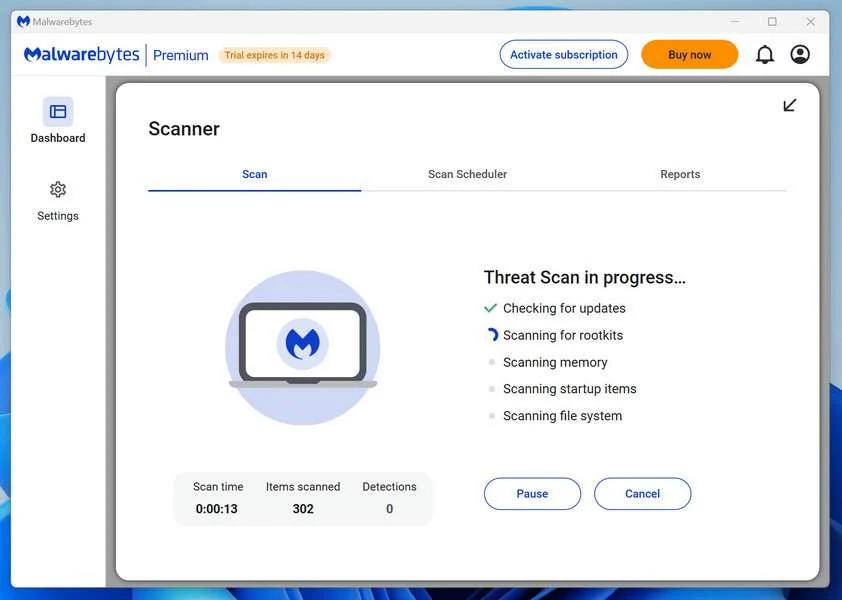
The scan checks your entire system for browser hijackers and other malicious programs, so it can take 5 to 20 minutes depending on your computer. Feel free to do something else — just check back occasionally to see the progress.
-
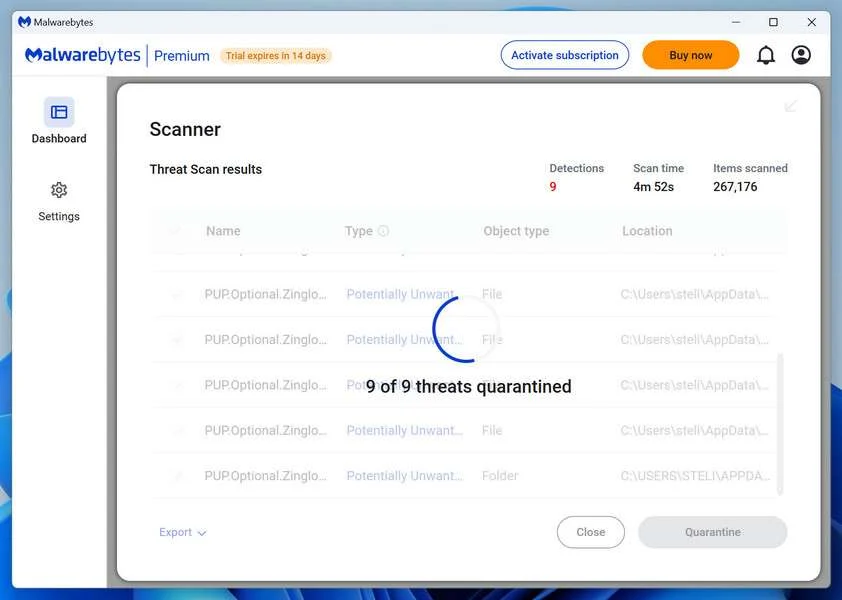
Quarantine the Detected Threats
When the scan is done, you’ll see a list of everything Malwarebytes found — malware, adware, and potentially unwanted programs. Click the “Quarantine” button to remove all of them at once.
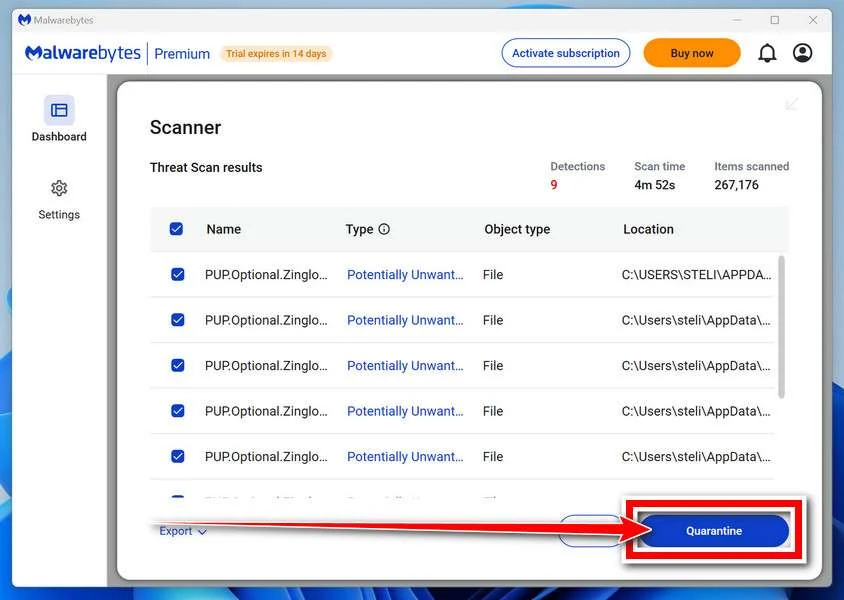
Malwarebytes will now remove the malicious files and registry entries and move them safely into quarantine.
-
Restart Your Computer
Some threats can only be fully removed after a reboot. If Malwarebytes asks you to restart, click Yes. Once you’re logged back in, Malwarebytes has finished removing the threats it found.
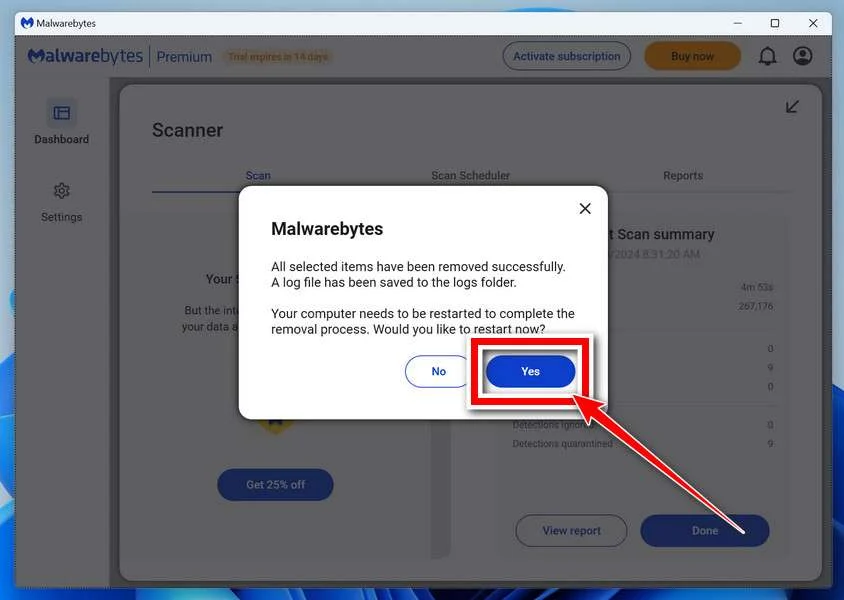
That’s it — your Windows PC is now clean of trojans, adware, and other malware, and should be back to running smoothly.
If you are still having problems with your computer after completing these instructions, then please follow one of the steps:
- Run a computer scan with ESET Online Scanner
- Ask for help in our Windows Malware Removal Help & Support forum.
Run a Malware Scan with Malwarebytes for Mac
Malwarebytes for Mac is a free on-demand scanner that removes the malware other security software tends to miss — adware, browser hijackers, and unwanted programs included. Cleaning an infected Mac with Malwarebytes has always been completely free, and it’s our go-to recommendation. Follow the steps below to scan and clean your Mac in just a few minutes.
-
Download Malwarebytes for Mac
Click the button below to download the latest version of Malwarebytes for Mac.
Download MalwarebytesOfficial installer for macOS. Your download starts right away.Want real-time protection? See Malwarebytes PremiumMalwarebytes Free for MacScans and removes malware at no cost -
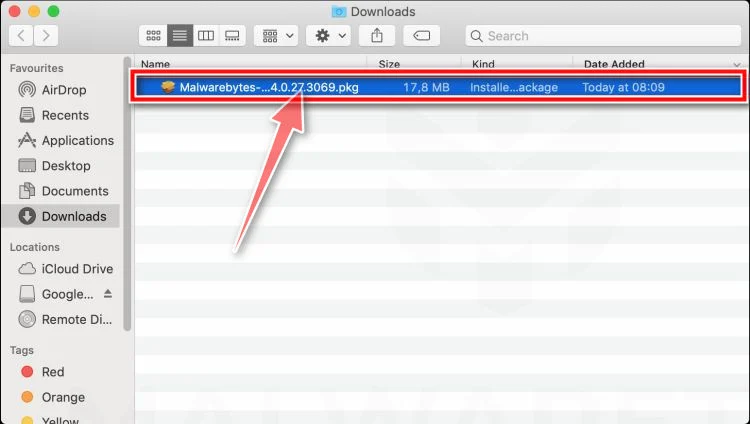
Open the Malwarebytes setup file
When the download finishes, open your Downloads folder and double-click the setup file to begin the installation.
-
Follow the On-Screen Prompts to Install Malwarebytes
The Malwarebytes for Mac Installer will guide you through a few quick screens. Click “Continue” and keep following the prompts until the installation completes.
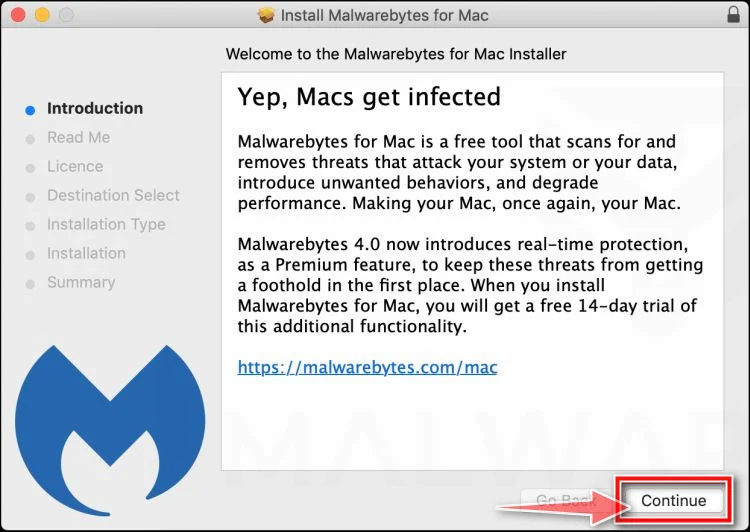
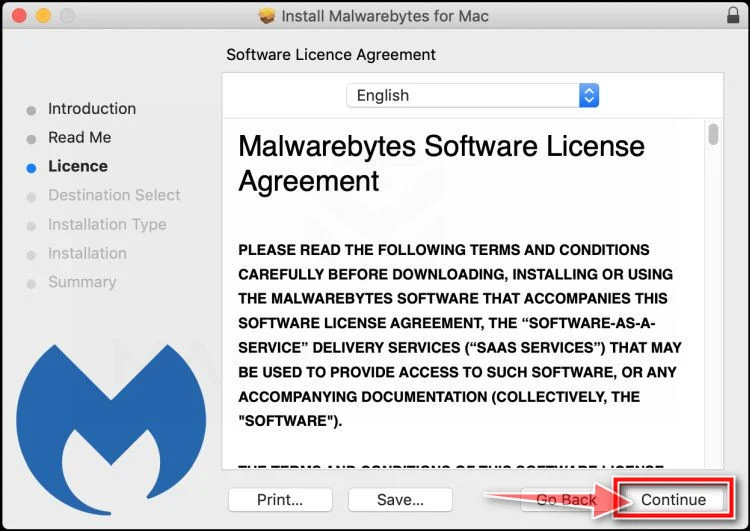
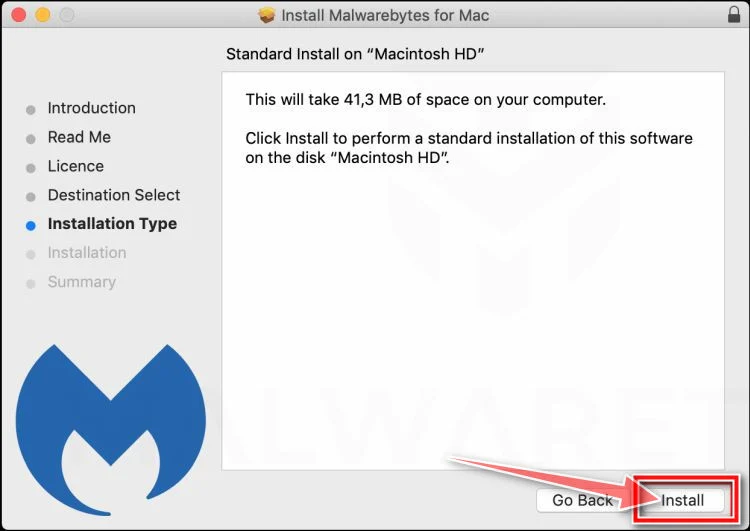
When the installation is complete, Malwarebytes opens to the Welcome to Malwarebytes screen. Click “Get started“.
-
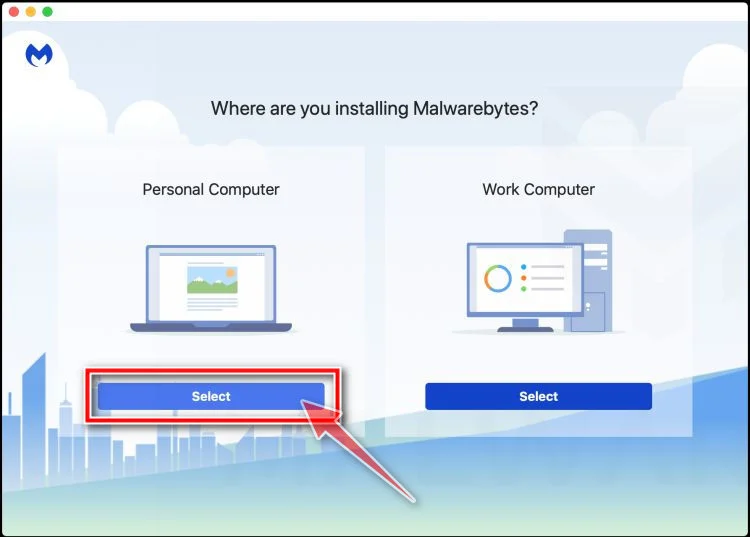
Select “Personal Computer” or “Work Computer”
Malwarebytes will ask what type of computer you’re installing it on. Click either Personal Computer or Work Computer, whichever applies.
-
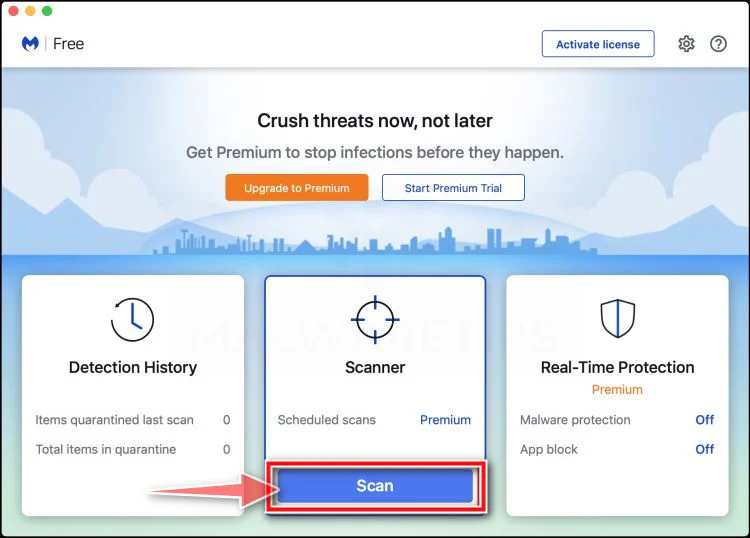
Start the Scan
Click the “Scan” button. Malwarebytes will automatically update its detection database and begin checking your Mac for malware.
-
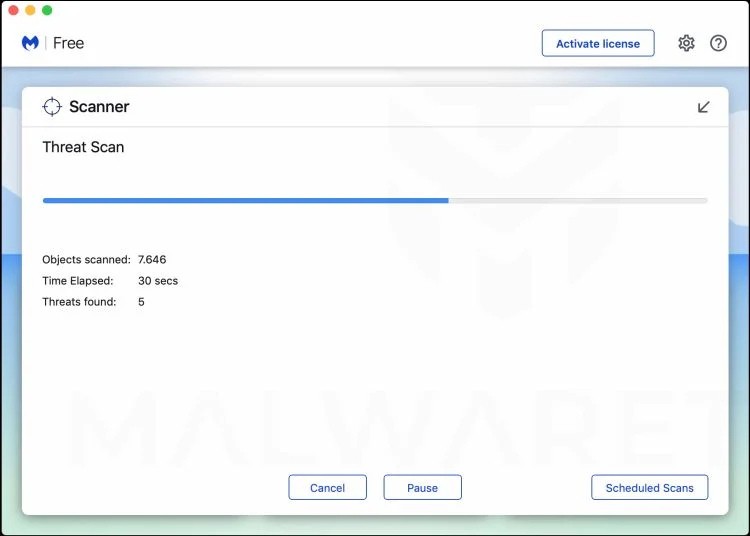
Wait for the Scan to Finish
Malwarebytes will scan your Mac for adware, browser hijackers, and other malicious programs. This can take a few minutes, so feel free to do something else — just check back occasionally to see the progress.
-
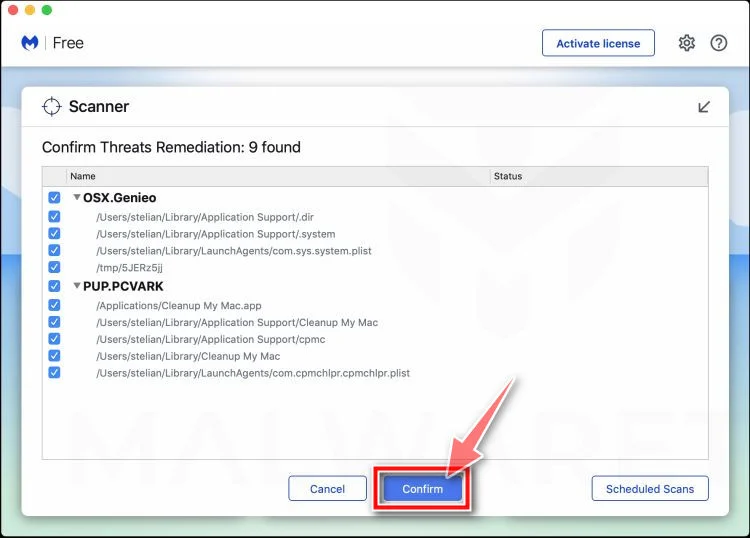
Quarantine the Detected Threats
When the scan is done, you’ll see a list of everything Malwarebytes found. Click the “Quarantine” button to remove all the threats at once.
-
Restart Your Mac
Malwarebytes will now remove all the malicious files it found. Some threats can only be fully removed after a reboot — if Malwarebytes asks you to restart, allow it. Once you’re logged back in, your Mac is clean.
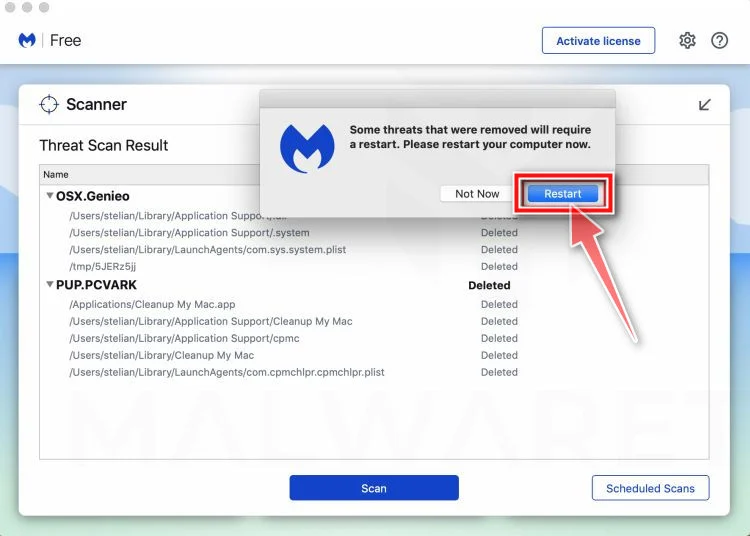
That’s it — your Mac is now free of adware, rogue browser extensions, and other potentially harmful software.
If you are still experiencing problems while trying to remove a malicious program from your computer, please ask for help in our Mac Malware Removal Help & Support forum.
Run a Malware Scan with Malwarebytes for Android
Malwarebytes for Android automatically detects and removes dangerous threats like malware and ransomware so you don’t have to worry about your most-used device being compromised. Aggressive detection of adware and potentially unwanted programs keeps your Android phone or tablet running smooth.
-
Download Malwarebytes for Android.
You can download Malwarebytes for Android by clicking the link below.
Get Malwarebytes for AndroidOpens Google Play in a new tab.Want real-time protection? See Malwarebytes Premium for AndroidMalwarebytes for AndroidScans your phone and removes malware at no cost -
Install Malwarebytes for Android on your phone.
In the Google Play Store, tap “Install” to install Malwarebytes for Android on your device.

When the installation process has finished, tap “Open” to begin using Malwarebytes for Android. You can also open Malwarebytes by tapping on its icon in your phone menu or home screen.

-
Follow the on-screen prompts to complete the setup process
When Malwarebytes will open, you will see the Malwarebytes Setup Wizard which will guide you through a series of permissions and other setup options.
This is the first of two screens that explain the difference between the Premium and Free versions. Swipe this screen to continue.
Tap on “Got it” to proceed to the next step.
Malwarebytes for Android will now ask for a set of permissions that are required to scan your device and protect it from malware. Tap on “Give permission” to continue.
Tap on “Allow” to permit Malwarebytes to access the files on your phone.
-
Update database and run a scan with Malwarebytes for Android
You will now be prompted to update the Malwarebytes database and run a full system scan.

Click on “Update database” to update the Malwarebytes for Android definitions to the latest version, then click on “Run full scan” to perform a system scan.

-
Wait for the Malwarebytes scan to complete.
Malwarebytes will now start scanning your phone for adware and other malicious apps. This process can take a few minutes, so we suggest you do something else and periodically check on the status of the scan to see when it is finished.

-
Click on “Remove Selected”.
When the scan has been completed, you will be presented with a screen showing the malware infections that Malwarebytes for Android has detected. To remove the malicious apps that Malwarebytes has found, tap on the “Remove Selected” button.

-
Restart your phone.
Malwarebytes for Android will now remove all the malicious apps that it has found. To complete the malware removal process, Malwarebytes may ask you to restart your device.
That’s it — your Android phone is now clean — no more malicious apps, adware, or browser redirects.
If you are still having problems with your phone after completing these instructions, then please follow one of the steps:
- Restore your phone to factory settings by going to Settings > General management > Reset > Factory data reset.
- Ask for help in our Mobile Malware Removal Help & Support forum.
Stay Protected: Block Ads and Malicious Sites
Now that your device is clean, keep it that way. Most infections start with a malicious ad or a fake download button — so blocking them at the source is your best defense.
We recommend AdGuard, which blocks malicious ads, phishing pages, and dangerous redirects before they can reach you.
👉 Download AdGuard and browse safely
Frequently Asked Questions
Does MAERSK send shipment documents by email?
Real shipping communications can arrive by email, but that does not authenticate this message. Confirm the booking through the official portal, internal records, or a representative reached through previously verified contact details.
Why would the page ask for my email password?
It should not. A carrier does not need access to your mailbox to deliver documents. A request for the mailbox password is a central sign that the page is harvesting credentials.
Is opening the email itself dangerous?
Simply reading ordinary message text usually does not compromise the account. Risk rises when a recipient follows the link, submits information, approves a sign-in, or opens a downloaded file.
What if the shipment details look accurate?
Accurate details may come from public records, breached email, or a compromised partner. Verify through a separate channel. Specific information makes the attack more convincing, not automatically legitimate.
Can a stolen mailbox password affect company payments?
Yes. Criminals can observe invoice threads and send altered bank details from a trusted account. Finance teams should independently verify payment changes, especially after any suspected mailbox compromise.
Should I contact MAERSK about the message?
Use contact information from maersk.com or your established representative, not the email. MAERSK advises customers who suspect phishing to verify communications directly through trusted contact details.
The Bottom Line
The MAERSK Shipment Ready for Dispatch email scam hides credential theft behind authentic-sounding trade documents. A Bill of Lading and customs language can make the story plausible, but they do not justify a webmail password request.
Verify the shipment in the official portal and through known contacts. If credentials were submitted, secure the mailbox, inspect rules and sessions, and warn everyone who relies on that account for cargo or payment instructions.

Join the discussion
0 commentsShare your experience or ask a question about this article.
Discussion
Start the conversation
Have a question or something useful to share? Add the first comment.