

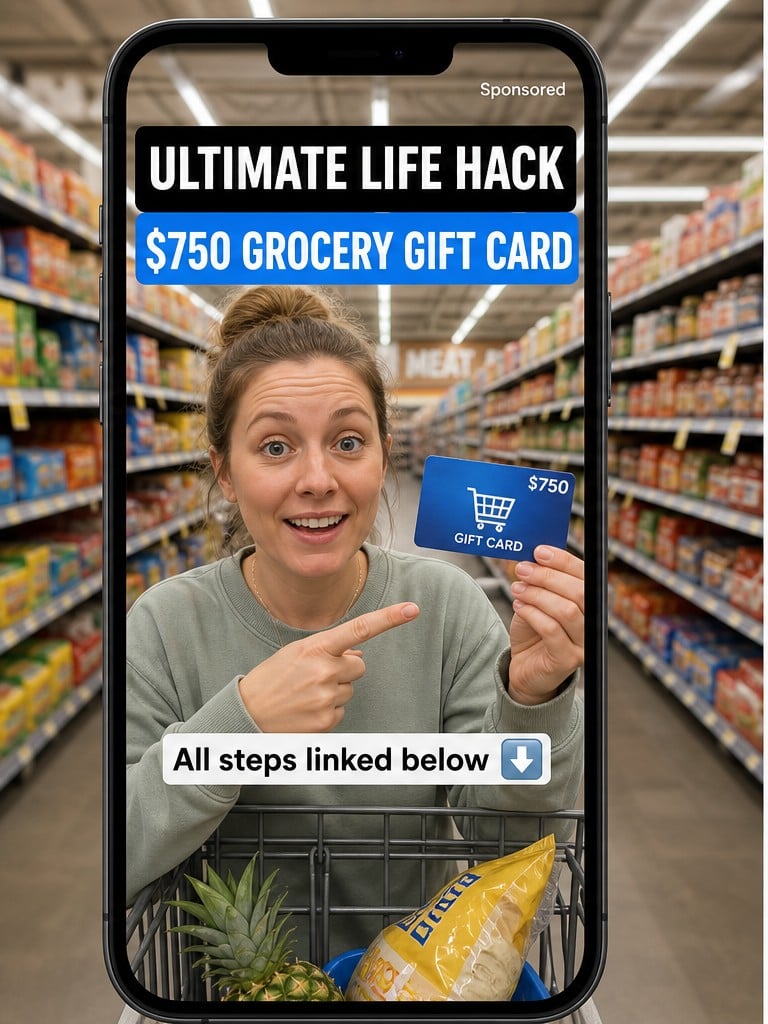
A shopper pushes a full cart down a grocery aisle and holds up a blue $750 gift card. The caption calls it the Ultimate Life Hack and says every step is waiting at the link below.
For a family watching food prices closely, the video lands at exactly the right emotional moment. The problem appears after the click, when a supposed Walmart benefit changes into an unrelated reward program built around personal data and third-party offers.
Overview
The grocery video makes the reward feel immediately useful
The Walmart Ultimate Life Hack scam does not promise abstract wealth. It promises groceries. A creator may show a cart, receipt, or stocked kitchen and suggest that ordinary shoppers are missing a $750 card available through a little-known process.
Phrases such as all steps linked below make the video sound instructional rather than promotional. The viewer feels invited to copy a successful shopper, not persuaded by an affiliate who may benefit from a registration or completed deal.
The link does not lead to a Walmart account benefit
Reported versions have passed through tracking addresses and loaded reward platforms such as Rewards Giant USA or Up Level Rewards. The page may retain retail colors and a gift card image, but its legal operator is separate from Walmart.
That separation is the central fact. A genuine Walmart promotion should be confirmable through Walmart's app, website, receipt, or verified channels. A blue theme and a lock icon cannot substitute for ownership of the domain.
The $750 headline conceals a demanding deal structure
After a quick survey and registration, the participant may discover that the gift card requires deals across several levels. Higher tiers can involve paid subscriptions, purchases, app installations, or trial services that renew if not cancelled in time.
The reward network can gain a valuable lead before the participant reaches the claim stage. The consumer, meanwhile, must track every offer, price, renewal, deadline, and eligibility rule while the original TikTok video continues to suggest a simple life hack.
- A TikTok grocery video promises a $750 Walmart gift card.
- The post may display fake verification or enthusiastic comments.
- The link passes through affiliate tracking and unrelated domains.
- Simple questions produce an almost automatic qualification message.
- Registration collects contact details and marketing consent.
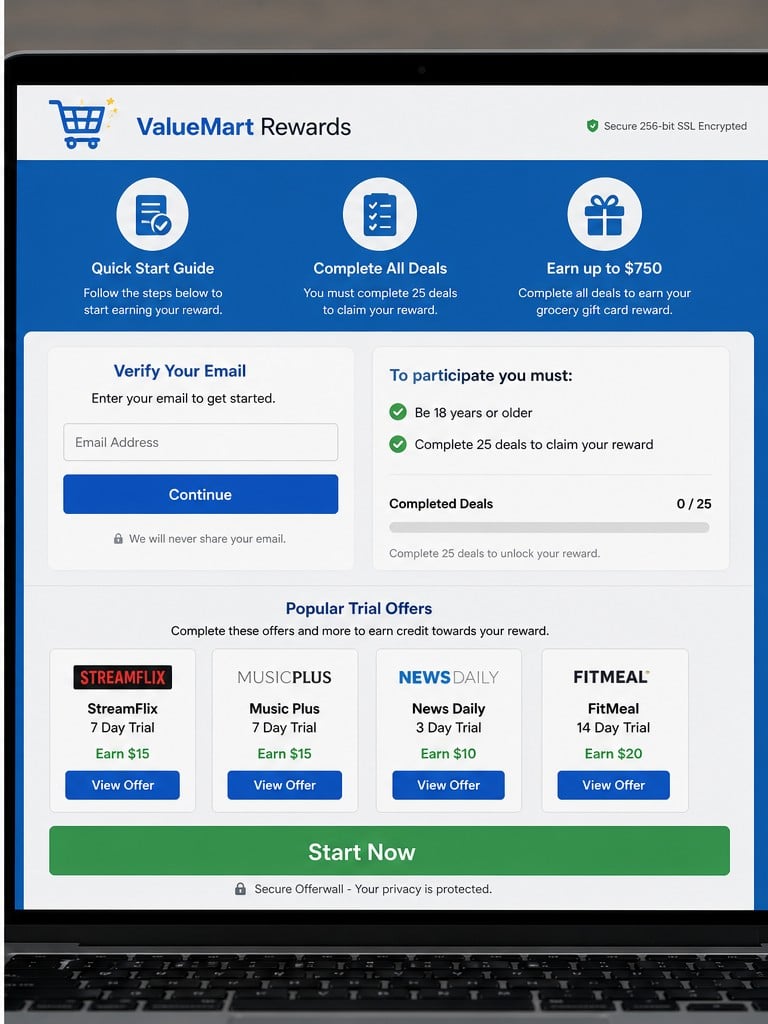
- A large reward tier can require as many as 25 completed deals.
- Trial offers can renew through several different merchants.
Why a Grocery Gift Card Is Such Powerful Bait
Groceries are a recurring necessity, which makes a large store card feel safer and more practical than a lottery jackpot. The viewer can immediately calculate how far $750 might go, especially when the video shows a family or a cart filled with recognizable staples.
The campaign also borrows the language of genuine online tips. Life hack implies that the value comes from knowing the correct sequence, not from winning a contest. That framing makes secret links and unusual steps feel like part of the discovery rather than evidence of deception.
Social proof reduces the remaining doubt. Comments may ask whether the card works in every state or claim that it arrived quickly. Likes, replies, and creator enthusiasm are not independent confirmation. Engagement can be purchased, filtered, copied, or posted by accounts connected to the campaign.
Walmart publishes fraud alerts and operates official gift card services, but it does not make an outside page official. Consumers should type Walmart.com themselves or open the app, then search for the exact promotion. A campaign visible only through a bio link has not passed that basic test.
The word verified deserves special caution. A badge drawn inside a video or page can be created in seconds. Platform verification, payment security, and retailer authorization are separate questions, and only the retailer can confirm whether it sponsors the advertised reward.
What the Deal Requirements Reveal
Campaign pages connected with this story have described participation requirements such as being at least 18, providing an email address, and completing a set number of deals. The most demanding reward tier can be far removed from the quick grocery trick shown in the video.
A 25-deal path is not a minor footnote. It can require creating numerous accounts, installing apps, spending money, monitoring renewal dates, and proving that tracking credited every action. The full cost may not be visible because later deals are revealed only after earlier levels are finished.
Free trials deserve close inspection. A $1 or $0 introductory offer can become a monthly charge, and each provider controls its own cancellation. The reward company may tell a participant to contact the merchant, while the merchant knows nothing about the promised Walmart card.
FTC actions concerning reward advertising have focused on disclosures, deal requirements, tracking, and consent. The lesson is not that every reward participant receives nothing. It is that a headline prize can be materially misleading when the true effort and expense are scattered across later pages.
The Ultimate Life Hack label can disappear while the system remains. A promoter can swap Walmart for another supermarket, payment service, delivery app, or season without rebuilding the underlying funnel. Readers should remember the sequence, not only the current gift card image.
How the Walmart Ultimate Life Hack Scam Works
Step 1: A relatable grocery video introduces the secret
The ad opens in a supermarket or kitchen. A creator shows a full cart and a $750 gift card, then says a hidden method paid for the groceries. The visual result arrives before any explanation, so the viewer emotionally accepts the outcome first.
Urgent captions may say the link could be removed or that the retailer does not want the trick shared. That story explains why the supposed promotion is absent from Walmart's own website and discourages independent checking.
Step 2: A bio link masks the redirect chain
The call to action opens an affiliate URL or a service such as myfunnelish before reaching a reward page. In-app browsers can hide part of the address, while tracking parameters identify which video and publisher generated the visitor.
The click has already left Walmart. The later appearance of a gift card does not reverse that fact. Consumers should expand the address bar and identify the registrable domain before entering an email address.
Step 3: A quick survey manufactures eligibility
The page asks broad questions about shopping habits, age, or interest in a reward. Nearly any response can lead to a message saying the visitor is eligible. A fake TikTok verification label or recent-winner counter may add confidence.
This is not Walmart approving a benefit. It is a marketing page moving a visitor toward registration. The difficult qualification rules are delayed until the person feels that the reward is already reserved.
Step 4: Contact information becomes the first conversion
The funnel requests a name, email, phone number, address, and demographic details. Consent language may allow the operator and marketing partners to send promotional calls, texts, and emails.
The data can retain value even if the visitor abandons the process. That is why follow-up promotions may arrive from companies the person does not recognize and why an unsubscribe from one sender may not stop the rest.
Step 5: The gift card becomes a multi-level deal wall
The promised $750 tier may require many offers, sometimes 25. Lower levels can look simple, while later choices include memberships, purchases, finance apps, gaming offers, or services requiring a card.
The participant cannot reliably call the card free without adding every cost. Time also matters: a deal may need to remain active, report completion correctly, and satisfy conditions that are separate from the reward site's own deadline.
Step 6: Trials and subscriptions bill under unrelated names
Each offer can create a separate relationship with a merchant whose name appears on the statement. Introductory pricing may turn into monthly billing, and cancellation can require visiting several sites or contacting several support departments.
A person looking for one Walmart reward may therefore end up managing a collection of unrelated subscriptions. Walmart support cannot cancel those charges because Walmart was not the seller.
Step 7: Claim friction appears after the spending
The final stage may require identity documents, deal screenshots, tracking reviews, waiting periods, or household verification. Missing credit for one action can prevent the participant from reaching the advertised tier.
The sunk-cost effect is strongest here. After investing time and money, users may keep completing offers or buying help rather than admit the social story was incomplete. Scammers and aggressive marketers design around that reluctance.
Company, Address, and Fulfillment Checks
Walmart is the borrowed storefront
The ad uses a trusted store to attract shoppers, but the page terms may identify a reward network and the receipt may identify several separate merchants. The social publisher can be another independent party that earns affiliate compensation.
Compare the domain and legal entity with Walmart's official records. If the operator is not Walmart and cannot show authorization, the card image is a marketing device, not proof that Walmart sponsors or funds the campaign.
Addresses can point to mailboxes rather than accountable offices
A policy may list a virtual office, registered agent, privacy service, or mailbox. Those addresses can handle correspondence without being the location where the reward campaign, advertising, or customer support is actually managed.
Search the address and call the listed number before giving payment data. An operator asking for 25 deals should be able to explain its legal identity, dispute procedure, and role in issuing the reward without hiding behind a generic contact form.
Support fragments across the funnel
One team may discuss reward tracking, while each trial merchant controls cancellation and the affiliate controls the video. When something fails, the participant can be sent in a circle as deadlines and renewal dates approach.
Test support before joining. Ask for the full deal list, total possible cost, renewal schedule, claim deadline, and identity of the gift card issuer. Vague answers before payment are a strong forecast of what happens after a dispute.
The supply chain delivers leads and subscriptions, not groceries
The real flow is digital: social platforms deliver viewers, affiliates deliver leads, reward platforms deliver offer traffic, and merchants receive customers. The grocery cart is only the emotional wrapper around that commercial chain.
A transparent promotion would name every role. When the advertiser, data collector, deal provider, biller, and reward administrator are difficult to connect, the consumer bears all the tracing work while every business captures its own benefit.
Warning Signs to Watch For
- The $750 card appears in a creator video but not in Walmart's official channels.
- A fake verified label is drawn inside the advertisement.
- The link passes through several domains unrelated to Walmart.
- Nearly everyone receives an eligibility message.
- The page asks for personal data before showing every deal.
- A free gift card requires up to 25 third-party offers.
- Trials can renew under merchant names absent from the ad.
- The complete cost and claim process are hard to determine in advance.
The strongest warning is not a misspelled word. It is the business-model switch. A Walmart grocery reward becomes an unrelated collection of leads, subscriptions, and deal commissions after the click.
What to Do if You Have Fallen Victim to This Scam
- Leave the reward page and stop completing deals. Do not spend more because the page claims only a few offers remain. Write down every trial, app, subscription, purchase, or account created after the $750 Walmart gift card video, including offers that appeared to cost nothing at first.
- Cancel every merchant separately and in writing. Open the receipt or official account for each deal and request cancellation before its renewal date. Ask for confirmation that both the service and recurring billing are closed. One message to the reward site rarely ends contracts created with several third parties.
- Contact the bank about charges and stored card access. Use the issuer's official phone number. Describe the gift card promise, the prices displayed before checkout, and every charge that posted. Ask about chargeback rights, subscription blocks, replacement cards, and the time limit for reporting future renewals.
- Protect the Walmart and email accounts. If the same password was used on the funnel, change it immediately in Walmart's official app or website and anywhere else it was reused. Review saved payment methods, orders, addresses, recovery details, and active sessions, then turn on available account security.
- Save proof of the promise and the conditions. Capture the social video, account name, phrase Ultimate Life Hack, links, redirect chain, fake verification labels, deal counter, full terms, receipts, support messages, and statement descriptors. Keep dates because disposable campaign pages may vanish or switch brands.
- Clean up apps and browser permissions. Remove downloads installed only to earn deal credit, along with unfamiliar extensions, push notifications, calendars, and configuration profiles. Use Malwarebytes for a full scan if the device began showing redirects, unwanted ads, or suspicious login prompts.
- Block common ad and tracking infrastructure. AdGuard can reduce exposure to malicious advertisements, pop-ups, and known tracking links used by these funnels. It is an additional filter, not a gift card verifier, so confirm future Walmart promotions through Walmart's official channels.
- Watch for identity and subscription problems. Review bank statements for several months and search email for renewal, membership, trial, and order messages. If sensitive identity data was submitted, use IdentityTheft.gov and consider placing a fraud alert or credit freeze.
- Report the deception and avoid refund agents. Flag the ad to the social platform, send the copied promotion to Walmart's fraud channel, and report the businesses and billing descriptors at ReportFraud.ftc.gov. Do not pay an unsolicited helper who claims to release the card or guarantee a refund.
Frequently Asked Questions
Is the Walmart Ultimate Life Hack a real Walmart promotion?
The viral $750 offer described here has not been established as an official Walmart promotion. The linked reward pages are operated outside Walmart, and a genuine campaign should be confirmable through Walmart's own channels.
Why do the videos show people with full grocery carts?
The image turns a complicated reward offer into an immediate household benefit. It is advertising theater and does not prove that the card was issued, loaded, or connected with Walmart.
Can a deal-based reward program issue a gift card?
Some programs may issue rewards to users who satisfy every condition. That does not validate false Walmart sponsorship or make 25 deals, subscription costs, tracking requirements, and data sharing disappear.
What does complete all deals mean?
It can mean finishing offers across several levels, meeting merchant rules, allowing tracking, keeping services active for required periods, and completing verification before a deadline. Read the current terms before starting anything.
Will a new card number stop existing subscriptions?
Not always. Some merchants use recurring payment updater services. Ask the card issuer about blocking specific merchants and recurring tokens, and cancel directly with every provider.
What if I entered my Walmart login on the page?
Change the password through Walmart's official app or website, review orders, addresses, payment methods, and sessions, secure the linked email, and contact Walmart about unfamiliar activity.
The Bottom Line
The Walmart Ultimate Life Hack scam packages a complicated reward funnel as a quick grocery tip. Behind the $750 card can be data collection, affiliate tracking, 25 deals, renewable trials, and a claim process that the original video never explains.
A real store promotion should survive independent verification. If the link leaves Walmart and the free card becomes conditional on unrelated purchases, close the page before the life hack becomes a stack of bills.

Join the discussion
0 commentsShare your experience or ask a question about this article.
Discussion
Start the conversation
Have a question or something useful to share? Add the first comment.