

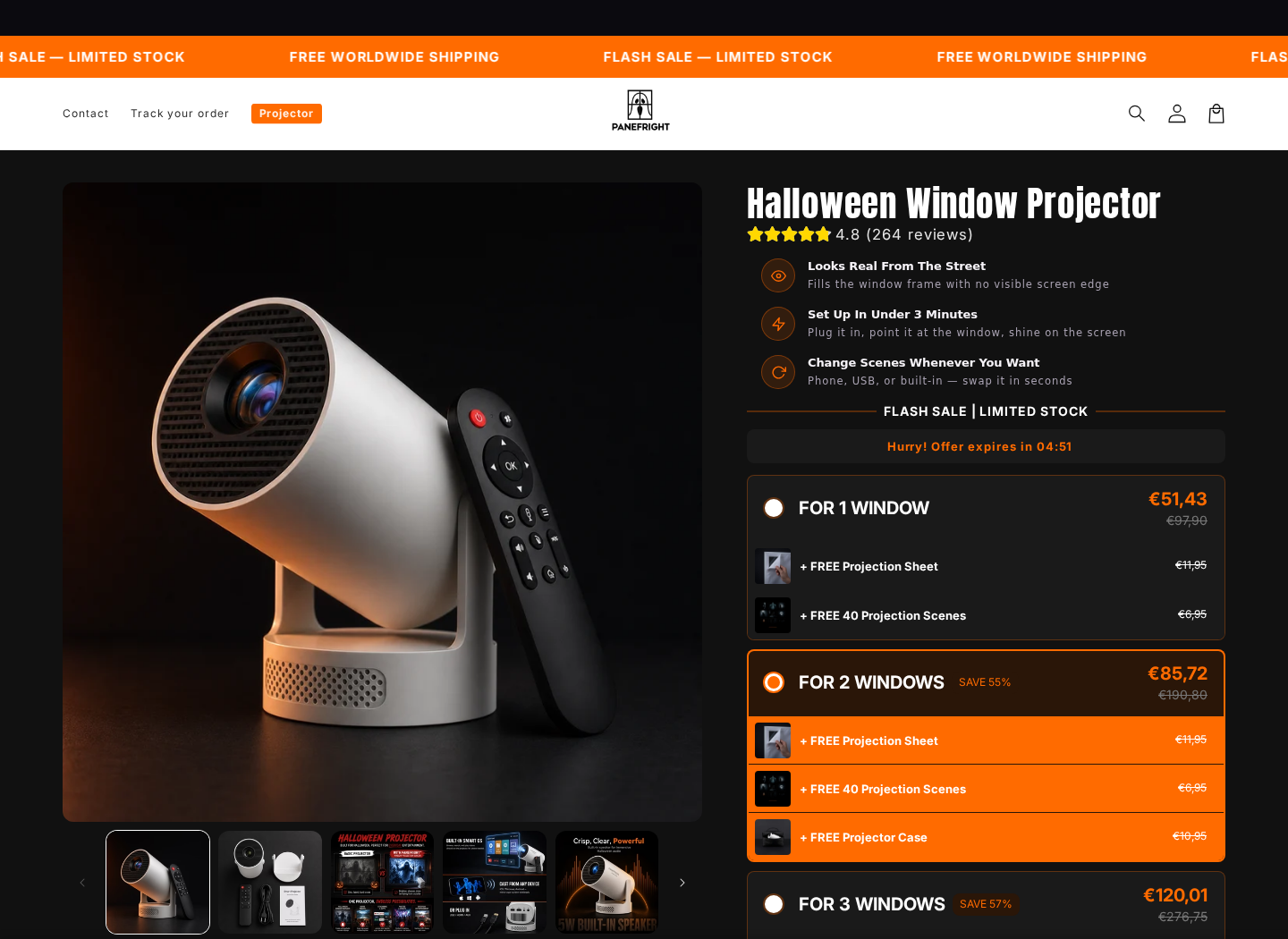
PaneFright promises to turn an ordinary window into a Halloween display that looks frighteningly real from the street.
The page makes the setup look effortless. A short countdown, limited-stock message, 4.8 rating, and glowing customer scenes all push the same idea: buy now and your house will be ready in minutes.
Before trusting that promise, there are three questions worth asking. What projector is being sold, where did the reviews come from, and what happens if the display does not look like the ad?
Overview
The Halloween brand wraps generic HY300 hardware
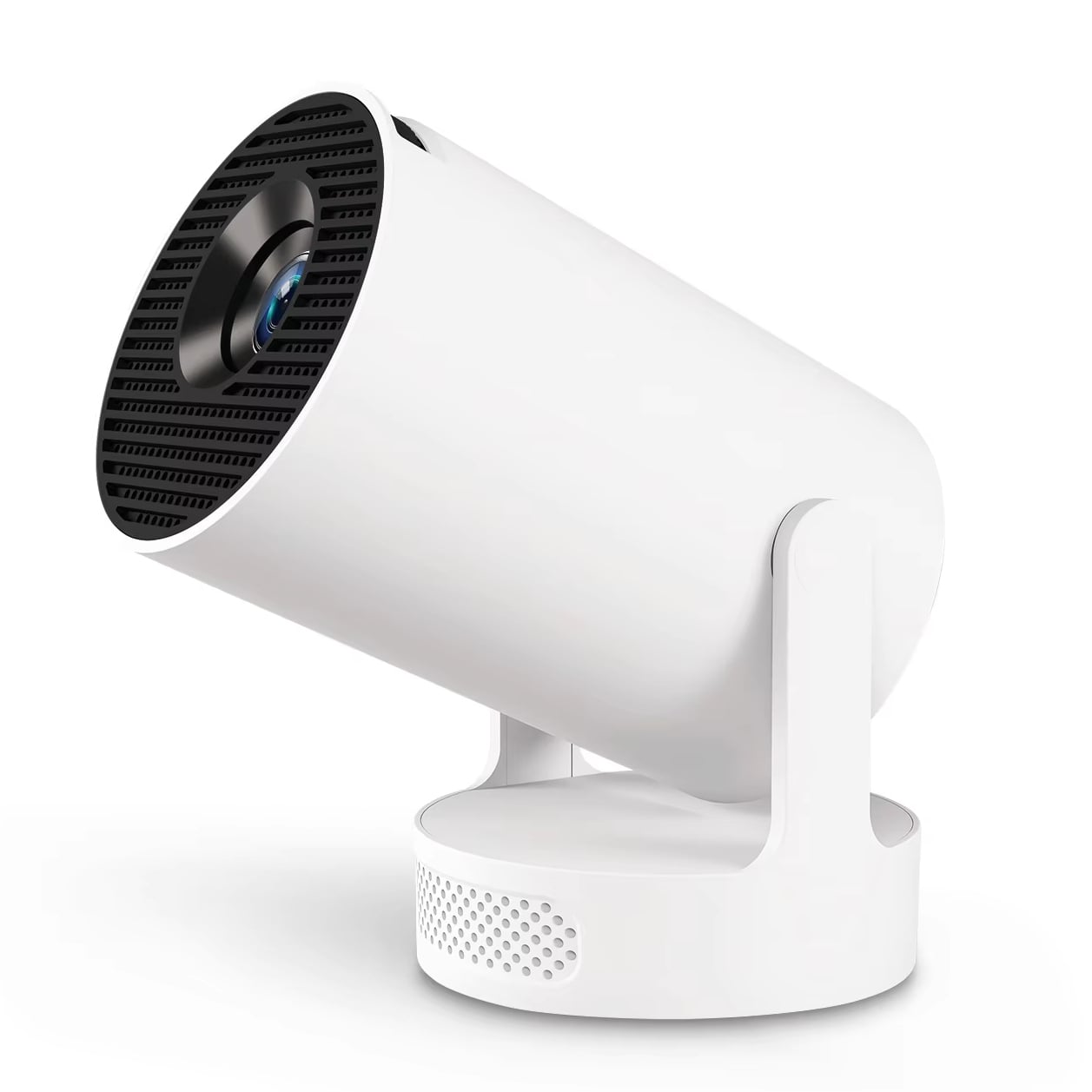
The PaneFright name is printed onto promotional renders, but one image also says “BY MAGCUBIC,” a name commonly associated with HY300-style mini projectors. The physical design is not unique. Similar 720p Android projectors appear across wholesale marketplaces under many seller names and with small firmware or brightness differences.
The savings and urgency do more work than the specifications
The page leads with “FLASH SALE,” “LIMITED STOCK,” a countdown, crossed-out prices, and bundle savings up to 57%. Yet its technical details are thin. Buyers see a lifestyle promise before they see a clear model number, native resolution, measured ANSI brightness, certification information, warranty procedure, or legal seller identity.
The reviews and policies raise harder questions
Many reviews are dated months before the PaneFright product and domain existed. Several discuss Android, Fire TV, fan noise, Netflix, and ordinary home-theater use rather than a PaneFright Halloween display. Meanwhile, the advertised 30-day guarantee is not backed by a working refund-policy page.
- Product: A generic HY300-family smart projector presented as a Halloween-specific solution.
- Observed price: €51.43 for one unit and €85.72 for the preselected two-window bundle in one live session; pricing changes by market.
- Wholesale comparison: Similar HY300 units appeared on Alibaba around $19 to $30, with other variants priced higher.
- Subscription: No recurring plan or refill program was found. The checkout was a one-time purchase with optional upsells.
- Main concern: The advertising creates premium value and trust signals that are not supported by equally clear specifications, company details, or return terms.
What PaneFright Is Actually Selling
PaneFright is selling a real category of device: a small LCD projector with a smart operating system, Wi-Fi, screen mirroring, HDMI, USB, an internal speaker, and a rotating stand. It can play Halloween clips against a sheet in a dark room. Nothing about that basic use is impossible.
The problem is the gap between a possible dark-room result and the cinematic scenes used in the campaign. Cheap projectors lose brightness as the picture grows. A sheet, glass, room lighting, viewing angle, and distance reduce contrast. A razor-sharp figure covering an entire window is a best-case presentation, not a dependable result.
Alibaba listings for the HY300 family commonly identify native resolution as 720p and brightness around 120 to 160 ANSI lumens, although supplier claims vary widely. Those numbers describe an entry-level projector that performs best in a very dark space. They do not describe a purpose-built professional window-display system.
Why the Promotional Images Deserve Skepticism
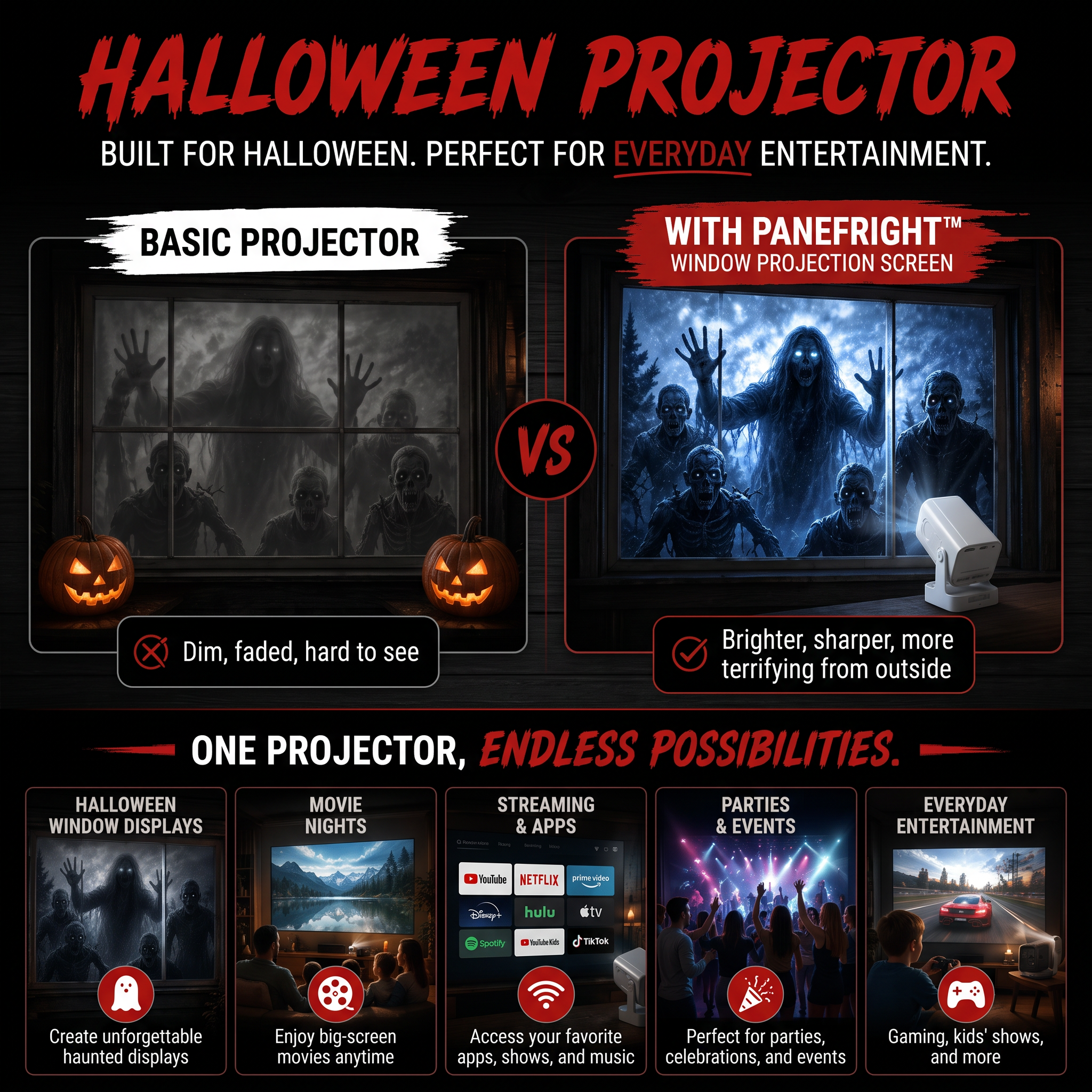
Several PaneFright graphics look more like advertising renders than documentary product photos. The projector is surrounded by perfect studio lighting, glowing lens effects, flawless interface panels, and Halloween scenes with unusually strong contrast. One comparison even depicts the PaneFright side as dramatically brighter than a “basic projector” without naming or measuring either device.
The images are also inconsistent. The remote shown beside the projector changes between assets, and the branded body says “PANEFRIGHT BY MAGCUBIC.” Other photos show the same generic shape without a clear permanent brand mark. These inconsistencies are typical of a rebranding campaign assembled from supplier photos and newly created promotional art.
We cannot prove which graphics were generated by an AI tool. Several are synthetic-looking or heavily composited, not neutral photographs of a PaneFright unit in a real house. Buyers should ask for one unedited demonstration showing the room, distance, sheet, window, and projected image.
The Review Timeline Does Not Fit the Store
The Shopify product data says the PaneFright item was created and published on August 2, 2026. Public registration data places the domain’s creation on August 3, 2026. Those dates matter because the product page displays reviews dated March, April, May, June, and July 2026.
A customer cannot buy from a PaneFright product page before that page and domain exist. Older reviews could be imported from another store or supplier, but they should not be presented in a way that makes them look like PaneFright purchase experiences. The page does not clearly explain their origin.
The reviews reinforce that conclusion. One praises the “internal Android system” and a Fire TV connection. Another calls the image 720p and complains about fan noise. Others discuss Bluetooth, Netflix, Polish delivery, or a 120-inch wall image. That is generic projector feedback, not evidence for the Halloween claims.
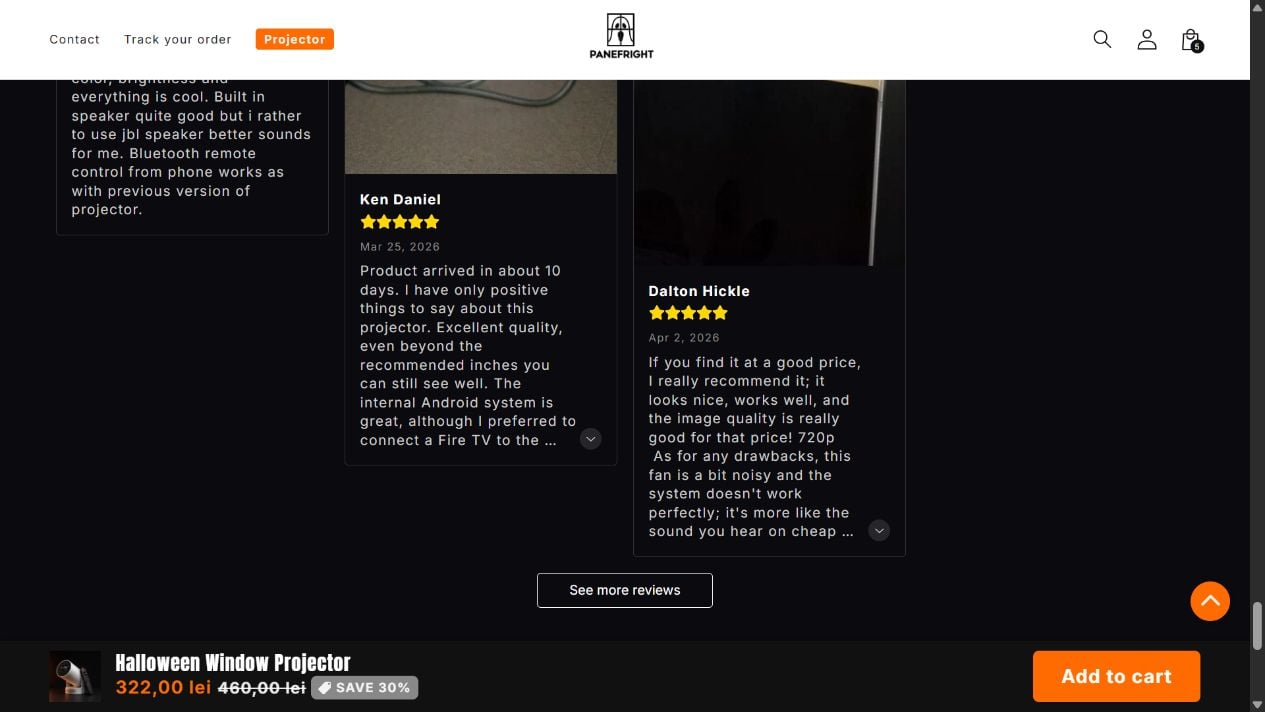
This does not establish that every review is invented. It establishes that the review block is not a clean record of verified PaneFright sales. The site also labels some reviewers as verified buyers without disclosing how that status was established or whether the review was transferred from another listing.
The timing is especially important because the page uses the 4.8 rating and 264-review count near the title, where it can influence a buyer before any specifications appear. A shopper may reasonably interpret that display as evidence that hundreds of people already bought this Halloween package from PaneFright.
PaneFright should identify the original marketplace and product version behind imported reviews. It should also separate them from direct feedback and use a verified-buyer label only when it can confirm a purchase from the same seller for the same product.
How the PaneFright Halloween Projector Funnel Works
Step 1: The ad sells a street-stopping Halloween story
The campaign begins with an emotional result rather than a model number. Viewers are shown a window that appears haunted from the sidewalk. Copy such as “Looks Real From The Street” and “If it doesn’t stop traffic, you don’t keep it” encourages shoppers to imagine neighbors reacting before they evaluate the hardware.
Step 2: Synthetic-looking scenes make generic hardware feel premium
Promotional graphics show bright, clean creatures filling windows and compare the PaneFright setup with a dim alternative. The presentation hides the normal limitations of a low-brightness 720p projector. No controlled test, raw footage, ANSI measurement, projection distance, or ambient-light reading accompanies the visual comparison.
Step 3: A countdown and limited-stock warning create urgency
The product page repeats “FLASH SALE” and “LIMITED STOCK” while a timer says the offer will expire within minutes. The timer continued during the investigation rather than documenting a dated promotion. A repeating countdown is a pressure device, not reliable evidence that inventory or pricing is about to change.
Step 4: The two-window bundle is selected before the buyer chooses
The highlighted default option was the package for two windows, not the lowest-priced single projector. Clicking the main purchase button without changing that selection placed two projectors and three advertised gifts into the cart. This is an important checkout design choice because it raises the order value before the shopper makes an active bundle decision.
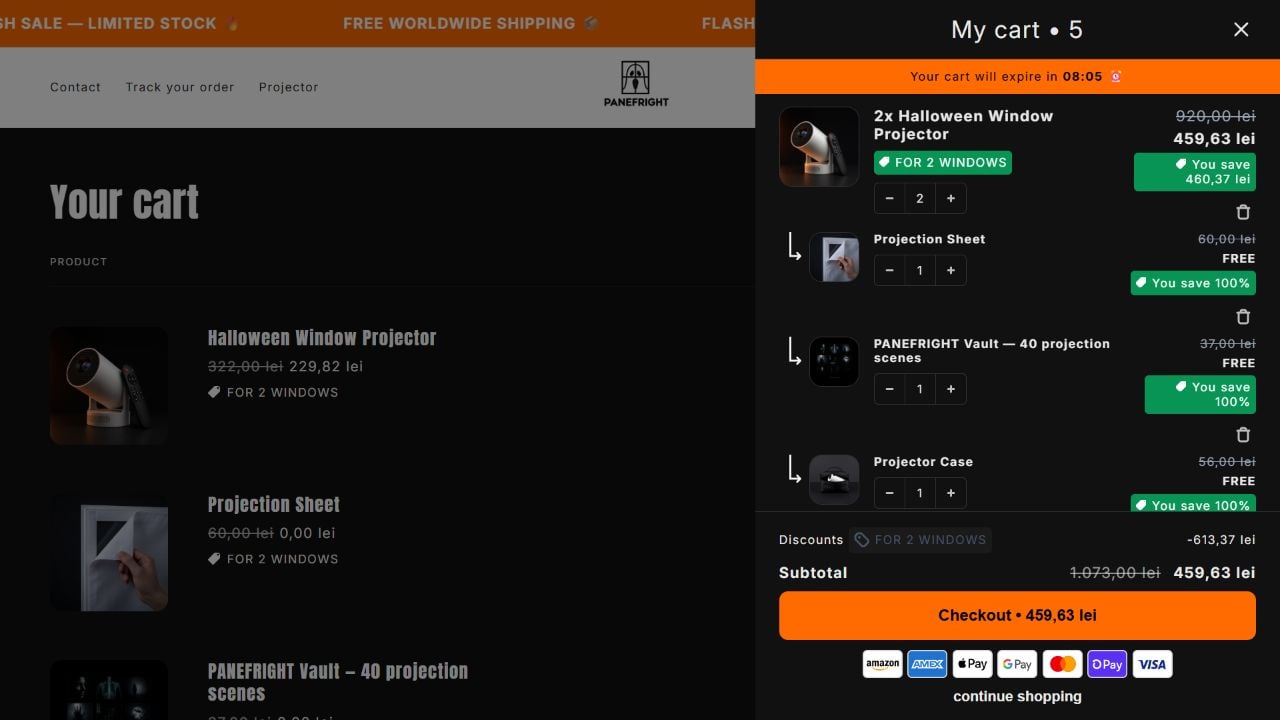
Step 5: Free gifts and crossed-out totals anchor the savings
The cart showed 1,073 RON reduced to 459.63 RON. The sheet, scene pack, and case were marked free, creating more than 600 RON in apparent savings. No independent retail history established that the accessories normally sell at the crossed-out prices.
Step 6: Imported reviews supply instant social proof
The rating, review count, dated testimonials, customer names, and photos create the impression of a mature product. Because many dates precede the site and the text concerns generic projector use, that social proof cannot be treated as a reliable record of PaneFright’s service, shipping, refund handling, or Halloween performance.
Step 7: The checkout promises support that the policies do not explain
The checkout stated that the order included free returns and round-the-clock access to award-winning customer service. Yet the public refund-policy, shipping-policy, and terms URLs returned 404 pages during the review. The product page makes a 30-day promise, but buyers are not given a complete, accessible procedure before paying.
The Price Comparison Needs Context
PaneFright’s localized prices changed with the visitor’s market. One live capture showed €51.43 for one window and €85.72 for the preselected two-window package. A Romanian session showed 459.63 RON for the two-unit cart. Dynamic pricing is common, but it makes the dramatic crossed-out savings harder to audit.
Alibaba listings for visually matching HY300 models showed examples around $19, $20.90, $23, and $29.99 per unit at different order quantities. Some suppliers offered a one-unit minimum, while others reserved the lowest price for volume orders. Freight, VAT, payment protection, and retail support can legitimately increase a reseller’s price.
The evidence therefore supports a substantial rebranding premium, not an exact profit calculation. We did not identify PaneFright’s factory, invoice cost, internal components, or fulfillment partner. A higher retail price is not automatically deceptive. The concern is charging that premium while relying on vague specifications, imported reviews, synthetic-looking results, and inaccessible policies.
Shoppers comparing listings should check native resolution, real ANSI brightness, RAM, storage, operating-system version, plug type, app certification, focus method, and return location. Two projectors with the same HY300 shell may contain different boards or firmware, so appearance alone is not enough to prove identical performance.
Company, Address, and Fulfillment Checks
PaneFright is a storefront brand, not a disclosed legal seller
The site identifies the operator only as PANEFRIGHT. We found no clear legal company name, company registration number, VAT number, or named owner on the product page, contact page, or privacy policy. That makes it difficult to know which entity accepted the order and which consumer law applies.
The Lithuanian address is incomplete
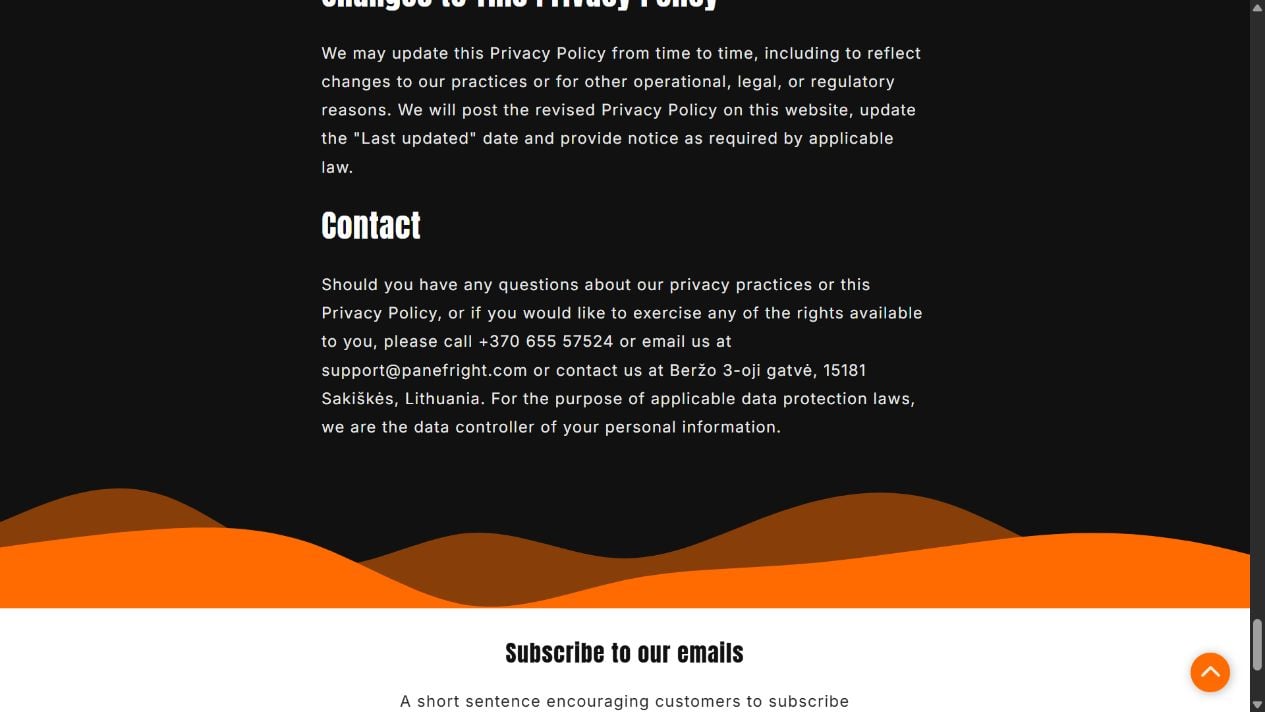
The privacy policy lists “Beržo 3-oji gatvė, 15181 Sakiškės, Lithuania.” The entry names a street but does not provide a visible building or house number. We could not independently verify that PaneFright operates an office, warehouse, or returns center at that location.
The support details are buried in one policy
The public contact page contains a form with name, email, phone, and comment fields. It does not display the seller’s legal identity, phone, address, or service hours. A phone number, support email, and the Lithuanian street appear only near the bottom of the privacy policy.
The fulfillment chain remains unclear
The product JSON did not expose a SKU, barcode, or inventory-management provider. The page promises worldwide shipping and delivery in roughly five to ten business days, but a public shipping-policy page was unavailable. We found no named warehouse, return center, or fulfillment company that a buyer could verify before ordering.
A thin company footprint does not prove non-delivery. It does increase practical risk. If the item arrives late, differs from the advertisement, or must be returned internationally, the buyer has less information for locating the responsible company and enforcing the promise.
This same risk appears in other generic projector campaigns. Our CineMaster Pro projector investigation explains why native resolution and measured brightness matter more than labels such as 4K support.
The 30-Day Promise Is Not a Usable Return Policy
PaneFright says buyers have 30 days to decide and promises a replacement or refund if the projector does not work for the window display. That language sounds simple. It does not explain whether a used projector can be returned, who pays international postage, where the return goes, or how quickly a refund is issued.
During the investigation, the site’s standard refund-policy URL led to a 404 page. The shipping-policy and terms-of-service URLs did the same. A marketing guarantee is not equivalent to a complete policy when the customer cannot read the conditions before payment.
The checkout’s claim of free returns adds another contradiction. Without a working policy, buyers cannot confirm whether “free” means a prepaid label, a reimbursement after delivery, a replacement only, or a benefit limited to certain countries. Save the exact wording shown during checkout because it may be important in a payment dispute.
Is There a Hidden Subscription or Refill Program?
We did not find one. Shopify’s public product data marked the item as not requiring a selling plan, and the checkout showed a one-time purchase. There was no recurring projector subscription, automatic refill schedule, or membership fee attached to the selected bundle.
The funnel does use optional add-ons. These included shipping protection, priority processing, a larger scene pack, an extra sheet, a case, a stand, and a lifetime warranty. Buyers should still review every line in the final order summary, but the main risk here is bundle inflation and upselling rather than recurring billing.
How to Evaluate the Projector Before Buying
Ask PaneFright to identify the exact model and provide an unedited video of the shipped unit projecting through a window. The video should show the projector, its menu, the room lighting, the distance to the sheet, and the outside view without cuts. A refusal would make the visual claims harder to trust.
Request the native resolution and measured ANSI brightness, not phrases such as 4K support, full HD compatibility, or crisp and powerful. A 720p projector can accept a 4K signal and still display only its native panel resolution. Compatibility is not the same as output quality.
Compare the full delivered price with established retailers that clearly name the HY300 version and offer a local return address. A known marketplace may cost more than Alibaba but still be a better value if it provides reliable delivery, buyer protection, documented specifications, and practical returns.
Finally, read the return policy before paying. In this case, that is impossible through the standard policy URL. Until PaneFright publishes complete terms and a verifiable legal seller identity, a credit card or PayPal Goods and Services offers more dispute protection than a debit card, bank transfer, or cash-transfer service.
What to Do if You Have Fallen Victim to This Scam
- Save the complete evidence. Capture the advertisement, product page, selected bundle, countdown, checkout promises, order confirmation, tracking page, and every message. Record the date, price, currency, and promised delivery window before the page changes.
- Contact PaneFright in writing. Use the contact form and support email. State whether the order is late, damaged, materially different, or unwanted. Request cancellation, a prepaid return label, or a refund under the exact guarantee shown when you paid.
- Do not return the item blindly. Ask for a return authorization, full numbered address, recipient name, customs instructions, and written confirmation of who pays postage. Tracked international returns can cost enough to make a low-value refund impractical.
- Open a payment dispute promptly. Tell the card issuer or payment service that the goods were not received, not as described, or sold with return terms the merchant will not honor. Provide the screenshots and explain the imported reviews, unavailable policy, and advertised guarantee.
- Inspect the projector before connecting accounts. Generic Android projectors may use outdated firmware. Avoid signing into a primary Google, Netflix, or email account. If you downloaded an app, APK, scene installer, or file from an unexpected link, scan the device with Malwarebytes.
- Block repeated ad funnels. If similar PaneFright or rebranded projector ads keep following you, AdGuard can reduce malicious and deceptive advertising. It cannot recover money, but it can limit exposure to clone storefronts and aggressive retargeting.
- Report the advertisement. Use the social network’s misleading-product or scam-report option. You can also report the seller to your national consumer-protection body and submit the transaction details to the relevant fraud-reporting service.
- Ignore recovery scammers. Anyone who promises a guaranteed refund for an advance fee, cryptocurrency payment, or remote access to your computer is creating a second loss. Work only with your bank, payment provider, or a recognized consumer authority.
Frequently Asked Questions
Is the PaneFright Halloween Window Projector a scam?
We cannot prove that every order is fake or undelivered. The product appears to be a real generic HY300-family projector. The serious concerns are misleading premium presentation, pre-launch reviews, urgency tactics, incomplete seller disclosure, and return promises that are not backed by a working policy page.
Is PaneFright selling the same projector found on Alibaba?
The casing, rotating stand, grille, ports, Android features, and 720p-class positioning closely match HY300 listings. PaneFright even uses “BY MAGCUBIC” on promotional images. We did not identify its exact supplier or prove that every internal component is identical.
Why is the PaneFright price higher than Alibaba?
A retailer may add freight, VAT, marketing, accessories, support, and profit. The issue is not markup alone. Buyers should question whether PaneFright’s seasonal premium is justified when core specifications are vague, reviews appear transferred, and public return terms are unavailable.
Are the PaneFright reviews real?
Some may describe real experiences with a generic projector. However, many dates precede the PaneFright product and domain, and the text discusses Android, Fire TV, 720p output, and other generic uses. They should not be treated as verified evidence of PaneFright service.
Does PaneFright enroll buyers in a subscription?
No subscription or refill plan was found. The product data and checkout indicated a one-time purchase. The site does offer bundles and optional add-ons, so shoppers should check quantities, warranties, protection products, and scene packs before completing payment.
Will a cheap HY300 projector work for Halloween windows?
It may create a visible effect in a dark room with a tightly stretched white sheet and a suitable viewing distance. Results will depend on real brightness, window size, ambient light, and video quality. Do not expect an advertising render to predict the result.
The Bottom Line
PaneFright takes a familiar low-cost HY300-style projector and turns it into a premium Halloween story. The hardware may arrive and project video, but the campaign asks shoppers to trust cinematic-looking graphics, a resetting urgency funnel, crossed-out values, and reviews that existed before the store.
The evidence points to generic projector hardware sold at a sizable seasonal markup with an exaggerated presentation. It does not identify one exact Alibaba supplier, and it does not show that every customer will receive nothing. The problem is that PaneFright’s marketing promises more than the store can verify.
Buyers should wait until the seller publishes a legal company identity, complete address, working shipping and return policies, clear hardware specifications, and honestly sourced reviews.
For now, an established marketplace seller with transparent terms and strong payment protection is the safer choice.








