

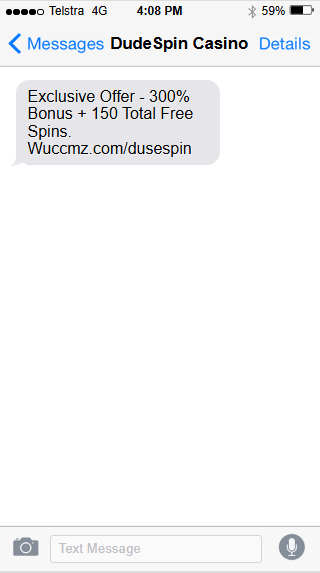
A text message promises a 300% casino bonus and 150 free spins. It takes only a few seconds to read, and it makes the offer sound exclusive enough to feel like a lucky break.
The DudeSpin Casino text is more complicated than a simple fake-prize message. The promotion resembles a real offer on the current DudeSpin website, but the route, the legal transparency, and the withdrawal rules deserve a much closer look before anyone deposits money.
Overview
The Promotion Is Real, but the SMS Route Is Not Transparent
DudeSpin’s current promotions page advertises a casino welcome package of 300% up to €2,000 plus 150 free spins. That closely matches the central promise in the text, so it would be inaccurate to call the advertised numbers entirely fabricated.
The message still creates a separate trust problem. Its visible destination is not dudespin.com, and the short SMS provides no affiliate identity, privacy explanation, legal operator, jurisdiction, or terms for the bonus.
A genuine promotion can be distributed through a risky, misleading, or unauthorized message. It can also be copied by criminals. Matching offer language does not authenticate the sender or make the supplied link safe.
The Bonus Headline Hides the Rules That Control Withdrawals
“300%” sounds like extra cash, while “150 free spins” sounds immediately usable. Casino bonuses are normally restricted balances governed by wagering requirements, game-contribution rules, expiry periods, maximum payouts, and withdrawal conditions.
DudeSpin’s general terms state that all bonuses have wagering requirements. Some games contribute only 10% or 0% toward those requirements, which means a player can wager repeatedly while making little or no progress toward releasing the promotional balance.
The same terms describe daily and monthly withdrawal limits, no more than three pending withdrawals, identity checks, and circumstances in which payments can be postponed. Those rules matter more than the percentage displayed in a text.
The Operator Is Harder to Verify Than the Brand
The pages reviewed repeatedly refer to “the Company,” but the general terms do not name that company, provide a registration number, display a physical address, or identify a gambling license. The footer shows the DudeSpin brand and support email, not the legal entity taking deposits.
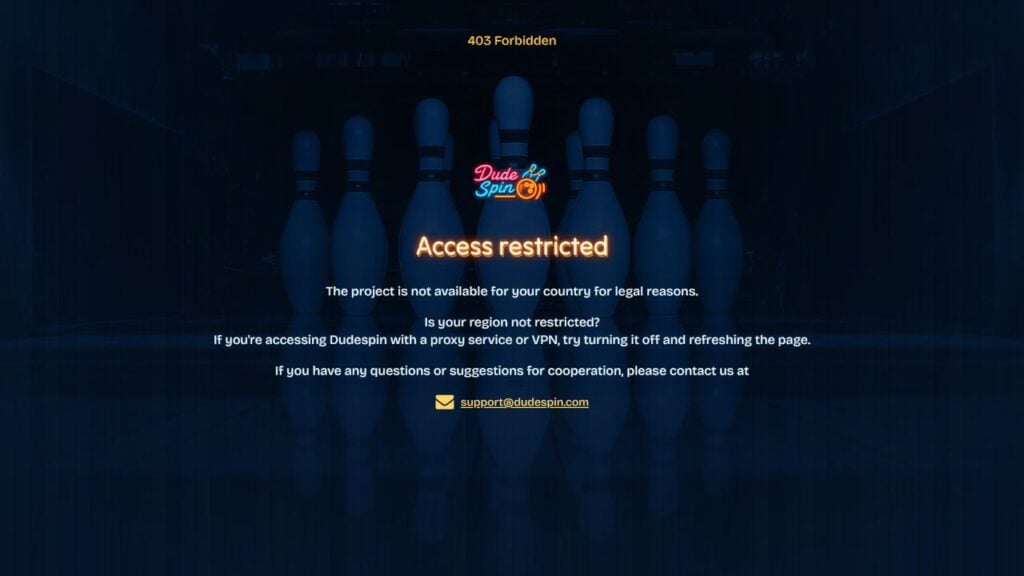
The website was also inaccessible from our review location because that country appears on DudeSpin’s excluded-jurisdiction list. A geographic restriction can be legitimate, but it underlines why a mass marketing text should never be treated as proof that the service is legal where the recipient lives.
- The SMS offers a 300% bonus and 150 free spins.
- The promotion closely matches an offer displayed on dudespin.com.
- The SMS link uses an unrelated domain instead of dudespin.com.
- The legal operator is not named in the general terms reviewed.
- No company address or license number was found in those terms.
- Bonus funds are subject to wagering and game-contribution rules.
- Withdrawals are limited by account level and other conditions.
- Several countries, including the United States and United Kingdom, are excluded.
The observed SMS identifies the sender as DudeSpin Casino and advertises an “Exclusive Offer.” Its link, however, uses an unrelated domain and a path written as “dusespin,” not the official dudespin.com address.
That mismatch matters. A marketing link can legitimately pass through an affiliate or tracking service, but recipients cannot tell from the message who owns that domain, what information it records, or where it will ultimately redirect them.
The safest approach is not to test the link. Type the known brand address independently, then compare the promotion, operator details, rules, and licensing information without allowing the SMS to control the journey.
What the DudeSpin Casino Text Actually Proves
The screenshot proves that a message using the DudeSpin name circulated with a large welcome offer and a non-brand link. It does not prove who sent the message or whether every recipient reached the same final website.
The current DudeSpin site proves that a similar 300% plus 150 free-spin offer exists. It does not prove that the unrelated SMS domain is an authorized affiliate, that the recipient is eligible, or that the service can legally accept that person’s wager.
Those distinctions are important. A copied promotion can make a phishing message look accurate. An authorized affiliate can also use aggressive marketing that leaves out the conditions most likely to change a consumer’s decision.
Anyone considering the offer should compare the full destination, not just the headline. Check the legal company, regulator, eligible country, payment processor, bonus rules, and withdrawal procedure before providing an email address, identity document, card, bank account, or crypto transfer.
Why a 300% Casino Bonus Is Not the Same as Withdrawable Cash
A deposit bonus changes the balance shown inside a casino account, but it does not necessarily create money that can be withdrawn. The promotional part is normally locked until the player completes a defined amount of eligible wagering.
If a player deposits $100 and receives a 300% bonus, the screen may show a much larger playable balance. The actual turnover required depends on whether the multiplier applies to the bonus alone or to the deposit and bonus combined.
Game contribution also changes the calculation. A $10 bet on a game contributing 10% may add only $1 toward the requirement. A game listed at 0% can consume the balance without moving the wagering counter at all.
Bonus terms may also limit bet size, exclude certain games, cap winnings, expire the balance, or treat a betting pattern as abuse. The large number in the advertisement says nothing about those restrictions.
DudeSpin’s published general terms say individual promotion rules take precedence over the general rules. That means the consumer must open the exact offer and save its specific terms before depositing, because the general promotions page is not the complete agreement.
The terms reviewed also allow the company to reject or cancel bonus participation and say its decision in promotion disputes is final and non-negotiable. That is a significant imbalance when the operating company and outside dispute route are not clearly identified.
How the DudeSpin Casino Bonus Text Scam Works
Step 1: A Large Bonus Arrives Without Context
The funnel starts with an unsolicited text. It uses “Exclusive Offer,” a 300% bonus, and 150 free spins to create the feeling that the recipient has been selected for something unusually valuable.
The message is short because details slow down the click. It does not explain the minimum deposit, eligible countries, wagering multiplier, excluded games, withdrawal limit, operator, license, or reason the recipient was contacted.
Recipients may assume the offer is free or nearly risk-free. In reality, the promotion page says a qualifying deposit is required, and the general terms confirm that promotional balances come with wagering requirements.
Step 2: An Unrelated Link Conceals the Destination
The observed URL does not use the DudeSpin domain. It may be an affiliate redirect, a disposable tracking address, a typo, or an unauthorized copy. The SMS gives the recipient no reliable way to distinguish among those possibilities.
A redirect can record the phone’s IP address, browser details, campaign identifier, and click time before sending the visitor elsewhere. A malicious version can stop at a cloned registration form and collect credentials or payment information.
Even if it reaches the real casino, the recipient has accepted a route chosen by an unknown sender. Going directly to the known site removes that unnecessary layer and makes the final hostname visible from the start.
Step 3: Registration Turns Curiosity Into an Account
The current promotions page instructs new users to select a welcome bonus, enter an email address, create a password, confirm their age, accept the policies, and provide the remaining requested information.
This is the point where an entertaining offer becomes a data transaction. The platform may obtain contact details, date of birth, address, device information, payment details, and later identity documents for verification.
Use a unique password. Reusing an email password or banking password on any gambling site creates a separate account-takeover risk, even if the casino itself is not responsible for a later credential leak.
Step 4: A Deposit Activates the Bonus and Its Conditions
The bonus is attached to a qualifying deposit. Once accepted, the account is governed by both the general rules and the promotion-specific rules that take precedence.
The headline amount can encourage a larger first payment than the customer originally intended. A player may focus on maximizing the bonus while overlooking the amount that must be wagered, the permitted bet size, and the time available.
Crypto payments deserve extra caution because they usually lack the chargeback process available with many cards. The promotions page actively lists crypto bonuses, and the site says it accepts crypto, cards, e-wallets, and transfers.
Step 5: Winnings on the Screen Build Commitment
A growing account balance feels like money already earned. Yet a displayed balance can include cash, bonus funds, pending rewards, and winnings that remain restricted until every applicable rule is satisfied.
The player may continue betting to finish the wagering target. Losses during that process are real, while the bonus and apparent winnings may still be conditional.
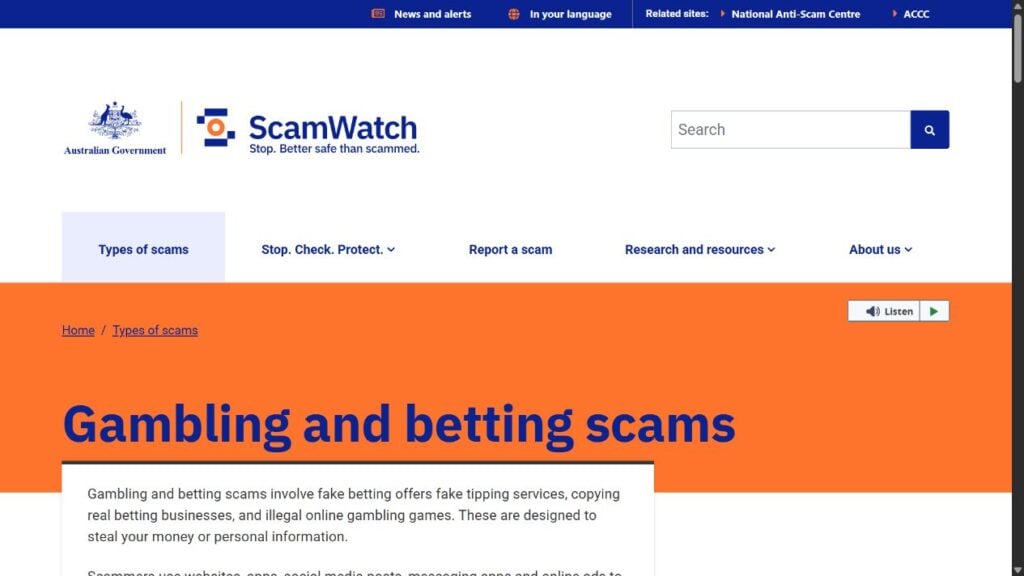
Scamwatch warns that fake casino-style platforms can show early wins, then suspend access or demand more payments. That general warning does not prove DudeSpin follows that pattern, but it explains why screen balances alone are not evidence of withdrawable funds.
Step 6: Withdrawal Rules Become the Real Test
DudeSpin’s terms set account-level withdrawal limits. The lowest listed USD tier allows $500 per day and $7,000 per month, while only three withdrawal requests can remain pending at once.
The terms say requests are worked through within three business days after the request or after the previous withdrawal was paid, provided checks and other conditions are complete. They also permit additional identity, account, and source-of-funds reviews.
The same document states that an account can be closed only with no balance and no pending withdrawal. It says requesting closure with a positive balance or pending withdrawal causes those funds to be voided.
Step 7: Delays Can Push the Player Back Into Gambling
When a withdrawal remains pending, the balance may stay visible and available. A frustrated player can cancel the request and wager again, sometimes losing money that had already been mentally counted as a payout.
Public complaint sites contain allegations of delayed withdrawals, repeated verification, and account-closure problems. Those reports are user claims, not court findings, and individual outcomes vary. They are still reasons to examine the rules before depositing.
Never pay a new “tax,” “release fee,” or “verification deposit” to unlock winnings. Scamwatch identifies repeated payments before a payout as a core warning sign in fake gambling schemes.
Company, Address, and Fulfillment Checks
The Brand Name Does Not Identify the Legal Company
DudeSpin is a trading name and website label. The general terms reviewed define “Company” as the company operating the site, but they do not state that entity’s legal name or registration number.
That omission makes it harder to verify ownership, financial standing, directors, or the correct defendant in a dispute. A consumer should know the legal counterparty before sending money.
The Missing Address Blocks Basic Accountability Checks
No physical headquarters, registered office, or complaint address was found in the general terms reviewed. A support email is not a substitute for an address tied to a registered company.
Without a jurisdiction and service address, it is difficult to know which consumer law applies, where formal notice must be sent, or which regulator can compel a response.
Support Exists, but an Email Is Not Independent Oversight
The site lists support@dudespin.com and a separate complaints address. It says an internal committee will review disputes and directs dissatisfied users to a third-party casino complaint site.
That route is not the same as a named gambling regulator or licensed alternative dispute body. Before depositing, ask support for the legal operator, license number, regulator, registered address, and formal escalation process.
Licensing and Payment Traceability Come Before Any Deposit
No license number or named licensing authority was found in the terms reviewed. The Australian ACMA advises consumers to check its licensed-provider register and warns that online casino-style games offered to Australians are prohibited services.
Also record the merchant descriptor and payment processor before paying. If the statement name differs from the casino brand, ask in writing which legal entity received the money and why.
Red Flags to Check Before Following a Casino Bonus Text
- The message arrived without a requested subscription or clear sender identity.
- The link does not use the brand’s known domain.
- The percentage dominates the message while the wagering rule is absent.
- The legal company, registration number, address, and regulator are missing.
- The service does not appear on the regulator’s local license register.
- The site accepts deposits from a country it later calls restricted.
- Identity checks appear only when a withdrawal is requested.
- Support cannot give a specific payout date or written reason for delay.
- A new payment is demanded to release an existing balance.
- The player is encouraged to cancel a pending withdrawal and continue betting.
One clue does not settle every case. The decision should rest on the combined picture: a mismatched marketing route, unclear legal identity, unverified licensing, restrictive terms, and the quality of the withdrawal process.
What to Do if You Have Fallen Victim to This Scam
- Stop depositing and do not chase the displayed balance. Do not send another payment for tax, verification, insurance, or release. Additional money does not make an unverified payout more likely.
- Preserve the full evidence trail. Save the SMS, sender number, visible URL, redirect history, account statements, deposits, bonus terms, wagering progress, withdrawal requests, chat logs, emails, and screenshots of the balance.
- Submit a written withdrawal or closure request. Use the official support address reached independently. Ask for a case number, the legal operator, the exact rule being applied, a payout date, and written confirmation that promotional messages will stop.
- Contact the payment provider immediately. Tell the bank, card issuer, e-wallet, or crypto exchange that the transaction followed a questionable gambling promotion. Ask what recall, dispute, card replacement, or merchant-blocking options remain available.
- Secure the identity information you supplied. Change reused passwords, enable multifactor authentication, watch email and financial accounts, and consider a credit alert if the site or linked form received identity documents.
- Scan any device that downloaded software. Run a complete Malwarebytes scan if the link installed an app, extension, certificate, or remote-support tool. Remove unfamiliar software and update the operating system and browser.
- Block malicious ads and repeat redirects. AdGuard can stop some known scam pages, aggressive pop-ups, and malicious advertising domains. It is an extra layer, not a substitute for checking the final domain and licensing record.
- Report the marketing route and gambling service. In Australia, report the message to Scamwatch and report a suspected illegal service to ACMA. Elsewhere, contact the gambling regulator and consumer-protection agency for your jurisdiction.
- Get support without shame. Gambling Help Online and similar local services can help if the bonus or pending balance is pulling you back into repeated deposits. Asking for help early protects both money and wellbeing.
- Reject recovery agents who demand advance payment. Scammers monitor complaint pages and contact victims promising guaranteed recovery. Do not share wallet seed phrases, remote access, identity documents, or a fee with an unsolicited helper.
Frequently Asked Questions
Is the DudeSpin 300% bonus text completely fake?
The advertised 300% plus 150 free-spin package resembles a current DudeSpin promotion. The unrelated SMS link and missing sender identity remain risks, so visit the known site independently and verify every term.
Does a matching promotion prove the SMS link is safe?
No. An affiliate or criminal can copy a real offer. The destination domain, legal operator, privacy terms, and licensing status must be verified separately.
Why can a casino bonus be difficult to withdraw?
Bonus balances commonly require repeated eligible wagering. Game contributions, expiry dates, bet limits, excluded games, maximum payouts, identity checks, and account-level withdrawal caps can all affect the result.
Is DudeSpin licensed?
No license number or licensing authority was found in the general terms reviewed on August 29, 2026. Ask the operator for verifiable details and confirm them directly with the named regulator before depositing.
What if the site is blocked in my country?
Do not use a VPN to bypass the restriction. The site’s own terms may exclude your location, and local law may prohibit the service or leave you without meaningful consumer protection.
Can I recover money sent through the promotion?
Recovery depends on the payment method, timing, and jurisdiction. Contact the payment provider immediately, preserve evidence, report the matter, and avoid anyone promising guaranteed recovery for an upfront fee.
The Bottom Line
The DudeSpin Casino text uses a real-looking, and apparently matching, 300% plus 150 free-spin offer. That does not make the unrelated link, sender, operator, or payment journey trustworthy.
The pages reviewed leave major accountability questions unanswered, while the published terms place meaningful limits and conditions around bonuses, withdrawals, verification, and account closure.
Do not let the headline decide. Verify the legal company, license, location eligibility, exact promotion rules, and withdrawal procedure before sending money or identity documents.








