

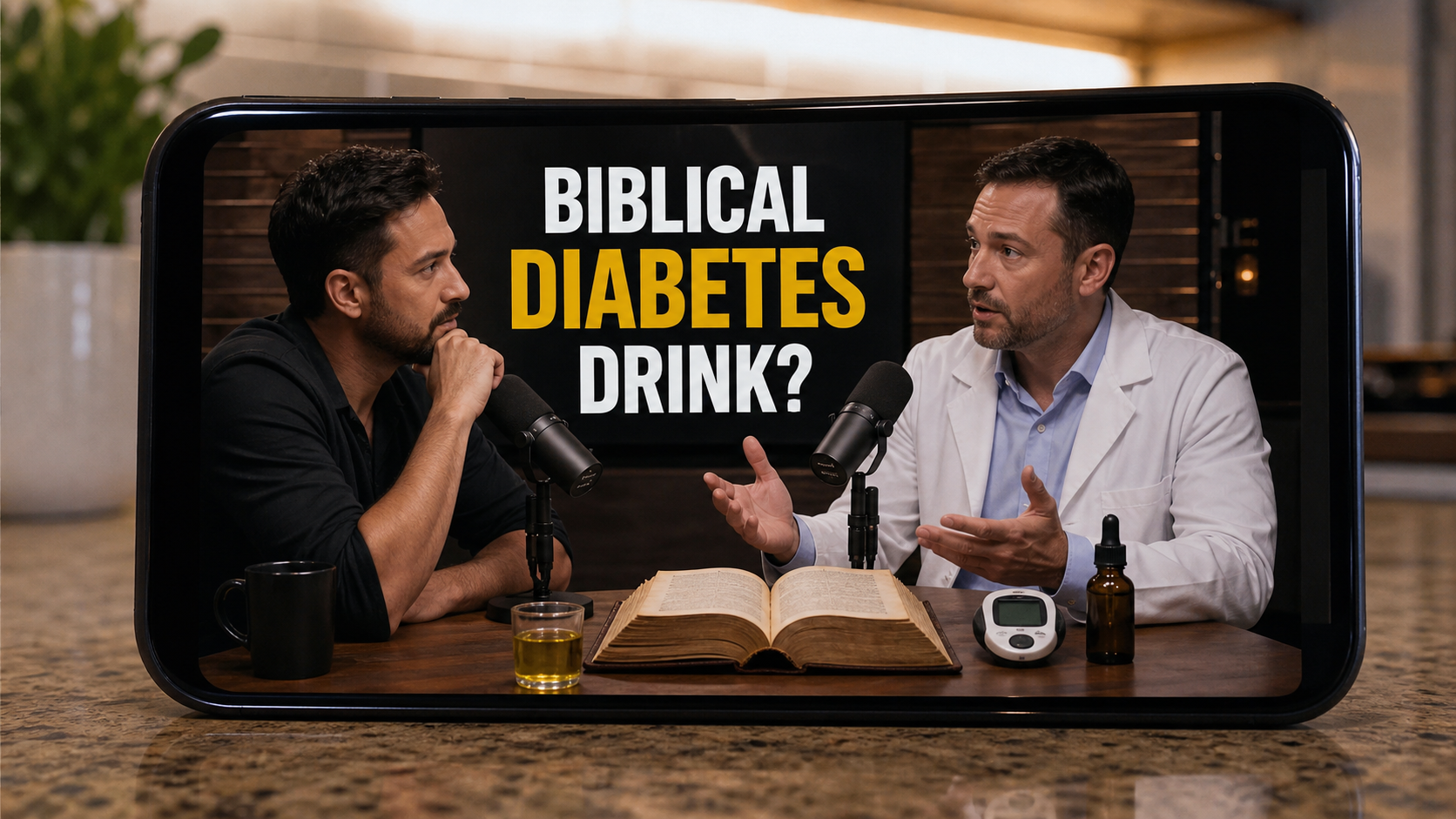
A podcast clip appears to reveal an ancient olive oil drink that can rebuild the pancreas and reverse type 2 diabetes. The host looks surprised, the doctor sounds certain, and a glucose meter sits nearby as visual proof.
The recipe is described as biblical, natural, and almost too simple. Yet the longer the viewer watches, the further the promised kitchen remedy moves out of reach.
This investigation explains how the biblical olive oil diabetes drink story turns AI-generated authority into a supplement sale, and why the medical claims deserve immediate caution.
Overview
A fake interview creates the appearance of a medical breakthrough
The promotion has used podcast-style footage associated with Steven Bartlett and Dr. William Li. Edited or AI-generated dialogue makes it appear that a respected host and physician are discussing a suppressed cure.
We found no credible evidence that either person endorsed the advertised diabetes drink or the drops sold at the end. The setting, voices, and familiar faces provide borrowed trust, not proof.
The story invents a simple hidden cause
Versions of the video claim that a “pancreatic parasite” feeds on insulin, disables GLP-1 activity, or prevents the pancreas from functioning normally. The biblical olive oil mixture is then presented as the one solution that removes the hidden cause.
This is not a medically established explanation for type 2 diabetes. The disease involves insulin resistance and impaired insulin production, with risk shaped by genetics, weight, age, activity, and other health factors.
The recipe reveal becomes a bottle of drops
Despite promising a drink viewers can make at home, the presentation eventually directs them to GlycoReset or a similarly positioned supplement. The bottle can change while the olive oil story continues.
That gap is central to the scam. The campaign attracts people with a supposedly free traditional recipe, then monetizes their concern through multi-bottle packages and additional offers.
- A familiar podcast format makes the video look independently produced.
- AI-generated speech creates endorsements that did not occur.
- Religious and ancient-history references give the remedy emotional authority.
- An invented parasite story reduces a complex disease to one frightening cause.
- The promised recipe is withheld until a supplement offer appears.
What the “Biblical Diabetes Drink” Is Supposed to Do
The video typically claims that a small amount of olive oil, sometimes combined with another ordinary ingredient, can restart the body’s natural ability to control glucose. Viewers may hear promises of lower readings, weight loss, renewed energy, and freedom from medication.
Some versions use a precise timeline such as 21 days. Exact numbers make a claim feel tested, but a timeline is not evidence. The ad does not provide a published clinical trial showing that the promoted recipe reverses diabetes in that period.
The word “biblical” also does important persuasive work. It frames the remedy as ancient knowledge that survived outside modern medicine. For religious viewers, the language can make ordinary skepticism feel like rejecting tradition rather than evaluating an advertisement.
Olive oil can be part of a healthy eating pattern. That broad nutritional fact does not prove that an olive oil shot rebuilds the pancreas, removes a parasite, replaces medication, or cures diabetes.
The parasite explanation is designed to frighten and simplify
A hidden organism offers the story a villain. It explains why previous efforts failed and why the viewer supposedly needs the advertised solution immediately.
Real parasitic infections are diagnosed through medical evaluation and appropriate testing. A generalized social media video cannot determine that millions of viewers have the same infection, and an unverified supplement should not be treated as an antiparasitic treatment.
The GLP-1 reference borrows credibility from real medicine
GLP-1 is a real hormone involved in blood sugar regulation and appetite. Approved medicines that act on related pathways have been studied in controlled trials and prescribed under medical supervision.
Mentioning GLP-1 does not prove that a dropper bottle reproduces those effects. The seller must provide evidence for the exact formula, dose, population, outcome, and safety profile.
What the GlycoReset Pages Actually Show
One GlycoReset page described the product as natural support for keeping type 2 diabetes under control and displayed several dropper bottles beside a 60-day money-back guarantee. It claimed a proprietary blend of eight ingredients backed by clinical research.
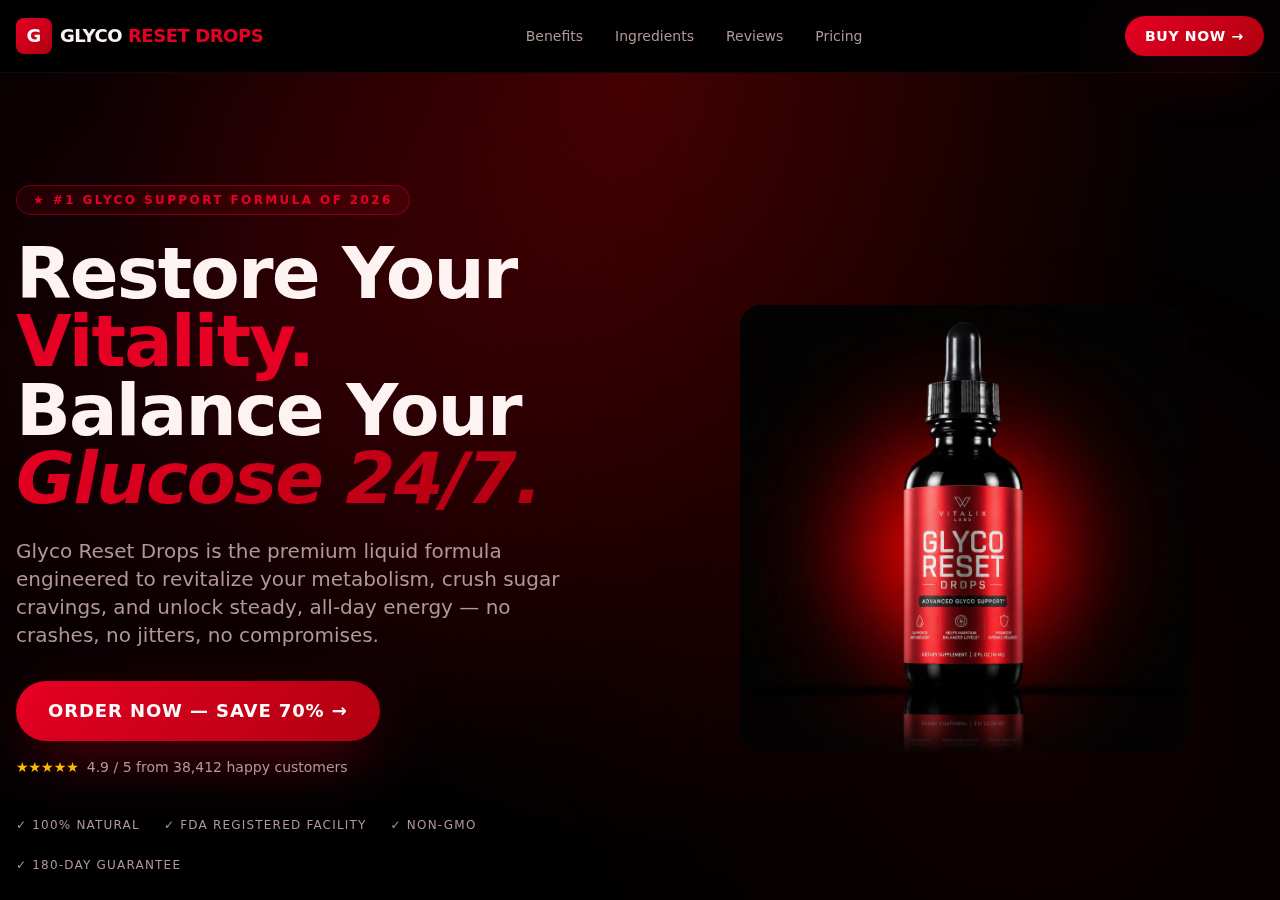
Another Glyco Reset Drops page used much more aggressive marketing language, including “restore your vitality,” “balance your glucose 24/7,” a claimed 70% discount, and an 180-day guarantee.
Those differences matter. Consumers searching the same name may encounter different labels, promises, guarantees, and seller details. A policy shown on one domain may not apply to an order placed through another.
The primary offer has been associated with BuyGoods, a third-party retailer that processes many direct-response products. Public promotional material listed contact@GlycoReset.com and +1 323-287-3893, while BuyGoods listed +1 302-404-2568 for retailer support.
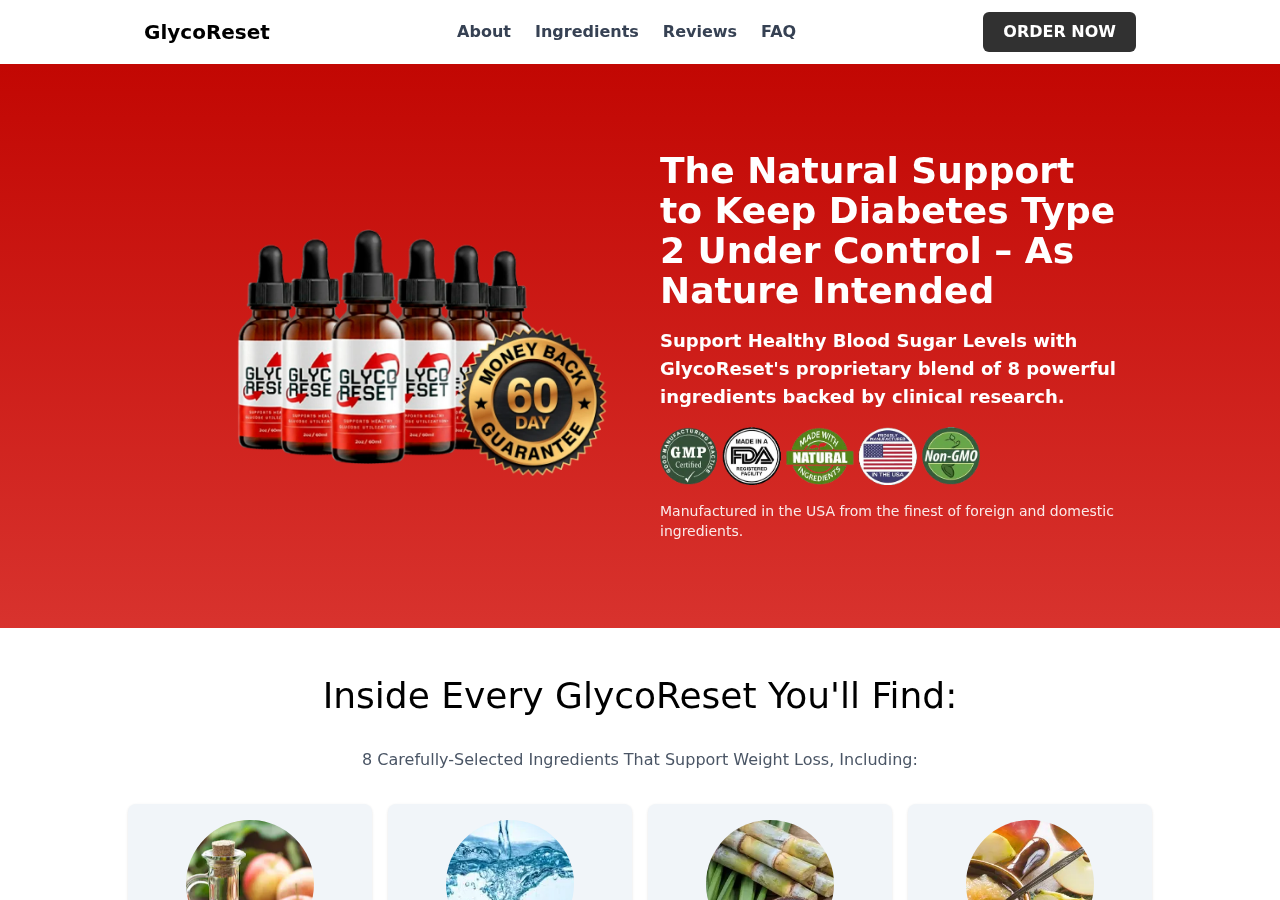
A sales video reference to an olive oil component sometimes called oleocanthal does not substitute for a complete Supplement Facts panel. Buyers need the name and amount of every active ingredient, not only a proprietary story about one component.
We did not find a clear, consistently presented full formula across every accessible GlycoReset-branded page. That uncertainty is especially important for people taking glucose-lowering medication, because combining products can affect blood sugar and create interaction risks.
Some online complaints describe six-bottle charges around $294, phone consultations, upsells, or extra bottles added after a click. These are consumer reports, not proof that every buyer experiences the same checkout. They are still a reason to record the order screen and reject unclear additions.
The safest approach is to judge the exact transaction. Confirm the bottle count, total, billing type, return policy, and responsible seller before submitting payment.
Why the Diabetes Cure Claim Is Dangerous
Type 2 diabetes can damage the heart, blood vessels, eyes, kidneys, and nerves when it is not properly managed. A deceptive cure promise can cause harm even if the bottle itself contains ordinary ingredients, because it may persuade someone to delay testing or stop effective care.
Diabetes remission is possible for some people, often after substantial and sustained weight loss through intensive lifestyle changes or metabolic surgery. Clinicians use the word “remission” carefully because glucose can rise again and ongoing monitoring remains important.
Remission is not the same as a universal 21-day cure. It also does not validate a social media recipe or mean a person should stop prescribed medication without medical supervision.
The FDA and FTC have repeatedly acted against products marketed with unsupported diabetes treatment claims. A dietary supplement cannot legally be transformed into a proven disease cure through testimonials, an AI doctor, or a disclaimer placed at the bottom of the page.
Blood sugar can change for many reasons
Food, exercise, illness, stress, sleep, hydration, medications, and measurement timing can all affect a reading. A short sequence of lower numbers after starting a product does not establish that the product repaired the pancreas.
Reliable conclusions require structured monitoring and medical interpretation. People using insulin or medications that can cause hypoglycemia need particular caution when adding supplements or sharply changing diet.
A guarantee cannot reverse a medical delay
A refund policy addresses the purchase price, not the health consequences of postponed care. Even a fully honored guarantee would not make an unsupported treatment claim safe.
Any ad telling viewers to distrust their clinician, stop medication, or avoid glucose monitoring should be treated as an urgent warning sign.
How the Scam Works
Step 1: A social ad imitates a viral podcast moment
The first clip shows a host reacting to a doctor-like guest who appears to reveal forbidden information. Microphones, studio lighting, captions, and camera cuts make the conversation feel authentic.
The clip is optimized to circulate without context. Viewers may never see the original program or check whether the exchange appears on the participants’ verified channels.
Step 2: AI-generated speech invents the endorsement
Artificial voice cloning and face animation place promotional words into the mouths of recognizable people. Real footage may be cut around the synthetic sections to hide inconsistencies.
Watch for unnatural lip movement, flat emotional timing, changing facial details, mismatched room sound, and sentences that never appear in an authentic source.
Step 3: A fake news or interview page extends the story
The ad opens an advertorial designed to resemble a trusted publication, television transcript, or podcast page. Logos, bylines, comments, and video controls may be visual props.
The actual domain often has no connection to the organization being imitated. Nearly every link moves the visitor deeper into the same sales funnel.
Step 4: The script invents a pancreatic parasite
The viewer is told that this hidden cause explains why diet, exercise, and medicine have not worked. The idea produces fear while offering relief: if there is one cause, there can be one easy fix.
No individualized diagnosis is performed. The same claim is delivered to every viewer, regardless of medical history, test results, or actual cause of elevated glucose.
Step 5: The biblical olive oil recipe remains just out of reach
The video promises to reveal a simple drink but delays the instructions through stories, warnings, and testimonials. This keeps viewers emotionally committed and increases the chance they will accept the eventual product reveal.
When the bottle appears, buying it feels like completing the lesson rather than beginning an ordinary commercial transaction.
Step 6: Multi-bottle packages and upsells raise the total
The sales page emphasizes several months of use and makes the largest bundle look like the best value. Additional bottles, coaching, expedited shipping, or related products may be offered after the first selection.
Do not rely on the per-bottle headline. The only amount that matters is the complete total beside the final purchase button.
Step 7: The product changes while the cure story continues
GlycoReset is one commercial endpoint. A different seller can attach the same podcast, parasite, GLP-1, and olive oil narrative to another supplement with little editing.
Remember the story pattern. It will remain useful after the current product name disappears.
Company, Address, and Fulfillment Checks
The brand does not identify every company involved
Separate parties may own the brand, run the affiliate ad, process payment, manufacture the supplement, and ship the bottles. Identify which entity is responsible for each role.
If the terms, label, receipt, and card statement name different businesses, save them all. A customer should not have to guess who owes the refund.
A retailer address or returns warehouse is not a laboratory
BuyGoods may process the sale, while a fulfillment center handles the package. Neither fact proves where the formula was developed, what testing occurred, or who made the medical claims in the AI ad.
Search every address. Mailboxes, registered-agent suites, warehouses, and unrelated occupants should not be presented as proof of a medical headquarters.
Phone and email support should answer direct questions
Before ordering, ask +1 323-287-3893 or the current contact listed in the exact offer to confirm the bottle count, total, auto-renewal status, formula, and return address. For a BuyGoods receipt, verify support through the retailer’s official order documentation.
If no one answers, the agent cannot find the product, or the reply avoids basic billing questions, do not proceed. A contact line that exists only inside an advertorial is not enough.
Missing formula details are a medical warning, not a small omission
People with diabetes need exact ingredient amounts, warnings, and interaction information. Vague claims about biblical ingredients, natural extracts, or an FDA-registered facility do not provide that information.
Supplements can be produced at scale and moved through third-party fulfillment networks. That does not automatically make them unsafe, but it means the label and testing must carry the evidence. An AI endorsement cannot.
What to Do if You Have Fallen Victim to This Scam
- Continue monitoring and contact your clinician. Do not stop insulin or other diabetes medication because of the ad. Seek urgent care for severe weakness, confusion, vomiting, breathing difficulty, very high readings, or symptoms of dangerously low blood sugar.
- Photograph the product before using more. Capture the front, back, Supplement Facts panel, lot number, seal, instructions, and shipping label. Keep the bottle even if you stop taking it.
- Save the complete sales story. Record the AI video, fake interview, parasite claim, promised timeline, landing page, price, terms, receipt, and any upsell screens.
- Ask a pharmacist about interactions. Bring the bottle and a list of prescriptions, over-the-counter medicines, and supplements. Report a serious adverse event to the FDA and seek medical care when needed.
- Cancel unclear orders and request a refund. Contact the exact seller and payment retailer in writing. Specify every unwanted bottle or add-on and request the correct return instructions.
- Challenge unresolved charges. If the company will not honor its policy or charged more than you approved, contact the card issuer promptly. Provide the order screen, receipt, correspondence, and tracking record.
- Protect your accounts. Change any reused password. Run Malwarebytes if the page required a download, “health report,” app, extension, or special video player. Supplement information should not require executable software.
- Reduce malicious redirects. AdGuard can block many ad scripts, trackers, and redirect domains used to deliver repeat cure campaigns. It cannot determine whether a health claim is medically sound.
- Report the health fraud. Report the ad to the platform, the FTC, and the FDA. Include the impersonated people, domain, product, parasite claim, and screenshots of the checkout.
Frequently Asked Questions
Can an olive oil drink cure type 2 diabetes?
No credible evidence shows that the advertised drink cures diabetes or rebuilds the pancreas in 21 days. Olive oil can fit into a balanced diet, but that is not the same as a disease treatment.
Is the pancreatic parasite claim real?
It is not an established general cause of type 2 diabetes. A parasitic infection requires medical evaluation and testing, not diagnosis through a universal social media video.
Did Steven Bartlett or Dr. William Li endorse GlycoReset?
We found no credible evidence that they endorsed the advertised cure story or product. The clips should be treated as manipulated unless verified through authentic channels.
Is GlycoReset a prescription diabetes medicine?
No. The pages we reviewed marketed it as a dietary supplement. It should not be confused with an approved prescription treatment or used as a replacement without medical guidance.
Does every GlycoReset order include extra bottles?
No. Complaints about upsells and extra bottles describe individual experiences and do not prove every checkout behaves identically. Record the final order summary and reject any addition you do not want.
Can type 2 diabetes go into remission?
Some people achieve remission, often through substantial sustained weight loss and structured medical care. Remission is monitored and is not proof that a biblical drink or supplement cures everyone.
The Bottom Line
The biblical olive oil diabetes drink scam combines an AI-generated interview, religious imagery, real medical vocabulary, and an invented parasite story to make a supplement checkout feel like a suppressed cure.
Do not let the bottle name distract from the method. Verify the speaker, demand evidence for the exact formula, keep diabetes care under medical supervision, and leave any offer that hides a product sale behind a promised home recipe.








