

The promise sounds almost comforting: add one secret ingredient to honey, wait a few seconds, and bring back the memory that age supposedly stole.
Then the page borrows Bill Gates, Ben Carson, CBS News, and the fear of Alzheimer’s disease to make the story feel too important to ignore.
What waits at the end is not a recipe. It is a changing supplement offer.
Overview
What Mind Honey 60 Pro Is Supposed to Be
Mind Honey, MindHoney 60, and Mind Honey 60 Pro are names used around a direct-response brain supplement campaign. The marketing says the formula supports memory, focus, mental clarity, blood flow, neurotransmitter function, and long-term cognitive health.
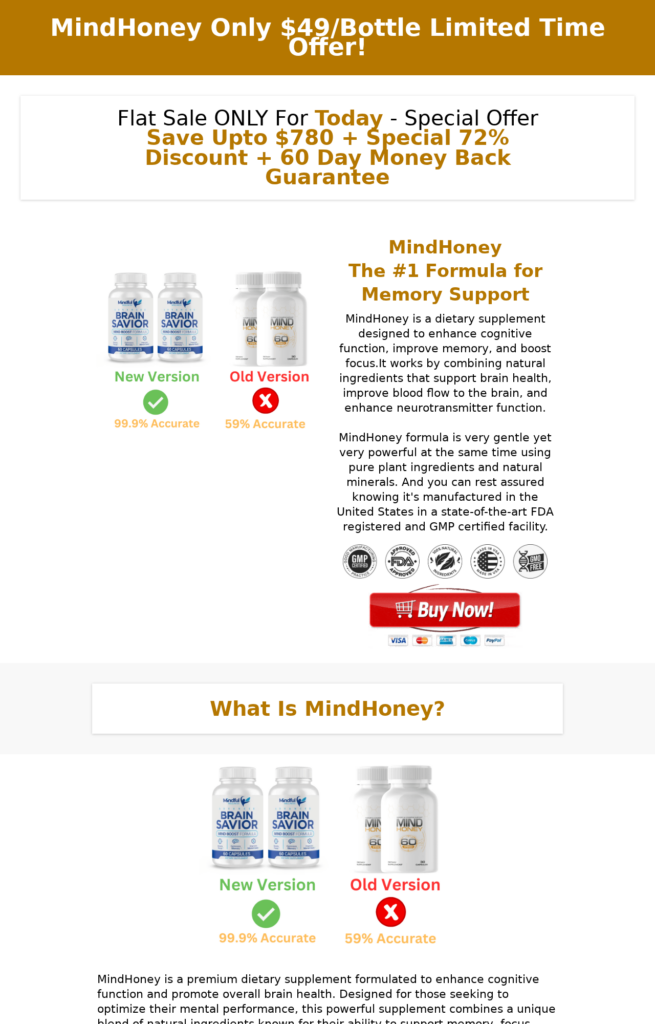
The page at mindhoney.org currently advertises a $49-per-bottle offer, a 72% discount, savings “up to $780,” and a 60-day guarantee. Yet the bottle art on the same page now says “Brain Savior,” while other graphics and text continue to use Mind Honey.
This investigation concerns that scam-style Mind Honey 60 Pro campaign. It should not be confused with Mindhoney.co, a different established nootropic brand with different packaging, products, and retail distribution.
How the “Honey Shield” Story Misleads Viewers
The campaign is promoted with social media videos promising a seven-second honey habit that can supposedly restore memory or reverse Alzheimer’s symptoms. Fake news-style pages imitate CBS News and 60 Minutes and use apparent footage of Bill Gates or Ben Carson.
Some versions claim involvement from Harvard, Oxford, 234 scientists, or tens of thousands of participants. We found no credible study, university announcement, official celebrity statement, or medical evidence supporting those representations.
The home-remedy framing is bait. After the viewer spends time following the story, the page switches to expensive multi-bottle supplement packages.
Our Verdict on Mind Honey 60 Pro
We recommend avoiding Mind Honey 60 Pro, Brain Savior, or any supplement sold through this “Honey Shield” funnel. The campaign relies on fake endorsements, counterfeit news branding, unsupported disease claims, extreme discount math, and a product identity that changes on the page itself.
A bottle may be delivered after payment. That does not make the Alzheimer’s claims, celebrity videos, testimonials, accuracy percentages, or guarantee easy to trust.
The most serious warning signs are:
- Fake CBS News and 60 Minutes presentation.
- No credible connection to Bill Gates, Ben Carson, Harvard, or Oxford.
- Claims about reversing Alzheimer’s symptoms in days.
- Mind Honey branding replaced by Brain Savior on the same page.
- A 99.9% “accuracy” graphic with no explained test or methodology.
- Contradictory refund wording and no prominent legal company identity.
The Product Changes While the Sales Story Stays the Same
Mind Honey Has Become Brain Savior on Its Own Page
The live page still calls itself MindHoney and repeatedly uses that name in headings. Its central product graphic, however, marks the “New Version” as Brain Savior and the “Old Version” as Mind Honey 60.
The site compares them with unsupported figures of 99.9% and 59% “accurate,” without explaining what is being measured, who performed the test, how many people participated, or where the results were published.
This is exactly why the story matters more than the bottle to the operators. The familiar honey cure and celebrity hook can continue even when the supplement name or artwork changes.
The Package Image Confirms the Rebrand
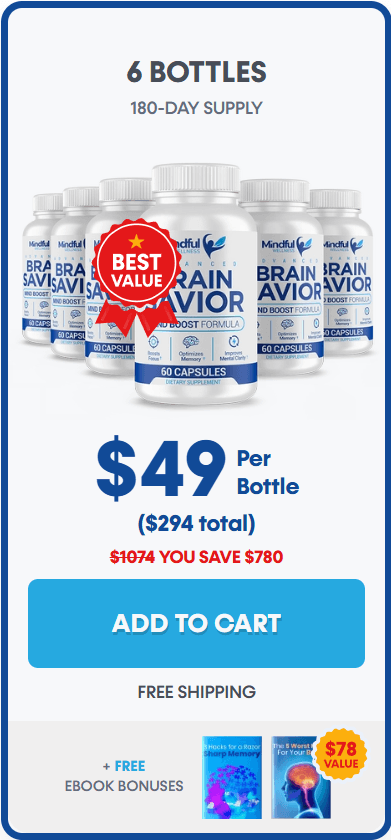
The six-bottle package currently displays Brain Savior bottles labeled “Mind Boost Formula,” not Mind Honey 60 Pro. The total is $294, presented as $49 per bottle against a crossed-out $1,074 value.
That graphic claims the buyer saves $780 and receives free shipping and bonus ebooks. The enormous reference price makes $294 feel small, but the site does not establish that customers normally pay $1,074 for the same package.
A changing label also complicates returns and research. Buyers should record exactly which name appears in the cart, on the confirmation, on the physical bottle, and on the card statement.
The Formula Description Is Broad and Potentially Significant
The page names Ginkgo biloba, St. John’s wort, Bacopa monnieri, acetyl-L-carnitine, Huperzine A, and phosphatidylserine. It also refers generally to B-complex vitamins.
Those are not harmless storytelling props. St. John’s wort can interact with many medicines, and Huperzine A affects acetylcholine pathways. A seller should provide an exact Supplement Facts panel, serving size, warnings, and distributor details before encouraging use.
The page makes generalized claims that the product is safe alongside other supplements, then suggests consulting a clinician. Consumers taking prescription medication should not rely on the reassuring sentence.
Ingredient Studies Cannot Prove a Finished Product Works
The site says individual ingredients have been researched, but it does not present a controlled clinical trial of the current Brain Savior or Mind Honey 60 Pro formula.
Evidence about one ingredient at a particular dose cannot automatically establish that a multi-ingredient commercial bottle improves memory, prevents cognitive decline, or produces the experiences described in seller-selected testimonials.
The relevant question is not whether an herb has appeared in a scientific paper. It is whether the exact finished formula was independently tested for the exact claims being made.
The Fake Authority Layer Is Built for Vulnerable Families
Bill Gates and Ben Carson Are Used Without Credible Verification
The fake news funnel associates the honey habit with Bill Gates and Ben Carson. Their faces make the story feel familiar and medically or technologically important.
We found no credible evidence that either person endorses Mind Honey 60 Pro or Brain Savior. A clip on an unfamiliar domain can be edited, generated, dubbed, or assembled from unrelated footage.
If the statement is real, it should be visible on an official channel or in reputable reporting that does not lead directly to a bottle checkout.
CBS News and 60 Minutes Branding Is Counterfeit
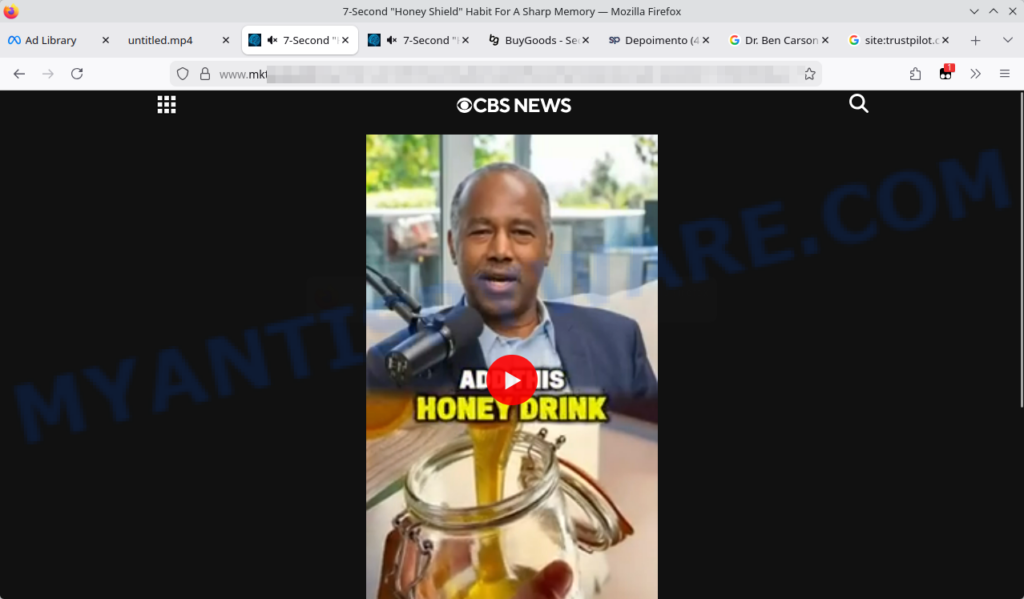
The captured promotion uses the CBS News logo and a television-style black layout around a vertical “Honey Drink” video. The address bar is not on a CBS domain.
That visual impersonation is central to the deception. People often recognize a logo faster than they read a URL, especially on a small phone screen.
Navigation, search icons, and “LIVE” labels can be copied in minutes. The domain and ownership of the page matter more than the familiar header.
Harvard, Oxford, and Invented Research Numbers Add Scale
Reported versions cite elite universities, hundreds of scientists, and tens of thousands of people. Large numbers create the impression that the remedy is settled science rather than a new supplement pitch.
The funnel does not provide a verifiable paper title, authors, journal, trial registration, methods, or data for the finished product. A university name used as decoration is not an endorsement.
When a page claims a breakthrough of this scale, confirmation should be easy to find in medical journals and official institutional announcements. Its absence is a major warning.
Seller-Controlled Testimonials Are Not Independent Reviews
The page shows named customers who claim dramatic improvements in memory, focus, family relationships, and mental sharpness. Their images, locations, and detailed stories create the appearance of verified social proof.
The site does not link those accounts to a checkable review platform or explain how customers were selected. One testimonial even describes an intense family situation in which a grandparent could not be trusted alone with grandchildren, then credits the product with rapid restoration.
Emotional detail makes a story memorable. It still does not establish typical results or replace clinical evidence.
How the Mind Honey 60 Pro Scam Works
Step 1: A Social Ad Promises a Seven-Second Honey Habit
The ad opens with honey, a breakfast routine, or a loved one’s memory returning. It tells viewers to click for a free recipe rather than presenting a supplement and price.
Short, visual ingredients work well in social feeds and allow the same ad concept to promote many changing products.
Step 2: The Click Opens a Fake News Report
The landing page copies CBS News, 60 Minutes, or another trusted outlet. A vertical video and familiar face make it look like a broadcast clip shared online.
The real domain is unrelated to the broadcaster. The page exists to move visitors toward a commercial offer.
Step 3: The Video Invents a Suppressed Discovery
The presenter claims researchers found a hidden cause of memory loss and that a honey mixture can repair it. Elite universities, foundations, doctors, and large studies are named to prevent skepticism.
The story may also suggest that drug companies or medical authorities do not want the public to know. That conspiracy framing discourages viewers from checking with qualified professionals.
Step 4: The Free Recipe Becomes a Supplement Kit
Instead of clearly providing the promised recipe, the video introduces Mind Honey 60 Pro, MindHoney, or Brain Savior. The product name can change while the honey narrative remains recognizable.
The switch happens late, after the viewer has invested time and emotion. That makes leaving feel like abandoning the answer just before it is revealed.
Step 5: Discount Math Pushes Six Bottles
The page highlights six bottles for $294, claims a $780 saving, adds ebooks, and says 93% of customers select the six-bottle option. It also recommends at least 90 days of use.
Those cues turn a first purchase into a multi-month commitment. The buyer has not yet confirmed the label, tolerance, or result.
Step 6: A Third-Party Checkout Collects Payment Details
The offer links through a MaxWeb tracking address, and reports of the broader funnel describe BuyGoods checkout pages. Affiliate tracking can identify who earns a commission when a visitor buys.
Inspect the last payment screen for quantity, shipping, upsells, refill language, and the legal merchant. We did not verify that every order includes automatic renewal, so the exact confirmation must guide any cancellation.
Step 7: The Guarantee Becomes Confusing After Purchase
The page headline and policy say 60 days, but the guarantee image is named as a 180-day asset, and one FAQ says the 60-day guarantee means buyers have six months.
Sixty days is not six months. That contradiction can matter when a buyer waits to request a refund. Save the page and ask the retailer for the binding deadline in writing.
Company, Address, and Fulfillment Checks
The Site Does Not Prominently Identify a Legal Company
Mindhoney.org uses a brand name, product copy, badges, and affiliate purchase links, but the main page does not prominently identify a legal company with a full physical address beside the offer.
A copyright line is not corporate transparency. Buyers should know who accepts the order, who appears on the card, and who is legally responsible for the label.
The Checkout and Affiliate Network May Be Separate Parties
MaxWeb appears in the purchase link, while reports of the scam funnel identify BuyGoods as a checkout platform. An affiliate network, retailer, advertiser, fulfillment center, and product distributor can all be different entities.
Do not send a refund request to whichever name is easiest to find. Match the retailer and merchant descriptor to the exact confirmation for your order.
No Visible Address Means the Warehouse Cannot Be Evaluated
The page does not give visitors a clear headquarters, manufacturing facility, or returns address before they follow the sales link. A later warehouse address would only show where packages are handled.
Ask for the distributor printed on the bottle, country of manufacture, lot number, expiration date, and return destination. We found no evidence proving this product is made in China, so that claim should not be repeated as fact.
The Label and Support Must Be Verified Before Use
Because the page shifts from Mind Honey to Brain Savior and names ingredients with potential interactions, the physical label deserves close inspection.
Compare it with the saved offer. If the name, serving size, ingredients, or warnings differ, do not use the product until a pharmacist or clinician has reviewed it.
A seller that cannot provide a stable product identity, complete Supplement Facts, reachable support, and precise return terms should not receive trust simply because the checkout displays security badges.
What to Do if You Have Fallen Victim to This Scam
- Get medical help for memory concerns. A supplement video cannot diagnose or reverse Alzheimer’s disease. Arrange a professional evaluation, especially if changes are sudden, worsening, or affecting safety.
- Stop using a mismatched bottle. If Mind Honey was ordered but Brain Savior arrived, or the ingredient panel differs from the page, photograph it and ask a pharmacist about the listed ingredients and interactions.
- Save every version of the offer. Keep the social ad, fake CBS page, video screenshots, product page, 60-day and six-month statements, package price, confirmation, and card descriptor.
- Identify the actual retailer. Use the confirmation email to determine whether BuyGoods or another company processed the sale. Request cancellation, an RMA, and a return address in writing.
- Check for recurring or added charges. Review the final order and later statements for upsells, extra bottles, subscriptions, or a different merchant name. Report anything you did not authorize to the card issuer promptly.
- Ship returns with proof. Follow the retailer’s written instructions, photograph the contents, use tracking, and keep delivery confirmation. Do not rely on an address copied from someone else’s complaint.
- Report the impersonation. Send the false celebrity ad to the social platform and the FTC at ReportFraud.ftc.gov. Report unsupported supplement disease claims or adverse events to the FDA.
- Protect the device and browser. Scan with Malwarebytes if you downloaded anything or encountered suspicious redirects. AdGuard can reduce deceptive ad exposure, but it does not cancel billing or replace medical advice.
Frequently Asked Questions
Is Mind Honey 60 Pro the same as Brain Savior?
The current mindhoney.org page labels Brain Savior as the new version and Mind Honey 60 as the old version. Confirm the exact name and formula on your order because the page’s branding has changed.
Is this the same company as Mindhoney.co?
No connection was established. Mindhoney.co sells a different nootropic brand through established retail channels. This article concerns the Mind Honey 60 Pro and Brain Savior “Honey Shield” funnel.
Did Bill Gates or Ben Carson endorse Mind Honey?
We found no credible evidence of a genuine endorsement. The faces appear in fake news-style marketing and should be treated as unauthorized, manipulated, or AI-generated.
Can honey reverse Alzheimer’s disease?
No credible evidence supports the funnel’s promise that a honey habit or this supplement reverses Alzheimer’s disease in days. Memory problems require professional assessment.
Does Mind Honey include automatic refills?
We did not verify mandatory refills for every purchase. Read the actual checkout and confirmation for recurring terms, and monitor statements for later charges.
Is the refund period 60 days or six months?
The page contradicts itself. It repeatedly says 60 days, while one FAQ calls that six months. Obtain the binding terms from the retailer and act within the shorter period unless told otherwise in writing.
The Bottom Line
Mind Honey 60 Pro is a story-first supplement funnel. Fake news branding, famous faces, and a “Honey Shield” Alzheimer’s promise create the trust, then the product changes from Mind Honey to Brain Savior while the six-bottle price stays at $294.
The cure claim is not supported, the endorsement is not credible, and the page cannot keep even its product name and refund timeline consistent. Families worried about memory loss deserve clear medical help, not a changing bottle hidden behind a counterfeit CBS video.








