

A lucky draw winner scam may begin when a social media quiz asks an easy question, a livestream host scratches a winning card, or a familiar creator appears to announce a cash giveaway.
Then comes the message everybody hopes to receive: you won. The prize looks settled, but collecting it somehow requires one small payment first.
Overview
The prize exists only inside the scammer’s conversation
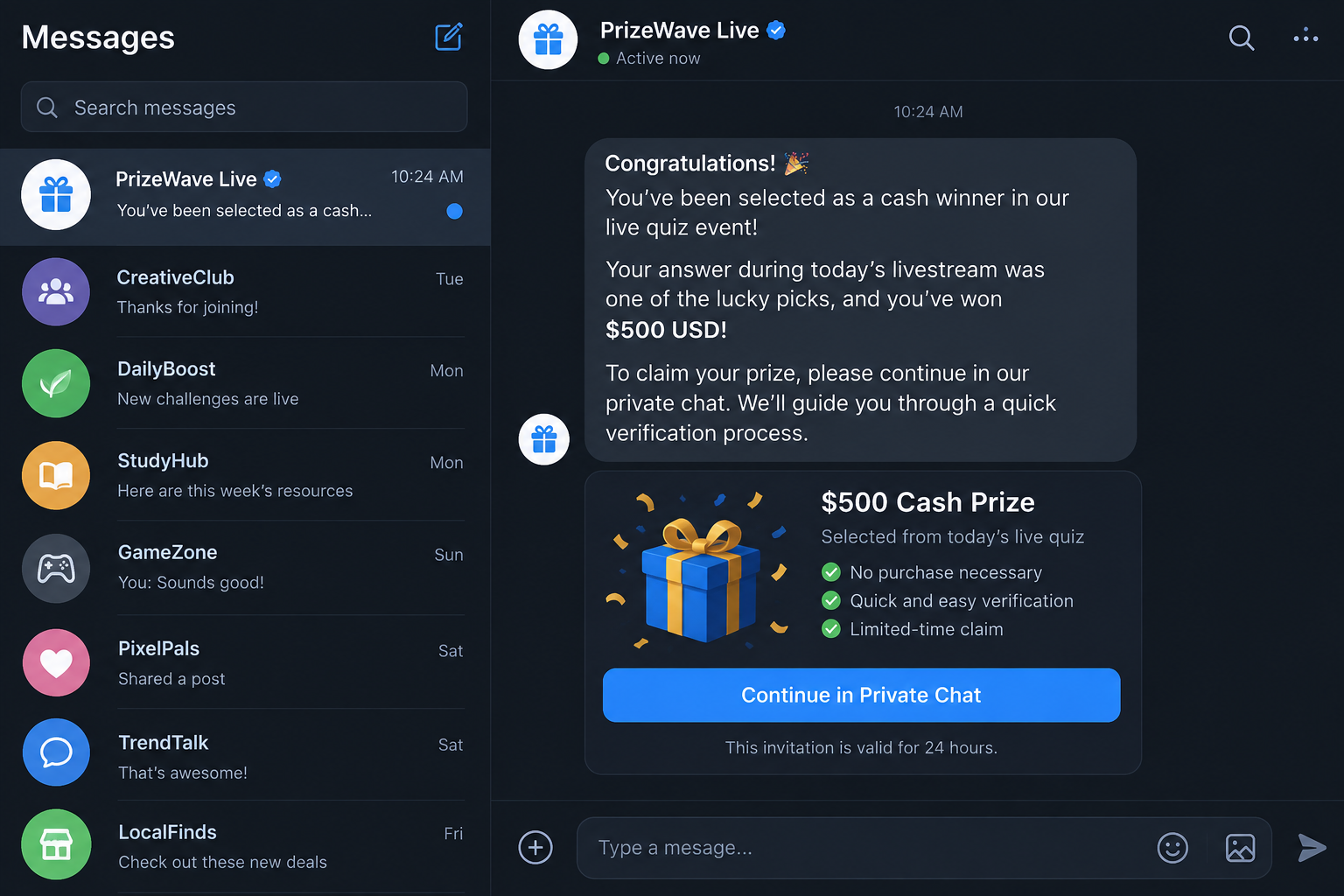
A lucky draw winner scam creates excitement before giving the target time to ask basic questions. The message may follow a quiz, Facebook reel, livestream scratchcard, or promotion using the identity of a popular creator.
The winner is moved into WhatsApp or another private channel. There, an organizer congratulates the victim, shows a certificate or payment screen, and explains that the money is ready for release.
Nothing has been won. The supposed prize is bait for a chain of processing, administration, verification, tax, or activation fees.
A second impersonator makes each new fee sound official
After the first payment, the organizer may claim the transfer is stuck. Another caller then appears, sometimes posing as a bank representative, payment processor, or prize department.
This second role makes the problem feel external. The first scammer can remain helpful while the fake bank blames compliance rules and demands another transfer.
Each payment produces a new obstacle. The prize never becomes withdrawable because the operation is collecting fees, not releasing winnings.
This is a documented mass campaign, not a disputed promotion
The Singapore Police Force documented at least 254 lucky draw scam cases reported from January through July 2026, with losses of at least $983,000.
Police described fake influencer quizzes, Facebook reels, livestream scratchcards, WhatsApp conversations, invented processing charges, and follow-up calls from people pretending to represent Maybank.
Warning signs include:
- winning a promotion you do not clearly remember entering;
- a creator’s video or profile directing you to a private WhatsApp number;
- a prize that requires payment before it can be released;
- fees described as refundable after the winner completes verification;
- requests to use PayNow, a QR code, bank transfer, gift card, or cryptocurrency;
- a bank representative calling from details supplied by the organizer;
- pressure to pay before a winner deadline expires;
- new charges appearing each time the previous one is paid.
Why Paying a Small Fee Feels Safer Than It Is
The first request is often deliberately modest compared with the prize. Paying $30 to receive $10,000 can feel like a harmless administrative step rather than a financial gamble.
That comparison is the trap. The prize amount costs the scammer nothing to display, while every fee paid by the victim is real money.
A first payment also changes the victim’s thinking. Walking away now means accepting that the money is gone, so another fee can feel like the only way to protect the earlier payment.
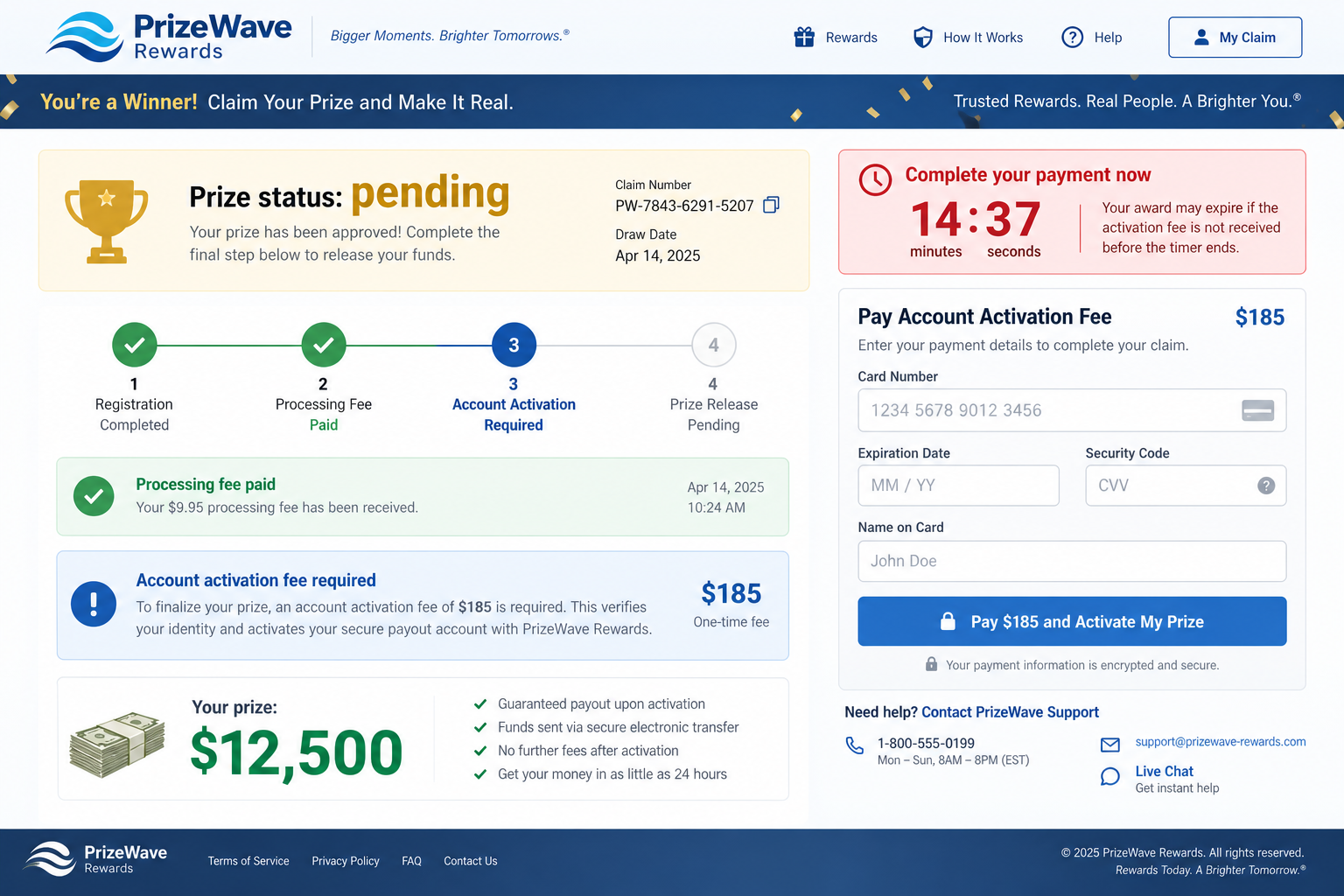
Scammers exploit that pressure with a believable sequence. Processing comes first, then identity verification, currency conversion, anti-fraud clearance, insurance, tax, and finally account activation.
None of those charges needs to be internally consistent. The goal is to give the victim a fresh reason to believe the next payment will be the last.
A fake payment screenshot adds visual certainty. It may show the victim’s name, the prize total, and a pending status. Because the organizer created the screen, it proves nothing about a real bank transfer.
The second caller is another confidence device. A real bank can be impersonated by name, logo, caller ID, email template, or copied website. Contact must be made through the bank’s official app or independently found number.
How the Lucky Draw Winner Scam Works
Step 1: A quiz or livestream creates an easy entry
The promotion may ask viewers to answer a simple question, choose a box, buy a scratchcard, or comment on a social post. Almost everyone can qualify.
Impersonating a known influencer helps the campaign borrow an existing audience. A stolen clip or copied profile can make the promotion look familiar during a quick scroll.
Step 2: The target is declared a winner
A direct message arrives quickly and uses celebratory language. The victim may see a winner certificate, numbered claim, or video showing their name beside a large prize.
Speed matters because excitement discourages verification. The organizer may also claim that public confirmation would invalidate the award.
Step 3: The conversation moves to private chat
WhatsApp gives the scammer a controlled space away from public comments and platform warnings. The account can send payment details, voice notes, and urgent reminders.
Public replies that question the promotion can be hidden. The victim sees only the organizer’s explanation and selected testimonials.
Step 4: A modest release fee is requested
The first charge may be labeled processing, administration, courier, or registration. It is presented as routine and tiny beside the promised payout.
Payment often goes to an individual, a QR-linked wallet, or an unrelated business. The mismatch is explained as an approved collection partner.
Step 5: A fake bank or payment officer joins
After payment, the organizer claims the prize transfer is pending. A second scammer calls or messages as a bank employee and confirms the invented problem.
The new role requests an activation deposit, clearance fee, or temporary security payment. A spoofed caller ID can make the call appear local or familiar.
Step 6: Every payment unlocks another problem
Receipts and pending screens keep the story alive, but no usable funds arrive. The scammer may threaten forfeiture if the latest fee is not paid immediately.
Victims who hesitate are reminded how much they have already spent. This pressure turns the earlier loss into leverage for the next transfer.
Step 7: The profiles disappear or recycle the victim
When payments stop, the organizer blocks the victim or deletes the account. The livestream, advertisement, and claim page may also vanish.
Contact details can later be sold to recovery scammers who claim to have found the stolen prize money.
A Genuine Prize Does Not Need Your Money First
Legitimate promotions publish rules identifying the sponsor, eligibility dates, entry method, prize, selection process, and claim procedure. Those rules should exist before a winner is chosen.
Search for the promotion through the brand or creator’s verified website. Do not rely on a link inside the winning message because a copied page can repeat the same false story.
Contact the sponsor through an independently found number or account. Ask whether the promotion exists, whether your claim number is valid, and whether any payment is required.
A winner may have tax obligations depending on location, but a surprise transfer to a stranger is not how a government or legitimate sponsor collects them. Verify tax questions with the relevant authority.
Never call the bank number supplied by the organizer. Open your banking app or use the number printed on your card, then explain the message from the beginning.
Check the payment recipient. A creator’s giveaway should not require funds sent to an unrelated personal account, rotating merchant, crypto address, or wallet chosen in private chat.
Do not treat a video as live proof. Clips can be reused, edited, or generated, while a livestream can be staged around predetermined fake winners.
What the Fake Bank Role Is Designed to Do
The fake bank officer solves a problem created by the first scammer. The prize organizer says the transfer was sent, while the bank persona claims a technical rule prevents it from arriving.
Splitting the roles makes the story seem independently confirmed. In reality, both accounts may be operated from the same room or scripted by the same group.
The caller may know the victim’s name, fee amount, and transaction time because the organizer shared them. That knowledge is presented as evidence of bank access.
Caller ID is not identity. Numbers can be spoofed, virtual, or chosen to resemble a genuine institution. A professional accent and account terminology do not change that.
A real employee will not object if a customer ends the call and contacts the bank through its official channel. Resistance to independent verification is a decisive warning.
If the person asks for an OTP, card PIN, screen share, remote-access app, or transfer to activate incoming funds, end the contact. Those actions expose money rather than receive it.
The Evidence a Real Winner Should Be Able to Find
A genuine promotion leaves a public trail before the winner message. There should be dated rules, an entry period, eligibility requirements, a selection method, and contact information controlled by the sponsor.
Look for the original announcement on the creator’s verified account. A copied page may show the same profile picture and videos, but its creation date, spelling, follower history, and external links often differ.
Search public comments for confirmation from the sponsor, not only congratulations beneath the suspicious post. Scammers can delete warnings and populate replies with accounts they control.
Ask for the legal name of the prize provider and the written claim process. Do not send identity documents merely because the organizer says they are needed for verification.
If a courier is supposedly delivering cash, contact the courier independently. Delivery companies do not collect random activation payments on behalf of social media winners.
Keep the conversation in writing while checking. Voice notes and urgent calls are useful to scammers because they leave less time to compare each new explanation with the original rules.
Company, Address, and Fulfillment Checks
The promotion sponsor must be identifiable
Find the full legal sponsor and original rules on a verified site. A copied creator profile is not the sponsor’s identity.
If no public rules existed before the drawing, there may be no genuine promotion to claim.
The address must connect to the real organizer
Compare the claim page, terms, corporate record, and creator’s verified contact details. A random office address or mail drop offers no accountability.
Search the address independently instead of opening the map link sent in chat.
Support should survive outside WhatsApp
A real promotion has a contact route published by its sponsor. Ask that channel to confirm the winner, claim number, and fees.
If every question returns to the same private number, the apparent departments are only roles in one conversation.
The prize and payment trail must be traceable
Request written rules and confirmation from the sponsor, not screenshots created by the claimant. Verify any bank reference directly with your own bank.
A pending image, certificate, or chat receipt is not evidence that funds were sent.
What to Do if You Have Fallen Victim to This Scam
- Stop paying immediately. Do not send the activation, tax, insurance, verification, or final release fee, even if the caller says the prize will be canceled.
- Contact your bank or payment provider. Use an official number, report fraud, identify every recipient, and ask whether transfers can be recalled or accounts frozen.
- Preserve the promotion. Save the ad, livestream URL, profile, quiz, winner message, chats, voice notes, payment instructions, receipts, and telephone numbers.
- Report the impersonation. Notify the genuine creator, bank, and social platform so they can warn followers and remove copied accounts.
- Change exposed credentials. If you entered banking, email, or identity details, use a clean device to reset passwords and enable multifactor authentication.
- Scan devices that opened files. If you installed an app or attachment, disconnect it and run a full Malwarebytes scan to check for credential-stealing malware.
- Reduce malicious redirects. AdGuard can block some known scam pages and advertising destinations, but it cannot verify that a giveaway is genuine.
- Protect your identity. Contact the document issuer and credit-reporting services if a passport, identity card, or selfie was submitted.
- File an official report. Tell local police and the appropriate national fraud portal. US victims can report through ReportFraud.ftc.gov.
- Ignore recovery agents. A person promising to release the prize or retrieve fees for another upfront payment is likely continuing the fraud.
Frequently Asked Questions
Can I win a draw I do not remember entering?
No legitimate random draw can select you without a valid entry. Treat an unexpected win as a scam until the sponsor confirms it independently.
Are all social media giveaways fake?
No, but genuine giveaways publish rules and do not require private payments to release prizes. Verify through the creator’s official site.
Why does the scam ask for a small fee first?
A modest request lowers resistance. Once paid, the earlier loss is used to pressure the victim into larger transfers.
Can a bank charge an activation fee for incoming prize money?
A stranger calling from details supplied by the organizer cannot establish that. End the call and ask your bank through its official channel.
Does a live video prove the draw is real?
No. A broadcast can be copied, edited, or staged, and the winning result can be predetermined by the operator.
Will paying the final fee release the prize?
No prize has been verified. In confirmed cases, each payment led to another excuse until the scammers disappeared.
The Bottom Line
A lucky draw winner scam makes imaginary money feel real, then asks the victim to risk a much smaller amount to collect it.
A genuine sponsor can confirm a prize without taking payment through private chat. When a win produces one surprise fee after another, stop paying and contact the named creator and bank through channels the message did not provide.








