

A shirt can feel more personal when it says something you believe. USAHopeWear builds its storefront around that connection, with faith-themed clothing and seasonal collections.
If a design has caught your eye, there’s one more thing to choose carefully: the purchase terms that come with it.
Overview
The appeal is meaningful clothing, but the transaction is ordinary retail
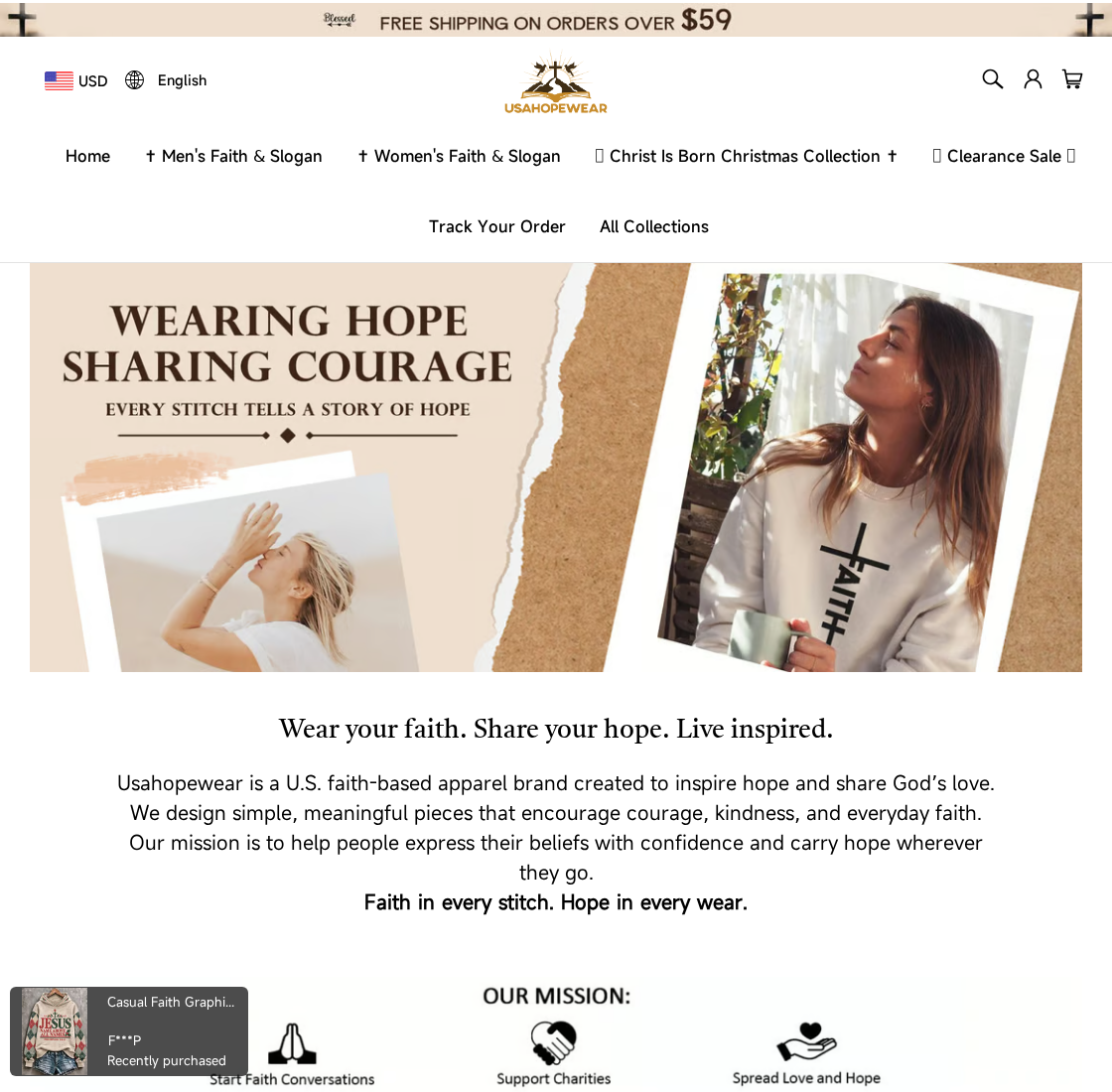
USAHopeWear, at usahopewear.com, describes itself as a U.S. faith-based apparel brand. Its storefront promotes men’s and women’s slogan clothing, a Christmas collection, and clearance offers.
There’s nothing inherently suspicious about selling religious clothing. The relevant questions are whether the seller identifies itself clearly and gives customers workable ordering and return arrangements.
A message you trust on a shirt shouldn’t take the place of checking the business selling it. The design and the merchant are separate decisions.
The return clock starts before you receive the clothes
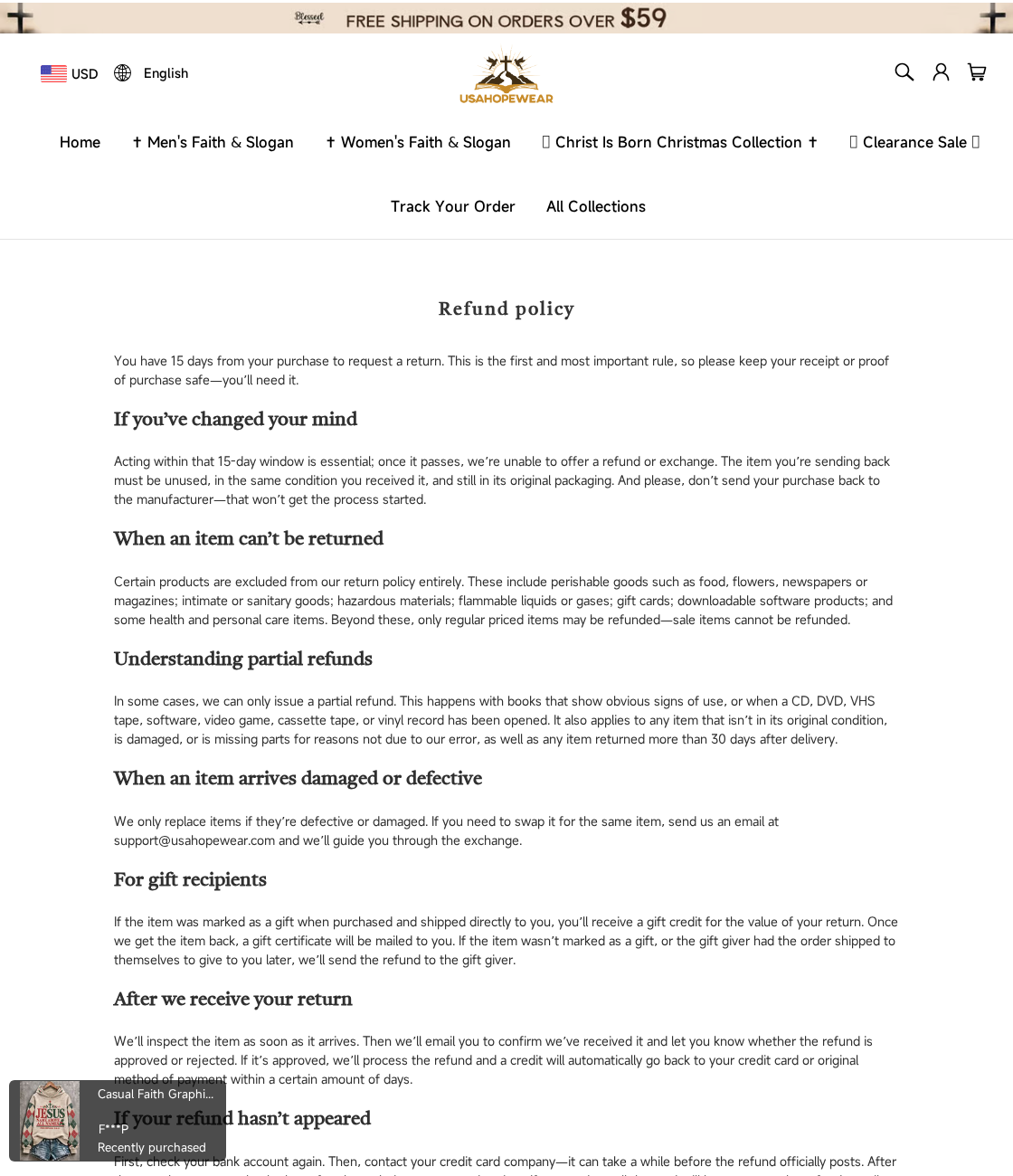
The refund policy gives buyers 15 days from purchase to request a return. It doesn’t start that period on the day the parcel is delivered.
The same policy excludes sale items from refunds. That deserves particular attention on a storefront that prominently offers clearance merchandise.
- The stated request period is purchase-based, so time spent processing and shipping can reduce the opportunity to inspect an item.
- Discounted items are excluded by the written refund policy, without a clear explanation beside every offer.
- The delivery page says there is no cancellation grace period and limits intervention once processing begins.
- Published customer service directs shoppers to support@usahopewear.com.
The current clearance offer is a poor choice for uncertain buyers
Don’t order from the clearance offer assuming you can inspect the clothes and return them afterward. The published conditions don’t support that assumption.
This is a warning about documented commercial terms, not proof that the brand’s beliefs are insincere or that all orders fail.
A 15-Day Purchase Clock Isn’t a 15-Day Trial
The refund policy starts with a 15-day period measured from purchase. That is the central issue for anyone worried about fit or quality.
Ordering a sweatshirt online involves uncertainty. You can’t feel the fabric, assess the print, or try the cut until the package reaches you.
If processing and delivery consume most of that period, you could have little time left for a request. A longer journey could exhaust it before inspection.
That is a possible consequence of the wording, not a claim that every shipment takes more than 15 days. The inspected shipping information doesn’t supply a clear overall arrival estimate.
A separate partial-refund paragraph mentions returns more than 30 days after delivery. Don’t treat that as a clear replacement for the opening 15-day rule.
Those provisions don’t fit together neatly. A seller should explain which period governs your item instead of making you select whichever sentence sounds more reassuring.
Sale eligibility makes the problem sharper. Even a quick return request may encounter the policy’s separate statement that sale items cannot be refunded.
Before buying a discounted size or color you’re unsure about, obtain an order-specific written answer. A general statement that customers are valued doesn’t change an exclusion.
How the USAHopeWear Sales Journey Works
Step 1: Faith-led branding makes the clothing feel familiar
The homepage connects its products with hope, kindness, and everyday faith. That gives shoppers a reason to identify with the collection beyond the garment itself.
The imagery can make an unfamiliar store feel more familiar. Still, a shared message doesn’t tell you where the order will be made or who handles a complaint.
Judge the actual garment separately: measurements, materials, printing method, selected size, and the written description. A slogan doesn’t answer those practical questions.
Step 2: Clearance pricing encourages a decision before fit is certain
Clearance is a normal retail category. Here, however, it sits alongside a policy that restricts refunds to regular-priced products.
The issue isn’t merely whether the discount is large. It’s whether the lower price removes a remedy you were counting on.
Save the item’s sale status and the wording displayed when you choose it. If support offers a different promise, ask for confirmation that it covers this exact purchase.
Step 3: Checkout may involve a different currency than the display
The Shipping & Delivery page says transactions are processed in USD, even where the storefront displays a local currency.
A non-USD card account may therefore involve your bank’s conversion and foreign-transaction charges. The page puts those costs outside the seller’s responsibility.
Check the final currency and full amount rather than converting a display price in your head. Record the actual authorization so a later comparison is meaningful.
For international destinations, the shipping policy also places import duties and taxes on the recipient. The shipping fee alone isn’t necessarily the complete delivered cost.
Step 4: Processing narrows the opportunity to correct an error
The delivery page describes ordering as an immediate commitment without a cancellation grace period. It tells buyers that changes disappear once processing advances.
It still asks people who spot an error to contact support quickly, while declining to promise that intervention will succeed.
That is not a dependable cancellation window. If you chose the wrong size or entered an incorrect address, request help immediately instead of waiting for dispatch.
Ask for an actual decision. A message saying your request has been forwarded doesn’t establish that production, packing, or shipment has stopped.
Step 5: Delivery obligations and return restrictions meet
The delivery page tells recipients to monitor their shipment and respond to carrier or customs requests. It warns of consequences when an order becomes undeliverable.
Its stated consequence can be no refund or free replacement, with a new order required. That is the seller’s policy position, not a legal ruling.
Meanwhile, the purchase-based return clock may already be running. Keep the ordering date, carrier updates, and delivery date together rather than looking at each in isolation.
For a gift, the delay also affects the recipient’s ability to inspect the garment. Don’t assume the return period begins when the present is finally opened.
The refund page distinguishes gift-marked purchases from ordinary orders. A qualifying direct gift can result in gift credit, while another refund goes back to the purchaser.
Keep the buyer involved if you received the clothing as a present. They may hold the receipt and payment account needed to resolve the transaction.
A promised gift credit also isn’t the same thing as cash returned to the original card. Ask which outcome applies before agreeing to a return.
USAHopeWear Business and Support Checks
A U.S. brand description isn’t a complete company identity
The homepage calls USAHopeWear a U.S. brand. The inspected About, Contact, and Terms pages don’t provide a distinct registered-company name and number.
That leaves a difference between a marketing identity and the entity accepting the order. Ask which company will appear on the invoice and handle any refund.
The wording also doesn’t establish U.S. manufacture. A brand’s stated roots and the location where a garment is produced are different facts.
The return destination isn’t made clear upfront
The refund page warns customers not to send goods back to the manufacturer. It doesn’t provide a complete authorized returns address in the inspected text.
That omission matters when the buyer is expected to cover return postage. An address supplied later may materially affect whether returning an inexpensive garment is worthwhile.
Don’t assume a U.S. return route from the brand name. Obtain the destination and postage responsibility for your order in writing.
Support needs to answer the deadline question
The published contact is support@usahopewear.com. No customer-service telephone or street address appeared on the inspected Contact page.
The most useful pre-purchase question is precise: will this discounted item be refundable after delivery, and what date starts the request period?
Keep the reply. A reassurance that returns are accepted is incomplete when the policy separately limits the period and excludes sale items.
Shipping claims shouldn’t substitute for a dispatch record
The shipping policy describes a global delivery network and international orders sent with duties unpaid. It doesn’t establish the actual route of a particular garment.
For an existing order, ask for the carrier and first acceptance event. A shipping email is a notification; a carrier event shows a different stage of fulfillment.
No order, parcel origin, support response, or manufacturing site was tested here. The findings concern the store’s own claims and purchase conditions.
Don’t Mistake the Store’s Policy for the Final Word on a Dispute
The written conditions are useful evidence of the offer, but their appearance on a website doesn’t settle every question about applicable rights or payment protections.
If clothing arrives damaged or materially different, describe that problem accurately. It isn’t necessarily the same situation as deciding you prefer another design.
The refund page discusses replacement of damaged or defective goods. Ask the seller to explain the proposed remedy for your actual defect rather than only reciting sale exclusions.
Return shipping is another cost to clarify. The policy makes it customer-paid and uses deduction wording that buyers should have explained before arranging postage.
Request an itemized figure so you understand what would be refunded and what would remain your expense. Avoid agreeing to an unclear deduction just to end the exchange.
Also note that the refund-processing language doesn’t give a specific number of days. Ask when approval occurred and when the refund instruction was sent.
You can take an unresolved transaction to the payment provider without first proving an entire retail operation fraudulent. The relevant evidence is what you bought and what went wrong.
What to Do If You Ordered USAHopeWear Clothing
-
Preserve the garment details and sale status. Save the size chart, fabric description, chosen variant, listed price, and whether the product was discounted.
Keep the confirmation showing the purchase date. That date matters because the policy’s main request period begins before delivery.
-
Raise an unwanted-order problem at once. Write to support@usahopewear.com with the reference and the precise correction or cancellation you need.
The policy doesn’t promise a grace period, but a prompt written request establishes when you acted. Ask for a direct acknowledgment of the outcome.
-
Challenge the return-clock ambiguity before it causes a rejection. Ask which deadline applies if the package arrives after the 15-day purchase period.
For clearance merchandise, also request a specific answer about eligibility. Don’t assume the paragraph mentioning 30 days after delivery overrides the sale exclusion.
-
Inspect delivery before wearing or washing anything. Photograph the package, garment, printed design, size label, and any visible defect.
Compare measurements with the saved chart. Report a wrong item or material discrepancy separately from a simple preference about fit.
-
Get a complete remedy proposal. Request the authorized return address, required reference, postage arrangements, deductions, and expected refund amount.
If the item is faulty, ask why the offered remedy is appropriate to that fault. Retain proof of any agreed return shipment.
-
Monitor the transaction and payment-provider deadline. Compare the currency and charged amount with your authorization, including any separate bank conversion fee.
If support doesn’t resolve a missing, incorrect, or unrefunded order, ask the provider how to dispute it. Supply the conflicting conditions and your dated messages.
Frequently Asked Questions
Is USAHopeWear a confirmed scam?
The published conditions support a warning about ordering risk, especially clearance purchases. They don’t establish that every order is fraudulent or that religious branding is itself deceptive.
The useful conclusion is to avoid this offer’s restrictive return setup, not to make an unsupported claim about every customer or the seller’s beliefs.
Do the 15 days begin when my order arrives?
No. The opening refund rule expressly measures the period from purchase. Ask for written clarification if that gives you little or no inspection time after arrival.
A later reference to partial refunds after 30 days from delivery doesn’t clearly resolve that conflict.
Are discounted USAHopeWear items refundable?
The written refund page excludes sale items and limits refunds to regular-priced goods. That is a major consideration for the advertised clearance collection.
Don’t assume a generic return reassurance changes the rule. Request confirmation that names your discounted item and the remedy offered.
Can I cancel a mistaken order?
The delivery page says there is no cancellation grace period and restricts changes as processing proceeds. It still directs buyers to contact support immediately about errors.
Make that request promptly, but don’t treat it as a guaranteed cancellation right under the seller’s published process.
Does U.S. branding mean the clothes are made in America?
No manufacturing location is established by that description alone. A brand’s identity doesn’t determine where each garment is made, printed, stored, or shipped.
Ask for item-specific information if origin is important to your decision. Don’t infer either domestic production or Chinese manufacture without evidence.
What should I do if the seller relies on the sale exclusion?
Explain the actual issue and preserve the response. A damaged or misdescribed delivery deserves a specific remedy discussion, not a vague exchange about dissatisfaction.
Ask your payment provider about the relevant options and deadlines if the merchant’s answer doesn’t resolve the transaction.
The Bottom Line
Avoid USAHopeWear’s current clearance offer if you’re relying on inspecting the clothing before deciding to keep it. The purchase-based deadline and sale exclusion make that assumption unsafe.
Already ordered? Act promptly, preserve the garment and policy evidence, and seek payment-provider help if a missing order or unresolved refund leaves you out of pocket.

Join the discussion
0 commentsShare your experience or ask a question about this article.
Discussion
Start the conversation
Have a question or something useful to share? Add the first comment.