

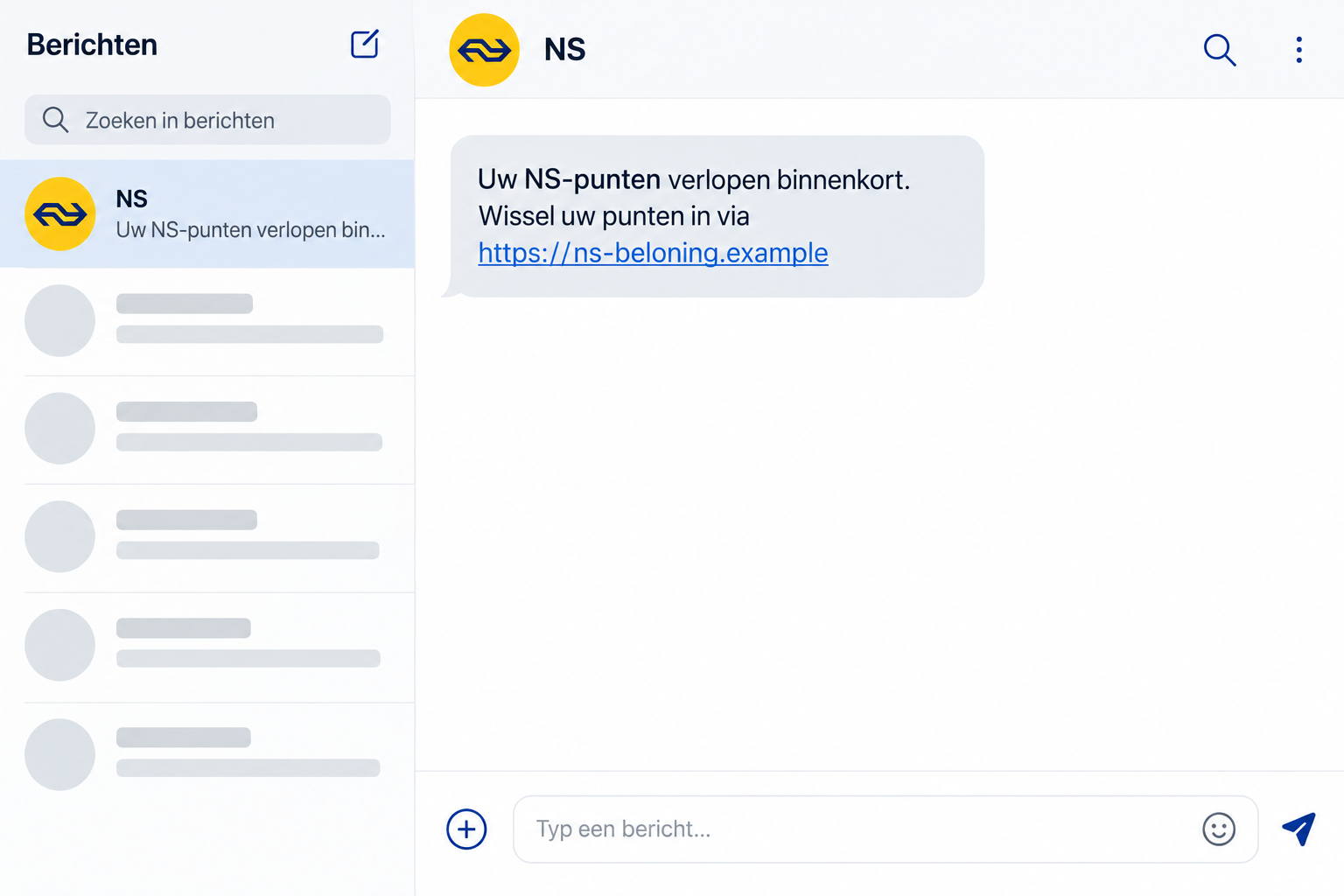
A text says your NS points are about to expire. There is still time to exchange them, apparently, if you follow the link before losing the rewards.
You may not remember collecting those points. The message makes checking them feel like an easy way to avoid missing out.
Overview
Expiring points are the bait for a card request
The NS points text scam impersonates the Dutch rail operator and directs recipients toward a supposed rewards exchange.
Fraudehelpdesk’s confirmed warning describes a specific route: a points-expiry SMS, a product selection, and a credit-card request for shipping.
Reported recipients were then asked to approve a payment, with varying amounts. This is more than an unexplained text about a loyalty balance.
A gift can turn the shipping fee into an afterthought
By the time a payment appears, you’ve been encouraged to think about a product the supposed points will cover. Shipping may feel like a minor detail.
Keep the whole offer in view rather than judging only the last charge:
- The starting message claims an expiring points balance you haven’t independently checked.
- The link controls where you select the supposed reward.
- A card is requested even though the offer began with accumulated points.
- The final approval needs checking for its actual amount, recipient, and purpose.
The subscription risk must not be overstated
The alert mentions unwanted subscriptions as a possible consequence of card disclosure. It explicitly says no such reports had been received for this case at that time.
So the card-payment deception is confirmed; automatic enrollment into a recurring plan is not. The illustration uses fictional details and is not an original text.
Why You Might Check Points You Don’t Remember Earning
People accumulate offers across travel apps, shops, and payment services. It isn’t unusual to forget a genuine promotion or misunderstand how a reward works.
The sender uses that uncertainty to give the link a purpose. Instead of asking you to buy something, it suggests you’re preserving value already yours.
That changes how you view the product page. Choosing a reward can feel like spending points rather than entering a new transaction with an unknown party.
When shipping appears, you may compare it with the value of the pictured item. The more useful comparison is between the request and a verified offer.
A cheap-looking delivery charge doesn’t authenticate the merchant. It also doesn’t tell you whether your payment information will be handled as promised.
Start with the account or operator, not the catalogue. Confirming the points before selecting a product avoids becoming invested in a reward that hasn’t been established.
The real NS is not the scam operator. The deception is the use of its identity to support the false points-and-shipping route.
How the NS Points Text Scam Works
Step 1: A text warns that the points will expire
The supposed deadline encourages you to act before checking whether the balance exists. Waiting is framed as losing something you already earned.
Don’t accept an SMS as an account statement. A sender can describe a balance without showing that any genuine reward record belongs to you.
If you’ve received real travel notifications before, that familiarity doesn’t authenticate the new request. Check this message independently rather than trusting the general name.
Step 2: A catalogue gives the claim something tangible
The documented route lets recipients choose a product supposedly covered by points. Selecting an item turns the abstract reward into something you can imagine receiving.
This also creates a reason to continue. Once you’ve chosen, abandoning the process can feel like throwing away a benefit.
But product photographs and a selection screen don’t prove an authorized rail promotion. The website still needs a genuine connection to the claimed operator.
You don’t need to complete the selection to check the offer. Leave the page and ask through NS’s real service channels.
Step 3: Shipping becomes the remaining cost
The offer shifts from using points to paying a delivery charge with a credit card. That is the financial step described in the fraud warning.
Shipping can sound reasonable while the recipient is entirely wrong. Check who would receive the payment before deciding whether the amount seems acceptable.
Don’t submit a card merely to see whether the next screen reveals the total. Resolve an unclear request before entering payment details.
Step 4: Card information is supplied to the unverified process
Sharing payment details creates exposure even if the advertised reward never arrives. You don’t need to wait for a delivery dispute to raise that concern.
If you started typing and then stopped, note how far you got. A page’s final confirmation is not the only point where information may be transmitted.
Tell the issuer which details were involved without sending those details around in screenshots. A card-security question belongs with the issuer, not the reward sender.
Step 5: An approval can commit more than you intended
Fraudehelpdesk reports requests to approve payments of varying amounts after card entry. The authorization deserves its own scrutiny rather than a reflexive confirmation.
Read the amount, merchant, currency, and action on the real approval screen. Decline anything you cannot connect to a verified transaction you actually want.
If you already approved it, preserve the bank record. Your intention to pay shipping doesn’t change the details the bank needs to investigate.
A failed reward page afterward doesn’t tell you whether the authorization succeeded. Check the genuine financial record rather than retrying through the same site.
Check the Offer Before You Check Out
Go to the rail operator yourself
Use the established NS app or type the official website address independently. Don’t install a supposed rewards app offered by the text.
NS’s official service and contact page gives a genuine starting point for questions about communications using its name.
Ask about the specific points-expiry promotion and reward request. Don’t settle for finding some unrelated legitimate discount that makes the general idea sound possible.
Keep the subject of the check narrow. A real rail company can run promotions without endorsing the product catalogue linked by an unknown sender.
Don’t confuse a points display with an account record
A number shown by the reward website is just information displayed on that website. It doesn’t establish where the points came from.
Look for an independently accessible account or promotion record you already recognize. If none can be confirmed, don’t substitute the sender’s explanation.
If a family member forwarded the text, ask them not to enter a card while you check. Forwarding doesn’t add another layer of authenticity.
Likewise, screenshots of supposed successful redemptions don’t prove the offer. A claimed delivery to someone else doesn’t verify your payment recipient.
Keep later charges separate from proven subscription terms
If you see another charge afterward, report the actual transaction. Save the description and any relevant communications rather than guessing the arrangement behind it.
Ask your issuer whether a recurring authorization or another payment mechanism is involved. A new physical card alone may not address every kind of unwanted payment arrangement.
Ask which merchant or descriptor the issuer can identify from the transaction. Use that information when discussing the actual charge, rather than assuming NS received it.
If you are told to contact a merchant about cancellation, verify the appropriate route with the issuer. Don’t invent a cancellation address from the rail brand.
Keep any receipt that describes the supposed shipping service. Its wording may help explain what you thought you agreed to, even if the payment record differs.
If there is no receipt, say that plainly. Don’t return to the reward site and enter your details again to generate one.
For multiple entries, list each amount separately. Several charges do not automatically explain their cause, but each is relevant to the issuer’s review.
Ask how to add a later transaction to your existing report. That avoids losing the connection between the original shipping promise and subsequent financial activity.
This is a reason to ask precise questions, not a claim that the reported NS campaign always creates recurring billing.
Don’t accept an unknown merchant’s demand for another payment to cancel. Use the issuer’s guidance and preserve any cancellation claims as evidence.
What to Do if You Have Fallen Victim to This Scam
-
Stop using the rewards site. Don’t make a second attempt if the first redemption failed, and don’t enter another card to troubleshoot it.
If you’ve only received the text, leave the link alone and remove the message after preserving anything needed for a report.
-
Contact the card issuer after entering payment information. Explain that a fake NS points offer requested a card for shipping.
Tell the issuer whether you supplied card details, received an approval request, or authorized a payment. These facts help distinguish exposure from a completed charge.
Ask whether the card, online payment access, or any associated authorization needs protecting. Don’t wait for the supposed reward’s delivery date.
-
Dispute or report charges using the actual records. Keep the amount, currency, merchant description, timestamp, and transaction reference.
If the authorization differed from what you expected, explain both the shipping promise and the operation you approved. Do not edit evidence to make them match.
Recovery depends on the circumstances and payment process. Reporting promptly is useful, but no article or recovery agent can promise reimbursement.
-
Check any additional account disclosure. A card-only interaction and a leaked account login require different follow-up. List the information you actually provided.
Replace exposed passwords through the genuine service and secure reused copies elsewhere. If email access was involved, inspect its recovery and forwarding settings.
-
Keep the text and relevant pages. Save screenshots of the message, product offer, stated shipping charge, and final request if already available.
Don’t reopen the false site just to improve your evidence. Preserve what you have and describe what is missing.
Remove personal addresses and payment information before sharing a public warning. Your issuer may need private details that other readers do not.
-
Report the impersonation. Fraudehelpdesk offers advice after disclosure, and the genuine rail operator can receive information about misuse of its identity.
A bank dispute, a provider report, and any police report are separate processes. Keep their references so later developments reach the appropriate organization.
-
Address software exposure if the page introduced it. Do not run a download offered as a way to claim points or fix a failed transaction.
Use Malwarebytes to help investigate an unfamiliar installation if needed. AdGuard may filter deceptive advertising, while card protection and disputed authorizations remain matters for the issuer.
Also remove unwanted browser notification permissions. The documented payment scam doesn’t mean every recipient’s device became infected.
-
Review later statements and reject recovery fees. Report new unexplained entries, including small ones, using the issuer’s genuine support route.
Don’t pay someone who contacts you promising to recover the shipping payment. A second confident story doesn’t repair the first unverified one.
Helping Someone Who Already Chose a Reward
If a relative is waiting for the gift, start with the payment question rather than debating the product. Ask whether a card or approval was involved.
Help them find the real transaction record and reach the issuer. A chosen reward can create reluctance to stop, even when the request now looks suspicious.
Don’t enter your own card to test whether the catalogue works. That creates another exposure without verifying the original offer.
Explain that contacting the issuer doesn’t require proving who operates the website. The immediate concern is the payment information and authorization already supplied.
After reporting, help establish a simple rule for future rewards: verify the offer first, choose the product second, and inspect any payment separately.
Frequently Asked Questions
Is the NS points text scam based on confirmed reports?
Yes. Fraudehelpdesk describes recipient reports involving points-expiry texts, reward selection, card shipping requests, and payment approvals. This concerns the Dutch rail brand, not UK NS&I.
Does the points balance shown by the website prove anything?
Not by itself. Check the offer through a genuine account or the real operator. A number displayed on an unverified page isn’t an independent record.
Why is a small shipping fee still risky?
The issue is the unverified request and exposed payment information, not only the advertised amount. Review the actual authorization and contact your issuer after disclosure.
Does this scam definitely enroll everyone in a subscription?
No. The warning described that as a possible consequence, without reports confirming it for this case. Report actual later charges rather than assuming a universal plan.
Should I try another card if the payment failed?
No. Stop the false rewards process and check your existing card activity. An error on the site doesn’t establish that nothing was submitted or authorized.
Can NS reverse the card payment for me?
Ask your card issuer about the financial transaction. The genuine operator can help assess the impersonation, but it isn’t automatically the recipient of the charge.
The Bottom Line
Do not redeem expiring NS points through an unexpected text. The confirmed scam moves recipients from a supposed reward to a credit-card shipping request and payment approval.
If you entered card information, contact the issuer and check the actual transaction. Keep the text, report the impersonation, and don’t pay again to finish redemption.

Join the discussion
0 commentsShare your experience or ask a question about this article.
Community experiences
Did this happen to you?
Your experience could help someone recognize the same scam. Submit a private report for our team to review.
I experienced this tooReports are reviewed before publication. Sharing publicly is always your choice.
Discussion
Start the conversation
Have a question or something useful to share? Add the first comment.