

A bottle of dental gel can sound especially appealing when your gums hurt and another dental appointment feels expensive. ProXental promotions speak directly to that worry.
But the page introducing a product and the store taking your order may tell noticeably different stories. Those differences deserve a closer look.
Overview
ProXental is a topical dental gel, not a tooth replacement
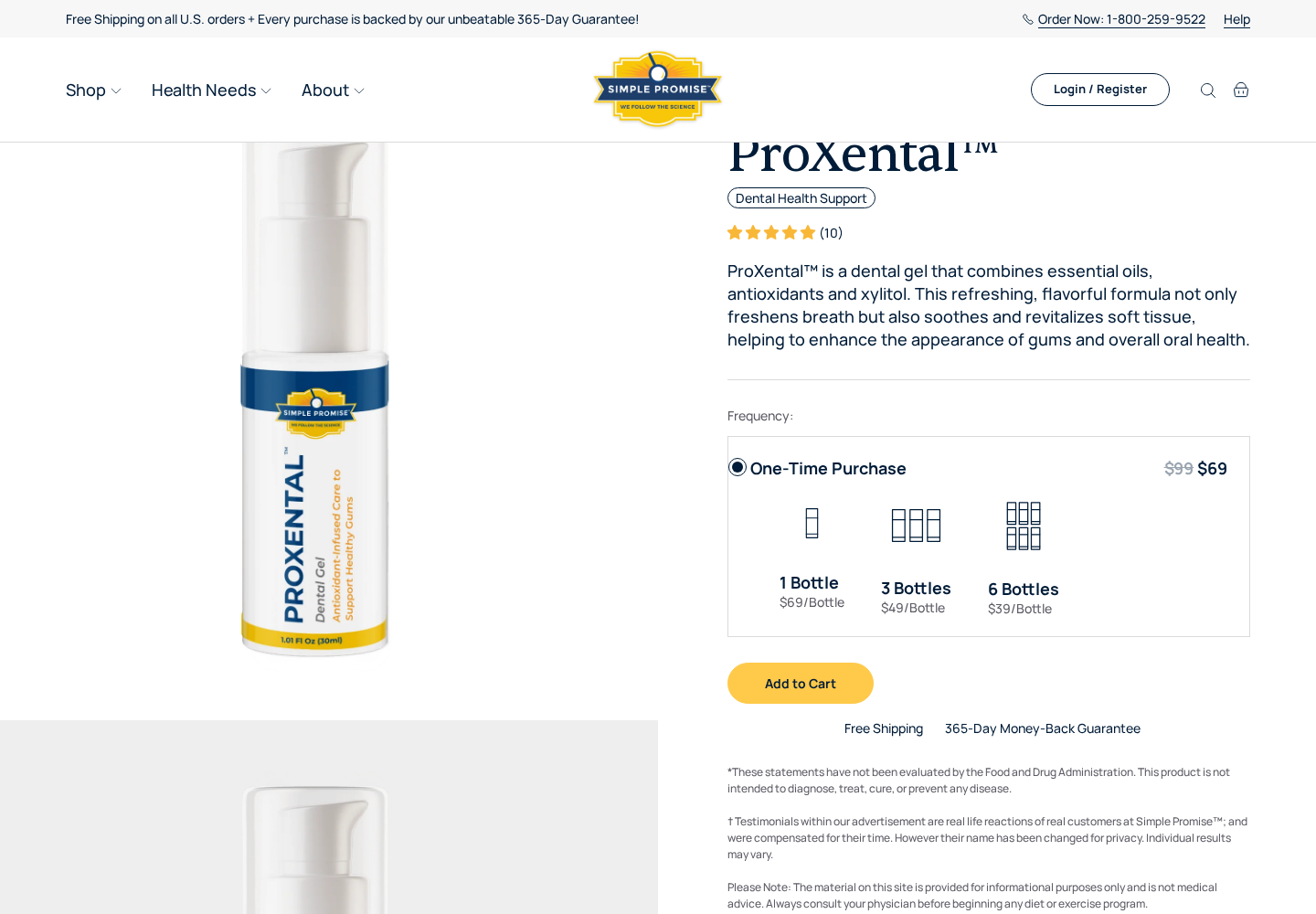
Simple Promise sells ProXental for application to the gums after brushing. Its main product description emphasizes breath freshness, oral comfort, and the appearance of healthy gums.
That is a narrower proposition than rebuilding damaged teeth or avoiding necessary treatment. A product that makes your mouth feel fresher has not automatically repaired underlying disease.
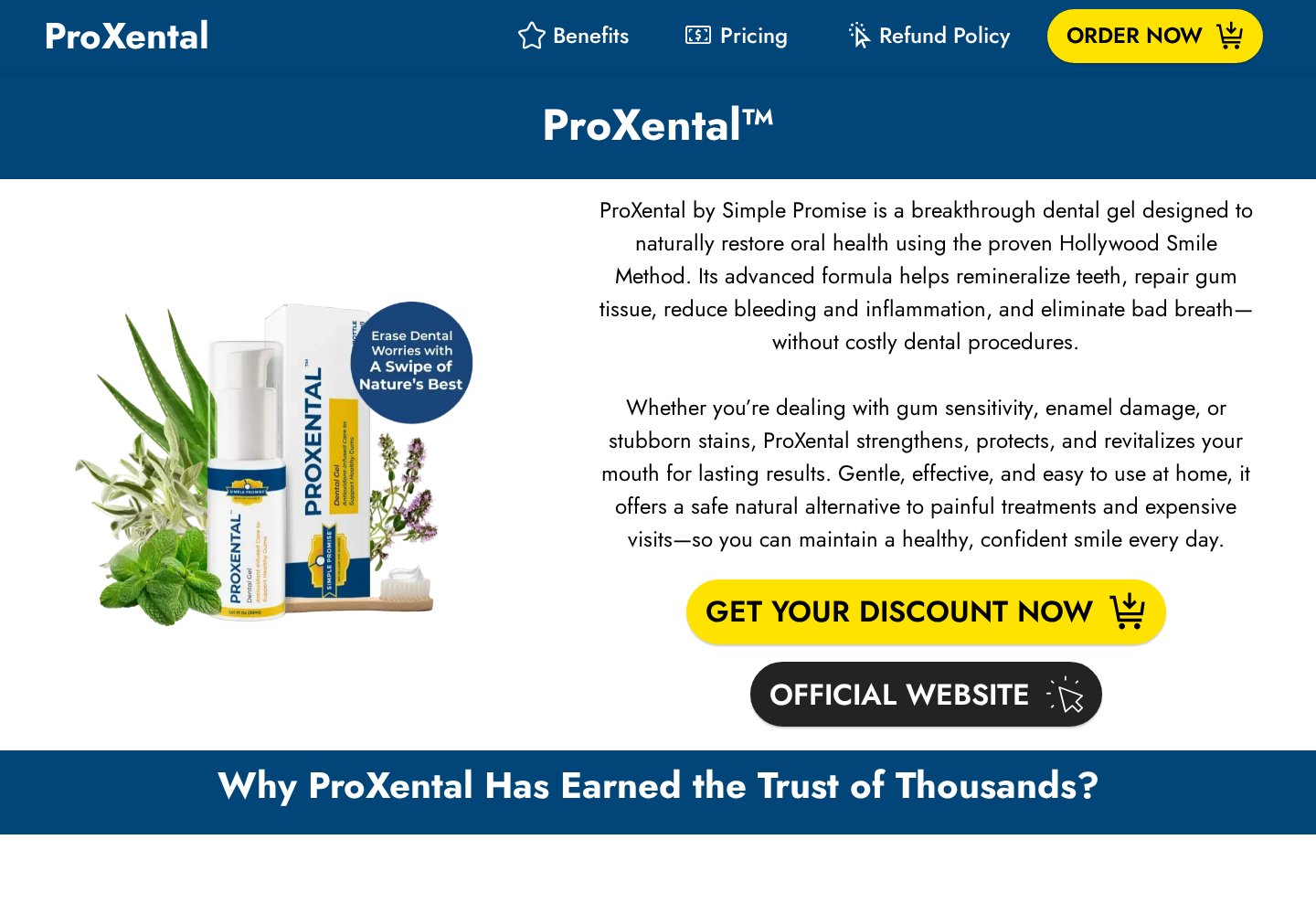
Some promotional websites stretch the pitch considerably further. One presents the gel as a natural alternative to costly procedures and invokes a supposedly proven Hollywood smile method.
The promotional pages do not speak with one voice
The store at mysimplepromise.com, the promotion at proxxental.com, and the page at pro-xentals.com are separate web addresses. Matching bottle pictures do not establish identical ownership.
Pro-xentals.com discloses possible affiliate compensation. Its prominent FDA approval heading is followed by a statement about facility registration, which is something very different.
Keep these distinctions in mind while reading ProXental reviews:
- The product exists as an item offered by Simple Promise.
- Dental-repair promises need evidence beyond ingredient descriptions and testimonials.
- An FDA-registered facility does not establish FDA approval of the gel.
- A lower bottle price may require purchasing several bottles.
- The captured store offer explicitly displays a one-time purchase option.
The buying recommendation depends on the promise
Do not buy ProXental as a way to regrow teeth, repair a cavity, or replace dental treatment. The promotional promises do not justify that expectation.
The important distinction is between buying an oral-care gel and buying a claimed treatment. The second needs a much stronger justification before you spend your money.
The Dental Repair Pitch Needs More Than Reassurance
Dental advertising often blends several very different outcomes into one attractive picture: less sensitivity, cleaner breath, stronger enamel, healthier gums, and a completely restored smile.
Those outcomes are not interchangeable. A minty sensation is easy to notice immediately. Whether a damaged tooth needs treatment cannot be decided by how fresh your mouth feels.
The proxxental.com introduction connects the product with repairing gum tissue and avoiding expensive procedures. That wording encourages readers to imagine a treatment alternative, not simply another hygiene product.
Early enamel changes are not the same as an established cavity
The National Institute of Dental and Craniofacial Research explains that early mineral loss can sometimes be reversed. Once decay creates a cavity, the damage needs professional repair.
That distinction matters when an advertisement uses words such as restore or remineralize without explaining what condition it means. Readers may hear a much bigger promise.
A gel cannot be assumed to fill a hole because one ingredient has been studied for oral hygiene. Ask whether the finished formula achieved the advertised outcome.
Useful research would identify the actual formulation, participants, comparison treatment, results, and follow-up. A list of botanical names does not supply those missing details.
Bleeding gums are a reason to investigate, not postpone care
Gum problems can have different causes and severities. The right treatment depends on what a dental examination finds, not on which advertisement describes your symptoms most convincingly.
NIDCR’s gum-disease guidance describes symptoms including bleeding, swelling, persistent bad breath, and loose teeth. Treatment can involve professional cleaning and additional care.
If you are worried about the bill, ask the dental practice about treatment priorities and payment arrangements. Buying several bottles first could leave less money for necessary care.
What the FDA Badge Actually Tells You
Pro-xentals.com places an approval heading above wording about an FDA-registered facility. Readers scanning the badges could easily take away a stronger message than the explanation supports.
The FDA explains that establishment registration and product listing do not denote approval. A registered facility is not a government endorsement of every product made there.
Nor does a manufacturing-quality claim demonstrate that a gel repairs diseased gums. Production standards and clinical effectiveness answer different questions.
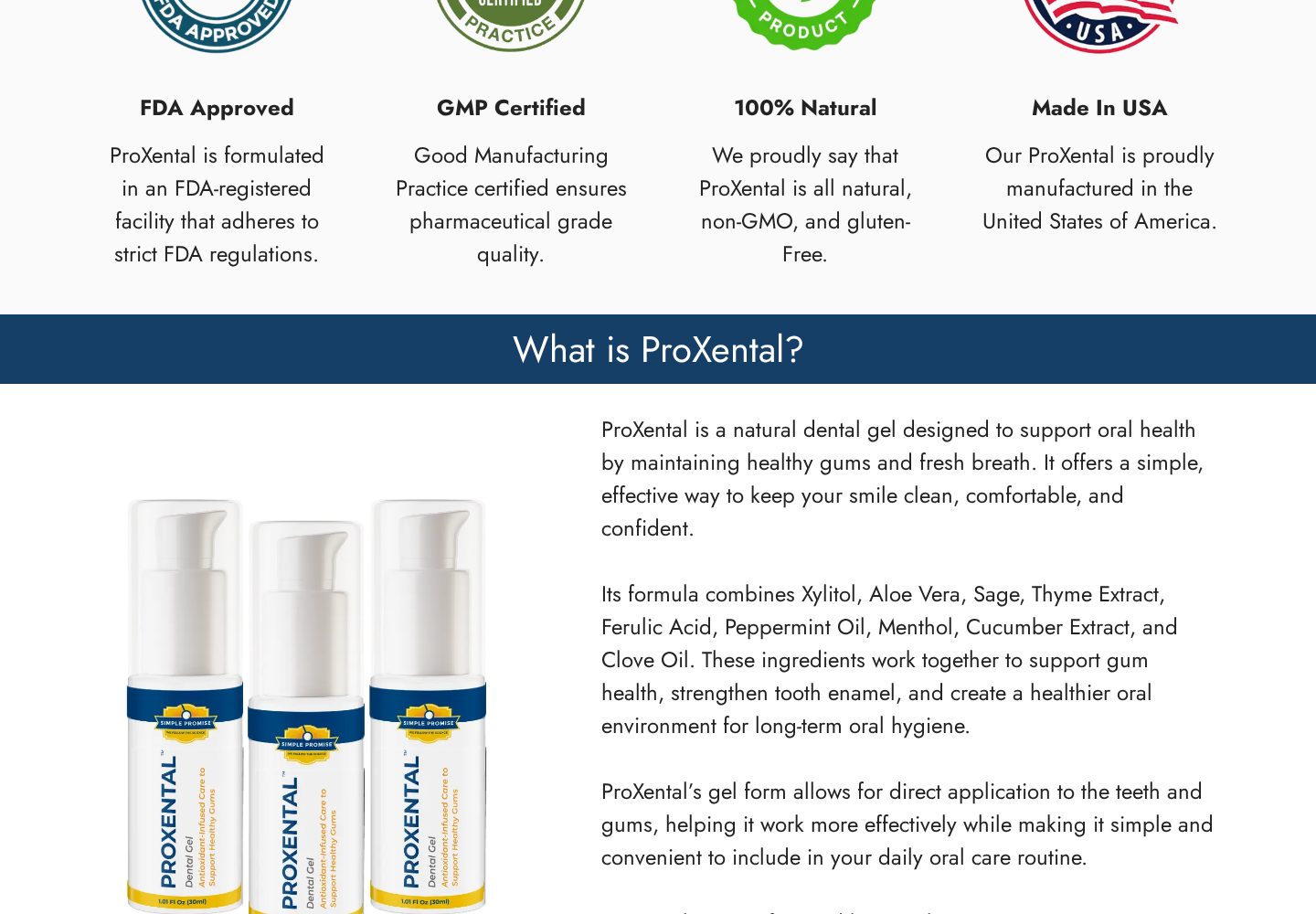
The issue is the mismatch between the prominent assurance and its supporting explanation. A shopper should not have to reinterpret a medical-looking badge to understand its limits.
The Simple Promise store also carries a disclaimer that its statements have not been evaluated by the FDA. That disclaimer is not a substitute for outcome-specific evidence.
If a seller relies on approval, ask for the exact product authorization it means. A reference to factory registration does not answer that question.
How the ProXental Sales Funnel Works
Step 1: A familiar dental worry becomes the opening hook
Sensitivity, bleeding gums, bad breath, and fear of expensive procedures make this pitch emotionally persuasive. You do not need to be gullible to want a simpler option.
The important turning point is where ordinary comfort language becomes a promise to avoid treatment. Stop there and separate what the gel might feel like from what it treats.
If an advertisement promises a transformation, save that exact wording. It may disappear when you reach a more cautious product description.
Step 2: Ingredients and badges make the promise feel scientific
Lists of oils, extracts, antioxidants, and manufacturing claims can give an impression of depth. They still leave the main question unanswered: what happened when this formula was tested?
Look for the finished product, not research about a plant in a laboratory. Concentration, contact time, formulation, and the condition being treated can change the relevance.
Also check who is making the claim. An affiliate page should not be treated as a regulator, dentist, or independent clinical reviewer.
Step 3: A lower unit price encourages a larger commitment
The captured Simple Promise offer lists one bottle at $69, three at $49 each, and six at $39 each. Those packages imply $69, $147, and $234.
Compare the full amount with the amount you intended to spend. A six-bottle commitment is not a $39 purchase, even though $39 is the most appealing visible number.
A store can legitimately offer bundles. The problem would be an unclear selection or charge, so inspect your own basket rather than assuming a promotional price covers one bottle.
Step 4: The order terms become more important than the ad
The purchase panel captured here says one-time purchase. A broader subscribe-and-save menu elsewhere in the store does not prove this particular selection creates recurring deliveries.
Before paying, confirm quantity, total, frequency, and seller. If the confirmation describes a renewal you did not expect, address it immediately rather than waiting for another shipment.
No purchase or cancellation test was performed for this article. The findings concern public offers, their claims, and the practical questions those offers leave for buyers.
Who Sells ProXental and Handles Returns?
Simple Promise and a promotional domain are different identities
The store’s terms identify Simple Promise Pte. Ltd. as its operator. The contact page also names that company, giving buyers a more useful starting point than a bottle logo.
Pro-xentals.com acknowledges affiliate links and distinguishes its promotional role from Simple Promise’s retail role. Do not assume a separate promoter can authorize your refund.
For an existing order, use the business identified on your receipt and payment record. If those details differ, ask the merchant to explain the relationship in writing.
A mailing address is not a dental laboratory
Simple Promise’s contact page lists 3242 NE 3rd Avenue #1051, Camas, WA 98607. A published contact address alone does not establish where this gel is manufactured.
It also should not become your automatic returns destination. Obtain the correct instructions for your order before paying for tracked shipping or mailing opened bottles.
Find out whether this address handles customer correspondence, product returns, or both. Those are different jobs, and a parcel sent incorrectly may not reach support.
Use the published support route, and keep the conversation
Simple Promise publishes support@mysimplepromise.com and 1-800-259-9522. These are listed contact channels, not independently tested evidence that every request receives a response.
Its refund page advertises a 365-day money-back guarantee. Save the version offered with your purchase and request the required procedure before sending anything back.
A guarantee gives you a route to request money back. It does not make an unsupported dental-repair claim scientifically reliable.
The bottle needs its own traceable information
Check the actual packaging for directions, ingredient information, responsible business, lot details, and warnings. Keep photographs before discarding the carton.
A promotional made-in-USA claim does not identify the factory. Ask the retailer for the manufacturer’s name and address if production origin matters to you.
If the bottle differs from the advertised product, document the discrepancy. Different packaging, missing identification, or unfamiliar instructions should be resolved before use.
Reading Testimonials Without Mistaking Them for Treatment Evidence
The Simple Promise page discloses that advertising testimonials involved compensation for participants’ time and changed names for privacy. Those disclosures should travel with your understanding of the praise.
They do not prove that every customer comment is fabricated. They do mean an advertisement is not the same setting as an independent clinical assessment.
A person can honestly report less discomfort without knowing whether decay or gum disease has improved. Symptoms, appearance, and professional findings can tell different stories.
When a review seems compelling, ask what it actually demonstrates. A report of fresher breath cannot verify the much larger claim that dental procedures become unnecessary.
Be especially wary of treating star ratings as a vote on medical effectiveness. A useful dental decision needs information about your mouth, not a popularity contest.
Ask which problem you are trying to solve
Before spending anything, write down the concern that brought you to the offer: breath, sensitivity, bleeding, or a damaged tooth. They lead to different conversations.
For example, a comfort product might be an optional addition after professional advice. It should not become the reason you abandon an appointment for unexplained bleeding.
If your main aim is avoiding a procedure, ask the dentist to explain why it was recommended and whether alternatives exist. Another professional opinion is different from advertising.
This keeps the decision tied to your actual problem. Otherwise, several appealing but loosely connected benefits can make a bottle seem like an answer to everything.
What to Do If You Ordered ProXental
-
Put your dental needs ahead of the delivery. Keep any planned examination. Ask your dentist about the specific symptoms that led you toward the advertisement.
Bring the product label or its ingredient information. A clinician can explain whether an additional oral-care product fits your existing routine.
-
Check the purchase you actually made. Read the receipt for bottle count, total payment, and purchase frequency. Compare it with your confirmation and card statement.
If you expected one bottle but selected a larger pack, ask promptly about cancellation or amendment. Describe the discrepancy accurately.
-
Save the promise that influenced you. Keep the promotional URL, screenshots, price selection, and guarantee. Include the claim about avoiding treatment if that drove your decision.
These records make a complaint more specific than saying the product was disappointing. They show what was represented before payment.
-
Request a refund through the order’s merchant. Give your order number and say whether you want cancellation, return instructions, or reimbursement under the advertised guarantee.
Ask where the product must go and which costs apply. Retain the response, shipping receipt, and tracking record if a return is required.
-
Address any unexpected charge separately. If a later payment appears, ask what agreement authorized it and cancel unwanted future deliveries in writing.
For an unresolved billing problem, contact your payment provider through its official app or number. Explain the facts and ask about its dispute deadline.
-
Stop using a product that causes a reaction. Keep the container and contact a healthcare professional if irritation develops or symptoms persist.
Do not keep applying more because an advertisement describes the ingredients as natural. That word is not a personal safety guarantee.
Frequently Asked Questions
Is ProXental a scam or a real dental gel?
It is a dental gel offered by Simple Promise. The stronger repair promises and misleading approval presentation on separate promotional pages warrant a clear buying warning.
Can ProXental regrow teeth or fill a cavity?
Nothing shown with these offers demonstrates either result. Ask a dentist about a damaged tooth before spending money on a repair promise.
Is the FDA approval badge reliable?
The badge’s accompanying explanation concerns facility registration. Registration does not substantiate approval of ProXental or its advertised treatment benefits.
Does buying ProXental always create a subscription?
No such conclusion is supported. The captured Simple Promise panel displays one-time purchase. Check the terms attached to your own order, particularly after following a different promotion.
Why is the advertised bottle price lower than my total?
A lower per-bottle rate may require a multipack. Six bottles at $39 each total $234 before any other applicable adjustments, not $39.
What should an unhappy customer do first?
Preserve the receipt and advertisement, then contact the merchant about its guarantee. Keep needed dental care separate from the refund discussion.
The Bottom Line
Do not buy ProXental to avoid necessary dental care or repair damaged teeth. The promotional claims and FDA registration badge do not justify that leap.
If you already ordered, check the quantity and billing terms, use the merchant’s refund process where appropriate, and take persistent dental symptoms to a dentist.

Join the discussion
0 commentsShare your experience or ask a question about this article.
Discussion
Start the conversation
Have a question or something useful to share? Add the first comment.