

A neuroscientist, an eight-second ear trick, and a promise that everyday forgetfulness could finally become easier to handle. The introduction sounds reassuringly simple.
If you searched for Dr. James Rivers after watching the presentation, there is one small disclosure that deserves much more attention.
Overview
The advertised expert is presented under a pen name
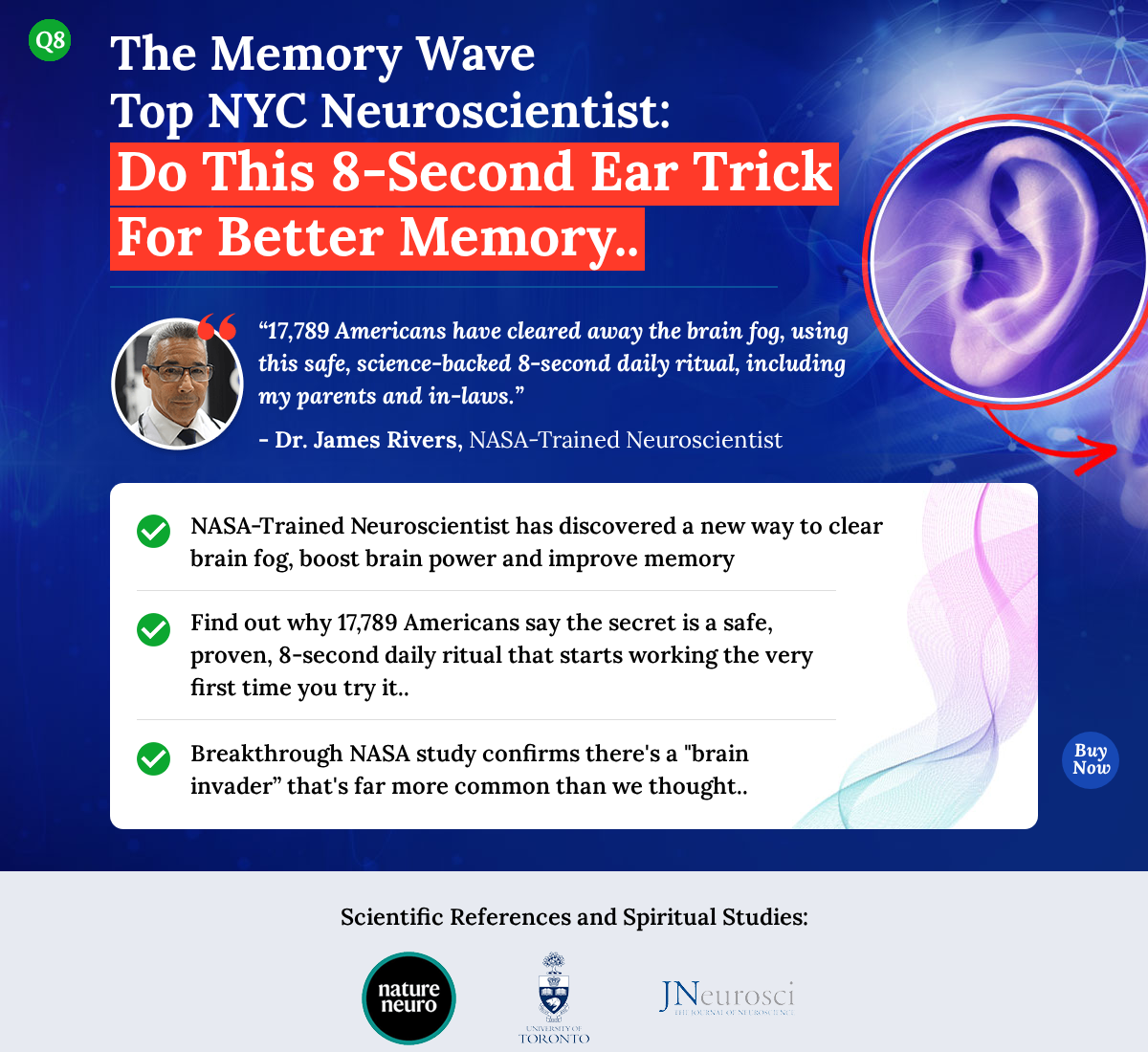
The Dr. James Rivers memory pitch introduces a supposedly NASA-trained neuroscientist. A promotional page then discloses that James Rivers is a pen name.
The disclosure says the underlying expert’s credentials are genuine and that the name protects personal privacy. It does not identify that expert for independent checking.
That is the central problem. Readers are asked to rely on a medical-sounding biography whose owner they cannot readily verify.
A pen name is not automatically fraudulent. But it cannot serve as independent proof of scientific qualifications or a product’s effectiveness.
The eight-second promise leads to a longer audio product
The earlier campaign connects the expert story with The Memory Wave, brain fog, a supposed hidden brain invader, and an unusually quick ear ritual.
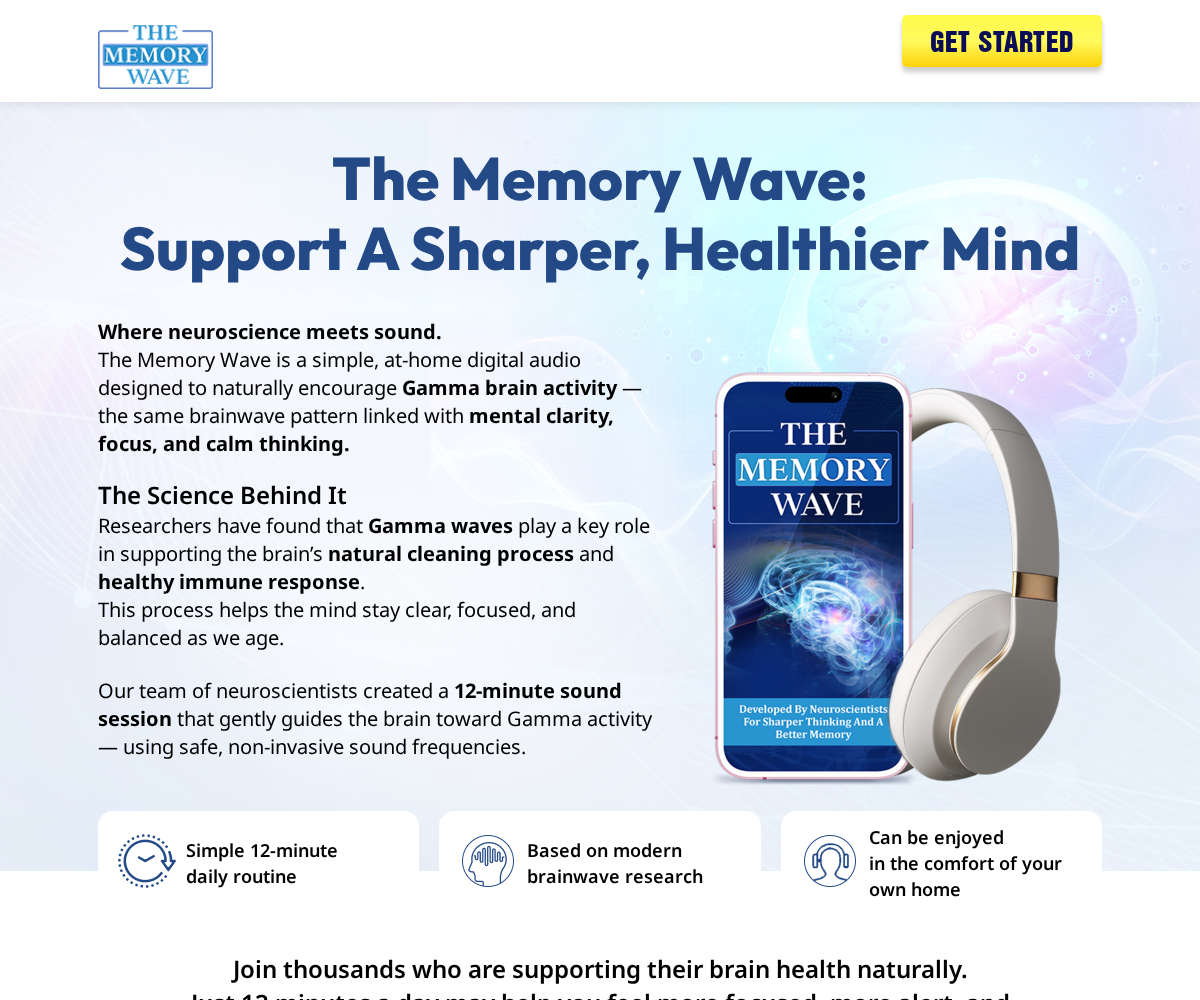
The actual commercial format is digital audio. The current discovermemorywave.com homepage describes a 12-minute daily sound session, not an eight-second medical intervention.
Another promotional copy, thememorywaave.com, still displays the Rivers identity and eight-second story. Similar branding does not establish the same operator behind both domains.
The screenshots show those different presentations. They should not be read as proof that the front page of one domain contains every claim on another.
The research must support this exact product, not just a familiar word
Do not buy based on the James Rivers biography or the NASA association. Those trust signals do not establish a tested solution for your memory concerns.
- The named scientist is disclosed as a promotional identity.
- A training claim is different from NASA authorization or product approval.
- Gamma-stimulation research does not automatically validate a downloadable audio file.
- Today’s simpler offer displays $39 and a 90-day guarantee.
This is a warning about unverified authority and overstretched claims, not proof that every audio purchase is fake or that unrelated researchers are involved.
For the audio package itself, see our separate Memory Wave investigation. This article examines the expert identity used to give the pitch authority.
Why the Pen-Name Disclosure Changes the Trust Calculation
A biography normally gives you a route out of the advertisement. You can check where the person works and what they have actually published.
Here, the identity doing the persuading cannot perform that function. Searching the advertised name may lead back to promotional material repeating the same story.
That repetition can look like corroboration. In reality, several pages may be recirculating one biography without adding an independent source.
Privacy is a reasonable concern for anyone, including scientists. A commercial seller can respect privacy without expecting buyers to treat an unverifiable persona as clinical evidence.
The relevant questions remain straightforward: who conducted the research, where was it published, and what exactly was tested?
A product trial can be identified without requiring a scientist to disclose family details. A study title, institution, method, and results would be more useful.
The marketing disclosure does not answer those questions by saying the credentials are verified. Verification needs someone accountable and a source the reader can inspect.
Nor does the disclosure prove the person in the photograph is the underlying scientist. The image and the biography require their own connection.
There is no need to label the portrait AI-generated or stolen without evidence. The identity gap already undermines the authority claim.
NASA Training Is Not NASA Approval
The NASA reference gives the presentation prestige. Space research suggests difficult problems, sophisticated equipment, and expertise beyond an ordinary wellness advertisement.
But someone having a genuine connection to an institution would not mean that institution evaluated their commercial product.
NASA’s own Spinoff FAQ distinguishes technology connections from endorsement and confirmation of a manufacturer’s performance claims.
That is a general policy, not a specific NASA finding about Memory Wave. It explains why the implied shortcut is unreliable.
To authenticate the advertised training, the seller would need an identifiable person and relevant records. The pen-name explanation leaves that bridge incomplete.
To validate the audio’s promised effects, the seller would then need suitable product evidence. Confirming a biography alone would still not establish those outcomes.
These are separate questions. A genuine scientist can make a weak commercial claim, just as an inaccurate biography can be attached to a real downloadable file.
How the Dr. James Rivers Ear-Trick Pitch Works
Step 1: A tiny time commitment makes the claim feel easy to try
The eight-second phrase offers an immediate contrast with appointments, exercises, or lengthy routines. It sounds like something anyone could fit into a morning.
That simplicity is appealing when the underlying worry feels complicated. It also directs attention toward how easy the method sounds rather than whether it works.
Before proceeding, ask what those eight seconds actually involve. A memorable advertising phrase is not a description of a tested treatment protocol.
If the product requires a 12-minute session, its benefit claims should be evaluated on that actual routine, not the shorter hook.
Step 2: The neuroscientist story supplies authority
The promotional page presents Rivers with a professional title, NASA training, and personal reassurance involving family members.
The combination makes the pitch feel both expert and caring. A buyer may assume the person has already done the checking they cannot do themselves.
The pen-name disclosure changes that assumption. The audience still needs a research trail that does not depend on trusting the advertisement’s own assurance.
Do not confuse an author’s privacy choice with a license to make uncheckable treatment claims. Product evidence remains necessary either way.
Step 3: A hidden brain problem gives the audio a purpose
The more aggressive copy describes an unseen invader and suggests conventional explanations have missed an important cause of cognitive decline.
That makes the offer feel like a discovery rather than entertainment. It also encourages readers to reinterpret common symptoms through one commercial explanation.
A diagram or dramatic description cannot diagnose an individual. Persistent memory changes need assessment that considers the person’s actual history and circumstances.
The seller’s explanation must not become a reason to delay that assessment. Buying a recording does not identify why someone is forgetting things.
Step 4: Genuine neuroscience becomes a broad product promise
The pitch invokes gamma brain activity and scientific references. Gamma rhythms are a legitimate research subject, not a fictional concept invented for the advertisement.
What matters is whether the cited work tested this recording, this exposure, and the outcomes being promised to buyers.
A laboratory finding about sensory stimulation cannot simply be transferred to any audio file using the word gamma.
The same caution applies to institutional logos. A real journal publishing relevant science does not mean it evaluated the commercial package beside its name.
Step 5: The narrative becomes a digital purchase
The current simpler homepage advertises a permanent digital copy for $39. Its delivery language explains that the product imagery is illustrative.
That is worth understanding before paying. A pictured disc or device does not mean a physical parcel will arrive.
The page identifies ClickBank as the retailer and distinguishes order support from seller support. Those details can help locate an actual transaction.
They do not establish a medical result. A functioning payment and download process answers a delivery question, not the memory claim.
Step 6: Disclaimers and optional offers determine the real commitment
The current terms describe entertainment-oriented information and warn against using the material instead of professional advice.
They also explain that testimonials may involve altered names, reenactments, or actors. That limits what a viewer can infer from an apparent customer story.
A 90-day refund promise appears on the simpler offer. Preserve its actual terms and the terms of any additional item you select.
An upsell is not automatically a hidden subscription. Check whether it is a separate purchase, recurring service, or an option you can decline.
What the Gamma Studies Can and Cannot Tell You
One referenced research area concerns 40-hertz sensory stimulation. It deserves a more careful explanation than either miracle advertising or blanket dismissal.
MIT described research in mice receiving chemotherapy, where controlled light and sound exposure helped protect against certain treatment-related brain effects.
That study does not establish that Memory Wave’s consumer audio reverses human memory loss. The animal model, exposure equipment, and measured outcomes differ.
Research can be promising without providing a ready-made retail treatment. The missing link is evidence for the product actually being sold.
Even a human study would need closer reading. How many participants were included? Was there a comparison group? Which cognitive measures changed?
Short-term task performance, perceived relaxation, and slowing a disease are different outcomes. They should not be presented as interchangeable evidence of a younger brain.
You do not need to settle the whole scientific field to make this purchase decision. The seller needs to justify its own specific promise.
Different Pages Need Different Evidence
The extra letter in thememorywaave.com matters when recording what a page says. A similar domain is not interchangeable with discovermemorywave.com.
The first capture preserves the Rivers pitch and its scientific-looking references. The second shows the current simpler presentation of a digital session.
Comparing them explains how readers can encounter a dramatic authority story and later see softer wellness wording. It does not establish who controls each site.
If your receipt names another domain, keep that exact address. A refund request should follow your transaction rather than the closest-looking search result.
Likewise, a claim removed from today’s homepage is not evidence that an earlier viewer imagined it. Saved advertising helps document which version influenced the purchase.
Specific records protect both readers and unrelated businesses from mistakes. The strongest complaint describes the particular message, seller, and transaction rather than a broad family resemblance.
Listening for Enjoyment Is a Different Decision
Someone may enjoy a recording, feel calmer while listening, or appreciate having a regular quiet period. Those experiences do not authenticate the advertised scientist.
They also do not demonstrate removal of a hidden brain invader. A personally pleasant experience should not be stretched into proof of disease treatment.
If your goal is relaxation, compare the offer as entertainment. Ask whether you understand the format, price, and access terms without the neuroscience story.
If your goal is help with worsening memory, an entertainment purchase is not an adequate substitute for assessment.
Make a note of practical changes such as missed appointments, repeated questions, or difficulty managing familiar tasks. Those details are useful when seeking care.
Invite a trusted person to help if keeping track feels difficult. The point is to make support easier, not to judge someone’s memory from an advertisement.
What to Do If You Bought the Audio
-
Identify exactly what you purchased. Find the item names, receipt references, access email, and full amounts charged.
Digital bundles can have similar titles. List any separate offers so a refund request identifies the correct purchase rather than only the advertised scientist.
-
Decide whether you want to keep it as entertainment. Do not continue because you feel obligated to give the medical story more time.
If the product did not meet your expectations, check the guarantee immediately rather than waiting for a dramatic improvement the advertisement never substantiated.
-
Request help through the retailer on the receipt. If ClickBank took the payment, use its genuine order-support channel to locate the transaction.
Explain the advertised promise and your requested outcome. Retain correspondence and confirmation of any refund or cancellation.
-
Review each charge on its own. Compare optional purchases with the recorded authorizations. Do not assume a larger total must represent a monthly subscription.
For a genuinely unrecognized or unwanted recurring charge, ask your provider about the appropriate dispute and cancellation process within its deadline.
-
Avoid unofficial replacement downloads. A stranger offering a free version or guaranteed refund may introduce a different risk.
You do not need to install a browser extension, allow remote access, or share a banking login to discuss an audio purchase.
-
Return to the original memory concern. Arrange appropriate healthcare advice if changes are persistent, worsening, or interfering with daily life.
Bring a description of the audio’s claims if helpful. Do not let a pen-name biography become the authority guiding a medical decision.
Frequently Asked Questions
Is Dr. James Rivers the scientist’s actual name?
The promotional disclaimer identifies James Rivers as a pen name. It asserts genuine credentials but does not provide an independently identifiable expert to verify them.
Does the NASA reference mean NASA approved the audio?
No. A claimed training connection is not product authorization, endorsement, or confirmation of effectiveness. The particular advertised training also remains unauthenticated.
Is the product an eight-second recording?
The current simpler offer describes a 12-minute audio session. The eight-second phrase belongs to the promotional hook and should not be confused with the delivered routine.
Do genuine gamma studies prove this product works?
No. Research using particular laboratory methods does not automatically establish benefits from this downloadable recording. The finished consumer product needs its own relevant evidence.
Does the current offer guarantee a physical disc?
No. The page identifies the delivery as digital and describes product pictures as visualization. Check the receipt before expecting shipped equipment or a disc.
Should I buy based on the Rivers presentation?
No. Its uncheckable expert identity is not sufficient purchase evidence. If you already paid, examine the receipt and pursue a timely refund if wanted.
The Bottom Line
Do not buy on the strength of the Dr. James Rivers ear-trick story. An asserted biography and borrowed institutional prestige do not validate a memory treatment.
If you purchased, check the digital order and refund terms now. For persistent memory changes, prioritize appropriate care rather than waiting for an advertised breakthrough.

Join the discussion
0 commentsShare your experience or ask a question about this article.
Discussion
Start the conversation
Have a question or something useful to share? Add the first comment.