

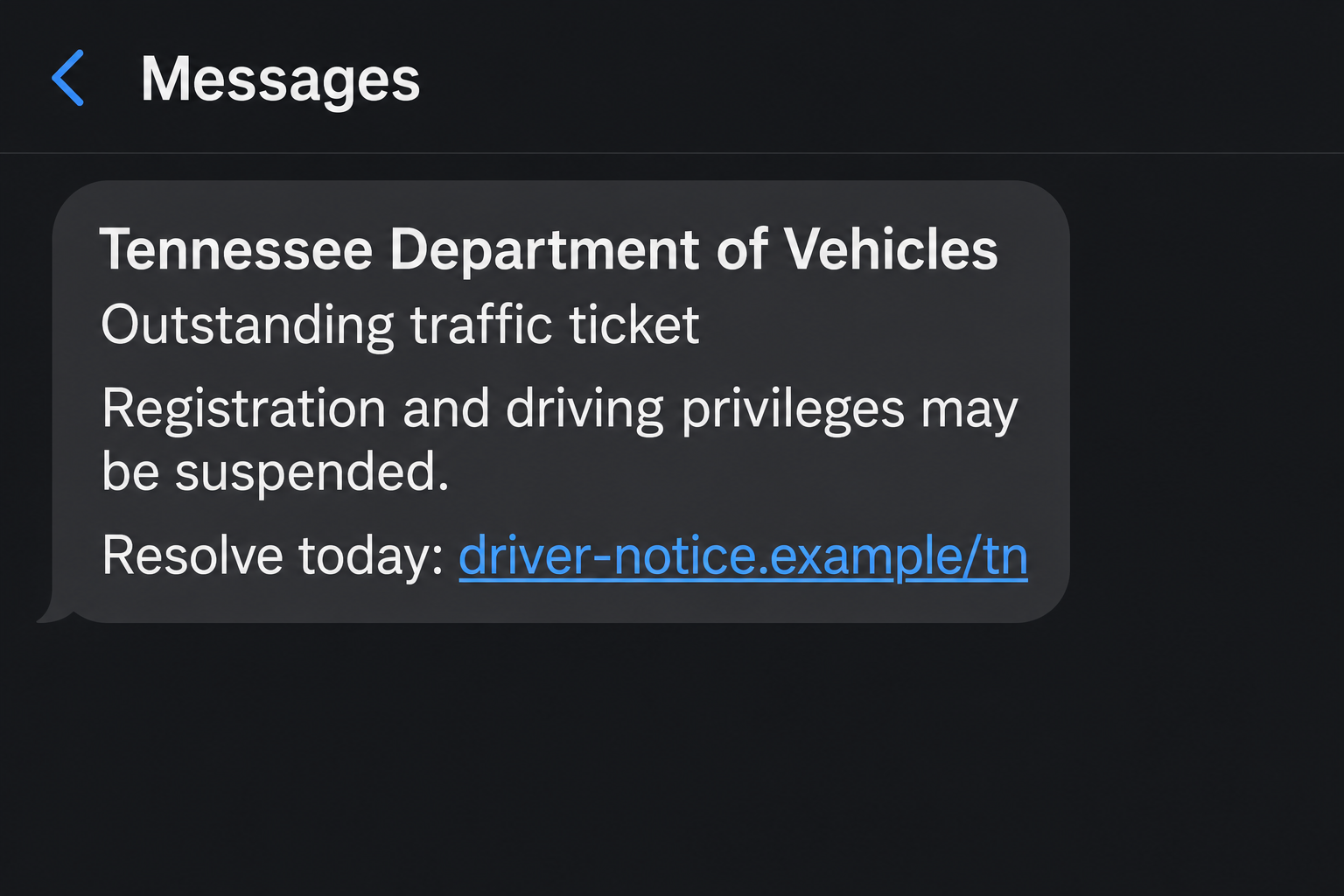
A Tennessee traffic-ticket text says your driving privileges are about to be suspended. The warning arrives without the ticket you would normally expect to explain it.
Now you’re wondering whether an old mistake could keep you from getting to work. Before trying the payment link, look at who is making that threat.
Overview
The message borrows authority from driver services
The Tennessee DMV text scam presents an alleged traffic balance as a problem that must be settled immediately. Registration or license consequences make the payment sound urgent.
The real Department of Safety and Homeland Security and Tennessee Highway Patrol have warned about this impersonation.
Their warning describes messages using the name Tennessee Department of Vehicles. A government-sounding label does not mean the sender controls your driving record.
A frightening subject conceals an unverified payment route
The agency identifies these unsolicited overdue-ticket messages as fraudulent. Some direct recipients to a website made to resemble the department’s own pages.
The lead image is a fictional illustration, not an original recipient’s text. Its example address cannot receive payments or look up a license.
Actual wording can change. What matters is the instruction to resolve a supposedly official problem through a channel supplied by an unknown sender.
You can check your record without obeying the text
A genuine driving concern belongs with the relevant official service or court. The text should not decide which website you visit or what information you submit.
- Use Tennessee Driver Services for an independently verified licensing question.
- Contact the court responsible for an actual citation.
- Check a real road-charge account with its own operator.
- Speak to your financial provider if the sender collected payment information.
These checks have different purposes. Paying a stranger to protect your license can create a financial problem without resolving any genuine record issue.
Why the Suspension Warning Gets Your Attention
The threat reaches beyond the alleged fine
A traffic fine is an expense. Losing the ability to drive can feel like losing access to your job, appointments, school runs, and family responsibilities.
That difference explains why a vague message can be so unsettling. You may concentrate on stopping the threatened consequence before asking whether the underlying ticket exists.
Someone who recently moved or renewed a vehicle document may find the timing especially convincing. That coincidence does not establish a connection to government records.
Write down the claim as stated. Avoid supplying a missing location, date, or explanation because you are trying to make the message fit your circumstances.
Several official-sounding names can hide a basic mismatch
The warning might mention DMV, driver services, or highway patrol. Familiarity with one name can spill over into trust in the rest of the text.
You do not need to memorize every department’s responsibilities. You do need a contact route that comes from the real organization, rather than the payment demand.
A correct agency name would not authenticate the sender either. Fraud does not stop working simply because the person writing the message improves the heading.
Check the instruction as well as the identity. A demand for instant payment through an unsolicited link conflicts with the department’s warning about these messages.
How the Tennessee DMV Text Scam Works
Step 1: A supposed overdue ticket appears without context
The text alleges an outstanding violation. It may treat the balance as an established fact, leaving you to wonder when the original notice was sent.
A short message can omit the details needed to recognize a ticket while still sounding official. Its link appears to offer the missing explanation.
That is the first decision to slow down. You should not have to disclose personal information to an unknown page just to determine what it alleges.
If you have genuine paperwork, compare it separately. Do not allow the text to replace a citation or letter you already obtained through a legitimate process.
Step 2: The department name gives the balance apparent authority
A sender posing as a vehicle agency seems able to connect a payment with your license. That makes an ordinary-looking text feel more consequential.
The official Tennessee warning describes both borrowed agency identities and websites resembling real state pages. A matching heading can carry the deception into the next screen.
Searching the department’s name and finding a genuine website confirms that the institution exists. It does not connect that institution to the incoming demand.
Leave the link behind when you search. Otherwise, your attempt to verify the agency can become a visit to the destination chosen by its impersonator.
Step 3: Registration and driving threats compress your decision
The alleged consequence may arrive sooner than you feel able to investigate. A short deadline encourages payment as the quickest route back to normal.
You still don’t know whether the ticket or sender is genuine. A countdown on the screen is another claim to check, not a reason to skip verification.
A threatening message cannot tell you whether a real suspension exists. That question requires the appropriate official record, with help from the responsible office if needed.
Do not ask the texter to postpone enforcement while you find money. That conversation lets an unverified person continue defining what the situation supposedly requires.
Step 4: The payment link turns concern into disclosure
The offered website may ask you to identify yourself, review a violation, or provide a card. Each field can expose information before any charge is completed.
A familiar color scheme or state-like heading does not identify who receives that information. Neither does the presence of a secure-connection icon.
Be wary of a request to reply before the link will work. You do not need to activate the sender’s payment route to investigate your own records.
If a page asks for a verification code, stop. Read any genuine bank notification independently to understand what action the code would approve.
Step 5: A payment screen is mistaken for an official resolution
A receipt or success message may make the problem feel finished. But a website controlled by an impostor cannot certify what happened to your driving record.
The same is true of an error message. A failed-looking transaction does not establish that card details were discarded or that no later attempt is possible.
Do not keep trying different cards to get a confirmation. Check your financial account directly and tell the provider about the suspected impersonation.
These risks depend on what the destination requested and what you supplied. Receiving the text alone is not a diagnosis of malware or account takeover.
The Real Tennessee Contacts Have Different Jobs
A license-status question belongs with Driver Services
For a genuine concern about your driving privileges, independently find Tennessee Driver Services on the state’s official website. Follow its own navigation and published contact instructions.
Ask about the actual record, not whether an unfamiliar payment page looks convincing. Have reliable documents available without sending them back to the text’s sender.
If a real restriction appears, request the official explanation and process. Do not assume the scam’s proposed payment would satisfy it.
A citation should identify its own court
Check actual citation paperwork for the issuing authority and court. Locate that court independently before asking about a hearing, fine, or payment option.
If you cannot identify the court, say so to the official agency you contact. Do not invent the missing information or accept the texter’s preferred office.
For a genuine case, obtain legal advice when appropriate. This warning is about an impersonation message, not instructions for contesting or ignoring an actual charge.
A toll story needs a separate account check
Tennessee’s Attorney General has also warned about toll-balance impersonation. A similar payment threat can arrive under another organization’s name.
If you drove in another state, a real bill may exist there. Check with that road’s actual operator rather than dismissing or accepting it based on geography alone.
Do not combine an unrelated trip, a Tennessee license, and an unknown payment link into one assumed debt. Establish the account and payee first.
An Official-Looking Email Address Is Only One Check
The department’s warning also distinguishes state email addresses from personal providers. That is helpful when a text conversation moves into a supposed official email exchange.
However, the displayed sender name is not a complete identity check. Do not trust a payment instruction merely because the message shows familiar government wording.
If an email follows the text, preserve it with the original message. Start a separate inquiry through the agency rather than replying to the new sender.
A transition from SMS to email can make the process feel more formal. It does not independently establish that the claimed ticket or collection office exists.
What to Do if You Have Fallen Victim to This Scam
-
End contact and preserve what you already have. Keep the original message, displayed address, sender identifier, and any payment record.
Make a brief timeline: what arrived, what you opened, and what you entered. Do not revisit the site to recreate steps for a screenshot.
If a caller is keeping you connected, hang up before seeking help. A claim that you must stay on the line should not control your response.
-
Protect the payment method involved. Contact the bank, card issuer, or transfer provider through an established route and describe the false traffic demand.
Ask whether exposed credentials need replacement and which transaction-recovery options apply. Report both pending activity and completed payments accurately.
Explain any payment you authorized under pressure. The provider needs the true sequence, and no outside recovery service can guarantee reimbursement.
-
Secure accounts if login details were disclosed. Replace the affected password on the real service and remove unfamiliar sessions where the account offers that option.
Check your recovery email and phone information. If you reused the same password, address those other accounts rather than changing only the one mentioned in the text.
A later password-reset message may itself be fraudulent. Open the service independently instead of using a new link that promises to undo the incident.
-
Match identity precautions to the information shared. A name or vehicle description is different from a Social Security number or identity-document image.
For sensitive identity exposure or misuse, use IdentityTheft.gov to plan suitable recovery steps. Keep your saved evidence out of public comment threads.
If software installation or unusual permissions were involved, seek device-specific help too. Account protection and payment disputes do not automatically remove unwanted software.
-
Resolve the actual driving question separately. Reach Driver Services or the responsible court using contacts you found without the scam message.
Ask whether a genuine issue exists and what verified deadline applies. Keep the answer alongside your own records, not inside another conversation with the impostor.
If everything is in order, you do not need to buy a clearance certificate from anyone. If a real matter exists, follow its authentic instructions.
-
Report the impersonation and reject further payment requests. Use your messaging provider’s junk-reporting option and forward unwanted texts to 7726 when supported.
Submit relevant details to ReportFraud.ftc.gov or IC3, particularly when money or sensitive information was involved.
After keeping the evidence, block the sender. A person offering guaranteed recovery or immediate license restoration for another fee should not receive your money.
Helping a Driver Who Is Already Worried
Start with what they are afraid of losing: the ability to drive. Telling them the message looks silly may not answer that concern.
Offer a concrete next step, such as locating Driver Services together or finding the court listed on genuine paperwork. That replaces the texter’s deadline with a verification plan.
Ask whether they paid before discussing how the message fooled them. A timely financial-provider call is more important than deciding who should have noticed which warning sign.
Avoid requesting their banking password to help. They can contact the provider while you help organize the message, times, and transaction references.
If you warn a local group, describe the payment tactic and official checking route. Cover personal information and do not recirculate an active link.
Frequently Asked Questions
Is the Tennessee DMV text about an overdue ticket genuine?
The state has identified this suspension-and-payment message as a scam. Verify an actual driving concern through Driver Services or the relevant court, outside the text.
Does the warning cover texts using the highway patrol’s name?
Yes. The official alert involves impersonation of TDOSHS and THP. Adding a recognizable law-enforcement name does not authenticate the demand.
What if I really forgot to pay a ticket?
Check that ticket with its actual court. A real unpaid obligation can coexist with a fraudulent text, and paying the impostor will not settle it.
Can the fake website suspend my license?
Its threatening screen does not establish an official restriction. Ask the real licensing service about your record instead of purchasing the sender’s proposed fix.
Is an unfamiliar domain the only warning sign?
No. The unsolicited collection instruction, pressure, claimed authority, and payment destination matter together. A familiar-looking address or polished page cannot replace independent verification.
Should I replace a card after a failed payment attempt?
Tell your issuer what information you entered, even if the page reported failure. Ask it which protective action fits the exposure.
The Bottom Line
Do not use the Tennessee DMV text scam’s link to pay a ticket or protect your license. The state identifies these overdue-payment threats as impersonation.
Check a genuine record through the appropriate official office. If the message already collected financial details, speak to your provider before attempting any further payment.

Join the discussion
0 commentsShare your experience or ask a question about this article.
Discussion
Start the conversation
Have a question or something useful to share? Add the first comment.