

A collaboration email lands with a friendly introduction and a product that seems relevant to your audience. For a creator, that can sound like an opportunity.
KOL Connect Hub outreach deserves a closer look before you spend time producing a video, accept software or attach your reputation to the proposed campaign.
Overview
What the Reported Collaboration Emails Offer
The reported KOL Connect Hub outreach promotes AI-related products and a creator arrangement involving four months of Pro access plus a 30% recurring affiliate commission.
The email sequence includes several sender display names, including Angela, Sunny and Crystal. Multiple follow-ups are part of the reported contact pattern.
References include UGC video and PhotoGenerator products. These descriptions should be matched to exact businesses and domains before a creator agrees to promote anything.
Free access and an affiliate percentage are compensation terms, not proof of a paid sponsorship. The distinction matters when deciding whether the work is worthwhile.
The Agency Has a Website, but Its Claims Need Verification
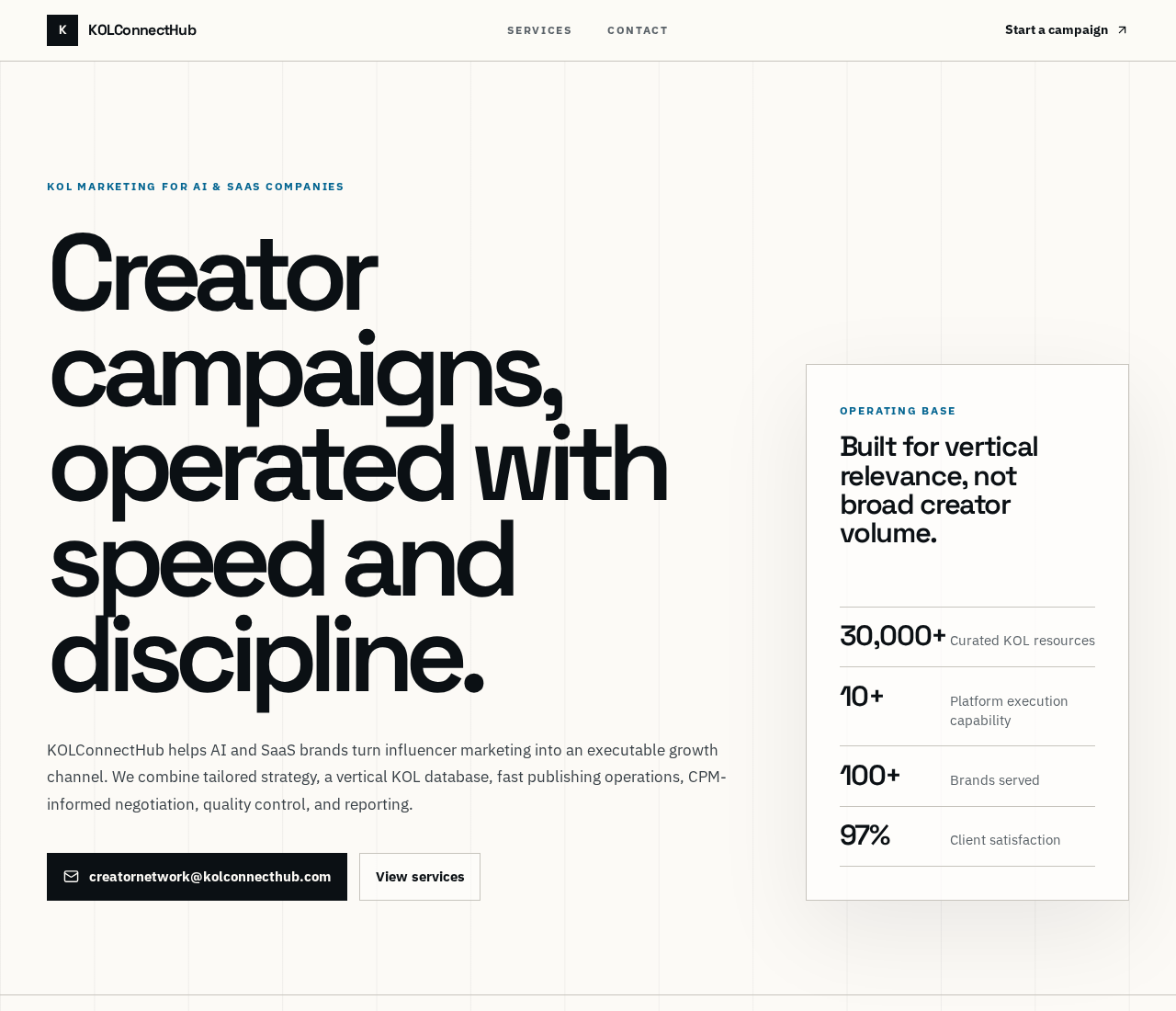
The accessible www.kolconnecthub.com site describes an agency serving AI and SaaS brands. It advertises strategy, creator selection, campaign execution and reporting.
Its displayed figures include more than 100 brands, 30,000 KOL resources, activity across more than ten platforms and 97% client satisfaction.
Those are the agency’s own claims. The page does not independently authenticate the specific email sender, confirm a campaign agreement or guarantee payment to a creator.
- Verify the sender through a separately obtained business contact.
- Confirm the agency is authorized by the named brand.
- Get deliverables, compensation and usage rights in writing.
- Do not install supplied files or grant channel access to evaluate an offer.
Is KOL Connect Hub a Confirmed Scam?
The available evidence does not justify that categorical conclusion. An existing agency website, repeated outreach and an affiliate proposal can all occur in legitimate marketing.
No theft, malicious attachment, unauthorized channel access or unpaid completed contract was demonstrated in these checks. Treating suspicion as a proven attack would mislead readers.
The practical recommendation is still firm: do not proceed on the emails alone. Authenticate the relationship and written terms before providing work, access or sensitive information.
How the Reported Creator Outreach Works
Step 1: An Email Frames a Product Promotion as a Collaboration
The first message creates a commercial possibility. A creator is invited to consider a product that appears compatible with technology, design or AI-related content.
This can be legitimate prospecting. The important question is whether the sender provides enough verifiable information to turn a friendly invitation into an accountable business arrangement.
A personalized greeting does not answer that question. Neither does a reference to a recent upload, since public channel information is easy to obtain.
Look for an exact product URL, the legal contracting party and an explanation of the agency’s role. Ambiguous product names make verification unnecessarily difficult.
Before responding, compare the full sender address and reply-to destination. A familiar display name is not the same thing as an authenticated company identity.
Step 2: Free Access and Commission Make the Offer Sound Tangible
Four months of Pro access gives the proposal a concrete benefit. A recurring 30% commission can sound more valuable than a one-time fee.
However, commission is contingent income. Its value depends on attributed sales, eligibility rules, refunds, payment thresholds and whether subscriptions continue.
Free access also has a different value from money. You may spend several days creating a video without receiving cash compensation at all.
Ask whether a fixed production fee exists. If the answer is affiliate-only, evaluate the proposal as affiliate marketing rather than accepting the implications of sponsorship language.
There is nothing inherently fraudulent about that arrangement when disclosed clearly. The problem would be allowing enthusiasm to replace a realistic calculation of time and obligations.
Step 3: Follow-Ups Encourage a Reply Before the Details Are Settled
The reported sequence includes repeated emails and different sender names. That can create a sense that an established team is waiting for your decision.
It may also simply reflect ordinary sales automation. Frequency alone does not establish a scam, and multiple employees can legitimately work on outreach.
What matters is whether the answers become clearer when you ask basic questions. More reminders are not a substitute for an identifiable counterparty and written brief.
Do not let a supposed deadline shorten your checks. If a campaign cannot accommodate reasonable verification, declining is a sensible business decision.
Step 4: The Website Supplies an Agency Story
KOLConnectHub’s page presents a structured service: targeted creator selection, campaign management, pricing discussions, quality control and reporting for AI and SaaS clients.
The site lists several claimed client domains, including toolify.ai, musiccreator.ai, pipiads.com, apollo.ai and hixbypass.com. A displayed name does not verify the relationship.
Similarly, a broad agency description cannot authenticate every product mentioned in an email. An agency might handle campaigns that are not displayed on its homepage.
The necessary next check is authorization for the exact proposed campaign. Confirm it with the brand through contact information obtained independently of the outreach chain.
Do not ask only whether the agency exists. Ask whether this sender can commission this specific work on this brand’s behalf.
Step 5: A Real Agreement Should Define the Work and Payment
A creator needs more than a trial account. The agreement should specify format, length, publication date, required claims, revisions and whether the brand can reject the work.
It should also identify compensation, payment timing, cancellation terms and the party responsible for paying. An attractive percentage does not resolve those practical questions.
If affiliate links are involved, obtain the tracking rules and payout conditions. Know whether refunded purchases reverse commissions and whether earnings expire below a threshold.
Rights matter too. A normal video upload is different from granting indefinite advertising use, voice cloning, likeness rights or permission to edit your statements.
No such broad rights are established as part of this offer here. They are contract issues to settle before granting permission, not accusations about a completed agreement.
Step 6: Access Requests Must Be Evaluated Separately From the Business Pitch
A campaign does not become safe merely because the compensation sounds reasonable. Software downloads, account connections and channel permissions create their own security questions.
No malicious file or permission request was confirmed in the reported KOL Connect Hub emails reviewed for this article. Do not assume one existed.
If a later message introduces an installer, archive or sign-in link, verify it independently. Prefer the product’s genuine public website over files sent in an email.
A marketer does not need your password, recovery code or ownership of your channel to evaluate your public work. Reject such requests regardless of the campaign’s name.
Agency Identity, Contact and Campaign Authority
The Brand Name Does Not Identify the Contracting Entity
The site says the agency was founded in 2024 by experienced industry leaders. The visible presentation does not name those individuals or a registered contracting entity.
It also does not provide a complete physical address or public telephone number in the inspected page. Those gaps limit accountability checks.
Remote agencies can operate legitimately without a public storefront. The appropriate response is to request the legal business name and contract details, not invent a fake-address accusation.
Match the entity on the contract with the party making payment. If different businesses are involved, ask for a written explanation of their responsibilities.
The Published Email Is a Starting Point
The website publishes creatornetwork@kolconnecthub.com. That helps identify a contact route, but a page listing an address is not a test of responsiveness or honesty.
This investigation did not send an email or negotiate a campaign. It therefore does not claim the team answered, ignored questions or refused verification.
Contact obtained independently is useful because it breaks reliance on the original email. Confirm that the exact sender and proposed product belong to the agency’s work.
Claimed Clients Must Confirm Their Own Involvement
A logo or client list can support further research, but it cannot independently authenticate itself. The same applies to impressive campaign totals and satisfaction figures.
Ask the proposed sponsor to confirm the campaign through its own business channel. A forwarded screenshot from the outreach sender is not equivalent.
Keep that confirmation with the agreement. If the agency’s authority ends or the brief changes, you need a clear record of what was approved.
Contract Terms Matter More Than an Automated Reputation Score
Domain age, private registration and scanner scores are screening signals, not findings that a business steals channels or refuses payment.
The decisive commercial questions are more specific: who owes money, for what work, under which conditions, and with which enforceable record?
A clear agreement does not eliminate every risk, but missing answers should stop production. You do not owe an unknown sender a free test campaign.
Before You Promote an AI Product to Your Audience
Your recommendation carries consequences beyond the fee. Viewers may spend money, upload their own work or disclose information because they trust your judgment.
Test the real product independently, using nonsensitive sample material. Do not upload client files, private footage or personal documents just to demonstrate a trial account.
Check what the product says about uploaded content and rights. If the terms are unclear, ask before agreeing to demonstrate features involving other people’s information.
Keep editorial control over claims you cannot substantiate. A sponsor’s preferred script does not make an unsupported performance or privacy promise safe to repeat.
Any material commercial relationship should be disclosed appropriately. Calling a commission-bearing promotion an independent recommendation would create a separate trust problem for your own audience.
What to Do If You Received or Accepted the Offer
- Pause commitments while checking identity.
You do not need to upload a video, install an application or disclose account information to keep an email conversation open.
Request the exact sponsor, campaign brief, legal counterparty and compensation structure. If those answers remain vague, decline rather than producing work on speculation.
- Confirm the relationship outside the original thread.
Use independently located contact details for both agency and product. Ask whether the named sender is authorized to offer that campaign.
Keep the original messages and full sender information. A reply from another address supplied by the same unverified person does not complete the check.
- Separate cash payment from affiliate possibilities.
Calculate the production time against guaranteed compensation, not a best-case commission estimate. Clarify when payment is due and how disputes or cancellations are handled.
Do not purchase a subscription or pay an onboarding fee merely to qualify for a collaboration. Reassess any new financial obligation independently.
- Review permissions if you connected an account.
Inspect connected applications through the genuine account settings. Remove access you do not recognize or no longer need, especially permissions unrelated to the proposed campaign.
If a password was disclosed, replace it and review sessions and recovery details. Follow YouTube’s official compromised-channel guidance if control changed.
- Respond proportionately to a downloaded file.
If you never downloaded or installed anything, a collaboration email alone is not evidence of malware. Do not pay a stranger to clean a nonexistent infection.
After an untrusted installation, a Malwarebytes scan may help check the device. AdGuard can reduce risky ads, but neither tool authenticates a sponsor or guarantees safe software.
- Resolve existing work through the written record.
If you already delivered content, preserve the brief, approval messages and agreed compensation. Ask the named counterparty to address the specific unresolved obligation.
If no payment was agreed, do not reinterpret uncertain affiliate income as a guaranteed fee. Seek appropriate professional advice if a substantial contractual dispute develops.
Frequently Asked Questions
Is KOL Connect Hub Definitely Fraudulent?
No confirmed fraud finding is supported by the evidence described here. A public agency site exists, while the specific outreach relationship still requires authentication.
The safe decision is not automatic acceptance. Require a verified sponsor, accountable counterparty and clear written terms before committing.
Are Several Sender Names Proof of Impersonation?
No. An agency can use multiple staff members or automated follow-ups. Those patterns can be annoying without establishing criminal conduct.
Check the actual addresses, reply destinations and campaign authorization. Those details are more informative than the number of friendly names appearing in your inbox.
Is the 30% Commission a Guaranteed Payment?
No. An affiliate percentage generally depends on qualifying sales and the applicable program rules. It is not automatically a fixed production fee.
Ask about attribution, thresholds, reversals and payment timing. Decide whether the arrangement makes sense even if it produces no commissions.
Does the Website Prove Every Client Claim?
No. The site publishes client names and performance figures, but those statements need independent confirmation for the campaign being offered.
Contact the named sponsor through its own channel. Confirmation of one relationship should not be stretched into approval of every other email.
Should a Sponsor Need My Channel Password?
No legitimate evaluation of public content requires your password or recovery code. Do not surrender account ownership to participate in a proposed marketing arrangement.
Review any requested permission separately and understand its scope. If access was already granted, inspect and remove unnecessary permissions through the genuine platform.
Should I Accept This Offer?
Not on the current emails alone. Proceed only if independent checks and written terms resolve identity, authority, compensation, rights and security questions.
If the sender will not provide those basics, decline. An opportunity is not valuable enough to justify unclear obligations or unnecessary account risk.
The Bottom Line
Do not label KOL Connect Hub a proven scam from repeated emails alone, and do not treat its website as automatic clearance for a campaign.
Withhold work and access until the sponsor and agreement are verified. If you already connected an account or delivered content, address that specific exposure using your records.

Join the discussion
0 commentsShare your experience or ask a question about this article.
Discussion
Start the conversation
Have a question or something useful to share? Add the first comment.