

Megyn Kelly appears to be discussing a green tea trick that produces startling weight loss. The presentation sounds like an interview with a discovery worth sharing.
Perhaps you stopped to watch because the name was familiar. Before following the offer, take a moment to examine how that apparent recommendation is put together.
Overview
A news personality is turned into a sales presenter
The Megyn Kelly green tea scam uses an apparent version of the broadcaster to give a weight-loss pitch the tone of a trusted media presentation.
It is not an authenticated interview, medical recommendation, or endorsement. The campaign joins manipulated celebrity material with a supposed matcha recipe and aggressive transformation claims.
The important question is not whether you agree with Kelly’s opinions. It is whether the person named in the promotion actually delivered the commercial message.
The story borrows medical language as well as a familiar identity
The presentation connects its tea narrative with Dr. Mark Hyman, prescription weight-management drugs, and references to hormone pathways. That combination makes the pitch sound medically established.
But a familiar host and scientific vocabulary cannot substitute for an authentic source or a clinical study of the actual product.
Mahgryn is the supplement associated with the documented campaign. This article addresses the false media story, not a laboratory assessment of that formulation.
The advertisement and the order need separate scrutiny
- The supposed broadcast is not proof of Kelly’s involvement.
- Rapid weight-loss promises should not be treated as expected results.
- A supplement offer is not the homemade recipe viewers were led to expect.
- A specific subscription claim requires the actual checkout or billing record.
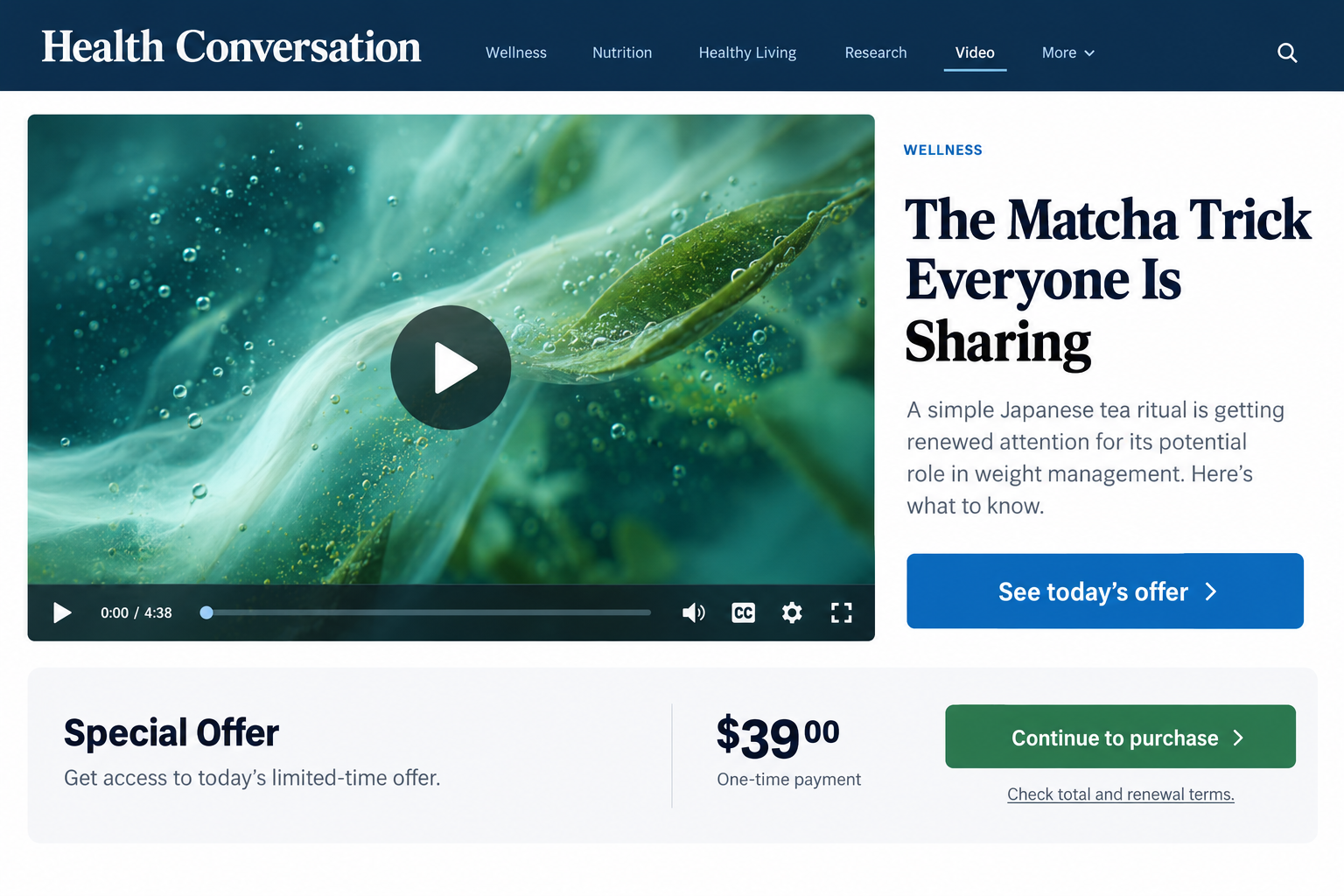
The opening graphic is a fictional interface illustration. Its layout and example offer are not records of a real price, checkout, or celebrity appearance.
Reject the misleading promotion. A commercial page that borrows someone else’s authority has not earned your confidence merely because it also lists a product.
When an Apparent Interview Is Really an Advertisement
Interviews have familiar signals: a recognizable presenter, a confident guest, short clips, and a story that seems to explain something the audience cares about.
A deceptive advertiser can reuse those signals without the original conversation. The result feels like journalism while serving a different purpose: keeping viewers moving toward an offer.
A clip may contain authentic footage while the words, context, or commercial connection are false. Recognizing a real person does not authenticate the surrounding claim.
This is particularly effective with health topics. A host seems to ask the questions viewers would ask, so the answer can feel examined even when nobody challenged it.
Yet all apparent participants may be controlled by the same promotional edit. A staged question followed by a confident answer is not an independent investigation.
Check whether the full segment exists through the broadcaster’s genuine publishing channels. Look for the original context, not another uploaded copy of the ad.
If the only route to the supposed discovery ends at a sales page, treat the presentation as marketing. Do not grant it the authority of a verified broadcast.
How the Megyn Kelly Green Tea Scam Works
Step 1: A surprising weight-loss claim interrupts the feed
The promotion offers an unusually easy solution to a difficult problem. A tiny ritual supposedly produces changes that normally require sustained treatment or considerable effort.
The green tea theme sounds accessible rather than intimidating. Viewers can imagine trying it without booking an appointment, learning a new exercise routine, or changing familiar meals.
That accessibility encourages the click. It also makes the eventual purchase feel less like a medical decision than it really is.
Before proceeding, identify what the ad actually promises: information, a recipe, a product, or treatment-like results. A changing promise deserves scrutiny.
Step 2: Kelly’s apparent presence supplies a journalistic seal of approval
The campaign places her identity inside the explanation, giving the impression that a recognizable media figure is presenting or validating the discovery.
That impression can survive even if the editing is awkward. Viewers often remember the famous name and the exciting claim rather than the details of the clip.
The relevant check is provenance. Find the original publication and complete segment rather than trying to judge authenticity solely from facial movement or sound quality.
AI detection is not a prerequisite for refusing the offer. A sales page that cannot substantiate the claimed interview has already failed an important credibility test.
Step 3: A doctor figure translates the promise into scientific-sounding certainty
The narrative introduces medical authority and talks about GLP-1 and GIP. These are real biological terms, which makes their misuse harder to spot.
Hearing an accurate term does not mean the proposed conclusion follows. A claim about a hormone pathway is not evidence of clinically meaningful weight loss.
The campaign also invokes prescription medicines as a comparison point. That shortcut asks readers to transfer confidence in studied treatments to an unrelated household routine.
A valid comparison would require appropriate research with clearly defined treatments and outcomes. A persuasive voiceover does not supply that research.
Step 4: Extreme transformations replace a realistic explanation
The presentation adds dramatic weight-loss stories and recognizable names. Each example makes the supposed effect seem widespread without showing reliable records behind the result.
Before-and-after footage cannot reveal what treatment a person used, whether the images are comparable, or whether the person agreed to promote the offer.
Very fast changes on a scale also do not necessarily represent fat loss. A video should not turn such claims into a safe goal for viewers.
Be wary when the story removes every limitation at once, including age, genetics, diet, and activity. An answer that fits everyone this neatly is a marketing warning sign.
Step 5: Waiting for the recipe becomes a reason to stay
Instead of simply explaining the promised drink, the presentation repeatedly points toward a reveal just ahead. The useful information remains somewhere after the next claim.
An exit message or renewed countdown can make leaving feel like missing an opportunity. That pressure serves attention and conversion, not informed medical judgment.
You do not owe a video more time because you watched most of it. Close the page when its promises stop matching what it actually provides.
A genuine educational explanation can identify its ingredients, limitations, and evidence without using the audience’s patience as leverage.
Step 6: The commercial destination inherits credibility it has not earned
The product offer arrives after the viewer has absorbed the apparent interview and scientific story. The advertiser hopes the decision has effectively been made already.
Pause there. The formulation, merchant, package size, total charge, and ongoing terms need their own assessment, independent of the names used to introduce them.
Nothing about a supposed Kelly segment establishes that a checkout is authorized, a guarantee will be honored, or an automatic delivery can be easily stopped.
Do not pay through this deceptive route. If the product interests you independently, discuss its actual label with a qualified healthcare professional rather than following the advertisement.
Why the Prescription-Drug Comparison Is a Serious Red Flag
The campaign’s medical language is not harmless decoration. It can encourage people to view an unfamiliar supplement as an alternative to a prescribed treatment.
Prescription drugs have specific ingredients, dosing, eligibility considerations, and evidence requirements. A plant-based product does not acquire the same properties by mentioning similar biological pathways.
Nor does a claim about a university establish that the university tested the marketed bottle. The study would need to be identifiable and relevant.
Ask what was tested, against what comparator, and in whom. A percentage without a clearly defined outcome and study design tells readers very little.
The NIH’s complementary-health center explains the limits of weight-loss supplements. Ingredient research should not be stretched into dramatic product promises.
There is also a difference between enjoying a beverage and taking concentrated extracts. Composition and dose affect the questions your pharmacist needs to consider.
Do not increase a supplement dose to chase the video’s results. If something does not produce an advertised transformation, that does not mean taking more is appropriate.
And do not postpone medical care because a presenter suggests you only need a pantry trick. Your health history deserves more attention than an advertising script provides.
Check the dates and subject of any research the seller supplies. A paper about an ingredient cannot automatically validate a different combination, dose, or delivery form.
If the evidence changes whenever you ask a specific question, step back. You should not have to reconstruct a scientific justification from scattered celebrity clips.
A credible explanation should become clearer under scrutiny. More testimonials and a faster countdown are not answers to questions about effectiveness or safety.
Follow the Merchant’s Paper Trail, Not the Presenter’s Name
A misleading promotion can be distributed by an affiliate or another third party. Identifying that possibility is important when seeking help after a purchase.
The person pictured in the advertisement is not your customer-service contact. Look at the receipt, confirmation message, payment descriptor, and terms attached to your order.
Record any mismatch between those names. It can explain why a search for the bottle alone leads to support that cannot locate your purchase.
A postal address should also be used for its stated purpose. A returns destination is not necessarily the manufacturer or the office handling payments.
Before returning anything, obtain instructions from the merchant responsible for your order and keep proof of postage. Avoid sending a parcel to an unverified address.
For billing, distinguish a large first order from a later renewal. Both can be unwanted, but they require different documentation and cancellation requests.
A page offering several bottles may emphasize the lowest unit price. Calculate the full amount, then check whether any recurring schedule is separately described.
No current order was placed to establish these outcomes in this campaign. Treat them as transaction checks, not a claim that every buyer receives extra bottles.
What to Do After Clicking or Buying
-
Capture the version you encountered. Keep the ad account name, video link, landing address, product page, and any purchase confirmation.
Preserve the connection between the apparent interview and the offer. A screenshot of a bottle alone will not explain what persuaded you to buy.
-
Reconcile the charge with the order. Check the authorized quantity, total, currency, shipping, and optional additions against your statement.
If something differs, contact the merchant promptly. Describe the discrepancy with the receipt attached rather than relying on a general complaint about the advertisement.
-
Ask directly about the next delivery. Find out whether any renewal exists, its timing and amount, and the correct process for stopping it.
Request written confirmation of cancellation where applicable. A customer-service message saying your concern was received is not necessarily confirmation that future billing has ended.
-
Check health concerns with someone qualified. Take the bottle label and ingredient amounts to your pharmacist or healthcare provider before using it with existing treatment.
Seek timely care for concerning symptoms after use. Retain the packaging so the product, manufacturer information, and lot can be identified accurately.
-
Use payment protections when appropriate. If the merchant does not resolve a documented problem, ask your bank or card provider about its process.
Supply cancellation records, the promised terms, and the actual charges. Deadlines and outcomes vary, so avoid waiting while support repeatedly tells you to check later.
-
Help prevent the same misrepresentation reaching someone else. Report the advertisement’s false presentation through the platform and submit relevant details to ReportFraud.ftc.gov.
If you shared the clip with friends, send a correction. Explain that the apparent interview is not an authenticated endorsement, without shaming anyone who believed it.
If you never ordered or entered personal details, leaving the ad may be all that is needed. A misleading video is not evidence of a malware infection.
Frequently Asked Questions
Is Megyn Kelly really presenting this green tea discovery?
The promotional segment is not an authenticated endorsement from Kelly. Her apparent presence should not be used to validate the recipe or the product offer.
Does the matcha trick work like a prescription injection?
The advertisement does not supply credible evidence for that comparison. A household drink or supplement should not be treated as interchangeable with a prescribed medicine.
Why are other celebrities mentioned in the same video?
Multiple names create an impression of broad agreement. When they all come from one promotional edit, they are not separate, independently verified recommendations.
Does a different supplement name make the story legitimate?
No. Changing a bottle label cannot authenticate the interview or support the medical claims. Assess the enduring story separately from each product’s seller and terms.
Can I assume the purchase includes a subscription?
No. Establish that from the actual checkout, confirmation, or billing history. If a renewal exists, cancel it explicitly with the responsible merchant.
How can I check an apparent celebrity interview?
Find the full original segment through the person’s official publishing channels. A repost, edited clip, or sales-page logo cannot confirm what the person actually said.
The Bottom Line
Skip the Megyn Kelly green tea offer. Its apparent media endorsement and sweeping medical promises do not provide a sound reason to buy a supplement.
If you purchased, identify the real billing merchant, document any discrepancy, and check future charges. Bring health questions to your clinician, not the video’s supposed presenters.

Join the discussion
0 commentsShare your experience or ask a question about this article.
Discussion
Start the conversation
Have a question or something useful to share? Add the first comment.