

Your CMCM member card is about to expire, an email says. A blue button offers to request a replacement before your benefits are interrupted.
It sounds like the kind of small administrative job you’d finish between other things. The renewal screen makes it look inexpensive, too.
Overview
A Replacement Card Is the Excuse for Opening the Form
The CMCM card renewal email scam claims a member card needs replacing and directs readers to a copied renewal site. It isn’t an ordinary membership notice.
CMCM is the genuine organization being impersonated. The fake email and collection pages are the problem, not CMCM’s actual health coverage.
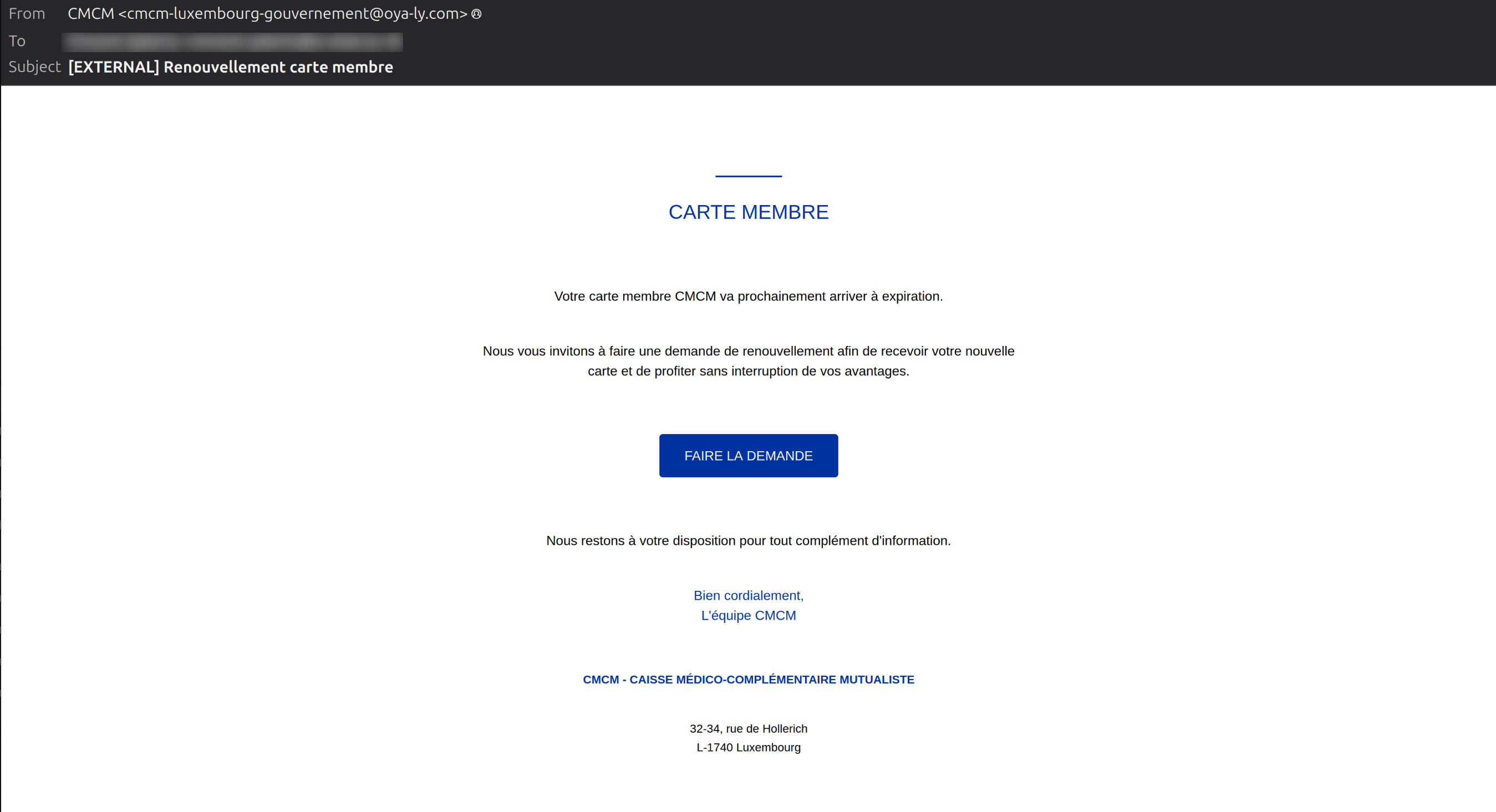
The original message pictured above promises continuity of benefits. Its familiar business details help the request look more routine than it is.
The Real CMCM Says Its Member Cards Don’t Expire
CMCM explicitly rejects these messages: its member cards don’t expire, and it doesn’t request payment for a member card.
The email asks you to fix an expiry that CMCM says doesn’t happen. There’s no reason to enter a replacement-card checkout.
There is also a government CSIRT analysis of the fake process, including the successive information requests and the final redirect.
The €1.53 Figure Doesn’t Describe the Full Exposure
The documented page displays a €1.53 procedure cost, then seeks personal information, payment-card details, and LuxTrust credentials. The small figure encourages a much larger disclosure.
- The quoted amount is a display on a phishing page, not proof of a legitimate charge.
- A health-card story doesn’t justify surrendering digital-identity credentials.
- A confirmation screen can’t tell you whether your information was handled safely.
- Reaching the real CMCM website afterward doesn’t authenticate the earlier form.
Why a Tiny Fee Can Lower Your Guard
If a page asked for a large transfer immediately, you might stop. A fee smaller than a coffee can seem too minor to investigate.
But the amount and the information required are separate questions. A card number doesn’t become less useful to an impostor because the displayed price is low.
The same applies to a banking identity. Entering it isn’t merely agreeing to spend €1.53; it exposes a credential used outside the supposed replacement-card task.
You may also be thinking about continued access to benefits rather than shopping. The message makes completing paperwork seem like the responsible option.
That pressure is unnecessary here. CMCM has already said its member cards don’t expire. Check genuine membership questions through the mutual’s established service instead.
This doesn’t mean every legitimate contribution or CMCM communication is false. The specific expiry story and unsolicited card-payment request are what the warning addresses.
How the CMCM Card Renewal Email Scam Works
Step 1: A Familiar Membership Message Introduces an Expiry Problem
The email presents itself as a card notice. It doesn’t need a dramatic threat when a quiet suggestion of interrupted benefits can prompt action.
A reader who recognizes CMCM may focus on the renewal button rather than the sender address. Familiarity with the institution becomes trust in this particular message.
Those aren’t the same thing. You can be a genuine member and still receive an unrelated impersonation email.
In the original example, a sender address outside CMCM appears beside the organization’s name. That’s a useful mismatch to notice before engaging with the button.
Don’t treat a cleaner-looking future email as automatically safe. The stronger check is whether the claimed card procedure matches what CMCM actually says.
Step 2: The Supposed Renewal Adds a Small Processing Cost
GOVCERT documents a malicious page at my.cmcm-membre[.]com. Its opening cost notice frames the next steps as a modest administrative procedure.
The address combines recognizable words, but it isn’t made official by including the letters CMCM. Read the entire destination, not just the reassuring part.
You don’t need to visit that address to check the warning. The original message and the authority’s page sequence already establish the deceptive request.
A low fee can encourage you to complete the form without comparing it against a bill, an account record, or a service you requested.
Stop before supplying payment information. For a genuine card question, begin at CMCM’s own website or contact channel rather than the unsolicited renewal route.
Step 3: The Form Moves From Personal Details to Financial Access
The documented sequence asks for personal information first, then card information, and finally LuxTrust credentials. Each stage makes the next look like part of the same job.
By the time a banking-related screen appears, you may feel you’re almost finished. That’s a bad reason to give it information the task shouldn’t require.
Consider each request independently. A page that copied a membership logo hasn’t earned permission to collect a different service’s password.
If you entered a card before stopping at the identity screen, the earlier exposure still matters. Protect what you actually supplied, not just the last page.
Likewise, a page error isn’t assurance that a submission failed. Tell the issuer what you entered rather than using the page’s response to judge safety.
Don’t approve an unexpected app prompt to make the renewal finish. Ask your bank or LuxTrust about any action you don’t understand.
Step 4: A Success Screen Sends You Back to the Real Organization
After the data requests, the fake process displays a registration confirmation. Its return button then takes the visitor to the genuine CMCM website.
That last destination can make the whole interaction feel settled. You see a real institution again and may stop questioning the pages that came before it.
But a redirect only changes the next address your browser opens. It doesn’t transfer legitimacy backward to the form that received your information.
Don’t use a visit to the authentic site as your proof that the replacement request was recorded there. Check directly with CMCM instead.
What the Email’s Business Details Can and Can’t Tell You
The original email includes a CMCM signature and a Luxembourg address. An impersonator can copy both without having any relationship with that office.
They identify the organization being imitated, not the person receiving the stolen details. Sending a complaint to a copied address won’t undo a banking exposure.
There is no reason to invent a warehouse, a manufacturer, or a hidden subscription to explain this case. The established mechanism is fraudulent information collection.
The €1.53 display also doesn’t establish a settled charge, a recurring interval, or a merchant descriptor. Your card issuer’s records answer those questions.
If an unfamiliar transaction appears, preserve the actual description and amount. Don’t assume it will have CMCM in the name merely because the email did.
When telling a bank what happened, describe the fake card-renewal route and the information supplied. That is more useful than guessing the criminal’s business identity.
Real Authentication Is Not Permission for a Copied Login
LuxTrust is a real digital-identity service, and legitimate services can use it for authentication. Seeing that name isn’t itself evidence of fraud.
The question is why you’re using it and where the request began. Here, the starting point is a false expiry notice contradicted by CMCM.
You shouldn’t have to accept the email’s explanation simply because a later screen resembles a banking tool. Return to an independently opened service before doing anything else.
LuxTrust’s support guidance distinguishes certificate protection from banking protection. Suspected phishing can require contacting both LuxTrust and the bank.
A password change alone may not settle every concern after an approval or transaction. Explain the full interaction so the providers can assess the relevant access.
If you use the same identity for work, tell the appropriate workplace contact about an exposure. Don’t forward secret codes or personal banking records to colleagues.
What to Do if You Have Fallen Victim to This Scam
Start with the information that left your control. You can address that without waiting to see whether a new card ever arrives.
-
Stop the replacement-card workflow. Close the form without supplying another card, credential, or approval. Don’t return to test whether the fee has changed.
Keep the email long enough to preserve evidence. Don’t keep communicating with its sender about cancellation or a refund.
-
Call the card issuer if you entered payment details. Use its normal support number or banking app, not a contact supplied by the renewal page.
Explain that the advertised transaction was a fake CMCM replacement card. Ask whether the card should be blocked or replaced and how to review pending activity.
Report any unfamiliar charge accurately. The displayed €1.53 doesn’t limit what you should watch for, and a lack of charges doesn’t validate the form.
Tell the issuer whether you only entered card details or also confirmed a payment. Those actions may require different checks and evidence.
Ask whether any wallet registration or ongoing payment authorization needs review. This is a protection question, not a claim that either occurred in every attempt.
-
Protect the affected LuxTrust certificate. If you entered its credentials or approved an unexpected request, contact official LuxTrust support promptly.
Ask about suspension and the correct next steps for your product. Also notify your bank about any associated financial access or approval.
-
Change passwords that were actually exposed. Do this through the genuine services, opened separately. Replace reused passwords on other accounts as well.
Don’t type a new password into a page reached from the same email. A replacement secret submitted to the impostor doesn’t secure the account.
-
Write down the sequence and retain existing records. Include the sender, URL you saw, fields completed, approvals, and any transaction notification.
Use masked account references in ordinary notes. Share full financial evidence only through the bank’s secure process or with the police as appropriate.
-
Verify your actual membership question with CMCM. Use the contact route on its independently opened website. Ask about the message without sending banking secrets.
Don’t let concern about benefits draw you back to the renewal link. A real membership issue can be handled outside the suspected phishing chain.
-
Report the fraud and expect possible follow-up approaches. File a police report if money or sensitive information was taken, and use your email provider’s phishing report.
If someone later claims to reverse the card fee, don’t supply another code or payment. Return to the real issuer using the channel you established.
If You Entered Only Your Name or Contact Details
That is a different exposure from handing over a card or digital identity. Don’t assume your entire account was accessed just because you opened the form.
At the same time, treat future messages using those details carefully. Someone can use a genuine name or phone number to make a new request sound personal.
If an incoming caller mentions the renewal, don’t regard that knowledge as proof of employment at CMCM. Reach the mutual through its own channel.
If you submitted nothing, close the site and report the email. The documented form sequence doesn’t establish that simply viewing it infected your device.
A download or installation would be a separate issue to describe when seeking help. Don’t confuse account protection with software cleanup.
When helping a family member, ask which screens they completed rather than blaming them for clicking. That answer determines whether the issuer or LuxTrust needs urgent involvement.
Give them room to mention an approval they initially forgot. Embarrassment can hide the detail that matters most for protecting the account.
Keep the genuine support reference once a provider has opened a case. It gives you a reliable starting point if another supposed helper contacts you.
If the same card pays household bills, discuss replacement arrangements with the issuer. Don’t postpone reporting the exposure merely because replacing it would be inconvenient.
For an affected work identity, follow your employer’s incident procedure. The workplace needs to assess professional access separately from the bank’s handling of your personal card.
After urgent protections are in place, preserve the provider’s written instructions. They help you follow the genuine recovery process without returning to the false renewal page.
Frequently Asked Questions
Do CMCM Member Cards Expire?
CMCM says its member cards don’t expire. The email’s claim that a replacement is required to maintain benefits contradicts the organization’s own warning.
Is the €1.53 Renewal Fee Genuine?
It appears on the documented phishing page. CMCM says it doesn’t request payment for a member card. Don’t enter payment details through that offer.
Why Does a Card Replacement Ask for LuxTrust?
The fake workflow collects digital-identity credentials after personal and card details. That is part of the documented theft attempt, not evidence of an authorized CMCM procedure.
Does Returning to the Real CMCM Site Prove Success?
No. A fraudulent page can redirect visitors to a genuine site after collecting information. Verify any request directly with CMCM through an independent route.
Am I Enrolled in a Subscription?
The documented case doesn’t establish a subscription. Ask your issuer about actual charges and any recurring authorization rather than assuming the email explains your statement.
Who Should I Contact After Giving Both Card and LuxTrust Details?
Contact your bank or card issuer for financial protection and LuxTrust for certificate exposure. Describe the separate disclosures and any approvals you completed.
The Bottom Line
Don’t pay or log in through the CMCM card renewal email scam. The expiry claim is false, and the replacement process asks for valuable financial credentials.
If you used it, protect the card and any exposed LuxTrust access now. Verify genuine membership matters with CMCM, not the sender offering the replacement.

Join the discussion
0 commentsShare your experience or ask a question about this article.
Discussion
Start the conversation
Have a question or something useful to share? Add the first comment.