

A long scratch down the car door can make a small cloth look like a very tempting purchase. NanoPolix promises to spare you the body-shop bill.
NanoPolix Scratch Remover makes the job seem almost effortless. What deserves attention is the gap between that promise and the repair you actually need.
Overview
One cloth, a remarkably broad repair claim
NanoPolix Scratch Remover is marketed as a reusable cloth that removes scratches, scuffs, oxidation and other damage in about 60 seconds.
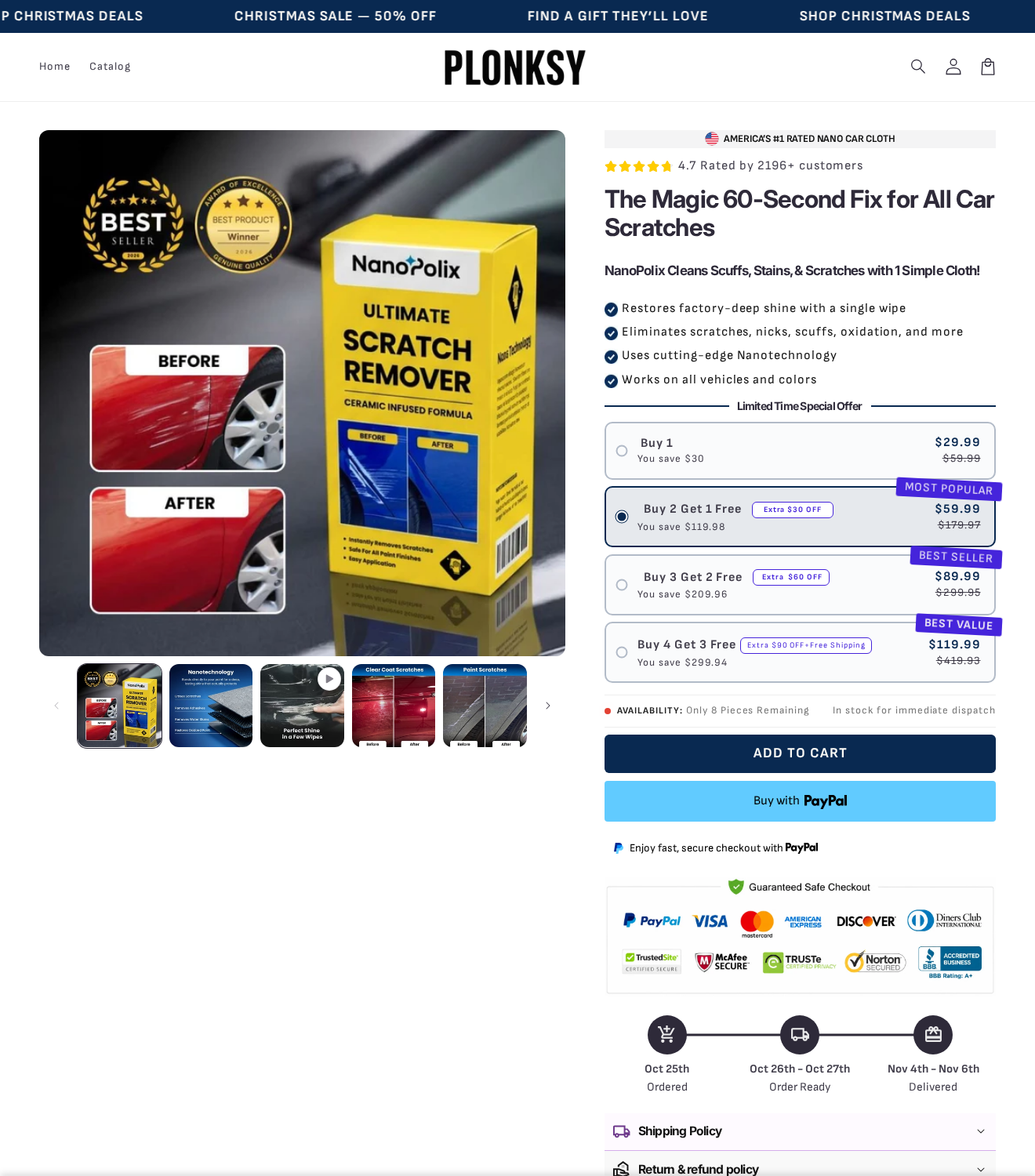
The Plonksy offer shows a yellow product box alongside dramatic vehicle images. It presents the cloth as an alternative to expensive professional repairs.
A separate NanoPolix-branded website expands the explanation into ceramic-infused particles and molecular repair. The same product name appears across different storefronts and promises.
That does not establish that the sites share an owner. It does make the exact seller and terms of your order important.
Light marks and missing paint are different problems
A legitimate polishing product can improve some surface defects. That does not mean a cloth can rebuild every damaged paint layer or repair corrosion.
The strongest concerns in these offers are specific:
- Broad promises cover damage far beyond ordinary light scuffs.
- Technical-sounding explanations are not accompanied by an identifiable product test.
- The Plonksy page initially selects a three-cloth offer, not the single cloth.
- Its return policy adds a short deadline, video requirements and discounted-goods exclusions.
Why the buying recommendation is negative
Do not buy NanoPolix on the expectation that it will erase any scratch in a minute. The advertised certainty outruns the demonstrated capability.
Some light marks may improve with suitable treatment. The trouble is being sold certainty about every scratch before its depth is even known.
No order was placed, and no evidence establishes automatic recurring charges. The visible package selection and written return barriers are enough to examine without inventing extras.
What a Scratch Remover Can Actually Change
Start with the layer that was damaged
Vehicle paint commonly includes primer, a color layer and a protective clear coat. Damage confined to the outer surface differs from a cut through the color.
3M’s scratch-removal guidance explains that its scratch-removal products address defects within the clear coat, including fine marks from washing.
That distinction is missing from a sweeping headline about all scratches. A shallow swirl and a deep key gouge should not receive the same guarantee.
Paint transfer is another possibility. Material left by a different object may look severe while sitting mainly on top of the finish.
Removing that transfer can produce an impressive transformation. It does not prove that missing paint has grown back or that underlying metal was repaired.
Polishing is not automatically a trick
Some genuine correction products remove or refine a small amount of the surrounding surface to reduce a shallow defect. Others temporarily conceal imperfections.
It would be wrong to dismiss every successful polishing demonstration as fake. The question is what damage was present and what process changed it.
A useful demonstration would show the same clean, dry panel under consistent lighting, with the scratch depth identified before treatment.
Without that context, a glossy after-photo cannot tell you whether the product removed residue, concealed a mark or performed a durable correction.
Rust needs careful description too. A superficial stain on top of the finish is different from corrosion where the coating has failed.
A cleaner improving the first problem would not demonstrate that it repaired the second. Ask which condition the seller’s example actually shows.
Matte paint needs more than a universal safety slogan
The separate nanopolix.net page says its product is suitable for matte and satin finishes, as well as glossy paint.
Compare that with Meguiar’s ScratchX instructions, which distinguish glossy surfaces from matte and satin finishes.
That comparison does not test NanoPolix. It shows why an all-finishes claim needs credible, product-specific instructions rather than a blanket assurance.
If your vehicle has matte paint, a wrap or a specialist coating, ask the relevant manufacturer or installer before applying an unfamiliar treatment.
How the NanoPolix Sales Funnel Works
Step 1: Lead with the repair bill you want to avoid
The offer emphasizes body-shop costs, inconvenience and embarrassment about visible damage. The cloth then appears inexpensive beside a much larger repair bill.
But those prices may describe a different job. A body shop might be repainting damaged layers that a polishing cloth never claims to replace in detail.
Compare products intended for your actual defect. Otherwise, a low price can distract from the fact that you are buying the wrong kind of repair.
Step 2: Present product artwork as performance evidence
The packaging and page show scratches disappearing into a smooth finish. Award-style graphics and customer ratings surround the demonstration.
Those elements make the result look established before you reach the technical explanation. They remain marketing material unless supported by a traceable assessment.
A decorative award needs a named issuer and relevant criteria. A rating displayed by a seller is not an independent paint-repair test.
Step 3: Explain the miracle with nano terminology
The NanoPolix-branded page describes particles filling gaps and bonding with clear coat. It then credits a ceramic layer with protection against future damage.
These are separate claims: improving appearance, permanently rebuilding a defect and preventing later scratches. Success at one would not automatically establish the others.
The page’s own limitation about damage reaching bare metal narrows its much broader opening. Read that limit before treating the headline as a promise.
Step 4: Make a bundle the natural next click
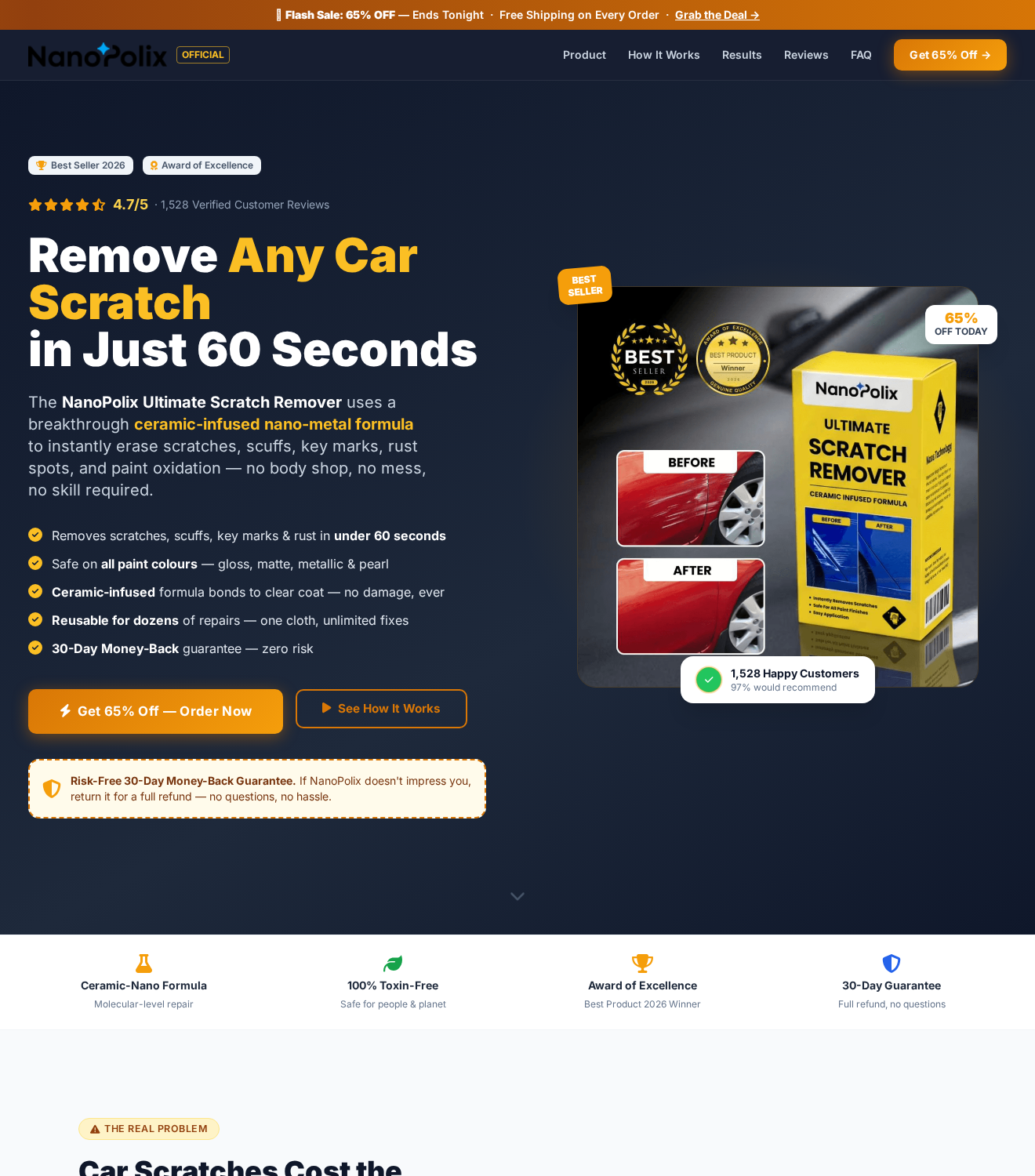
The loaded Plonksy offer selects the buy-two-get-one-free option at $59.99. The single-cloth option is displayed at $29.99.
A larger package is not automatically an unauthorized sale. It becomes a problem when shoppers believe the prominent price or button represents one item.
Check the selected circle, quantity and full total. The seven-cloth option costs $119.99, even though its per-cloth arithmetic may look more attractive.
Three cloths for $59.99 work out to about $20 each. That is the unit comparison, not the amount your card would be charged.
The crossed-out bundle values also use a higher reference price than the current single-cloth offer. Compare actual available packages, not only the largest displayed saving.
The visible default establishes a preset. It does not establish that a customer ordering one cloth later receives or pays for extra units without consent.
Step 5: Leave the refund conditions for another page
The ordering experience emphasizes savings and quick results. The return policy asks for far more effort if the cloth fails to match expectations.
Those conditions matter before the package arrives. One requirement concerns filming the opening, something you cannot honestly recreate after unboxing.
Do not let a large discount or a remaining-stock message rush you past the part explaining how a dispute would actually be handled.
NanoPolix Sellers, Contacts and Return Responsibilities
The product name does not identify your merchant
The Plonksy contact page names Plonksy and gives a Wyoming address. Its footer identifies PUISSANCE PTE. LTD. and an address in Singapore.
A separate NanoPolix-branded domain is another purchase route, not automatically the same contract. Match the receipt to the seller that actually took your payment.
Do not send a refund request to whichever NanoPolix page ranks first in search. Another storefront’s guarantee may not cover your order.
Published addresses are not a confirmed return destination
Plonksy lists 30 N Gould St, Suite N, Sheridan, Wyoming. Its footer gives 420 North Bridge Road, #04-28, Singapore.
These entries do not, by themselves, identify a factory, stockroom or authorized returns desk. The policy requires instructions from support.
Posting the cloth to an address found in a footer could leave you without a valid return. Obtain the destination and authorization together.
Support details do not consistently match the store name
The contact page lists 0981981498, while the footer publishes +1 307 395 6166. The email used in its return policy is support@sarsence.com.
The different email domain deserves explanation, but it is not proof that nobody answers. No telephone call or support message was sent for this investigation.
Keep your communication attached to the order number and ask support to confirm that it handles the exact Plonksy purchase.
What is actually inside the treatment remains important
A reusable cloth can contain a treatment as well as fabric. Buyers need handling instructions, compatible surfaces and a clear account of the active material.
A claim that a formula is non-abrasive or harmless needs more support than a badge. Request the applicable safety information before extensive use.
No manufacturing-country conclusion or independent composition test is established here. Similar yellow packaging alone cannot identify a common factory.
The Plonksy Return Policy Is Much Tougher Than the Pitch
A 10-day request window
The Plonksy refund policy requires a request within 10 days of arrival. Waiting through weeks of experimentation could therefore be costly.
The same policy discusses unused goods, then narrows refund and replacement situations to defects, damage, incorrect items and other specified problems.
A cloth that arrives intact but fails to erase your particular scratch may become a disagreement about performance rather than obvious transit damage.
An unboxing video and a sale exclusion
The policy asks for photos and a continuous video showing the package being opened, with no pauses or edits. Missing evidence may lead to rejection.
It also excludes discounted goods while the product page promotes discounted packages. Ask whether that exclusion applies to the exact package before ordering.
For eligible ordinary returns, buyers pay postage. The policy makes an exception for seller error, such as defective or incorrect goods.
These are the seller’s published conditions, not a ruling that every condition overrides your local consumer rights or payment-provider protection.
One seller’s guarantee cannot repair another’s policy
The separate NanoPolix website advertises 30 days and a much easier refund. Its own text varies between returning the item and needing no return.
That inconsistency needs clarification too. It cannot be used to promise a Plonksy customer a longer deadline or automatic no-return refund.
Save the exact offer you purchased. A product name shared between pages is not a substitute for the terms attached to your transaction.
What to Do If You Bought NanoPolix
-
Identify the storefront before doing anything else. Open your confirmation and record the domain, payment merchant, package quantity and total charged.
If you expected one cloth but the confirmation shows three, request a correction immediately. Preserve the original offer and explain the quantity mismatch accurately.
-
Document the parcel before using the cloth. Keep the shipping label and product instructions. Where practical, film the unopened parcel and its contents continuously.
Never fabricate an unboxing video after the event. If you lack one, explain that honestly and provide the photographs and records you do have.
-
Do not chase the advertised result with increasing pressure. Stop if the finish changes, residue appears or the mark does not improve as expected.
A detailer can help identify whether the defect is paint transfer, clear-coat damage or something deeper. Protecting the finish matters more than proving the advertisement right.
-
Request your remedy within the relevant deadline. For a Plonksy order, write to support@sarsence.com promptly and refer to the 10-day request period.
Describe the actual issue and requested outcome. Obtain the return address, postage responsibility and refund calculation before sending the product away.
-
Challenge a misleading promise with the promise itself. Attach the specific performance statement and explain how your experience differs, without embellishing the damage.
For example, an undelivered parcel and a disappointing scratch treatment require different records. Include tracking for one and clear panel photographs for the other.
-
Ask your payment provider about unresolved problems. Bring the receipt, correspondence and delivery evidence. Ask which dispute category and deadline fit the transaction.
A refund is not guaranteed, and product-quality disputes can follow a different process from billing errors. Accurate records give the provider something useful to assess.
Frequently Asked Questions
Is NanoPolix Scratch Remover a proven scam?
The offers contain sweeping performance claims and material buying risks. That warrants avoiding the advertised repair promise, without asserting that every seller commits fraud.
Can a cloth remove a car scratch?
Some treated cloths or polishing products can improve suitable surface marks. A scratch through deeper paint layers is a different repair problem.
Does the Plonksy page default to one cloth?
The captured offer selected three cloths for $59.99. A single-cloth choice was available separately, so check the selected package rather than assuming one unit.
Are Plonksy and nanopolix.net the same company?
Common ownership was not established. Their use of the same product name does not make their prices, support channels or guarantees interchangeable.
Should I use NanoPolix on matte paint?
Do not rely on a universal safety claim. Obtain guidance specific to your paint or coating before applying an unfamiliar repair treatment.
Does NanoPolix create a monthly subscription?
No recurring enrollment was verified. A multi-cloth bundle is an immediate quantity choice, not evidence of later automatic refills.
The Bottom Line
Skip NanoPolix Scratch Remover if you are buying the promise of erasing every scratch in 60 seconds. Match the repair to the actual damage instead.
Already paid? Identify your merchant, preserve the advertising and seek a remedy promptly. Plonksy’s short return window makes waiting an especially poor strategy.

Join the discussion
0 commentsShare your experience or ask a question about this article.
Discussion
Start the conversation
Have a question or something useful to share? Add the first comment.