


An investment email arrives with a familiar bank name, a polished bond summary, and an adviser ready to explain the next step. It looks reassuringly ordinary.
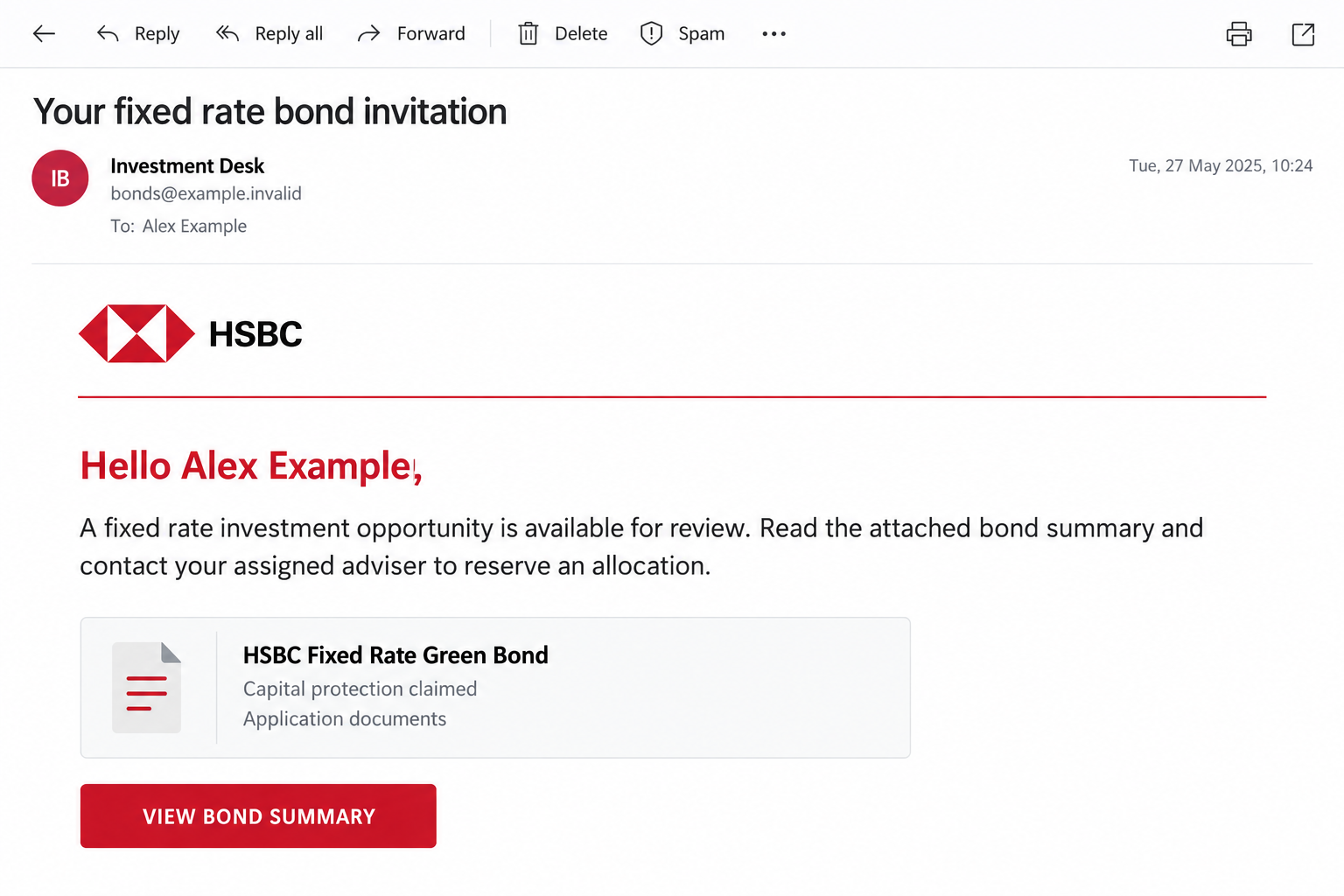
Before treating that invitation as a banking relationship, look at who supplied it. The illustrated email uses fictional details, not a real customer’s correspondence.
Overview
The offer borrows a bank’s reputation
The HSBC fixed rate bond scam involves criminals posing as bank or investment staff to sell an investment that does not exist.
HSBC’s name is the disguise, not the perpetrator. A message can mention a genuine bank, department, or employee while directing your money somewhere entirely different.
The approach may arrive by email, message, or phone. What matters is whether the person offering the investment actually represents the organization they name.
Official warnings identify the impersonation
HSBC’s scam warnings describe supposed Wealth, Premier, and Private Bank staff promoting bonds with attractive returns and claims of protection.
HSBC Asset Management also warns about bogus investment products, copied literature, and false contact details. Its examples include a supposed fixed rate green bond.
These warnings concern fraudulent offers using HSBC’s identity. They do not mean every bond, fixed rate product, or environmental investment is fraudulent.
The payment destination matters more than the brochure
A convincing document can make an unfamiliar payment instruction feel like the last routine step. Treat that instruction as a new question, not a formality.
- Confirm the investment through contact details obtained independently.
- Check the firm and its permissions, not just whether its name appears on a document.
- Don’t send money while the supposed adviser’s identity remains unresolved.
- If a transfer has already been made, contact the sending bank immediately.
The safest response to this impersonation is to stop the transaction. You can investigate a genuine opportunity without continuing the stranger’s conversation.
Why the Bond Story Can Pass an Initial Check
A familiar institution makes the paperwork easier to trust
A bank name supplies context before you’ve checked anything. You may already recognize its branches, website, advertisements, or investment business.
That familiarity can shift your attention toward the proposed return and away from the more basic question of who is speaking to you.
A brochure may contain accurate background information copied from public material. Finding one correct fact doesn’t authenticate the payment instructions beside it.
Someone can describe a real organization while falsely claiming to work for it. The authentic background becomes part of the sales pitch.
Protection language can hide the identity question
Terms such as fixed rate, green bond, or capital protection can sound careful and conservative. None establishes that the sender has authority to accept your investment.
Before comparing terms, establish who would receive the money. A convincing product description won’t tell you whether this adviser really works for the bank.
If the discussion keeps returning to the attractive rate whenever you ask about verification, notice that change of subject. The identity check still needs an answer.
How the HSBC Bond Scam Works
Step 1: A supposed bank adviser introduces an opportunity
The approach places the sender inside a familiar institution. A department name, professional signature, or reference to private banking makes the conversation appear established.
The recipient may be an existing customer or someone who has never banked with HSBC. Recognition of the brand is enough to start the conversation.
Being approached isn’t an obligation to continue. Don’t let politeness turn an unsolicited message into a relationship you feel you must preserve.
Step 2: Investment documents make the proposal look researched
The supposed adviser supplies literature describing the opportunity. HSBC warns that scammers can use copied materials, fake signatures, and genuine employee photographs.
Those features encourage the reader to evaluate the investment as though the provider’s identity has already been settled.
But the document is coming from the same person whose authority needs checking. More paperwork from that source is not independent confirmation.
Ask yourself what you would know if you removed the logo. A name, a rate, and a contact number still need verification.
Step 3: Real firm details are mixed with false contact details
A clone firm uses information belonging to a legitimate business to make the impersonation harder to spot. The real organization is not connected to the clone.
The FCA specifically identifies hsbcfixedincome[.]com as a clone impersonating HSBC Bank Plc. It distinguishes the fraudulent operation from the authorized bank.
A real firm’s reference number or office address can therefore appear inside an unsafe offer. Looking up only the name may give you false reassurance.
The crucial comparison is between independently obtained contact details and the person communicating with you. Don’t use the brochure’s number to authenticate its author.
Step 4: The investment decision becomes a transfer instruction
Once the proposal feels credible, the request moves toward personal information and payment. The apparent adviser asks you to proceed with the investment.
This is the point to stop if the identity remains uncertain. A completed application does not oblige you to transfer funds to an unverified recipient.
Don’t solve an unexplained mismatch by accepting another explanation from the same contact. Take the details to your own bank and the genuine institution.
Nor should a deadline decide the question for you. Missing an allocation is preferable to sending savings to someone whose authority you cannot establish.
Step 5: The victim expects investment records instead of a fraud problem
After payment, you may expect confirmation, interest information, or account access. Waiting for those records can postpone the more urgent conversation with your bank.
If you discover the impersonation, stop discussing additional payments with the supposed adviser. A demand for another fee is not a reason to send more.
Save the original instructions and contact the sending provider. Explain that the transfer was induced by someone impersonating a bank or investment firm.
Wealth Desk, Firm Identity, and Contact Checks
A department name is not evidence of employment
Wealth, Premier, and Private Bank sound like specific places inside an institution. In an unsolicited message, they are still claims made by the sender.
Check the person and proposed product through the genuine organization’s established channel. Don’t rely on a profile or signature supplied as part of the pitch.
A copied reference number does not authorize the caller
The FCA’s clone-firm guidance explains that fraudsters can copy a genuine firm’s name, address, and firm reference number.
Use the FCA Firm Checker independently to check authorization, relevant permissions, and listed contact details. A matching name alone leaves the impersonation question unanswered.
An impressive address does not identify the payment recipient
A brochure can print the address of a real bank. That doesn’t establish that the person collecting an application or supplying transfer details works there.
Keep the identities separate: the institution named in the document, the contact giving instructions, and the recipient of your payment.
They need a verified connection. Don’t fill that gap yourself because the presentation looks consistent.
Genuine support should be reached outside the sales conversation
Open the bank’s official website yourself or use contact details from your existing banking records. Ask about the specific offer, not merely whether the institution exists.
Don’t let the supposed adviser transfer you to a second person as the only verification. Both contacts may belong to the same false process.
A Practical Pause Before Sending Savings
Put the proposed transfer aside while you verify. That means not making a small test investment, paying a reservation fee, or sending additional identity documents.
A small payment doesn’t prove that a larger one will be safe. It also doesn’t answer whether the supposed adviser represents the bank.
Write down the product name, the contact’s claimed role, and the proposed recipient. Ask the genuine institution whether those details belong together.
If you receive a bank warning during payment, don’t work around it or let the caller tell you how to describe the transaction.
You should be able to tell your bank exactly why you are transferring money and who instructed you. Secrecy makes a difficult situation harder to evaluate.
It can help to show the proposal to someone you trust. Give them the original documents, but don’t include passwords or ask them to open suspicious links.
A second reader isn’t a substitute for official verification. They can, however, help you notice unanswered questions when the sales conversation has become persuasive.
Why a Protection Claim Needs a Second Look
The genuine bank’s status doesn’t cover an impersonator
A sales document may mention regulation or compensation as though those protections travel with the logo. They don’t establish a relationship with the person collecting your money.
The FCA’s warning about this clone says dealing with it does not provide access to the Financial Ombudsman Service or Financial Services Compensation Scheme.
That warning is about the fraudulent operation, not a judgment that the genuine HSBC business lacks authorization. Keep those two entities separate when reporting the approach.
Nor does a real firm’s authorization automatically answer every product question. The relevant permissions and the actual service being offered still matter.
A fraud claim is different from a promised investment guarantee
If you were deceived into making a bank transfer, ask the sending provider about the payment’s protections. That’s different from asking the fake adviser to honor a bond.
Don’t abandon a report because the clone isn’t regulated. The payment route may involve separate rules that your bank needs to assess.
Equally, don’t read reimbursement guidance as permission to take a chance. A disputed payment can create substantial uncertainty, delay, and work even when protections may apply.
Record the transfer method and recipient accurately. Those details help the provider identify the right process instead of treating every investment-related problem as the same kind of claim.
What to Do if You Have Fallen Victim to This Scam
- Contact the bank that sent the payment.
Use your banking app or the number on your card. Explain that you were deceived into paying someone impersonating HSBC, and give the transfer details.
Ask what steps can be taken to trace or recall the payment and protect the account. Don’t wait for the supposed investment to mature.
- Describe the payment accurately.
If you approved the transfer because of deception, explain that distinction. Don’t describe it as a normal investment dispute or invent an unauthorized login.
The Payment Systems Regulator explains UK APP-fraud protections. Eligibility depends on the payment and circumstances; ask your provider what applies rather than assuming recovery is guaranteed.
- Stop further payments and document requests.
Do not send another transfer to activate the bond, release returns, or arrange a refund. Keep communications for evidence, but stop negotiating with the impersonator.
If you gave account credentials or security codes, tell your bank. Those exposures need attention in addition to the transfer itself.
- Preserve the complete paper trail.
Save emails, brochures, messages, payment instructions, recipient details, and timestamps. Keep the original files rather than replacing everything with cropped screenshots.
Make a brief timeline showing when the offer arrived, what was promised, and when you paid. Note any warnings or changes in payment instructions.
- Notify the genuine institution and the relevant authorities.
Use HSBC’s independently opened official channels to report misuse of its identity. Do not contact a reporting address supplied by the supposed adviser.
UK readers can report through Report Fraud and notify the FCA about a suspected clone. Elsewhere, use your local fraud-reporting route.
- Follow up on the bank’s decision.
Ask for the case reference, any evidence needed, and the complaint process. Keep written responses together with the payment records.
The PSR directs individual victims to their payment provider first. It also identifies the Financial Ombudsman Service as a possible escalation route.
- Be cautious about anyone offering guaranteed recovery.
A stranger who knows about the loss may still be another scammer. Don’t pay an unsolicited recovery fee or disclose online banking access.
The FCA warns about recovery-room scams targeting people after investment losses. Use established reporting and banking channels instead of a new private arrangement.
Frequently Asked Questions
Does this mean HSBC is operating the scam?
No. Criminals are impersonating the bank or its investment staff. HSBC and the FCA have issued warnings distinguishing fraudulent contacts from genuine organizations.
Are all HSBC fixed rate or green investments fake?
No. The concern is the specific impersonated offer. A genuine financial product’s name doesn’t authenticate the person contacting you about it.
Why does the brochure contain a genuine reference number?
Clone firms can copy public regulatory information. Compare independently obtained contact details and confirm the actual offer, rather than trusting the number printed in the brochure.
Is an unfamiliar email address enough to prove fraud?
It is a reason to verify, not a complete identity investigation. In this case, official warnings identify specific false addresses and a documented impersonation mechanism.
Should I send a small amount to test the adviser?
No. A test payment exposes money without verifying authority. Contact the genuine institution and resolve the identity and product questions before sending anything.
Can my bank guarantee the money will be returned?
No universal guarantee applies. Report the deception promptly, ask which payment protections cover your case, and follow the provider’s evidence and complaint procedures.
The Bottom Line
Do not invest through an unsolicited HSBC bond offer until the genuine institution independently confirms it. Copied branding, regulatory details, and polished documents cannot authorize an impersonator.
If you already transferred money, contact the sending bank now. Preserve the instructions and report the deception without paying another fee to the supposed adviser.

Join the discussion
0 commentsShare your experience or ask a question about this article.
Discussion
Start the conversation
Have a question or something useful to share? Add the first comment.