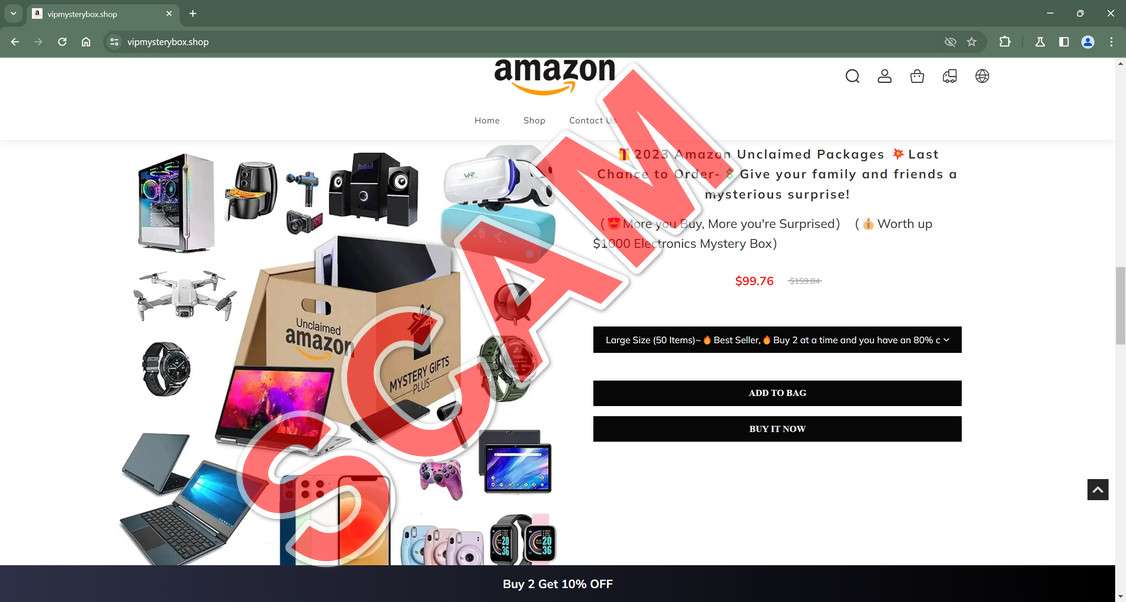
What if you could buy a mystery box packed with iPhones, PS5 consoles, smartwatches, and other high-end gadgets for just $29? That’s the irresistible promise behind the “Amazon Mystery Box” offers flooding Facebook, TikTok, Instagram, and Google ads. The sites look polished, the branding mimics Amazon, and the deals sound too good to pass up. But there’s a catch: it’s a scam—and it’s growing fast.
This in-depth guide exposes how the Amazon Mystery Box Scam works, the tactics scammers use, how to recognize fake websites, and what to do if you’ve already been targeted.
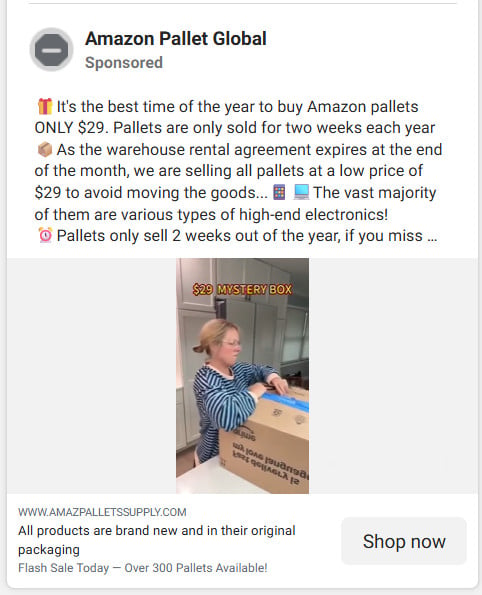
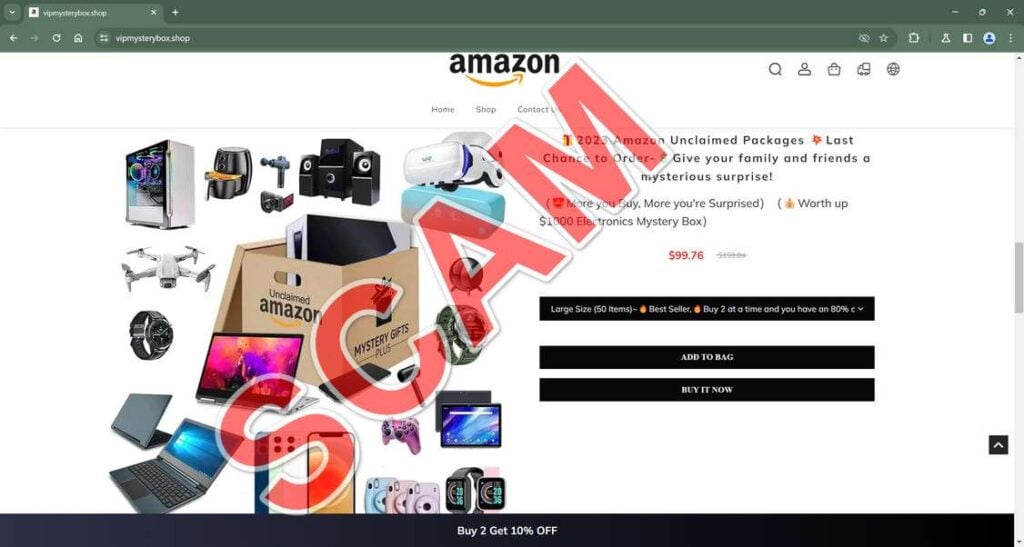
Scam Overview
The Amazon Mystery Box Scam is an elaborate online fraud scheme designed to mimic legitimate Amazon promotions. Scammers promise mystery boxes or “warehouse return pallets” allegedly filled with high-value electronics at suspiciously low prices—often $29 to $59. The sites use stolen Amazon logos, fake reviews, countdown timers, and fabricated testimonials to create the illusion of credibility.
A familiar hook: “Prime Day” and “Warehouse Clearance”
These scams typically appear during major shopping seasons or events like Prime Day, Black Friday, or holiday sales. Ads often contain lines like:
- “Amazon Mystery Box – $29 Mega Clearance Event”
- “Warehouse Return Pallets – iPhones, PS5, Laptops Inside!”
- “80% OFF – Last Chance Before It’s Gone.”
The language is deliberately urgent and emotionally charged, encouraging impulse buying without time to verify the site.
Professional-looking websites built to deceive
Fraudulent websites behind these offers are often designed to resemble legitimate Amazon pages. They use:
- Amazon’s colors and logos
- Fake “Prime Day” banners
- AI-generated customer reviews
- Simple one-page checkout processes
Examples of previously reported fake sites include:
- amaclearbox.com
- amatreasurepallets.com
- amazpalletssupply.com
- amareturnpalletx.com
These domains are typically registered only days or weeks before launching ad campaigns. Once they attract enough victims, scammers abandon the site and launch a new one.
Fake social proof is part of the deception
Scammers know that trust drives conversions. That’s why these fake mystery box websites are filled with:
- 5-star customer reviews
- Photos of happy “customers” opening boxes of iPhones or laptops
- Comment sections on ads with identical positive messages
The videos and images used are usually stolen from legitimate YouTube unboxing videos or stock footage libraries, not from real customers.
Why people fall for it
The scam is effective because it targets basic psychological triggers:
- Scarcity: Countdown timers and “only 3 boxes left” messages push quick decisions.
- Greed or opportunity: People hope to score high-value electronics at a fraction of the price.
- Trust in Amazon: Many victims assume the deals are legitimate because Amazon is a well-known and trusted brand.
Not an isolated scam
The Amazon Mystery Box Scam is part of a much larger network of fake e-commerce operations. Similar tactics have been used to push “Walmart clearance boxes,” “Target surprise deals,” or “Apple mystery pallets.” The common thread is always the same: low prices, fake urgency, stolen branding, and nonexistent products.
This scam has been also investigated by Jordan Liles on his YouTube channel, where he offers a detailed video on the subject. We recommend watching his content for a comprehensive understanding of the scam.
Next, let’s break down exactly how scammers carry out this scam from start to finish.
How the Scam Works
Understanding how the Amazon Mystery Box Scam unfolds is key to spotting it early. While details may vary slightly from site to site, most follow a predictable funnel designed to look legitimate at every step.
Step 1: The Fake Ad
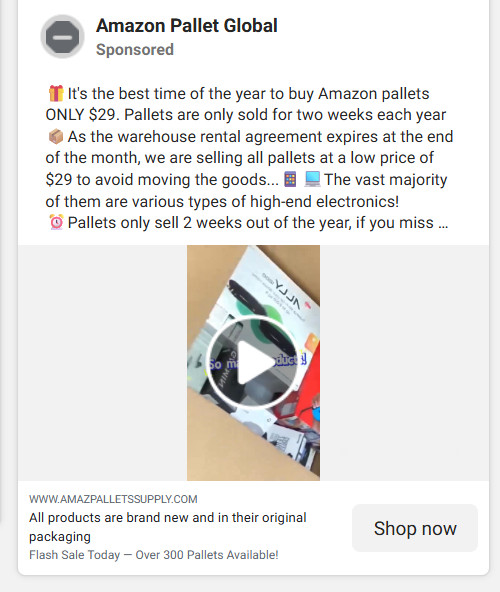
The scam begins with targeted ads on major platforms like Facebook, Instagram, TikTok, and YouTube. These ads use slick promotional videos and headlines like:
- “Amazon Clearance Event – Mystery Boxes Only $29”
- “Prime Day Warehouse Liquidation – Limited Stock!”
- “Surprise Electronics Box – Worth $1000+.”
The videos show people unboxing iPhones, gaming consoles, and laptops, but the footage is stolen or staged. The scammers use social media ad systems to target bargain hunters, seniors, and impulse buyers.
cStep 2: Redirect to a Fake Website
Clicking the ad leads users to a fraudulent website designed to mimic Amazon’s branding. This site usually includes:
- Amazon logo and orange color scheme
- A “Prime Day” or “Clearance Event” banner
- A fake timer counting down from 10 or 15 minutes
- Mystery box “categories” like Electronics Box, Apple Box, or Mixed Box
It looks professional enough to fool most visitors, especially those who don’t check the URL.
Step 3: Fake Reviews and Testimonials Build Trust
On the product page, visitors see dozens of glowing “reviews”:
- “I got an iPhone and a PS5 for $29. Unbelievable!”
- “Fast shipping and real products. Highly recommend.”
- “Best deal ever.”
The names and faces are fake, often generated with AI or copied from other sites. This fake social proof is one of the most effective hooks in the scam.
Step 4: Easy Checkout Process
Victims are encouraged to act fast:
- “Only 5 boxes left”
- “Offer ends in 00:09:59”
- “This deal is only available today.”
The checkout process is deliberately simple, requiring just an email, shipping address, and payment method. Red flags often appear here:
- No PayPal option (because PayPal allows easy disputes)
- Unfamiliar payment processors
- No company address or terms of service
- Vague or missing refund policies
Step 5: Payment Is Collected
Once payment is submitted, scammers get access to:
- The victim’s credit card details
- Personal information like name, email, phone number, and address
Victims usually receive an auto-generated confirmation email with a fake tracking number or shipping notice. This gives the impression the order is legitimate.
Step 6: Fake Shipping or Junk Package
After payment, one of three things typically happens:
- No package arrives at all. The website goes offline within weeks.
- A cheap trinket is sent, like a phone case or cable, to create a fake “proof of delivery.”
- A fake tracking number leads to a bogus logistics page that never updates.
This is designed to delay complaints and chargebacks, giving scammers more time to disappear.
Step 7: Website Disappears or Rebrands
Once the scam site is reported or flagged by payment processors, the scammers shut it down and launch a new domain under a different name. This is why dozens of nearly identical mystery box websites exist at any given time.
How to Spot the Amazon Mystery Box Scam on Social Media
Social media platforms like Facebook, Instagram, TikTok, and YouTube are the main engines driving the Amazon Mystery Box Scam. Scammers rely on sponsored ads, stolen videos, and fake urgency to grab attention fast. Fortunately, once you know what to look for, these scam ads become easy to recognize.
Here are the most common warning signs and examples to help you spot them before it’s too late.
1. Ads Promising Unrealistic Deals
The biggest red flag is the unbelievable price. You’ll often see ads claiming:
- “Amazon Mystery Box — Only $29.99!”
- “iPhone, PS5 or Laptop Inside — Guaranteed!”
- “Final Clearance: $1000+ Value Mystery Box for $29.”
These offers are designed to make you act on impulse. Real Amazon liquidation sales do not work like this, and no legitimate retailer guarantees luxury electronics in a cheap “mystery box.”
Example:
An ad showing someone opening a box with an iPhone and AirPods inside, with a caption like “I can’t believe I got this for $29. Limited offer — only 3 boxes left!”
2. Pages with Suspicious or Generic Names
Legitimate Amazon ads come from verified accounts. Scam ads usually come from pages with:
- Misspelled names (e.g., “Amazn Pallets Dealz”, “AmazonBoxClear”)
- Generic names like “Mystery Pallet Store”, “Prime Deals 2025”
- No verification badge, few followers, and a recently created page.
Example:
A Facebook page called “Amazon Clearance Prime Store” with only a handful of posts and a creation date from a few weeks ago.
3. Stolen Videos and Recycled Content
Scam ads often use the same unboxing videos repeatedly across different pages and countries. These clips are stolen from legitimate YouTube channels or stock footage sites. If you reverse image search or look closely, you’ll notice the same video used by multiple “stores.”
Example:
A TikTok ad shows a man unboxing a PS5 with the text overlay “Amazon Mystery Box Delivery”. The same clip appears in dozens of ads from different pages claiming to be “official” sellers.
4. Urgency Tactics and Countdown Timers
Scammers push you to act fast by using fake scarcity:
- “Only 5 boxes left.”
- “Offer ends in 09:59.”
- “Last chance today!”
This is a psychological trick to discourage you from verifying the offer.
Example:
An Instagram ad with a big red banner reading “Final Prime Day Blowout – Ends in 10 minutes” and a countdown timer, even though the same ad runs all week.
5. Comment Sections Filled with Fake Testimonials
The comments under scam ads are often full of fake excitement. You might see repeated posts like:
- “Just got mine — iPhone inside!”
- “Fast shipping. Best deal ever!”
- “Didn’t believe it at first but it’s real!”
Many of these accounts are bots or stolen profiles. If you click their profiles, they’re often newly created or empty.
Example:
A Facebook ad with 200 comments, most saying the same 2–3 sentences and using stock profile photos.
6. Links That Don’t Lead to Amazon.com
Scam ads will never link to Amazon directly. Instead, they use URLs like:
- amaclearbox.com
- amatreasurepallets.com
- amazpalletssupply.com
- palletclearanceevent.com
These websites mimic Amazon branding but are fake. If the URL doesn’t contain “amazon.com” or another official liquidation partner, it’s a scam.
Example:
A Facebook ad links to www.amaclearbox.com/mysterybox instead of www.amazon.com.
7. Poor Grammar or Awkward Language in the Ad Text
Legitimate Amazon ads are written professionally. Scam ads frequently include:
- Grammar errors
- Awkward phrasing
- Overuse of capital letters and exclamation marks
Example:
“GET YOUR MYSTERY BOX TODAY!!! VALUE IS OVER $1000!!! ONLY 29$ FASTLY SHIPPING!!!”
8. No Verified Badge or Official Branding
Real Amazon accounts on Facebook, Instagram, and TikTok have a verified blue checkmark. Scam pages never do. Their logos may look similar, but they’re not linked to the real Amazon profile.
Example:
A TikTok page named “Amazon Official Mystery Box” without a verified badge, created last month, posting only ads.
9. Repeated Ads from Different Pages with the Same Video
Because scammers constantly rotate domains and accounts, you may see the same ad multiple times from different page names. This is a strong indicator that the ad is part of a coordinated scam network.
Example:
The same “woman opening a mystery box” video appears from three different pages: PrimeClearance2025, Amazon Pallet Rush, and Best Deal Box.
10. Lack of Genuine User Engagement
If an ad looks popular but the engagement feels too clean or repetitive, it’s likely fake. Legitimate promotions usually have mixed comments, questions, and complaints. Scam ads, on the other hand, feature only glowing “reviews” and generic praise.
Example:
An ad with hundreds of comments, but not a single person asking about shipping, refunds, or product details—a clear sign something is off.
How to Spot a Fake Amazon Mystery Box Website
Even if you click through an ad, spotting a scam website is often easy once you know the warning signs. These fake pages are designed to look like Amazon, but small details usually give them away.
1. Suspicious Domain Name
Scam sites use URLs like amaclearbox.com or amazpalletssupply.com—not amazon.com. They often add extra words like “box,” “pallet,” “clearance,” or “prime.” A legitimate Amazon deal will never be hosted on a separate domain.
2. Unbelievable Prices
Mystery boxes promising iPhones or PS5 consoles for $29 are a clear scam. Real Amazon liquidation pallets cost hundreds of dollars and are sold through official B2B channels, not random discount pages.
3. Poor Branding and Fake Logos
The layout may look similar to Amazon at first glance, but logos are often blurry or slightly off. Fake “Prime Day” banners and countdown timers are another red flag.
4. No Real Contact Information
Scam sites rarely list a physical address or valid support number. They often use generic Gmail addresses or have only a broken contact form.
5. Shady Payment Options
Most scam sites don’t offer PayPal. Instead, they push credit or debit card payments through unfamiliar processors. The checkout page may also lack proper HTTPS security.
6. Recently Created Domains
These websites are often less than a month old. A quick WHOIS lookup or Google search with the domain name and “scam” usually reveals warnings from other victims.
Bottom line: If the URL isn’t Amazon, the price is too good to be true, and the contact information is vague or missing—close the site immediately.
What to Do If You Have Fallen Victim to This Scam
If you’ve already placed an order or entered your payment details on one of these fake Amazon Mystery Box websites, acting fast is crucial to minimize the damage. Follow these steps carefully:
1. Contact Your Bank or Credit Card Provider Immediately
- Report the transaction as fraudulent.
- Ask for a chargeback or dispute the charge.
- If necessary, cancel or freeze your card to prevent further unauthorized charges.
2. Monitor Your Financial Accounts
- Check recent transactions for anything unfamiliar.
- Set up alerts for future suspicious activity.
- Be cautious of any follow-up phishing attempts.
3. Report the Scam Website
- Amazon: https://www.amazon.com/report (impersonation reporting)
- FTC (U.S.): https://reportfraud.ftc.gov
- IC3 Internet Crime Complaint Center: https://www.ic3.gov
- Local consumer protection agencies in your country
Reporting the site helps authorities track the network and prevent further victims.
4. Change Your Passwords
If you used the same email or password elsewhere, change them immediately.
Enable two-factor authentication (2FA) on critical accounts like email, banking, and shopping platforms.
5. Report the Ad
If you saw the scam through a Facebook, Instagram, or TikTok ad:
- Click the three-dot menu on the ad.
- Select “Report Ad” → “Misleading or Scam.”
- Encourage others to report as well.
6. Educate and Warn Others
Post a warning on social media, forums, or review platforms. The more people know about this scam, the harder it becomes for scammers to profit.
Frequently Asked Questions
What is the Amazon Mystery Box Scam?
The Amazon Mystery Box Scam is a large-scale online fraud operation that claims to sell mystery boxes filled with high-value electronics like iPhones, PlayStation consoles, smartwatches, and laptops for as little as $29. These offers are advertised through social media platforms and search engines, using fake Amazon branding to appear legitimate. Victims who place orders either receive nothing, get a worthless trinket, or experience unauthorized charges on their credit cards. These mystery box websites are not affiliated with Amazon in any way.
How does the Amazon Mystery Box Scam work?
The scam usually starts with an eye-catching ad on Facebook, Instagram, TikTok, or Google. These ads use stolen videos and headlines like “Amazon Warehouse Mystery Boxes – Only $29.” When users click the ad, they are redirected to a fake website that mimics Amazon’s colors, logos, and layout. After entering personal and payment information, victims either receive a junk item or nothing at all. Scammers often provide fake tracking numbers to delay chargebacks and then shut down the site before law enforcement can intervene.
Is Amazon actually selling mystery boxes for $29?
No. Amazon does not sell mystery boxes or warehouse return pallets through random websites or social media ads. Real liquidation pallets are sold through verified liquidation platforms such as Amazon Liquidation Auctions or authorized third-party resellers. These legitimate pallets cost hundreds or even thousands of dollars, not $29.
Why do these scam sites look so convincing?
Scammers invest heavily in making their fake websites look professional. They use Amazon’s branding, stolen logos, countdown timers, fake Prime Day banners, and fabricated testimonials to mimic the shopping experience of a trusted retailer. This, combined with low prices and urgency tactics, tricks users into believing the deal is real. Many of these sites also use HTTPS encryption to appear secure, even though they’re fraudulent.
What are the warning signs of a fake Amazon Mystery Box website?
There are several clear red flags that can help you identify a scam:
- A suspicious URL that is not amazon.com (e.g., amaclearbox.com, amazpalletssupply.com).
- Unrealistic prices like $29 for electronics boxes.
- Poor-quality logos or slightly off branding.
- No real business contact information or physical address.
- No PayPal payment option, only card payments through unknown processors.
- Fake reviews that are identical across multiple sites.
- Recently registered domains, often less than 30 days old.
What happens after I place an order on a scam site?
Victims typically receive an automated order confirmation email and sometimes a fake tracking number. In some cases, scammers send a cheap item, such as a keychain or phone cable, to create fake “proof of delivery.” Other times, nothing arrives at all. Meanwhile, scammers may attempt additional unauthorized charges. The website eventually shuts down, making refunds impossible.
What should I do if I fell for the Amazon Mystery Box Scam?
Act immediately:
- Contact your bank or credit card provider to dispute the charge and block your card if needed.
- Monitor your financial accounts for any suspicious transactions.
- Report the website to Amazon, the FTC (if in the U.S.), IC3.gov, or your country’s consumer protection agency.
- Change any passwords that may have been reused and enable two-factor authentication.
- Report the original social media ad to help others avoid it.
Can I get my money back after being scammed?
In many cases, yes—if you act quickly. Contacting your bank or credit card provider and filing a chargeback is often the most effective way to recover your money. If the scammers used a traceable payment method, your chances of a refund are higher. If you used a debit card, the process may be more difficult but still possible.
Are these scams dangerous beyond losing money?
Yes. In addition to financial loss, these scams may expose your personal information to cybercriminals. Scammers can use stolen names, addresses, emails, and credit card details for identity theft, phishing attempts, or resale on dark web marketplaces. That’s why securing your accounts and reporting the scam is critical.
How can I verify if a mystery box offer is legitimate?
To verify legitimacy:
- Check the URL. Only trust amazon.com or official liquidation partners.
- Search the website name plus “scam” or “reviews.”
- Check domain registration age using a WHOIS lookup.
- Look for real business details and transparent contact information.
- Be suspicious of any offer below market value for high-end products.
Are Amazon Mystery Box scams only on Facebook?
No. While Facebook is one of the main platforms for these ads, scammers also use Instagram, TikTok, YouTube, X (formerly Twitter), and even Google search ads. Just because an ad appears on a major platform does not mean it’s legitimate. Scammers pay to promote their sites in the same way real businesses do.
How can I protect myself from similar scams in the future?
- Be skeptical of deals that sound too good to be true.
- Always check the domain and verify the seller before purchasing.
- Use payment methods with buyer protection, like credit cards or PayPal.
- Enable account alerts on your bank for suspicious charges.
- Stay informed about trending scams by checking consumer protection websites.
- Warn friends and family, especially those who might be less familiar with online shopping scams.
Why do scammers keep using Amazon’s name?
Amazon is one of the most trusted e-commerce brands in the world. By mimicking its branding, scammers exploit that trust to lower victims’ guard. This gives their fake offers credibility and makes it easier to collect payments quickly before disappearing.
What should I do if I only clicked on the ad but didn’t buy anything?
If you only clicked but didn’t enter payment information, you’re likely safe. However, you should:
- Avoid interacting further with the site.
- Clear your browser cache and cookies.
- Be alert for phishing emails or messages pretending to be Amazon.
- Report the ad to the platform so others are warned.
How can I report this type of scam?
You can report the scam to:
- Amazon Impersonation Reports: https://www.amazon.com/report
- FTC (U.S.): https://reportfraud.ftc.gov
- IC3 Internet Crime Complaint Center: https://www.ic3.gov
- Local consumer protection agencies in your country
- The social media platform where you saw the ad
Can scammers access my Amazon account if I buy from their site?
No, not directly. These fake sites are not linked to your Amazon account. However, if you use the same password on multiple sites, your account could be at risk. Always use unique passwords and enable two-factor authentication for extra security.
What’s the best way to avoid mystery box scams altogether?
The simplest rule is this: Amazon does not sell $29 mystery boxes. If you see a deal that looks unbelievable, it almost certainly is. Stick to official Amazon channels or verified liquidation partners. Always research before buying and never rush into a purchase because of fake urgency tactics.
The Bottom Line
The Amazon Mystery Box Scam is a fast-spreading online fraud that tricks shoppers with flashy ads, fake urgency, and stolen branding. Victims believe they’re buying valuable electronics for $29 but end up with junk—or nothing at all.
Legitimate Amazon promotions do not sell mystery boxes or return pallets through random websites. These scams are designed solely to steal your money and personal data.
If you’ve already fallen victim, act quickly: dispute the charge with your bank, secure your accounts, and report the scam. If you haven’t, the best protection is awareness and skepticism.
If it looks too good to be true, it almost always is.