You’ve probably seen the viral TikTok ads claiming you can earn $500 to $750 simply by reviewing mobile games for Apple. The videos show screenshots of Apple Cash balances, “payment receipts,” and smiling users who say they’ve just received money from Apple for testing games. It looks effortless — play games, leave reviews, get paid.
But here’s the truth: there is no official Apple Game Reviewer program. These ads are part of a sophisticated scam network designed to trick people into handing over personal information, completing fake offers, and sometimes even giving away their credit card details. The scammers exploit Apple’s brand trust and the appeal of quick money to reel in unsuspecting users.
In this article, we’ll break down exactly how the Apple Game Reviewer Scam works, why it’s spreading so fast, and what you should do if you’ve fallen victim.
Scam Overview
The Apple Game Reviewer Scam is a deceptive online campaign that uses social media — especially TikTok — to promote fake job opportunities. These ads claim Apple is hiring everyday users to test and review mobile games for high payouts.
At first glance, the offer seems legitimate. The ads use Apple’s name, logo, and even screenshots that perfectly mimic Apple Cash transactions. They’re designed to look professional and trustworthy, which makes them more convincing.
However, the entire concept is a fraud. Apple does not pay users to review games through TikTok or any third-party website. The scammers behind these ads are not connected to Apple or the App Store in any capacity.
The TikTok Ad Campaign
The scam starts with eye-catching TikTok videos. They often begin with a young influencer or attractive person saying something like:
“I just tried this Apple game reviewer job and got $750 Apple Cash today!”
The next clip shows a phone screen displaying an Apple Cash balance or a payment confirmation — for example, “$750 sent by Apple, September 15, 2025.” The design looks authentic: the fonts, interface, and Apple Pay logo are perfectly copied. But these are doctored screenshots created with simple editing tools.
These fake visuals are meant to trigger curiosity and a sense of urgency. Viewers are encouraged to click a link in the bio or video caption to “sign up before spots run out.” That link is the gateway to the scam network.
The Redirect Chain
Once a user clicks the link, they’re rarely taken directly to one site. Instead, the link redirects through several affiliate and reward-based URLs, such as:
1plf.mbluemandillo.com
uplevelrewards.com
rewards-giant.com
surveyjunkie.co (a cloned version of a legitimate site)
Each of these pages claims you can earn large payouts for completing “simple tasks” like playing games, reviewing apps, or answering surveys. But the entire ecosystem is fraudulent. None of the linked websites belong to Apple or have any affiliation with real survey or reward programs.
The Core Deception
The central lie of the Apple Game Reviewer scam is that Apple pays users for reviewing games. Apple does no such thing. The App Store’s reviews are public and unpaid; users leave feedback voluntarily.
The scammers twist this concept into a false job opportunity, using Apple’s credibility to draw users into their affiliate marketing scheme. They’re not paying you — they’re making money from your clicks, sign-ups, and data.
Signs the Apple Game Reviewer Offer Is Fake
There are multiple red flags that expose this scam:
Apple never advertises jobs through TikTok ads. All Apple job listings appear exclusively on Apple’s Careers page.
Unfamiliar domains. Any site ending in “mbluemandillo.com” or similar generic names is not connected to Apple.
No HTTPS encryption. Scam websites often lack proper security certificates.
Fake testimonials. The “people” claiming they got paid are fake accounts or bots.
No company contact details. There’s no verifiable email, phone number, or physical address on these sites.
Unrealistic earnings. No company pays $500+ for basic game reviews.
The Bigger Picture
The Apple Game Reviewer Scam isn’t an isolated incident — it’s part of a broader network of survey and affiliate fraud. This type of scam has existed for years, repeatedly rebranding itself under new names and companies.
Past versions have included:
“Netflix Watcher Job”
“Cash App Tester”
“Amazon Product Reviewer”
“TikTok Video Reviewer”
The structure never changes. Scammers choose a trusted brand, build fake reward pages around it, and use social media ads to reach millions of users quickly. Once one domain gets flagged or blocked, they launch a new one and continue the cycle.
This scam has first been investigated by Jordan Liles on his YouTube channel, where he offers a detailed video on the subject. We recommend watching his content for a comprehensive understanding of the scam.
Next, let’s break down exactly how scammers carry out this scam from start to finish.
How the Apple Game Reviewer Scam Works
To understand why this scam is so convincing, it helps to examine how it operates from start to finish.
Step 1: The Hook
Scammers begin by creating TikTok ads that look like personal testimonials or “life hacks.” The videos are short, casual, and relatable. The person in the video says something like:
“You can get paid to review games for Apple. I didn’t believe it at first, but I got $750 Apple Cash today!”
They show proof in the form of fake Apple Cash screenshots — all designed to make the story believable. Some ads even use voiceovers that sound like genuine reviews from everyday people.
The goal is to make you think, “If they can do it, I can too.”
Step 2: The Clickbait Link
Once you’re intrigued, the ad invites you to “sign up now” or “click the link in bio.” This link redirects to a random URL — often one that changes frequently to avoid detection.
For example:
1plf.mbluemandillo.com
appreviewsbonus.com
uplevelrewards.com
Each link leads you through a web of redirects that track your clicks and activity. Every time you land on one of these pages, the scammers earn small affiliate revenue.
Step 3: The “Sign-Up” Page
When you land on the destination page, it appears professional. The branding mimics Apple’s style: clean white backgrounds, rounded buttons, and language like “Join the Apple Review Team” or “Apply to Become a Game Tester.”
You’re asked to provide basic information such as:
Full name
Email address
Phone number
The site claims it’s “to verify your identity,” but this is where data harvesting begins.
Step 4: The “Complete Offers” Step
Once you sign up, you’re told to “complete 3–5 tasks” to unlock your Apple Cash reward. These tasks include:
Downloading apps and using them for a few minutes.
Signing up for “free trials” of subscription services.
Completing surveys.
Submitting additional information like mailing addresses or credit card details.
Each time you complete one of these actions, the scammers get paid through affiliate programs. These offers come from third-party advertising networks that reward affiliates for generating leads — and in this case, you are the lead.
Step 5: The Endless Loop
Even after completing multiple offers, users never receive payment. Instead, they see messages like:
“You’re almost done! Just one more step to unlock your reward!”
This keeps you stuck in a cycle of clicking, completing, and signing up for more offers. Meanwhile, the scammers keep earning commissions with every action you take.
Step 6: Hidden Subscription Charges
Some offers ask you to provide credit card information for “free trials.” Many of these trials automatically convert to paid subscriptions after a few days, billing you monthly without clear consent.
Victims often find small recurring charges from unfamiliar companies weeks later. Canceling these subscriptions can be difficult, especially when the company is overseas or unresponsive.
Step 7: The Aftermath
Once your personal information is collected, it’s often sold to data brokers or marketing companies. Victims start receiving:
Spam emails about unrelated promotions.
Text messages claiming new offers or rewards.
Scam calls targeting their phone numbers.
At this point, the scammers have already made their profit — and you’re left with spam, potential financial loss, and no reward.
What to Do If You Have Fallen Victim to the Apple Game Reviewer Scam
If you’ve already signed up, shared information, or completed offers on one of these scam sites, act immediately to limit the damage.
1. Stop Interacting with the Site
Close the website and do not click on any more links, surveys, or offers. Avoid revisiting the page.
2. Change Your Passwords
If you used your email address and password, change your passwords on all accounts immediately. Use strong, unique passwords and enable two-factor authentication wherever possible.
3. Monitor Your Bank Accounts
If you entered any payment information, check your recent transactions carefully. Look for:
Unauthorized charges.
Recurring payments to unknown services. Contact your bank or credit card company to report fraud and cancel your card if necessary.
4. Cancel Any Trial Subscriptions
If you signed up for a “free trial” as part of the scam, log in to the service and cancel immediately. Contact customer support to ensure no future billing will occur.
5. Run Antivirus and Security Scans
Use reliable antivirus or anti-malware software to check your device for potential threats. Some of these scam pages may run tracking scripts or download unwanted files.
Apple Support: Inform Apple about misuse of their branding.
Reporting these scams helps authorities track and shut down fraudulent domains.
7. Block Spam and Phishing Messages
If you begin receiving unwanted emails or texts, block the senders and mark messages as spam. Avoid clicking links in suspicious messages.
8. Consider Identity Protection Services
If you provided sensitive personal data (such as your address or date of birth), consider enrolling in an identity theft protection service. These services can monitor for unauthorized use of your information.
9. Warn Others
Scammers rely on volume. Share your experience with friends and family so they don’t fall for similar ads or fake job offers.
10. Stay Vigilant Online
Be cautious of any future “opportunities” that promise fast money for minimal effort. Verify all claims by searching online for reviews or scam reports before engaging.
Is Your Device Infected? Scan for Malware
If your computer or phone is slow, showing unwanted pop-ups, or acting strangely, malware could be the cause. Running a scan with Malwarebytes Anti-Malware Free is one of the most reliable ways to detect and remove harmful software. The free version can identify and clean common infections such as adware, browser hijackers, trojans, and other unwanted programs.
Malwarebytes works on Windows, Mac, and Android devices. Choose your operating system below and follow the steps to scan your device and remove any malware that might be slowing it down.
Malwarebytes for WindowsMalwarebytes for MacMalwarebytes for Android
Run a Malware Scan with Malwarebytes for Windows
Malwarebytes stands out as one of the leading and widely-used anti-malware solutions for Windows, and for good reason. It effectively eradicates various types of malware that other programs often overlook, all at no cost to you. When it comes to disinfecting an infected device, Malwarebytes has consistently been a free and indispensable tool in the battle against malware. We highly recommend it for maintaining a clean and secure system.
Download Malwarebytes
Download the latest version of Malwarebytes for Windows using the official link below. Malwarebytes will scan your computer and remove adware, browser hijackers, and other malicious software for free.
(The above link will open a new page from where you can download Malwarebytes)
Install Malwarebytes
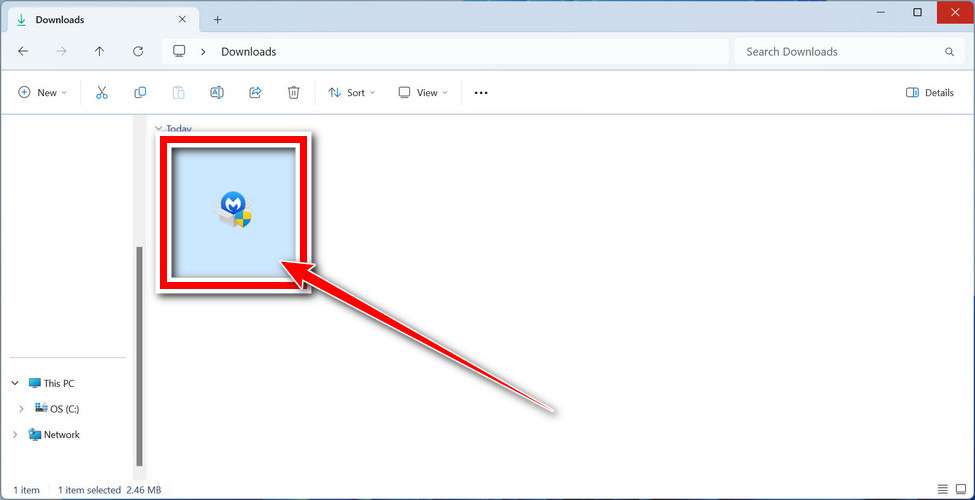
After the download is complete, locate the MBSetup file, typically found in your Downloads folder. Double-click on the MBSetup file to begin the installation of Malwarebytes on your computer. If a User Account Control pop-up appears, click “Yes” to continue the Malwarebytes installation.
Follow the On-Screen Prompts to Install Malwarebytes
When the Malwarebytes installation begins, the setup wizard will guide you through the process.
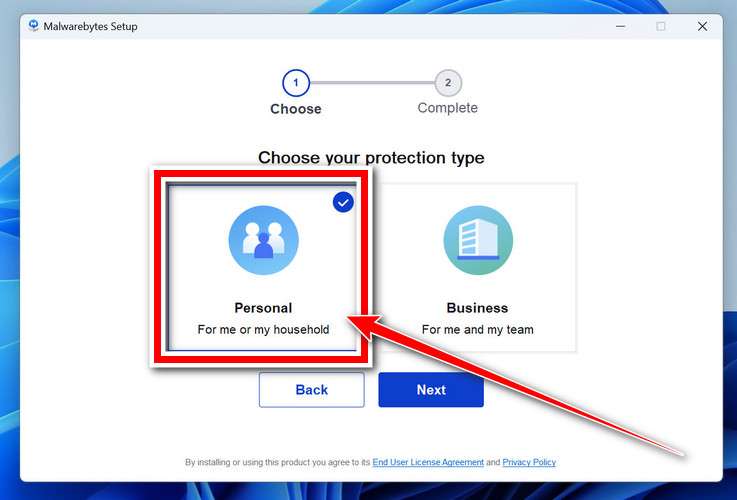
You’ll first be prompted to choose the type of computer you’re installing the program on—select either “Personal Computer” or “Work Computer” as appropriate, then click on Next.
Malwarebytes will now begin the installation process on your device.
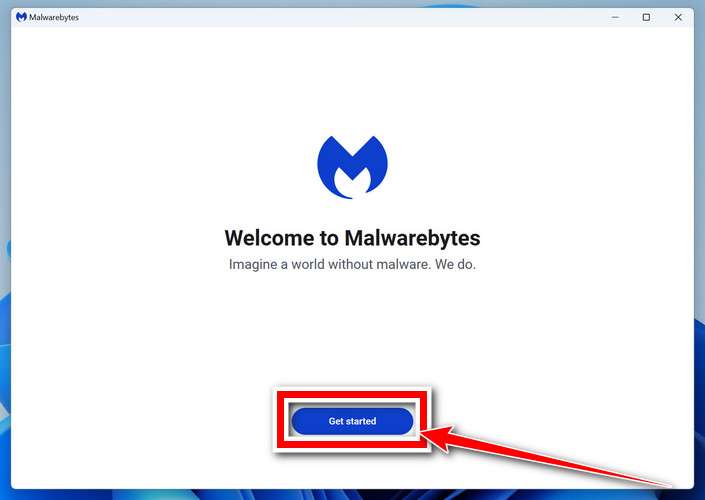
When the Malwarebytes installation is complete, the program will automatically open to the “Welcome to Malwarebytes” screen.
On the final screen, simply click on the Open Malwarebytes option to start the program.
Enable “Rootkit scanning”.
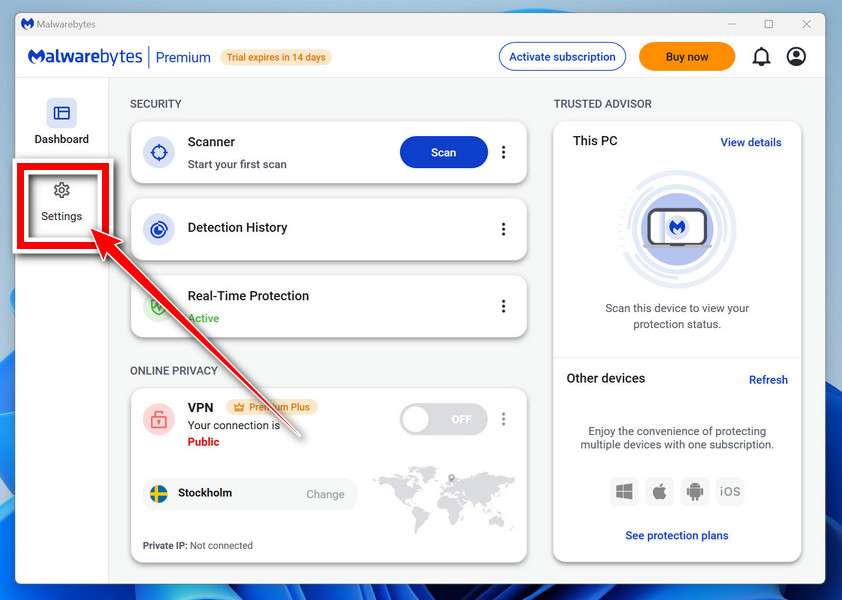
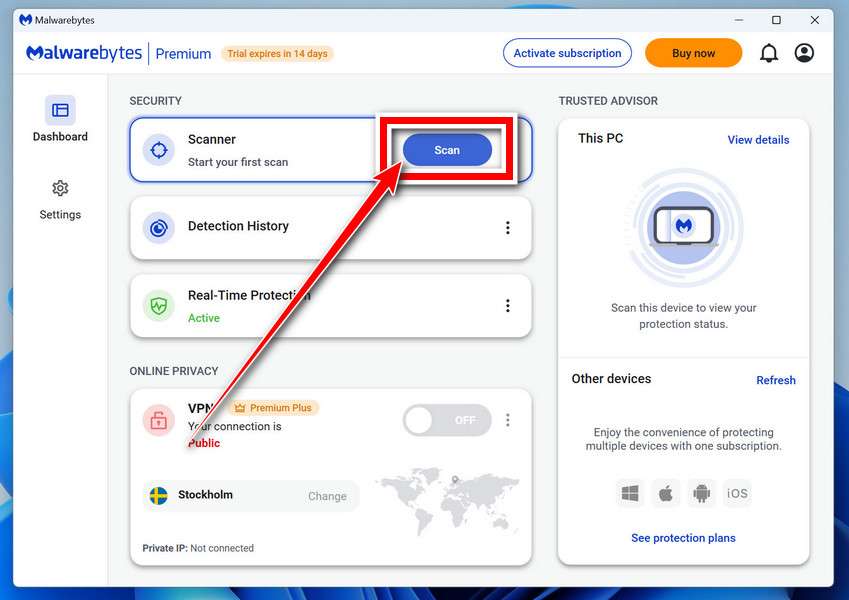
Malwarebytes Anti-Malware will now start, and you will see the main screen as shown below. To maximize Malwarebytes’ ability to detect malware and unwanted programs, we need to enable rootkit scanning. Click on the “Settings” gear icon located on the left of the screen to access the general settings section.
In the settings menu, enable the “Scan for rootkits” option by clicking the toggle switch until it turns blue.
Now that you have enabled rootkit scanning, click on the “Dashboard” button in the left pane to get back to the main screen.
Perform a Scan with Malwarebytes.
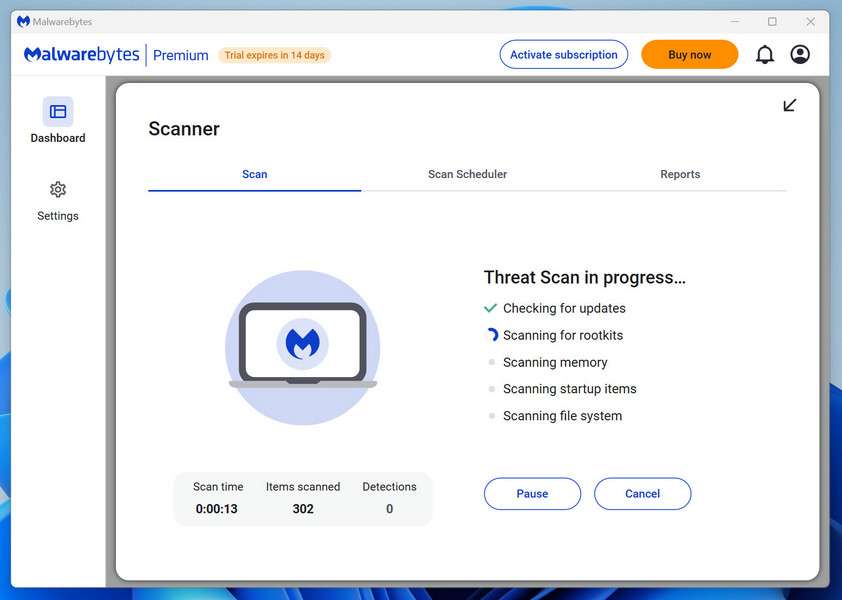
To start a scan, click the Scan button. Malwarebytes will automatically update its antivirus database and begin scanning your computer for malicious programs.
Wait for the Malwarebytes scan to complete.
Malwarebytes will now scan your computer for browser hijackers and other malicious programs. This process can take a few minutes, so we suggest you do something else and periodically check the status of the scan to see when it is finished.
Quarantine detected malware
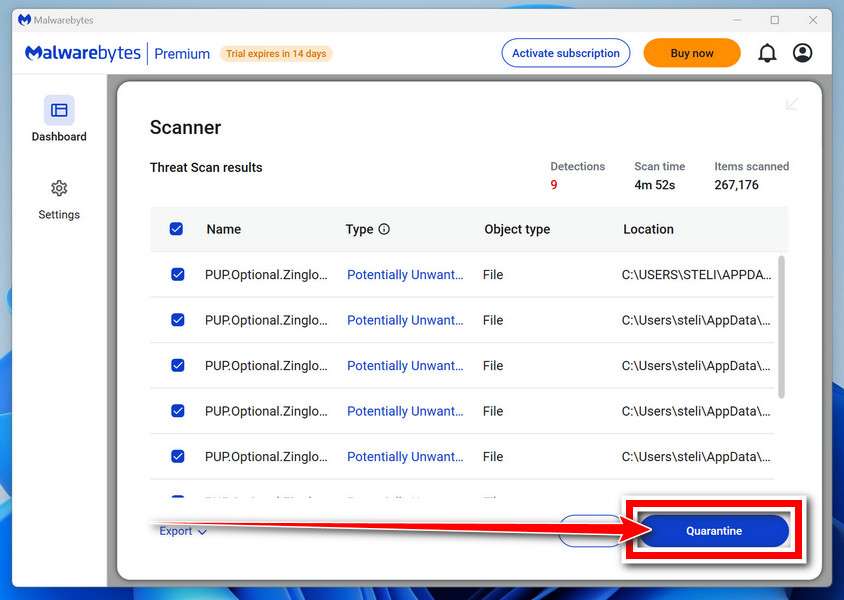
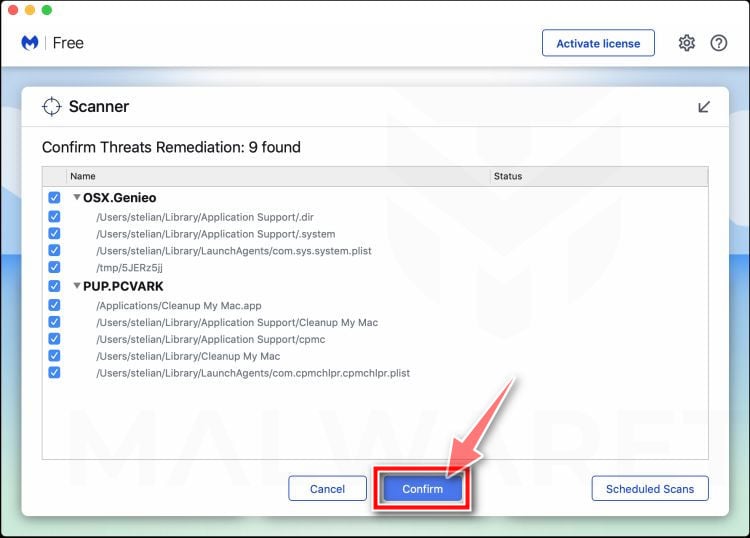
Once the Malwarebytes scan is complete, it will display a list of detected malware, adware, and potentially unwanted programs. To effectively remove these threats, click the “Quarantine” button.
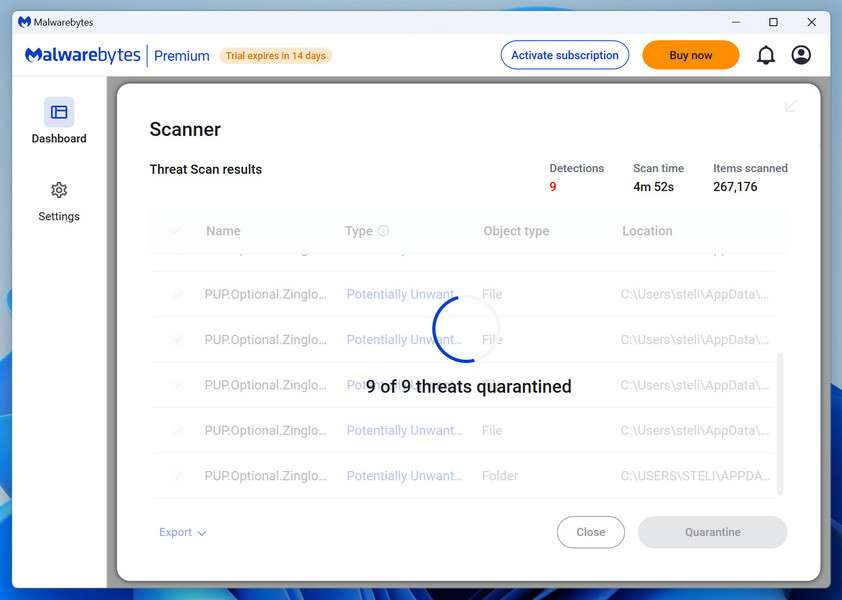
Malwarebytes will now delete all of the files and registry keys and add them to the program’s quarantine.
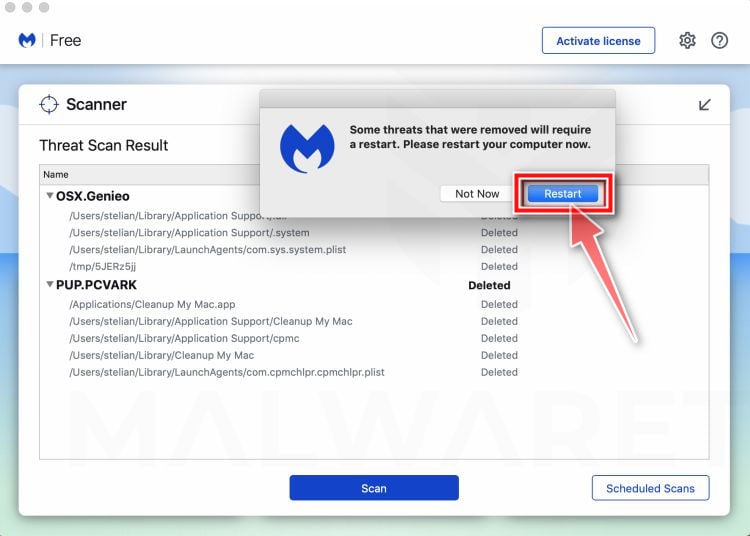
Restart your computer.
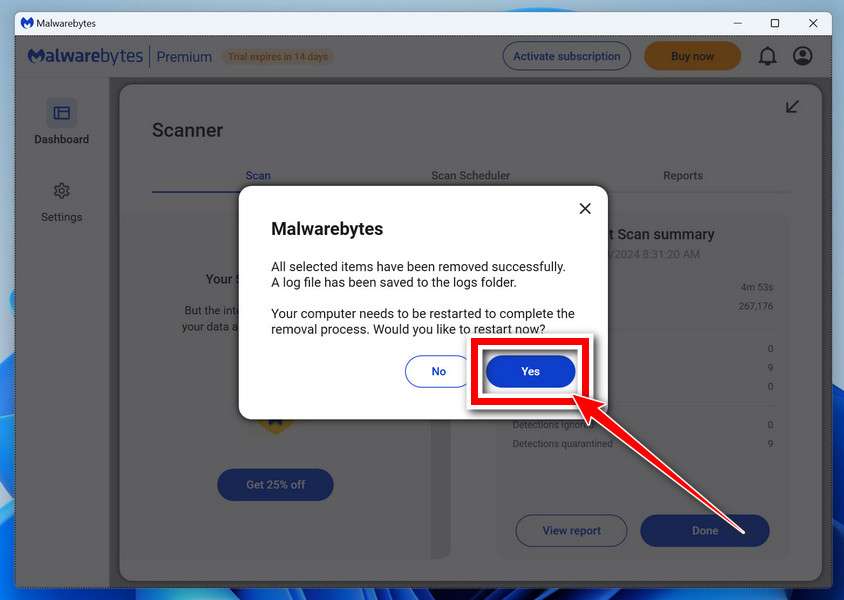
When removing files, Malwarebytes may require a reboot to fully eliminate some threats. If you see a message indicating that a reboot is needed, please allow it. Once your computer has restarted and you are logged back in, you can continue with the remaining steps.
Once the scan completes, remove all detected threats. Your Windows computer should now be clean and running smoothly again, free of trojans, adware, and other malware.
If your current antivirus allowed this malicious program on your computer, you may want to consider purchasing Malwarebytes Premium to protect against these types of threats in the future. If you are still having problems with your computer after completing these instructions, then please follow one of the steps:
Malwarebytes for Mac is an on-demand scanner that can destroy many types of malware that other software tends to miss without costing you absolutely anything. When it comes to cleaning up an infected device, Malwarebytes has always been free, and we recommend it as an essential tool in the fight against malware.
Download Malwarebytes for Mac.
You can download Malwarebytes for Mac by clicking the link below.
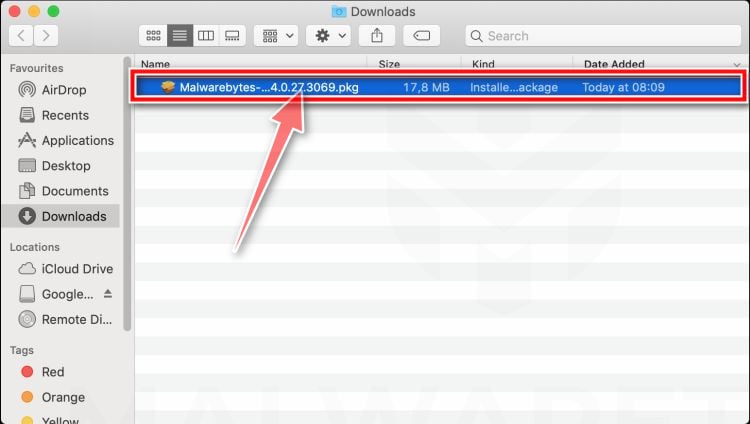
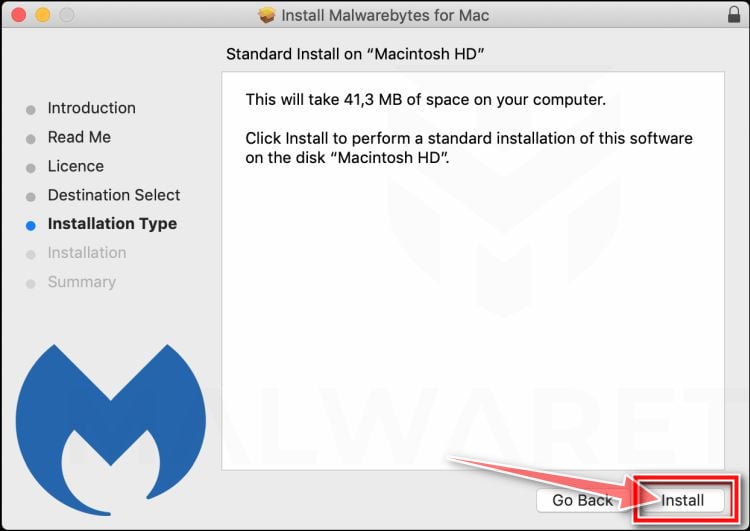
When Malwarebytes has finished downloading, double-click on the setup file to install Malwarebytes on your computer. In most cases, downloaded files are saved to the Downloads folder.
Follow the on-screen prompts to install Malwarebytes.
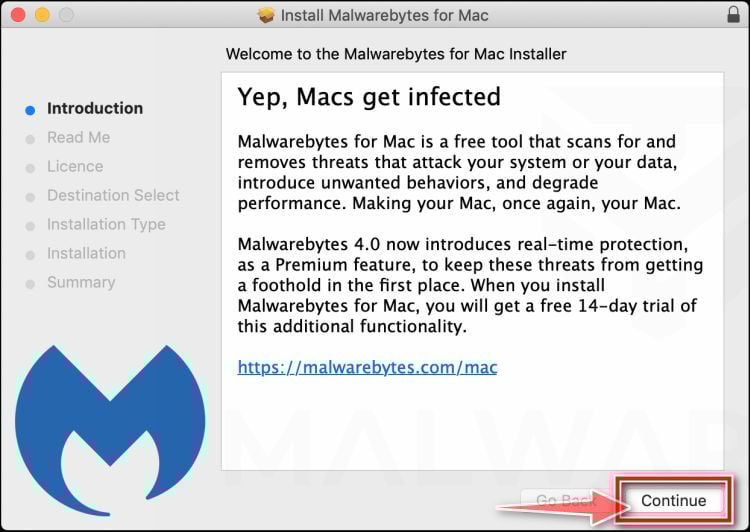
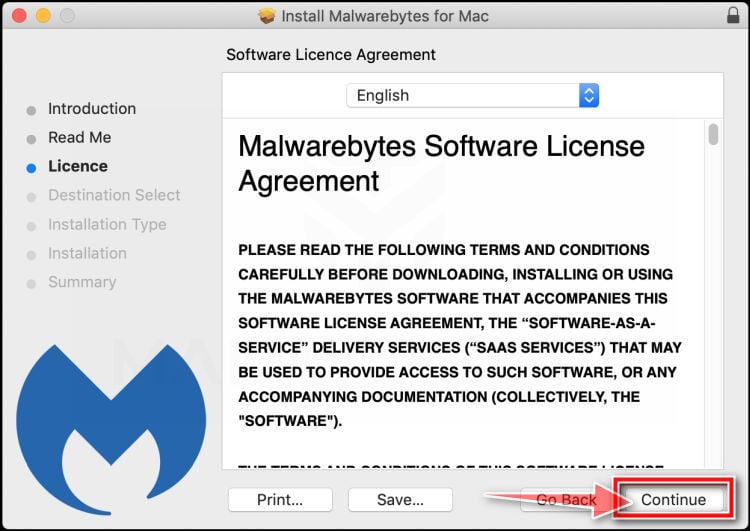
When the Malwarebytes installation begins, you will see the Malwarebytes for Mac Installer which will guide you through the installation process. Click “Continue“, then keep following the prompts to continue with the installation process.
When your Malwarebytes installation completes, the program opens to the Welcome to Malwarebytes screen. Click the “Get started” button.
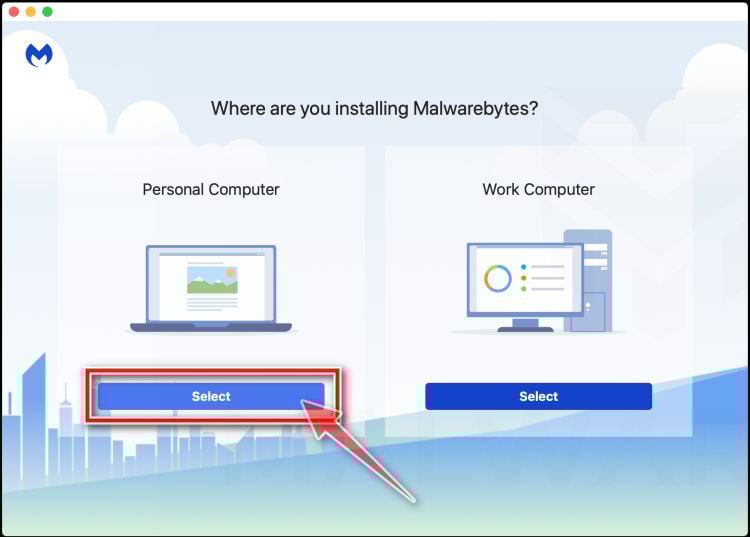
Select “Personal Computer” or “Work Computer”.
The Malwarebytes Welcome screen will first ask you what type of computer are you installing this program, click either Personal Computer or Work Computer.
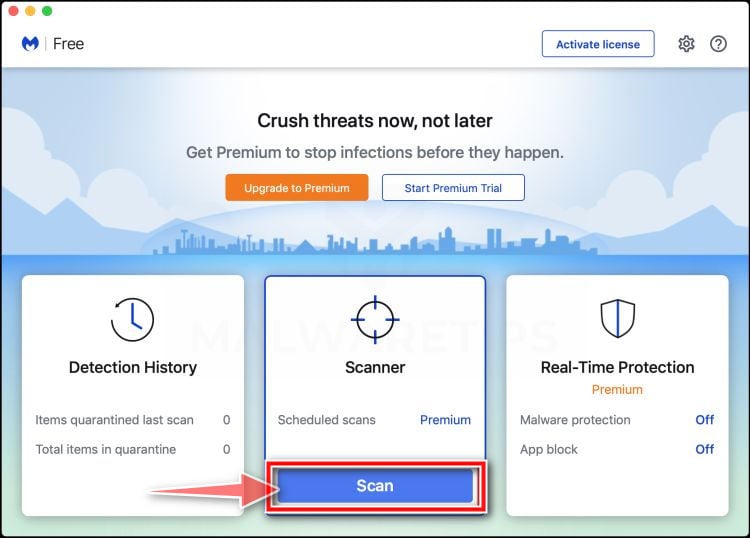
Click on “Scan”.
To scan your computer with Malwarebytes, click on the “Scan” button. Malwarebytes for Mac will automatically update the antivirus database and start scanning your computer for malware.
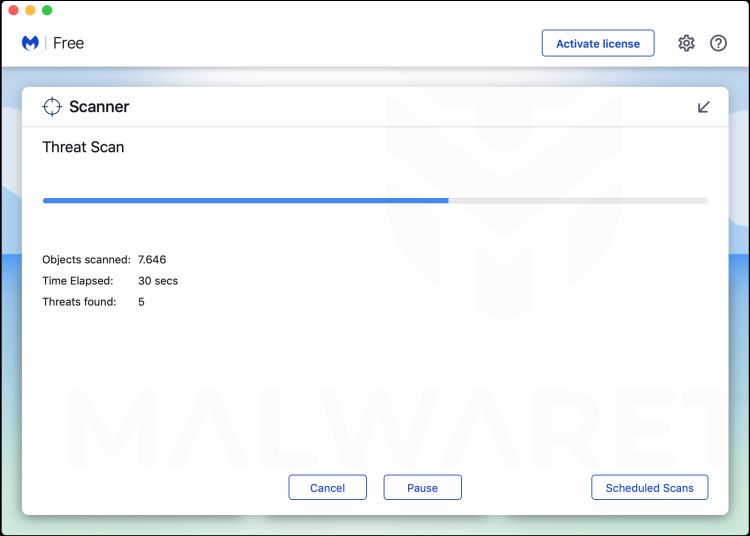
Wait for the Malwarebytes scan to complete.
Malwarebytes will scan your computer for adware, browser hijackers, and other malicious programs. This process can take a few minutes, so we suggest you do something else and periodically check on the status of the scan to see when it is finished.
Click on “Quarantine”.
When the scan has been completed, you will be presented with a screen showing the malware infections that Malwarebytes has detected. To remove the malware that Malwarebytes has found, click on the “Quarantine” button.
Restart computer.
Malwarebytes will now remove all the malicious files that it has found. To complete the malware removal process, Malwarebytes may ask you to restart your computer.
After scanning, delete any detected threats. Your Mac should now be free from adware, unwanted extensions, and other potentially harmful software.
If your current antivirus allowed a malicious program on your computer, you might want to consider purchasing the full-featured version of Malwarebytes Anti-Malware to protect against these types of threats in the future. If you are still experiencing problems while trying to remove a malicious program from your computer, please ask for help in our Mac Malware Removal Help & Support forum.
Run a Malware Scan with Malwarebytes for Android
Malwarebytes for Android automatically detects and removes dangerous threats like malware and ransomware so you don’t have to worry about your most-used device being compromised. Aggressive detection of adware and potentially unwanted programs keeps your Android phone or tablet running smooth.
Download Malwarebytes for Android.
You can download Malwarebytes for Android by clicking the link below.
In the Google Play Store, tap “Install” to install Malwarebytes for Android on your device.
When the installation process has finished, tap “Open” to begin using Malwarebytes for Android. You can also open Malwarebytes by tapping on its icon in your phone menu or home screen.
Follow the on-screen prompts to complete the setup process
When Malwarebytes will open, you will see the Malwarebytes Setup Wizard which will guide you through a series of permissions and other setup options. This is the first of two screens that explain the difference between the Premium and Free versions. Swipe this screen to continue. Tap on “Got it” to proceed to the next step. Malwarebytes for Android will now ask for a set of permissions that are required to scan your device and protect it from malware. Tap on “Give permission” to continue. Tap on “Allow” to permit Malwarebytes to access the files on your phone.
Update database and run a scan with Malwarebytes for Android
You will now be prompted to update the Malwarebytes database and run a full system scan.
Click on “Update database” to update the Malwarebytes for Android definitions to the latest version, then click on “Run full scan” to perform a system scan.
Wait for the Malwarebytes scan to complete.
Malwarebytes will now start scanning your phone for adware and other malicious apps. This process can take a few minutes, so we suggest you do something else and periodically check on the status of the scan to see when it is finished.
Click on “Remove Selected”.
When the scan has been completed, you will be presented with a screen showing the malware infections that Malwarebytes for Android has detected. To remove the malicious apps that Malwarebytes has found, tap on the “Remove Selected” button.
Restart your phone.
Malwarebytes for Android will now remove all the malicious apps that it has found. To complete the malware removal process, Malwarebytes may ask you to restart your device.
When the scan is finished, remove all detected threats. Your Android phone should now be free of malicious apps, adware, and unwanted browser redirects.
If your current antivirus allowed a malicious app on your phone, you may want to consider purchasing the full-featured version of Malwarebytes to protect against these types of threats in the future. If you are still having problems with your phone after completing these instructions, then please follow one of the steps:
Restore your phone to factory settings by going to Settings > General management > Reset > Factory data reset.
After cleaning your device, it’s important to protect it from future infections and annoying pop-ups. We recommend installing an ad blocker such as AdGuard. AdGuard blocks malicious ads, prevents phishing attempts, and stops dangerous redirects, helping you stay safe while browsing online.
The Bottom Line
The Apple Game Reviewer Scam is a modern example of digital deception. It combines social media marketing tactics with affiliate fraud to exploit trust in Apple’s brand. By promising easy money, scammers collect personal data, generate affiliate revenue, and leave victims with nothing but spam and frustration.
Apple does not — and has never — paid users to review games through TikTok or third-party sites. All legitimate Apple opportunities are found exclusively on apple.com or within its developer ecosystem.
If you see ads offering “Apple Cash for game reviews,” recognize them for what they are: fake offers designed to profit from your curiosity. Protect your data, question unbelievable claims, and always verify opportunities before clicking any links.
The easiest rule to remember is this: If it sounds too good to be true, it always is.
Frequently Asked Questions
What is the Apple Game Reviewer Scam?
The Apple Game Reviewer Scam is a fraudulent scheme spreading primarily through TikTok and other social media platforms. Scammers create ads claiming that Apple is hiring people to review games in the App Store and earn anywhere from $500 to $750 through Apple Cash or PayPal. These ads look professional, often featuring fake payment screenshots and Apple-style interfaces to make them appear legitimate. However, there is no such program offered by Apple. Once users click the ad, they’re redirected to a series of suspicious websites that collect personal data and trick them into completing surveys or “offers” that generate money for scammers. Victims never receive any payment, and their data is often sold to marketers or used for spam campaigns.
Does Apple really pay people to review games?
No. Apple does not pay users to review games on the App Store or through any external websites. Game and app reviews in the App Store are voluntary and unpaid. If Apple ever offered paid testing or review opportunities, they would be listed on Apple’s official Careers page or within the Apple Developer Program. Any ad or website claiming you can earn money as an Apple Game Reviewer is fake and should be treated as a scam.
How does the Apple Game Reviewer Scam work?
The scam uses social media ads and fake testimonials to lure users in. Here’s how it typically unfolds:
You see a TikTok video or ad claiming Apple will pay you for reviewing games.
The ad shows edited screenshots of Apple Cash payments as “proof.”
Clicking the link redirects you to an unknown domain, often hosted on sites like mbluemandillo.com or uplevelrewards.com.
The website asks for your name, email, and phone number to “sign up.”
You’re then told to complete a few “offers” such as downloading apps, taking surveys, or starting free trials.
Each action you complete earns the scammers affiliate revenue.
After completing everything, you never receive the promised reward.
The scammers profit from your activity and sell your personal information to advertising networks and data brokers.
Why is the Apple Game Reviewer offer considered a scam?
It’s a scam because the offer is based entirely on false promises and brand impersonation. Scammers use Apple’s logo, interface designs, and trusted reputation to make their ads look credible. The entire scheme is designed to extract personal details and monetize user participation through affiliate commissions. There’s no legitimate payment system, no Apple Cash reward, and no actual job. Victims end up wasting time, exposing personal data, and sometimes losing money through hidden subscription traps.
What are the red flags that show it’s fake?
Several warning signs reveal the Apple Game Reviewer offer is fraudulent:
The website domain is not Apple.com.
The ad appears only on social media, not on Apple’s verified platforms.
Unrealistic earnings are promised for minimal work.
Fake Apple Cash screenshots are used as “proof.”
The site lacks contact information or official branding details.
You’re asked to complete unrelated “offers” to qualify for payment.
There’s no privacy policy or verifiable company behind the site.
These red flags clearly indicate the scam’s deceptive intent.
What happens when you click the TikTok ad?
When you click the ad, you’re redirected through a network of affiliate tracking links. Each time you visit or interact with these links, the scammers earn a small commission. The final landing pages often claim you must complete a few tasks or surveys to unlock your Apple Cash reward. However, those surveys are hosted by third-party marketing companies unrelated to Apple. Completing them generates revenue for the scammers, not rewards for you.
What kind of information do scammers collect?
These scam sites collect a variety of personal data, including:
Full name
Email address
Phone number
ZIP code
Device information
Sometimes even payment details for “trial” offers
This data is valuable to scammers because it can be sold to advertisers, used for spam campaigns, or leveraged in future scams. Providing credit card information can also lead to unauthorized charges.
Final Thoughts on the Apple Game Reviewer Scam
The Apple Game Reviewer Scam is a fake online scheme that uses TikTok ads and fabricated payment proof to trick people into believing Apple pays for app reviews. In reality, it’s a data-harvesting and affiliate scam that benefits only the fraudsters. Apple has no such program, and any legitimate opportunities will always be found through its official channels. If you see these ads online, report them and spread awareness. Staying informed and skeptical is your strongest defense against scams like this.
Thomas is an expert at uncovering scams and providing in-depth reporting on cyber threats and online fraud. As an editor, he is dedicated to keeping readers informed on the latest developments in cybersecurity and tech.