If you or someone you love suffers from nerve pain, you’re not alone. Neuropathy affects millions—and countless marketers know it. Recently, a supplement called Arialief has been aggressively pushed online, promising relief through a “simple vitamin”. It claims to be backed by expert endorsements and customer success stories. But how much of it is true? Is Arialief a real solution, or just another internet scam targeting the desperate?
This article dives deep into the Arialief phenomenon, breaking down the truth behind its marketing, website tactics, and product claims. If you’re considering trying it—or fear you’ve already fallen into its trap—keep reading.
Scam Overview
Arialief is marketed as a revolutionary nerve-health supplement. Promoted heavily through Facebook ads and clickbait-style landing pages, it claims to relieve pain, numbness, and discomfort associated with neuropathy. The supposed breakthrough? A “yellow vitamin” said to work from the comfort of your home.
The typical advertisement features a man in a wheelchair urging you to “watch before it’s too late,” followed by a slick video interview. In the video, a host introduces Dr. Richard Moore, an “orthopedist” and author of a book called Neuropathy – The Ailment of the Century. The video claims to be from a show titled Health in Focus.
However, a comprehensive check reveals something suspicious:
- No record exists of the Health in Focus show, its host, or Dr. Richard Moore. No listings in medical databases, IMDb, or reputable media sources. The only hits? Pages reselling the same supplement.
- The domain “nicely24health.com” is new and registered anonymously in January 2025. It contains no genuine content, only a looping sales video and a purchase link.
What little independent feedback exists—on forums like Reddit or scam-reporting blogs—is mostly negative. Users frequently complain about ineffective results and the inability to contact customer service. Many who requested a refund under the 180-day guarantee never received one.
Clinical claims are another red flag. The central ingredient, palmitoylethanolamide (PEA), does show some promise in pain relief. But the studies vary widely in dosage and duration, and PEA is not a guaranteed fix. Arialief does not disclose its exact dosage or the presence of any additional active compounds. Nor has it undergone any published clinical trials.
Despite its aggressive branding—featuring FDA logos, gluten-free badges, and U.S.-manufactured claims—the small print admits:
“These statements have not been evaluated by the FDA. This product is not intended to diagnose, treat, cure or prevent any disease.”
In Summary:
- No trace of any medical authority backing the product
- No independently verified customer reviews or clinical trials
- No legitimate broadcast or media coverage
- Shady domain registrations and sales funnel tactics
This isn’t just a questionable product. It appears to be an orchestrated marketing scam wrapped in the language of wellness and urgency.
How The Scam Works
Understanding how scams like Arialief operate can help you avoid similar traps. Here’s a detailed, step-by-step breakdown:
1. Targeted Facebook Ads
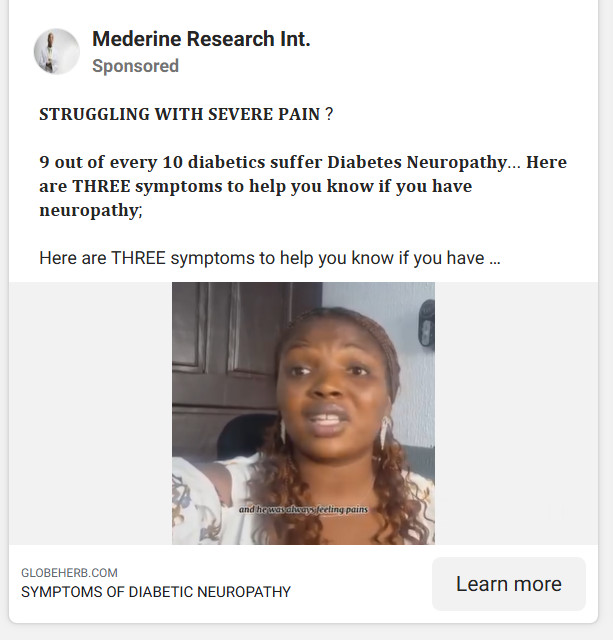
The funnel starts with emotionally-charged ads on Facebook. These ads typically feature someone in a wheelchair or an emotional appeal about losing mobility and independence. Phrases like “before it’s too late” and “neuropathy sufferers must see this” build urgency and fear.
2. Clickbait Landing Page
Clicking the ad takes you to a webpage hosted on nicely24health.com, which contains a single purpose: to convert you. The landing page mimics the format of a health talk show. It presents the narrative of a respected doctor introducing a miracle supplement.
But the domain:
- Has no company information
- Was registered very recently (Jan 2025)
- Uses proxy registration to hide ownership
There’s no real contact, no background on the supplement, and no proof of claims.
3. Fake Authority Figures
This is where the scam goes all-in on credibility theater:
- Rachel Mathews as host: No traceable media footprint
- Dr. Richard Moore, Orthopedist: No trace in academic journals, the AMA database, or even LinkedIn
- Book: Neuropathy – The Ailment of the Century: Doesn’t exist in Amazon, Google Books, or library archives
Everything appears fabricated to create a convincing story.
4. Faux Medical Backing
The supplement is described using clinical-sounding language—phrases like “clinically proven,” “doctor-recommended,” and “vitamin therapy.” It may highlight one ingredient like PEA, cherry-picking positive studies while ignoring that research is limited, inconclusive, and irrelevant without dosage data.
The fine print undercuts the claims entirely:
“This product is not intended to diagnose, treat, cure, or prevent any disease.”
5. Urgency and Scarcity Tactics
You’ll see phrases like:
- “Only 10 bottles left!”
- “Claim your discount while supplies last!”
- “One-time offer ends soon!”
These are classic high-pressure sales tricks to rush your decision before you can research further.
6. Checkout Manipulation
You’re encouraged to buy in bulk—2, 3, or 6 bottles—with no clear subscription terms or refund process. The site lists badges like:
- FDA Approved
- cGMP certified
- Money-back guarantee
But none are independently verifiable. The refund guarantee often goes unhonored.
7. No Post-Purchase Support
Once you buy, it’s nearly impossible to get help:
- No live chat or phone number
- Emails go unanswered
- Refund requests are ignored or delayed
This is a hallmark of ecommerce scams: easy to buy, hard to get help.
8. Recycled Funnels
After a while, the entire site will likely vanish or rebrand under a new name. These scams run in cycles, reusing the same content under new domains.
What to Do If You’ve Fallen Victim to the Arialief Scam
If you’ve already purchased Arialief, here are steps to take immediately:
1. Contact Your Bank or Credit Card Company
- Request a chargeback, especially if it’s been less than 60 days
- Explain that the product was misrepresented
- Provide screenshots if needed
2. Cancel Any Recurring Charges
- Check your credit card or bank statement for any subscriptions
- Cancel future payments to the company
3. Report the Website
- Use FTC Complaint Assistant
- File a report with your country’s consumer protection agency
- Report the scammy Facebook ad directly to Facebook
4. Leave a Review or Warning
- Post on Reddit or scam alert forums
- Leave feedback on review sites like Trustpilot (if the company is listed)
5. Monitor Your Accounts
- Watch for unauthorized charges
- Set up fraud alerts with your bank or credit card provider
6. Educate Others
- Warn friends and family who might fall for similar ads
- Share articles like this to raise awareness
7. Consult a Doctor
If you’ve taken Arialief and have any side effects—or if you were using it instead of prescribed medicine—see a real medical professional immediately.
The Bottom Line
Arialief is a classic example of supplement marketing overstepping into scam territory. It uses fake authority, phony urgency, and unverifiable claims to sell a product that lacks transparency and clinical backing. Most distressingly, it targets vulnerable people in pain.
While some ingredients like PEA have scientific promise, the way Arialief is sold undermines any trust. From hidden domain ownership to fake doctors and unreachable support, the red flags are everywhere.
Don’t treat Facebook ads as medical advice. Talk to a licensed physician before trying any supplement, especially those sold through manipulative marketing funnels. Arialief may look like a miracle cure—but once you dig deeper, it’s just another internet hustle with a pretty label.
Stay safe, stay skeptical, and always double-check the source.