It usually starts with a message that feels oddly calm.
A short hello. A compliment. A line that sounds personal enough to make you pause, even if you roll your eyes and think, “Yeah right.”
Then the account keeps showing up.
The replies are fast. The tone is warm. The details feel specific. And somehow, the conversation slips from “this is obviously fake” to “what if it isn’t?”
A day later, there’s a photo you can’t find anywhere online.
Then a video that looks real enough to quiet the doubt.
Then a private explanation for why everything has to stay secret.
And that’s when the hook sets.
Because the Brad Pitt AI scam isn’t just pretending to be a celebrity. It’s built to make the story feel believable, piece by piece, until saying “no” starts to feel like abandoning someone you care about.
Scam Overview
The “Brad Pitt AI scam” is a modern version of a classic romance scam: criminals impersonate a famous celebrity (or someone close to them), build an emotional connection with a target, and then engineer a financial crisis that only the victim can solve.
The twist is the realism.
Where older celebrity scams relied on stolen photos and poorly written emails, today’s versions can include:
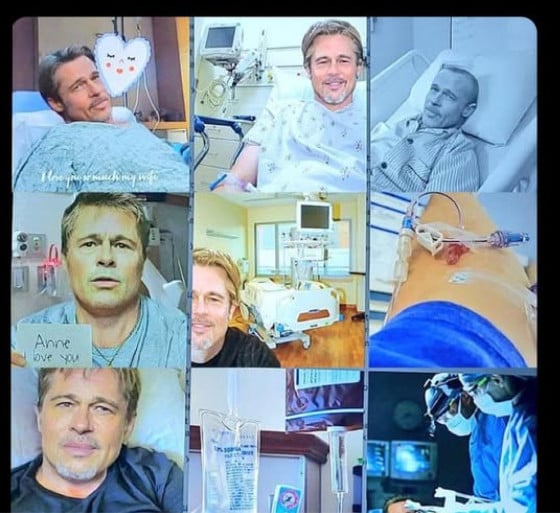
- AI-generated hospital images
- deepfake video clips that appear to show the celebrity speaking
- voice notes that sound convincing
- “private” selfies that don’t exist anywhere else online
- screenshots of fake bank transfers, fake legal documents, and fake medical invoices
The scam is designed to feel intimate and urgent at the same time. The victim is made to believe they are part of a secret, private relationship with a high-profile person who “can’t go public” yet.
The emotional narrative usually follows the same pattern:
- The celebrity is lonely, misunderstood, trapped by fame.
- The victim is special, trustworthy, a safe place.
- The relationship intensifies quickly.
- A crisis appears, often medical or legal.
- The victim is pressured into sending money, fast.
- The scammer vanishes, or escalates to demand more.
Some victims report losses in the tens of thousands of dollars. Others lose far more, sometimes life-changing amounts that wipe out savings, retirement funds, or property equity.
Why “Brad Pitt” is such a powerful bait
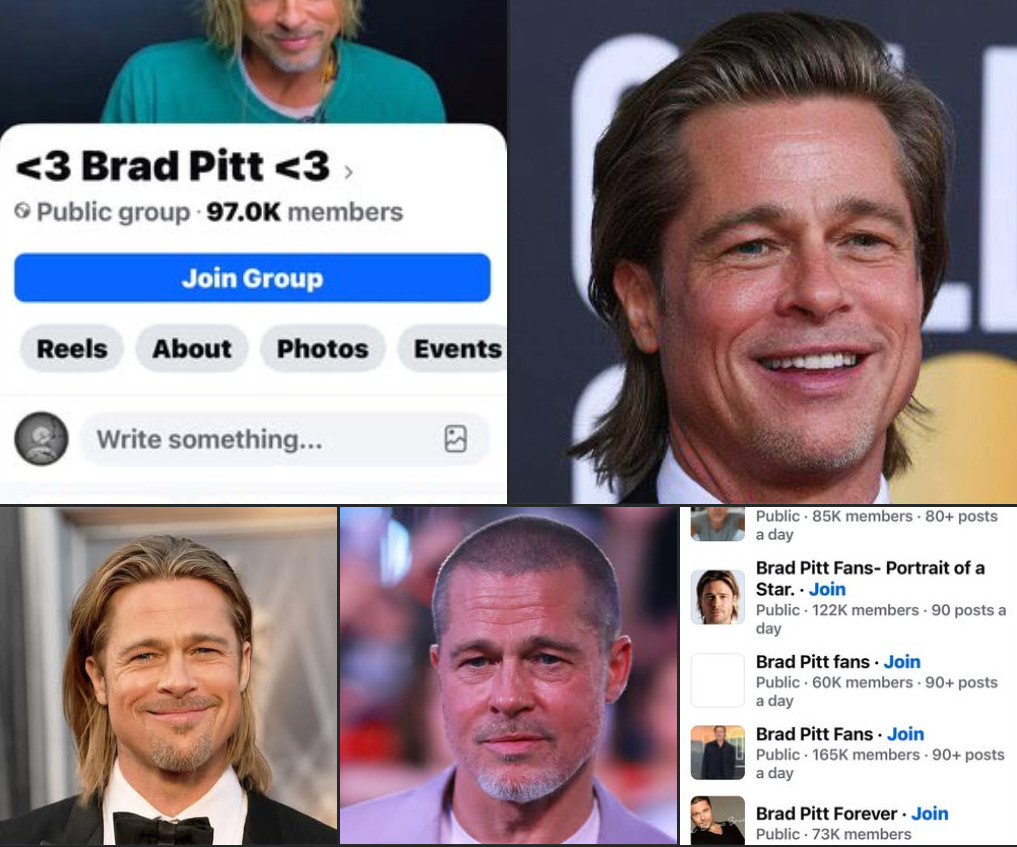
Scammers choose celebrities strategically. Brad Pitt works for several reasons:
- He is globally recognizable across age groups.
- His public persona has been shaped by decades of media coverage.
- Many people have watched his interviews and movies, which gives scammers “reference material” to mimic his tone.
- The name carries instant credibility, which lowers skepticism at the start.
Most victims do not begin by believing, “This is definitely Brad Pitt.” They begin by thinking, “This is obviously fake, but let me see what they say.”
That curiosity is enough. Once the conversation starts, scammers shift from identity to emotion. The goal becomes less about proving it is him and more about making the victim feel responsible for him.
The scam is not just “being fooled,” it is being conditioned
Romance fraud is a process. It is closer to grooming than a one-time con.
The scammer spends time learning what the target needs emotionally:
- validation and attention
- companionship
- a sense of excitement or escape
- someone who listens
- a fantasy that breaks the routine of daily life
They mirror the victim’s values. They ask questions that feel caring. They share “private” stories. They create a bond that feels rare, then reinforce it constantly.
This is why victims often defend the scammer even after friends warn them. By the time the money request happens, the victim is not evaluating a stranger.
They are protecting a relationship.
How AI changes the game
AI does not make the scam smarter. It makes the scam easier to sell.
In older celebrity impersonation scams, the weak points were obvious:
- recycled photos you could reverse-search
- generic scripts used on many victims
- inconsistent “personal details”
- poor grammar and strange phrasing
- refusal to appear on video in any form
AI can patch those holes.
A scammer can now create “unique” images that do not exist anywhere online, which defeats the simple reverse image search tactic many people rely on.
They can also generate:
- a hospital scene that looks authentic at a glance
- an “exclusive selfie” holding a sign with the victim’s name
- a short deepfake video clip that resembles a quick hello
- a voice note that sounds like the celebrity
The content does not need to be perfect. It only needs to be convincing enough to keep the victim emotionally invested.
The hospital story is not random
Many Brad Pitt AI scam stories involve a medical emergency. The details vary, but the structure is consistent:
- the celebrity is “sick” in secret
- they can’t use normal channels because of privacy
- they need immediate funds for treatment
- they claim they cannot access their own money due to legal constraints, divorce issues, frozen accounts, or management control
- they insist the victim must act quickly and quietly
Medical urgency is powerful because it triggers empathy and reduces critical thinking.
It also creates an easy excuse for why the celebrity looks different. If the victim notices something off in the images, the scammer can explain it away:
“He’s in treatment.”
“He’s not sleeping.”
“He’s lost weight.”
“He’s exhausted.”
AI imagery helps sell that storyline.
Why victims are often women, but anyone can be targeted
Many reported cases involve women, often because scammers focus on demographics that are more likely to engage with celebrity fan communities and romance-based messaging.
But the scam itself is not gender-specific.
Anyone who is:
- lonely or isolated
- going through grief, divorce, or major life stress
- seeking connection online
- active in fan groups, comment sections, or messaging apps
- trusting by nature
- empathetic and helpful
…can be targeted.
These scammers do not “hunt” based on intelligence. They hunt based on emotional accessibility.
Where the scam happens
The first contact often happens on mainstream platforms:
- Facebook pages and groups
- Instagram DMs
- TikTok comments leading to private messages
- X (Twitter) DMs
- YouTube comments
Once the scammer sees engagement, they usually try to move the conversation to a private channel:
- Telegram
- Signal
- Google Chat
- sometimes even SMS
This “platform move” matters because it reduces moderation, makes reporting harder, and increases isolation.
Common identity setups scammers use
In Brad Pitt AI scams, scammers rarely use one single profile. They build a small ecosystem of supporting characters. For example:
- “Brad Pitt” account (the main romantic contact)
- “Brad’s manager” (handles logistics and money requests)
- “Brad’s assistant” (sends documents, schedules calls, coordinates)
- “Brad’s mom” or “family member” (creates emotional credibility)
- “doctor” or “hospital staff” (sends invoices, photos, “proof”)
- “foundation” or “charity team” (requests donations that secretly go to scammers)
This multi-character approach makes the story feel more real, like a real celebrity’s life, full of intermediaries.
It also helps the scammer apply pressure from multiple angles. When the victim hesitates, the “manager” can get stern while “Brad” stays loving and emotional.
The money requests are engineered to feel reasonable, then they grow
The first request is usually “small enough” to test compliance.
Examples include:
- a “verification fee” to prove identity
- a small payment to “unlock a private line”
- gift cards “because it’s safer”
- help with a “phone replacement” or “secure device”
- a donation to a charity connected to the celebrity
If the victim pays once, the scammer learns something critical: this person can be convinced.
Then the amounts escalate.
A later request might be framed as:
- urgent surgery costs
- private clinic bills
- legal fees related to divorce or custody
- taxes required to release frozen funds
- security fees to travel
- customs fees to send gifts or jewelry
- fees to “activate” a transfer of money to the victim
At higher levels, scammers may push for:
- wire transfers
- bank-to-bank transfers
- cryptocurrency
- financing through loans
- selling assets
- borrowing from friends or family
The scam often ends only when the victim runs out of money or finally confronts undeniable proof.
The emotional manipulation tactics that make it stick
This scam is built on psychological leverage. Common tactics include:
- Love bombing: intense compliments, fast attachment, constant messaging
- Future faking: promises of marriage, moving in, travel plans, private life together
- Secrecy: “You can’t tell anyone or it will ruin my life”
- Isolation: “Your friends don’t understand us”
- Guilt: “If you loved me, you would help”
- Urgency: “The surgery is tomorrow” or “The account closes tonight”
- Victimhood: “Everyone wants to exploit me, you’re the only one I trust”
- Authority pressure: fake lawyers, fake doctors, fake documents
- Intermittent reinforcement: affection disappears when the victim resists, then returns when they comply
Victims often describe it as emotionally exhausting, like being pulled between romance and crisis every day.
Why the scam feels “too real” to ignore
AI content can make the relationship feel “verified,” even when it is not.
A victim might think:
“I saw a video.”
“He said my name.”
“He sent a photo that isn’t online.”
“He looks sick, I can’t abandon him.”
But deepfakes and AI-generated images are not proof. They are tools designed to simulate proof.
The scammer’s real power is not the technology. It is the emotional story they build around it.
How The Scam Works
Below is the typical step-by-step flow of a Brad Pitt AI romance scam, with the most common variations scammers use.
Step 1: The first hook
The scam begins with a low-risk entry point.
It might look like:
- a message from a “fan account” saying you were selected for a private chat
- a comment reply that flatters you, then asks you to message privately
- a friend request from a profile with celebrity photos
- a DM that says “Hello dear, I noticed your profile”
- a message claiming to be from “Brad’s team”
The opening is intentionally simple. Scammers do not want to trigger alarms immediately.
They want you to respond.
Once you reply, the scammer shifts into relationship-building mode.
Step 2: Building trust through attention and consistency
Most victims report frequent contact, sometimes all day.
The scammer’s job is to become part of your routine.
They will:
- ask about your day
- remember small details
- send good morning and good night messages
- compliment your personality, not just your appearance
- share “private struggles” to create intimacy
This phase can last days or weeks. Some scammers invest months.
The longer they invest, the more confident they are that a larger payout is possible.
Step 3: Creating a reason the relationship must stay private
Soon, the scammer introduces a barrier:
- “I can’t use my official account.”
- “My management monitors my communications.”
- “Fans would destroy us.”
- “We need privacy for security reasons.”
- “I have legal issues and must keep quiet.”
This is not just storytelling. It’s a control mechanism.
Privacy discourages you from:
- asking friends for advice
- posting screenshots for help
- publicly verifying identity
- reporting the account early
Secrecy is where scams grow.
Step 4: Moving you off-platform
After trust is established, they ask you to switch to a private messenger.
They might say:
- “Facebook is not secure.”
- “My assistant wants me to use WhatsApp.”
- “Telegram is safer.”
- “I have a private number.”
This move is a major red flag.
It also creates distance from platform protections and makes it easier for scammers to delete profiles and disappear.
Step 5: Delivering “exclusive proof” using AI-generated images
Once you are in a private channel, the scammer begins sending proof.
This is where AI plays a huge role.
They might send:
- a “hospital bed” photo
- a selfie holding a sign with your name
- a behind-the-scenes image that feels personal
- a deepfake clip that looks like a quick greeting
- a voice note that resembles the celebrity’s voice
The goal is not to prove reality beyond doubt. It is to keep doubt low enough that emotion can lead.
If you question it, the scammer pivots quickly:
- “You don’t trust me?”
- “I thought you were different.”
- “I’m risking everything by talking to you.”
- “I’m sick and you’re making this harder.”
That guilt response is intentional.
Step 6: Love intensifies fast
In many cases, the scam escalates emotionally at high speed.
They talk about:
- destiny
- soulmates
- marriage
- moving you to a better life
- sending you gifts
- giving you a private home
- taking care of your family
This is classic romance scam strategy: create a future so vivid that the victim starts living in it emotionally.
At that point, sending money feels less like “payment” and more like “helping your partner.”
Step 7: The first financial ask, framed as something small and logical
The first money request is rarely “Send me $10,000.”
It is often:
- $50, $100, or $300 for a small “fee”
- gift cards for “phone credit” or “security access”
- a donation to a “foundation”
- money to “prove loyalty” or “verify identity”
Scammers want the victim to cross the first line.
Once you pay once, it becomes easier to pay again. The scammer also learns which payment methods you can use.
Step 8: The crisis arrives
After the first payment, the real storyline begins.
Common crisis narratives include:
- a secret medical condition needing urgent treatment
- a private clinic that requires payment upfront
- legal trouble with a divorce settlement
- frozen funds that require fees to release
- a “security breach” where money must be moved quickly
- a planned visit that requires travel costs, security deposits, or private arrangements
The story is often packed with details. That detail is a trick.
People assume detailed stories are truthful. Scammers know that.
Step 9: The scammer introduces “professionals” to increase pressure
This is where fake supporting characters appear.
You may receive messages from:
- “doctor” with medical invoices
- “lawyer” with legal letters
- “manager” demanding confidentiality
- “finance team” explaining why fees must be paid first
They might send PDFs, screenshots, and official-looking documents.
Many are fake templates. Some are AI-generated.
The victim is overwhelmed by apparent complexity and assumes professionals are involved, so it must be real.
Step 10: They avoid real-time verification while pretending they are offering it
Victims often ask for a live video call.
Scammers respond with excuses:
- “I can’t, the hospital won’t allow it.”
- “My security team forbids it.”
- “I’m under contract.”
- “I’m in a private clinic.”
- “I’m too weak to talk.”
Instead, they offer substitutes:
- pre-made deepfake clips
- short video snippets with poor quality
- voice notes
- text messages full of emotion
Sometimes they schedule a call and then “something happens” at the last minute.
That pattern repeats until the victim stops asking.
Step 11: Escalation and reinforcement
At this stage, the scam becomes a cycle:
- affection
- crisis
- payment
- relief
- bigger crisis
- bigger payment
If the victim hesitates, the scammer applies pressure:
- “I thought you loved me.”
- “If you don’t help, I could die.”
- “I will never forgive you.”
- “You are abandoning me like everyone else.”
If the victim complies, affection returns immediately.
This is emotional conditioning.
Step 12: The payment methods shift to harder-to-reverse options
As amounts increase, scammers prefer irreversible payments.
Common methods include:
- wire transfers
- cryptocurrency
- gift cards
- bank transfers to accounts under other names
- payment apps that are difficult to dispute
They may also direct victims to:
- buy crypto and send it to a wallet address
- use money transfer services
- split payments into smaller parts to avoid bank flags
- lie to bank employees about the purpose of the transfer
If a scammer tells you to lie to your bank, that is not a relationship. That is a crime in progress.
Step 13: The “almost there” trap
One of the most dangerous moments is when the victim feels the scam is near its end.
Scammers exploit this with the “release fee” tactic:
- “Pay $2,000 for the final hospital discharge.”
- “Pay $3,500 for the lawyer to finalize the paperwork.”
- “Pay $1,200 for customs to release the package.”
- “Pay $5,000 to unlock the transfer.”
They promise this is the last payment.
It almost never is.
This is called “sunk cost pressure.” The victim thinks:
“I’ve already sent so much, I can’t stop now.”
Scammers know that mindset. They push hard right there.
Step 14: The collapse, and sometimes a second scam
When the victim finally resists, or runs out of money, the scammer often:
- disappears
- blocks the victim
- deletes accounts
- or switches to threats
In some cases, the victim is targeted again with a “recovery scam.”
A new person appears claiming:
- they can recover the funds
- they are a cyber expert, police contact, or lawyer
- they need a fee to start the process
This is usually the same scam network coming back for more.
What the AI “proof” often gets wrong
Even when images look convincing, there are common tells, such as:
- unnatural skin texture and lighting
- odd fingers, hands, or medical equipment placements
- inconsistent facial features across images
- strange text on devices, monitors, or documents
- mismatched reflections, shadows, or hospital branding
- overly cinematic or “perfect” hospital scenes
The problem is that victims do not analyze images like investigators. They react emotionally.
That is what scammers count on.
The biggest red flags in a Brad Pitt AI scam
If you remember nothing else, remember this list.
A real celebrity will not:
- ask you for money for medical care
- ask you to pay fees to release funds
- request gift cards or crypto
- communicate through random private numbers
- require secrecy from your family
- use a “manager” to collect money from fans
- refuse normal verification while claiming privacy
- fall in love with you instantly and propose quickly
These are not celebrity behaviors. They are scam patterns.
What To Do If You Have Fallen Victim to This Scam
If you have sent money, shared personal information, or built a relationship with a “Brad Pitt” account that now feels suspicious, take action quickly. The goal is to protect your finances, your identity, and your emotional well-being.
- Stop sending money and stop negotiating.
Even if the scammer promises “this is the last payment,” it is designed to keep you paying. Do not argue, do not bargain, do not try to get closure first. Pause the conversation and protect yourself. - Save evidence before the scammer deletes it.
Take screenshots of chats, usernames, profile links, phone numbers, payment instructions, wallet addresses, emails, and any documents they sent. Save images and videos. If possible, export the conversation from the app. - Contact your bank or payment provider immediately.
Tell them you believe you were targeted by a romance scam. Ask what options exist for reversing or disputing payments. The earlier you report, the better the chance of stopping transfers or flagging destination accounts. - If you paid by wire transfer, act fast.
Wires can sometimes be recalled, but time matters. Call your bank and request a recall or fraud investigation right away. - If you paid with cryptocurrency, document everything.
Crypto transactions are usually irreversible, but reporting wallet addresses can still help investigations. Save the wallet address, transaction IDs, exchange accounts used, and any instructions the scammer gave you. - Report the account on every platform involved.
Report the profile on Facebook, Instagram, TikTok, X, or wherever the contact began. Also report the WhatsApp or Telegram number. Reporting helps platforms detect connected scam networks. - Report to local authorities and fraud reporting centers.
File a police report, especially if you lost significant amounts or shared sensitive identity info. Even if recovery is not guaranteed, a report can help with documentation and potential investigations. - Protect your identity if you shared personal details.
If you sent photos of your ID, your address, banking details, or any sensitive data, take steps to reduce identity theft risk. That may include fraud alerts, credit monitoring, and changing passwords. - Change passwords and enable stronger security.
Change passwords for your email, banking, and social accounts. Turn on 2-factor authentication. If you reused passwords, update them everywhere. - Tell someone you trust, even if it feels embarrassing.
Scammers thrive on silence. Talking to a friend or family member gives you emotional support and a reality check. Shame keeps victims stuck. Support helps victims exit. - Watch out for “recovery” scams.
Anyone who messages you claiming they can recover your money for a fee is likely another scammer. Be extremely skeptical of “hackers,” “agents,” “lawyers,” or “investigators” who reach out unsolicited. - Consider emotional support.
Romance fraud is not just financial. It can feel like grief, betrayal, and humiliation all at once. Support groups, counseling, or talking to someone neutral can help you process what happened without self-blame.
The Bottom Line
The Brad Pitt AI scam is not really about Brad Pitt.
It’s about what his name represents: trust, status, romance, safety, fantasy, and the feeling that something extraordinary is happening to you.
AI makes this scam easier to run and harder to spot, because scammers can manufacture “proof” instead of stealing it. But the core pattern stays the same: fast intimacy, forced secrecy, constant crises, and money that never stops being “needed.”
If a celebrity or a celebrity “team” asks you for money, it is a scam. If they refuse normal verification and replace it with AI content, it is still a scam. If they pressure you to act quickly, keep secrets, or pay in irreversible ways, it is a scam.
You are not foolish for having feelings. That is what the scam targets.
The safest move is simple: treat any private celebrity romance message as a fraud attempt, block it, report it, and keep your heart and your money for people who can prove they are real in the real world.
FAQ
Is the “Brad Pitt AI romance” story real?
No. If someone claiming to be Brad Pitt (or his “manager” or “doctor”) contacts you privately and asks for money, it’s a scam.
How do scammers make the photos look so real?
They often use AI-generated images, edited photos, and sometimes deepfake video clips to create “exclusive proof” that won’t show up in reverse image searches.
What are the biggest red flags?
Requests for money, secrecy, moving to WhatsApp/Telegram, refusing a normal live video call, and urgent crises like “medical treatment” or “legal fees.”
Why would a celebrity ask a stranger for money?
They wouldn’t. Celebrities have access to professional financial help, insurance, assistants, and legal teams. The money request is the scam.
Can I get my money back?
Sometimes, depending on how you paid and how quickly you report it. Bank transfers and card payments may be reversible in limited cases. Gift cards and crypto are usually very hard to recover.
What should I do immediately if I suspect a scam?
Stop sending money, save all messages and payment details, contact your bank, and report the account on the platform and messaging app.
What is a “recovery scam”?
A second scam where someone claims they can recover your funds for a fee. It’s usually another scammer targeting you again.