The rise of cryptocurrency has opened doors to innovation and financial opportunity. However, it has also given scammers new ways to exploit unsuspecting users. One growing threat in this space is the emergence of fake Chainbase Airdrop scam websites. These malicious sites pose as legitimate Chainbase promotional pages, luring users to connect their wallets and eventually draining their crypto funds. This article provides a detailed, well-researched analysis of these scams, how they work, and what victims can do to protect themselves.
Scam Overview
Scam websites impersonating Chainbase have been appearing frequently, often using domains like chainbz[.]vip and other similar variations. These sites are designed to deceive crypto users by offering fake “airdrop rewards” under the guise of the legitimate Chainbase platform. Their goal is to trick victims into granting wallet access or revealing sensitive recovery information, allowing attackers to steal all the crypto assets from compromised wallets.
These phishing operations follow a clear pattern:
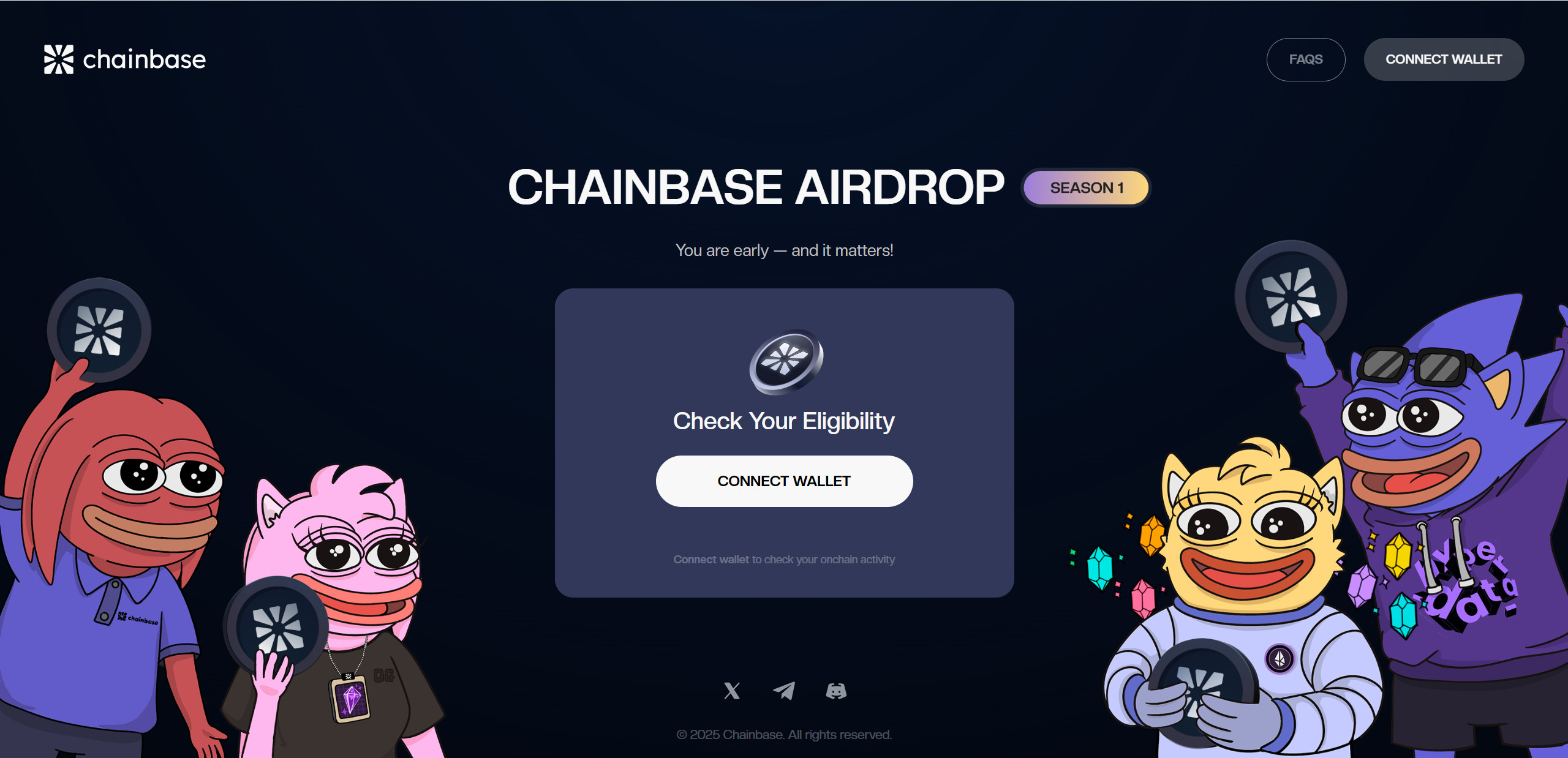
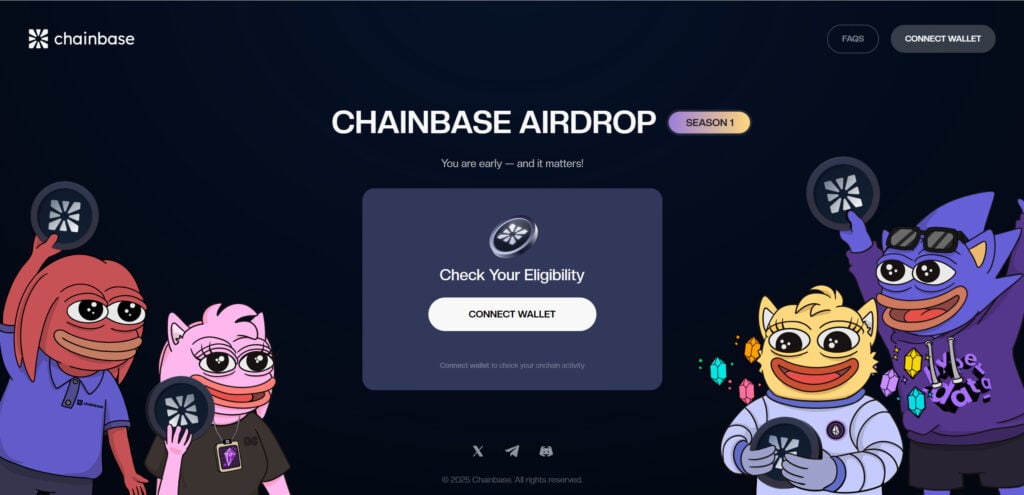
- Deceptive Branding: Scam sites use the Chainbase logo, similar color schemes, and professionally designed graphics to appear legitimate. They often include fake promotional messages such as “You are early — and it matters!” to create urgency and entice users to act fast.
- Fake Airdrop Campaigns: Victims are promised free tokens through what appears to be an official Chainbase airdrop event. The website typically displays a large “Connect Wallet” button with instructions to check eligibility for the airdrop.
- Malicious Wallet Connection Requests: When users attempt to connect their wallet, the scam site prompts for wallet access permissions. Granting these permissions gives scammers full control over the victim’s funds.
- Phishing Variants: Some variations of the scam involve fake wallet update prompts. Victims are instructed to input their seed phrase or private key under the pretense of “updating their wallet.” This instantly exposes their entire wallet to theft.
The scam is in no way associated with the legitimate Chainbase platform. These fraudulent sites exploit Chainbase’s reputation and the excitement surrounding airdrops to lure victims.
The Scale of the Problem
Phishing scams in crypto are increasing rapidly. Reports indicate that millions of dollars are lost every year due to wallet-draining schemes. These scams target users across multiple platforms, from desktop browsers to mobile wallets, with fake promotional links spreading via social media, Discord channels, Telegram groups, and even fake sponsored ads on search engines.
Victims often fall for these scams because:
- The websites look highly professional.
- They use time-sensitive messages like “limited airdrop slots.”
- They exploit users’ fear of missing out (FOMO).
- They mimic real blockchain transaction prompts.
This makes it critical for every crypto holder to learn how these scams operate and how to spot them before falling victim.
How the Scam Works
The Chainbase Airdrop scam is not just a simple phishing page. It is a carefully designed multi-step scheme that manipulates users into compromising their own funds. Here is how the scam typically unfolds:
1. Scammer Promotion and Distribution
Scammers promote the fake Chainbase Airdrop site through:
- Social media posts claiming “Free Chainbase tokens available now.”
- Fake Twitter or Telegram accounts pretending to be official Chainbase representatives.
- Direct messages to crypto users, especially those active in DeFi or NFT communities.
- Malicious links in comments on forums, crypto-related blogs, or YouTube videos.
- Sponsored ads on Google, making the fake site appear at the top of search results.
2. Landing on the Fake Airdrop Site
The victim clicks the link and is taken to a professional-looking website that replicates Chainbase branding. It usually features:
- A header like “Chainbase Airdrop Season 1.”
- Fake testimonials or token distribution counters.
- A prominent “Connect Wallet” button inviting users to claim their free tokens.
3. Prompting Wallet Connection
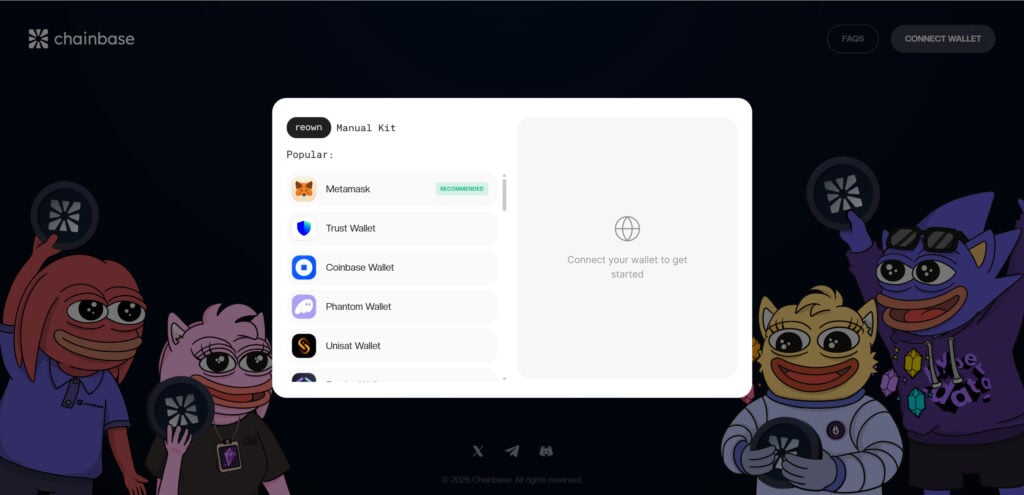
Upon clicking “Connect Wallet,” users are presented with a list of popular wallet options like Metamask, Trust Wallet, Coinbase Wallet, or Phantom Wallet. This interface is designed to look exactly like legitimate Web3 connection pop-ups.
In reality, the connection request is malicious. Instead of merely requesting read-only wallet access, it attempts to:
- Gain permission to spend tokens from the victim’s wallet.
- Request a signature that allows future unauthorized transactions.
- Execute smart contracts designed to transfer funds automatically to the scammer’s wallet.
4. Variant Scam: The Fake Wallet Update
In some cases, the scam site claims that in order to receive the airdrop, the user must update their wallet. A pop-up appears asking for the wallet’s seed phrase or private key. This is a direct phishing attempt. Once a seed phrase is provided, scammers immediately import the wallet and drain all funds, including NFTs and stablecoins.
5. Funds Drained Instantly
If the user grants permissions or shares their passphrase, the scammer’s automated scripts immediately sweep the wallet. Funds are transferred to multiple addresses, making it nearly impossible to trace or recover them.
6. Victim Realizes the Loss
Most victims only notice something is wrong when they check their wallet balance and see all their crypto assets missing. By then, the transactions are irreversible, and there is no way to retrieve stolen funds.
What to Do if You Have Fallen Victim to This Scam
If you suspect you have interacted with a Chainbase Airdrop scam site, immediate action can limit the damage:
- Disconnect Your Wallet Immediately
- Go to your wallet settings and disconnect the malicious site from your connected dApps list.
- This stops future unauthorized interactions but does not reverse transactions already made.
- Revoke Unauthorized Token Approvals
- Use blockchain explorer tools like Etherscan (for Ethereum) or BscScan (for Binance Smart Chain).
- Navigate to “Token Approvals” and revoke access given to suspicious addresses.
- Transfer Remaining Funds to a New Wallet
- If your wallet is compromised, move any remaining crypto or NFTs to a secure new wallet immediately.
- Never use the compromised wallet again for significant transactions.
- Report the Scam Website
- Report phishing links to crypto security platforms like ScamSniffer, Chainabuse, or directly to search engines and hosting providers.
- Warn others in relevant communities to avoid further victims.
- Monitor Wallet Activity Closely
- Keep an eye on blockchain explorers for any unexpected outgoing transactions.
- Set up alerts for wallet activity if your wallet provider offers them.
- Learn and Implement Wallet Security Best Practices
- Never share your seed phrase or private key with any website or individual.
- Verify official links from trusted sources before connecting your wallet.
- Bookmark legitimate websites to avoid phishing pages.
- Consider using a hardware wallet for added protection.
The Bottom Line
The Chainbase Airdrop scam is a sophisticated phishing scheme that exploits the popularity of a legitimate platform to steal funds from unsuspecting crypto users. These fake websites are well-designed and persuasive, making it easy for even experienced users to fall victim. The scam works by tricking users into connecting their wallet or entering sensitive information, resulting in instant theft of funds.
Vigilance is the best defense. Always verify the authenticity of airdrop campaigns, double-check website URLs, and never share your wallet seed phrase. If you have already interacted with a fraudulent site, act fast to secure your funds and prevent further damage. The cryptocurrency space is full of opportunities, but only those who prioritize security can truly benefit from it.
Frequently Asked Questions (FAQ) About the Chainbase Airdrop Scam
What is the Chainbase Airdrop Scam?
The Chainbase Airdrop Scam is a phishing scheme where fake websites impersonate the legitimate Chainbase platform. These fraudulent sites claim to offer free airdrop tokens, usually under the label “Chainbase Airdrop Season 1” or similar. Victims are prompted to connect their crypto wallets, which results in unauthorized access and stolen funds. Some variants of the scam request a “wallet update” or ask users to enter their seed phrases, further compromising wallet security.
Is the real Chainbase platform involved in this scam?
No. The legitimate Chainbase platform is not associated with these scam websites in any way. These fake sites are created by malicious actors to exploit unsuspecting users by mimicking Chainbase branding and design elements.
How do I know if a Chainbase airdrop site is fake?
Scam airdrop sites often have suspicious URLs such as “chainbz[.]vip” or similar lookalike domains. Warning signs include: – Requests for your wallet seed phrase or private key – Promises of guaranteed token rewards with no clear verification process – Poor grammar, design inconsistencies, or broken links – Pop-ups or redirect loops asking you to “verify eligibility” or “update wallet”
What happens if I connect my wallet to a fake Chainbase site?
If you connect your wallet to a fake Chainbase airdrop site, the scammers can gain access to your wallet permissions. In many cases, this allows them to drain all your cryptocurrency tokens and NFTs. Some variations of the scam install malicious scripts that give them permanent access to your wallet.
What if I entered my seed phrase on one of these sites?
Entering your seed phrase on a scam site means your wallet has been fully compromised. You must immediately: 1. Transfer any remaining funds to a new wallet. 2. Revoke all previous wallet permissions using a trusted tool like revoke.cash. 3. Never reuse that seed phrase or wallet again.
Can I recover stolen crypto if I was scammed?
Unfortunately, in most cases, stolen crypto is not recoverable. Blockchain transactions are irreversible. However, you should still: – Report the incident to your wallet provider – Alert your community to prevent others from falling victim – Report the scam site to Google Safe Browsing and phishing watchdogs
What are the most common fake URLs linked to this scam?
Some known scam domains mimicking Chainbase include: – chainbz[.]vip – chainbase-airdrop[.]org – chainbasedrops[.]xyz These domains change frequently, so always double-check any airdrop link against official Chainbase announcements.
Is connecting a wallet to an airdrop site safe?
Only connect your wallet to verified, trusted airdrop sources. If a site is asking for: – Seed phrases – Private keys – “Wallet updates” – Suspicious approvals then it is not safe. Always verify the site’s authenticity through the project’s official social media or website.
How can I check if a site is a phishing scam?
You can use tools such as: – Whois Lookup to examine domain registration details – Google Safe Browsing to check site reputation – PhishTank or ScamAdviser to see if others have reported the domain When in doubt, do not interact with the site.
What should I do if I see a fake Chainbase airdrop site?
If you come across a phishing or scam site impersonating Chainbase: 1. Do not interact with the site 2. Report the domain to relevant authorities (Google, ICANN, etc.) 3. Alert the crypto community via Reddit, Twitter, Discord, or Telegram 4. Notify Chainbase through their official support or contact channel
How can I stay safe from crypto wallet phishing scams?
To protect your crypto wallet from phishing scams: – Never share your seed phrase or private key – Use a hardware wallet for added security – Double-check all airdrop URLs and announcements – Install browser security extensions like MetaMask’s phishing detector – Use tools like revoke.cash to monitor and manage wallet permissions
What is the goal of the Chainbase Airdrop Scam?
The main goal of this scam is to steal funds by gaining control over victims’ wallets. This is either done by tricking users into approving malicious transactions or stealing seed phrases to access wallets directly.
Are other crypto airdrop scams similar?
Yes. Scams involving fake airdrops are widespread in the crypto world. They follow similar patterns: – Create urgency with phrases like “early access” or “limited time” – Offer unrealistic rewards – Trick users into exposing wallet credentials
Can scammers target me if I don’t share my seed phrase?
Yes. Even if you don’t share your seed phrase, scammers can still drain your wallet if you approve malicious smart contract interactions. That’s why it’s crucial to read wallet approval prompts carefully and only interact with trusted sites.