A new gadget called the Electromagnetic Antifreeze Car Snow Removal Device is flooding social media with bold claims that it can melt ice instantly and winter proof your car for just a small upfront cost. The ads look convincing and the videos seem real, but the entire product is a trap designed to make you spend $30 to $80 on a $1 item that does absolutely nothing. Before you risk your money, here is the truth behind the viral winter device that has already fooled thousands of drivers.
Scam Overview
The Electromagnetic Antifreeze Car Snow Removal Device has gained massive exposure online, thanks to waves ofThe Electromagnetic Antifreeze Car Snow Removal Device has recently surged across social media, pushed aggressively through paid Facebook ads, influencer style captions, and polished promotional clips. At first glance, it appears to be a futuristic winter solution that uses electromagnetic technology to melt ice, remove frost, prevent frozen door seals, and improve cold weather performance. However, a closer look reveals that it is one of the most misleading winter gadget scams circulating this season. The entire concept is engineered to deceive consumers into buying a $1 air freshener disguised as an advanced scientific tool.
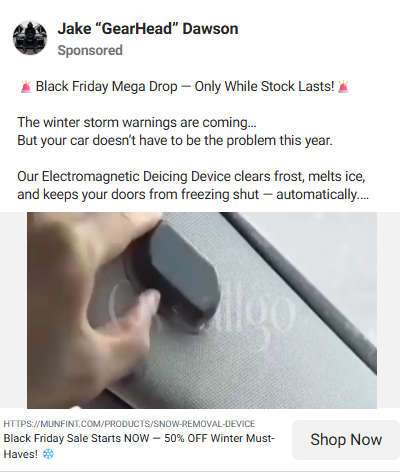
The scam begins with highly targeted advertisements showing dramatic demonstrations of ice melting instantly on car windows. These visuals are staged using edited footage, preheated surfaces, or artificial effects. The ads mimic legitimate automotive brands by including captions about cold start performance, electronic interference prevention, and universal compatibility. Many promotional posts feature generic names like Jake GearHead Dawson or Pseudo Makeapoetry, which are fabricated or stolen identities created exclusively to run ad campaigns. These pages often have almost no real followers or activity, another sign of a coordinated scam network.
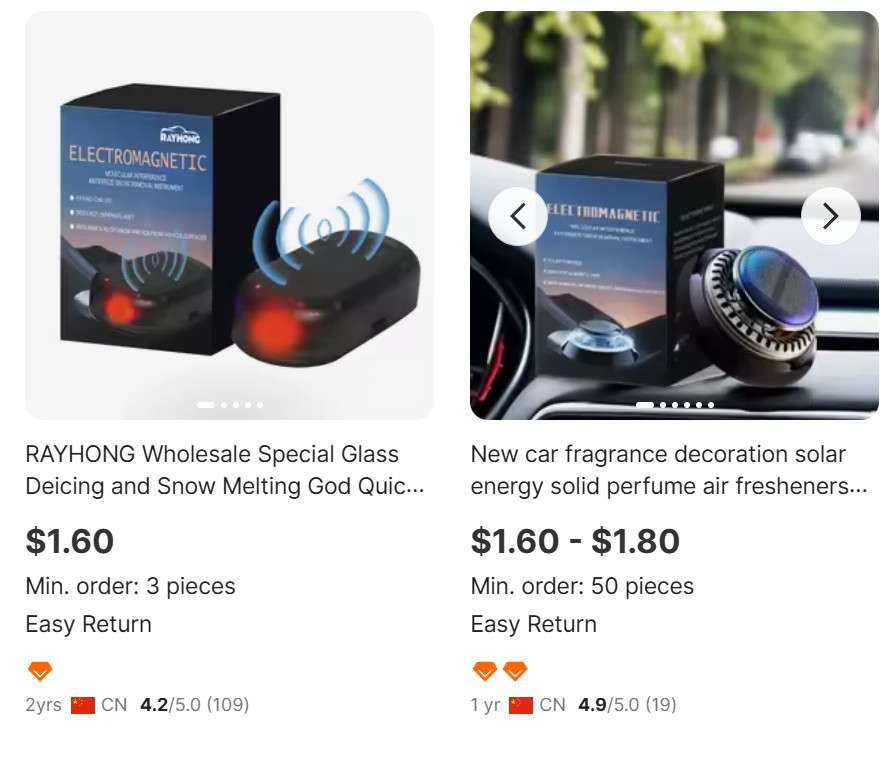
The claims behind the device are entirely fictional. The ads insist that the gadget emits an electromagnetic frequency that destabilizes ice molecules, allowing frost to fall away without scraping. They reference advanced engineering and imply that the device uses sophisticated internal components. In reality, there is no power source, no circuitry, and no technology inside the product at all. The object shipped to customers is identical to wholesale car air fresheners sold on platforms like Alibaba for about $1 – $2. The Alibaba listing you provided shows the exact same plastic housing, the same fake electromagnetic waves printed on the packaging, and the same cheap build quality. Nothing inside the item can influence temperature, moisture, or vehicle electronics.
Scam retailers increase their profits by presenting the product as a premium winter innovation. They inflate the price to $40 and use psychological triggers to create urgency. Their product pages include countdown timers, limited stock warnings, Black Friday banners, and claims of massive seasonal demand. Many sites offer unrealistic discounts like fifty percent off or buy one get one free to push buyers toward impulsive purchases. Everything is designed to simulate legitimacy while rushing customers through the checkout process before they can research the product.
Another defining characteristic of this scam is the network of cloned e commerce sites. Scammers create dozens of short lived stores with different names, all using the same product photos and descriptions. When one domain gathers too many complaints or negative reviews, they shut it down and immediately launch a new one. This rotating structure helps them avoid accountability and makes the scam difficult to trace. The lack of verifiable business information is another warning sign. These websites rarely list a physical address, and when they do, it is often fake or unrelated. Customer service emails rarely respond. Return policies are vague or intentionally confusing, making it almost impossible to receive a refund.
The Electromagnetic Antifreeze Car Snow Removal Device also relies heavily on fabricated customer reviews. The websites show rows of identical five star comments claiming dramatic results such as instant melting, improved traction, or safer winter driving. None of these reviews are verifiable. No independent user has produced real footage of the device performing any of the functions advertised. The absence of scientific explanations or legitimate testing data further exposes the deception.
Ultimately, the entire product is a bait and switch. Consumers believe they are buying an advanced deicing technology but instead receive a useless decorative item that cannot melt snow or affect their car in any way. The scam thrives on cold weather frustration, impulse buying during winter storms, and misleading content that looks professional at a glance. The Electromagnetic Antifreeze Car Snow Removal Device is not just ineffective. It is intentionally designed to misrepresent itself, inflate its value, and exploit buyers through repeated cycles of rebranded sales pages and deceptive advertising strategies.
How the Scam Works
The Electromagnetic Antifreeze Car Snow Removal Device scam operates through a carefully engineered funnel that combines emotional triggers, misleading visuals, fabricated science, and rapidly rotating online storefronts. Each stage of the process is designed to convince buyers that they are purchasing an advanced winter technology, when in reality they are paying an inflated price for a $1 plastic air freshener imported from wholesale suppliers. Understanding how this funnel works is essential to recognizing similar schemes that appear every winter season.
Step 1: Scammers Identify a Seasonal Pain Point
The scam begins with a simple observation. Winter produces stress, inconvenience, and discomfort for drivers. Frosted windshields, frozen car doors, and slow cold starts are universal problems. Scammers target this frustration because it makes consumers more vulnerable to miracle solutions. By timing their campaigns around the first major snowfalls or winter storm warnings, they maximize the emotional pressure that drives impulsive purchases.
Step 2: Creating the Fake Technology
Once the seasonal demand is identified, scammers select a cheap wholesale object to disguise as a cutting edge invention. In this case, they use a low cost air freshener purchased from Alibaba. The images you provided show the exact same device sold for around $1 under generic names like Special Glass Deicing and Snow Melting God. Scammers then redesign the packaging to include scientific sounding terms such as molecular interference, electromagnetic frequency, and ice melting technology. None of these features exist. The device contains no internal components, is not powered, and cannot influence temperature.
Step 3: Producing Staged Demonstration Videos
To create credibility, scammers invest in promotional content that appears professional. The videos circulating online show a hand placing the device near a frosted surface while ice melts instantly. These clips are staged using editing, preheated glass, steam effects, or unrelated footage. Because the average viewer cannot analyze the authenticity of the melting scenes, the visual impression alone is enough to build trust. The goal is to create the illusion of real scientific performance without offering any proof.
Step 4: Flooding Social Media With Ads
Scammers launch hundreds or thousands of paid ads using generic or fake profiles. Many of the ads you uploaded show names like Jake GearHead Dawson, Wideous u, and Pseudo Makeapoetry. These pages typically have no history, no real posts, and no traceable identity. Their sole purpose is to run ads for a short period before being deleted or banned. The ads use bright icons, bold promises, and winter related imagery to attract immediate attention. Targeting algorithms help these ads reach users living in snowy regions, further increasing conversion rates.
Step 5: Directing Users to Cloned E Commerce Websites
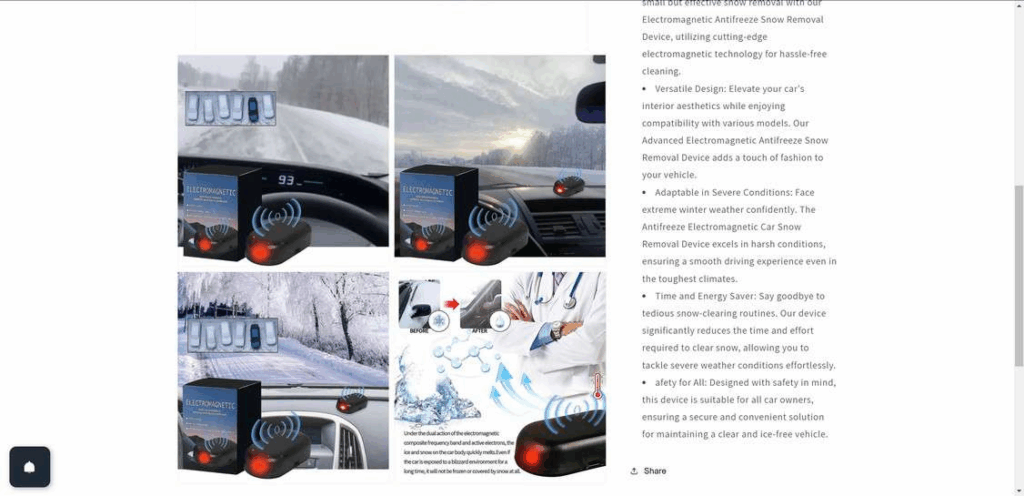
When a user clicks an ad, they are taken to a polished but disposable online store. These stores all share the same design elements. The homepage shows icy landscapes, graphics of electromagnetic waves coming from the device, and lists of unrealistic features. Countdown timers, flash sale banners, and low stock indicators push the buyer to act quickly. Fake reviews line the product page, describing instant ice melting and improved winter safety. These websites are intentionally created to appear legitimate for a few weeks, long enough to collect as many orders as possible.
Step 6: Adding Fake Scientific Authority
To enhance credibility, the scammers use pseudo scientific language. The product pages claim the device prevents electronic interference, enhances cold start performance, stabilizes molecular activity in ice, and emits protective electromagnetic fields. None of these claims have any scientific foundation. No consumer product can melt ice through electromagnetic activity without power. The scammers rely on scientific sounding terminology to confuse or overwhelm the buyer, hoping that the complexity will deter skepticism.
Step 7: Using Urgency and False Discounts
One of the most effective manipulation tactics in the scam is manufactured urgency. The websites claim that only a few units remain, that the product is trending on social media, or that a Black Friday sale ends within minutes. These pressure tactics are designed to push customers into buying without researching the product. Limited time discounts, buy one get one free deals, and free shipping banners create the impression of a rare opportunity.
Step 8: Processing Payments Through Anonymous Structures
Once buyers place orders, their payments are processed by shell companies or overseas entities. The receipts often list unfamiliar corporate names. Customer service emails route to unmonitored inboxes. The business addresses, if provided at all, frequently belong to unrelated buildings or fake locations. This anonymity protects the scammers from accountability and prevents customers from pursuing refunds.
Step 9: Shipping the $1 Air Freshener
After payment is collected, the scammers mail a cheap plastic item exactly like the ones shown in the Alibaba listings. It arrives in a box printed with electromagnetic branding, but the item itself is nothing more than a decorative block with no electronics. There are no instructions explaining electromagnetic operation, no certification labels, and no functional components. Many buyers immediately recognize they have been scammed as soon as they unbox the item.
Step 10: Blocking Refund Attempts
Victims who attempt to return the device encounter resistance. Scam websites use several tactics to prevent refunds. These include long response delays, vague return policies, unreasonable return requirements, short refund windows, and requests to ship the product back to distant overseas warehouses. By making the return process costly or confusing, scammers ensure that most victims give up.
Step 11: Closing the Website and Reopening Under a New Name
Once negative reviews increase or payment processors begin examining chargeback requests, scammers simply abandon the website. They then create a new domain with a new name, upload the same product photos, reuse the same promotional videos, and start running ads again. This constant rotation helps them avoid shutdowns and allows the scam to continue indefinitely.
Step 12: Repeating the Cycle Every Winter
The scam is seasonal, so the entire operation restarts each winter. The branding changes, the website names change, and the profiles running the ads change, but the item remains the same low cost air freshener. Each year, thousands of customers fall for the same marketing strategy because the scam targets a universal seasonal frustration and uses highly convincing visuals.
What to Do If You Have Fallen Victim
If you purchased the Electromagnetic Antifreeze Car Snow Removal Device and realized too late that it is a scam, do not panic. Many consumers fall for similar schemes, and there are clear steps you can take to attempt recovery of your money and protect yourself from further fraud.
1. Document your purchase
Save all receipts, emails, tracking numbers, screenshots of ads, product photos, and website information. This documentation will help you dispute the transaction.
2. Contact the seller directly
Even though many scammers do not respond, you should still send a written request for a refund. State clearly that the product you received is not what was advertised. Save copies of every message.
3. File a chargeback with your credit card company
If the seller refuses to refund you, contact your bank or card issuer immediately. Chargebacks are often successful in cases of nondelivery or deceptive advertising. Provide all documentation and explain that the product is misrepresented and nonfunctional.
4. Dispute the transaction through PayPal if applicable
If you used PayPal, file a dispute under the category of item not as described. PayPal typically investigates these cases and may refund you if the seller fails to provide evidence.
5. Report the scam to consumer protection agencies
Submitting reports helps authorities track patterns and shut down scam networks. Report the seller to:
• Your national consumer protection authority
• Online fraud reporting portals
• Your local law enforcement if applicable
• Online scam databases
• The platform where you saw the ad
6. Warn other consumers
Leave honest reviews on forums, blogs, social platforms, and review websites. Sharing your experience can prevent other victims from falling into the same trap.
7. Monitor your financial accounts
Scammers sometimes reuse payment information for unauthorized charges. Keep an eye on your account activity for several weeks.
8. Learn red flags for future protection
Understanding this scam will help you recognize and avoid similar schemes in the future.
Frequently Asked Questions
What is the Electromagnetic Antifreeze Car Snow Removal Device scam?
It is an online scam that promotes a small plastic gadget as an advanced electromagnetic deicing system for cars. The ads claim it melts snow, prevents ice buildup, stops door seals from freezing, and improves winter driving safety. In reality, the device is a cheap air freshener sourced from wholesale platforms for about $1 – $2 and repackaged under fake scientific branding. It has no heating capability, no electronics, and no electromagnetic functionality.
Why are the Facebook ads so convincing?
Scammers invest in polished video clips, staged before and after effects, and professionally written captions. They use copy like Winter Proof Your Car, Prevent Electronic Interference, and Advanced Electromagnetic Deicing Device to create the illusion of breakthrough technology. They also use stock footage of cars in snowstorms and fake product demonstrations. The accounts promoting these ads often have generic names, stolen profile photos, or newly created pages, which is a strong red flag.
Does the device contain any real technology?
No. The shipped product is a small plastic object identical to Alibaba car air fresheners priced at around $1. It contains no circuits, no coils, no emitters, and no heating elements. It cannot melt ice, change temperature, or influence moisture on any car surface. The electromagnetic claims are fabricated for marketing purposes.
Why are there so many different ads and sellers promoting the same device?
Scam networks run multiple ad accounts, domains, and store names to avoid detection. If one store receives complaints or is shut down by a payment processor, they simply launch a new website with the same photos and text. Every domain uses the same product pictures, the same fake diagrams, and the same staged videos. This rotating strategy helps them stay active throughout winter.
Why do the product pages look professional?
Scammers use prebuilt templates designed for impulse purchases. These pages include countdown timers, fake scarcity warnings, limited stock bars, and 50 percent off banners to push buyers into quick decisions. They also fabricate reviews and testimonials that show unrealistic results. The professional layout is designed to distract from the lack of real product specifications or verifiable company information.
How do scammers use pseudo science to trick buyers?
They insert phrases like electromagnetic frequency disruption, molecular interference, or NASA inspired deicing into their ads. These statements sound scientific but have no grounding in physics. No consumer grade device without a power source can generate electromagnetic energy capable of melting ice. The terminology is chosen only to confuse buyers and create false credibility.
Why do the listings on Alibaba look identical to the product being advertised?
Because they are the same item. Scammers purchase bulk air fresheners, switch the label to Electromagnetic Antifreeze, and mark up the price by several thousand percent. The images included in your screenshots show the exact same plastic mold and packaging design, proving that the so called deicing device is simply relabeled wholesale inventory.
What happens after you place an order?
After purchasing, customers receive automated emails claiming the item is being prepared for shipment. Once shipped, the product arrives in a basic box containing the cheap air freshener. There is no instruction manual explaining electromagnetic operation, no technical data, and no indication that it performs any winter function. It is decorative only. Some customers never receive anything at all.
Why do scam pages say the device prevents electronic interference or freezing doors?
These are fabricated claims designed to broaden the appeal and make the device seem multifunctional. None of these features are real. A $1 plastic object cannot influence vehicle electronics, door seals, or engine performance. These statements are used to justify higher pricing and create a sense of safety benefit.
Are the positive comments on Facebook real?
No. Most are posted by bots or accounts created solely for engagement. Many comments are generic, such as Works great or My husband loves this. If you check the profiles, they often have no real photos, minimal activity, or foreign follower lists. Fake engagement is a standard tactic for boosting the credibility of scam ads.
Why do the ads say the product is universal fit or compatible with all cars?
Because it is a decorative item. Claiming universal compatibility helps bypass questions about required power, installation, or calibration. A device with no function can be marketed as compatible with everything.
Why do some ads show a glowing red light or blue light?
The glowing effects are edited into the videos. The actual item does not light up or change color. These visual effects are added to imply that the device is activated or generating energy when it is not.
What should I do if I purchased the device?
Document everything, contact the seller once, and immediately file a dispute with your bank or PayPal under item not as described. Provide photos proving the device is a cheap air freshener. The sooner you dispute the charge, the better your chances of recovering your money.
The Bottom Line
The Electromagnetic Antifreeze Car Snow Removal Device is a classic example of a deceptive online scam. It presents itself as a cutting edge scientific breakthrough but is nothing more than a cheap plastic trinket. The ads rely on misleading videos, fabricated science, fake reviews, and pressure tactics to generate purchases quickly. No part of the product works as advertised, and customers who attempt to seek refunds encounter resistance or total silence.
Consumers should always approach viral miracle gadgets with caution, especially when they promise results that contradict basic physics. Winter weather is difficult, but there are no shortcuts involving electromagnetic devices that melt snow without any power source. The best defense is awareness, research, and skepticism.
If you have encountered ads for this device, avoid purchasing it. If you already bought it, follow the steps above to recover your money. Staying informed protects both your wallet and your personal information, helping you navigate online shopping safely throughout the winter season.