

In recent years, a dangerous scam promoting the ‘EWheels EW-14 Four Wheel Scooter’ has emerged on Facebook and other social media platforms. This fraudulent scheme aims to trick unsuspecting consumers into purchasing non-existent scooters or low-quality counterfeit versions of the real EWheels EW-14 model.
The scam typically begins with an eye-catching Facebook advertisement promoting the EWheels EW-14 scooter at an unbelievably low price, often $29.99 or $39.99. Persuasive phrases like “clearance sale!” and “last day for discounts!” create a false sense of urgency. When users click on the ad, they are directed to a fake website meticulously designed to resemble an authorized EWheels retailer.
However, this is only a facade. In reality, users who place orders through these fraudulent websites either receive nothing at all or a cheap knockoff scooter vastly inferior to the genuine product. By the time victims realize they have been scammed, the websites have vanished, and the scammers are long gone with their money.
This article will take an in-depth look at how the ‘EWheels EW-14 Four Wheel Scooter’ scam works, who is behind it, and most importantly, how you can avoid becoming a victim. We will also provide guidance on what to do if you have already fallen for this insidious Facebook scam.
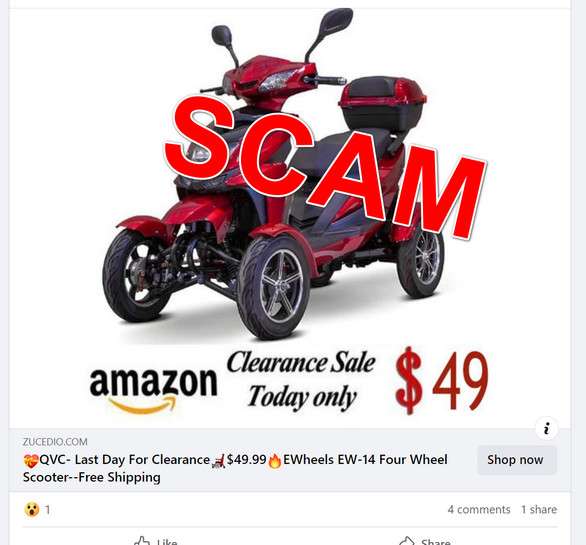
Overview of the EWheels EW-14 Four Wheel Scooter Scam
The ‘EWheels EW-14 Four Wheel Scooter’ scam is a fraudulent scheme designed to take advantage of unsuspecting consumers looking for mobility scooters online. Scammers use carefully crafted Facebook ads and fake websites to trick victims into paying for scooters they will never receive or get low-quality counterfeits instead of the real product.
This scam has been active since at least 2020 and continues to claim new victims regularly. Reports indicate thousands of people have fallen for the ploy, with total losses adding up to a substantial amount.
The EWheels brand appears to be specifically targeted because its EW-14 model is a popular mid-range mobility scooter known for its reasonable price and solid performance. Scammers bank on the product’s appeal and reputation to lure in victims.
While the scam’s details evolve over time, the core tactics remain consistent:
- Posting eye-catching Facebook ads promoting the EWheels EW-14 at absurdly low prices like $29.99 or $39.99.
- Using persuasive language like “clearance sale!” or “liquidation prices!” to create false urgency.
- Directing users to sophisticated fake websites that accept payments but never deliver any products.
- Collecting order and personal information from victims that can be used in other scams or sold to third parties.
- Never providing any valid contact information, making it almost impossible for users to get their money back or even report the scam.
The scam is essentially an affinity fraud that relies on the strong brand recognition and reputation of EWheels to exploit less internet-savvy consumers. It demonstrates the dark side of social media advertising and e-commerce.
Key Facts About the EWheels EW-14 Scooter Scam
- Active since at least 2020 with new victims regularly
- Thousands estimated to have fallen victim so far
- Losses in the tens or hundreds of thousands of dollars
- EWheels brand specifically targeted for its popularity
- Fraudulent Facebook ads promise prices like $29.99 or $39.99
- Fake websites look like real EWheels retailers at first glance
- Scammers collect order details and personal information
- Very difficult to get money back or even report the scam
- Tactics and websites frequently change but core scam is the same
Scam Advertisement Examples
The Facebook ads used in the EWheels scooter scam tend to follow similar templates, even as the specific websites being promoted change frequently. Here are some examples of the type of language and claims used in the ads:
“⚡Last day for clearance, ONLY $29.99!⚡ EWheels EW-14 Four Wheel Scooter – Eco-friendly, efficient, and stylish! Get ready to cruise in style! The first 100 users who order today will get a FREE accessory package! 😀We hope to help more people with limited mobility. I bought one for my dad, and he LOVES it! 👇👇”
“🔥🔥LIQUIDATION PRICES!🔥🔥 EWheels EW-14 Four Wheel Scooter only $39.99 today only! ✅Eco-friendly ✅Smooth ride ✅Portable 🛵Get the mobility you need at a price you can afford! Free carrying bag for the first 50 orders. Try it out for yourself! Link below:”
As you can see, absurdly low prices, high-pressure phrases like “last day” and “limited time,” too-good-to-be-true free gifts, fake reviews, and emoji-laden text are commonly used to grab attention and create urgency.
Suspicious Website Tactics
The fraudulent websites used in the EWheels scooter scam are sophisticated operations designed to lure in victims. Here are some of the common tactics and red flags to watch out for:
- Domain names containing the words “EWheels,” “scooter,” or “wheels” but with odd prefixes/suffixes.
- Homepages featuring fake countdown timers or stock “xFew products left!” messages.
- No real company information, address, or contact details provided.
- No mention of returns, refunds, or warranties anywhere.
- No HTTPS secure connection.
- Prices seem too good to be true compared to legitimate sellers.
- Positive reviews are vague, unnatural, or computer-generated.
- Payment accepted immediately without chance to review details.
- Credit cards, debit cards, Zelle, PayPal, or crypto only. No safer options.
If you come across a website with one or more of these red flags, avoid purchasing anything from them. They are most likely a scam operation.
How the EWheels EW-14 Scooter Scam Works
Now that you know the overview of this insidious Facebook scam, let’s break down step-by-step how the fraudsters operate and how innocent victims get sucked in. Understanding the scam’s anatomy is crucial to avoid falling for it yourself.
Step 1 – Baiting Victims with Fake Facebook Ads
The scam begins with Facebook ads promoting the EWheels EW-14 scooter for improbably low prices like $29.99 or $39.99. These ads are targeted at users Facebook’s algorithms determine may be interested in mobility scooters, either through their browsing history or demographic data.
The ads use manipulative language and eye-catching graphics to make outrageous claims like “80% discount just for today!” or “Final clearance sale!” that create a false sense of urgency. Even savvy users can be fooled by a slick, professional-looking ad run by scammers.
Step 2 – Directing Victims to Sophisticated Fake Websites
When users click on the enticing advertisements, they are taken to elaborate scam websites dressed up to look like legitimate EWheels retailers or dealerships. The site domains often contain the EWheels name or variations of common scooter terms.
Everything from the product images to policies and even product reviews are carefully fabricated to avoid setting off alarms. To unsuspecting visitors, the website seems totally authentic and trustworthy.
Some sites even go as far as copying and pasting content from the real EWheels site to appear more credible. However, telltale signs like no real contact info or guarantees can reveal their true nature.
Step 3 – Collecting Payment and Personal Information
Once on the fake website, users are encouraged to purchase the heavily discounted EWheels scooter as quickly as possible before the “sale” ends. The sites make the checkout process fast and simple, with credit cards or services like PayPal and Zelle the preferred payment options.
In their rush to grab the deal, victims hand over not just their money but also personal information like their name, shipping address, phone number, and email without a second thought. This info can then be used or sold by scammers for future frauds.
Step 4 – Vanishing Act: Websites and Sellers Disappear
Within days or even hours of collecting payments and order details, the fake websites vanish without a trace, leaving victims confused and unable to contact the “seller.” Any emails or numbers provided turn out to be dead ends or link to other scam sites.
Even if the site remains up, victims find that there is absolutely no way to get any response from the scammers regarding their orders. Requests for order status updates, refunds, or just general queries go unanswered.
Some people only realize weeks or months later that they have been scammed when no scooter ever arrives.
Step 5 – No Products or Low-Quality Knockoffs are Sent
In some cases, the scammers will actually follow through and ship something to victims to extend the charade. However, it is never the high-quality EWheels scooter advertised.
Instead, victims receive a cheap counterfeit model, often damaged or non-functional right out of the box. These knockoffs mimic the EWheels design but are made from flimsy materials and components that break almost immediately.
Of course, by this point, it’s far too late to get their money back or return the lousy products. The fake websites and sellers are long gone, leaving the victims stuck with the bill and useless scooters.
Red Flags: How to Spot the EWheels Scooter Scam
Now that you understand the mechanics of this scam, here are some of the telltale warning signs to watch for:
Too Good to Be True Pricing
Genuine EWheels EW-14 scooters retail for $599 to $899 at authorized dealers. So prices like $29.99 or $39.99 are simply too good to be true. Real businesses cannot survive selling products for 95%+ less than usual. Discounts this extreme are virtually guaranteed to be a scam.
High-Pressure Tactics
Scammers use limited time offers, high-demand claims, fake scarcity tactics and urgent language to create a false sense of urgency. No legitimate retailer needs to push customers to purchase immediately with such aggressive sales ploys.
No Company Details
Scam websites lack any identifiable company information or seller details beyond a vague business name. No physical address, email, phone number, or business identification can be found.
Unsafe Payment Options
Secure online retailers offer various payment methods, including options with purchase protection and refund guarantees. Scam sites only take the riskiest options like bank transfers, cryptocurrency, and gift cards.
No Return Policy or Guarantees
There are no refund terms, warranties, or exchange policies listed on scam websites. No legitimate retailer, especially for expensive mobility scooters, would operate without product guarantees and a safety net for customers.
Grammatical Errors & Amateur Design
While scam websites are improving in sophistication, telltale mistakes can still reveal their real nature. Look for awkward phrasing, bad grammar, misspelled words, repetitive text, and amateurish design elements.
If you notice one or more of these red flags, do not hand over your money or personal details. Seek out genuine authorized EWheels dealers instead to avoid this scam.
What to Do if You Have Fallen Victim to the EWheels Scooter Scam
If you made a purchase from one of the fraudulent EWheels scooter websites and never received your product, or received a cheap knockoff model, here are the steps to take:
Step 1: Report the Incident
Report the scam website and transaction to the following authorities:
- Facebook – Report the fraudulent ad and any associated Facebook pages.
- Federal Trade Commission (FTC) – File a scam report with the FTC’s Complaint Assistant.
- State Attorney General – File a complaint with the AG’s consumer protection division for your state.
- Local police department – File a formal fraud complaint with details of the transaction.
- Banks/Payment Services – Report the scam to your bank, credit card company, or payment provider (Zelle, PayPal, etc).
The more reports that are made, the better the chances of shutting down these scams and preventing future victims.
Step 2: Gather Evidence
Collect screenshots and details of the Facebook ad, fake website, order confirmation, payment receipts, and any email or messaging correspondence. Document everything while details are still fresh. Evidence will strengthen your case when disputing the charges or trying to recover losses.
Step 3: Dispute the Charges)
Immediately contact your bank, credit card provider, or payment service like Zelle or PayPal to report the fraudulent charges. Provide details of the scam transaction and request a chargeback or refund due to fraud. The sooner you act, the better your odds of recovering your payment.
Step 4: Warn Others
Post warnings about the scam website on your own social media feeds. Share details of your experience to make others aware of these predatory fraudsters. The more people informed, the harder it becomes for scammers to find new victims. Consider contacting local media outlets as well.
Step 5: Adjust Security Settings
Check your Facebook privacy and security settings. Tighten parameters on who can see your posts, profile info, friends list, and activity. Limiting what scammers can view makes it harder for them to target you again.
Step 6: Seek Legal Counsel (If Viable)
For losses in the thousands of dollars, you may want to consult a lawyer about additional legal remedies. They can provide guidance on steps like challenging fraudulent domains or targeting scam call centers. However, the costs may exceed potential recoveries.
How to Avoid EWheels Scooter Scams on Facebook
Here are some key tips to avoid becoming a victim of the “EWheels Scooter” scam and other e-commerce frauds on social media:
Stick to Authorized Dealers
Only purchase directly from the official EWheels website or authorized EWheels brick-and-mortar dealers listed on their site. Never trust third-party sellers on Facebook, Instagram, or random websites.
Beware of Social Media Ads
Approach Facebook ads for scooters or mobility devices with extreme caution. Scammers relentlessly target social media users with fraudulent ads. Verify seller legitimacy before clicking.
Research Before Buying
Do your homework before making any purchase. Search for reviews of the seller, look for valid contact information, and check for a company history. Only buy from reputable sources that can be validated.
Avoid “Too Good to Be True” Offers
If a price or discount seems unrealistic, walk away. Stick to reasonable offers in line with MSRP ranges. Remember, only scammers can offer brand new scooters for $29.99.
Pay with Credit Cards
Never pay by unsafe methods like wire transfers, gift cards, cryptocurrency, or direct bank withdrawals. Always use a credit card with fraud protection and purchase guarantees. Avoid debit cards, PayPal, Zelle, etc.
Use Caution on Every Site
Even if a website looks professional, check for red flags like no contact info, fake reviews, gramatical errors, or pushy sales language. Don’t let polished scams fool you.
Trust Your Instincts
If an offer just seems “off” or sketchy, listen to your gut feeling. Don’t get distracted by slick ads, countdown timers, or “act now” messages. Just abandon the site. Your instincts are usually right.
Staying vigilant is crucial. With fraudsters regularly unleashing new scams, the threats will only increase across all e-commerce platforms, including social media. But armed with awareness and caution, you can avoid becoming their next victim.
Here is a sample FAQ section about the EWheels EW-14 scooter scam:
Frequently Asked Questions
What is the EWheels EW-14 scooter scam?
This is a fraudulent scheme where scammers use Facebook ads and fake websites to trick users into buying non-existent or low-quality counterfeit EWheels scooters. The ads promise unrealistic prices like $29.99 to lure victims in.
How do the scammers operate?
They use convincing Facebook ads to direct targets to sophisticated fake sites that collect payment and personal information. But no products are ever delivered, or victims receive broken knockoffs. The scammers then disappear with the money.
What are some red flags of the scam ads/sites?
Red flags include prices too good to be true (under $100), high-pressure tactics, no real company details, fake reviews, grammatical errors, and unsafe payment options.
What should I do if already scammed?
If you paid by credit card, report it to the card issuer immediately to dispute the charges. File complaints with the FTC, state attorney general, police, and social networks. Gather evidence and warn others about the scam.
How can I avoid the EWheels scooter scam?
Only buy directly from EWheels’ official website or authorized listed dealers. Beware of Facebook ads, do research on sellers, avoid unrealistic offers, pay by credit card, and trust your instincts on scam red flags.
Are other mobility scooter brands targeted too?
Yes, while EWheels is common, scammers also create similar fake offers using brands like Pride, Golden, Solax and more. The same warning signs apply. Only buy from the verified brand sites and authorized sellers.
Where can I find legitimate EWheels scooters for sale?
Genuine EWheels scooters are sold through the official EWheels website and brick-and-mortar dealers listed on their website’s dealer locator page. Purchasing directly from them ensures you get an authentic product.
What should I do if I suspect a fraudulent website?
Report it immediately to the hosting provider, domain registrar, social networks driving traffic to it, and anti-fraud authorities. Provide as many details as possible to get fraudulent sites shut down quicker.
Conclusion
The ‘EWheels EW-14 Four Wheel Scooter’ scam on Facebook serves as a sobering reminder that social media and e-commerce still pose major risks for consumers. Savvy counterfeiters and fraudsters continue to exploit the reach of platforms like Facebook to deceive unsuspecting shoppers.
This scam has already affected thousands looking for mobility solutions online. But understanding how these frauds operate can prevent you from unwittingly handing money over to crooks behind fake websites and advertisements.
When a deal seems too good to be true, it almost always is. Follow our tips to steer clear of this predatory scam and only make purchases from authorized sellers you can thoroughly verify. And if you do fall victim, act swiftly to have any chance at recovering losses.
With vigilance and caution, customers can steer through the minefield of scams on social media. Do your due diligence, follow safe shopping practices, and don’t let tempting offers cloud your judgment. Protect yourself and your hard-earned money.








