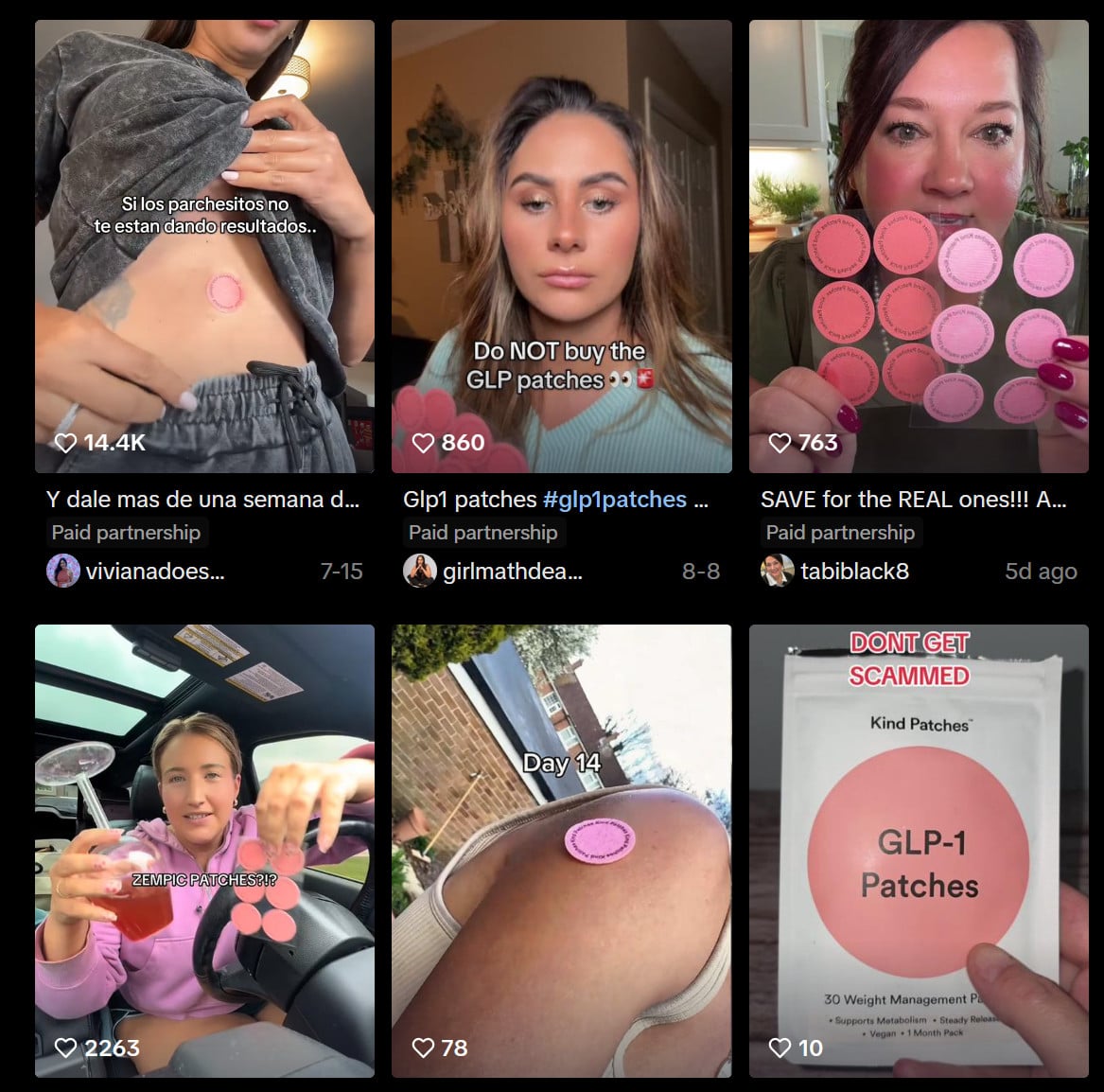
Have you seen those TikTok ads promoting Kind Patches GLP-1 patches that promise to burn fat, suppress cravings, and boost energy — all without needles or side effects? The marketing sounds almost magical: stick a small patch on your arm, let the ingredients absorb through your skin, and watch the pounds melt away.
But here’s the big question: Do these GLP-1 patches really work, or are they just another case of false advertising in the booming weight loss industry?
In this article, we’ll take a deep dive into the claims, ingredients, marketing tactics, and scientific feasibility of these trending weight loss patches. We’ll also compare them with real GLP-1 medications like Ozempic and Wegovy, look at customer reviews, highlight red flags, and outline what you should do if you’ve already bought into the hype.
By the end, you’ll have a clear answer on whether Kind Patches GLP-1 patches are legitimate — or just another weight loss gimmick.
What Are GLP-1 Patches?
GLP-1 patches are marketed as topical weight loss aids that claim to support appetite control, regulate blood sugar, and burn fat by delivering natural extracts and vitamins directly through the skin.
On the official Kind Patches website, the benefits are described as:
- Absorption through skin
- Activates within 1 hour
- Steadily releases ingredients
- Supports cravings management
- “No side effects, discreet and simple”
Each pack contains 30 patches (a one-month supply). The product description highlights plant-based ingredients such as berberine, cinnamon extract, pomegranate, B vitamins, L-glutamine, and chromium — substances often associated with metabolism or appetite control.
The patches are positioned as a needle-free alternative to expensive GLP-1 weight loss injections like Ozempic or Wegovy, which have exploded in popularity due to their proven effectiveness in suppressing appetite and promoting weight loss.
But here’s the first red flag: GLP-1 patches do not actually contain GLP-1. Instead, they include herbal extracts and vitamins that supposedly “support GLP-1 production.” That’s a huge difference.
Understanding GLP-1: Why It Matters in Weight Loss
To understand why these patches are controversial, you need to know what GLP-1 actually is.
- GLP-1 (Glucagon-like peptide-1) is a natural hormone produced in the gut after eating.
- It helps regulate blood sugar by stimulating insulin release.
- More importantly for weight loss, GLP-1 slows down digestion and sends “fullness signals” to the brain, reducing appetite.
This is why GLP-1 receptor agonist drugs (like semaglutide in Ozempic and Wegovy, or liraglutide in Saxenda) have been revolutionary for obesity treatment. They mimic the effects of GLP-1 and can help patients lose significant weight when prescribed under medical supervision.
However, these drugs:
- Are protein-based molecules (peptides).
- Must be injected or taken orally with special protective coatings.
- Cost hundreds of dollars per month.
- Require strict medical testing, regulation, and FDA approval.
Now ask yourself: Can a $10–$20 patch bought online mimic the effects of a prescription drug that costs $800+ per month?
The science says no.
The Science of Transdermal Patches – Can GLP-1 Work This Way?
Transdermal patches (like nicotine patches or hormone therapy patches) are effective when the drug molecules are small and lipophilic (fat-soluble) enough to penetrate the skin barrier.
Examples of successful patch-delivered drugs include:
- Nicotine (small molecule, addictive, used for smoking cessation).
- Hormones like estrogen or testosterone (small molecules, fat-soluble).
- Pain medications like fentanyl.
But GLP-1 is a peptide hormone — a large, complex protein molecule. Proteins are far too large to pass through the skin barrier. That’s why Ozempic and Wegovy are injections and not creams or patches.
So scientifically:
- A patch cannot deliver GLP-1 into your bloodstream.
- Any patch claiming to deliver GLP-1 effects is either misleading or using non-GLP-1 ingredients.
This explains why the Kind Patches ingredient list does not include actual GLP-1. Instead, it contains herbal extracts like berberine and cinnamon. These may have mild metabolic effects when taken orally, but there is no scientific evidence that they work through a patch.
Ingredients Breakdown: What’s Really in Kind Patches GLP-1?
The official ingredient list includes:
- Berberine Extract (8.75mg) – a plant compound studied for blood sugar regulation and possible weight management benefits. But clinical studies use oral doses of 500–1500mg/day — hundreds of times more than what’s in a patch.
- Cinnamon Extract (2.75mg) – associated with minor blood sugar regulation, but again, studies use grams, not milligrams.
- Pomegranate Extract (1.75mg) – antioxidant properties, no proven GLP-1 effect.
- Vitamin B Complex (B1, B2, B3, B6, B9, B12) – useful for general energy metabolism, but not weight loss.
- L-Glutamine (3.5mg) – an amino acid that may help gut health, but oral doses used in studies are grams, not milligrams.
- Chromium (35mcg) – marketed for appetite control and metabolism, but evidence is mixed and weak.
In short: the ingredients may sound impressive, but the doses are tiny and not proven to be effective through skin absorption.
Marketing Red Flags
The way GLP-1 patches are marketed raises several red flags that consumers should be aware of:
1. False FDA Approval Claims
Some ads suggest the patches are “FDA approved” — which is misleading. Only prescription medications like Ozempic have FDA approval for GLP-1 weight loss treatment. Dietary supplements and patches like these are not FDA approved drugs.
2. Too-Good-To-Be-True Promises
Phrases like “burn fat while you sleep”, “instant appetite control”, and “no side effects” are classic examples of overhyped marketing with no scientific backing.
3. Low Price vs. Prescription Drugs
Real GLP-1 medications cost hundreds per month because of their complexity. These patches are sold for as little as $9–$20 online, which should immediately make you skeptical.
4. Copycat Branding
Multiple brands (Kind Patches, OceAura, etc.) sell nearly identical products with the same packaging design, suggesting white-label dropshipping from cheap suppliers.
5. TikTok and Influencer Hype
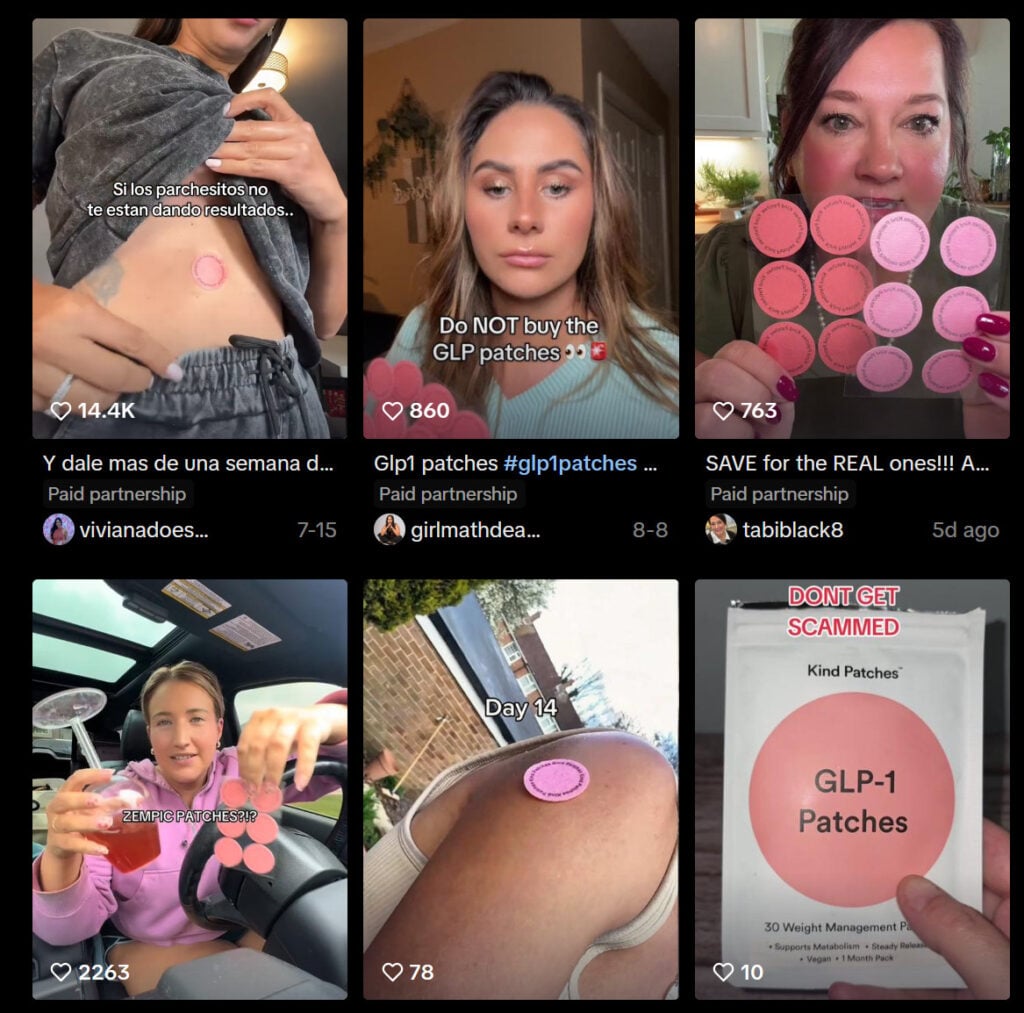
The patches gained traction on TikTok, with influencers showing themselves sticking a patch on their arm and claiming they feel less hungry. But many of these are likely sponsored promotions or even fake reviews.
Customer Reviews: Mixed Experiences
On platforms like Amazon, TikTok, and eBay, reviews of GLP-1 patches are mixed:
- Some buyers report feeling “less hungry,” though this may be placebo effect.
- Others say the patches did absolutely nothing for them.
- A few mention skin irritation or rashes from the adhesive.
- Many negative reviews call out the false advertising, pointing out that the patches do not actually contain GLP-1.
One customer review summed it up:
“They call it a GLP-1 patch, but it’s just berberine in sticker form. I’ve used berberine pills before — much stronger and cheaper. This patch didn’t do anything.”
Expert Opinions: What Doctors Say
Doctors and obesity specialists are clear:
- No patch or over-the-counter supplement can replicate the effects of prescription GLP-1 agonists.
- Weight loss requires clinically tested treatments combined with diet, exercise, and lifestyle changes.
- Supplements and patches are not substitutes for medical treatment.
The Business Model: Dropshipping and Rebranding
Another red flag is how these patches are sold.
- On Kind Patches’ website, a one-month supply sells for around $12–$20.
- On eBay, nearly identical products are sold under the brand OceAura for under $10.
- On social media, different names pop up, but the packaging and claims are the same.
This suggests the patches are generic products sourced cheaply from overseas manufacturers and resold at inflated prices under different brand names.
It’s a common dropshipping model: create a trendy product name, advertise aggressively on TikTok, and cash in before customers realize it doesn’t work.
What To Do If You Bought GLP-1 Patches
If you’ve already purchased GLP-1 patches, here’s what you should do:
- Stop Expecting Medical Results – These patches will not deliver the same effect as prescription GLP-1 drugs.
- Check for Skin Reactions – If you notice redness, itching, or irritation, stop using them immediately.
- Request a Refund – Contact the seller or payment provider (PayPal, credit card, etc.) to ask for a refund, citing misleading advertising.
- Report Misleading Ads – File complaints with the FTC (Federal Trade Commission) or equivalent in your country.
- Switch to Evidence-Based Methods – Talk to your doctor about safe, proven weight loss options, including real GLP-1 medications if appropriate.
- Warn Others – Share your experience online to help others avoid falling into the same trap.
FAQ
What are GLP-1 patches?
GLP-1 patches are marketed as weight loss patches that claim to support appetite control and fat burning. They do not actually contain GLP-1 but instead use plant-based extracts like berberine and cinnamon.
Do GLP-1 patches really work?
There is no scientific evidence that GLP-1 patches work for weight loss. GLP-1 is a large protein hormone that cannot be absorbed through the skin.
Are GLP-1 patches FDA approved?
No. Only prescription drugs like Ozempic and Wegovy are FDA approved for GLP-1 weight loss therapy. Patches sold online are unregulated supplements.
What’s inside GLP-1 patches?
Ingredients typically include berberine, cinnamon extract, pomegranate, B vitamins, L-glutamine, and chromium — but in doses far too small to be effective.
Can GLP-1 patches replace Ozempic or Wegovy?
No. Prescription GLP-1 drugs are clinically tested and regulated. Patches are unproven supplements and cannot replicate medical-grade treatments.
Are there side effects?
Some users report skin irritation from the adhesive. Otherwise, the patches are unlikely to cause harm but also unlikely to deliver any real benefit.
Why are GLP-1 patches so cheap compared to real medications?
Because they are not real GLP-1 drugs. They are inexpensive supplements repackaged as patches, often through dropshipping businesses.
What should I do if I bought GLP-1 patches?
Request a refund, stop using them if they cause irritation, and consult your doctor about safe, effective weight loss options.
The Bottom Line
Kind Patches GLP-1 patches and similar products are not legitimate alternatives to prescription GLP-1 medications.
- They do not contain GLP-1.
- They cannot deliver GLP-1 through the skin.
- The ingredients inside are underdosed and unproven for weight loss in patch form.
- Marketing tactics rely on hype, false promises, and confusion with real GLP-1 drugs like Ozempic.
At best, these patches are a placebo effect with vitamins. At worst, they’re false advertising designed to cash in on the GLP-1 trend.
If you are serious about weight loss, the safe path is clear: consult a medical professional and consider evidence-based treatments. Don’t fall for TikTok gimmicks.