Have you received a suspicious text claiming to be from an Indeed recruitment assistant offering you a flexible remote job with incredible pay? If so, you’re not alone. Thousands of people around the world are receiving these messages daily. They sound tempting, with promises of working from home, setting your own hours, and earning hundreds of dollars a day. But here’s the truth: it’s a scam. In this article, we’ll take a detailed look at the Indeed recruitment text scam, how it works, what the red flags are, and what steps you should take if you’ve already fallen victim. By the end, you’ll know exactly how to protect yourself and your loved ones from this growing online threat.
The Indeed recruitment text scam is one of many fraudulent schemes that prey on job seekers by impersonating well-known job platforms. Indeed is a legitimate and trusted job search site, but scammers exploit its name to build credibility. They send unsolicited text messages claiming to be from a “recruitment assistant” at Indeed, offering a remote job that seems both flexible and lucrative. Let’s break down what makes this scam particularly dangerous and effective.
The Typical Message
Most scam messages look very similar. They often read something like this:
“Hello, I’m a recruitment assistant at Indeed. We’d like to offer you a great remote part-time/full-time job to help update app store data, increase app views and downloads, and provide you with free training. Flexible hours, working only 30 to 90 minutes a day, earning up to $800 daily.”
At first glance, this may sound legitimate. After all, remote jobs are more popular than ever. But a closer inspection reveals several glaring red flags:
Too good to be true pay: Earning $500 to $800 a day for simple tasks is highly unrealistic.
Vague job description: “Updating app store data” or “increasing app views” are not real, structured job duties.
Unsolicited message: Real recruiters don’t cold-text random people with job offers.
Push to move platforms: Scammers often insist that you switch to WhatsApp, Telegram, or another messaging app.
Requests for money or information: Eventually, they’ll ask for deposits, training fees, or even banking details.
Why People Fall for It
The scam works because it targets people in vulnerable situations. Job seekers, stay-at-home parents, retirees, and those looking for side hustles are all prime targets. The promise of easy money, low work hours, and flexibility feels like a dream come true. Unfortunately, it’s a carefully crafted illusion designed to lure people in before stealing their money or personal data.
What Indeed Says About It
Indeed is aware of these scams and warns job seekers not to trust unsolicited messages. According to their official site, Indeed will never:
Ask for personal details through text or messaging apps.
Send job offers out of the blue if you haven’t applied.
Request payments for training or job placement.
This scam uses Indeed’s name without authorization, tricking people into believing it’s legitimate. But the company has made it clear: any unsolicited text message claiming to be from an Indeed recruiter should be treated as suspicious.
The Impact on Victims
Victims of this scam can suffer financial losses, identity theft, and emotional stress. Some people lose hundreds or even thousands of dollars through fake “training fees” or deposits. Others unknowingly hand over sensitive details like banking information, Social Security numbers, or passport scans. Once scammers obtain this data, they can commit fraud, open new accounts in your name, or sell your information on the dark web.
This isn’t just a minor inconvenience. Falling for the Indeed recruitment text scam can have long-term consequences that take months or years to resolve.
How The Scam Works
Now that we’ve seen an overview of the scam, let’s dive deeper. Understanding how the scam works step by step will help you recognize it faster and protect yourself.
Step 1: The Initial Message
The scam begins with an unsolicited text message. This is a mass campaign, often sent to thousands of random phone numbers using automated systems. The text will always sound professional and enticing, referencing a job offer that requires little effort for high pay. The scammer will identify themselves as a “recruitment assistant” from Indeed or another popular job platform.
Step 2: Building Interest
Once you reply to the message, the scammer tries to build rapport. They’ll emphasize the flexibility of the role, the lack of strict qualifications, and the simplicity of the work. They may send additional details that sound official, such as supposed job descriptions or training outlines. The goal here is to lower your guard and make you believe the opportunity is real.
Step 3: Moving to Another Platform
Next, the scammer will push you to continue the conversation on apps like WhatsApp, Telegram, or even email. Why? Because these platforms are harder to monitor and make it easier for scammers to disguise themselves. Once you’ve moved off SMS, they can bombard you with fake documents, ID badges, and even screenshots to convince you of their legitimacy.
Step 4: The Fake Job Tasks
Scammers will describe the “job duties” in very vague terms. You might be told you’ll be:
Updating app store data.
Boosting views and downloads for apps.
Completing simple online surveys.
Writing fake reviews.
These are not real job tasks. They’re deliberately vague so you can’t verify them. They also make the job sound easy, which adds to the appeal.
Step 5: The Hook – Money or Personal Information
Eventually, the scammer will ask you for something. This could include:
A deposit or training fee: They claim it’s needed for registration or software access.
Bank account details: They pretend it’s for salary deposits.
ID documents: They ask for scans of your driver’s license, Social Security card, or passport for “verification.”
Once you provide this, you’ve essentially given them the keys to your finances and identity.
Step 6: The Disappearance
After they’ve extracted money or information from you, scammers will vanish. They may block you on messaging apps or simply stop responding. By the time you realize you’ve been scammed, the money is gone and your data may already be misused.
What To Do If You Have Fallen Victim to This Scam
If you’ve already interacted with scammers, don’t panic. There are steps you can take to limit the damage and protect yourself. Here’s what you should do:
Stop Contact Immediately
Block the scammer’s number.
Do not reply to any more messages.
Do not click on any links they send you.
Report the Scam
In the US, forward the scam text to 7726 (SPAM).
Report it to the Federal Trade Commission (FTC) at reportfraud.ftc.gov.
Contact Indeed through their official website to alert them.
Inform your phone carrier so they can take further action.
Secure Your Finances
If you provided bank account information, immediately contact your bank.
Freeze or close compromised accounts if necessary.
Monitor your statements for unauthorized transactions.
Protect Your Identity
If you sent ID documents, consider placing a fraud alert on your credit reports.
Contact the three major credit bureaus: Equifax, Experian, and TransUnion.
Keep an eye out for new accounts or credit inquiries you didn’t authorize.
Run a Security Check on Your Devices
If you clicked links in the scam message, run a full malware and antivirus scan.
Change your passwords, especially for banking and email accounts.
Educate Yourself and Others
Learn how to spot similar scams in the future.
Share your experience with family and friends so they don’t fall for the same trick.
Taking immediate action can help you recover and prevent further damage.
Is Your Device Infected? Scan for Malware
If your computer or phone is slow, showing unwanted pop-ups, or acting strangely, malware could be the cause. Running a scan with Malwarebytes Anti-Malware Free is one of the most reliable ways to detect and remove harmful software. The free version can identify and clean common infections such as adware, browser hijackers, trojans, and other unwanted programs.
Malwarebytes works on Windows, Mac, and Android devices. Choose your operating system below and follow the steps to scan your device and remove any malware that might be slowing it down.
Malwarebytes for WindowsMalwarebytes for MacMalwarebytes for Android
Run a Malware Scan with Malwarebytes for Windows
Malwarebytes stands out as one of the leading and widely-used anti-malware solutions for Windows, and for good reason. It effectively eradicates various types of malware that other programs often overlook, all at no cost to you. When it comes to disinfecting an infected device, Malwarebytes has consistently been a free and indispensable tool in the battle against malware. We highly recommend it for maintaining a clean and secure system.
Download Malwarebytes
Download the latest version of Malwarebytes for Windows using the official link below. Malwarebytes will scan your computer and remove adware, browser hijackers, and other malicious software for free.
(The above link will open a new page from where you can download Malwarebytes)
Install Malwarebytes
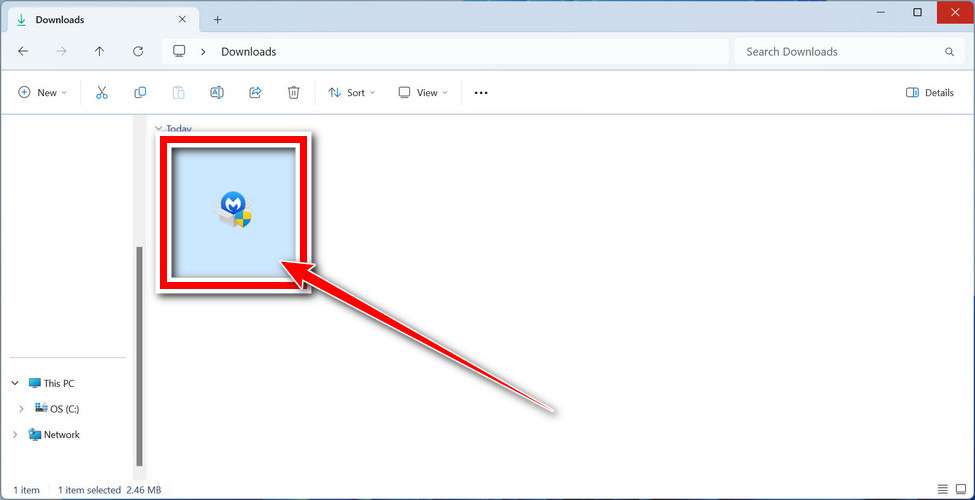
After the download is complete, locate the MBSetup file, typically found in your Downloads folder. Double-click on the MBSetup file to begin the installation of Malwarebytes on your computer. If a User Account Control pop-up appears, click “Yes” to continue the Malwarebytes installation.
Follow the On-Screen Prompts to Install Malwarebytes
When the Malwarebytes installation begins, the setup wizard will guide you through the process.
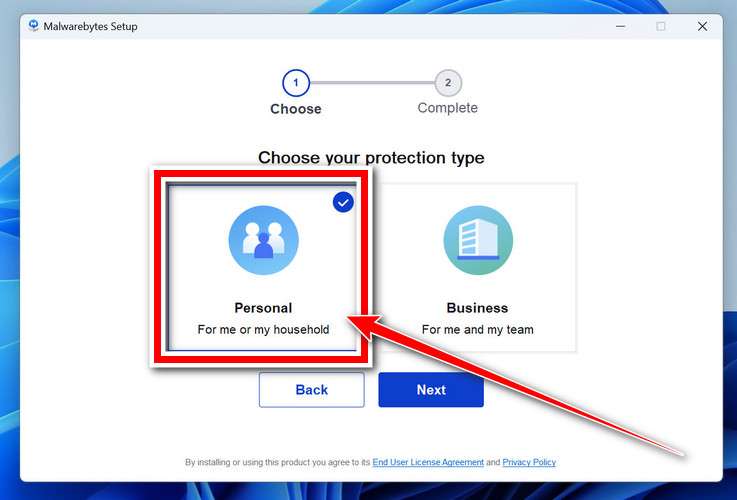
You’ll first be prompted to choose the type of computer you’re installing the program on—select either “Personal Computer” or “Work Computer” as appropriate, then click on Next.
Malwarebytes will now begin the installation process on your device.
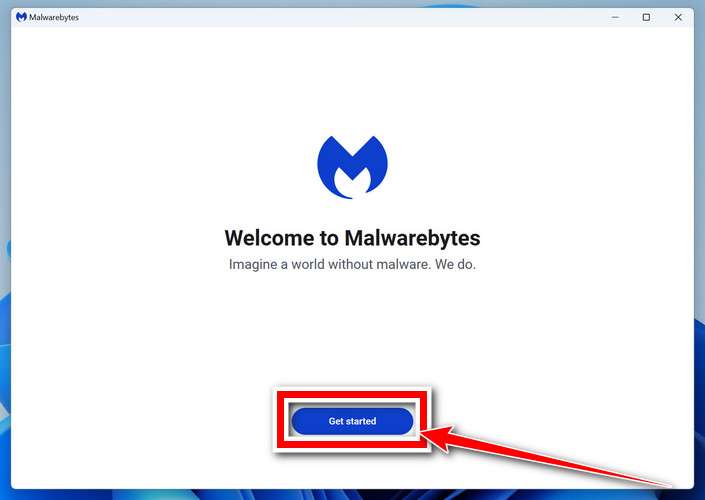
When the Malwarebytes installation is complete, the program will automatically open to the “Welcome to Malwarebytes” screen.
On the final screen, simply click on the Open Malwarebytes option to start the program.
Enable “Rootkit scanning”.
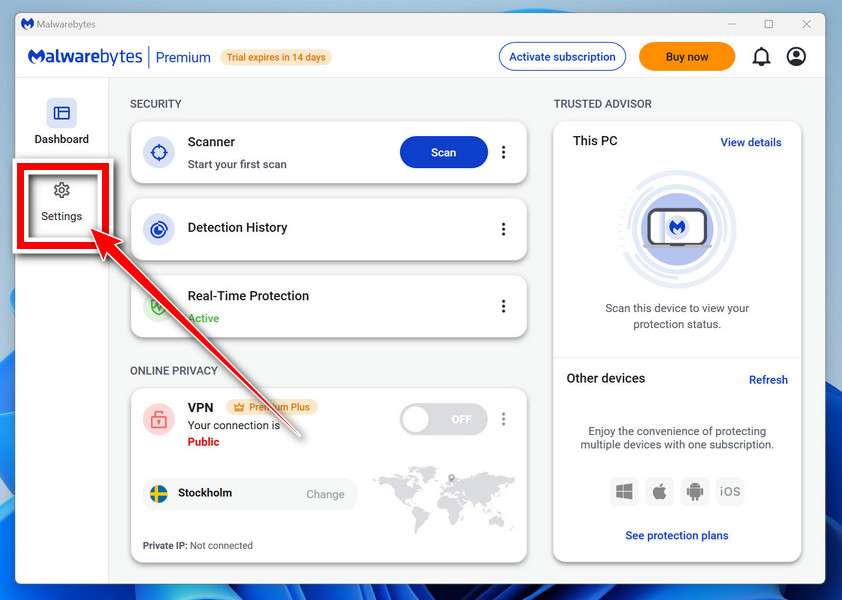
Malwarebytes Anti-Malware will now start, and you will see the main screen as shown below. To maximize Malwarebytes’ ability to detect malware and unwanted programs, we need to enable rootkit scanning. Click on the “Settings” gear icon located on the left of the screen to access the general settings section.
In the settings menu, enable the “Scan for rootkits” option by clicking the toggle switch until it turns blue.
Now that you have enabled rootkit scanning, click on the “Dashboard” button in the left pane to get back to the main screen.
Perform a Scan with Malwarebytes.
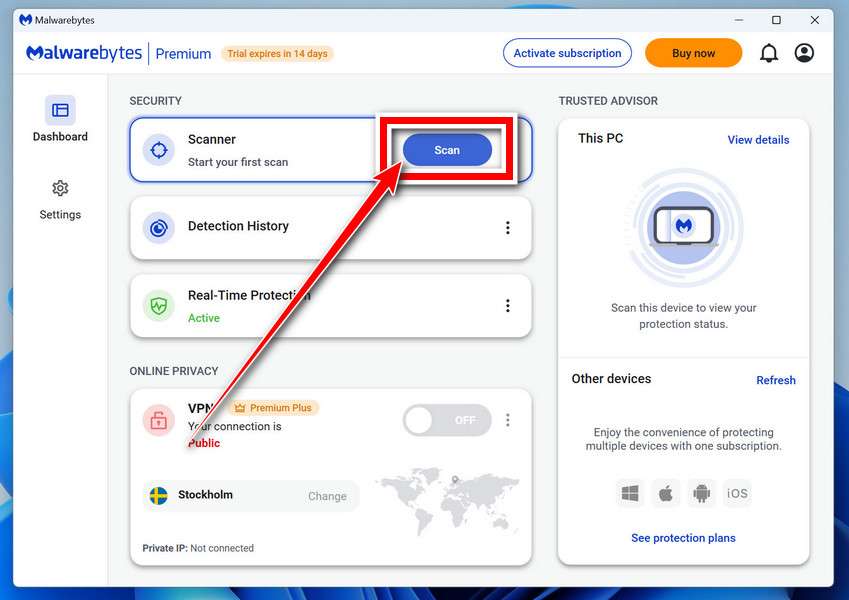
To start a scan, click the Scan button. Malwarebytes will automatically update its antivirus database and begin scanning your computer for malicious programs.
Wait for the Malwarebytes scan to complete.
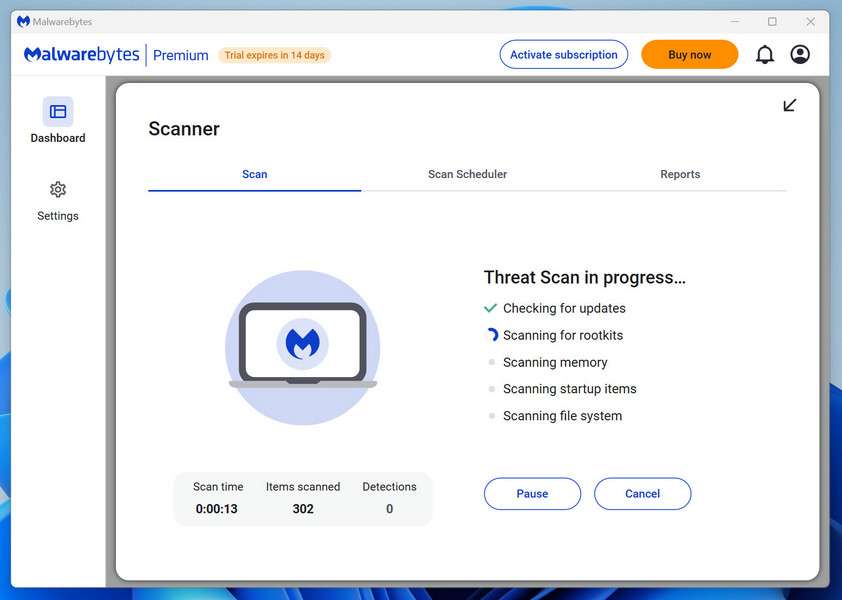
Malwarebytes will now scan your computer for browser hijackers and other malicious programs. This process can take a few minutes, so we suggest you do something else and periodically check the status of the scan to see when it is finished.
Quarantine detected malware
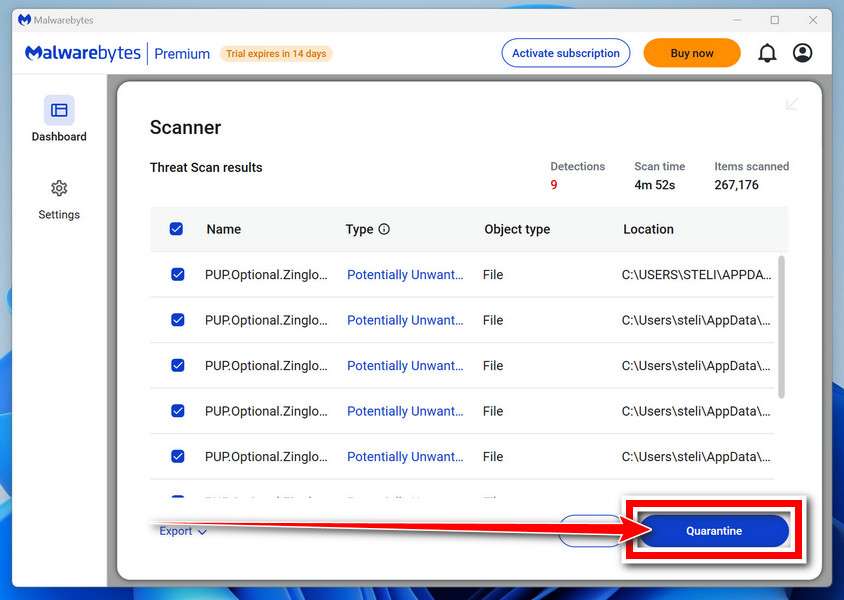
Once the Malwarebytes scan is complete, it will display a list of detected malware, adware, and potentially unwanted programs. To effectively remove these threats, click the “Quarantine” button.
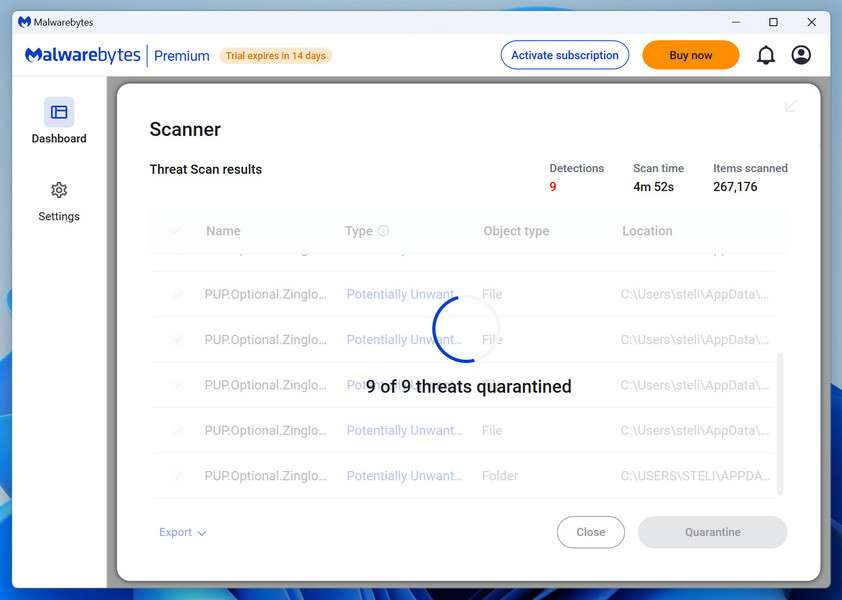
Malwarebytes will now delete all of the files and registry keys and add them to the program’s quarantine.
Restart your computer.
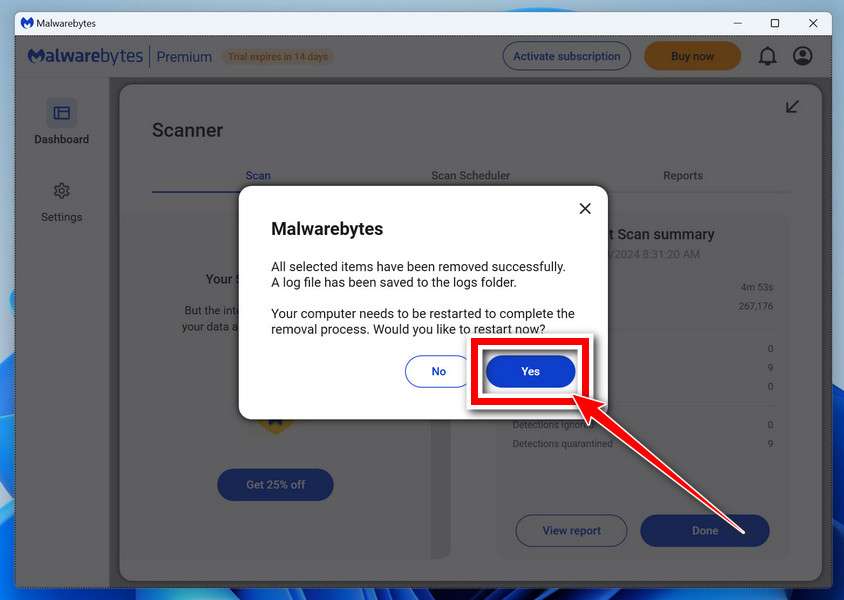
When removing files, Malwarebytes may require a reboot to fully eliminate some threats. If you see a message indicating that a reboot is needed, please allow it. Once your computer has restarted and you are logged back in, you can continue with the remaining steps.
Once the scan completes, remove all detected threats. Your Windows computer should now be clean and running smoothly again, free of trojans, adware, and other malware.
If your current antivirus allowed this malicious program on your computer, you may want to consider purchasing Malwarebytes Premium to protect against these types of threats in the future. If you are still having problems with your computer after completing these instructions, then please follow one of the steps:
Malwarebytes for Mac is an on-demand scanner that can destroy many types of malware that other software tends to miss without costing you absolutely anything. When it comes to cleaning up an infected device, Malwarebytes has always been free, and we recommend it as an essential tool in the fight against malware.
Download Malwarebytes for Mac.
You can download Malwarebytes for Mac by clicking the link below.
When Malwarebytes has finished downloading, double-click on the setup file to install Malwarebytes on your computer. In most cases, downloaded files are saved to the Downloads folder.
Follow the on-screen prompts to install Malwarebytes.
When the Malwarebytes installation begins, you will see the Malwarebytes for Mac Installer which will guide you through the installation process. Click “Continue“, then keep following the prompts to continue with the installation process.
When your Malwarebytes installation completes, the program opens to the Welcome to Malwarebytes screen. Click the “Get started” button.
Select “Personal Computer” or “Work Computer”.
The Malwarebytes Welcome screen will first ask you what type of computer are you installing this program, click either Personal Computer or Work Computer.
Click on “Scan”.
To scan your computer with Malwarebytes, click on the “Scan” button. Malwarebytes for Mac will automatically update the antivirus database and start scanning your computer for malware.
Wait for the Malwarebytes scan to complete.
Malwarebytes will scan your computer for adware, browser hijackers, and other malicious programs. This process can take a few minutes, so we suggest you do something else and periodically check on the status of the scan to see when it is finished.
Click on “Quarantine”.
When the scan has been completed, you will be presented with a screen showing the malware infections that Malwarebytes has detected. To remove the malware that Malwarebytes has found, click on the “Quarantine” button.
Restart computer.
Malwarebytes will now remove all the malicious files that it has found. To complete the malware removal process, Malwarebytes may ask you to restart your computer.
After scanning, delete any detected threats. Your Mac should now be free from adware, unwanted extensions, and other potentially harmful software.
If your current antivirus allowed a malicious program on your computer, you might want to consider purchasing the full-featured version of Malwarebytes Anti-Malware to protect against these types of threats in the future. If you are still experiencing problems while trying to remove a malicious program from your computer, please ask for help in our Mac Malware Removal Help & Support forum.
Run a Malware Scan with Malwarebytes for Android
Malwarebytes for Android automatically detects and removes dangerous threats like malware and ransomware so you don’t have to worry about your most-used device being compromised. Aggressive detection of adware and potentially unwanted programs keeps your Android phone or tablet running smooth.
Download Malwarebytes for Android.
You can download Malwarebytes for Android by clicking the link below.
In the Google Play Store, tap “Install” to install Malwarebytes for Android on your device.
When the installation process has finished, tap “Open” to begin using Malwarebytes for Android. You can also open Malwarebytes by tapping on its icon in your phone menu or home screen.
Follow the on-screen prompts to complete the setup process
When Malwarebytes will open, you will see the Malwarebytes Setup Wizard which will guide you through a series of permissions and other setup options. This is the first of two screens that explain the difference between the Premium and Free versions. Swipe this screen to continue. Tap on “Got it” to proceed to the next step. Malwarebytes for Android will now ask for a set of permissions that are required to scan your device and protect it from malware. Tap on “Give permission” to continue. Tap on “Allow” to permit Malwarebytes to access the files on your phone.
Update database and run a scan with Malwarebytes for Android
You will now be prompted to update the Malwarebytes database and run a full system scan.
Click on “Update database” to update the Malwarebytes for Android definitions to the latest version, then click on “Run full scan” to perform a system scan.
Wait for the Malwarebytes scan to complete.
Malwarebytes will now start scanning your phone for adware and other malicious apps. This process can take a few minutes, so we suggest you do something else and periodically check on the status of the scan to see when it is finished.
Click on “Remove Selected”.
When the scan has been completed, you will be presented with a screen showing the malware infections that Malwarebytes for Android has detected. To remove the malicious apps that Malwarebytes has found, tap on the “Remove Selected” button.
Restart your phone.
Malwarebytes for Android will now remove all the malicious apps that it has found. To complete the malware removal process, Malwarebytes may ask you to restart your device.
When the scan is finished, remove all detected threats. Your Android phone should now be free of malicious apps, adware, and unwanted browser redirects.
If your current antivirus allowed a malicious app on your phone, you may want to consider purchasing the full-featured version of Malwarebytes to protect against these types of threats in the future. If you are still having problems with your phone after completing these instructions, then please follow one of the steps:
Restore your phone to factory settings by going to Settings > General management > Reset > Factory data reset.
After cleaning your device, it’s important to protect it from future infections and annoying pop-ups. We recommend installing an ad blocker such as AdGuard. AdGuard blocks malicious ads, prevents phishing attempts, and stops dangerous redirects, helping you stay safe while browsing online.
FAQ: The Indeed Recruitment Text Scam
1. Is the Indeed recruitment text message real?
No. Indeed does not send unsolicited job offers via text messages. If you receive a random message claiming to be from Indeed, it’s a scam.
2. How can I tell if a recruitment text is a scam?
Look for red flags such as:
Promises of extremely high pay for simple tasks.
Vague or unusual job descriptions.
Requests to move the conversation to WhatsApp or Telegram.
Upfront requests for payment, deposits, or training fees.
Poor grammar or awkward phrasing in the message.
3. What should I do if I replied to a scam text?
Stop all communication immediately. Do not provide personal or financial information. Block the number, report the scam to authorities, and secure your accounts.
4. Can scammers steal my identity from just my phone number?
While a phone number alone is not enough for full identity theft, scammers can use it to attempt phishing attacks, impersonate you, or trick you into giving more sensitive details.
5. Does Indeed charge for job applications or training?
No. Indeed is free for job seekers. You should never pay money for applications, job placements, or training through Indeed.
6. How do I report a fake Indeed job scam?
You can:
Report the text to your carrier by forwarding it to 7726.
Notify the FTC (if in the US).
Report it directly on Indeed’s help page.
Inform your local consumer protection agency.
7. What happens if I clicked a link in the scam text?
Immediately run an antivirus scan on your device, change your important passwords, and monitor your financial accounts. Scam links can install malware or lead to phishing sites.
8. Who do scammers usually target with these recruitment texts?
They often target job seekers, unemployed individuals, retirees, and people searching for flexible side jobs. However, anyone with a phone can be targeted.
9. Are there other scams similar to the Indeed text scam?
Yes. Similar scams impersonate companies like Amazon, Walmart, FedEx, and even government agencies. The tactic is the same: impersonate a trusted name to trick people into giving money or personal information.
10. How can I protect myself from recruitment scams?
Only apply for jobs through official company websites or trusted platforms.
Never share personal data or banking details with unverified recruiters.
Be skeptical of offers that sound too good to be true.
Verify job postings directly on Indeed.com or through the official company site.
The Bottom Line
The Indeed recruitment text scam is just one of many online job scams designed to exploit people looking for legitimate work. The promises of high pay for little effort are enticing, but they are also the clearest red flag. No real company will ask you for money upfront, push you to use WhatsApp for recruitment, or send unsolicited text job offers.
If you ever receive one of these texts, remember: ignore it, report it, and never provide personal or financial information. Always verify job opportunities directly through official channels like Indeed.com. By staying alert and informed, you can protect yourself and others from falling victim to this dangerous scam.
Stay safe, stay informed, and share this information to help others avoid becoming the next target.
Thomas is an expert at uncovering scams and providing in-depth reporting on cyber threats and online fraud. As an editor, he is dedicated to keeping readers informed on the latest developments in cybersecurity and tech.