Jagfa.com looks like one of those online stores that appears out of nowhere and suddenly starts showing up everywhere.
A clean storefront. Big discounts. Popular products. Photos that look like they came straight from a real brand catalog. It feels familiar on purpose.
And that is exactly why people let their guard down.
Because the moment you see a “limited-time deal” in a Facebook or TikTok ad, you are not shopping calmly anymore. You are reacting. You are trying to grab something before it’s gone.
This article is designed to slow that moment down.
We’ll walk through the common pattern behind sites like Jagfa.com, why the prices and presentation can be misleading, and the specific warning signs that matter most before you enter your address, card details, or phone number.
If you already ordered, you’ll also find a clear step-by-step plan to protect yourself and give yourself the best chance of getting your money back.
Overview
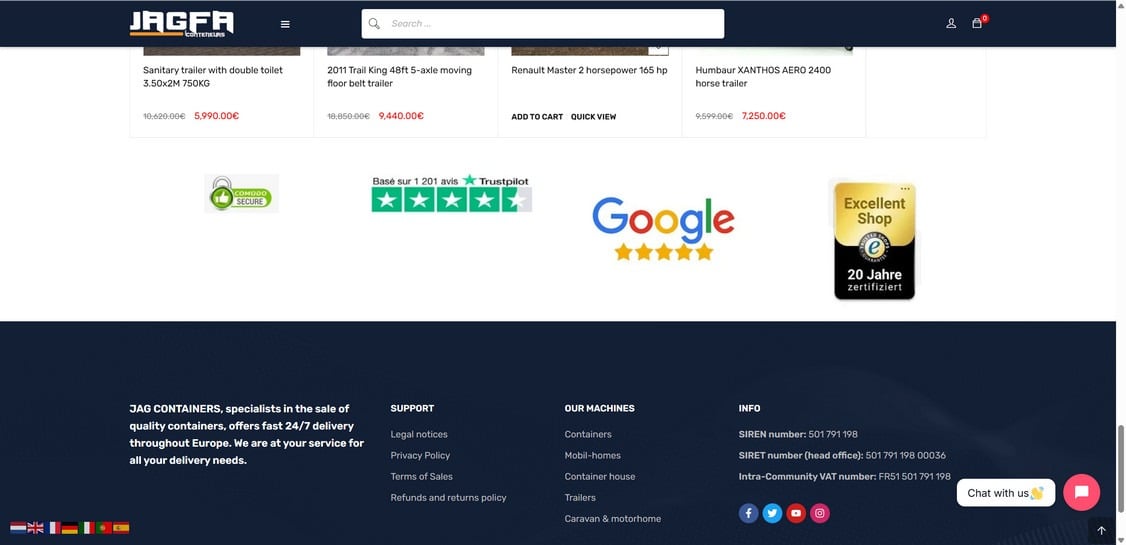
At a glance, Jagfa.com can seem completely normal.
It often uses a polished ecommerce template that looks like hundreds of legitimate online shops. Product pages are neatly laid out. Photos look professional. Prices are aggressively discounted. The site may even include “reviews,” shipping banners, and policy pages that make it feel established.
But when you look closer, the experience many shoppers describe follows a very specific pattern.
The first clue is usually the marketing style.
Jagfa.com-type sites tend to be discovered through paid ads, not through reputation. People don’t find them because a friend recommended them or because they have a known brand presence. They find them because a social media ad targeted them at the right moment, often with messaging built to create urgency.
Common ad angles include:
- “Warehouse clearance”
- “Going out of business”
- “Limited stock”
- “Last chance today”
- “Huge discount before it’s gone”
This kind of advertising isn’t automatically proof of anything on its own. Real businesses run sales too.
The difference is what happens after you buy.
What buyers commonly report
With high-risk stores like Jagfa.com, the most common complaints are not about small delays or minor quality issues.
They are about the entire transaction feeling designed to produce one of these outcomes:
- The product arrives extremely late, sometimes weeks or even months after purchase.
- The product that arrives is cheap and nothing like what was shown in the ad.
- The “brand-name-looking” item turns out to be a generic substitute.
- The material, size, performance, or finish is wildly different than expected.
- Returns are “technically allowed” but practically impossible.
A lot of people only realize what’s happening when the package finally shows up.
They open it expecting something that matches the glossy photos from the ad.
Instead, they get something that looks like it came from a completely different listing.
This can be especially frustrating because the buyer often feels tricked twice:
First by the ad that made the product look premium.
Then by the checkout process that made the store feel legitimate.
Why delivery times are often so long
One of the most consistent signals with these sites is slow fulfillment.
You might see claims like “fast shipping” or “ships in 24 hours,” but the real delivery timeline can be far longer.
This typically happens because the store is not shipping from where it claims. Many of these operations use a fulfillment chain that routes orders through overseas suppliers, often with low-cost shipping methods that are slow by design.
That can create a predictable sequence:
- You place an order and receive a clean confirmation email.
- For days (or longer), nothing changes.
- A tracking number appears, but it may not update for a while.
- Tracking updates are vague, delayed, or confusing.
- The package eventually arrives late, often with minimal packaging.
Even when delivery does happen, the waiting period helps the seller.
It pushes the transaction further into the past, which can reduce the chance that a customer successfully disputes the charge, especially if the buyer waits too long to act.
The “returns are possible” trap
Many high-risk stores include return policies that sound reasonable at first glance.
They may say things like:
- “30-day returns”
- “Satisfaction guaranteed”
- “Hassle-free returns”
- “Contact support for a return label”
But when customers actually try to return the item, the process often becomes a wall.
The biggest obstacle is that the return address is frequently overseas, commonly in China, and the buyer is expected to pay for return shipping.
That can turn a return into a financial and logistical dead end.
For example:
- Shipping an item back can cost a large portion of the original purchase price.
- Tracking and delivery confirmation may be required, making it even more expensive.
- The store may demand specific packaging rules or documentation.
- Support may delay responses until the return window “expires.”
- The buyer may be told that refunds are only issued after the item is received, which can take weeks.
Even worse, some buyers report that the return address is incomplete, changes mid-process, or seems unverified, making successful returns unlikely.
The policy exists, but the process is built so that most people give up.
The partial refund offer: 15% to 30% and “keep the item”
This is one of the most telling patterns.
When buyers complain that the item is wrong, low quality, or not as advertised, they often receive an offer like this:
- A 15% to 30% refund
- The buyer keeps the product
- No return required
It can sound like a compromise, but it often functions as a pressure tactic.
The seller is betting that:
- You are tired of arguing.
- You don’t want to deal with international return shipping.
- You’ll accept “something back” and move on.
- You won’t file a chargeback if you feel partially compensated.
This is also why the offered refund is often not generous.
It’s designed to be cheaper than losing a full payment dispute.
And if a buyer accepts it, the issue may become harder to dispute later, depending on how the refund is processed and what messages were exchanged.
Why the product often looks “nothing like the ad”
This is where the mismatch becomes obvious.
Social media ads can be engineered to sell a feeling, not a product.
They use:
- Perfect lighting
- Close-up angles
- Edited footage
- Dramatic before-and-after visuals
- Confident claims about materials, performance, or durability
Sometimes the content is recycled from other brands, other listings, or influencer videos that have nothing to do with the store itself.
So the buyer is not buying what the store actually ships.
They are buying what the ad made them imagine.
When the real item arrives, the difference can be shocking.
And because the store controls the product page and can change it at any time, the buyer may even find that screenshots and saved details become important evidence later.
The second risk: your personal information
Even when buyers are mainly worried about money, personal data matters too.
When you check out on a site like this, you may provide:
- Full name
- Home address
- Phone number
- Email address
- Payment details
If the store is unreliable or operating without transparency, you have no strong reason to trust how that data is stored, used, or shared.
Many people who buy from questionable sites later report:
- More spam emails
- More scam texts
- Phishing attempts referencing deliveries or refunds
- Suspicious “order problem” messages
Not every buyer experiences this, but it is a real risk when you share personal details with a store that has no established trust.
The practical takeaway
If Jagfa.com is offering extreme discounts, has vague business identity, and is mainly promoted through social media ads, treat it as unverified.
Even if some buyers receive packages, the pattern people report most often is:
- Long delivery times
- Items that are cheap and do not match the ads
- Returns that are difficult or effectively impossible
- Partial refund offers of 15% to 30% to close complaints quickly
This is why caution matters before you buy, not after.
How The Operation Works
The names and domain can change, but the structure behind these stores is usually consistent.
Below is a step-by-step breakdown of how the operation commonly runs, from the moment you see the ad to the moment a buyer tries to get a refund.
1. The social media ad funnel
Everything starts with the ad.
These ads are designed to trigger impulse buying. They often focus on:
- A dramatic discount in $ terms or % terms
- A strong emotional hook (fear of missing out, “today only,” “final sale”)
- A product that looks premium or highly desirable
- Visuals that feel like a real brand campaign
In many cases, the ad is the strongest part of the entire operation.
It may be professionally edited, narrated, or formatted like influencer content. The goal is to remove friction and make the buyer feel like the store is already trusted.
Key tactic: urgency.
If the buyer feels rushed, they are less likely to research the store name, check reviews, or look for business information.
2. The storefront illusion
Once someone clicks, the landing page usually looks clean and familiar.
Jagfa.com-type sites often use:
- Standard ecommerce templates
- “Only X left” stock alerts
- Countdown timers
- “People are buying now” popups
- Review widgets that look authentic
Even when these elements are fake or automated, they create a psychological effect: social proof.
The visitor thinks, “Other people are buying, so it must be real.”
Many buyers also assume that a site with multiple pages (about, shipping, privacy) must be legitimate.
But for these operations, those pages are often generic templates, sometimes copied and pasted.
3. Product pages built to convert, not to inform
Product descriptions frequently focus on persuasion over clarity.
You’ll often see:
- Big claims, vague details
- “Premium materials” without specifying what they are
- Photos that look like studio shots
- No true brand story or real company background
- Minimal technical specifications
A key warning sign is when the product looks too polished for a store no one has heard of.
Another signal is inconsistency:
- Product photos in different styles
- Different writing tone across pages
- Strange sizing charts
- Conflicting shipping timelines
It can feel like multiple catalogs stitched together.
4. Checkout and payment capture
Checkout is where the operation wins.
The store wants three things:
- Your payment
- Your contact details
- A completed order before you hesitate
That’s why checkout is often frictionless and heavily guided.
In some cases, the store may offer multiple payment routes. In other cases, it may rely on card processing that can change over time.
From the buyer’s perspective, the transaction looks normal.
From the operation’s perspective, the key is speed and completion.
5. Confirmation messages to reduce suspicion
After purchase, most buyers receive a confirmation email.
This is not just customer service.
It’s a strategy.
A confirmation message:
- Makes the buyer feel reassured
- Reduces immediate panic
- Buys time before the buyer disputes the charge
Some stores will also send a “your order is processing” update.
These messages often create a sense that shipping is underway, even when nothing has moved.
6. Tracking numbers that do not match buyer expectations
When tracking appears, it often creates more confusion than clarity.
Common patterns include:
- Tracking that does not update for many days
- Tracking that shows “label created” for a long time
- Vague milestones like “in transit” with no location detail
- A carrier name the buyer has never heard of
- A tracking link that redirects through multiple sites
Sometimes, a package does arrive.
But the tracking experience is still part of the strategy because it keeps the buyer in “wait mode.”
Waiting is powerful.
It delays disputes.
It delays chargebacks.
It keeps the buyer hoping the issue will resolve itself.
7. The product arrives late, cheap, or totally different
This is the moment many buyers realize what happened.
Instead of the premium item shown in the ad, the buyer receives:
- A generic version with lower quality
- A lightweight replica
- A smaller item than implied
- A different design than pictured
- A product that fails quickly or feels unusable
This mismatch is not always subtle.
It can be obvious within seconds of opening the package.
Why does this happen so often?
Because the operation is usually optimized for profit, not fulfillment quality.
If the store can ship a cheap substitute for a fraction of the price, they can still make money even after occasional refunds.
8. Complaint handling scripts and delays
When the buyer complains, support often behaves in predictable ways:
- Replies are slow
- Responses feel scripted
- Questions are ignored
- The buyer is asked to “wait a bit longer” even after delivery
- The buyer is asked for photos repeatedly
- The buyer is told the item “matches the description”
These interactions are designed to drain your energy.
Every extra day that passes can make the buyer less likely to pursue a dispute through their bank.
9. The return wall: shipping to China
If the buyer pushes for a return, the real barrier appears.
Common demands include:
- Return shipping to China at the buyer’s expense
- A specific return address that may be hard to verify
- Requirements for tracking and proof of delivery
- No refund until the return is received and processed
This can turn a $50 purchase into a return that costs $25 to $60, sometimes more depending on the country and shipping method.
And because international returns can be slow, the buyer risks falling outside dispute windows.
Even when the buyer is willing to pay return shipping, the process may still fail because of:
- Incomplete address details
- Delayed support responses
- Shifting instructions
- Claims that the return was “not received”
10. The 15% to 30% refund offer to close the case
This is where many people get stuck.
The store offers a partial refund, often 15% to 30%, and tells the buyer to keep the product.
It’s positioned as a helpful compromise, but it often serves the operation more than the buyer.
Why?
Because it reduces risk.
If you accept:
- The store spends less money than a full refund.
- You may be less likely to file a chargeback.
- The issue feels “resolved,” even if it’s not fair.
If you refuse:
- They may continue pushing the return-to-China option.
- They may delay responses further.
- They may stop responding entirely.
This partial refund offer is one of the clearest patterns behind these operations, especially when the delivered product does not match the ads.
11. Rebrand and repeat
Over time, complaint volume rises.
Chargebacks rise.
Ad accounts get flagged.
Domains get reported.
When that happens, the operation often pivots:
- A new store name appears
- A new domain goes live
- The same product videos show up again
- The same template is reused
That’s why this article uses Jagfa.com as a placeholder.
The mechanism stays the same even when the name changes.
What To Do If You Bought from This Site
If you already placed an order on Jagfa.com, the goal is to act quickly, stay calm, and build a clean paper trail.
Even if you eventually receive something, you can still protect yourself now.
1. Save evidence immediately
Before anything changes on the site, capture what you paid for.
Save:
- Order confirmation email
- Receipt or transaction ID
- Product page screenshots (photos, claims, price, shipping promises)
- Checkout screenshots if you have them
- Any support emails or chat logs
- Tracking number screenshots and status history
This matters because product listings and policies can change after complaints start.
2. Check your payment method and timeline
Identify exactly how you paid:
- Credit card
- Debit card
- PayPal
- Digital wallet
Then check your bank’s dispute window.
In many cases, acting early gives you better odds.
If the item has not arrived and the seller is unresponsive, you may have a strong basis to dispute.
If the item arrived but is clearly not as advertised, you may still have options.
3. Do not accept a small refund if you plan to dispute
If you are offered 15% to 30% back and you feel the transaction was misleading, think carefully before accepting.
A partial refund can make the situation feel “closed” in the seller’s eyes.
If you want to pursue a full resolution through your payment provider, keep your communication consistent:
- The item is not as advertised, or
- The item never arrived, or
- Returns are not realistically available
If you do accept a partial refund, document everything.
4. Contact your bank or card issuer
If the item never arrived, or if what arrived is clearly not what was advertised, contact your bank.
Ask about:
- A dispute
- A chargeback
- A “goods not received” or “not as described” claim
Be clear, factual, and calm.
Use your screenshots.
Focus on mismatches between what was advertised and what was delivered.
If you used a debit card, you can still dispute in many cases, but protections vary by bank and region.
5. If you entered card details, consider replacing the card
Even if the charge looks normal today, it’s smart to reduce risk.
If you entered card details on a site you no longer trust, consider:
- Freezing the card temporarily (if your bank supports it)
- Replacing the card
- Setting transaction alerts
- Monitoring for small “test charges”
Small charges are sometimes used to test whether a card is active.
6. Monitor your email and phone for phishing
After purchases on high-risk stores, many people see an increase in messages like:
- “Delivery problem, confirm your address”
- “Your package is held, pay a small fee”
- “Refund failed, verify your details”
Treat these as suspicious by default.
Do not click links in unexpected delivery messages.
If you need to check a shipment, use the tracking number on a reputable carrier site, not the link in a random email.
7. Change passwords if you reused them anywhere
If you created an account on the site, or reused a password, change it anywhere it matters.
Start with:
- Email account password
- Banking password
- Shopping accounts
- Social media accounts
Then enable 2-factor authentication on important accounts.
This is a quick step that can prevent bigger headaches later.
8. Report the ads and the site
Reporting won’t always lead to an immediate takedown, but it helps reduce future victims.
Report:
- The ad on the platform where you saw it (Facebook, Instagram, TikTok)
- The store domain to your local consumer protection authority
- Any suspicious emails as phishing (if you received them)
If you are in the US, FTC reporting is a common route.
If you are in the UK, Action Fraud is often used.
In the EU, your national consumer protection authority is usually the best starting point.
9. If you received a cheap substitute, document it clearly
If the product arrived and it’s obviously not what the ad showed, make your evidence simple:
- Photograph the item from multiple angles
- Photograph packaging labels
- Compare it to screenshots of the ad and listing claims
- Write a short, clear explanation of differences
Examples of differences that matter:
- Material quality
- Size discrepancies
- Missing features shown in the ad
- Performance claims that are not true
- Branding differences
Payment providers respond better to specific, documented mismatches.
10. Do not pay extra fees to “release” a package
A common follow-up trick is a message claiming you must pay a small fee for customs, redelivery, or “address confirmation.”
Real carriers do not ask for random payments through unknown links.
If you receive such a message, treat it as suspicious and verify through official channels.
The Bottom Line
Jagfa.com may look like a normal online store, but the pattern behind sites like this is often built around high-pressure ads, long delivery timelines, and products that arrive cheap and nothing like what shoppers were shown.
Returns are frequently presented as available, yet the process often requires costly shipping to China, making refunds difficult in practice.
When buyers complain, many are offered a partial refund of 15% to 30% and told to keep the product, which can feel like a quick fix but often leaves the buyer paying for an item they never wanted in the first place.
If you are considering a purchase, the safest move is to treat Jagfa.com as unverified and shop with retailers that have clear business identity, responsive support, and a track record you can actually confirm.
If you already bought, act quickly, document everything, and contact your payment provider early. That single step often makes the biggest difference.