You see the ad once and scroll past.
Then it shows up again. Different page, same story.
A tiny patch, “nano microneedles,” and a promise that sounds almost unfair: faster results, effortless fat loss, and “science-backed” proof you can supposedly see with your own eyes.
That’s exactly how the LBMLBM Nano Microneedle Patch pitch is designed to work.
It doesn’t just sell a product. It sells relief. Hope. A shortcut.
And for a lot of people, the real surprise comes after the payment goes through.
Scam Overview
The LBMLBM Nano Microneedle Patch scam is not one single website or one single brand name.
It is a repeatable sales system that shows up under different “brands,” different product names, and sometimes even different categories (weight loss patches, “brown fat” patches, skincare micro-needling kits, collagen drops, and other trendy items).
From what these storefronts typically look like, the structure is familiar:
- A clean, modern store layout
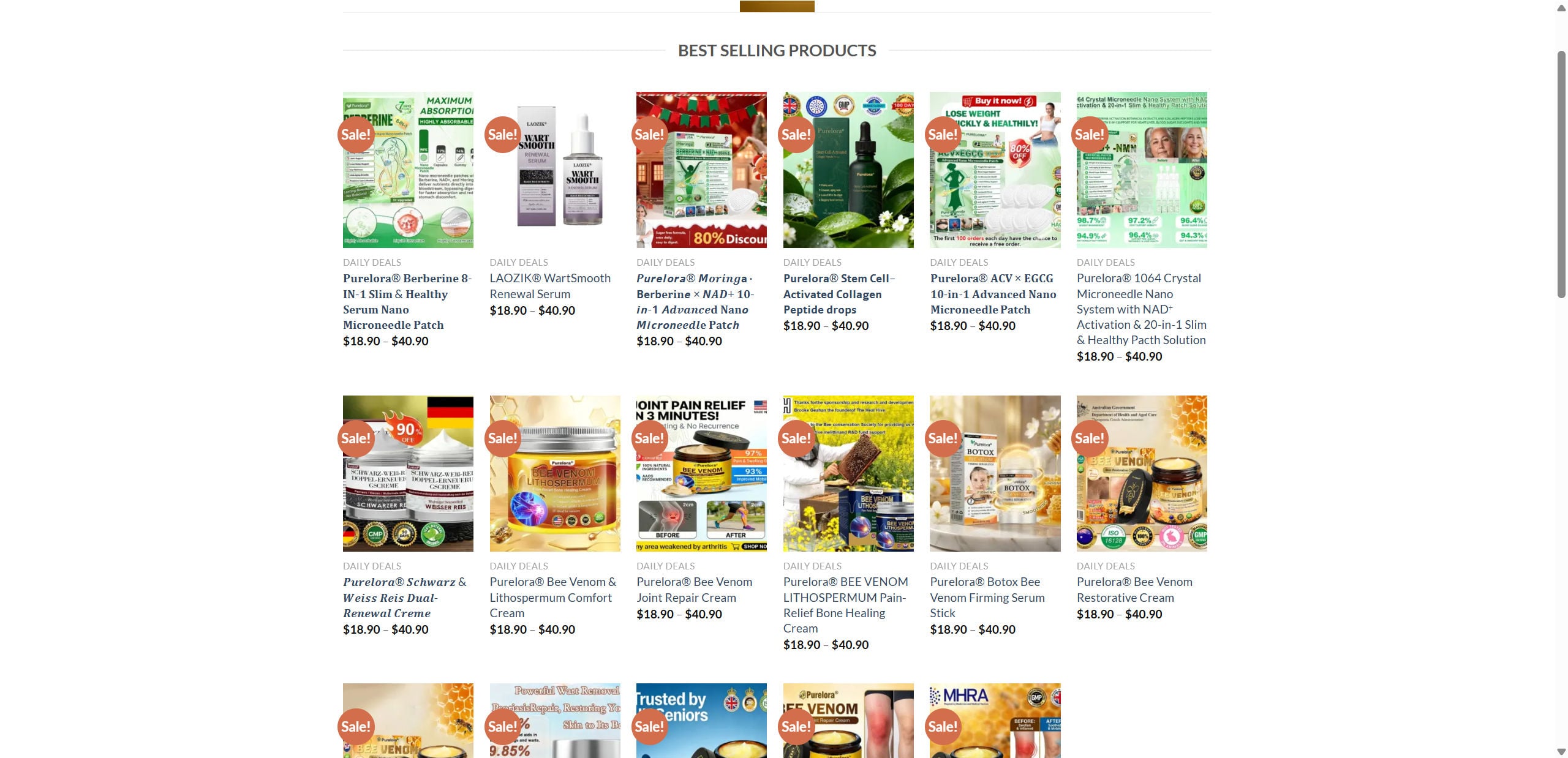
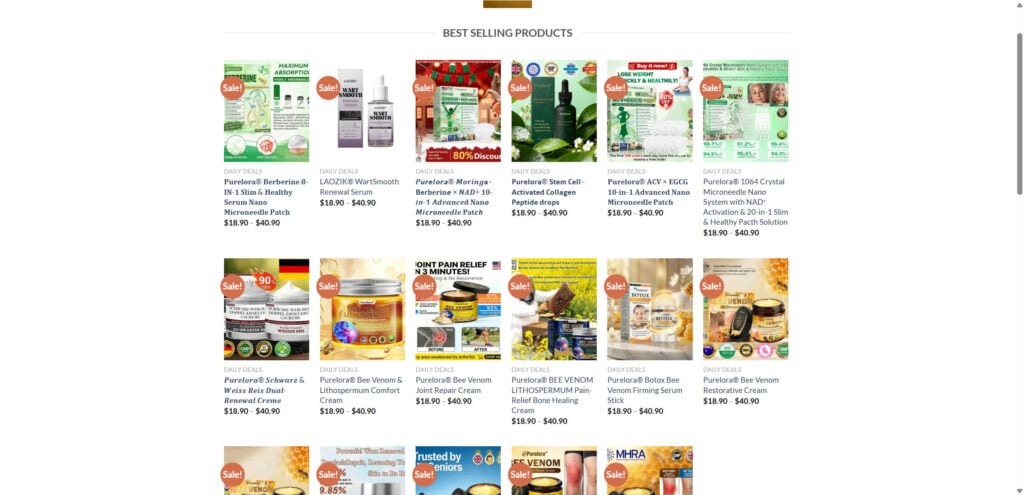
- A “Best Selling Products” grid filled with unrelated miracle items
- Aggressive discounts like 50% to 80% off
- Big medical-sounding claims (fat burning, appetite control, hormone balance, inflammation reduction)
- Trust badges and “as seen on” style logos
- A long scrolling sales page written like a dramatic story, not like a normal product listing
It feels professional at first glance, but the details often tell a different story.
What the LBMLBM patch is usually claiming
These microneedle patch pages often promise some combination of the following:
- Targeted fat loss (belly, visceral fat, stubborn areas)
- “Brown fat activation” or “metabolic activation”
- Reduced cravings and appetite control
- Better energy and mood
- Faster weight loss without dieting
- Visible proof the patch is “working” (color change, darkening, residue, “extraction”)
The hook is powerful because it sounds like a modern biohack.
The problem is that the marketing commonly jumps far beyond what a topical patch can realistically prove, especially when it implies dramatic fat loss, broad disease improvements, or near-medical outcomes.
Why this pattern gets called a “scam” so often
When people label something like this a scam, they are usually reacting to the gap between the promise and the reality.
With microneedle patch storefronts, that gap often shows up in predictable ways:
- The ad implies clinical-grade results, but the product arrives looking cheap, generic, or totally different than expected.
- The site claims an easy refund, but support becomes slow, confusing, or unresponsive.
- The “brand” feels disposable. If complaints pile up, the seller pivots to a new domain and new name.
- The page leans heavily on testimonials, before-and-after photos, and dramatic personal stories, but provides little verifiable evidence that matches the strength of the claims.
This is why these products spread so fast on social media.
They are optimized for impulse buying, not long-term customer trust.
The “microneedle” buzzword problem
Microneedling is a real thing in skincare when done properly with appropriate tools, sanitation, and realistic expectations.
Microneedle patches also exist in legitimate medical and cosmetic contexts, usually for very specific ingredients and very specific use cases.
But scammy storefronts borrow the vocabulary without adopting the discipline:
- They present “nano microneedles” as a magic delivery system for anything they want to sell.
- They treat ingredient lists like superhero rosters: berberine, EGCG, curcumin, resveratrol, collagen, hyaluronic acid, carnitine, omega-3, probiotics, and more.
- They imply these ingredients will work through the skin the same way they might work orally or clinically, without showing credible dosing, delivery, or human evidence for that exact patch.
So the problem is not that microneedle technology is automatically fake.
The problem is that the marketing often uses a real concept as a costume for exaggerated claims.
The “storefront of everything” red flag
One of the biggest tells is the product catalog.
A legitimate brand usually has a coherent lineup.
A microneedle patch scam storefront often looks like a “miracle mall”:
- A weight loss patch next to a wart serum
- Collagen “stem cell” drops next to bee venom creams
- “Advanced nano microneedle systems” next to random holiday promos
This kind of catalog is common in dropshipping operations where the goal is not to build a brand.
The goal is to find any product angle that converts.
If one trend dies, they swap to the next.
The fake certainty of “numbers”
Another common manipulation tactic is the use of very specific statistics that appear authoritative:
- “Over 2 million satisfied customers”
- “98% of users saw results”
- “Verified by doctors”
- “Based on 15,356 reviews”
Specific numbers are persuasive because they feel measurable.
But on many of these pages, there is no transparent way to verify where the numbers come from, who counted them, or whether the review system is independent.
If a brand has tens of thousands of reviews, you should be able to find strong third-party footprints.
Many of these patch brands have little to no credible presence outside their own sales funnel.
The “medical claim” pressure cooker
These pages often do something subtle but powerful.
They start by talking about appearance (weight, wrinkles, stubborn fat).
Then they escalate into health conditions (blood pressure, diabetes, liver health, menopause symptoms, inflammation).
That escalation is not accidental.
It makes the purchase feel urgent.
It turns curiosity into fear.
And fear is the fastest shortcut to checkout.
If you ever see a microneedle patch page that implies it can meaningfully improve serious medical conditions, treat that as a high-risk sign.
Even if the product is not “fake,” the marketing may be dangerously misleading.
Why people buy anyway
It’s not because buyers are careless.
It’s because the funnel is designed to work on normal human emotions.
- Many people have tried diets, workouts, supplements, and routines without getting the results they want.
- The promise of an “effortless” solution lands when motivation is low and hope is high.
- Social media ads are short, confident, and repetitive. That repetition creates familiarity, and familiarity feels like credibility.
Then the page adds urgency:
- “Only 100 orders per day”
- “Limited stock”
- “Sale ends tonight”
So buyers do what most people would do in that moment.
They take the chance.
How The Scam Works
This is the typical step-by-step playbook behind microneedle patch scams like LBMLBM.
Not every seller uses every step, but the overall pattern is extremely consistent.
Step 1: The social media hook
The first contact usually comes from:
- Facebook and Instagram ads
- TikTok-style short videos
- Sponsored “review” posts
- Clickbait headlines that sound like news or a personal confession
The hook is usually one of these angles:
- “Doctors hate this because it works too well”
- “I lost stubborn belly fat in weeks”
- “This patch activates brown fat”
- “No injections, no diet, no gym”
The goal is not to educate.
The goal is to trigger a click.
Step 2: The “story page” that feels like a revelation
After you click, you land on a long page that reads like a dramatic discovery.
It often includes:
- A personal narrative (“I was desperate, nothing worked… then I found this”)
- A villain (“Big Pharma,” “diet companies,” “the industry”)
- A hero (“nano microneedle technology”)
- A simple ritual (“apply patch daily, watch it change color”)
This is classic direct-response copywriting, and it works because it keeps the reader moving.
The page is built to reduce questions, not answer them.
Step 3: The credibility costume
Next comes the trust layer.
You’ll often see:
- “As seen on” logos or media-style badges
- “Clinically proven” language without clear study links
- Stock photos of people in lab coats
- Claims of FDA registration, GMP, or “approved” stamps
Here is the key: a stamp or badge on a website is not proof.
Scam pages rely on the fact that most people do not have time to verify.
They are counting on the visual effect.
Step 4: Ingredient overload
Then comes the ingredient section, and this is where many readers get convinced.
The page lists a parade of popular health ingredients and gives each one a heroic job.
For example:
- “Boosts metabolism”
- “Reduces inflammation”
- “Supports insulin sensitivity”
- “Improves collagen production”
- “Targets stubborn fat at the source”
The problem is not that ingredients have no research at all.
The problem is that the page often implies:
- The ingredients are present in effective amounts
- They absorb through the skin in meaningful doses
- They target fat loss predictably
- They create dramatic outcomes quickly
Those are huge leaps.
And the page rarely provides the kind of dosing, delivery, and independent testing you would need to justify them.
Step 5: The “visible proof” trick
Some microneedle patch scams include a “proof you can see” claim.
Examples include:
- Patch turns dark
- Patch changes color
- Patch shows residue
- Patch “pulls toxins” or “extracts fat”
This is one of the oldest gimmicks in the book, because it converts doubt into certainty.
But visible changes can happen for many normal reasons:
- Oxidation from air exposure
- Moisture, sweat, oils from skin
- Dye reacting to humidity or temperature
- Adhesive residue mixing with lint or skin products
A patch changing color is not medical proof of fat extraction.
It is, at best, a cosmetic reaction.
Step 6: The fake urgency squeeze
Now comes the moment designed to convert.
You’ll see:
- Countdown timers
- “Limited stock” banners
- “Only X bundles left”
- “Sale ends today”
Sometimes the timer resets when you refresh.
That alone tells you what you need to know.
The urgency is not about inventory.
It’s about pressure.
Step 7: The bundle trap
The pricing often nudges buyers into bigger orders:
- Buy 1 for $X
- Buy 2 for a “massive discount”
- Buy 3 and get 2 free
- “Best value” highlighted
This does two things:
- It increases the order value.
- It reduces the chance of a chargeback win because the buyer might feel more “committed” to making it work.
Step 8: Checkout and data capture
At checkout, the site collects:
- Full name, address, email, phone
- Payment details
- Sometimes marketing opt-ins hidden in fine print
Even if the product arrives, buyers later report problems like:
- Difficult refunds
- Slow support
- Surprise policies
- Shipping that takes far longer than expected
Not every case includes unauthorized charges, but if a site feels disposable, it is smart to treat your payment details cautiously.
Step 9: The fulfillment reality
This is where many buyers feel the disconnect.
Common outcomes include:
- Long shipping times with minimal tracking updates
- A generic product that does not match the premium branding
- Packaging that looks like a low-cost import
- Instructions that feel vague or copied
- No meaningful way to verify quality or safety
The product might exist.
But it often does not exist in the way the ad implied.
Step 10: Support friction and policy fog
When buyers complain, the response pattern often looks like this:
- Delayed replies
- Requests for more photos, more details, more waiting
- “We can offer you a partial refund”
- “Return shipping is your responsibility”
- A return address that is expensive to ship to
- Policies that seem designed to discourage follow-through
This is not an accident.
Friction is part of the business model.
If enough people give up, the seller profits even when the product disappoints.
Step 11: The pivot to a new name
Once complaints pile up, the operation often shifts:
- New domain
- New brand name
- Same product photos
- Same page structure
- Same claims
That’s why you will see “different” microneedle patches that read like twins.
The template is the product.
The brand name is disposable.
What To Do If You Have Fallen Victim to This Scam
If you already bought a LBMLBM Nano Microneedle Patch (or any similar nano microneedle patch), you’re not stuck.
Here’s a calm, practical plan that improves your odds of getting your money back and protecting your accounts.
- Take screenshots of everything right now
Capture the product page, the claims, the price, the refund policy, and your order confirmation.
Also screenshot any tracking page and any emails you receive. - Save your order details in one place
Keep a note with: order number, date, amount charged ($), the website domain, and the email address used for support. - Send one clear refund request (short, firm, documented)
Ask for a refund in writing.
Include your order number and state that you want to cancel and receive a full refund.
Do not write long emotional messages. Short and direct is easier to use later as evidence. - Do not accept endless delays without a deadline
If support replies with “please wait,” respond with a deadline.
Example: “If I do not receive confirmation of a full refund within 48 hours, I will dispute the charge with my bank.” - Check your card statement for extra charges
Look for:- Duplicate charges
- Small “test” charges
- Charges from a different business name than the website
- Start a chargeback if the seller stalls or refuses
If the product never arrives, arrives very late, is materially different than advertised, or the company refuses to honor the refund policy, dispute the transaction.
Use your screenshots as evidence. - If you used a debit card, act faster
Debit card disputes can be more time-sensitive than credit cards.
Contact your bank as soon as you suspect an issue. - Secure your account and payment method
- Change the password on the email you used to order (especially if it’s reused elsewhere).
- Consider replacing the card if you’re worried about future charges.
- Turn on transaction alerts.
- Do not keep “testing” the product if it irritates your skin
Microneedle-related products can cause irritation, especially with unknown materials.
If you have redness, burning, swelling, or a rash, stop using it and consider speaking with a medical professional. - Report the ad platform and the store
Report the ad on Facebook, Instagram, TikTok, or wherever you found it.
Even if it feels pointless, reports help reduce the spread. - Leave a factual public warning
Keep it factual: what you ordered, what happened, and what the company did (or did not) do.
Avoid threats or exaggeration. Clear timelines help other buyers. - Watch for follow-up scam attempts
Some buyers later receive phishing-style emails pretending to be “support” or “delivery confirmation.”
Do not click unknown links. Use your original order email and navigate manually.
FAQ
Is the LBMLBM Nano Microneedle Patch legit?
It may be a real physical product, but the bigger issue is often the marketing. Many microneedle patch storefronts use exaggerated claims, fake urgency, and vague “clinical” language that does not match what buyers actually receive.
Can a microneedle patch really cause weight loss?
Weight loss is complex. A topical patch claiming dramatic fat loss, appetite control, and metabolic changes should be treated with skepticism unless it has strong, transparent human evidence for that exact product and delivery method.
Why do these sites talk about “brown fat activation”?
“Brown fat” is a real concept, but it is also a trendy buzzword. Scammy pages use it because it sounds scientific and convincing, even when they cannot prove their patch meaningfully affects brown fat in real-world use.
What does it mean when the patch changes color?
A color change is not proof that fat is being “extracted.” Color shifts can happen from sweat, skin oils, oxidation, humidity, dyes, or adhesive reactions. Visible change is not the same as clinical evidence.
Are the before-and-after photos real?
Sometimes they are borrowed, heavily edited, or taken from unrelated sources. Even when a photo is real, it doesn’t prove the patch caused the change. Always treat dramatic transformations on a sales page as marketing, not evidence.
Why does the site show huge discounts like 70% or 80% off?
This is a common pressure tactic. The discount creates urgency and makes people feel they are getting a rare deal. Many of these stores run “sales” constantly.
Why does the store sell a bunch of unrelated products?
Because it often isn’t a real brand. It’s a dropshipping-style storefront built to chase trends. When one product stops selling, they swap in another.
What if the product never arrives?
Gather screenshots, save your order confirmation, and contact the seller once in writing. If tracking stalls or delivery never happens, file a dispute with your card issuer.
What if they offer only a partial refund?
That’s a common tactic to reduce losses for the seller. If the product is materially different than advertised or the refund policy promised more, you can still dispute the full amount and include the partial-refund offer as evidence of refusal to honor the policy.
What payment method is safest for sketchy online stores?
Credit cards are typically safer than debit cards for disputes. Virtual cards can also reduce risk. If you already paid and feel uneasy, monitor your account and consider replacing the card.
Should I keep using it if it irritates my skin?
No. Stop immediately if you experience burning, swelling, rash, or worsening irritation. Unknown materials plus micro-needle style delivery can increase the risk of skin reactions.
Can these sites steal my personal information?
They collect personal data at checkout. Not every store misuses it, but disposable storefronts increase risk. That’s why it’s smart to monitor statements, use strong passwords, and avoid reusing credentials.
How do I spot the next microneedle patch scam faster?
Look for patterns:
- Over-the-top medical claims
- Fake urgency timers
- Huge discounts that never end
- A storefront selling unrelated “miracle” products
- Vague company info and unclear returns
- Heavy reliance on testimonials and badges instead of transparent evidence
The Bottom Line
The LBMLBM Nano Microneedle Patch scam pattern is less about one product and more about a repeatable formula: big promises, scientific buzzwords, emotional storytelling, urgency pressure, and a checkout designed for impulse decisions.
If you’re researching this because you feel unsure, trust that instinct.
When a website claims a simple patch can deliver dramatic fat loss and broad health improvements with minimal effort, the safest assumption is that the marketing is doing the heavy lifting, not the product.
And if you already bought it, focus on what you can control: document everything, push for a clear refund, watch your statements, and dispute the charge if the seller doesn’t make it right.