
Imagine being promised a surefire way to win the lottery—using artificial intelligence, no less. With flashy ads, fake celebrity endorsements, and emotionally charged testimonials, the Lotto Rush AI app seems too good to be true. And that’s because it is.
This article exposes the Lotto Rush AI scam in full detail. From how it works to how you can protect yourself if you’ve already been duped, here is everything you need to know to stay safe.

What Is the Lotto Rush AI Scam?
The Lotto Rush AI app, also known as Lotto Rush Online, is a well-crafted digital fraud that lures unsuspecting users with promises of lottery riches. It claims to use “advanced AI” and “hidden mathematical formulas” to predict winning lottery numbers, offering users the chance to win life-changing jackpots for a one-time payment.
The pitch? For just $197, you get access to a system that supposedly has helped thousands of people win big. On paper, it may sound revolutionary. But in reality, it’s a classic bait-and-switch scam built on lies, deepfakes, and fake news coverage.
The Marketing Machine
Lotto Rush is pushed aggressively on platforms like Facebook, Instagram, and TikTok. The ads are professionally made and extremely misleading. They often feature deepfake videos that falsely portray public figures like:
- Elon Musk
- The Rock (Dwayne Johnson)
- Donald Trump
- CBS News anchors
These fake endorsements are designed to build immediate trust. In one video, an AI-generated voice that mimics Elon Musk praises Lotto Rush as the “next financial revolution.” In another, a CBS-style news segment showcases Lotto Rush as if it’s a tech breakthrough.
None of it is real. Elon Musk has never endorsed Lotto Rush. CBS has never reported on it. These are staged productions crafted by scammers to make you believe the platform has credibility.
Who is Dr. Thomas Davis?
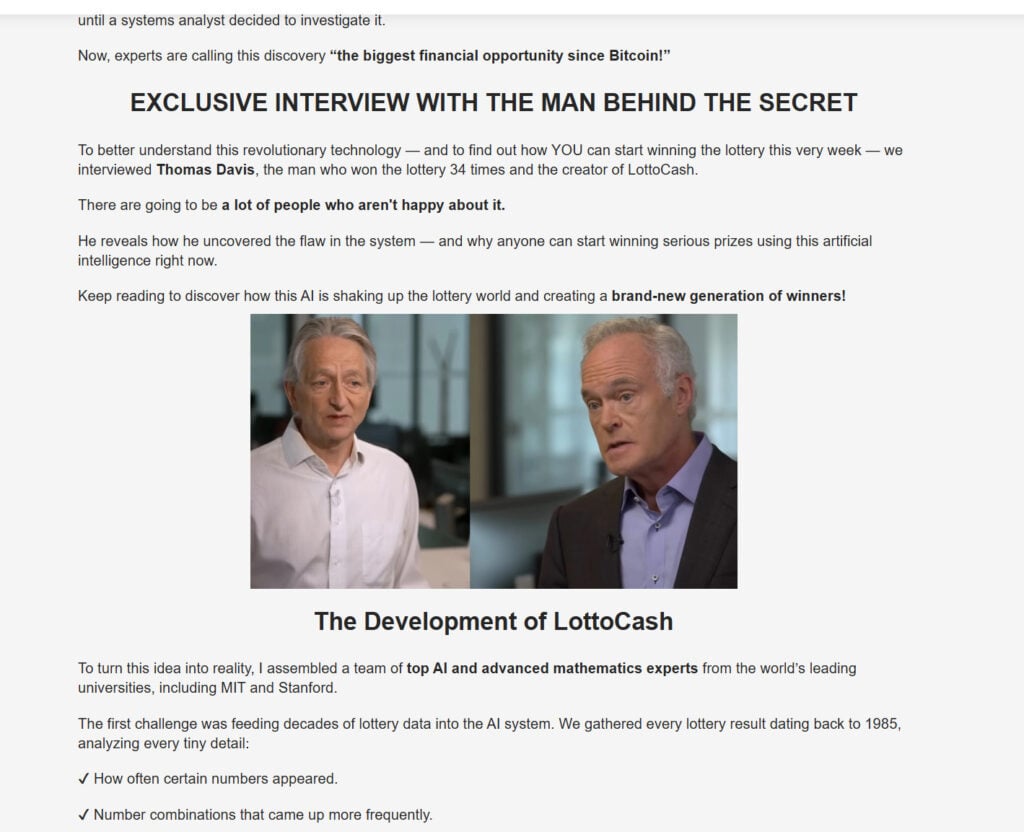
Another fabricated element of the scam is the persona of Dr. Thomas Davis, the alleged creator of Lotto Rush. He’s portrayed as a former NASA engineer who won the lottery 34 times using his secret algorithm. Videos and photos show an older man giving interviews, but the identity is fake.
Winning the lottery once is rare. Winning 34 times is statistically impossible. Yet the scam leans on this absurd narrative to sell the dream.
Fake Testimonials and “Success” Stories
Lotto Rush promotional material is filled with over-the-top success stories. A man in Brooklyn supposedly turns $5 into $298 million. A grandmother claims she paid off her mortgage with her winnings. These are fake testimonials, often using stock photos or AI-generated faces.
None of these stories have verifiable proof. No lottery commission has acknowledged Lotto Rush. The goal is to manipulate your emotions and make you act fast.
The $197 Trap
Once convinced, you’re prompted to pay $197 for access. The purchase process mimics legitimate sites, sometimes showing fake countdown timers or “limited spots” to rush you into buying. But once you pay, you’re left with a generic PDF or app filled with meaningless advice and no actual AI system.
You’re not buying a tool. You’re buying a lie.
How the Lotto Rush AI Scam Works
Understanding how this scam operates can help you avoid similar traps in the future. Here’s a detailed breakdown of the entire Lotto Rush AI operation:
Step 1: The Hook
Scammers begin by flooding social media with attractive ads. These often include:
- Sensational headlines like “AI cracks the lottery code!”
- Fake news clips resembling segments from CBS or CNN
- Deepfake endorsements from celebrities
- Claims of “limited time offers” and “exclusive early access”
These ads are designed to go viral and spark curiosity.
Step 2: The Landing Page
Clicking on one of the ads leads to a professionally designed landing page. The page may feature:
- Fake video interviews with “Dr. Thomas Davis”
- Screenshots of bank accounts with massive deposits
- Testimonials from alleged users
- Promises of legal, AI-driven success
The site is tailored to reduce skepticism and increase trust. It often uses phrases like:
- “Backed by NASA technology”
- “Endorsed by major news outlets”
- “As seen on CNN, NBC, ABC”
None of these claims are true.
Step 3: The Urgency Tactic
To push you toward a purchase, the site will create artificial urgency:
- “Only 7 licenses remaining”
- “Offer expires in 12 minutes”
- “This version will be shut down soon”
These psychological triggers are intended to override rational thinking and pressure you into buying fast.
Step 4: The Sale
You are then directed to purchase the system for $197. The checkout process looks legitimate, often using third-party payment gateways. Some versions may offer upsells or add-ons, claiming they “enhance” the AI’s accuracy.
Step 5: The Empty Product
Once payment is complete, you receive access to:
- A basic app or PDF with no real AI
- Generic lottery tips that can be found online for free
- No system updates, no customer support
No refunds, no results.
Step 6: The Follow-Up Scam
Many victims report being contacted again with:
- “Advanced” packages costing hundreds more
- “One-on-one coaching”
- Threats or urgent emails warning about losing access
These are designed to squeeze more money from victims who have already paid.
Not the First Time: Same Scam, Different Names
The Lotto Rush AI scam is just the latest version of a long-running scheme that has been repackaged under various names over the years. While the branding and promotional materials may change, the underlying scam remains exactly the same—promise easy lottery winnings using “AI” or “secret algorithms,” take your money, and deliver nothing of real value.

Previous versions of this scam have been marketed under names such as:
- Lottery Defeated
- Lottery Defeater
- Lotto Champ
Each of these so-called systems used the same core tactics:
- Fake endorsements from celebrities and media outlets
- Deepfake or AI-generated videos and voices
- Staged testimonials from “winners”
- A made-up creator or “mathematical genius” behind the tool
- Urgency-based sales tactics designed to push users into paying quickly
Despite being exposed multiple times, these scams continue to resurface under new names in order to stay one step ahead of consumer awareness and regulatory scrutiny. They thrive on digital platforms where content spreads quickly and users often act impulsively.
So if you come across any lottery system claiming to be powered by AI, backed by celebrities, or offering guaranteed wins, remember: if it’s not Lotto Rush, it could be the same scam hiding behind a different name. Always do your research and stay vigilant.
What to Do If You’ve Fallen Victim to the Lotto Rush Scam
If you’ve paid money to Lotto Rush or a similar scam, act quickly. Here are the essential steps to follow:
1. Report the Transaction
- Contact your bank or credit card company: Request a chargeback or dispute the payment.
- If you used PayPal or another payment service, report the transaction as fraudulent.
2. Report the Scam to Authorities
- Federal Trade Commission (FTC): https://reportfraud.ftc.gov
- Internet Crime Complaint Center (IC3): https://www.ic3.gov
- Better Business Bureau (BBB): File a complaint online.
3. Secure Your Personal Information
- If you entered any sensitive data, monitor your bank accounts and credit reports.
- Consider freezing your credit through Equifax, Experian, and TransUnion.
4. Leave Reviews and Warnings
- Post reviews on ScamAdviser, Trustpilot, Reddit, and social media.
- Warn friends and family to avoid similar offers.
5. Seek Support
- If you feel emotionally distressed, scams like this can have a psychological impact. Reach out to support networks or financial counselors.
6. Don’t Fall for Recovery Scams
- Some criminals offer “recovery services” to get your money back. These are almost always scams themselves.
The Bottom Line
Lotto Rush AI is not the revolutionary breakthrough it claims to be. It’s a digital scam that preys on financial desperation and the dream of easy money. With fake endorsements, false promises, and no legitimate evidence of success, it’s one of the more elaborate lottery-related frauds online today.
If it sounds too good to be true, it usually is. Stay vigilant, protect your money, and share this information to help others avoid falling for the same trap.
Stay informed. Stay safe. And remember: no one can predict the lottery.