

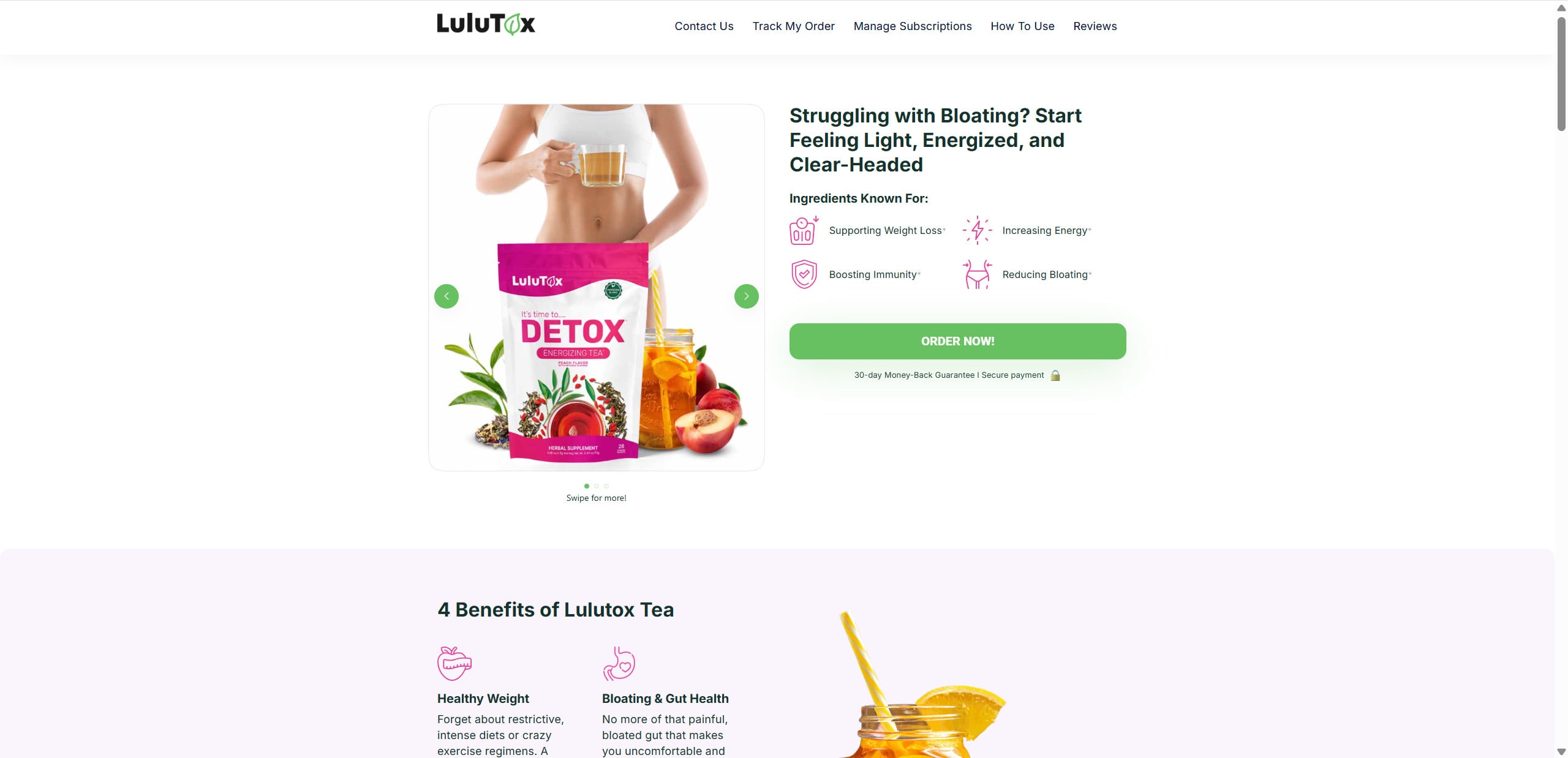
Lulutox Detox Tea has been trending everywhere — on Instagram ads, Facebook pages, influencer endorsements, and flashy websites. The product promises quick weight loss, reduced bloating, improved digestion, more energy, and even a stronger immune system. Advertisements highlight glowing before-and-after photos, while the sales page is filled with claims that sound like a miracle cure in a cup.
But is Lulutox Detox Tea really the life-changing product it claims to be, or is it just another marketing-driven scam designed to separate consumers from their money?
This detailed investigation will uncover the truth behind the hype. We’ll examine what Lulutox is, how it’s marketed, the red flags hidden in its sales process, customer complaints, and the step-by-step way the entire operation works. Finally, we’ll outline what you should do if you’ve already fallen victim and provide a clear conclusion on whether this detox tea is worth your time or money.
Overview of Lulutox Detox Tea
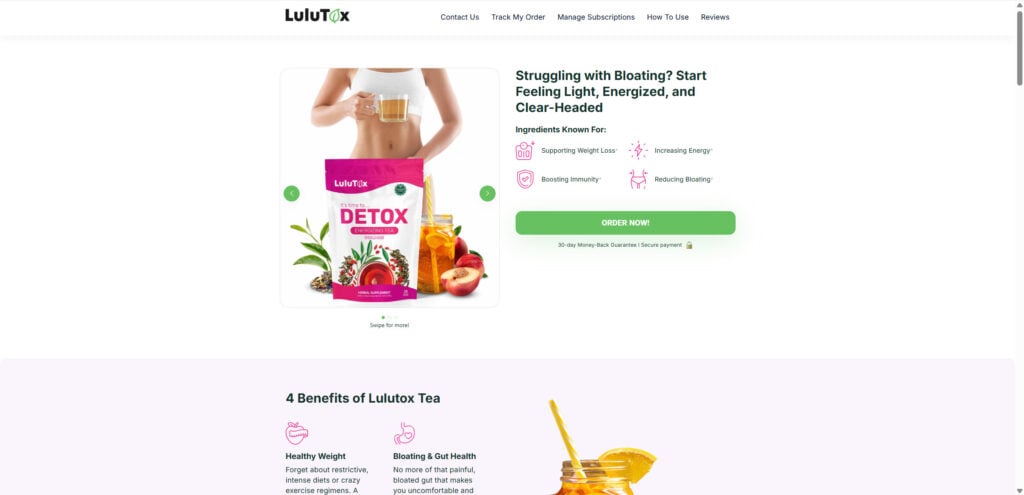
Lulutox Detox Tea is marketed as a herbal detox and weight-loss solution. The packaging is colorful, modern, and health-oriented, showing fruits, herbs, and slim waists. The official website emphasizes natural ingredients and claims that the tea can help consumers slim down quickly, feel lighter, and boost overall health.
Claimed Benefits
The product page highlights the following supposed benefits of drinking Lulutox:
- Support for weight loss without strict dieting or exercise.
- Reduction in bloating and digestive discomfort.
- Increase in natural energy throughout the day.
- Boosting the immune system.
- Stress management and mood improvement.
- Detoxification of the digestive system.
At first glance, these claims appear appealing, especially to individuals who are struggling with weight management, bloating, or low energy. However, a closer look raises important concerns.
Ingredients Listed
According to the marketing materials, Lulutox Detox Tea contains:
- Sencha Green Tea – Known for antioxidants and mild metabolism support.
- Nettle Leaf – Traditionally used to reduce inflammation and support digestion.
- Oolong Tea – Claimed to help with weight management and heart health.
- Dandelion Leaf – Acts as a natural diuretic and digestion aid.
These ingredients are not inherently harmful; in fact, they are commonly found in standard teas available at grocery stores. The problem is that Lulutox exaggerates their effects, presenting them as powerful fat burners and detoxifiers — something not supported by credible scientific studies.
Marketing Tactics
Lulutox’s website and ads use common supplement industry tactics to build trust and urgency:
- Testimonials and before/after photos – Many look generic or stock-photo based.
- Bold claims – “87% of women see results in the first days” or “burns hormonal fat.”
- Money-back guarantee – Highlighted in marketing but often difficult to claim in practice.
- Limited-time offers – Discounts and “most popular pack” deals encourage bulk buying.
These strategies are meant to lower skepticism and increase conversions, pushing people to order quickly without carefully researching.
Pricing and Bulk Purchases
The product is sold in packs:
- 1 pack (28 bags) – €25.95
- 2 packs (56 bags) – €42.85
- 3 packs (84 bags) – €55.95
Notice how the site strongly promotes the 3-pack option as the “most popular.” This is a classic sales technique used to maximize revenue and lock buyers into larger commitments.
Subscription Trap
One of the biggest red flags is buried in the terms of service. Lulutox often operates on a subscription model, meaning once you buy, you may automatically be enrolled in recurring charges every 30, 60, or 90 days.
Customers have reported that:
- Cancellation requests are ignored.
- Credit cards are charged even after unsubscribing.
- Companies use third-party billing services to keep withdrawing funds.
This creates a subscription trap — making it extremely difficult for the consumer to stop future payments.
Customer Complaints
A search across forums, Facebook groups, and consumer protection sites reveals a consistent pattern:
- Unauthorized charges – Some people were billed twice for the same product.
- Ignored refund requests – The advertised “30-day money-back guarantee” is rarely honored.
- Poor product quality – Customers describe the tea as tasting like cheap supermarket blends.
- Delayed or missing shipments – Orders sometimes take weeks to arrive, or never arrive at all.
- Fake reviews – Positive reviews often lack detail, while genuine complaints mention billing issues and disappointment.
Overall, the overview reveals a troubling picture: the product makes bold, unrealistic claims, uses manipulative marketing, and has a poor track record with customer satisfaction.
How the Operation Works
To understand why so many people get caught up in the Lulutox Detox Tea scheme, let’s break down how the operation is structured.
Step 1: The Hook – Flashy Ads and Influencer Marketing
Lulutox campaigns rely heavily on social media advertising. Instagram reels, TikTok videos, and Facebook ads feature slim models sipping tea, with captions like:
- “Lose 5 pounds in a week without dieting!”
- “87% of women notice results in the first days.”
- “Say goodbye to bloating!”
In some cases, influencers or paid affiliates promote the tea, adding a layer of social proof. The ads often target people searching for “quick weight loss,” “bloating solutions,” or “detox remedies.”
Step 2: The Landing Page
When users click the ad, they’re taken to a sleek sales page filled with:
- A bold headline: “Struggling with bloating? Start feeling light, energized, and clear-headed.”
- Eye-catching images of the tea and slim bodies.
- Lists of health benefits, presented in medical-style bullet points.
- A call-to-action button: “Order Now!”
The design mimics legitimate health brands, making it feel professional and trustworthy.
Step 3: The Scarcity Pressure
On the checkout page, users are presented with different pack sizes. The “3-pack deal” is emphasized as most popular and best value, nudging buyers toward spending more. Limited-time discounts or countdown timers may also appear to create urgency.
Step 4: The Fine Print – Subscription Trap
Hidden in the terms and conditions, Lulutox’s operation relies on recurring billing. Unless you cancel at least 24 hours before rebilling, your card will be charged again — often without clear reminders. Some companies also use card updater systems, meaning even if your card expires, they can still process charges through your bank.
This tactic ensures continuous revenue, even from dissatisfied customers.
Step 5: Delivery and First Impressions
The tea eventually arrives, often weeks later. Customers report that it resembles generic tea blends, with little to no difference in taste or effect compared to cheap supermarket teas. Any “weight loss” experienced is usually due to:
- Water weight reduction (from diuretic herbs like dandelion).
- Increased bowel movements (from laxative properties).
- Placebo effect – users believe it’s working because they expect results.
Step 6: Customer Support Roadblocks
When dissatisfied buyers attempt to request refunds or cancel subscriptions, they encounter:
- Automated responses with no follow-up.
- Claims that refunds are not eligible due to “policy restrictions.”
- No clear phone number for support, only vague email addresses.
This lack of accountability makes it extremely difficult to resolve billing issues.
In summary, the operation is a well-oiled marketing machine: attract with bold promises, lock customers into subscriptions, make refunds difficult.
What to Do if You Have Fallen Victim
If you’ve purchased Lulutox Detox Tea and suspect you’ve been scammed, here are the steps to take immediately:
- Cancel the Subscription – Contact the company directly and request cancellation in writing (via email). Keep a record of your communication.
- Block Future Payments – Contact your bank or credit card company to stop recurring charges. Ask about a “chargeback” if you were billed without consent.
- Request a Refund – Use the 30-day money-back guarantee (if still valid). If the company refuses, escalate through your bank.
- Document Everything – Save receipts, emails, and screenshots of the website. These may be useful for disputes.
- Report the Scam – File a complaint with consumer protection agencies in your country. Examples:
- In the U.S.: Federal Trade Commission (FTC).
- In the U.K.: Action Fraud.
- In the EU: European Consumer Centre (ECC).
- Warn Others – Share your experience on forums, review sites, and social media to alert others.
- Check for Identity Risks – If you entered sensitive information, monitor your accounts for suspicious activity.
The Bottom Line
Lulutox Detox Tea presents itself as a natural solution for weight loss, bloating, and energy. However, a closer examination shows that it relies on exaggerated health claims, subscription traps, fake reviews, and poor customer service. While some ingredients may have mild health benefits, they are available in far cheaper, more transparent products.
The red flags are clear:
- Unrealistic promises of fast weight loss.
- Hidden subscription billing practices.
- Numerous customer complaints of unauthorized charges and no refunds.
- Fake reviews drowning out genuine criticism.
So, is Lulutox Detox Tea legit? The evidence strongly suggests it’s closer to a scam than a genuine solution. At best, it’s an overpriced tea with ordinary ingredients. At worst, it’s a subscription trap designed to drain customers’ wallets.
If you want real, sustainable weight loss and better health, focus on proven methods: balanced nutrition, exercise, hydration, and consulting medical professionals. Don’t let flashy ads convince you that a single cup of tea can replace science and discipline.


Thanks I didn’t realise this but I will be more wary of this roduct from now on.