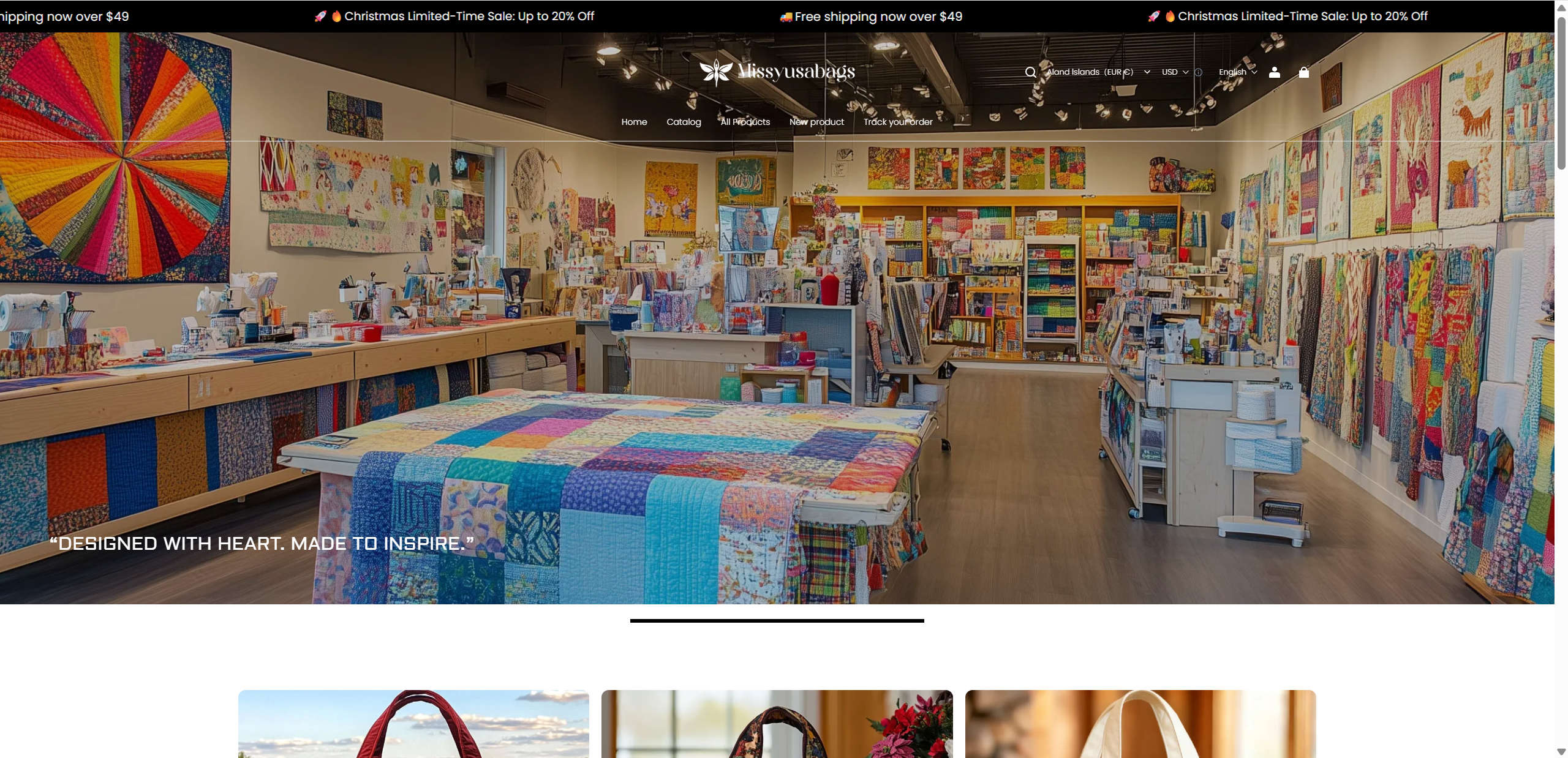
Missy USA Bags looks like a charming online shop that sells handmade quilted tote bags inspired by books, nature, pets, and cozy home crafting. The images on the site are bright, artistic, and emotionally appealing. At a glance, the entire brand feels warm, creative, and built around craftsmanship.
But many shoppers who place an order quickly discover that the real product they receive is nothing like the photos. Instead of embroidered and quilted artwork, they receive thin printed bags, poor materials, and quality so low that it becomes clear the photos were never real to begin with. At this stage, the real story begins to unfold.
Missy USA Bags is part of a growing network of websites that use AI generated images to lure customers into buying items that appear handcrafted but are mass produced in China at very low cost. When buyers try to get a refund, they are blocked by return conditions that require expensive shipping back to China or they are pushed into accepting a small partial refund instead.
This article breaks everything down clearly. You will learn what Missy USA Bags really is, how the operation works step by step, why the photos are AI generated, and what to do if you already bought from this shop.
Overview
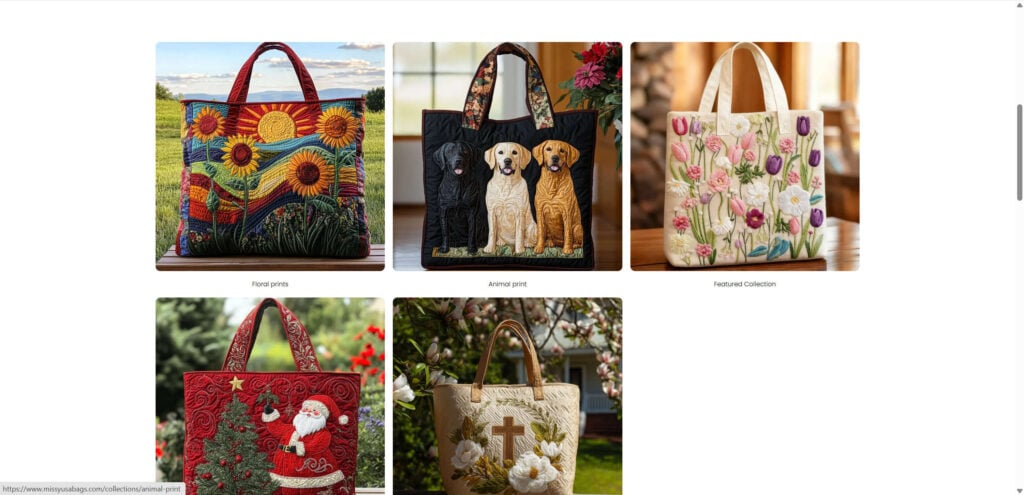
Missy USA Bags presents itself as an American handmade brand. The imagery, product descriptions, and website visuals all aim to create the feeling of a small artisan workshop. The colors are vivid, the stitching looks detailed, and the backgrounds make it seem as if real sewing studios produced these items by hand.
But the reality is very different. A closer look shows that the entire product catalog consists of AI generated images that do not represent actual physical bags. The designs display characteristics common in AI artwork, including overly sharp textures, unrealistic embroidery layering, impossible fabric lighting, and inconsistencies in stitching patterns that never occur in real quilting.
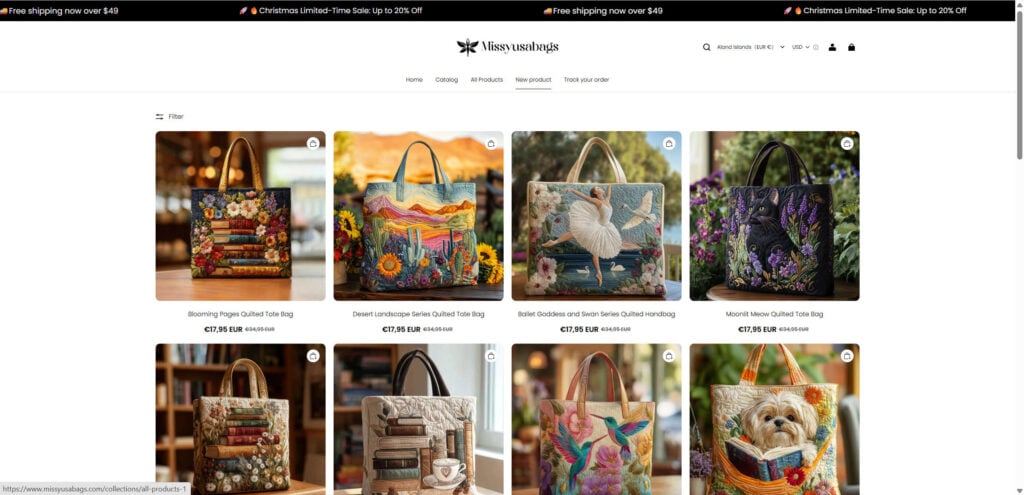
When customers buy these bags, they expect handmade craftsmanship. Instead, they receive mass produced printed fabric bags that barely resemble the listings.
The Problem With AI Generated Product Images
AI generated bag images share several distinctive traits:
- Overly perfect stitching
- Artificial quilt textures
- Impossible lighting consistency
- Fabric shadows that do not behave naturally
- Details that look embroidered but are digitally simulated
Real embroidery always contains slight imperfections, thread inconsistencies, and natural shadows. The images on Missy USA Bags show flawless uniformity that only digital tools can produce.
This is one of the clearest early signs that the company does not sell what it advertises.
No Real Handmade Craftsmanship
The branding leans heavily on the idea of handcrafted American style quilting. But when buyers receive their bags, the differences are dramatic:
- There is no embroidery
- The fabric is thin and synthetic
- The designs are printed, not stitched
- The colors look washed out or dull
- The structure feels flimsy instead of quilted
The contrast between the advertised product and the delivered product is so large that many customers believe they were sent the wrong item.
No Physical Address Or Transparent Ownership
Legitimate companies selling handmade goods always include:
- A physical address
- A real contact phone number
- A clear business registration
- An About Us section with founders or team members
Missy USA Bags includes none of this. It uses generic email addresses, vague brand descriptions, and no verifiable company information. Even though the site name suggests a United States origin, the operation is not located in the USA.
Shipping data and return policies expose a different truth. All returns must be sent to China at the buyer’s expense, which indicates the company is connected to Chinese warehouses and low cost manufacturers.
Why The Product Never Matches The Photos
Missy USA Bags inflates the product value through idealized AI images. The designs are created using digital tools, not real photography. These images are then displayed as if they represent physical products, which they do not.
When buyers receive their items, they find that:
- The artwork is printed onto cheap fabric
- Colors are inaccurate
- The bags may arrive flattened in envelopes
- The construction feels weak
- Handles fray quickly
- The quality is closer to a market stall item than a handcrafted piece
Because the product never actually existed in the form shown online, it is impossible for the real bag to match the listing.
The Return Policy Trap
The return policy is intentionally structured to discourage returns. While the website claims returns are accepted, customers quickly learn that:
- They must ship the product back to China
- Shipping cost often exceeds the price of the bag
- Tracking is required for approval
- Customer service requests endless photos
- Response times are slow and repetitive
This makes returning the product so expensive and time consuming that most buyers give up.
Part Of A Larger Network Of Similar Scam Sites
Missy USA Bags fits into a recognizable pattern of Chinese based ecommerce sites that use AI generated handmade images to attract customers. These operations share common traits:
- Identical pricing structures
- Generic template websites
- Fake discounts
- AI generated product images
- Returns to China
- Partial refund tactics
- Lack of company transparency
- Frequent rebranding under new names
These sites appear and disappear regularly, using the same product images across multiple domains.
Patterns That Reveal The Company’s Real Structure
Several patterns make it clear that Missy USA Bags is not a genuine handmade brand:
- No customer photos anywhere
- Repeated AI image flaws across the catalog
- Reviews that appear fake or AI generated
- Identity masking through vague language
- No social media presence of actual artisans
- Multiple similar websites using the same designs
Everything points to low quality dropshipping combined with AI image marketing.
How The Operation Works
Understanding the structure behind Missy USA Bags is key to understanding why so many customers feel misled. The operation is designed to maximize sales while making refunds and returns extremely difficult.
Below is a clear, step by step breakdown of how this entire system typically works.
Step 1 Creating The Illusion Of A Handmade Brand
The shop launches with a large catalog of AI generated tote bag images. These images mimic:
- Embroidery
- Quilting
- Fabric texture
- Hand stitching
The website design reinforces the illusion with comforting scenes that resemble American craft studios.
This strategic branding is meant to connect emotionally with buyers and create trust instantly.
Step 2 Flooding Social Media With AI Images
Next, the operation runs ads on Facebook, Instagram, and TikTok showing these digitally generated bags. Because the images are bright and beautiful, they attract a lot of attention.
Viewers think they are seeing real handmade products and often share them. This organic spread is part of the strategy. It gives the site rapid visibility at low cost.
Step 3 Using “Limited Time” Discounts To Trigger Impulse Buys
Nearly every item is displayed with:
- A fake original price
- A “sale” price
- Claims of limited stock
- Holiday specific promotions
This creates urgency. Customers feel they must buy now to avoid missing a deal. When combined with the emotional appeal of the artwork, these tactics increase impulse purchasing.
Step 4 Manufacturing And Shipping From China
Once the customer pays, the real product is produced or sourced in China. These items are not quilted or embroidered. They are printed on low cost polyester fabric. The goal is to maximize profit margins.
Product quality is extremely low because:
- Materials are cheap
- Labor is minimal
- No real quality control exists
- Bags are shipped flat to save on shipping
Shipping often takes weeks, and customers are not informed at checkout that the product ships from China.
Step 5 The Refund Tactic Offering 20% To 30%
When customers complain, they receive scripted replies. The support team offers a partial refund of around:
- 20%
- 25%
- 30%
They claim this is a goodwill offer or a fair compromise.
Why do they do this? Because they know most customers will not:
Pay $20 to $40 to return an $18 product
Spend time communicating repeatedly
Go through an international shipping process
This tactic reduces their losses and avoids chargebacks.
Step 6 Returns Require Shipping To China
If a customer refuses the partial refund, the company insists they must ship the product back to China to get a full refund. This is intentionally designed to discourage returns.
Customers discover:
- The return address is in China
- They must pay the full shipping cost
- Tracking is required
- Shipping may cost more than the product
- If the parcel is lost, no refund is issued
These obstacles push customers into giving up or accepting the partial refund offer.
Step 7 Rebranding And Relaunching Under New Names
When complaints grow too large, the site may shut down and reappear under a new name with the same catalog of AI bags. This allows the operators to avoid negative reviews, chargeback ratios, and platform bans.
The rebranding cycle is one of the strongest signs that these sites are part of a coordinated network rather than independent small businesses.
What To Do If You Have Bought This
If you already placed an order from Missy USA Bags, do not panic. Many buyers have been through this situation and there are clear, effective steps you can take.
- Take photos of everything
Capture clear images of the product you received. Photograph the stitching, materials, and overall design. Also take screenshots of the original product listing. - Save all emails and order confirmations
These will support your case when filing a dispute. - Contact customer support once
You can request a refund and state that the product does not match the advertised images. - Do not accept a 20% or 30% partial refund if you want your money back
Partial refunds close the door on full refunds. - Do not agree to return shipping to China
The cost will be higher than the product itself. - File a chargeback with your bank
Chargebacks are very effective in cases of misleading product images or non as described items. - If you used PayPal, open a dispute
Choose the “significantly not as described” option. - Keep all correspondence polite and factual
Banks and PayPal look more favorably on clear, well organized claims. - Leave a review on trusted platforms
Your experience can help protect future buyers. - Monitor your account for future charges
It is rare but always safe to keep an eye on your statement after dealing with sites like this.
The Bottom Line
Missy USA Bags is not the handmade American brand it appears to be. The images are AI generated, the products are low quality mass produced items from China, and the return policy is structured to make refunds difficult or financially impractical. The company uses tactics that match a well known network of scam oriented ecommerce websites that rely on emotional advertising and confusing return conditions.
If you were considering purchasing from Missy USA Bags, it is safer to avoid it altogether. And if you already ordered, follow the steps in this guide to protect yourself and recover your money.
FAQ
Is Missy USA Bags a real handmade brand?
No. Despite the website’s presentation, Missy USA Bags is not a handmade American brand. The product images are AI generated artwork, and the actual bags are mass produced in China using low quality printed fabric.
Why do the bags look nothing like the photos?
The photos on the website are not real product photographs. They are digitally created images designed to resemble embroidered or quilted bags. The real products are printed polyester bags that cannot match the detailed AI artwork shown online.
Where does Missy USA Bags ship from?
Although the site suggests an American identity, all products ship from China. Shipping times may be long, and the packaging often arrives in flat plastic envelopes that distort the bag’s shape.
Why is it so hard to return a product?
Returns must be shipped back to China at the customer’s expense. International shipping can cost more than the price of the bag, making returns financially impractical. This is intentional and part of the business model.
What happens if I ask for a refund?
Customer support typically offers a small partial refund of around 20% to 30% if you agree to keep the item. If you want a full refund, they require you to ship the product back to China, which most buyers refuse due to the cost.
Are the reviews on the website real?
Most reviews appear generic, incomplete, or artificially generated. There are no verified customer photos, and there is no evidence of real buyers receiving products that match the images.
Is Missy USA Bags part of a scam network?
Yes. The site matches the structure of a larger network of Chinese based online stores using AI generated images, fake discounts, vague company information, and the same partial refund tactics.
Can I get my money back if I already bought something?
Yes. The most effective approach is to file a chargeback with your bank or card provider, or open a PayPal dispute under “significantly not as described.” Provide photos and screenshots showing the differences between the listing and the product.
What should I do with the low quality bag I received?
You can keep it, donate it, or recycle it, depending on its condition. Returning it to the seller usually costs more than the item itself, so pursuing a chargeback is the best option for recovering your money.
How can I avoid scams like this in the future?
Look for red flags such as AI generated images, vague About Us pages, no real company address, return shipping to China, and large discounts on supposedly handmade items. Always check customer photos and independent reviews before buying from unfamiliar shops.