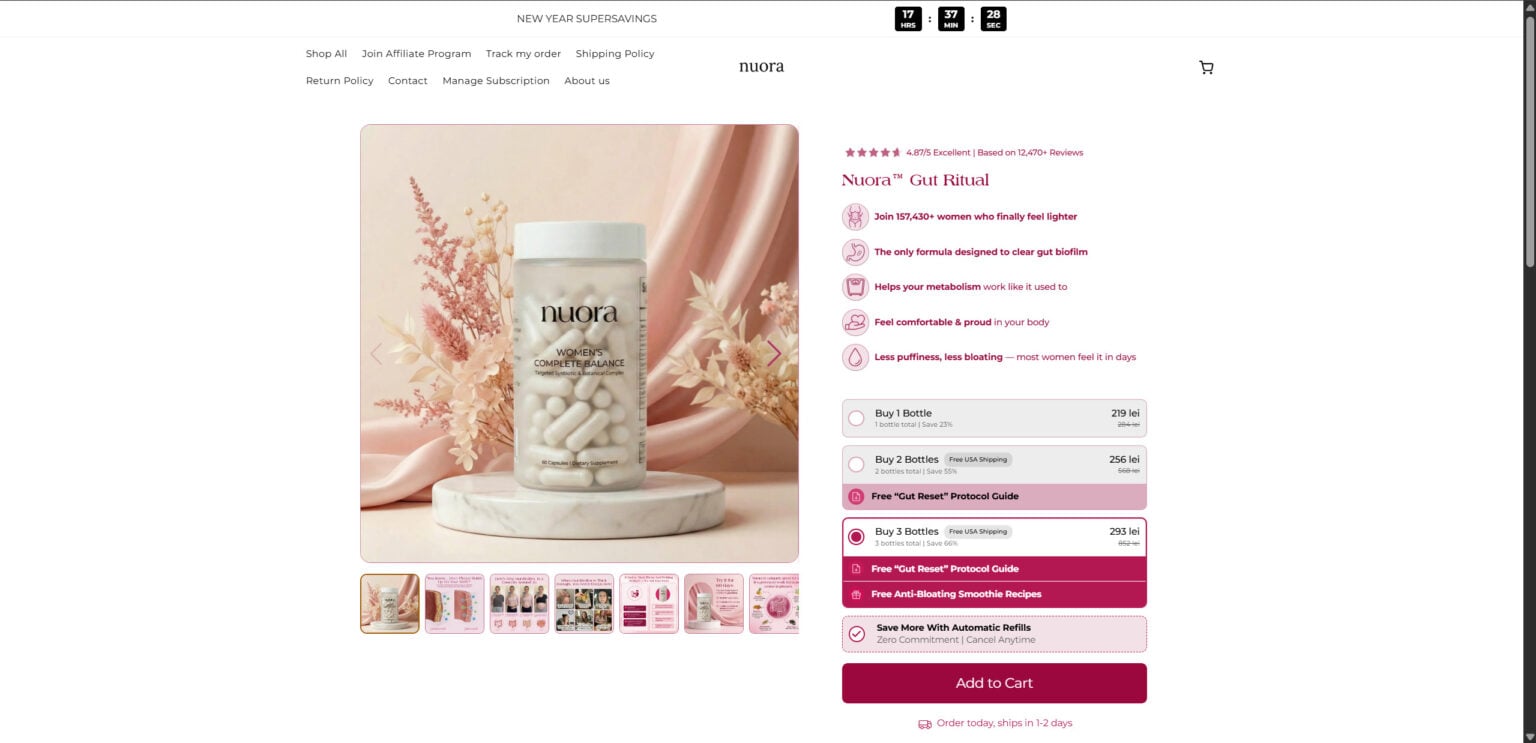
Nuora Gut Ritual is pitched as the missing link for bloating, puffiness, cravings, and “slow metabolism”, with a narrative that your gut is blocked by something called “biofilm” and that this product “clears the path” so your body can finally absorb what it needs. The sales page also pushes fast timelines for noticeable changes and leans heavily on large review counts and polished social proof.
That combination can be persuasive. It can also be a textbook pattern used by aggressive supplement funnels: bold mechanism, guaranteed timelines, oversized social proof, and a purchase flow that nudges you toward bundles and recurring refills.
Below is what to know before you spend money, plus what to do if you already ordered and now see unexpected shipments or recurring charges.
Overview
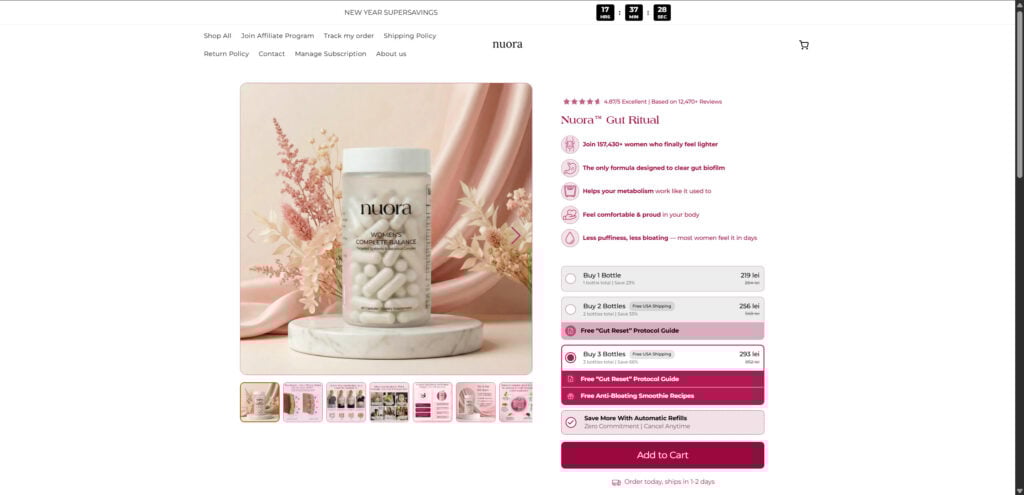
Nuora Gut Ritual is marketed as an all-in-one “gut ritual” that allegedly solves multiple issues at once: bloating, puffiness, cravings, metabolism, and how your body “feels in your 20s.” The sales copy repeatedly frames the problem as something blocking your gut from absorbing supplements properly, and positions Gut Ritual as the fix.
The core pitch: “biofilm” as the villain
The page claims many people are “blocked” by gut “biofilm” and that ordinary probiotics or supplements will not work because “nothing gets through.” It then claims Gut Ritual “clears the path first” (often by highlighting bromelain and other ingredients) so the rest of the formula can finally reach your system.
Biofilms are real in microbiology. But the leap from “biofilm exists” to “this consumer supplement reliably removes gut biofilm in real people and fixes symptoms on a predictable schedule” is where marketing often outruns evidence. The page’s language is written for certainty, not nuance.
The “results timeline” pressure
Another major red flag is the promise of predictable timelines. The page describes people “feeling” changes within 3 to 5 days, then stacking additional claims in weeks 2 to 4 and beyond.
When a supplement uses scripted timelines like a program (day range, week range, then a “by week 6-8” payoff), it is usually not because human biology is that uniform. It is because timelines reduce hesitation and increase conversion.
The “GLP-1” style framing
Nuora’s page also leans on a “same ingredient, different result” narrative for berberine, implying that most berberine “passes through,” but this product changes absorption and produces dramatically better effects. The page also uses GLP-1 language that many consumers associate with prescription weight-loss and diabetes drugs.
That is a high-stakes comparison in the buyer’s mind. It is also where you should be most skeptical, because it encourages people to expect medication-like outcomes from a supplement.
Oversized review counts and polished social proof
On Nuora’s shop pages, Gut Ritual is displayed with a very large review count and a high average rating.
Huge review totals are not impossible, but they deserve verification. The key question is not “Does the page show 12,000+ reviews?” It is “Can I audit them?”
Look for verifiable review systems, review dates, verified purchases, and a mix of outcomes. If you cannot, the number is marketing, not evidence.
The recurring billing and subscription angle
Nuora’s ecosystem includes “Manage Subscription” and a published subscription policy that explains recurring charges and cancellation rules.
That matters because a meaningful portion of consumer complaints around similar brands are not about the supplement “working” or “not working.” They are about billing behavior: surprise refills, difficulty canceling, or being charged after attempting to cancel.
Public complaint channels reflect those patterns. For example, complaints posted with the Better Business Bureau include allegations about recurring charges and cancellation problems, plus frustration over fulfillment and support responsiveness.
Inconsistent policy language and template signals
When you evaluate legitimacy, you are not only evaluating ingredients. You are evaluating operations.
One operational red flag is sloppy or template-based policies that do not clearly match what is being sold. On some Nuora pages, policy text appears generic and includes language that looks like it belongs to apparel or general merchandise (for example, “unworn/un-used with tags”). =
That kind of mismatch is common in fast-launch ecommerce operations. It does not prove fraud by itself. It does signal low rigor and a higher risk that support, refunds, and accountability will be frustrating when something goes wrong.
“Dropship/white-label” concerns
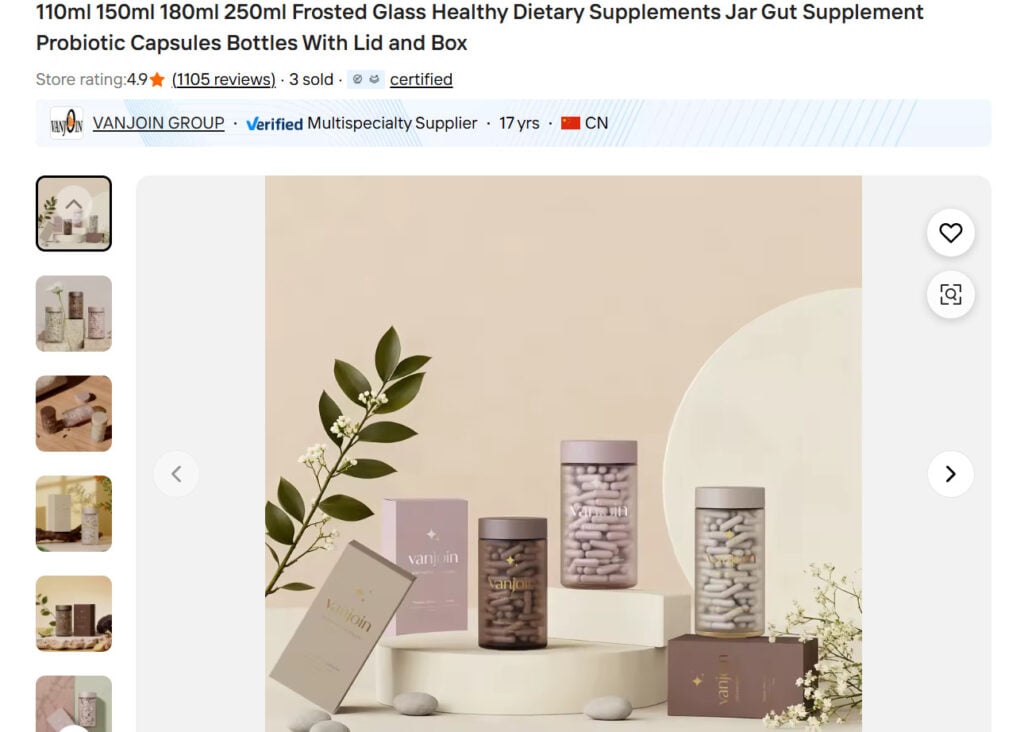
You also referenced what many buyers suspect: the product looks like a standard, mass-produced supplement sold under a premium brand wrapper, sometimes with packaging and bottle styles that resemble wholesale catalog items.
Here is the practical issue: if a supplement is white-labeled and fulfilled through complex supply chains, consumers often see some combination of:
- Unclear manufacturer identity or location
- Minimal batch-level transparency (lot numbers, COAs you can verify, third-party test results you can trace)
- Slower shipping, fragmented tracking, and outsourced customer support
- Return processes that feel designed to discourage returns, especially when shipping is expensive or international
Even when a website lists a US business address, fulfillment can still be outsourced. The fix is not guessing where it ships from. The fix is demanding verifiable transparency before you buy.
How the operation typically works
This is the pattern many shoppers describe, and it matches what Nuora’s funnel design encourages.
Step 1: You see an ad that targets a painful, broad problem
The ad usually targets vague but relatable symptoms: bloating, puffiness, cravings, “gut imbalance,” stubborn weight, fatigue, or feeling “inflamed.” It implies the cause is hidden and that normal approaches failed because you were “blocked.”
This framing is effective because almost anyone can map their own experience onto it.
Step 2: A landing page gives you a single, simple villain and a single solution
The villain is “biofilm,” “buildup,” “toxins,” or “bad bacteria.” The solution is Gut Ritual.
Instead of presenting a balanced explanation (diet, sleep, stress, medical conditions, medications, IBS, etc.), the copy narrows your attention to one mechanism and one purchase.
On Nuora’s Gut Ritual page, the mechanism is described in “blocked absorption” terms, with bromelain and berberine framed as the difference-maker.
Step 3: Scripted timelines reduce hesitation
Timelines like “feel lighter in 3-5 days” and “weeks 2-4” are used to create a near-term reward expectation.
When you believe results are imminent, you are more likely to buy multiple bottles “so you do not stop early.”
Step 4: Social proof and authority cues close the gap
The funnel then uses:
- Large review counts and high star ratings
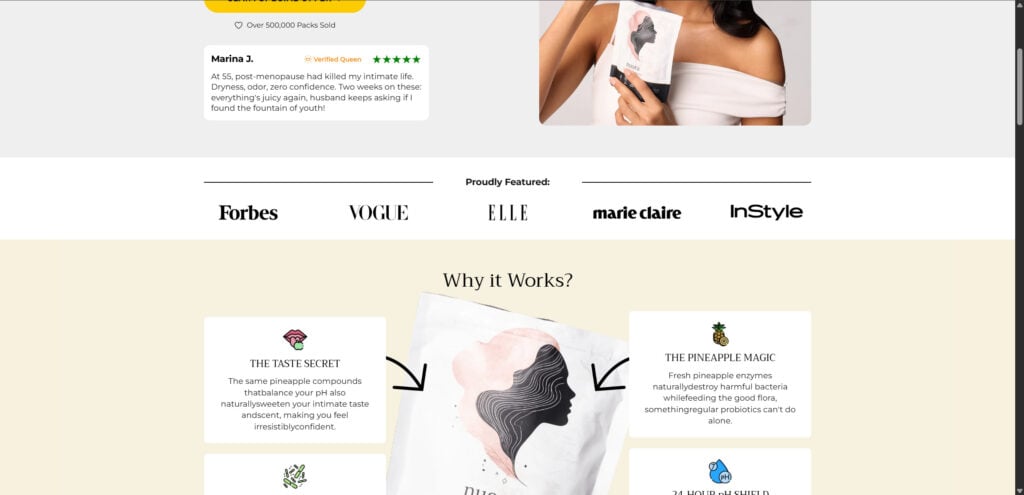
- Magazine-style logos such as Forbes, Vogue, Elle, Marie Claire, and InStyle
- “Join 157,000+ women…” style claims and statistics
This works because it reduces perceived risk. But it is only meaningful if you can verify the underlying source.
Step 5: Bundles and “best value” steer you into buying more
The page offers price anchors that make multi-bottle purchases feel rational. That is not automatically bad.
It becomes problematic when the product’s core promise is tied to a timeline that “requires” multiple bottles, and when recurring refill options are nudged as the default.
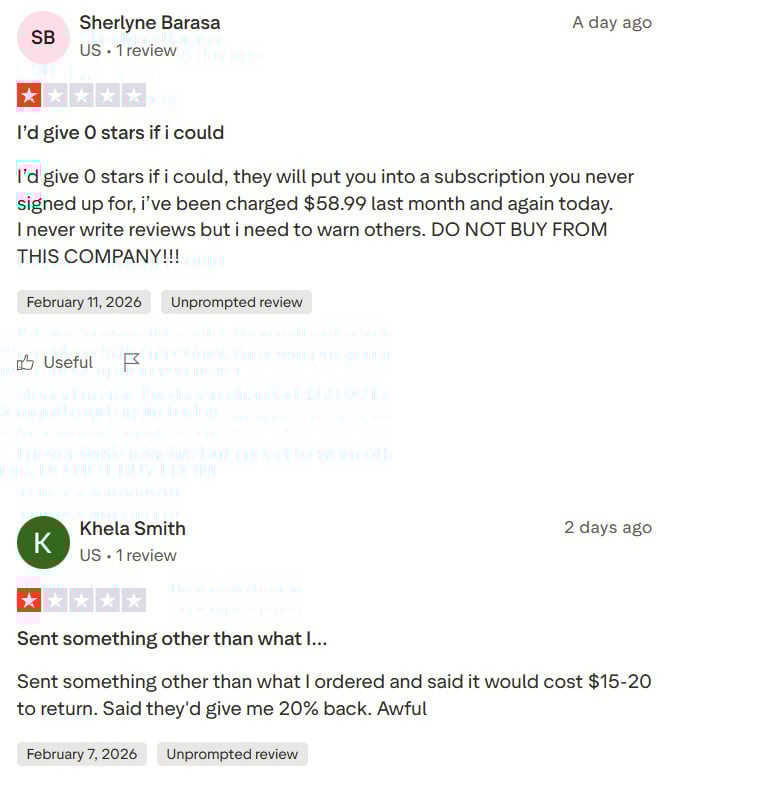
Step 6: Auto-refill or subscription mechanics can trigger surprise billing
Many supplement funnels include “save more with automatic refills” or a subscription checkbox, sometimes easy to miss on mobile.
Nuora provides subscription management links and a subscription policy that describes recurring charges, cancellation windows, and how to stop future billing.
Where complaints arise is when the buyer did not realize they enrolled, or cancellation was not processed the way they expected, or charges continued after contact attempts.
Step 7: Refund friction and support bottlenecks
When customers ask for refunds, they often report being routed through slow email support, being asked to wait, or facing conditions that make refunds difficult.
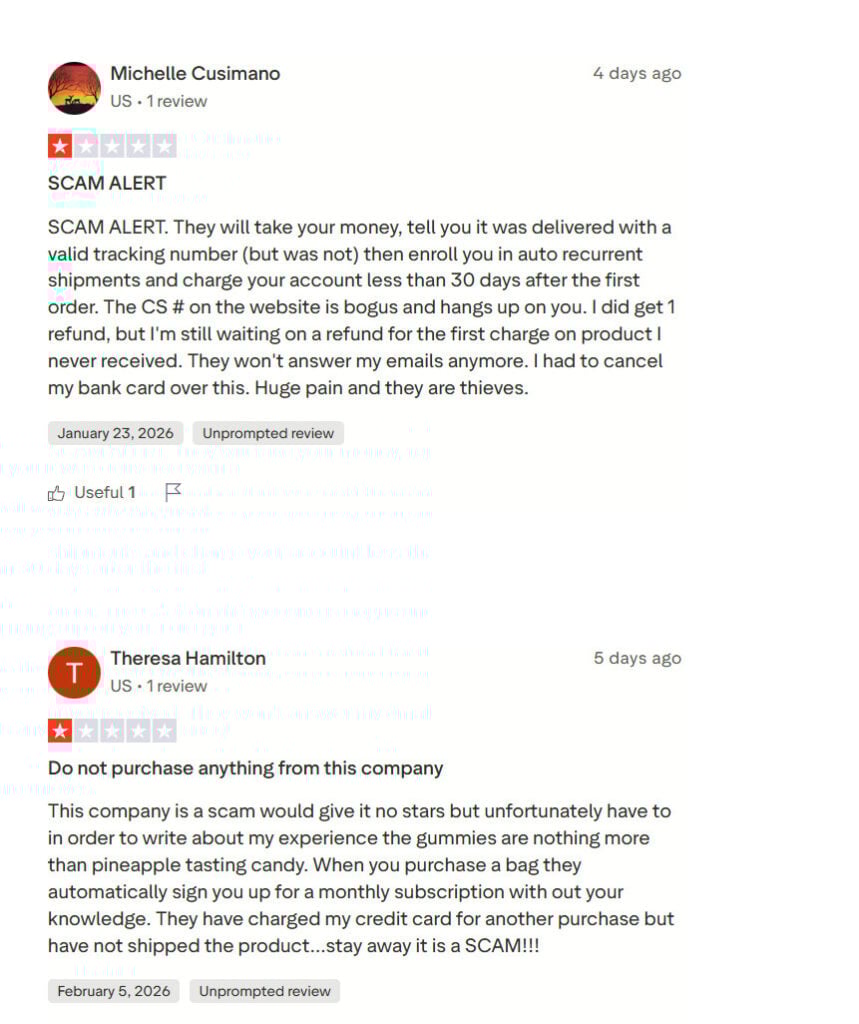
Complaint channels reflect this general pattern for Nuora-related transactions, including allegations about cancellation and recurring charge.
Again: complaints do not prove every customer will have a bad experience. They do establish that the risk is not hypothetical.
What Gut Ritual appears to be, and what that means
Based on the sales copy, Gut Ritual is built around ingredients like berberine and bromelain, plus black pepper extract (piperine) for “absorption.”
That combination is not exotic. It is a common structure in supplement marketing:
- A “hero” ingredient (berberine)
- A “mechanism” ingredient (bromelain, framed as breaking barriers)
- An “absorption booster” (black pepper extract/piperine)
The product’s differentiation is not the ingredient list. It is the story attached to it.
What the ingredients can and cannot realistically do
This section is about expectations.
Berberine is not a prescription GLP-1 drug
Berberine has been studied for metabolic markers, and there is ongoing research interest. But equating it to GLP-1 medications in the consumer’s mind is a marketing move, not a clinical equivalence.
If you are considering it for blood sugar, cholesterol, or weight, treat it as a supplement with mixed evidence and potential side effects, not a medication substitute. Discuss it with a clinician, especially if you take diabetes meds, blood pressure meds, or anticoagulants.
Black pepper extract can increase absorption, but “up to 20x” is context-dependent
Nuora’s page makes very large absorption claims, including references to up to 20x and dramatic percentage increases.
Piperine has been shown to increase bioavailability for certain compounds in specific contexts. For example, literature discussing piperine and curcumin reports large relative increases in curcumin bioavailability under study conditions.
But here is the key consumer point: a big absorption statistic for compound A does not automatically mean the same magnitude for compound B, in your body, with your dose, with your diet, and with your medications.
“Biofilm cleanse” claims are where you should be most skeptical
Biofilms are real. The claim that a consumer supplement “clears gut biofilm,” restores absorption, and produces reliable symptom changes on a short timeline is a much bigger leap.
Nuora’s page presents this as a near-certainty, comparing ordinary supplements to “watering a plant through plastic wrap.”
When you see that level of certainty, you should demand unusually strong evidence: human clinical trials on the exact formula, not ingredient-level speculation.
Red flags checklist for Nuora Gut Ritual
Use this as a quick filter before buying:
- Guaranteed or scripted timelines (days, then weeks, then “back to normal”)
- Medical-sounding mechanism with simplified certainty (“blocked absorption,” “biofilm barrier”)
- GLP-1 style framing that encourages drug-like expectations
- Very large review counts without strong verification signals
- Magazine logos used as authority cues without clear citations
- Subscription mechanics and recurring billing
- Public complaints alleging cancellation or billing issues
- Policy pages that appear templated or mismatched to the product category
- Limited manufacturing transparency (no easy-to-verify third-party lab testing, unclear sourcing)
The more boxes you check, the more you should avoid ordering directly through the funnel.
Should you buy it?
If your priority is minimizing risk, Nuora Gut Ritual is not a great bet.
That does not mean every bottle is “fake,” or that every customer will have issues. It means the business model and marketing style increase the chance of buyer regret:
- Expectations are engineered to be high and fast.
- The funnel structure encourages multi-bottle purchases.
- Subscription management is part of the ecosystem, and complaints exist about recurring charges and cancellation.
If you still want to try something in this category
A safer approach:
- Buy ingredients from brands with strong third-party testing (COAs you can actually verify).
- Avoid auto-refill programs unless you intentionally choose them.
- Do not buy 3-6 months upfront based on scripted timelines.
- Treat “biofilm cleanse” claims as marketing until proven otherwise.
And if you have real GI symptoms, persistent bloating, or sudden changes, do not self-diagnose via a sales page. A clinician can screen for common causes that supplements will not fix.
What to do if you already ordered
If you are seeing unexpected charges, extra bottles, or you suspect a subscription, act quickly.
1) Find and save your proof
- Screenshot the checkout page, order confirmation, and any “subscription” language.
- Save emails, tracking pages, and the refund/return policy text visible at the time you ordered.
- Take screenshots of your bank or card statement line items.
2) Try to cancel the subscription immediately
Nuora provides a subscription policy and subscription management links. Use them right away.
If the self-serve portal fails, email support with a clear message:
- “Cancel all subscriptions”
- “Do not ship further refills”
- “Confirm in writing that recurring billing is stopped”
3) Dispute quickly if you see unauthorized or continued charges
If you were billed after cancellation attempts, or you never knowingly enrolled in a subscription:
- Contact your card issuer or bank and request a charge dispute for unauthorized recurring billing.
- Ask about blocking the merchant from future charges or issuing a new card number if needed.
4) Do not rely on verbal assurances
If support says “it is canceled,” request written confirmation and keep it.
Public complaints often show that “I contacted them” is not enough unless you can document it.
5) Be careful with returns
If you decide to return:
- Confirm the return address in writing.
- Confirm whether they require unopened product.
- Use tracked shipping and keep the receipt.
Also watch for policy language that seems generic or mismatched. If policies look sloppy, assume the return process may be frustrating.
6) Report patterns if you believe the marketing or billing is deceptive
If you believe you were misled or enrolled without clear consent, you can report to:
- Federal Trade Commission for deceptive marketing or negative-option billing
- Your state attorney general consumer division
- Food and Drug Administration for supplement-related adverse events (if applicable)
The bottom line
Nuora Gut Ritual uses a high-conversion supplement playbook: a single villain (“biofilm”), fast promised timelines, massive review counts, and a recurring-billing ecosystem that can create surprise charges if you are not careful.
If you want the lowest-risk option, skip ordering through this funnel. If you already ordered and suspect subscription billing or extra shipments, document everything, cancel immediately, and dispute fast if charges continue. Public complaints indicate that cancellation and billing issues are a real risk, not a theoretical one.
FAQ
Is Nuora Gut Ritual a scam?
It is sold as a supplement, but the marketing raises red flags: “biofilm barrier” certainty, scripted timelines, very large review counts, and recurring-billing infrastructure.
Why do people mention subscriptions and surprise charges?
Nuora has subscription management and a subscription policy describing recurring billing and cancellation rules. Complaints in public channels include allegations about recurring charges and cancellation problems.
Does it really work in 3-5 days?
The page claims many women feel visible or tangible changes within 3 to 5 days. That kind of timeline is a marketing technique and is not a guarantee of real-world outcomes across a diverse population.
What is “gut biofilm,” and can a supplement remove it?
Biofilms exist, but consumer supplement claims about reliably clearing gut biofilm and restoring absorption are far stronger than what most shoppers can reasonably verify from a sales page.
Is berberine basically Ozempic or a GLP-1 drug?
No. Berberine is a supplement studied for metabolic markers, but it is not a prescription GLP-1 medication. Marketing that encourages that association can create unrealistic expectations.
What does black pepper extract actually do?
Piperine can increase bioavailability of certain compounds in specific contexts. Large “percentage” claims do not automatically translate to the same effect for every ingredient, dose, or person.
Why are there so many reviews shown on the site?
The shop page displays a very high review count and rating. The key is whether reviews are independently verifiable, include verified purchases, and show a realistic spread of outcomes.
What should I do if I ordered 1 bottle and received 3?
Treat it as a potential bundle or subscription issue. Save proof of what you selected at checkout, contact support in writing, cancel any subscriptions, and dispute if you were billed for items you did not authorize.
How do I cancel if the portal does not work?
Use the published contact routes, demand written confirmation of cancellation, and if billing continues, dispute through your card issuer. Nuora’s subscription policy outlines how cancellation is supposed to work.
Are refunds easy?
Some policies and complaint patterns suggest refund friction is a risk. If you seek a refund, document everything, follow the exact instructions, and use tracked shipping if returning physical goods.