The internet has always been a place where the unusual thrives. From conspiracy theories about aliens to viral pranks that rack up millions of views, social media rewards the mysterious, the shocking, and the bizarre. In 2025, one such story exploded across TikTok, captivating millions of viewers worldwide: the Panama Meteorite Video.
- Viral Panama Meteorite Story
- TikTok Claims and Strange Transformations
- Scientific Explanation: Fungus or Fake?
- Red Flags & The Truth Revealed
- Final Verdict on Meteorite in Panama Turned Into Marvel’s Venom
- Why the Panama Meteorite Hoax Captivated Millions
- The Science Behind Devil’s Fingers Fungus
- Could It Have Been Real? Why Skepticism Matters
- How to Spot Viral Hoaxes Like the Panama Meteorite
- Conclusion: Panama Meteorite Truth
In the clip, a man claimed to have discovered a meteorite in Panama that was not just a rock from space, but something far more sinister and fascinating. He alleged that the strange object began to sprout black tentacles, writhing and pulsing like something straight out of Marvel’s Venom movie franchise. To many, it looked like an alien life form, a real-life symbiote creeping into our world.
But as with so many viral internet sensations, the truth is far less cosmic and far more grounded in reality. Experts in biology, materials science, and internet culture weighed in to reveal what was really happening. Some pointed to Devil’s Fingers fungus (Clathrus archeri), a rare but bizarre-looking species. Others suggested it was nothing more than a clever hoax using silicone-based polymers and solvents.
This article breaks down everything you need to know about the Panama Meteorite story: the viral video, the claims, the science, the red flags, and the ultimate verdict. If you’ve been wondering whether this was proof of alien life or just another TikTok stunt, you’re in the right place.
Viral Panama Meteorite Story
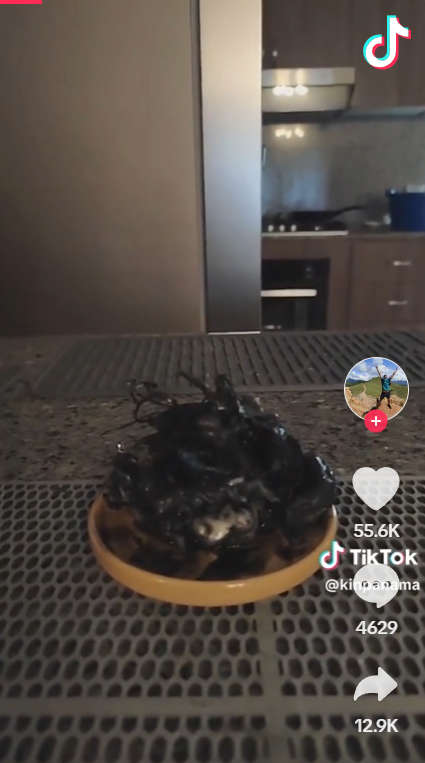
It all began when a TikTok user known as @KinPanama uploaded a series of short clips in which he claimed to have discovered a mysterious meteorite. The video showed a dark, shiny, rock-like object sitting in a bowl. At first glance, it seemed like just another piece of stone. But then, the “meteorite” appeared to do something incredible.
Dark, finger-like tentacles began to push out of the object. They writhed, squirmed, and twitched as though alive. The effect was both mesmerizing and terrifying. Within hours, the video went viral, garnering tens of thousands of likes, shares, and comments.
Headlines followed:
- “Panama Meteorite Grows Alien Tentacles”
- “TikTok User Discovers Venom Symbiote in His Kitchen”
- “Alien Life Found in Panama? Viral Video Sparks Debate”
The resemblance to Marvel’s anti-hero Venom was uncanny. In the comics and movies, Venom is a symbiotic alien organism that bonds with a human host, giving them powers while corrupting their mind. The black, tar-like, pulsating growths in the TikTok video seemed almost identical. Viewers flooded the comments section with theories. Some joked about Marvel’s next film, while others insisted it was proof of extraterrestrial life.
But as the video spread, so did skepticism.
TikTok Claims and Strange Transformations
The creator of the Panama Meteorite video didn’t stop at one post. He uploaded a **series of clips—over 20 in total—**showing the progression of this bizarre “meteorite.” According to his story, the object began oozing a greenish fluid before turning into a sticky black slime. Soon after, tentacle-like growths sprouted, expanding and curling as though they had a mind of their own.
He even claimed the object emitted a burning smell and that local universities refused to examine it when he tried to reach out. This detail fueled conspiracy theories, with some viewers speculating about cover-ups or government experiments.
The series quickly became known online as “Venomkin”, a play on the creator’s username and the Marvel character. Each video drew millions of views, and the mystery deepened with every new upload.
But many sharp-eyed viewers noticed inconsistencies. The “meteorite” never seemed to leave the bowl it was placed in. The lighting and angles made it difficult to analyze closely. And most importantly, there was no independent verification—just the word of a single TikTok creator.
Still, curiosity spread like wildfire. Was this really a meteorite transforming into alien life? Or was it something else entirely?
Scientific Explanation: Fungus or Fake?
When viral videos like this appear, scientists and hobbyists alike rush to analyze them. In the case of the Panama Meteorite, two main explanations emerged:
1. Devil’s Fingers Fungus (Clathrus archeri)
Biologists quickly pointed out that the growths in the video looked strikingly similar to Devil’s Fingers fungus, also known as the Octopus Stinkhorn. This fungus is rare but can be found in different parts of the world, including Central America.
It begins life inside a white, egg-like sac buried in soil or debris. When it matures, the sac bursts open, releasing several bright red, tentacle-like arms. These arms are often covered in a foul-smelling, dark slime. The stench is no accident—it’s designed to attract insects, which then help spread the fungus’s spores.
To the untrained eye, Devil’s Fingers looks incredibly alien. Its tentacles appear to move as they expand and unfold. Combined with its slime and foul odor, it could easily be mistaken for something extraterrestrial.
If the TikTok creator placed a Devil’s Fingers fungus inside a silver-painted rock or staged it with careful camera work, the resemblance to an “alien meteorite” would be uncanny.
2. A Clever Hoax Using Polymers
Another explanation came from materials scientists and special effects enthusiasts. Some noted that the movement of the tentacles looked mechanical or chemical rather than biological.
A user on Reddit claimed the effect was caused by a silicone-based polymer called polydimethylsiloxane (PDMS) combined with a solvent like hexane. When PDMS absorbs the solvent, it swells and contracts, creating a snapping or pulsating motion.
This process, known as swelling-induced snapping motion, has been studied in robotics and materials science for years. When dyed black and shaped into tentacles, PDMS can mimic the look of organic tissue.
If this was the method used, then the Panama Meteorite video was essentially a special effects trick, similar to what’s done in Hollywood movies.
Red Flags & The Truth Revealed
As more people analyzed the videos, several red flags emerged:
- Lack of independent evidence: No scientists or journalists were able to confirm the object’s existence outside of the TikTok account.
- Deleted clips: Some videos in the series were mysteriously deleted after skeptics began asking tough questions.
- Inconsistent narrative: At times, the creator described the object as burning hot, then later as cold and slimy.
- Suspicious props: Viewers pointed out what appeared to be discarded matches and strange residue around the “meteorite,” suggesting stage effects.
- No scientific interest: If a real meteorite had been discovered in Panama, especially one that sprouted tentacles, research institutions would have rushed to investigate. The lack of official involvement was telling.
These red flags made it increasingly clear that the Panama Meteorite was not alien life, but rather a mix of biology (fungus) and creative staging (props and polymers).
Final Verdict on Meteorite in Panama Turned Into Marvel’s Venom
After weeks of viral speculation, the consensus among experts and skeptics was clear: The Panama Meteorite was a hoax.
Whether it was staged using Devil’s Fingers fungus placed inside a rock-like shell, or whether it was an experiment with silicone polymers and solvents, the result was the same: an eerie but fake display designed for maximum viral impact.
The truth is that no meteorite in Panama sprouted alien tentacles. Instead, it was a clever use of either natural fungi or special effects materials to create a Venom-like spectacle.
In the end, this was not proof of alien life, but it was proof of something else: the incredible power of social media to take a strange video and amplify it into a worldwide phenomenon.
Why the Panama Meteorite Hoax Captivated Millions
The success of the Panama Meteorite video wasn’t just about the visuals. It tapped into several cultural touchpoints that made it irresistible:
- Pop Culture Connection: By resembling Marvel’s Venom, the video instantly resonated with fans of superhero movies.
- Alien Fascination: Humans have always been captivated by the idea of extraterrestrial life. The video played into that fascination.
- Mystery and Suspense: The creator drip-fed new videos, building suspense like a serialized story.
- Distrust of Institutions: By claiming universities ignored his calls, the creator fueled conspiracy theories about cover-ups.
- TikTok Algorithm: Short, shocking clips spread quickly on TikTok, boosting the creator’s reach exponentially.
The Science Behind Devil’s Fingers Fungus
For those still curious, let’s take a deeper dive into the Devil’s Fingers fungus theory.
- Scientific Name: Clathrus archeri
- Origin: Native to Australia and New Zealand, but now found worldwide due to human activity.
- Appearance: Red, finger-like tentacles emerging from a white “egg.”
- Smell: Strong odor similar to rotting flesh, used to attract flies.
- Life Cycle: Begins as a spore, develops into a mycelium, then produces the egg, which hatches into the tentacles.
In Panama’s humid environment, Devil’s Fingers could thrive. If someone found one and placed it inside a rock-like shell, the fungus could easily be mistaken for something alien.
Could It Have Been Real? Why Skepticism Matters
It’s worth addressing a broader point: what if it had been real?
If a meteorite in Panama truly sprouted alien tentacles, it would be the greatest scientific discovery in history. The idea of a symbiotic, tentacled organism surviving interstellar travel is straight out of science fiction. But extraordinary claims require extraordinary evidence.
In this case, the evidence was weak—just a series of videos from a single source. Without peer-reviewed research, independent analysis, or credible witnesses, there was no reason to believe this was real.
Skepticism is not about rejecting exciting ideas. It’s about demanding solid proof. The Panama Meteorite reminds us why critical thinking is essential in the age of viral media.
How to Spot Viral Hoaxes Like the Panama Meteorite
The Panama Meteorite is just one of many viral hoaxes that have swept the internet. Here are some tips to help you spot them:
- Check the Source: Is the story coming from a credible news outlet or just a social media account?
- Look for Independent Verification: Has anyone else confirmed the event?
- Watch for Red Flags: Inconsistencies, missing context, and too-good-to-be-true visuals are warning signs.
- Consult Experts: Scientists often weigh in quickly on viral phenomena. Search for expert opinions.
- Remember the Algorithm: Shocking content spreads faster, regardless of truth.
By applying these principles, you can avoid being misled by the next big viral sensation.
Conclusion: Panama Meteorite Truth
So what’s the final word? The Panama Meteorite video was not proof of alien life, but rather a viral hoax cleverly staged to look like Marvel’s Venom. Whether it was Devil’s Fingers fungus or a silicone polymer trick, the result was the same: millions of people entertained, a creator boosted to internet fame, and another reminder of how quickly misinformation can spread online.
The next time you see a bizarre video claiming alien life, ask yourself: Is this extraordinary claim backed by extraordinary evidence? If not, it’s probably just another Panama Meteorite.