Ever seen those ads for the “Realistic AI Plush Pandy” that moves, blinks, wags, and even responds like a real pet? They look astonishingly lifelike—and it’s easy to want one the moment you see it. But how real is it, really? Does the Panda AI Plush deliver on its promises—or is it a well‑designed illusion to part you from your money?
In this article, we’ll dive deep into the Pandy AI Plush Reviews, dissect whether the product is Ultra Realistic Panda Toy Legit Or Scam, examine how the scam works if it is one, guide you if you’ve been caught in its trap, and wrap up with a clear conclusion. Stick with me—you’ll gain clarity before you click “Buy Now.”
Scam Overview
What is the Pandy AI Plush?
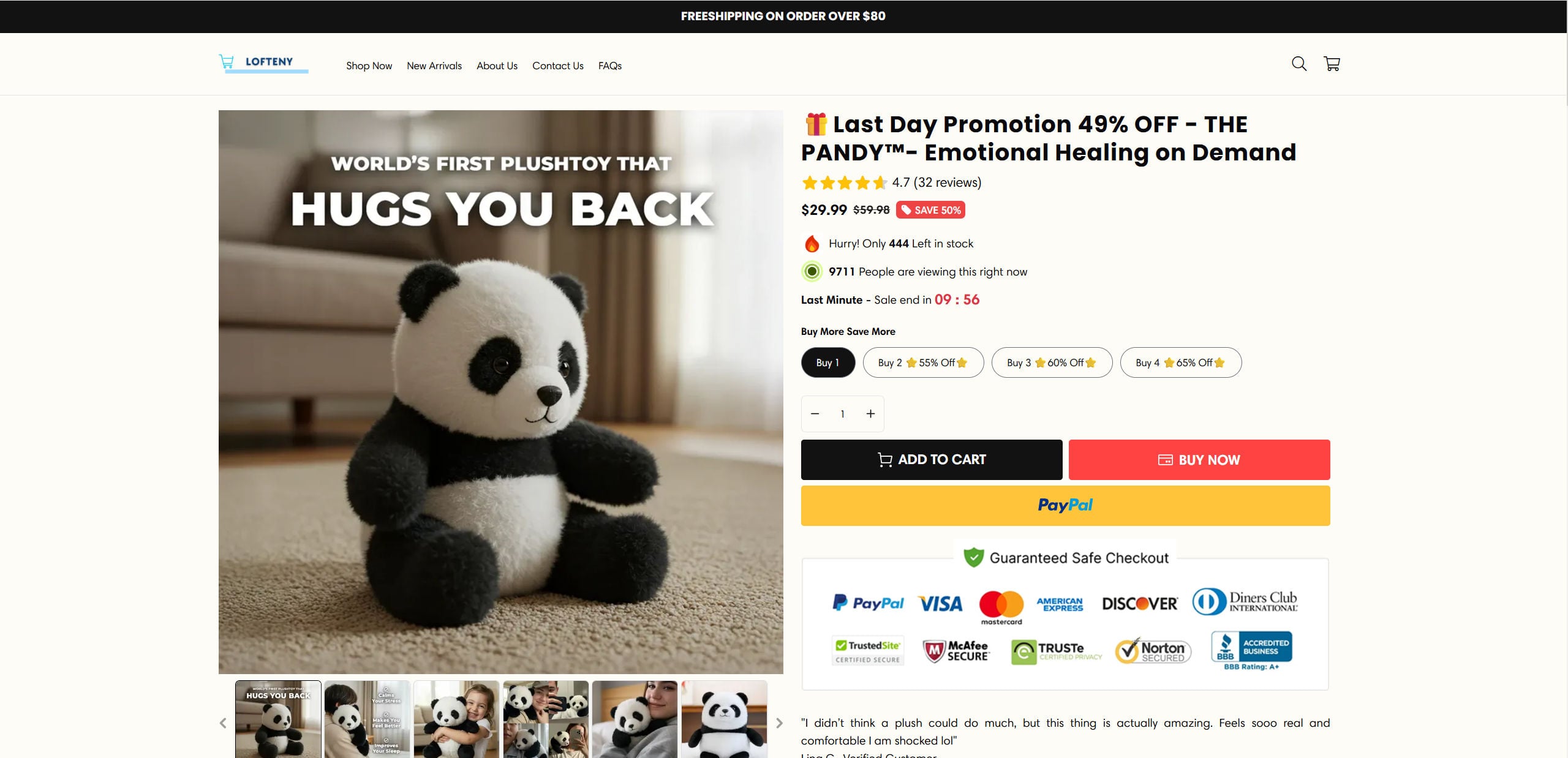
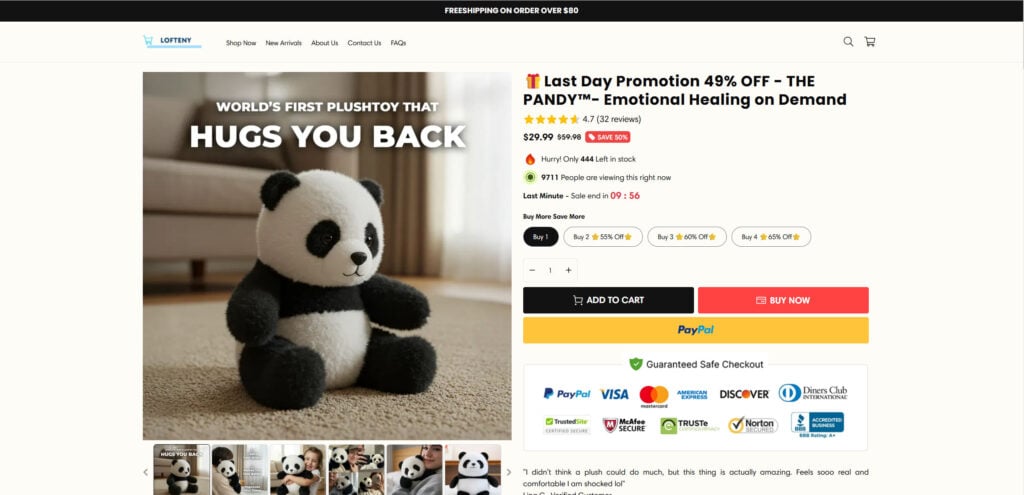
The Pandy AI Plush, sometimes branded as PANDY™ – Emotional Healing on Demand, is marketed as an ultra‑realistic interactive plush toy. The sales pitch claims it’s the “world’s first plush toy that hugs you back,” thanks to proprietary CuddleMotion™ AI Technology. Ads promise that it blinks, breathes, responds — even caters to emotional needs and releases oxytocin, the “feel‑good” hormone, when hugged.
On the surface, it’s the kind of heart‑tugging product anyone could fall for, especially amid rising stress and the search for comfort. But behind the glossy videos and emotional copy lies a growing wave of dissatisfied buyers. Complaint after complaint describes a toy that doesn’t move, just looks like an ordinary stuffed panda. The emotional narrative rings hollow when the product fails to deliver.
Why the suspicion?
There are several signs that have triggered widespread skepticism:
- AI‑generated fake videos serve as the core marketing content. These videos show the plush blinking or shifting in remarkably smooth ways—movements no normal stuffed toy could perform.
- The price is so low (often under $30, sometimes as low as $20) it’s almost laughable when paired with the list of so‑called “technologies” crammed into the product.
- Stock counters (“Only 444 left!”) and viewer numbers (“9,711 people viewing right now!”) create artificial urgency. They’re textbook gimmicks.
- No verifiable user‑generated videos showing real functionality.
- Reviews are sparse or suspiciously positive with overly general praise. Many buyers report being delivered cheap plush toys with zero movement or interactivity.
Scope and impact
This is not an isolated case. Across Facebook, Instagram, TikTok, and Google Ads, these “AI plush” ads have gone viral, prompting thousands of impulse buys. At least dozens of consumer complaints have popped up on forums, comment threads, Reddit, and social media. The common story? Buyers received a simple panda plush—fluffy, cute, but motion‑less.
That pattern often signals an emerging scam cycle: a product that promises high tech but delivers cheap novelty. People share unboxing stories and warn others—yet new ads keep popping up. It’s a template used for many trending “gadget” products with dubious claims.
Why it qualifies as a “scam” rather than a “misfire”
There’s a difference between a failed product launch and a scam. A misfire might involve a product that under‑delivers but tries to make amends. Here, the pattern fits more of a deliberate deceptive marketing approach:
- Unverified, AI‑style product demos that no real purchase can replicate.
- Fake scarcity and urgency cues to push impulsive decisions.
- Low price point combined with unrealistic promises—a classic bait.
- No reputable third‑party reviews or credible in‑field tests.
- Buyers report receiving non‑functional stuffed animals, sometimes not even panda‑shaped.
When dozens‑hundreds of people report being misled, and the seller offers little remedy, “scam” becomes a fair conclusion. This examination will show how it works on a granular level.
Summary of the scam overview
In essence, the Pandy AI Plush is marketed as a one‑of‑a‑kind interactive cuddle toy. The pitch leans heavily on emotional appeal—comfort, stress relief, love. In reality, it appears to be a poorly‑functional or non‑functional plush in the hands of most buyers. The business model depends on viral ad spreads, impulse buys, and low return rates. That adds up to a high‑likelihood scam structured to profit from hype, not happy customers.
How The Scam Works
Let’s break down exactly how this scam is engineered—step by step, in detail.
1. Viral Ad Creation
Stage One: AI‑style video production
The promoters use skillfully edited video content. These videos show the plush eyeing the camera, blinking softly, gently closing its eyes, swaying as someone hugs it. Sometimes the ad overlays captions like “WORLD’S FIRST PLUSH TOY THAT HUGS YOU BACK.” Every frame is polished and emotionally tuned.
Likely, these are fully CGI or heavily edited with visual effects. No plain consumer who bought the toy has staged those same movements and filmed them clearly (if anyone has, evidence is buried or obviously fake). That masks the fact that the product lacks any robotics, sensors, or actuators.
Why this works:
The human brain is drawn to lifelike movement. Marketing plays on emotional need—for comfort, for a pet without responsibilities. The “AI” label adds a veneer of futuristic desirability.
2. Copywriting and Emotional Seduction
Stage Two: Emotional pitch
Marketing copy is loaded with emotional phrases:
- “World’s first plush toy that hugs you back”
- “Comfort backed by science”
- References to oxytocin, cuddle tech, and emotional healing
- Language about loneliness, stress, need for connection.
This is persuasive language that nudges impulsive purchases. It also establishes an implied science‑based legitimacy (“your brain responds to it. Research shows…”). That’s appealing even if the claims are unattested.
Why this works:
Emotional stress is universal. Framing a product as a cure to loneliness, a source of love, strikes a chord—especially when you see movement in the video.
3. Fake Urgency and Scarcity
Stage Three: Timers and low-stock warnings
Almost every landing page or ad environment features:
- Countdown timers (“Sale ends in 09:56,” “Only 444 left in stock”)
- Claims that thousands are viewing the page (“9,711 people are viewing this right now”)
These devices exploit FOMO—fear of missing out. The user is nudged into acting now, not waiting to think or verify.
Why this works:
Impulse buys thrive when time is limited. Scarcity induces rush; combined with emotional copy, it shuts off rational thought.
4. Quick Checkout and Poor Return Policy
Stage Four: One-click purchase
The pages highlight a “Buy Now” or “Add to Cart” button upfront, often integrated with PayPal, credit card options, “Guaranteed Safe Checkout” badges.
There is usually a “save 50%” style price tag—e.g., from $59.98 down to $29.99.
Return policies, if any, are buried in fine print. Sometimes they require you pay for return shipping, or can’t return if the box is opened or after 30 days. Refund requests are often redirected to offshore email addresses with delayed replies.
Why this works:
Lowering friction at checkout leads to more completed transactions. Poor refunds deter returns, preserving seller profit even if customers are dissatisfied.
5. Delivery of a Basic Plush
Stage Five: What you likely receive
After purchase, users typically receive:
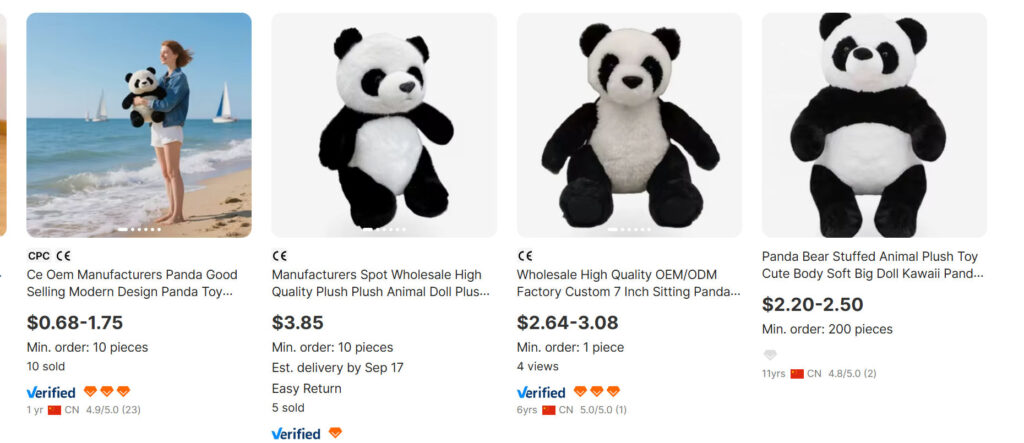
- A non‑interactive plush panda
- No electronics, not blinking, not hugging back
- Generic design—doesn’t match the ad’s high-detail AI version
Pictures on the unboxing forums show plain plush, often cheaply made-shape or poor stitching.
Why this works:
Given the low price, sellers can ship cheap plush for low cost. Many customers don’t bother returning it, especially if they paid $20.
6. Limited or No Recourse
Stage Six: Returns and support fail
When buyers file complaints:
- They’re asked to provide photos or videos
- Many report being offered partial refunds (e.g., a coupon)
- Others say emails go unanswered
This creates a chilling barrier: return shipping plus time doesn’t justify effort for most frustrated buyers.
Why this works:
Sellers rely on customer inertia. The cost of chasing a refund outweighs the plush value. For the fraudsters, even if 5–10% request refunds, the 90% who don’t cover the advertising cost.
7. Repeat with New Ad Variants
Stage Seven: Cycle repeats
As complaints surface online, the original ads may go down. New variations emerge—maybe a slightly different design, new video angle, refreshed emotional copy—still making the same promises.
On TikTok, Instagram, Snapchat, Facebook, Google Display, new audiences see it. The cycle restarts.
Why this works:
Ad platforms rarely catch this as anything more than “plush toy ads.” The volume of ads means regulation is weak. The scam can scale rapidly.
What to Do If You Have Fallen Victim to This Scam
If you or someone you know has already ordered the Pandy AI Plush and received a plain stuffed toy—or nothing—you’re not alone. Here’s a step‑by‑step guide (numbered for clarity) on what to do next.
1. Document Everything
- Save screenshots of the ads.
- Archive any product pages or emails.
- Take photos of the received item (front, labels, packaging, lack of electronics).
- Note the tracking number and delivery date.
Clear documentation strengthens your case.
2. Contact Seller Immediately
- Reply to your order confirmation email with a complaint.
- Attach your photos, explain that the product doesn’t function as advertised.
- Ask for a full refund.
- Keep a record of your communication.
3. Try Payment Dispute or Chargeback
If the seller doesn’t respond or refuses to refund:
- Contact your payment provider (PayPal, credit card, etc.).
- Explain that the item was misrepresented in the ad.
- Provide screenshots and photos as evidence.
- Most providers allow disputes within 60 days of purchase.
4. Leave Reviews or Warnings
- On the site, if there’s a review system, leave an honest account.
- On social platforms where you saw the ad, comment on the ad post (politely) to warn others.
- Try forums like Reddit (r/scams, r/consumerprotection), Facebook groups, or trust‑review sites (Trustpilot, Sitejabber).
5. Report to Consumer Protection Authorities
Depending on your country, you can escalate:
- In the U.S.: submit to the FTC (ftc.gov/complaint).
- In the EU/UK: report to your national consumer protection office or ECC.
- In Australia: contact the ACCC.
- In Romania: you could file with the ANPC (Autoritatea Națională pentru Protecția Consumatorilor).
6. Dispute with Ad Platforms (if visible)
If you repeatedly see the ad on Facebook or Google:
- Click “Report Ad” and mark it as misleading content or scam.
- Provide information in feedback: “False claims about interactive plush; many buyers received non‑functional toy.”
- This helps reduce ad reach and informs the platform.
7. Share Your Experience
- Consider making a short social post or comment to warn friends/followers.
- Title could be: “Bought the Realistic AI Plush Pandy—here’s why it’s not real.”
- Empathy helps—many fall for good marketing. Your warning can save someone money.
8. Keep Expectation Realistic
With low‑cost impulse buys, refund success varies. A full chargeback might take time, but persistence matters.
If that fails, at least you tried. Learn to be skeptical: no plush at that price is that technologically advanced.
Frequently Asked Questions About the Pandy AI Plush Scam
What is the Pandy AI Plush?
The Pandy AI Plush, often marketed under names like PANDY™ is advertised as an interactive stuffed animal that uses “CuddleMotion™ AI Technology” to simulate lifelike movements. It’s claimed to blink, breathe, respond to touch, and provide emotional support on demand. However, most buyers receive a basic plush toy with no interactive features.
Is the Pandy AI Plush a scam?
Yes, based on dozens of user reports, misleading advertisements, and deceptive marketing tactics, the Pandy AI Plush is widely considered a scam. The product shown in ads does not match what customers receive. The toy lacks the promised AI motion, blinking, or hugging abilities.
How does the Pandy AI Plush scam work?
The scam uses viral videos, emotional marketing, and fake urgency to push sales. The product is promoted as high-tech and therapeutic but delivered as a standard stuffed toy. Buyers often discover the plush has no electronics or movement and find it difficult to get refunds or customer support.
Where is the Pandy AI Plush sold?
The Pandy AI Plush is primarily sold through direct-to-consumer websites such as Lofteny, Balaboosté, and other pop-up Shopify stores. It’s also heavily promoted via Facebook, Instagram, TikTok, and Google Ads. These sites often use countdown timers and “limited-time” discounts to encourage fast purchases.
Does the Pandy Plush actually move or blink?
No, the plush toy most customers receive does not move, blink, or respond in any way. Despite marketing claims about AI technology and motion sensors, there is no evidence of built-in electronics or interactivity in the actual product.
What do customers actually receive?
Customers typically receive a non-functional plush panda. It may resemble the advertised toy in shape or size, but it does not have any motion, smart sensors, or AI features. In some cases, the quality of the plush is also lower than expected.
Can I return the Pandy AI Plush for a refund?
In most cases, returns are difficult. Many customers report unresponsive customer service, vague return policies, and denial of refunds. If you paid with a credit card or PayPal, your best option may be to file a dispute or chargeback directly with your payment provider.
Is the Pandy Plush safe for kids?
The toy itself, as a soft stuffed animal, does not pose an immediate physical danger. However, the marketing claims may mislead parents into expecting therapeutic or interactive benefits that do not exist. The real concern is the deceptive nature of the product.
Are there any real reviews or videos showing the Pandy Plush working?
No genuine reviews or videos exist showing the plush performing the actions promised in ads, such as blinking or hugging. Most user reviews expose that the toy is static and non-interactive. Promotional content is usually AI-generated or heavily edited.
Why do the ads look so convincing?
The scam relies on AI-generated promotional videos, professional product photography, and emotionally charged copywriting. These tactics are designed to build trust and create an emotional connection that bypasses critical thinking, leading to impulse purchases.
How can I report the Pandy AI Plush scam?
You can report the scam in the following ways:
- File a complaint with the FTC at ftc.gov/complaint (U.S.)
- Use PayPal Resolution Center or your credit card issuer’s dispute process
- Report the misleading ad directly on Facebook, Instagram, or TikTok
- Share your experience on Reddit or consumer sites like Trustpilot or Sitejabber
What should I do if I already bought the Pandy AI Plush?
If you’ve been scammed:
- Document everything (receipts, order confirmation, product photos).
- Contact the seller to request a refund.
- File a dispute with your payment provider.
- Leave reviews to warn others.
- Report the seller to relevant consumer protection agencies.
How can I avoid scams like this in the future?
To avoid similar scams:
- Be skeptical of ads that make exaggerated claims for low prices.
- Look for verified user reviews outside the seller’s website.
- Avoid sites with poor refund policies or no contact information.
- Check the domain age and company details before buying.
- Use credit cards or PayPal for safer transactions.
The Bottom Line
The Pandy AI Plush—branded as PANDY™, or “world’s first plush toy that hugs you back”—is almost certainly not legitimate in its claims of AI interactivity. What buyers often receive is a basic panda plush that lacks motion, sensors, or any of the intelligent behavior promoted in ads.
What’s real is the marketing: elegant, emotional, urgency‑driven, and effective. CGI video, emotionally charged narratives, fake timers, and low prices lure buyers into impulse purchases. Once the plush arrives and disappointment sets in, returns are difficult, and vendor communication is sparse.
If you have purchased this toy and it didn’t deliver, document everything, contact the seller, file payment disputes, report to consumer authorities, warn others, and learn from the experience.
At the end of the day, Pandy AI Plush may be cute—but the “AI” part? That’s likely just fluff.