It starts the same way for a lot of people, a voicemail you don’t remember asking for.
“This message is from the tax resolution team… you’ve been marked for IRS resolution options… press two to speak with a resolution team member…”
For a second, your brain freezes on the words that matter. Garnishment. Levy. IRS.
Maybe you know you don’t owe anything. Maybe you’re not sure. Either way, the message does what it was designed to do, it makes you feel like ignoring it could be a mistake.
And that’s the trap.
Because the moment you press a button or call back, you’re no longer listening to a voicemail. You’re stepping into a script that’s been practiced thousands of times, by people who know exactly how to keep you on the line.
Scam Overview
What the “Tax Resolution Team” scam is, in plain English
This scam is a fraudulent phone outreach campaign where callers, robocalls, or voicemails claim to represent a “tax resolution team,” “IRS resolution department,” “tax debt relief unit,” or a similarly named group. They suggest you’ve been “flagged,” “marked,” or “selected” for special IRS programs, often implying you can avoid serious consequences like wage garnishment, bank levies, liens, or even arrest.
The language is carefully chosen. It sounds technical enough to feel real, but vague enough to fit almost anyone. Most people don’t know the fine details of IRS collections. They just know the words are scary.
A key detail that matters: the IRS warns that it typically contacts taxpayers the first time by mail, and not by a surprise prerecorded threatening message.
So when a voicemail tries to rush you, threaten you, or push you to “press 2 now,” it’s waving a giant red flag.
Why the “Offer in Compromise” name gets abused
Scammers love sprinkling in real tax terms to make the call feel legitimate. “Offer in Compromise” is a big one. It’s a real IRS program, but scammers twist it into a magical “debt eraser” button, the kind of thing you can supposedly unlock in minutes over the phone if you just talk to their “resolution agent.”
The result is confusion that works in their favor:
If you’ve heard of the program, you think, “Oh, this could be real.”
If you haven’t, you think, “Maybe I missed something important.”
Either way, they’ve pulled you into a conversation where they control the pace.
A legit tax professional will never guarantee you qualify for a program before reviewing your actual situation. Scammers, on the other hand, hand out certainty like candy. They need you to believe there’s a narrow window to act.
The emotional trap: urgency, shame, and relief
These calls tend to target a very human pressure point: the fear of being in trouble with the government. Even if you know you paid your taxes, it’s easy to think:
“What if something went wrong?” “What if it’s identity theft?” “What if I missed a letter?”
That uncertainty is powerful. Scammers push it harder with phrases like:
“Final notice”
“Immediate action required”
“You may be subject to garnishment”
“You’ve been marked for resolution options”
“This will be escalated today”
The IRS has warned for years about impersonation schemes that use threats of arrest or other punishment, and about scammers demanding immediate payment.
The emotional pattern often looks like this:
1. Fear hits first. 2. Confusion kicks in. 3. Then they offer relief, but only if you stay on the line.
What scammers ask for, and why it matters
Once you engage, the goal is to move you from “listening” to “complying.” Depending on the crew running the scam, the request can escalate in stages.
Common asks include:
Personal identifying details (full name, address, date of birth)
Social Security number or partial SSN
Bank information
Photos of your ID
Copies of tax returns or “verification” documents
A “small payment” to start your case file
A “processing fee” to secure your slot
Then come the payment traps. The IRS specifically warns that scammers often demand payment via gift cards, prepaid debit cards, or wire transfers, and that this is a classic sign of a scam.
When you hear, “Go buy gift cards and read me the codes,” you are no longer in tax territory. You are in theft territory.
The twist: when it turns into fake tech support
Some versions of this scam don’t stop at “pay us to fix your taxes.” They pivot into a different con once they’ve got your attention and your phone number.
Here’s how that pivot typically works:
You call back a number from the voicemail.
A “resolution agent” answers, sounds confident, asks a few questions.
Then they claim they need to “verify your identity” or “secure your account.”
Suddenly, they tell you your device is infected, hacked, or being monitored.
They insist they must connect remotely to “protect you” or “process a refund.”
This is where remote access tools enter the story. Scammers commonly push apps that let them take control of your computer or phone, like AnyDesk and similar remote desktop tools. Once they’re in, they can:
Watch you log in to your bank
Intercept security codes if you read them aloud
Steer you into sending money
Potentially install additional malware or persistence tools
It’s a nightmare because it feels cooperative. The victim thinks they’re being helped. The scammer is simply guiding the victim through their own robbery.
“But the IRS can call people sometimes, right?”
Yes, there are situations where the IRS may call, and there are also private collection agencies contracted by the IRS for certain inactive tax liabilities. But the key protection is consistency and written notice first. The IRS states it typically contacts you the first time by mail, and that private collection agencies only come into play after you receive written notice.
Scammers exploit the fact that most people have heard some version of “the IRS might call,” then they fill in the blanks with fear and speed. They don’t want you to verify anything. They don’t want you to breathe, think, or look up an official number.
Why these scam calls keep working
Because they’re engineered to work on normal people having normal days.
Busy people react faster.
Stressed people second-guess themselves.
Helpful people stay on the phone longer.
Polite people don’t hang up.
People with past tax issues feel instant panic.
And scammers are relentless. They rotate phone numbers, spoof caller IDs, and blast out robocalls until enough people bite. The IRS and TIGTA have repeatedly warned about phone scams, including the use of threats and pressure tactics, and they encourage people to hang up and report the call.
Quick red flags you can spot in seconds
If you want a simple gut-check, these are the patterns that show up again and again:
A prerecorded voicemail claiming urgency or threatening action (the IRS warns it doesn’t leave prerecorded, urgent, or threatening messages).
A request to “press 2” to connect immediately.
A claim you’ve been “marked” or “selected” for special resolution.
Demands for immediate payment or a specific payment method like gift cards or wire transfer.
Threats of arrest, deportation, or police involvement.
Instructions to install remote access software to “secure” your device.
Pressure to keep the call secret, stay on the line, or act “today.”
When you see two or three of these together, treat it as hostile. The safest move is to end the call.
How the Scam Works
Step 1: The hook, a voicemail built to spike your stress
The scam often begins with a robocall or voicemail like the one you received. It’s short, “official-sounding,” and loaded with consequence words: garnishment, levy, resolution, compromise.
What’s happening psychologically is simple. They’re trying to create a mental emergency. Not a full story, just enough urgency to make you call back before you verify anything.
The IRS notes that scammers use threatening language and urgency, including prerecorded messages, to pressure victims into calling back.
Step 2: The call-back, a friendly voice and a fast-moving script
If you call the number, the tone often shifts. Instead of threats, you may get a calm “agent” who sounds professional. They might say:
“Let’s see what you qualify for.”
“I’m here to help you avoid enforcement.”
“We just need to verify a few details.”
They want momentum. The faster you answer small questions, the easier it becomes to answer bigger ones later.
At this stage, they often collect basics that can be used for identity theft or further social engineering:
Full name
Address
Date of birth
Last 4 of SSN
Employer name
Estimated tax debt amount
Even if they don’t steal money yet, this information can be sold, reused, or used to make the next scam call feel even more “real.”
Step 3: The pressure squeeze, consequences get louder
Once they have you talking, they begin tightening the screws. They lean on enforcement language: wage garnishment, bank levy, asset seizure, criminal charges.
This is where they may say something like:
“This is your last chance before it escalates.”
“A case has been opened.”
“A warrant may be issued.”
The IRS has explicitly warned about impersonators who threaten arrest or other punishments, and who demand immediate action.
The trick is that fear makes people seek the quickest path out. The scammer presents that path as “just follow my instructions.”
Step 4: The solution pitch, a fake program with a real-sounding name
Now comes the “good news.” They claim you qualify for an IRS program that can:
Reduce what you owe
Pause collections immediately
Prevent garnishment
“Settle” for pennies on the dollar
Eliminate debt through a “resolution option”
Sometimes they name-drop “Offer in Compromise” or talk about “fresh start” style relief in a sloppy, exaggerated way.
Then they attach a price tag, often framed as:
An enrollment fee
A processing fee
A document preparation fee
A retainer to “stop enforcement today”
They might claim the fee is required “to lock in” the program before your case “moves forward.”
Step 5: The payment trap, gift cards, wire transfers, or “secure” payments
This is the point where the scam stops being subtle. Many victims report being pushed toward irreversible payment methods:
Gift cards
Wire transfers
Prepaid debit cards
Payment apps or crypto
The IRS warns that scammers commonly demand payment through gift cards, prepaid debit cards, or wire transfers, and that this is a hallmark of impersonation fraud.
If the caller is steering you away from normal, traceable payment channels and toward methods that are hard to reverse, that’s not a “resolution team.” That’s a thief choosing the fastest exit.
Step 6: The tech-support pivot, “your device is infected, we must connect”
In the variant you described, the scam can pivot into fake tech support. This often happens if:
You hesitate on payment
You say you need to check your account
You mention you received a strange email or text
You sound unsure and ask questions
They respond with a new threat: your device is compromised.
Then they offer a new kind of help:
“We will secure your device.”
“We will help you file the resolution forms.”
“We will process a refund or reverse the charge.”
“We need to verify you through a secure session.”
They walk you into installing remote access software. Once you do, you’ve essentially handed a stranger the steering wheel.
From there, common outcomes include:
They direct you to log into your bank while they watch.
They claim they “see suspicious activity” and instruct you to move money.
They manipulate you into approving transfers.
They may attempt to access saved passwords, files, or financial documents.
Even if you catch on later, remote access sessions can be damaging, because you can’t always be sure what was changed in the background.
Step 7: The follow-up loop, more calls, more pressure, and sometimes retaliation
If you pay, the scam rarely ends cleanly.
You may get:
New demands for “tax stamps,” “release fees,” or “final processing”
More calls from “supervisors”
Threats if you stop cooperating
A second scam posing as “fraud protection” or “government recovery”
If you didn’t pay but you engaged, your number may be flagged as responsive. That can lead to more scam calls, sometimes from totally different scripts, because you’ve been identified as someone who answers.
This is why a quick hang-up matters. The less data you give them, the fewer doors they have into your day.
What To Do If You Fell Victim
1. Stop contact immediately, hang up, and do not call back. If you are on the phone with them right now, end the call. If they keep calling, let it go to voicemail. Do not argue, do not negotiate, do not try to “trap” them. The goal is to disengage.
2. If you paid, contact your bank or card issuer right away. Explain that you were the victim of a phone scam and want to stop or reverse any transfers. Ask specifically about chargebacks, wire recall options, and whether they can flag your account for suspicious activity.
If you paid with gift cards, contact the gift card company immediately. Sometimes the funds can be frozen if the codes have not been redeemed yet. Act fast.
3. If you installed remote access software, disconnect and remove it. If you installed AnyDesk or another remote access tool, disconnect your device from the internet first, then uninstall the tool. After that, restart your device.
Because remote access can leave you unsure what was changed, take this seriously even if nothing “looks” different.
4. Change passwords from a clean device, starting with email and banking. Do not change passwords on a device you suspect may be compromised. Use a different device you trust. Start with:
Your email account (because it controls password resets)
Your bank and payment apps
Your Apple ID or Google account
Any password manager accounts
Turn on 2-factor authentication where possible.
5. Run a reputable malware scan and tighten your ad and browser protection. Use Malwarebytes to scan for malware and unwanted programs, especially if remote access was involved. Also consider AdGuard to reduce malicious ads, scammy pop-ups, and dangerous redirects that often feed into these schemes.
This step is not about blaming yourself. It’s about closing the doors scammers commonly use.
6. Report the scam to the right places. The IRS recommends reporting IRS impersonation phone scams to TIGTA, and also reporting the phone number by emailing phishing@irs.gov with the subject line “IRS Phone Scam.” You can also report through TIGTA’s complaint channels and hotline.
7. If you shared sensitive personal info, consider identity theft precautions. If you gave your Social Security number, bank details, or photos of IDs, consider placing a fraud alert or credit freeze with the major credit bureaus. Monitor accounts closely for new accounts, unusual logins, or unexpected mail.
8. If you are genuinely worried about real tax issues, verify using official IRS channels. Do not use phone numbers from the voicemail. The IRS explains how it contacts taxpayers and how to verify official notices and letters. If you have concerns, go through official IRS contact routes and keep everything in writing.
9. Give yourself a clean ending to the day. This kind of scam is designed to leave you rattled. Take a breath, write down what happened while it’s fresh (numbers, dates, what you installed, what you paid), then move to the practical steps above. You are not the first person they’ve tried this on, and you will not be the last. The important thing is you stopped the damage from spreading.
How to Remove Unwanted Apps and Malware
If you have accidentally downloaded unwanted programs or malware from a pop-up scam, you can find below a full malware removal guide.
This malware removal guide may appear overwhelming due to the number of steps and numerous programs that are being used. We have only written it this way to provide clear, detailed, and easy-to-understand instructions that anyone can use to remove malware for free. Please perform all the steps in the correct order. If you have any questions or doubts at any point, stop and ask for our assistance.
Browser hijackers, unwanted apps, and adware can infect Windows, Mac, iOS, or Android devices, so we’ve covered below all these operating systems. Depending on which operating system is installed on your device, please click on the operating system icon below and follow the displayed steps.
In this first step, we will manually check if any unknown or malicious programs are installed on the computer. Sometimes adware and browser hijackers can have a usable Uninstall entry that can be used to remove them.
Windows 11Windows 10Windows 8Windows 7
Press the Windows key + I on your keyboard to open the Settings app.
First, open Windows Settings by pressing Windows+I on your keyboard. You can also right-click your Start button and select “Settings” from the list.
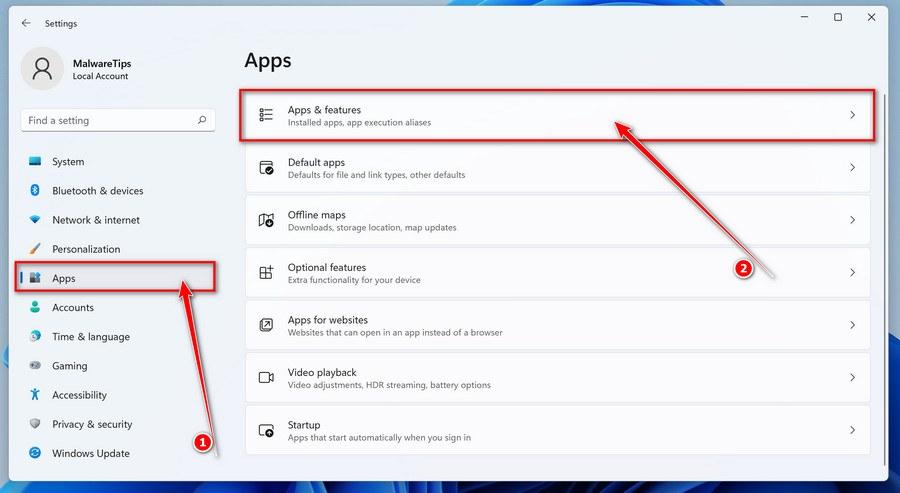
In the Settings app, click on “Apps” and then “Apps & features”.
When Settings opens, click “Apps” in the sidebar, then select “Apps & Features”.
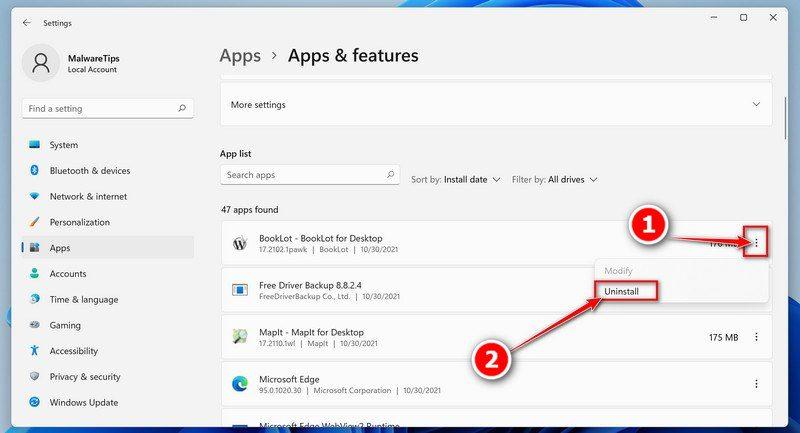
Find the malicious program in the list of installed apps and uninstall it.
In Apps & Features settings, scroll down to the app list and search for unknown or suspicious programs. To make things easier, you can sort all installed programs by their installation date. To do this, click “Sort by” and select “Install date”. Look out for any suspicious program that could be behind all the drama – anything you don’t remember downloading or that doesn’t sound like a genuine program. When you find a malicious program, click the three dots button beside it and select “Uninstall” in the menu that appears.
If you have checked your computer for malicious programs and did not find any, you can proceed with the next step in this guide.
Follow the prompts to uninstall the program.
In the next message box, confirm the uninstall process by clicking on Uninstall, then follow the prompts to uninstall the malicious program. Make sure to read all of the prompts carefully, because some malicious programs try to sneak things in hoping that you won’t read them closely.
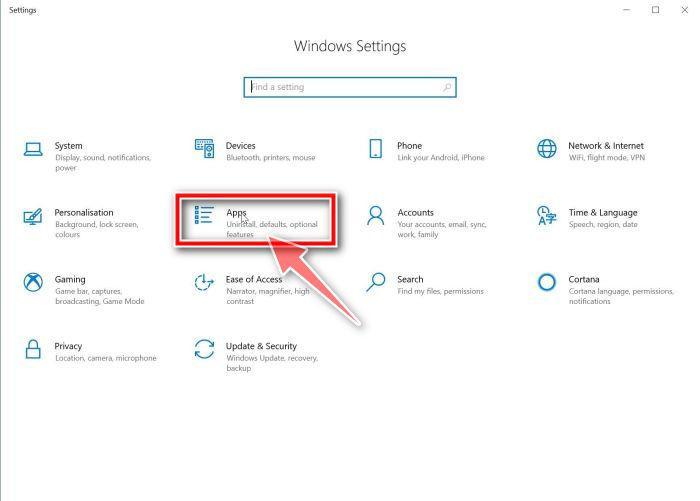
Press the Windows key + I on your keyboard to open the Settings app.
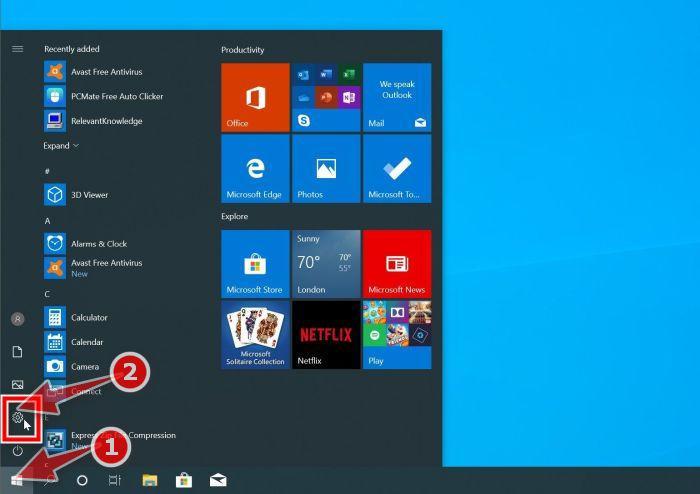
Press the Windows key + I on your keyboard to open the Settings app. You can also ope the Settings app by clicking the Start button on the taskbar, then select “Settings” (gear icon).
In the Settings app, click on “Apps”.
When the “Windows Settings” window opens, click on “Apps“. By default, it should open “Apps and Features” but if it doesn’t, select it from the list on the left.
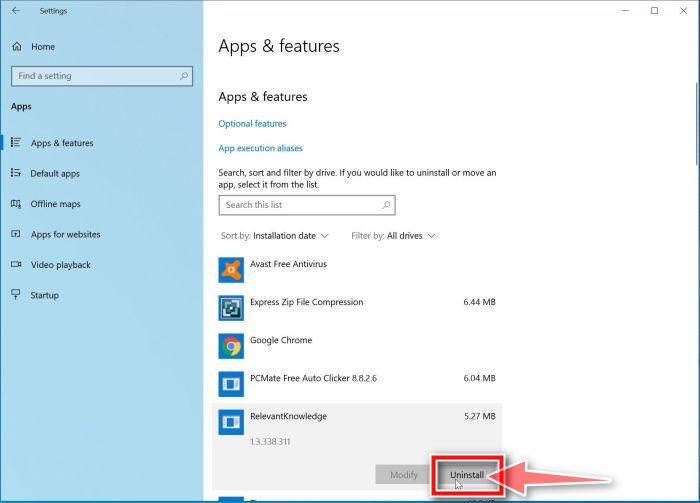
Find the malicious program in the list of installed apps and uninstall it.
In Apps & Features settings, scroll down to the app list and search for unknown or suspicious programs. To make things easier, you can sort all installed programs by their installation date. To do this, click “Sort by” and select “Install date”. Look out for any suspicious program that could be behind all the drama – anything you don’t remember downloading or that doesn’t sound like a genuine program. When you find a malicious program, click on it and select “Uninstall” in the menu that appears.
If you have checked your computer for malicious programs and did not find any, you can proceed with the next step in this guide.
Follow the prompts to uninstall the program.
In the next message box, confirm the uninstall process by clicking on Uninstall, then follow the prompts to uninstall the malicious program. Make sure to read all of the prompts carefully, because some malicious programs try to sneak things in hoping that you won’t read closely.
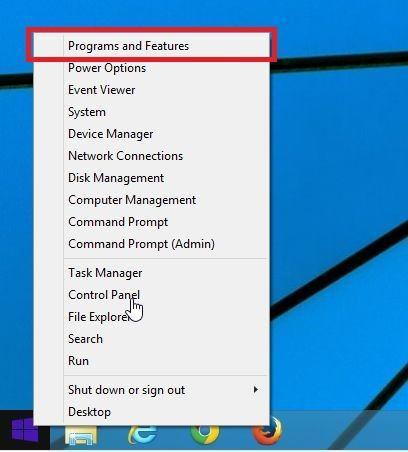
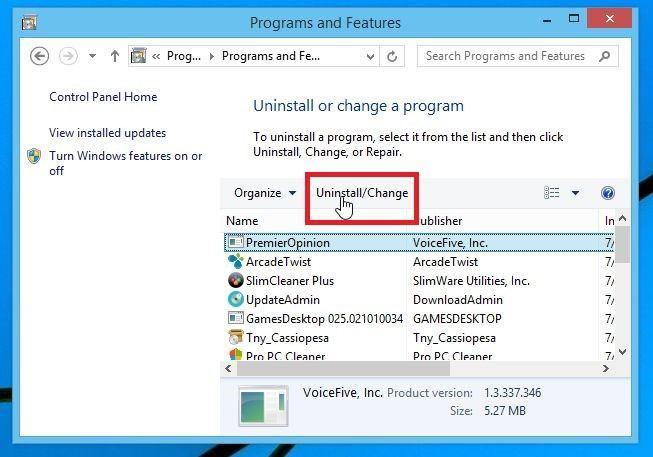
Go to “Program and Features”.
Right-click on the Start button in the taskbar, then select “Programs and Features”. This will take you directly to your list of installed programs.
Search for malicious program and uninstall it.
The “Programs and Features” screen will be displayed with a list of all the programs installed on your computer. Scroll through the list until you find any unknown or suspicious program, then click to highlight it, then click the “Uninstall” button.
Look out for any suspicious program that could be behind all the drama – anything you don’t remember downloading or that doesn’t sound like a genuine program.
If you have checked your computer for malicious programs and did not find any, you can proceed with the next step in this guide.
Follow the on-screen prompts to uninstall malicious program.
In the next message box, confirm the uninstall process by clicking on Yes, then follow the prompts to uninstall malicious program. Make sure to read all of the prompts carefully, because some malicious programs try to sneak things in hoping that you won’t read closely.
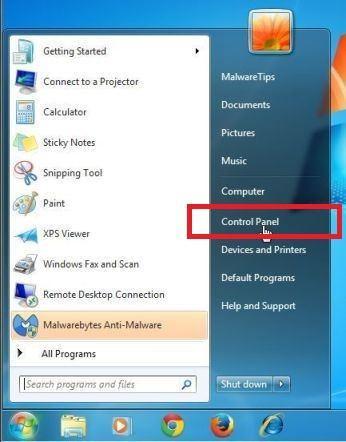
Open the “Control Panel”.
Click on the “Start” button, then click on “Control Panel“.
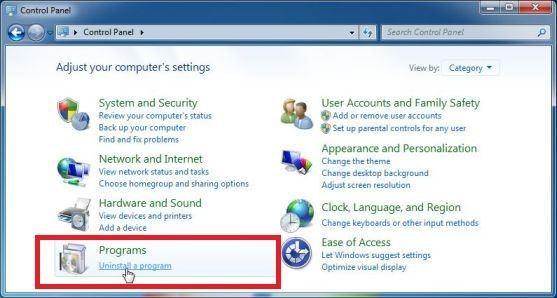
Click on “Uninstall a Program”.
When the “Control Panel” appears, click on “Uninstall a Program” from the Programs category.
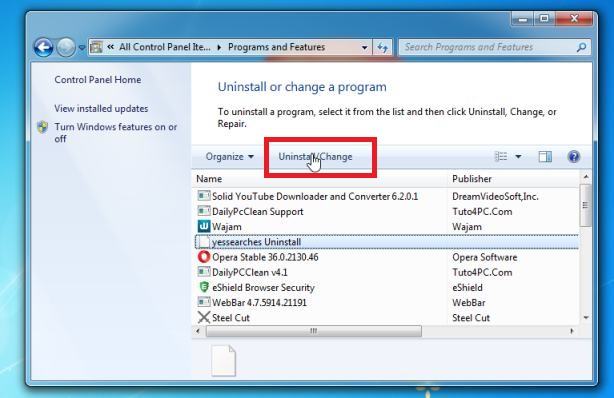
Search for malicious programs and uninstall them.
The “Programs and Features” screen will be displayed with a list of all the programs installed on your computer. Scroll through the list until you find any suspicious or unknown program, then click to highlight it, then click the “Uninstall” button. Look out for any suspicious program that could be behind all the drama – anything you don’t remember downloading or that doesn’t sound like a genuine program.
If you have checked your computer for malicious programs and did not find any, you can proceed with the next step in this guide.
Follow the on-screen prompts to uninstall malicious program.
In the next message box, confirm the uninstall process by clicking on Yes, then follow the prompts to uninstall malicious program. Make sure to read all of the prompts carefully, because some malicious programs try to sneak things in hoping that you won’t read closely.
If you are experiencing difficulty while attempting to uninstall a program, you can use Revo Uninstaller to completely remove the unwanted program from your computer.
Now that the malicious programs have been removed from your computer, we can proceed with the next step in this guide.
STEP 2: Reset browsers back to default settings
In this step, we will remove spam notifications, malicious extensions, and change to default any settings that might have been changed by malware. Please note that this method will remove all extensions, toolbars, and other customizations but will leave your bookmarks and favorites intact. For each browser that you have installed on your computer, please click on the browsers tab below and follow the displayed steps to reset that browser.
ChromeFirefoxMicrosoft EdgeInternet Explorer
Reset Chrome for Windows to default settings
We will now reset your Chrome browser settings to their original defaults. This will reset your startup page, new tab page, search engine, and pinned tabs. It will also disable all extensions and clear temporary data like cookies. Your favorites, history, and saved passwords will not be cleared.
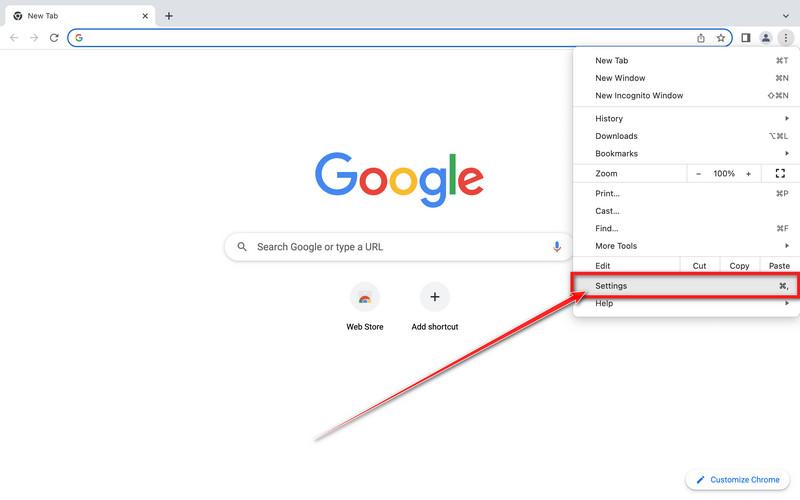
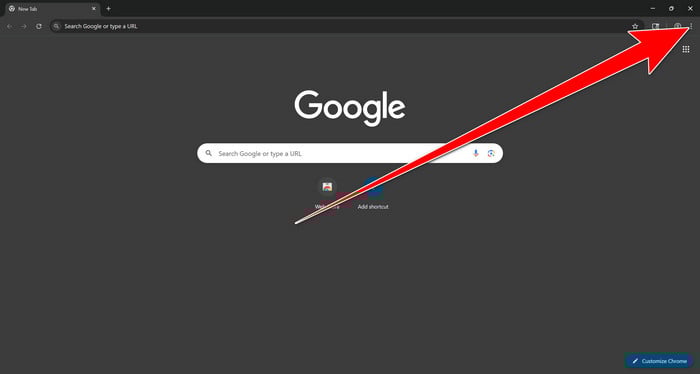
Open the Chrome menu
In the top-right corner of Chrome, click the three-dot (⋮) icon to open the menu.
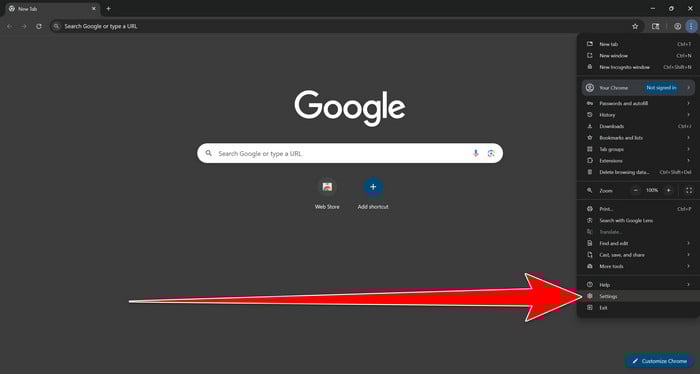
Go to Settings
From the menu, select Settings.
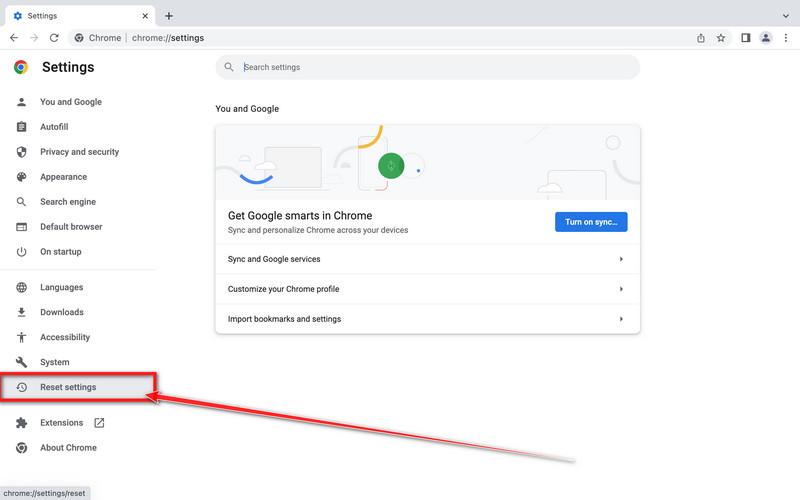
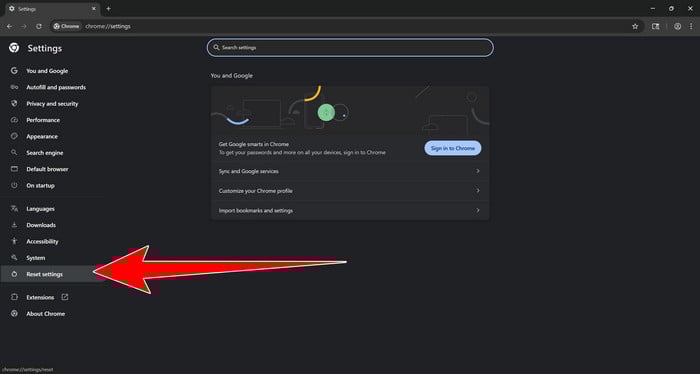
Select “Reset settings”
In the left sidebar, scroll down and click Reset settings.
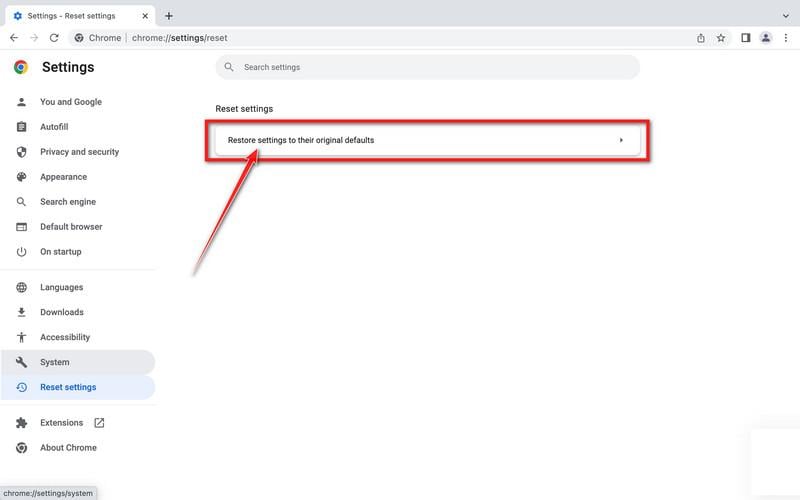
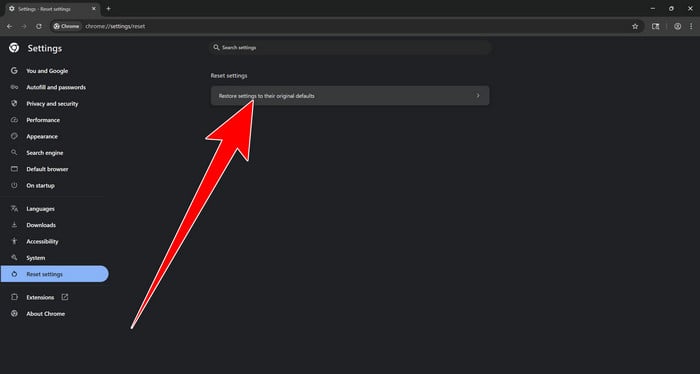
Choose “Restore settings to their original defaults”
Click the Restore settings to their original defaults option.
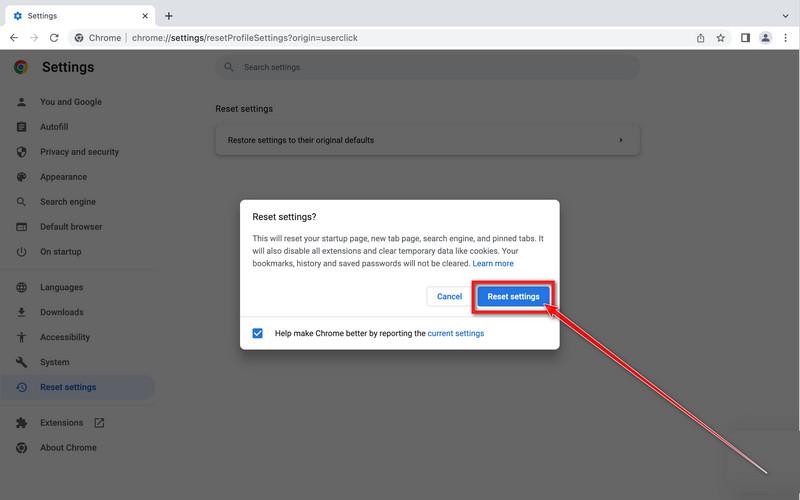
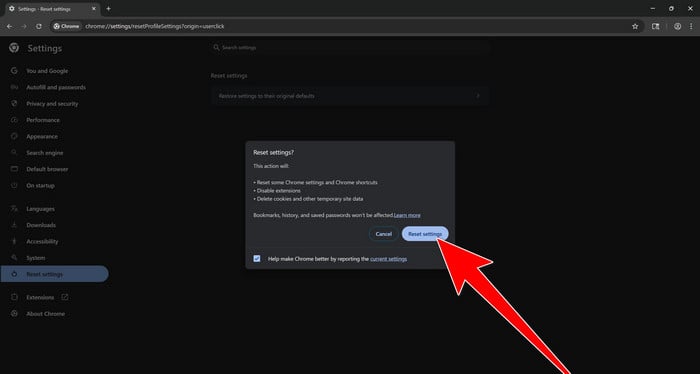
Confirm the reset
In the dialog that appears, click Reset settings to restore Chrome to its default state. Bookmarks, history, and saved passwords will remain, but extensions will be disabled and temporary data cleared.
Reset Firefox for Windows to default settings
We will now reset your Firefox browser settings to their default. The reset feature fixes many issues by restoring Firefox to its factory default state while saving your essential information like bookmarks, passwords, web form auto-fill information, browsing history, and open tabs.
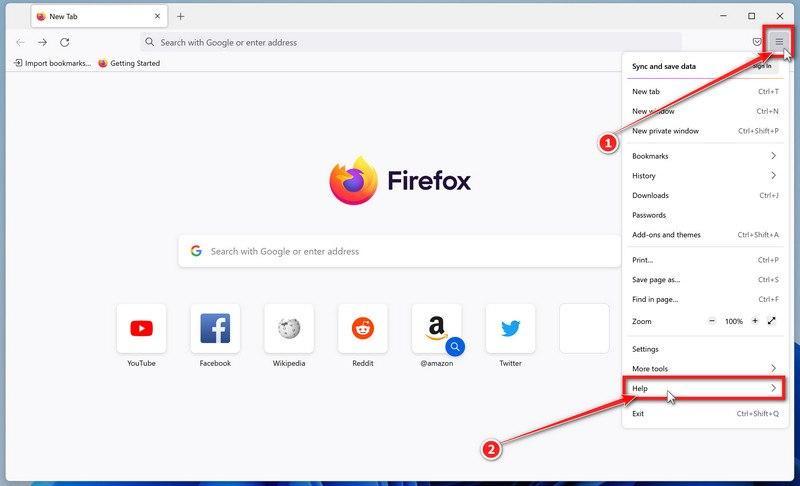
Click the three horizontal lines in the top-right corner and then click on “Help”.
Click on Firefox’s main menu button, represented by three horizontal lines. When the drop-down menu appears, select the option labeled “Help“.
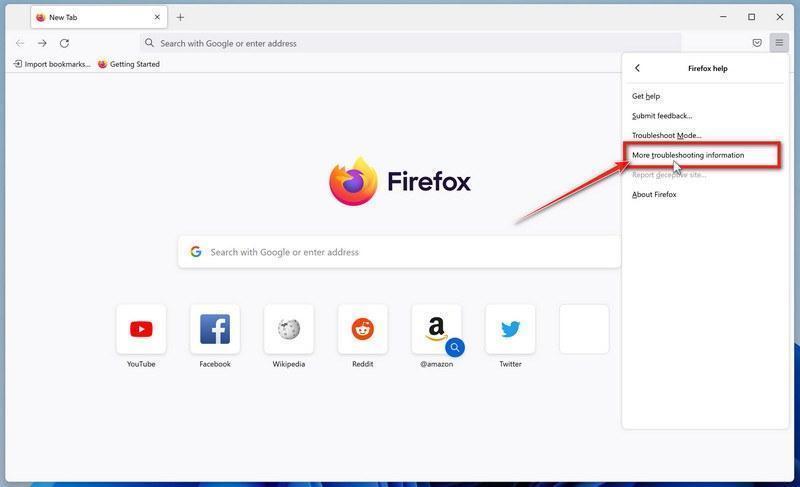
Click “More troubleshooting information”.
From the Help menu, click on “More troubleshooting information“.
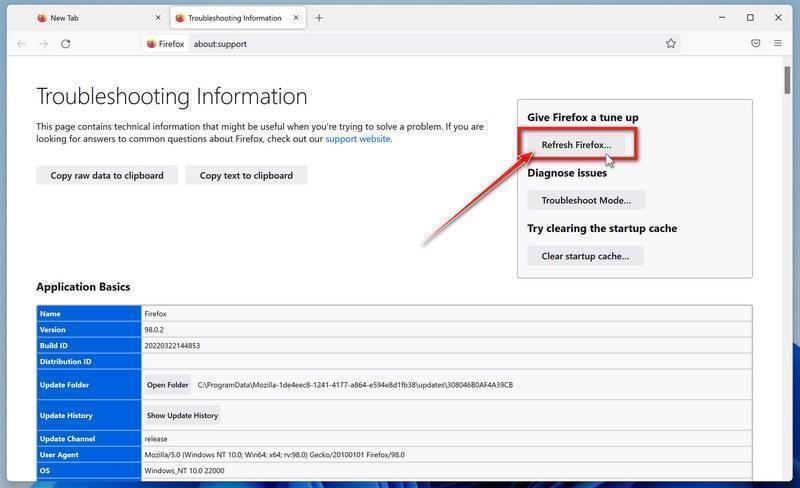
Click on “Refresh Firefox”
When the “Troubleshooting Information” page opens, click on the “Refresh Firefox” button.
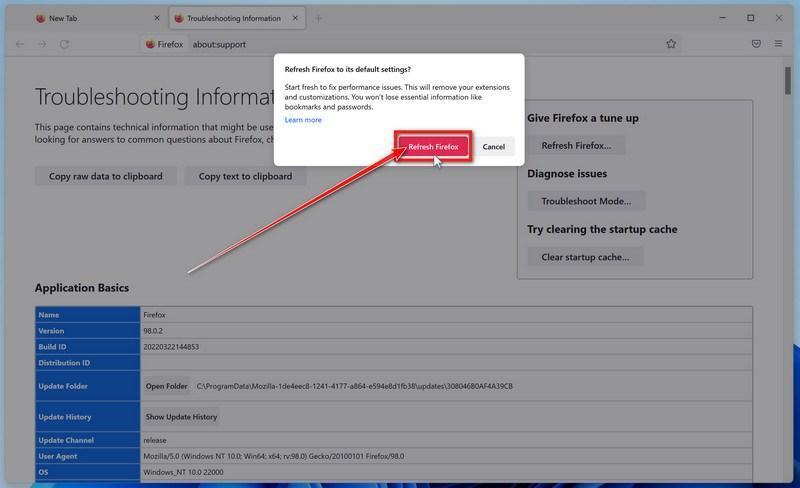
Confirm that you want to reset your browser settings.
To finish the reset process, click on the “Refresh Firefox” button in the new confirmation window that opens.
Click “Finish”.
Firefox will now close itself and will revert to its default settings. When it’s done, a window will list the information that was imported. Click on “Finish“.
Your old Firefox profile will be placed on your desktop in a folder named “Old Firefox Data“. If the reset didn’t fix your problem you can restore some of the information not saved by copying files to the new profile that was created. If you don’t need this folder any longer, you should delete it as it contains sensitive information.
Reset Microsoft Edge to default settings
We will now reset your Microsoft Edge browser settings to their default. This will reset your startup page, new tab page, search engine, and pinned tabs. It will also disable all extensions and clear temporary data like cookies. Your favorites, history, and saved passwords will not be cleared.
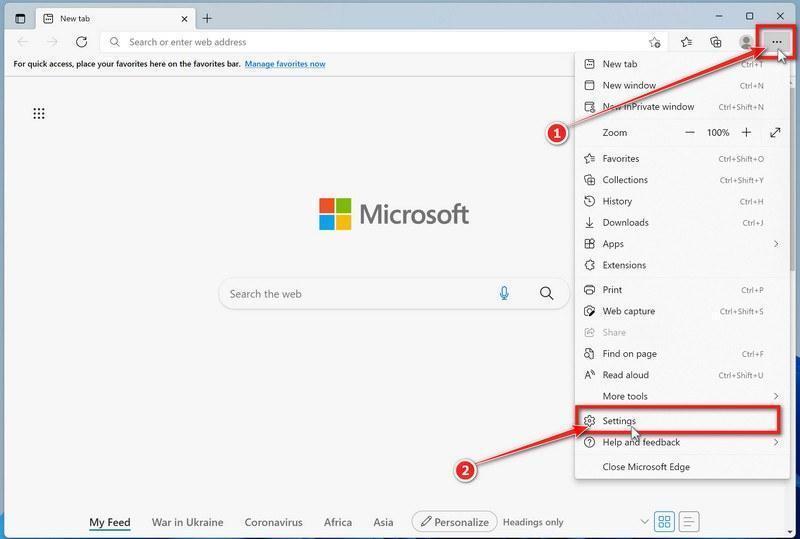
Click the three dots in the top-right corner and then click on “Settings”.
In the top right corner, click on Microsoft Edge’s main menu button, represented by three horizontal dots. When the drop-down menu appears, click on “Settings“.
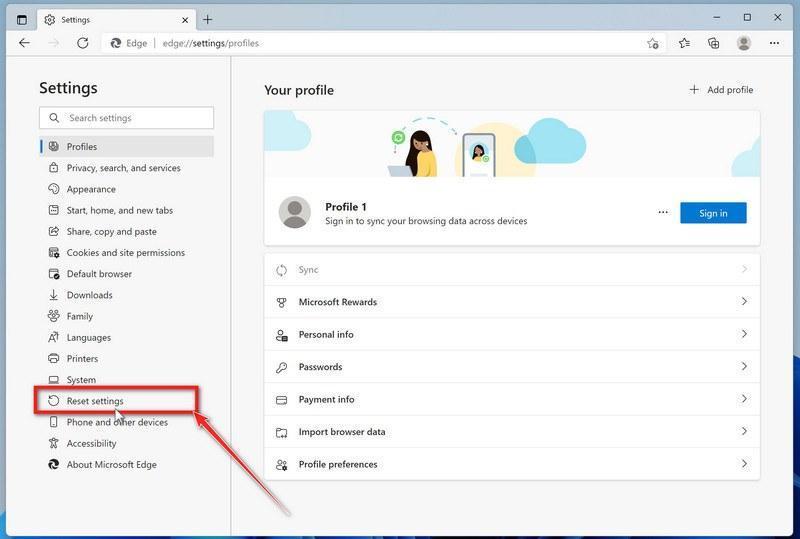
Click on “Reset Settings”.
On the left side of the window, click on “Reset Settings“.
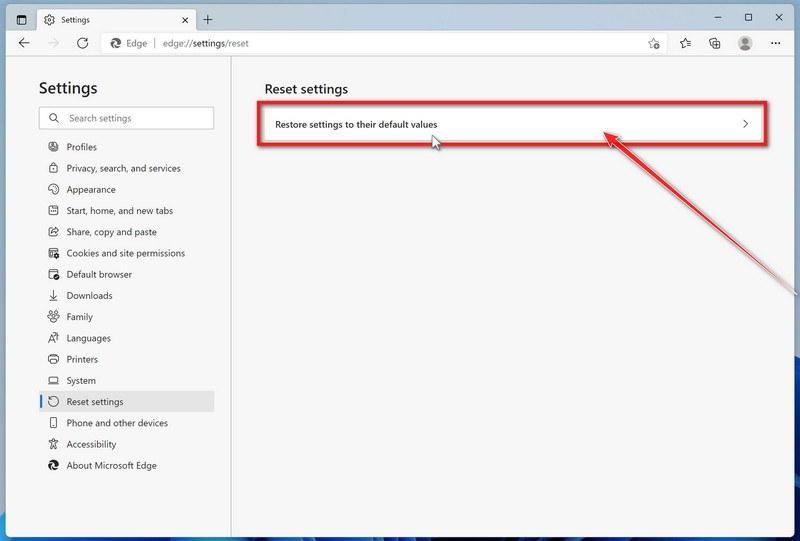
Click on “Restore settings to their default values”.
In the main window, click on “Restore settings to their default values“.
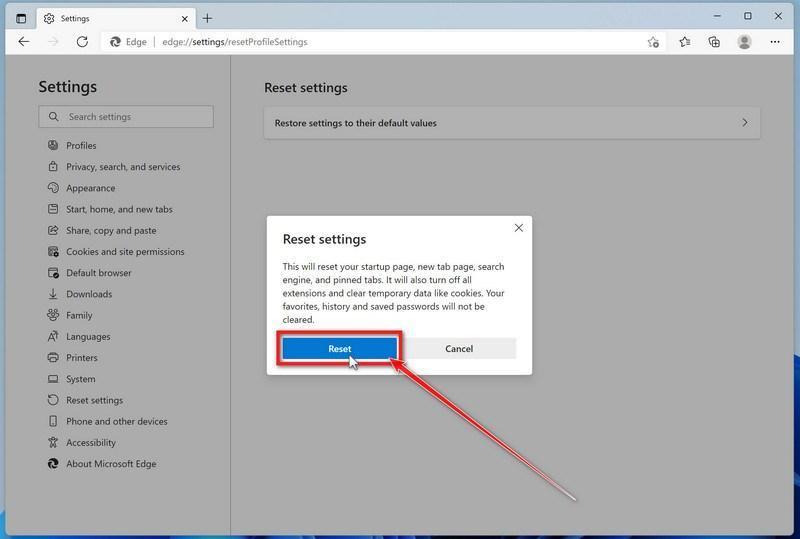
Click “Reset”.
A confirmation dialog should now be displayed, detailing the components that will be restored to their default state should you continue with the reset process. To complete the restoration process, click on the “Reset” button. Microsoft Edge will now erase all your personal data, browsing history, and disable all installed extensions. Your bookmarks, though, will remain intact and still be accessible.
Reset Internet Explorer to default settings
We will now reset your Internet Explorer browser settings to their default. You can reset Internet Explorer settings to return them to the state they were in when Internet Explorer was first installed on your computer.
Go to “Internet Options”.
Open Internet Explorer, click on the gear icon in the upper-right part of your browser, then select “Internet Options“.
Select the “Advanced” tab, then click “Reset”
In the “Internet Options” dialog box, select the “Advanced” tab, then click on the “Reset” button.
Click on “Reset”.
In the “Reset Internet Explorer settings” section, select the “Delete personal settings” checkbox, then click on the “Reset” button.
Click on “Close”.
When Internet Explorer has completed its task, click on the “Close” button in the confirmation dialogue box. Close your browser and then you can open Internet Explorer again.
STEP 3: Use Malwarebytes Anti-Malware to remove malware and unwanted programs
In this third step, we will install Malwarebytes to scan and remove any infections, adware, or potentially unwanted programs that may be present on your computer.
Malwarebytes stands out as one of the leading and widely-used anti-malware solutions for Windows, and for good reason. It effectively eradicates various types of malware that other programs often overlook, all at no cost to you. When it comes to disinfecting an infected device, Malwarebytes has consistently been a free and indispensable tool in the battle against malware. We highly recommend it for maintaining a clean and secure system.
Download Malwarebytes
Download the latest version of Malwarebytes for Windows using the official link below. Malwarebytes will scan your computer and remove adware, browser hijackers, and other malicious software for free.
(The above link will open a new page from where you can download Malwarebytes)
Install Malwarebytes
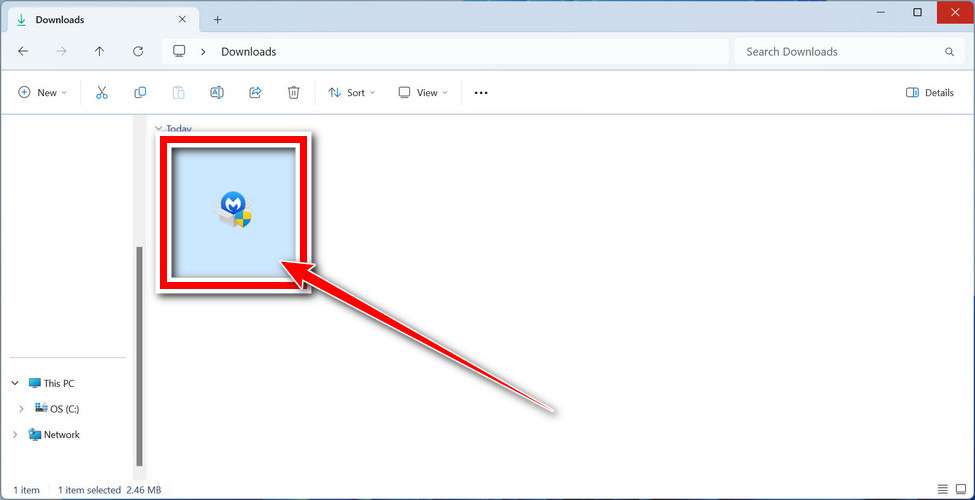
After the download is complete, locate the MBSetup file, typically found in your Downloads folder. Double-click on the MBSetup file to begin the installation of Malwarebytes on your computer. If a User Account Control pop-up appears, click “Yes” to continue the Malwarebytes installation.
Follow the On-Screen Prompts to Install Malwarebytes
When the Malwarebytes installation begins, the setup wizard will guide you through the process.
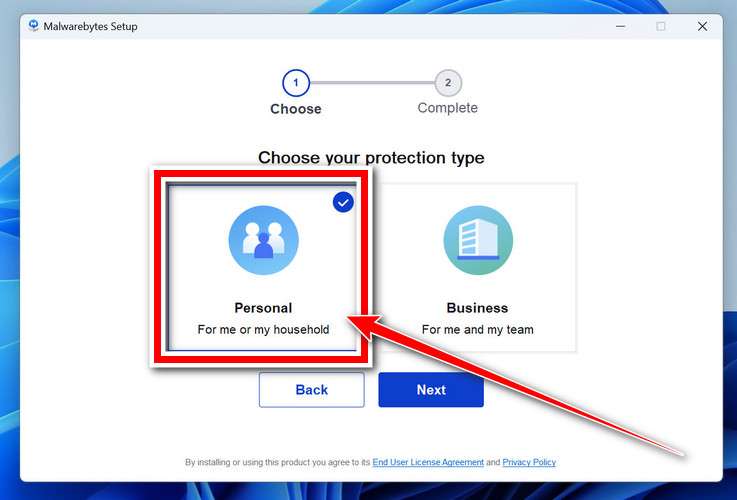
You’ll first be prompted to choose the type of computer you’re installing the program on—select either “Personal Computer” or “Work Computer” as appropriate, then click on Next.
Malwarebytes will now begin the installation process on your device.
When the Malwarebytes installation is complete, the program will automatically open to the “Welcome to Malwarebytes” screen.
On the final screen, simply click on the Open Malwarebytes option to start the program.
Enable “Rootkit scanning”.
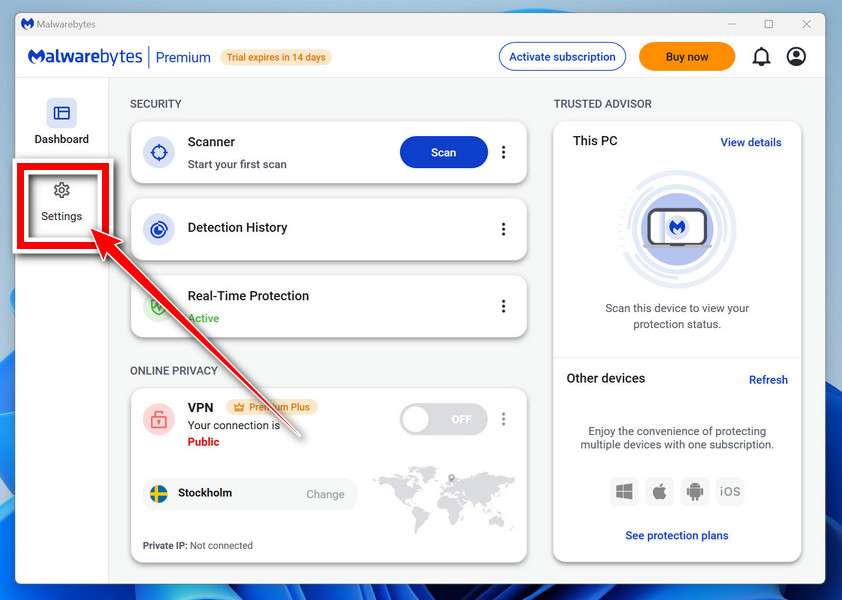
Malwarebytes Anti-Malware will now start, and you will see the main screen as shown below. To maximize Malwarebytes’ ability to detect malware and unwanted programs, we need to enable rootkit scanning. Click on the “Settings” gear icon located on the left of the screen to access the general settings section.
In the settings menu, enable the “Scan for rootkits” option by clicking the toggle switch until it turns blue.
Now that you have enabled rootkit scanning, click on the “Dashboard” button in the left pane to get back to the main screen.
Perform a Scan with Malwarebytes.
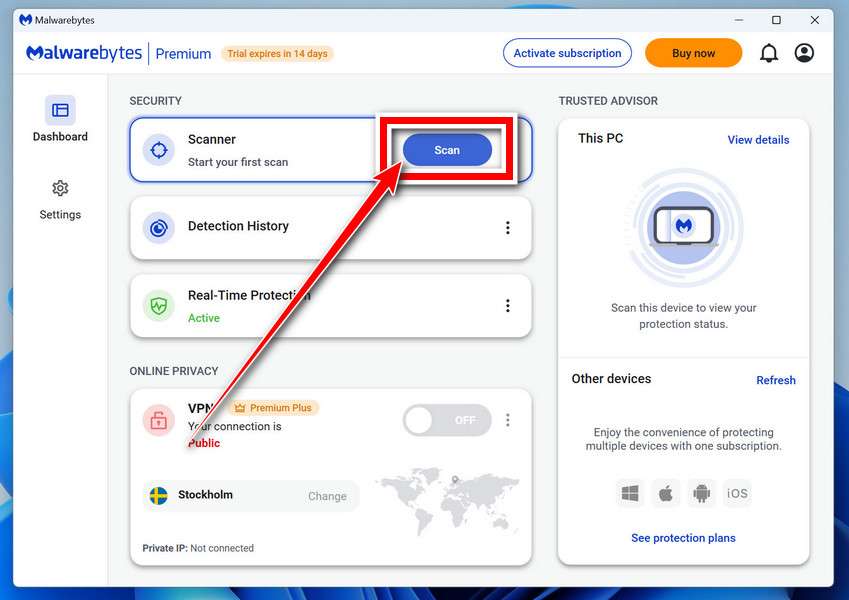
To start a scan, click the Scan button. Malwarebytes will automatically update its antivirus database and begin scanning your computer for malicious programs.
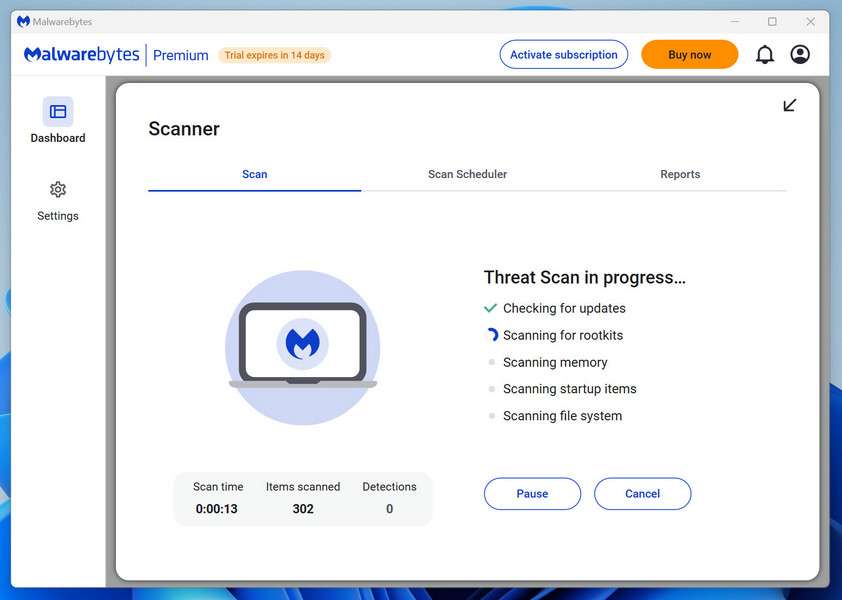
Wait for the Malwarebytes scan to complete.
Malwarebytes will now scan your computer for browser hijackers and other malicious programs. This process can take a few minutes, so we suggest you do something else and periodically check the status of the scan to see when it is finished.
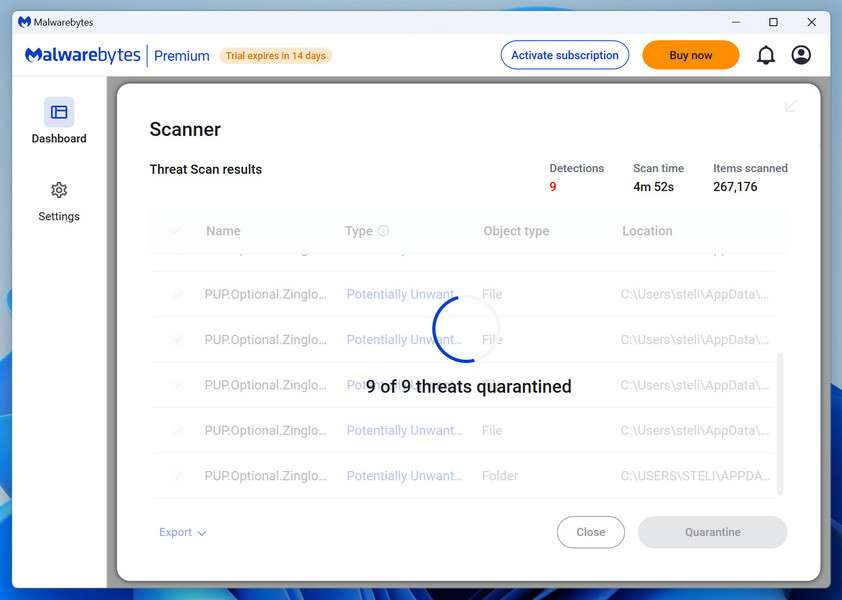
Quarantine detected malware
Once the Malwarebytes scan is complete, it will display a list of detected malware, adware, and potentially unwanted programs. To effectively remove these threats, click the “Quarantine” button.
Malwarebytes will now delete all of the files and registry keys and add them to the program’s quarantine.
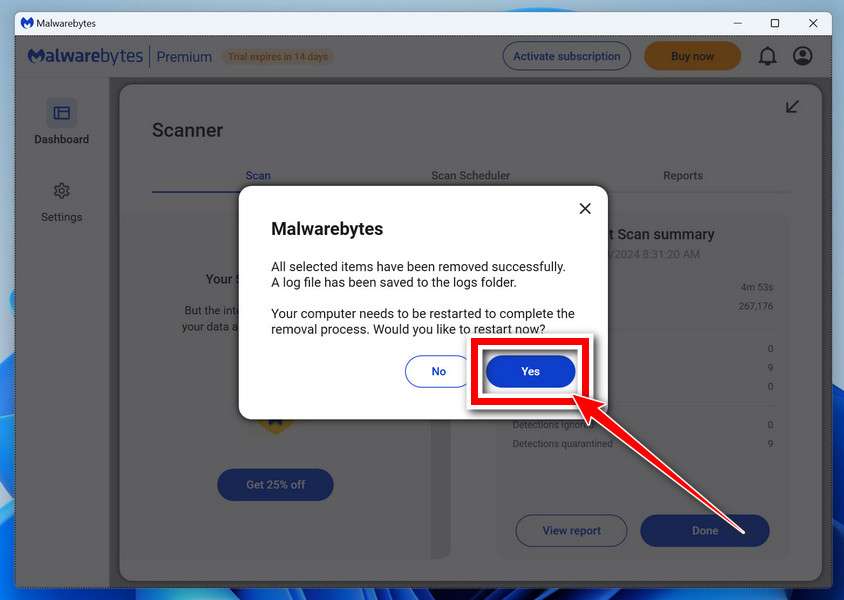
Restart your computer.
When removing files, Malwarebytes may require a reboot to fully eliminate some threats. If you see a message indicating that a reboot is needed, please allow it. Once your computer has restarted and you are logged back in, you can continue with the remaining steps.
STEP 4: Use HitmanPro to scan your computer for badware
In this next step, we will scan the computer with HitmanPro to ensure that no other malicious programs are installed on your device.
HitmanPro is a second-opinion scanner that takes a unique cloud-based approach to malware scanning. HitmanPro scans the behavior of active files and also files in locations where malware normally resides for suspicious activity. If it finds a suspicious file that’s not already known, HitmanPro sends it to its clouds to be scanned by two of the best antivirus engines today, which are Bitdefender and Kaspersky.
Although HitmanPro is shareware and costs $24.95 for 1 year on 1 PC, there is no limit on scanning. The limitation only kicks in when there is a need to remove or quarantine detected malware by HitmanPro on your system and by then, you can activate the one-time 30-days trial to enable the cleanup.
Download HitmanPro.
You can download HitmanPro by clicking the link below.
HITMANPRO DOWNLOAD LINK (The above link will open a new web page from where you can download HitmanPro)
Install HitmanPro.
When HitmanPro has finished downloading, double-click on “hitmanpro.exe” (for 32-bit versions of Windows) or “hitmanpro_x64.exe” (for 64-bit versions of Windows) to install this program on your computer. In most cases, downloaded files are saved to the Downloads folder.
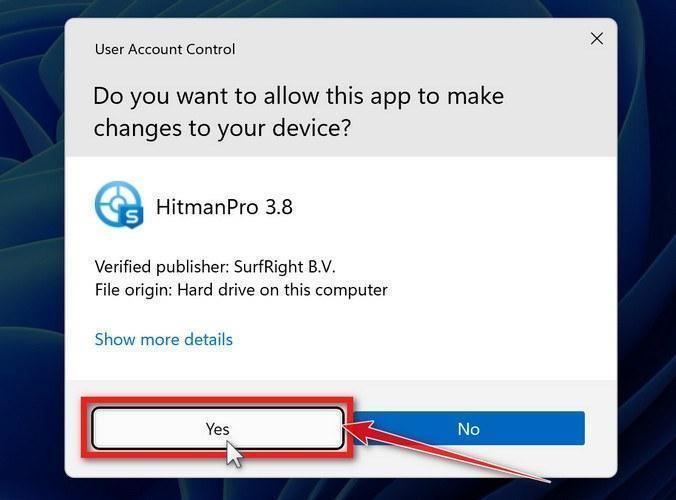
You may be presented with a User Account Control pop-up asking if you want to allow HitmanPro to make changes to your device. If this happens, you should click “Yes” to continue with the installation.
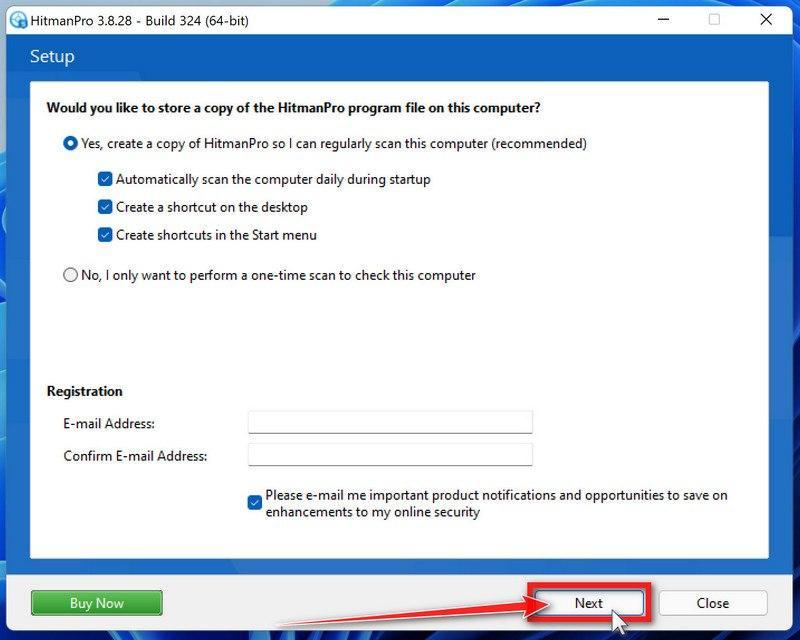
Follow the on-screen prompts.
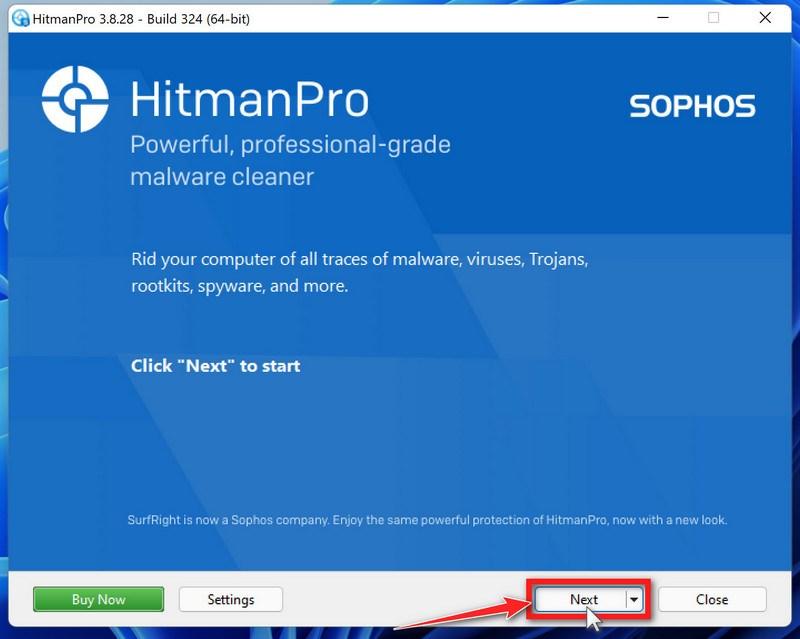
When HitmanPro starts you will be presented with the start screen as shown below. Click on the “Next” button to perform a system scan.
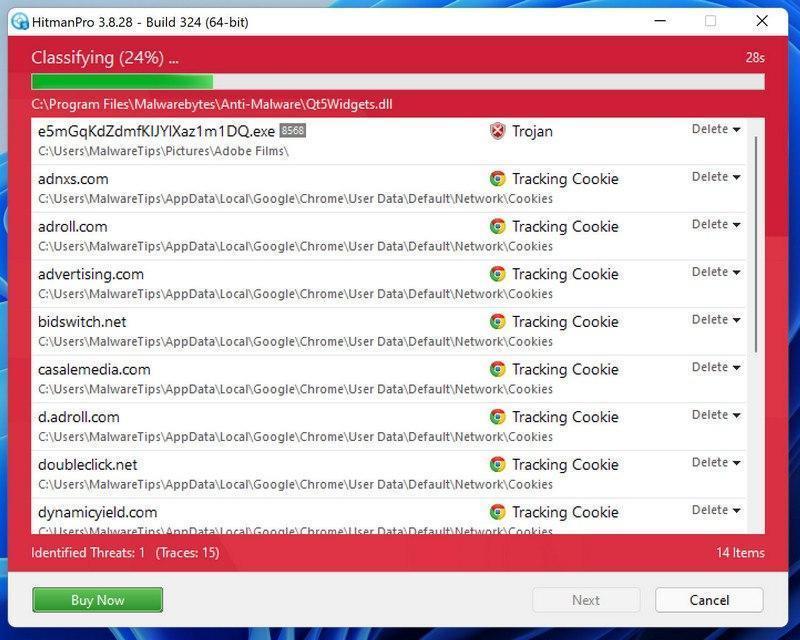
Wait for the HitmanPro scan to complete.
HitmanPro will now begin to scan your computer for malicious programs.
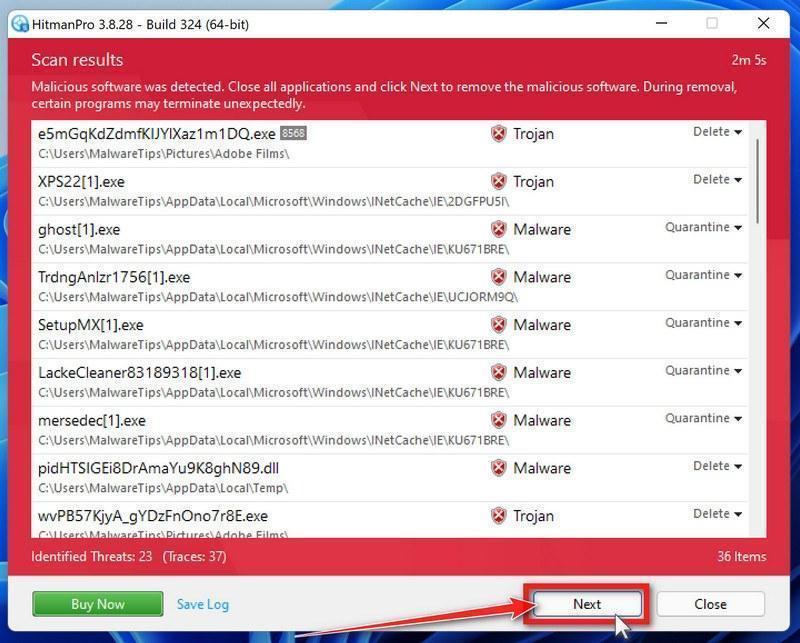
Click on “Next”.
When HitmanPro has finished the scan, it will display a list of all the malware that it has found. Click on the “Next” button to have HitmanPro remove the detected items.
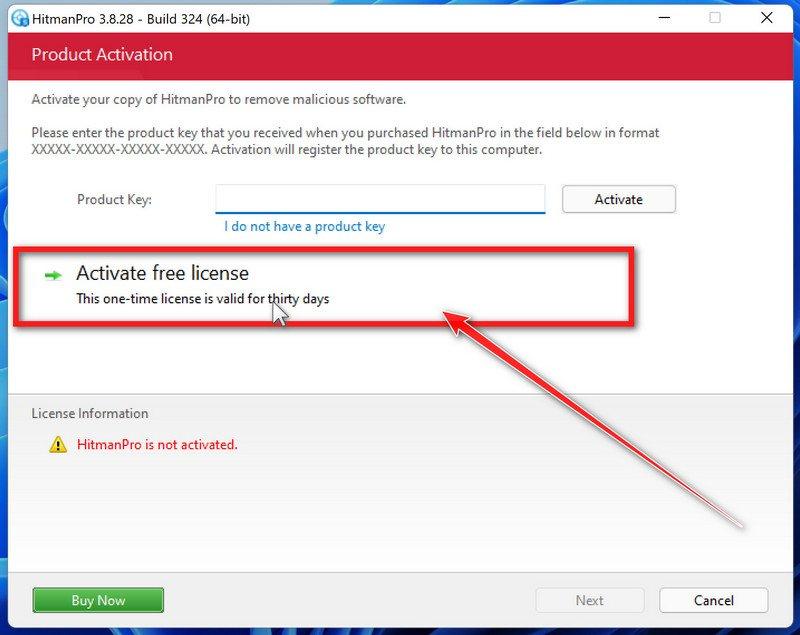
Click on “Activate free license”.
HitmanPro may now require to activate the free 30-days trial to remove the malicious files. To do this, click on the “Activate free license” button to begin the free 30 days trial and remove all the malicious files from your computer.
When the malware removal process is complete, it will display a screen that shows the status of the various programs that were removed. At this screen, you should click on the Next button and then if prompted you should click on the Reboot button. If HitmanPro does not prompt you to reboot, please just click on the Close button.
STEP 5: Use AdwCleaner to remove adware and malicious browser policies
In this final step, we will use AdwCleaner to remove the malicious browser policies that were set by browser hijackers on your computer and delete malicious browser extensions.
AdwCleaner is a free popular on-demand scanner that can detect and remove malware that even the most well-known anti-virus and anti-malware applications fail to find. This on-demand scanner includes a lot of tools that can be used to fix the side effects of adware. browser hijackers and other malware.
Download AdwCleaner.
You can download AdwCleaner by clicking the link below.
ADWCLEANER DOWNLOAD LINK (The above link will open a new web page from where you can download AdwCleaner)
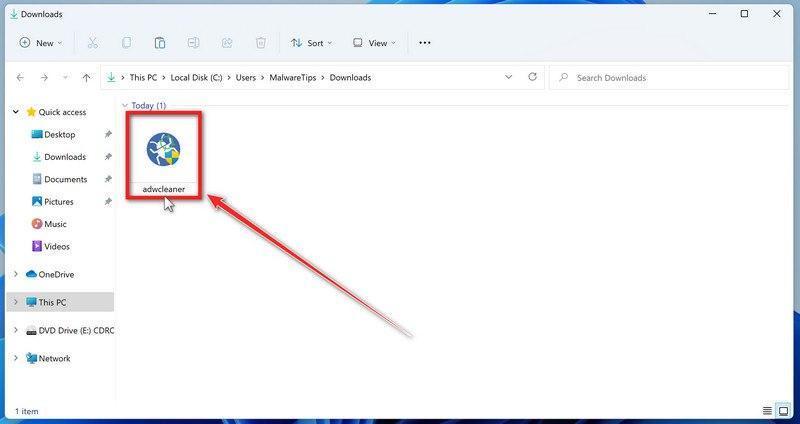
Double-click on the setup file.
Double-click on the file named “adwcleaner_x.x.x.exe” to start AdwCleaner. In most cases, downloaded files are saved to the Downloads folder.
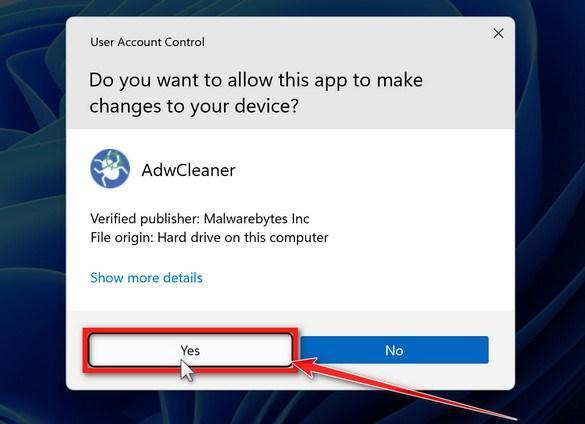
AdwCleaner program will now open and you will be presented with the program’s license agreement. After you read it, click on the I agree button if you wish to continue. If Windows prompts you as to whether or not you wish to run AdwCleaner, please allow it to run.
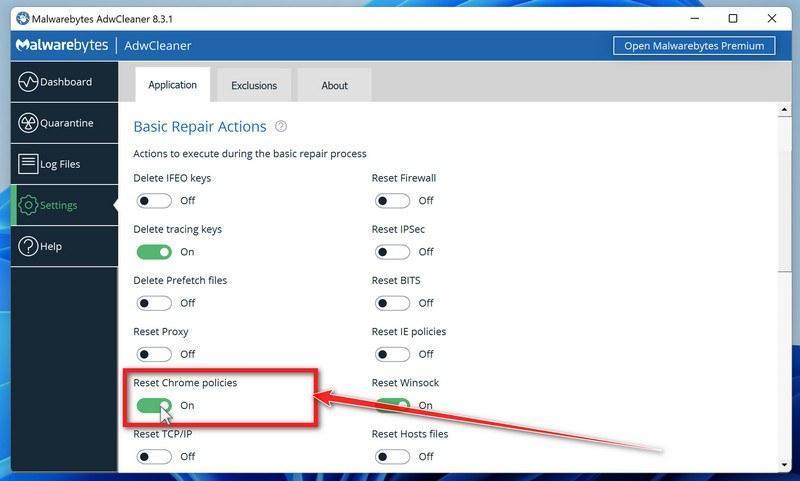
Enable “Reset Chrome policies” to remove malicious browser policies.
When AdwCleaner starts, on the left side of the window, click on “Settings” and then enable “Reset Chrome policies“.
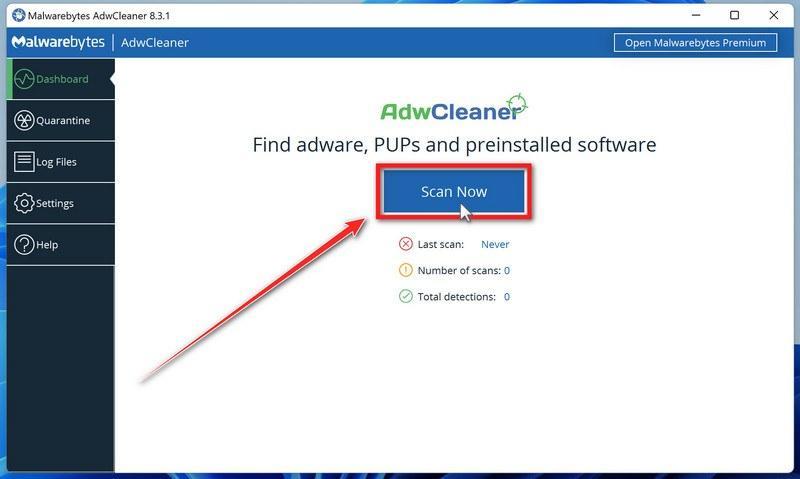
Click on the “Scan” button.
On the left side of the AdwCleaner window, click on “Dashboard” and then click “Scan” to perform a computer scan.
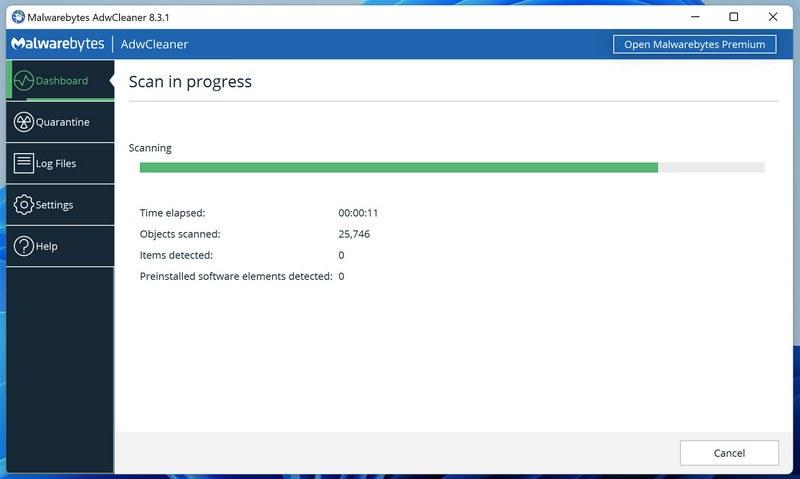
Wait for the AdwCleaner scan to finish.
AdwCleaner will now scan your computer for malware. This process can take a few minutes.
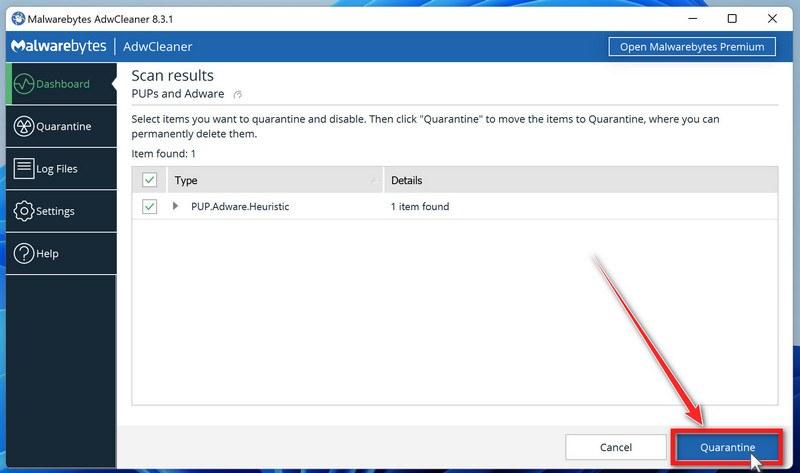
Click on “Quarantine” to remove malware.
When the AdwCleaner scan is completed it will display all of the items it has found. Click on the “Quarantine” button to remove the malicious programs from your computer.
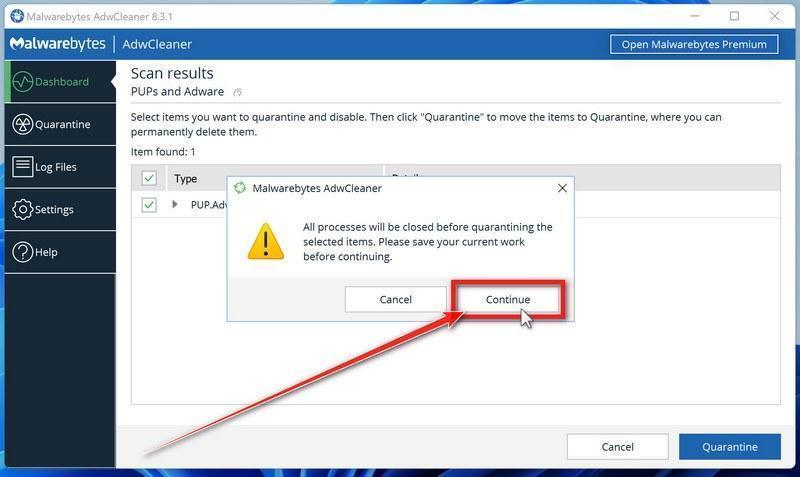
Click on “Continue” to remove the malicious programs.
AdwCleaner will now prompt you to save any open files or data as the program will need to close any open programs before it starts to clean. Click on the “Continue” button to finish the removal process.
AdwCleaner will now delete all detected malware from your computer. When the malware removal process is complete, you may be asked to restart your computer.
Your computer should now be free of Unwanted Apps and Malware and other malware.
If your current antivirus allowed this malicious program on your computer, you may want to consider purchasing Malwarebytes Premium to protect against these types of threats in the future. If you are still having problems with your computer after completing these instructions, then please follow one of the steps:
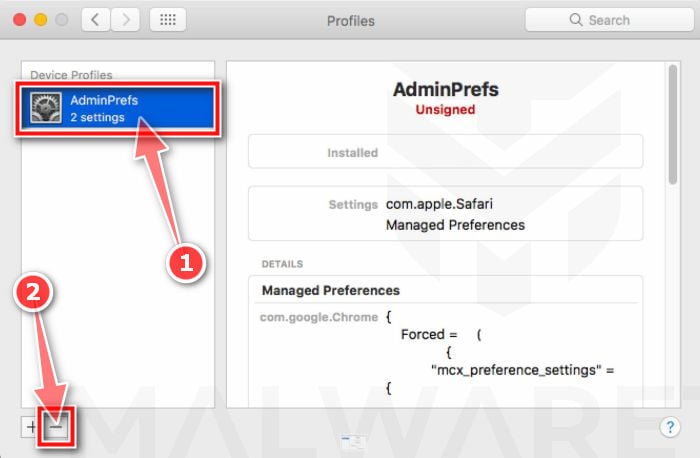
Profiles are used by IT admins in businesses to control the behavior of their Macs. These profiles can configure a Mac to do many different things, some of which are not otherwise possible. When it comes to home users, adware and browser hijackers are using the configuration profile to prevent users from removing malicious programs from the computer. This also prevents the user from changing that behavior in the browser’s settings.
In this first step, we will check your computer to see if any configuration profiles are installed. To do this, follow the below steps:
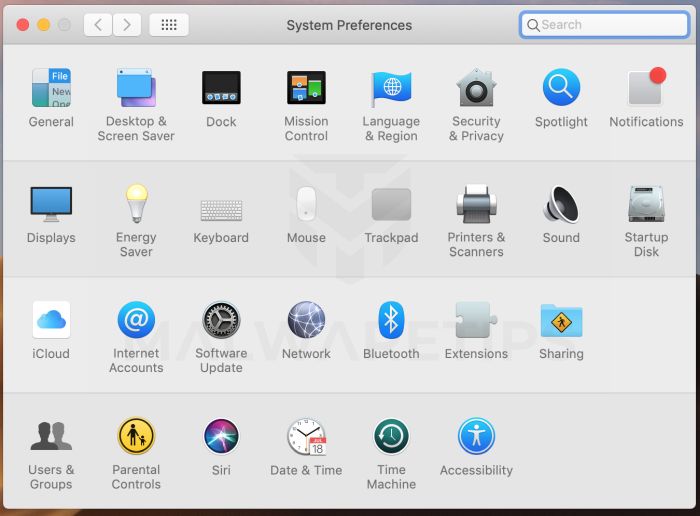
Open “System Preferences”
From the Apple menu, select System Preferences.
Search for “Profiles”
When the System Preferences window opens, search for the Profiles icon.
If there isn’t a Profiles icon, you don’t have any profiles installed, which is normal and you can continue with the next steps.
Remove the malicious profiles
If there’s a Profile icon, click on it and select any suspicious profile that you want to remove, and then press the – (minus) button. Click Remove to remove the profile.
STEP 2: Delete malicious apps
In this second step, we will try to identify and remove any malicious apps and files that might be installed on your computer. Sometimes redirects or adware programs can have usable Uninstall entries that can be used to remove these programs.
Quit the malicious programs
On the Apple menu bar, in the top-right corner, if you see any unknown or suspicious icon, click on it and then select Quit.
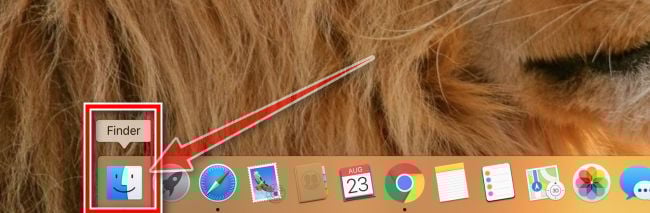
Open “Finder”
Click the Finder application on your dock.
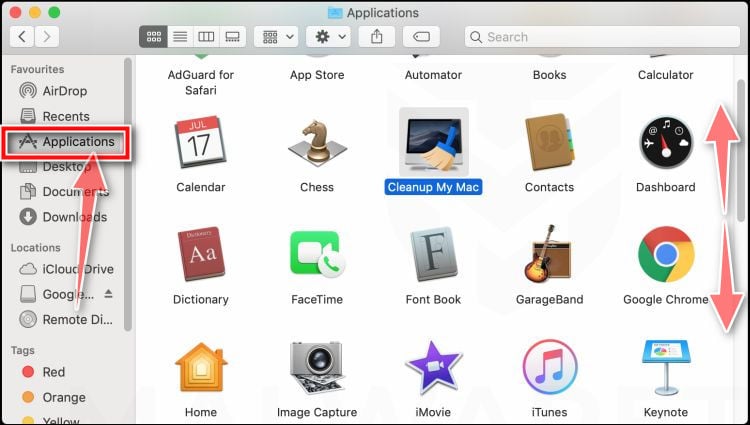
Click on “Applications”
In the Finder left pane, click on “Applications“.
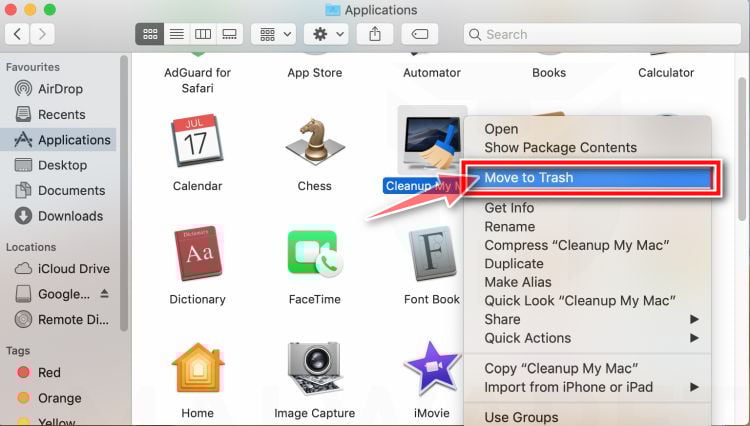
Find and remove the malicious app.
The “Applications” screen will be displayed with a list of all the apps installed on your device. Scroll through the list until you find the malicious app, right-click it, and then click “Move to Trash”.
Look out for any suspicious program that could be behind all the drama – anything you don’t remember downloading or that doesn’t sound like a genuine program. Here are some known malicious programs: SearchMine, TakeFresh, TopResults, FeedBack, ApplicationEvents, GeneralOpen, PowerLog, MessengerNow, ImagePrime, GeneralNetSearch, Reading Cursors, GlobalTechSearch, PDFOnline-express, See Scenic Elf, MatchKnowledge, Easy Speedtest, or WebDiscover.
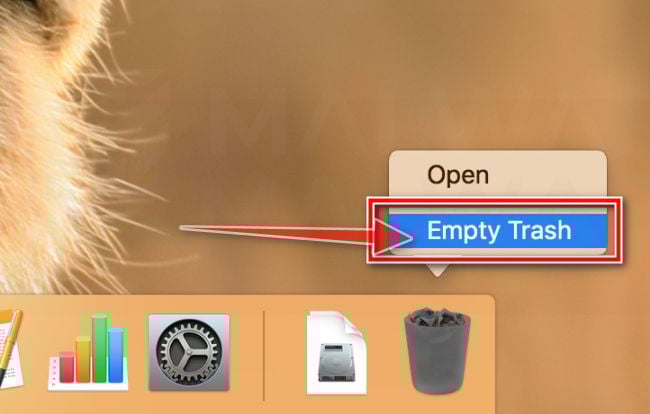
Click “Empty Trash”
On the dock, right-click on the trash icon and select “Empty Trash”. Doing so deletes the Trash’s contents, including the program that you just sent to the Trash.
Find and remove the malicious files
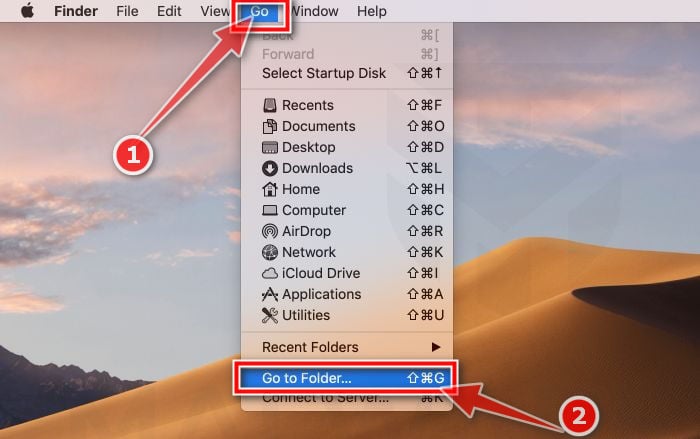
Click the desktop to make sure you’re in the Finder, choose “Go” then click on “Go to Folder“.
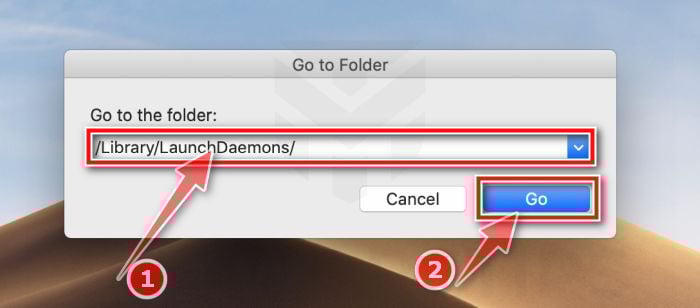
Type or copy/paste each of the below paths into the window that opens, then click Go.
/Library/LaunchAgents
~/Library/LaunchAgents
/Library/Application Support
/Library/LaunchDaemons
Look out for any suspicious files that could be behind all the drama – anything you don’t remember downloading or that doesn’t sound like a genuine program. These are some known malicious files: “com.adobe.fpsaud.plist” “installmac.AppRemoval.plist”, “myppes.download.plist”, “mykotlerino.ltvbit.plist”, or “com.myppes.net-preferences.plist”. When you find a malicious file move it to the Trash.
STEP 3: Reset browsers back to default settings
In this third step, we will remove spam push notifications and malicious extensions, and change to default any settings that might have been changed by malware. For each browser that you have installed on your computer, please click on the tab below and follow the displayed steps to reset that browser.
Safari BrowserChrome for Mac BrowserFirefox for Mac Browser
Remove malicious extensions and settings from Safari
To remove malware from Safari we will check if there are any malicious extensions installed on your browser and what settings have been changed by this malicious program.
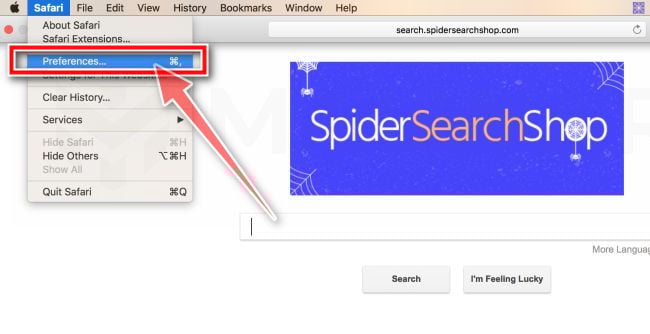
Go to Safari’s “Preferences”.
On the menu bar, click the “Safari” menu and select “Preferences”.
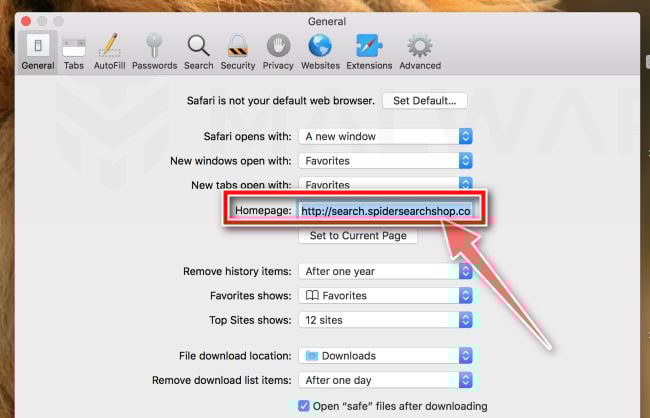
Check Homepage.
This will open a new window with your Safari preferences, opened to the “General” tab. Some browser hijackers may change your default homepage, so in the Homepage field make sure it’s a web page you want to use as your start-up page.
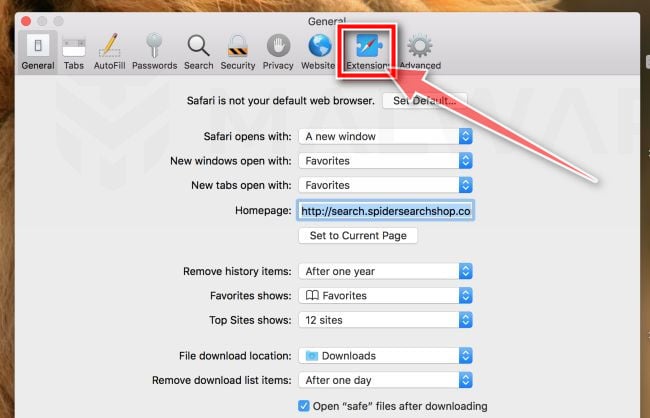
Click “Extensions”
Next, click on the “Extensions” tab.
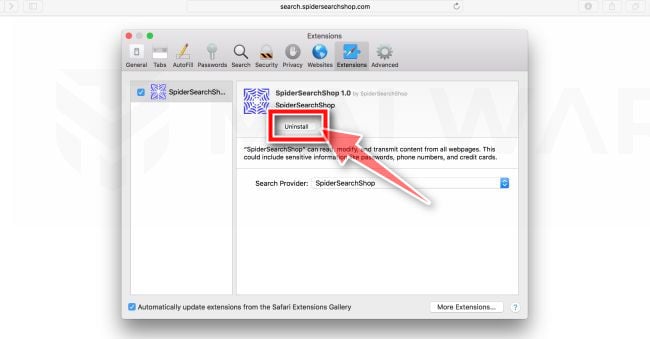
Find and uninstall malicious extensions.
The “Extensions” screen will be displayed with a list of all the extensions installed on Safari. Look out for any suspicious browser extension that could be behind all the drama – anything you don’t remember downloading or that doesn’t sound like a genuine extension. By default, there are no extensions installed on Safari so it’s safe to remove an extension
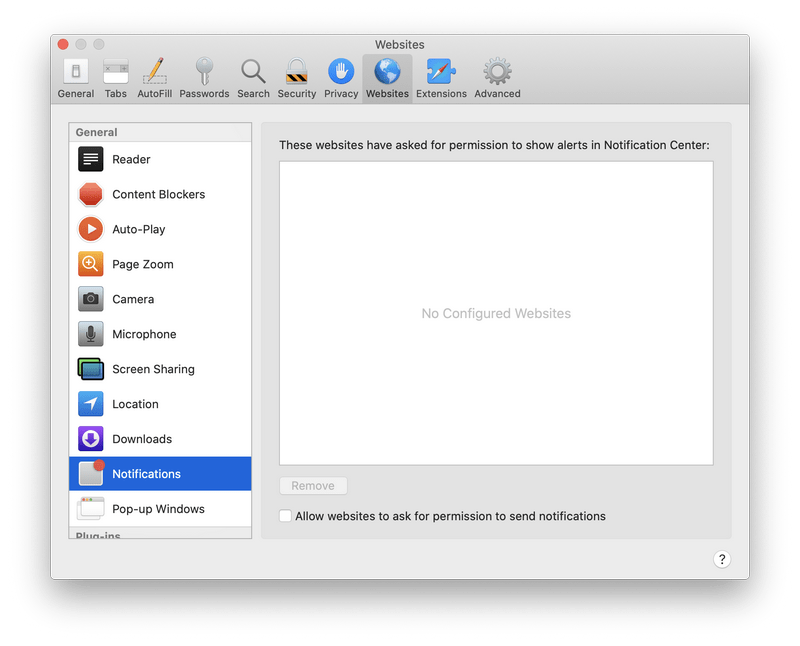
Remove spam notifications ads
Click Preferences, click Websites, then click Notifications. Deselect “Allow websites to ask for permission to send push notifications”.
Remove all data stored by websites on your computer.
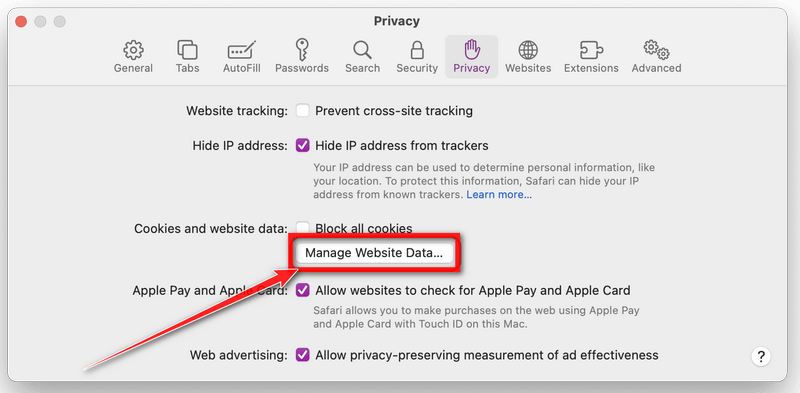
In the Safari menu, choose “Preferences…”, select “Privacy” at the top of the new window that appears, and then click the “Manage Website Data” button.
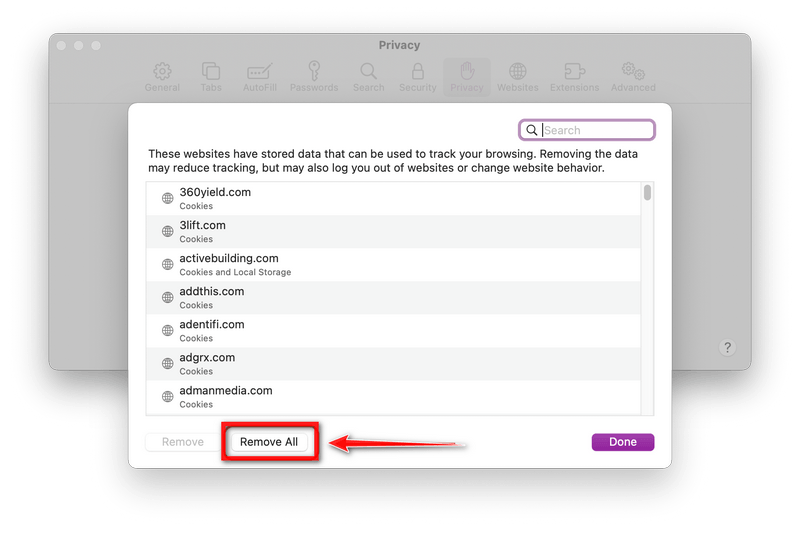
In the next dialog box, click “Remove All“. It will ask you if you are sure you want to remove all data stored by websites on your computer. Select “Remove Now” to clear data that could be used to track your browsing.
Empty Safari Caches.
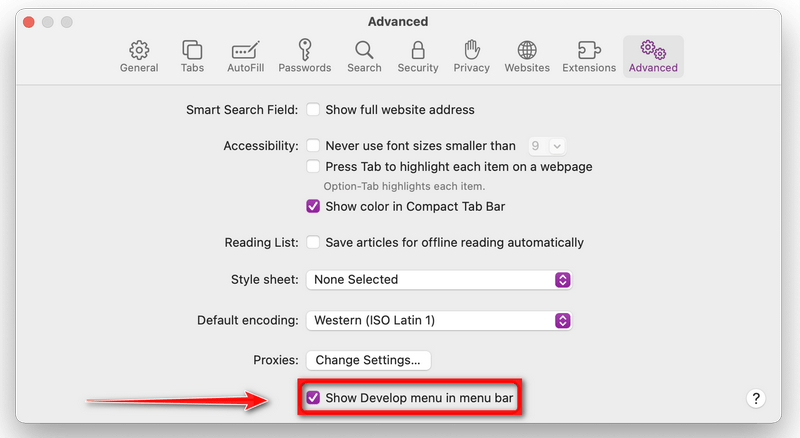
From your Safari menu bar, click Safari and select Preferences, then select the Advanced tab. Enable the checkbox to “Show Develop menu in menu bar“.
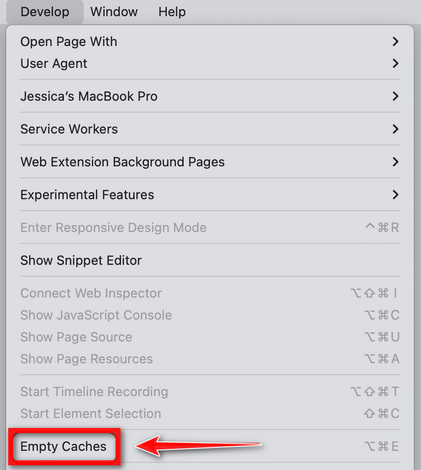
From the menu bar select Develop, then click on Empty Caches as seen in the image below.
Remove malware from Chrome for Mac
To remove malware from Chrome for Mac we will reset the browser settings to their default. Doing these steps will erase all configuration information from Chrome such as your home page, tab settings, saved form information, browsing history, and cookies. This process will also disable any installed extensions. All of your bookmarks, though, will be preserved.
Click on the three dots at the top right and go to Settings.
Click on Chrome’s main menu button, represented by three dots at the top right corner. Now click on the menu option labeled Settings as shown by the arrow in the picture below, which will open the basic settings screen.
In the left sidebar, click on the “Reset and Cleanup” option.
In the left sidebar, click on “Reset and clean up“.
Click “Reset settings to their original defaults”.
Now click on the “Reset settings to their original defaults”. link as shown in the image below.
Click “Reset Settings” button.
A confirmation dialog should now be displayed, detailing the components that will be restored to their default state should you continue with the reset process. To complete the restoration process, click on the “Reset Settings” button.
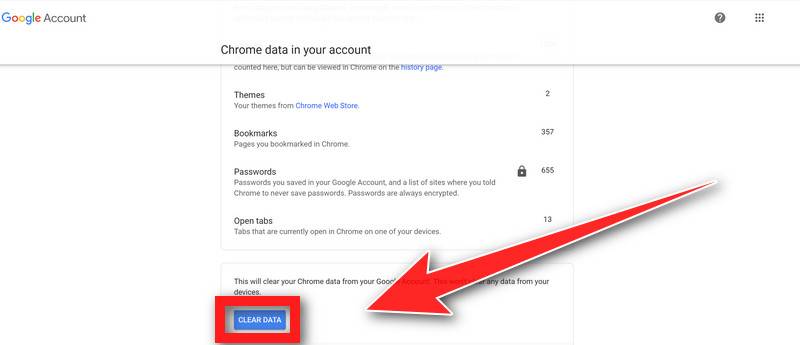
(Optional) Reset Chrome Data Sync.
In case a malicious extension reinstalls itself even after performing a browser reset, you have an additional option to reset the data sync for your browser. To do this, navigate to chrome.google.com/sync and click on the Clear Data button.
Remove malware from Firefox for Mac
To remove malware from Firefox for Mac we will reset the browser settings to its default. The reset feature fixes many issues by restoring Firefox to its factory default state while saving your essential information like bookmarks, passwords, web form auto-fill information, browsing history, and open tabs.
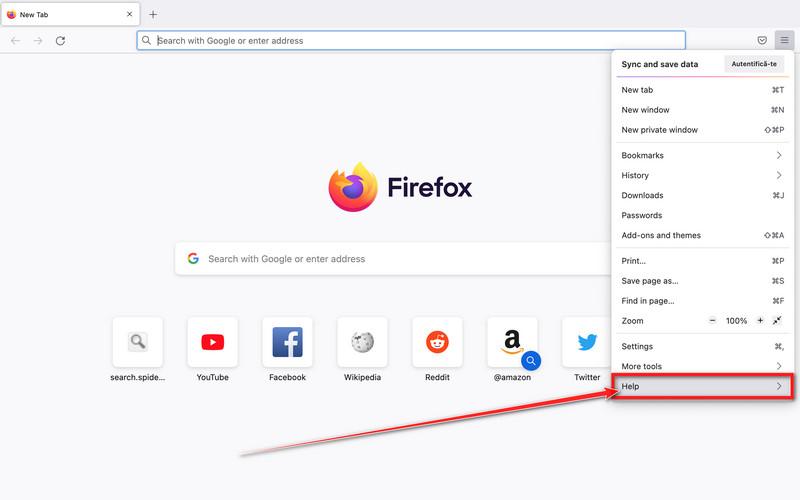
Go to the “Help” menu.
Click on Firefox’s main menu button, represented by three horizontal lines. When the drop-down menu appears, select the option labeled “Help“.
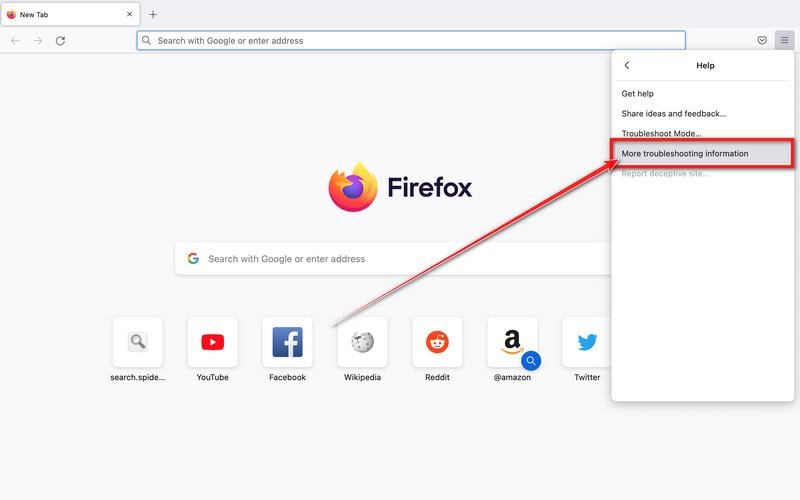
Click “Troubleshooting Information”.
Next click on the “Troubleshooting Information” option as indicated by the arrow in the image below. This will bring you to a Troubleshooting page.
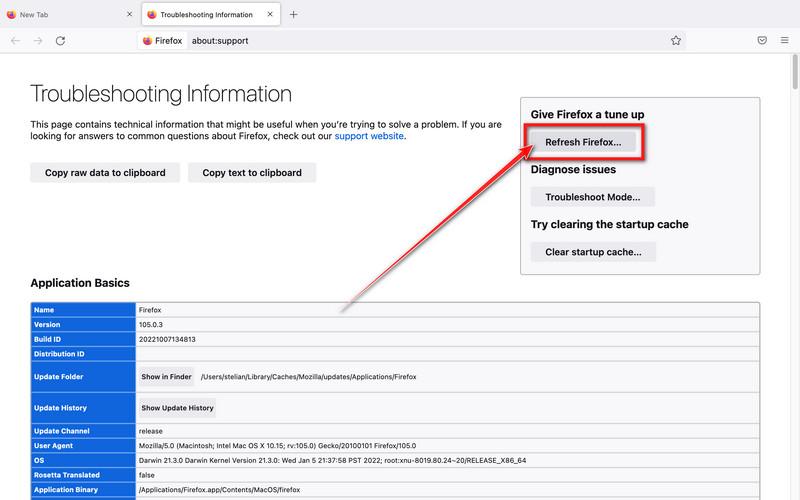
Click on “Refresh Firefox”
Click the “Refresh Firefox” button in the upper-right corner of the “Troubleshooting Information” page.
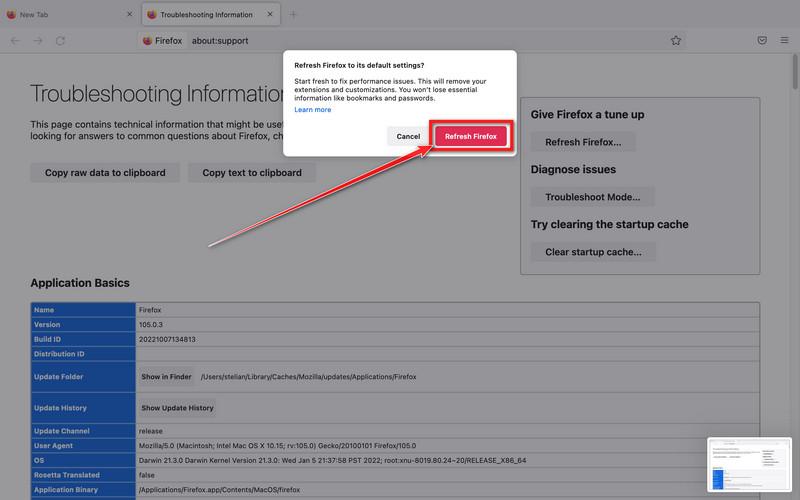
Confirm.
To continue, click on the “Refresh Firefox” button in the new confirmation window that opens.
Click on “Finish”.
Firefox will close itself and will revert to its default settings. When it’s done, a window will list the information that was imported. Click on the “Finish“.
Your old Firefox profile will be placed on your desktop in a folder named “Old Firefox Data“. If the reset didn’t fix your problem you can restore some of the information not saved by copying files to the new profile that was created. If you don’t need this folder any longer, you should delete it as it contains sensitive information.
STEP 4: Run a scan with Malwarebytes for Mac to remove malware
In this final step, we will scan the computer with Malwarebytes for Mac to find and remove any malicious programs that might be installed on your Mac.
Malwarebytes for Mac is an on-demand scanner that can destroy many types of malware that other software tends to miss without costing you absolutely anything. When it comes to cleaning up an infected device, Malwarebytes has always been free, and we recommend it as an essential tool in the fight against malware.
Download Malwarebytes for Mac.
You can download Malwarebytes for Mac by clicking the link below.
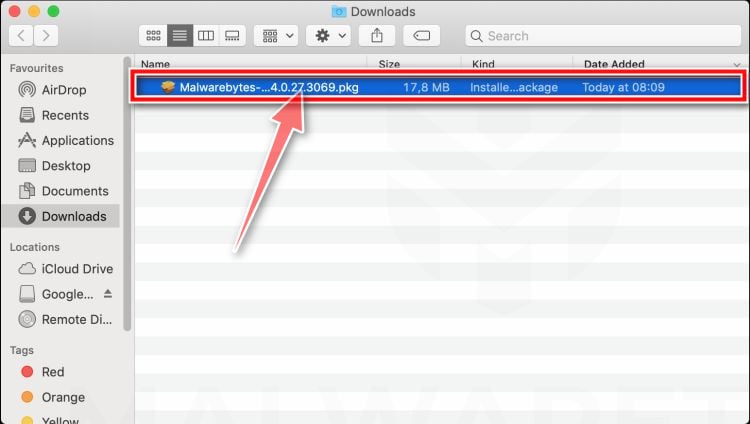
When Malwarebytes has finished downloading, double-click on the setup file to install Malwarebytes on your computer. In most cases, downloaded files are saved to the Downloads folder.
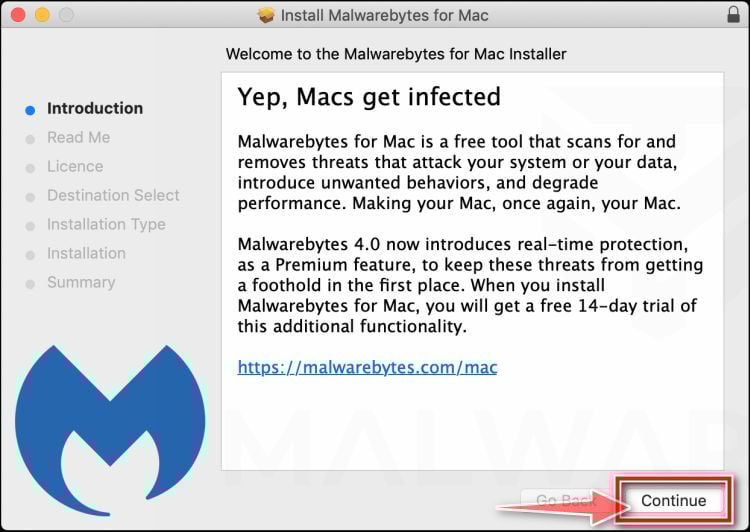
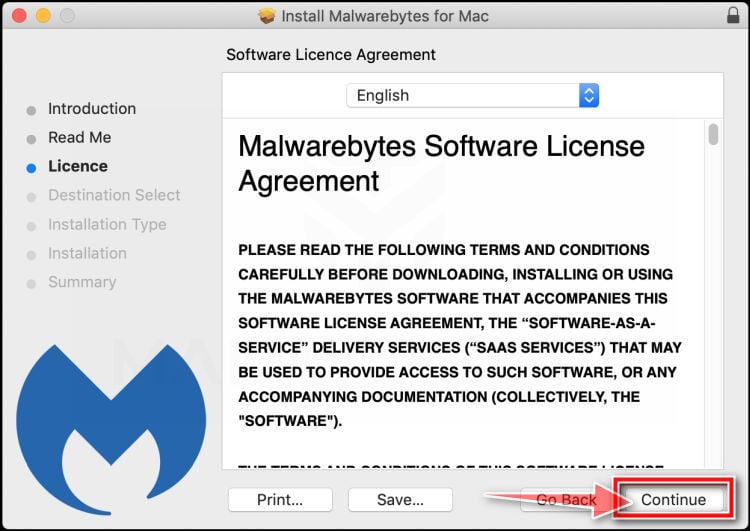
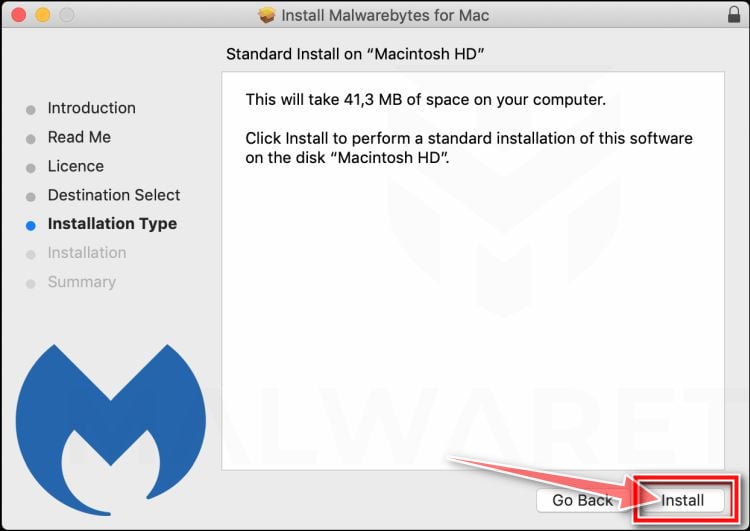
Follow the on-screen prompts to install Malwarebytes.
When the Malwarebytes installation begins, you will see the Malwarebytes for Mac Installer which will guide you through the installation process. Click “Continue“, then keep following the prompts to continue with the installation process.
When your Malwarebytes installation completes, the program opens to the Welcome to Malwarebytes screen. Click the “Get started” button.
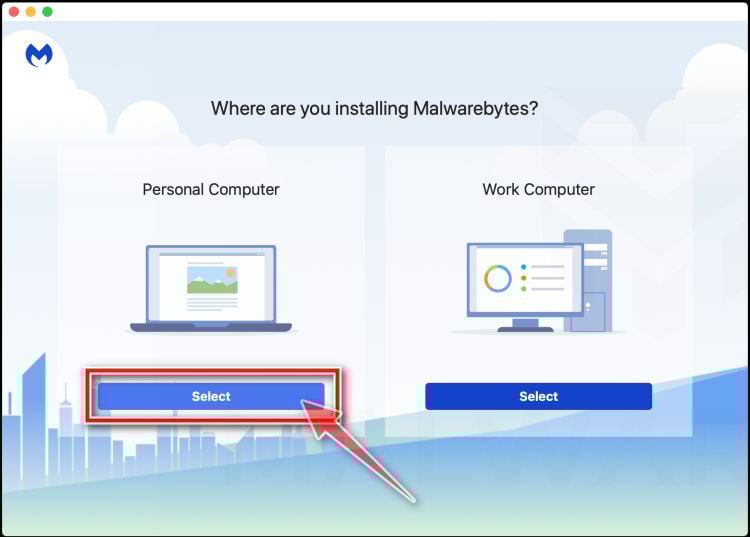
Select “Personal Computer” or “Work Computer”.
The Malwarebytes Welcome screen will first ask you what type of computer are you installing this program, click either Personal Computer or Work Computer.
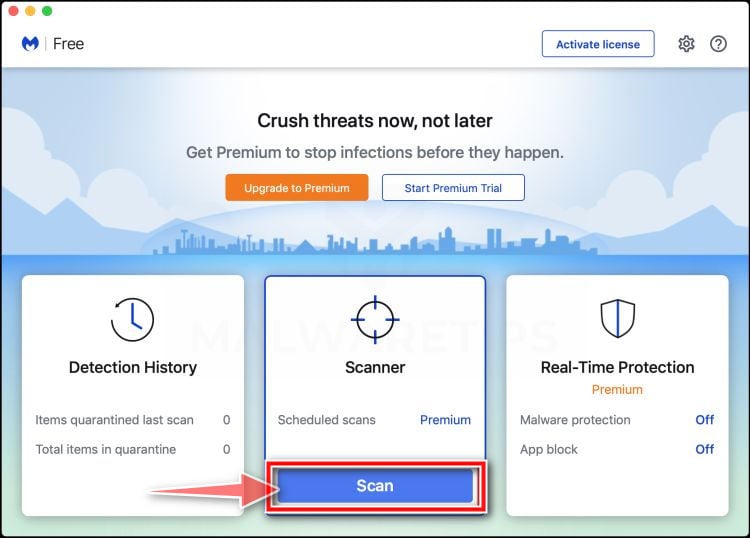
Click on “Scan”.
To scan your computer with Malwarebytes, click on the “Scan” button. Malwarebytes for Mac will automatically update the antivirus database and start scanning your computer for malware.
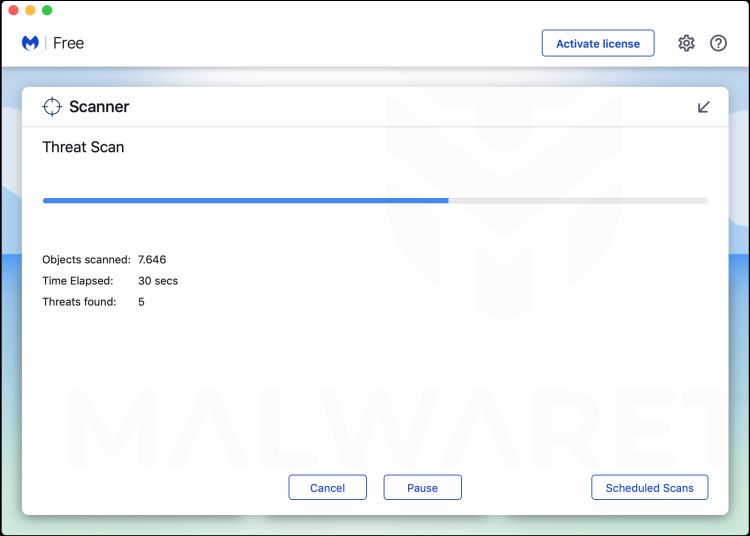
Wait for the Malwarebytes scan to complete.
Malwarebytes will scan your computer for adware, browser hijackers, and other malicious programs. This process can take a few minutes, so we suggest you do something else and periodically check on the status of the scan to see when it is finished.
Click on “Quarantine”.
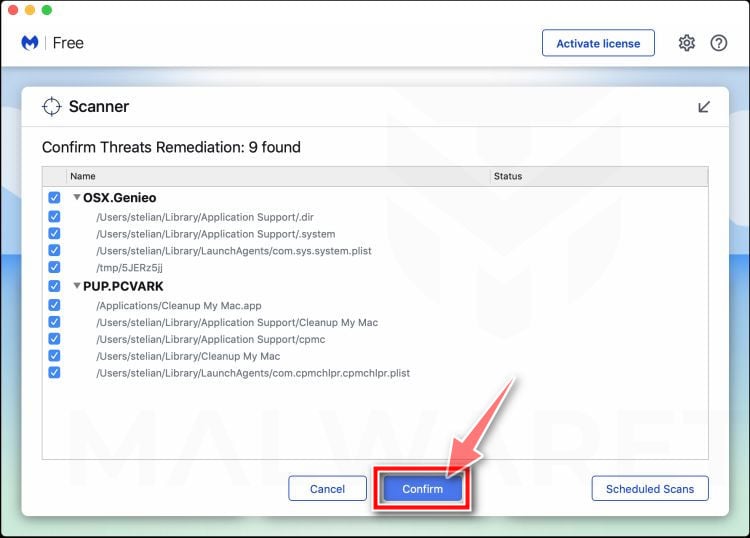
When the scan has been completed, you will be presented with a screen showing the malware infections that Malwarebytes has detected. To remove the malware that Malwarebytes has found, click on the “Quarantine” button.
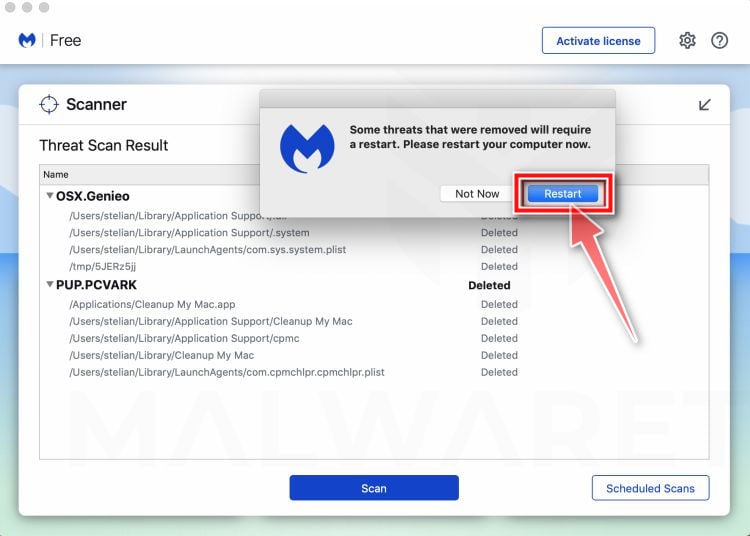
Restart computer.
Malwarebytes will now remove all the malicious files that it has found. To complete the malware removal process, Malwarebytes may ask you to restart your computer.
Your computer should now be free of Unwanted Apps and Malware and other malware.
If your current antivirus allowed a malicious program on your computer, you might want to consider purchasing the full-featured version of Malwarebytes Anti-Malware to protect against these types of threats in the future. If you are still experiencing problems while trying to remove a malicious program from your computer, please ask for help in our Mac Malware Removal Help & Support forum.
Remove Unwanted Apps and Malware from Android
Remove Unwanted Apps and Malware from Android
To remove Unwanted Apps and Malware from your phone or tablet, follow these steps:
In this first step, we will check if any malicious apps are installed on your phone. Sometimes browser hijackers or adware apps can have usable Uninstall entries that can be used to remove these apps.
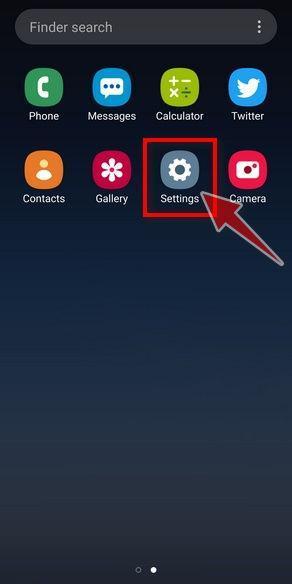
Open the “Settings” menu.
Tap on the “Settings” app from your phone menu or home screen.
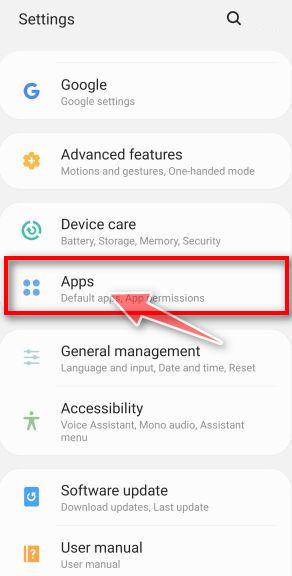
Tap on “Apps”.
When the “Settings” menu opens, tap on “Apps” (or “App Manager”) to see all the installed applications on your phone.
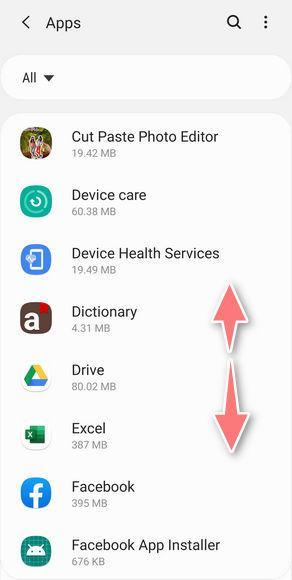
Find the malicious app.
The “Apps” screen will be displayed with a list of all the applications that are installed on your phone. Scroll through the list and look out for any suspicious app that could be behind all the drama – anything you don’t remember downloading or that doesn’t sound like a genuine program. Most often, cyber criminals hide malware inside video or photo editing apps, weather apps, and camera apps.
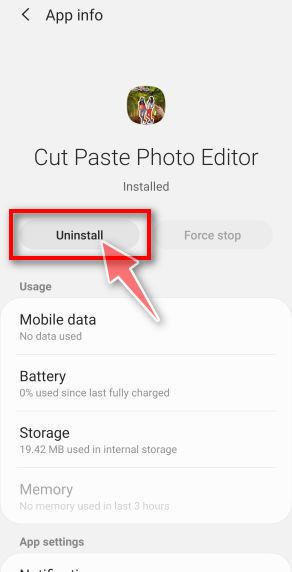
Uninstall the malicious app
When you find a suspicious or malicious app, tap on it to uninstall it. This won’t start the app but will open up the app details screen. If the app is currently running press the “Force stop” button, then tap on “Uninstall”.
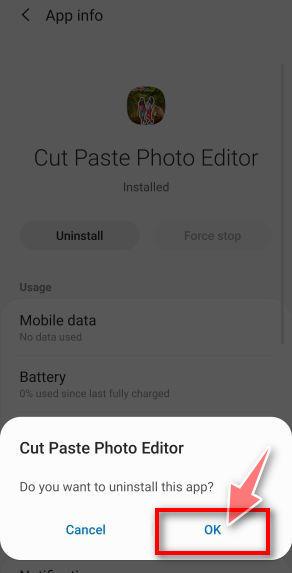
A confirmation dialog should be displayed to confirm you want to uninstall the app, tap on “OK” to remove the malicious app from your phone.
STEP 2: Reset browsers back to default settings
In this second step, we will reset your browser to its default settings to remove spam notifications, unwated search redirects, and restore its factory settings
Resetting the browser settings to their default it’s an easy task on Windows or Mac computers; however, when it comes to Android, this can’t be done directly because it’s not an option built-in into the browser settings. Restoring the browser settings on Android can be done by clearing the application data. This will remove all the cookies, cache, and other site settings that may have been saved. So let’s see how we can restore your browser to its factory settings.
Chrome for AndroidFirefoxOperaSamsung Internet BrowserMicrosoft Edge
Remove malware from Chrome for Android
To reset Chrome for Android to its default settings, follow the below steps:
Open the “Settings” menu.
Tap on the “Settings” app from your phone menu or home screen.
Tap on “Apps”.
When the “Settings” menu opens, tap on “Apps” (or “App Manager”) to see all the installed applications on your phone.
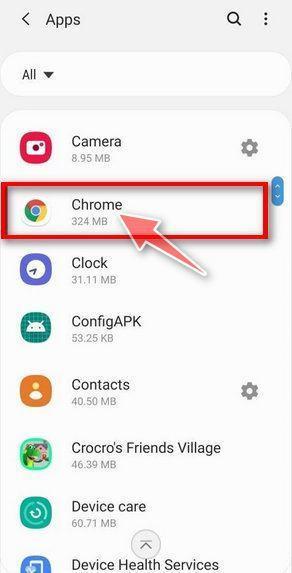
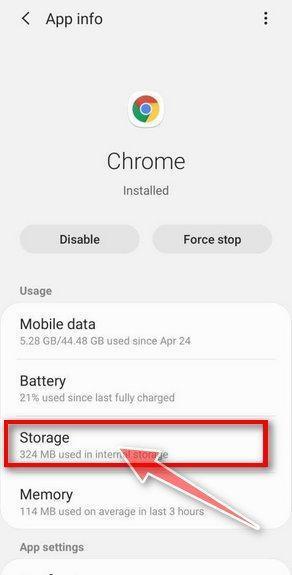
Find and tap on Chrome.
The “Apps” screen will be displayed with a list of all the apps installed on your phone. Scroll through the list until you find the Chrome app, then tap on it to open the app’s details.
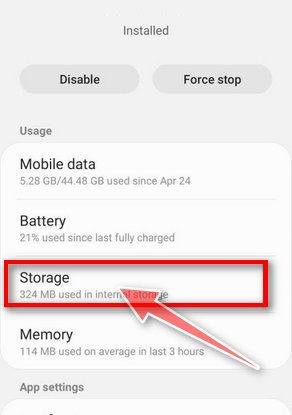
Tap “Storage”.
When Chrome’s app info menu is displayed, tap on “Storage“.
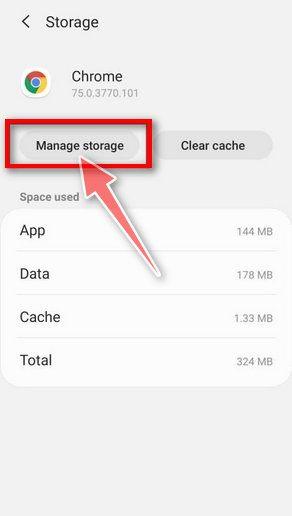
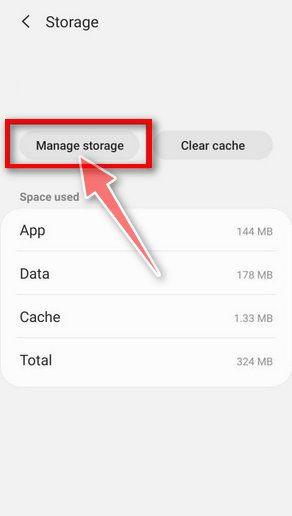
Tap “Manage Space”.
Under the storage settings, you will get two options — Manage Space and Clear Cache. Tap on “Manage Space“.
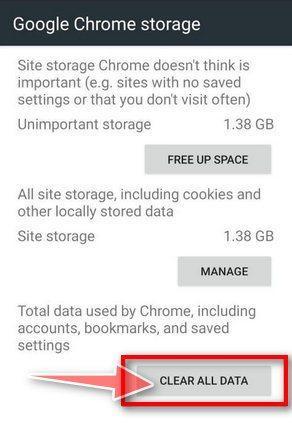
Tap “Clear all data”.
Tap “Clear all data” to delete all Chrome’s data including accounts, bookmarks, and your settings to reset the default settings.
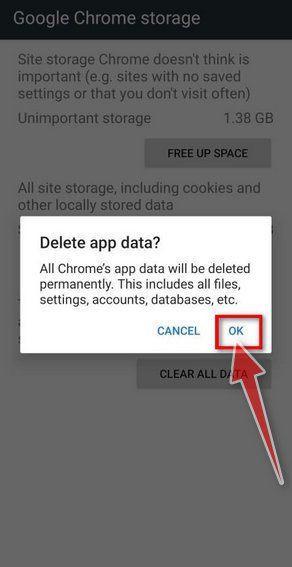
Confirm by tapping “Ok”.
A confirmation dialog should now be displayed, detailing the components that will be restored to their default state should you continue with the reset process. To complete the restoration process, tap “Ok“.
Remove malware from Firefox for Android
To reset Firefox for Android to its default settings, follow the below steps:
Open the “Settings” menu.
Tap on the “Settings” app from your phone menu or home screen.
Tap on “Apps”.
When the “Settings” menu opens, tap on “Apps” (or “App Manager”) to see all the installed applications on your phone.
Find and tap on Firefox.
The “Apps” screen will be displayed with a list of all the apps installed on your phone. Scroll through the list until you find the Firefox app, then tap on it to open the app’s details.
Tap “Storage”.
When Firefox’s app info menu is displayed, tap on “Storage“.
Tap “Manage Space”.
Under the storage settings, you will get two options — Manage Space and Clear Cache. Tap on “Manage Space“.
Tap “Clear all data”.
Tap “Clear all data” to delete all Firefox data including accounts, bookmarks, and your settings to reset the default settings.
Confirm by tapping “Ok”.
A confirmation dialog should now be displayed, detailing the components that will be restored to their default state should you continue with the reset process. To complete the restoration process, tap “Ok“.
Remove malware from the Opera browser
To reset the Opera browser to its default settings, follow the below steps:
Open the “Settings” menu.
Tap on the “Settings” app from your phone menu or home screen.
Tap on “Apps”.
When the “Settings” menu opens, tap on “Apps” (or “App Manager”) to see all the installed applications on your phone.
Find and tap on Opera.
The “Apps” screen will be displayed with a list of all the apps installed on your phone. Scroll through the list until you find the Opera app, then tap on it to open the app’s details.
Tap “Storage”.
When Opera’s app info menu is displayed, tap on “Storage“.
Tap “Manage Space”.
Under the storage settings, you will get two options — Manage Space and Clear Cache. Tap on “Manage Space“.
Tap “Clear all data”.
Tap “Clear all data” to delete all Opera’s data including accounts, bookmarks, and your settings to reset the default settings.
Confirm by tapping “Ok”.
A confirmation dialog should now be displayed, detailing the components that will be restored to their default state should you continue with the reset process. To complete the restoration process, tap “Ok“.
Remove malware from Samsung Internet Browser
To reset the Samsung Internet Browser to its default settings, follow the below steps:
Open the “Settings” menu.
Tap on the “Settings” app from your phone menu or home screen.
Tap on “Apps”.
When the “Settings” menu opens, tap on “Apps” (or “App Manager”) to see all the installed applications on your phone.
Find and tap on Samsung Internet Browser.
The “Apps” screen will be displayed with a list of all the apps installed on your phone. Scroll through the list until you find the Samsung Internet Browser app, then tap on it to open the app’s details.
Tap “Storage”.
When the Samsung Internet Browser’s app info menu is displayed, tap on “Storage“.
Tap “Manage Space”.
Under the storage settings, you will get two options — Manage Space and Clear Cache. Tap on “Manage Space“.
Tap “Clear all data”.
Tap “Clear all data” to delete all Samsung Internet Browser’s data including accounts, bookmarks, and your settings to reset the default settings.
Confirm by tapping “Ok”.
A confirmation dialog should now be displayed, detailing the components that will be restored to their default state should you continue with the reset process. To complete the restoration process, tap “Ok“.
Remove malware from Microsoft Edge for Android
To reset the Microsoft Edge for Android to its default settings, follow the below steps:
Open the “Settings” menu.
Tap on the “Settings” app from your phone menu or home screen.
Tap on “Apps”.
When the “Settings” menu opens, tap on “Apps” (or “App Manager”) to see all the installed applications on your phone.
Find and tap on Microsoft Edge.
The “Apps” screen will be displayed with a list of all the apps installed on your phone. Scroll through the list until you find the Microsoft Edge app, then tap on it to open the app’s details.
Tap “Storage”.
When the Microsoft Edge’s app info menu is displayed, tap on “Storage“.
Tap “Manage Space”.
Under the storage settings, you will get two options — Manage Space and Clear Cache. Tap on “Manage Space“.
Tap “Clear all data”.
Tap “Clear all data” to delete all Microsoft Edge’s data including accounts, bookmarks, and your settings to reset the default settings.
Confirm by tapping “Ok”.
A confirmation dialog should now be displayed, detailing the components that will be restored to their default state should you continue with the reset process. To complete the restoration process, tap “Ok“.
STEP 3: Use Malwarebytes for Android to remove malicious apps
In this final step, we will install Malwarebytes for Android to scan and remove malicious apps from your phone or tablet.
Malwarebytes for Android automatically detects and removes dangerous threats like malware and ransomware so you don’t have to worry about your most-used device being compromised. Aggressive detection of adware and potentially unwanted programs keeps your Android phone or tablet running smooth.
Download Malwarebytes for Android.
You can download Malwarebytes for Android by clicking the link below.
In the Google Play Store, tap “Install” to install Malwarebytes for Android on your device.
When the installation process has finished, tap “Open” to begin using Malwarebytes for Android. You can also open Malwarebytes by tapping on its icon in your phone menu or home screen.
Follow the on-screen prompts to complete the setup process
When Malwarebytes will open, you will see the Malwarebytes Setup Wizard which will guide you through a series of permissions and other setup options. This is the first of two screens that explain the difference between the Premium and Free versions. Swipe this screen to continue. Tap on “Got it” to proceed to the next step. Malwarebytes for Android will now ask for a set of permissions that are required to scan your device and protect it from malware. Tap on “Give permission” to continue. Tap on “Allow” to permit Malwarebytes to access the files on your phone.
Update database and run a scan with Malwarebytes for Android
You will now be prompted to update the Malwarebytes database and run a full system scan.
Click on “Update database” to update the Malwarebytes for Android definitions to the latest version, then click on “Run full scan” to perform a system scan.
Wait for the Malwarebytes scan to complete.
Malwarebytes will now start scanning your phone for adware and other malicious apps. This process can take a few minutes, so we suggest you do something else and periodically check on the status of the scan to see when it is finished.
Click on “Remove Selected”.
When the scan has been completed, you will be presented with a screen showing the malware infections that Malwarebytes for Android has detected. To remove the malicious apps that Malwarebytes has found, tap on the “Remove Selected” button.
Restart your phone.
Malwarebytes for Android will now remove all the malicious apps that it has found. To complete the malware removal process, Malwarebytes may ask you to restart your device.
Your phone should now be free of Unwanted Apps and Malware and other malware.
If your current antivirus allowed a malicious app on your phone, you may want to consider purchasing the full-featured version of Malwarebytes to protect against these types of threats in the future. If you are still having problems with your phone after completing these instructions, then please follow one of the steps:
Restore your phone to factory settings by going to Settings > General management > Reset > Factory data reset.
In this first step, we will clean your Safari browser by using the built-in “Clear History and Website Data” feature. “Clear History and Website Data” allows you to delete the browsing history and website data that is stored on your device. This can include information such as the websites you have visited, your search history, and any data that has been stored by websites you have visited, such as cookies and cache.
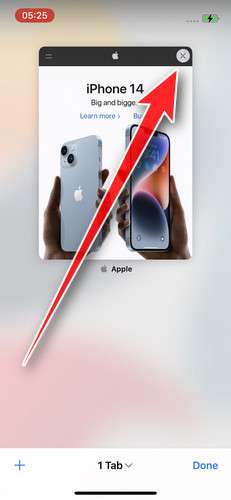
Do not tap on the malicious browser window or pop-ups. Instead, tap on the tab icon located in the lower right corner of the screen, as shown in the image below.
Tap the X button on the tab or swipe up to safely close it.
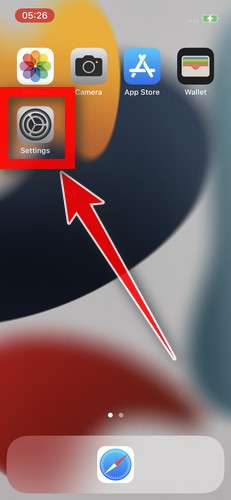
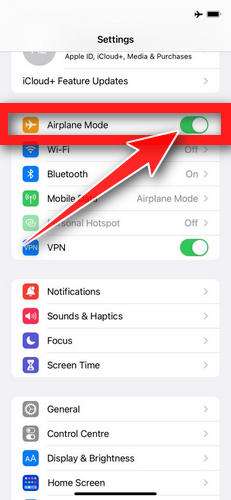
Tap the Settings app.
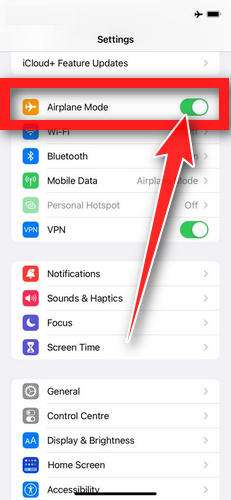
Toggle on Airplane Mode to temporarily disconnect your phone from the internet and block unwanted access.
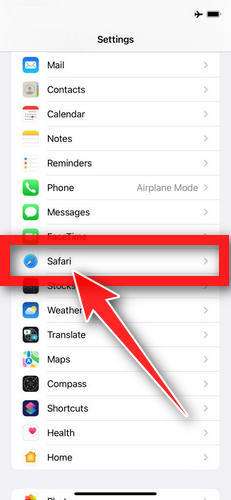
Scroll down and tap Safari.
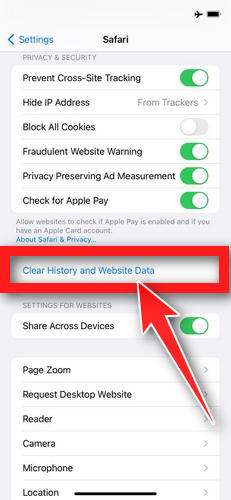
Tap Clear History and Website Data.
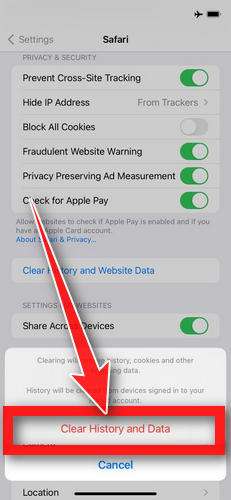
Confirm that you want to clear the history and data by tapping “Clear History and Data” in the pop-up window.
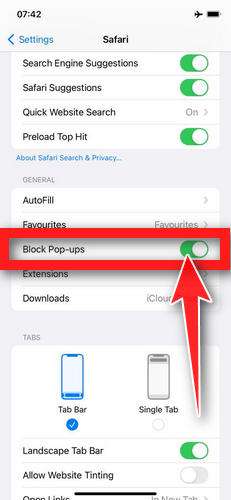
While in Safari settings, make sure to toggle on Block Pop-ups and Fraudulent Website Warning.
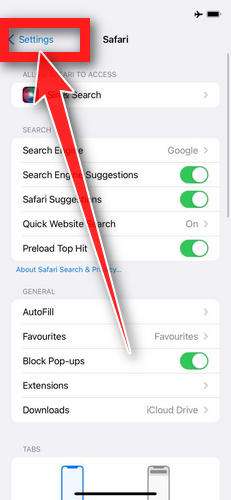
Tap on Settings in the upper-left corner to return to the main Settings menu.
Toggle Airplane Mode back off to re-connect your phone to the internet.
STEP 2: Delete unwanted apps
In the next step, we will remove any potentially unwanted apps that may be installed on your iPhone. If you have downloaded an app after being redirected to the App Store by suspicious websites, it is recommended to delete it.
On the home screen, tap and hold on the app icon until all of the icons start to wiggle.
Tap the “X” button that appears on the top left corner of the app icon.
Confirm that you want to delete the app by tapping “Delete”.
That’s it, your iPhone should be clean and you can continue browsing the Internet. We recommend that you install an ad blocker like AdGuard [recommended] to block the malicious ads.
If you continue to have malware related issues with your device after completing the above steps, we recommend to take one of these actions:
The Tax Resolution IRS Phone Calls Scam works because it borrows the emotional weight of the IRS, then uses urgency to push you into fast decisions. The voicemail is the spark, words like “garnishment,” “levy,” and “resolution options” are the fuel, and “press 2 now” is the trap door.
If you remember only one rule, make it this: the IRS generally contacts people first by mail, and scammers are the ones who demand immediate action, strange payment methods, or remote access to your device.
Hang up. Verify independently. Report the attempt. And if you did get pulled in, take it step by step, you can shut this down, clean up the risk, and move forward.
FAQ: Tax Resolution IRS Phone Calls Scam
Is a “Tax Resolution Team” voicemail from the IRS real?
Usually, no. Scammers use names like “Tax Resolution Team,” “IRS Resolution Department,” or “Tax Debt Relief Unit” to sound official. The IRS generally contacts taxpayers by mail first, not by an unexpected robocall telling you to “press 2” immediately.
The voicemail mentioned “garnishment” and “levy.” Does that mean I’m in trouble?
Not necessarily. Scammers intentionally use scary IRS words because they know most people will panic. Real IRS collection actions follow a process and you would normally have written notices first.
The message said “offer in compromise” or “offering compromise.” Is that a real IRS program?
Offer in Compromise is real, but scammers misuse the term. They present it like a quick, guaranteed loophole. In reality, qualification depends on your financial situation and the IRS has specific rules, it is not something unlocked by a random phone call.
Should I press 2, call back, or talk to their “resolution agent”?
No. Don’t press anything, don’t call back, and don’t “verify details.” If you want to check your real tax status, use official IRS channels you look up yourself, not any number provided in the voicemail.
What are the biggest red flags that it’s a scam?
Common red flags include:
Robocalls or prerecorded “IRS” messages
Pressure to act today or “before it escalates”
Threats of arrest, deportation, or police involvement
Demands for payment by gift cards, wire transfers, crypto, or prepaid cards
Requests for remote access to your phone or computer
Can the IRS demand payment using gift cards?
No. Gift cards are a scam payment method because they are hard to recover. If anyone asks for gift cards, treat it as fraud and stop contact immediately.
They told me my phone or computer is infected and they need remote access. Is that part of the scam?
Yes, that’s a common escalation. Scammers often pivot into fake tech support and push tools like AnyDesk or similar. Once they have remote access, they can watch you log in, manipulate transfers, and steal sensitive info.
I called back and gave them my name, address, or SSN. What should I do now?
Take it seriously, but don’t panic. Do this:
Stop contact and block the numbers
Change your email and banking passwords from a clean device
Turn on 2-factor authentication
Monitor your bank accounts and credit
Consider placing a fraud alert or credit freeze if you shared SSN or ID details
I installed AnyDesk or another remote access app. What should I do immediately?
Disconnect from the internet (WiFi and mobile data)
Uninstall the remote access app
Restart the device
Run a full security scan (Malwarebytes is a solid option)
Change passwords from a different, trusted device If you used the device for banking while they had access, contact your bank and explain what happened.
I paid them. Can I get my money back?
It depends on how you paid:
Credit or debit card: call your bank immediately and ask about chargebacks or fraud claims
Wire transfer: ask your bank about a wire recall right away
Gift cards: contact the gift card issuer immediately, sometimes funds can be frozen if not redeemed yet Even if recovery is unlikely, reporting fast improves your odds.
Where should I report these scam IRS calls?
Report to:
TIGTA (Treasury Inspector General for Tax Administration)
phishing@irs.gov (include the number and what they said, and note it was an IRS phone scam) You can also report the call to your phone carrier as spam and to your local consumer protection agency.
How do I verify if I actually owe the IRS without getting scammed?
Do not use any contact info from the voicemail. Use official IRS sources you find directly, or work with a licensed tax professional (CPA, EA, or tax attorney) using verified contact details.
Are there legitimate tax relief companies?
Some are legitimate, many are not. A trustworthy provider will:
Clearly identify who they are, with a real address and credentials
Explain fees upfront in writing
Never guarantee outcomes before reviewing your documents
Never ask for gift cards or remote access to your device If the pitch feels rushed, secretive, or threatening, walk away.
How can I reduce these scam calls and malicious pop-ups going forward?
A few practical steps:
Use an ad blocker like AdGuard to reduce scammy ads and redirects
Use Malwarebytes to scan regularly for adware and unwanted programs
Enable spam call filtering on your phone
Avoid calling back unknown numbers from voicemails
Keep your devices and browser updated
What should I tell family members who get the same voicemail?
Tell them one simple rule: don’t engage. Don’t press keys, don’t call back, don’t give info, and don’t install anything. If they’re worried about taxes, verify through official IRS channels, not through a voicemail number.
Thomas is an expert at uncovering scams and providing in-depth reporting on cyber threats and online fraud. As an editor, he is dedicated to keeping readers informed on the latest developments in cybersecurity and tech.




 Remove Unwanted Apps and Malware from Windows
 Remove Unwanted Apps and Malware from Mac
 Remove Unwanted Apps and Malware from Android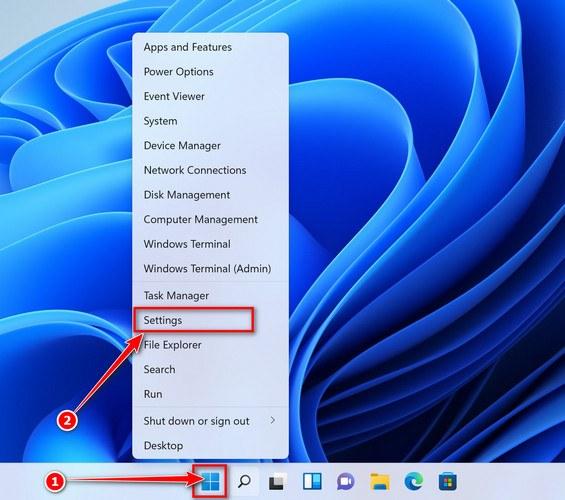
 If you have checked your computer for malicious programs and did not find any, you can proceed with the next step in this guide.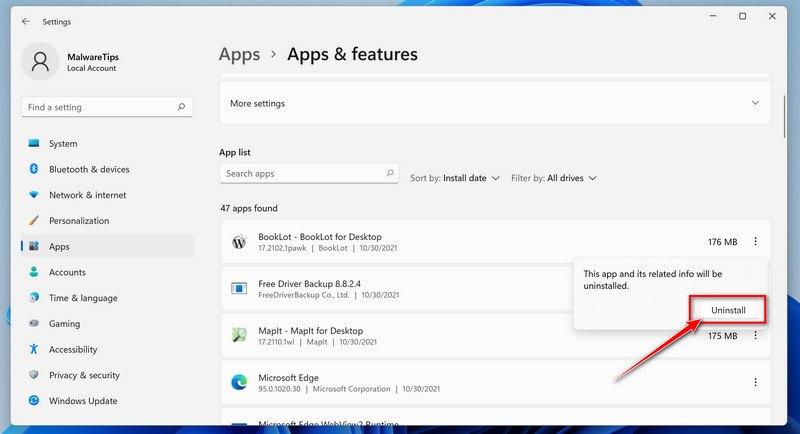
 If you have checked your computer for malicious programs and did not find any, you can proceed with the next step in this guide.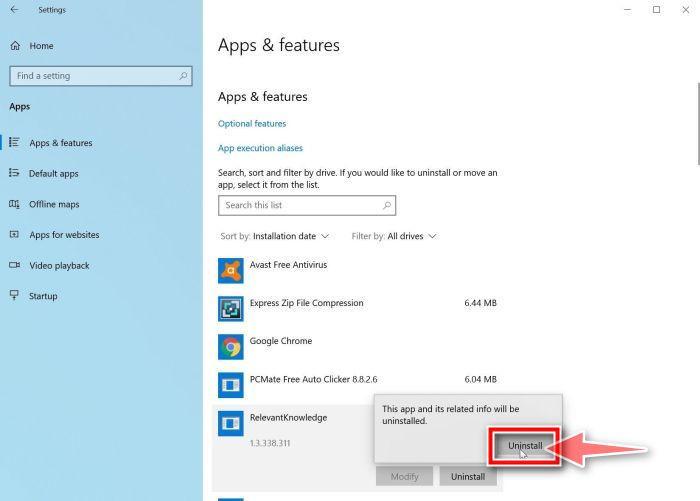






 HITMANPRO DOWNLOAD LINK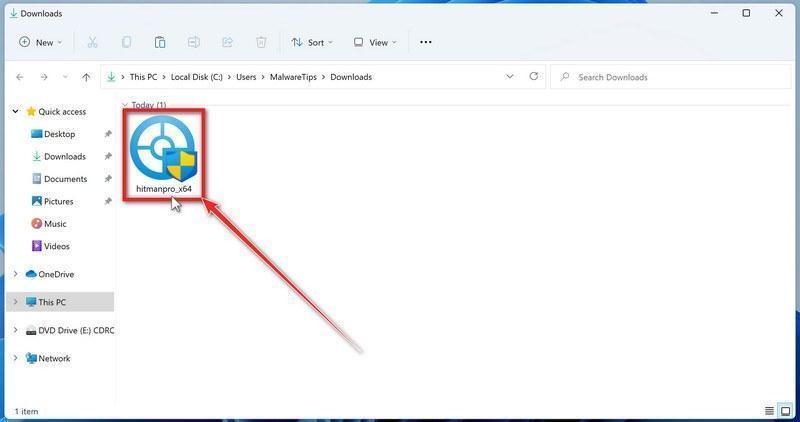

 If there isn’t a Profiles icon, you don’t have any profiles installed, which is normal and you can continue with the next steps.