
Cryptocurrency has always attracted both innovators and opportunists. For every legitimate project that drives blockchain technology forward, there are countless schemes that exploit the hype and lure in unsuspecting investors. TexitCoin.org is one of the latest names making waves, presenting itself as the “future currency of Texas independence.”
But is TexitCoin.org truly a legitimate opportunity, or is it another crypto MLM scam waiting to collapse?
This comprehensive article examines the history, structure, promises, and legal issues surrounding TexitCoin. We’ll dive into the man behind the project, Bobby Gray, detail exactly how the operation works, and provide a step-by-step guide for those who may already have fallen victim.
Our research includes analysis from BehindMLM, which has extensively documented TexitCoin’s structure and background. By the end of this article, you’ll have everything you need to know to make an informed decision about TexitCoin and protect yourself from similar schemes.
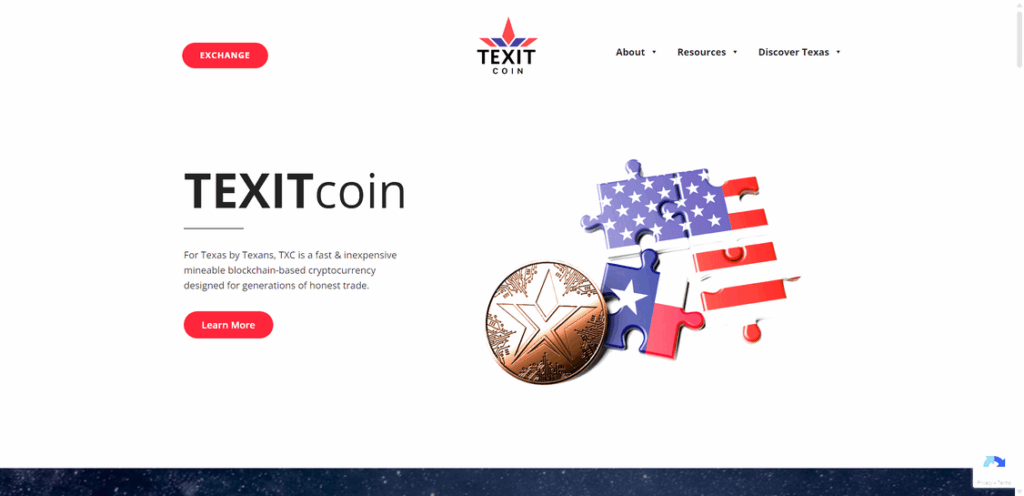
Overview of TexitCoin.org
TexitCoin.org is a self-styled cryptocurrency project that operates in the MLM investment niche. On the surface, it claims to represent a bold financial experiment linked to the Texas independence movement. In reality, it operates more like a Ponzi and pyramid scheme than a legitimate blockchain innovation.
TexitCoin’s Launch and Domains
TexitCoin emerged in 2024 and went live with its MLM compensation structure in early 2025. It operates through two primary domains:
- texitcoin.org – privately registered on January 5, 2024
- minetxc.com – registered in April 2024
Both domains are privacy-protected, which is common among scam operations seeking to obscure their ownership. The company provides a McKinney, Texas address, but investigations suggest that it is a residential property, not a corporate office.
The Founder: Bobby Gray’s Troubled History
At the center of TexitCoin is Bobby Gray, also known as Rob Gray and Robert J. Gray. Gray has a long track record of controversial ventures in alternative currencies, failed businesses, and alleged fraudulent schemes.
Early Connections: Liberty Dollar
Gray’s earliest known involvement was with Liberty Dollar, a private currency launched in 1998 by Bernard von NotHaus. Liberty Dollar sought to replace U.S. currency with silver-backed coins, but the project was raided in 2007. Von NotHaus was later convicted of counterfeiting and labeled by federal authorities as a domestic financial threat.
Gray was reportedly a Regional Currency Officer within Liberty Dollar. After its collapse, he launched his own spin-off: the American Open Currency Standard (AOCS) in 2008.
AOCS and Mulligan Mint
The American Open Currency Standard positioned itself as an alternative money system, but it quickly lost traction. By 2012, Gray pivoted again and launched Mulligan Mint, a silver minting company.
Initially pitched as a “complementary currency system,” Mulligan Mint gained attention but collapsed spectacularly by 2013. A Wall Street Journal investigation revealed that part of a $1.4 million silver shipment was missing, prompting bankruptcy filings. Gray himself admitted he did not know where the silver had gone.
Cold Storage Coins and Blockchain Mint
By 2017, Gray had rebranded his efforts under Cold Storage Coins, a Singapore-based company that minted physical coins tied to blockchain wallets. This later evolved into Blockchain Mint. Like his earlier ventures, it fizzled out without long-term stability.
Pattern of Failed Ventures
Across all these ventures, one pattern emerges:
- Launch an alternative currency or minting business.
- Gain attention with bold promises.
- Collapse amid controversy, missing assets, or bankruptcy.
- Re-emerge with a new brand under Gray’s leadership.
TexitCoin is simply the latest in this long cycle, marketed with a fresh angle but repeating the same underlying model.
TexitCoin’s MLM Compensation Structure
Unlike legitimate cryptocurrencies, TexitCoin has no real products or services to sell. Instead, it uses a multi-level marketing (MLM) structure to incentivize recruitment and investment.
Members can purchase one of three plans:
- Single Plan – $995
- Triple Play Plan – $2,985
- Builder Plan – $8,955
Investors are told they will receive a variable amount of TexitCoin (TXC) and the potential to earn more by recruiting others.
The system uses a binary compensation plan, where each promoter is placed at the top of a binary tree with two “legs” (left and right). New recruits are added under these legs, and promoters earn commissions when both sides generate enough investment points.
The compensation model strongly incentivizes recruitment over actual use of the coin, which is a key sign of a pyramid scheme.
Promises of Wealth and “Missing Out”
TexitCoin’s marketing preys on the fear of missing out. Promotional videos and website copy compare TXC to Bitcoin, claiming that those who missed Bitcoin’s early rise can still become millionaires by buying TexitCoin today.
One promotional claim suggests that a $100 investment in TXC could grow into $20 million if the coin reaches the top spot on CoinMarketCap. Such projections are wildly unrealistic and designed to manipulate investors’ emotions.
Legal Red Flags: The Howey Test
Applying the Howey Test—a standard for identifying securities under U.S. law—TexitCoin clearly qualifies as an unregistered security offering:
- Investment of money – Members must invest cash equivalents in stablecoins like USDT or USDC.
- Common enterprise – All investments are pooled and controlled by TexitCoin.
- Expectation of profit – Promises of daily TXC returns are central to the scheme.
- Efforts of others – Profits depend entirely on TexitCoin’s operations, not the investor’s work.
Because neither TexitCoin nor Bobby Gray is registered with the SEC, this operation is illegal under securities law.
Additionally, since there are no retail products, TexitCoin functions as a pyramid scheme, violating FTC regulations.
How the TexitCoin Operation Works
To understand TexitCoin, it’s essential to break down how the system actually functions. The structure is deliberately complex, but beneath the jargon, it follows a familiar Ponzi and pyramid scheme pattern.
Step 1: Recruitment and Initial Investment
The first step in TexitCoin’s funnel is recruitment. Promoters advertise TexitCoin as a once-in-a-lifetime opportunity. They use FOMO marketing, promising early investors that they could replicate Bitcoin’s success.
New recruits are encouraged to choose from the three membership tiers:
- Single Plan – $995
- Triple Play Plan – $2,985
- Builder Plan – $8,955
The higher the investment, the greater the “potential returns” and the more TXC coins the investor receives.
Step 2: Promise of Daily Returns
TexitCoin promises daily payouts in TXC coins. These returns are positioned as “mining rewards” or “staking income,” but in reality, they are not backed by actual blockchain activity. Instead, the system uses new investor funds to pay existing members.
This is the classic definition of a Ponzi scheme: earlier participants are paid with money from newer ones, not from legitimate revenue streams.
Step 3: Binary Compensation Structure
TexitCoin uses a binary MLM model to structure its payouts. Here’s how it works:
- Each promoter is placed at the top of a binary tree with two sides: left leg and right leg.
- When new recruits join, they are placed in these legs.
- Points are earned based on the investment level of each recruit:
- Single Plan = 1 point
- Triple Play Plan = 3 points
- Builder Plan = 9 points
- For every 3 points matched on both sides, the promoter earns a $1,000 commission.
This model heavily incentivizes recruiters to bring in as many people as possible. Without recruitment, members cannot earn commissions.
Step 4: “Texit Ranger” Status
TexitCoin introduces a higher-tier designation called Texit Ranger. Members who host events, run Zoom calls, and recruit aggressively can unlock unlimited commission potential.
This mechanism pushes participants to actively promote the scheme, ensuring a steady flow of new recruits.
Step 5: Cashing Out – While Funds Last
Members can cash out their TXC coins into USDT or other cryptocurrencies. However, withdrawals depend on the system having enough new investment to cover them.
As with all Ponzi schemes, once recruitment slows down, the system cannot sustain payouts. When that happens, withdrawals are frozen or delayed, leaving most investors with losses.
Step 6: Collapse is Inevitable
The mathematics of a Ponzi scheme ensure that collapse is inevitable:
- Early participants may profit.
- The majority of investors, especially those who join late, will lose money.
This collapse typically occurs once recruitment slows down, which is a matter of when, not if.
What to Do If You Have Fallen Victim to TexitCoin.org
If you’ve already invested in TexitCoin.org, it’s important to take immediate action. Here’s a step-by-step guide:
- Stop Investing Immediately
Do not put more money into TexitCoin. Many Ponzi schemes encourage reinvestment, but this only increases your losses. - Document Everything
Keep records of all transactions, emails, and communications with TexitCoin representatives. Screenshots and receipts are vital for reporting. - Report to Authorities
- File a complaint with the U.S. Securities and Exchange Commission (SEC).
- Report to the Federal Trade Commission (FTC) for pyramid scheme violations.
- Submit a case with the Internet Crime Complaint Center (IC3).
- Seek Legal Advice
Contact a lawyer specializing in investment fraud. They can guide you on potential recovery options. - Warn Others
Share your experience publicly or with trusted friends to prevent others from falling victim. - Monitor Your Accounts
Ensure your crypto wallets and personal accounts are secure. Scammers often target victims for repeat scams. - Join Victim Groups
Many Ponzi victims form support groups to share information and pursue collective legal action. Look for online communities focused on TexitCoin or MLM scams.
The Bottom Line
TexitCoin.org markets itself as a revolutionary cryptocurrency tied to Texas independence, but beneath the surface, it is a Ponzi and pyramid scheme led by Bobby Gray, a figure with a long history of failed ventures and controversial financial experiments.
The system relies entirely on new investments to pay old investors, has no legitimate products, and operates as an unregistered securities offering in violation of U.S. law.
For potential investors, the message is clear: TexitCoin.org is not a safe or legitimate opportunity. It is a high-risk scheme designed to enrich its founders at the expense of ordinary people.
For victims, the priority is to stop investing, document your losses, and report to authorities as soon as possible.
History shows that schemes like TexitCoin always collapse, leaving the majority of participants with nothing. The best defense is awareness, skepticism, and the willingness to question opportunities that sound too good to be true.
Credits: Much of the foundational research and background information used in this article was sourced from BehindMLM’s detailed review of TexitCoin, which provides further insights into the scheme and its founder.
Disclaimer:
The information provided in this article is for educational and informational purposes only. It does not constitute financial, legal, or investment advice. While every effort has been made to ensure accuracy, no guarantee is given regarding the completeness, reliability, or timeliness of the information. Readers should conduct their own due diligence and consult with licensed financial or legal professionals before making any investment decisions. The author and publisher are not responsible for any financial losses or damages incurred as a result of using the information in this article. References to external sources, including BehindMLM, are included for context and research purposes only.