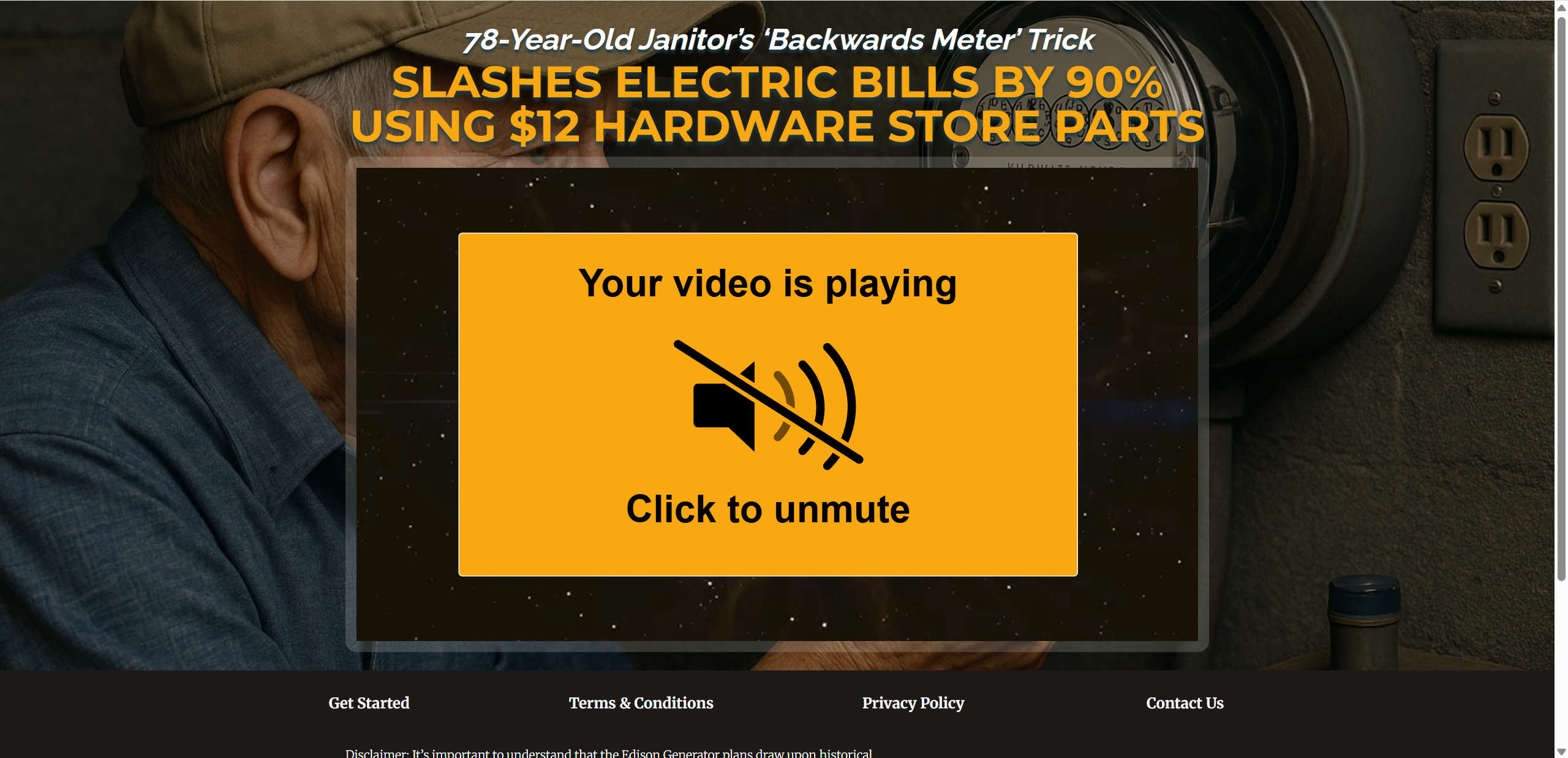
Every few months, a new “miracle energy breakthrough” makes the rounds online, complete with slick ads, fake news clips, and dramatic survival stories. One of the most persistent of these is the so-called “Thomas Edison’s Secret Blueprints” or “Edison Generator” scam. According to the marketing pitch, schematics hidden away by Thomas Edison himself have been rediscovered, allowing ordinary homeowners to slash their electric bills by 90% or even live completely off-grid with just a few dollars’ worth of parts from the local hardware store.
It sounds incredible. And that’s exactly the problem.
This article will break down the scam in detail, explain how it tricks people step by step, show what actually happens if you buy into it, and give clear advice on what to do if you’ve already fallen victim. By the end, you’ll see why Thomas Edison’s Secret Blueprints Scam is nothing more than a clever online con – one that has already separated thousands of people from their money.
Scam Overview
The Thomas Edison’s Secret Blueprints Scam is part of a broader category of fraudulent schemes often called “energy generator scams” or “free energy scams.” These cons typically revolve around claims that forgotten technology, suppressed by governments or greedy utility companies, can provide unlimited or nearly free electricity for your home.
The Marketing Hook
The scam begins with eye-catching ads on platforms like YouTube, Facebook, or even Google Display. These ads use shocking headlines such as:
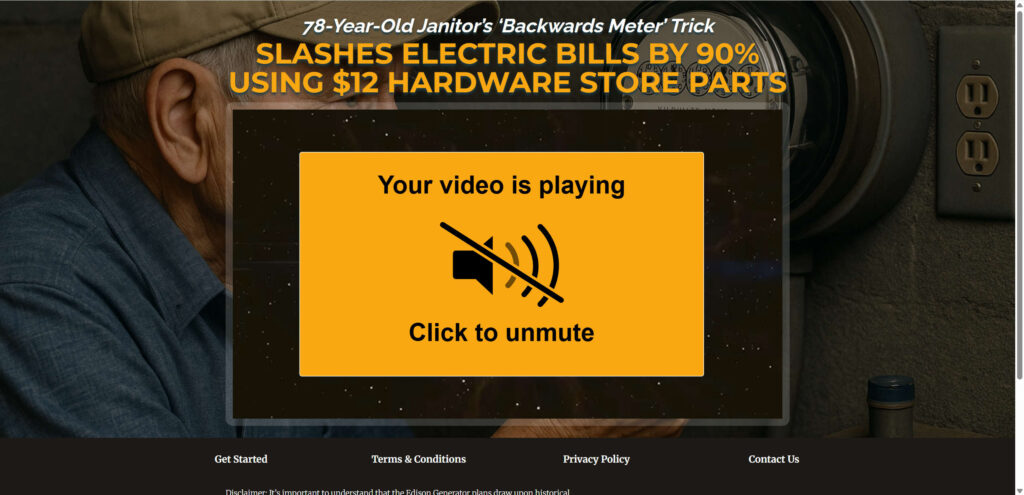
- “78-Year-Old Janitor Discovers Edison’s Lost Generator – Slashes Electric Bills by 90% Using $12 in Parts”
- “Thomas Edison’s Secret Blueprints Revealed – Power Your Home Without Paying a Cent”
- “Government Tried to Hide This… But the Plans Have Finally Been Released”
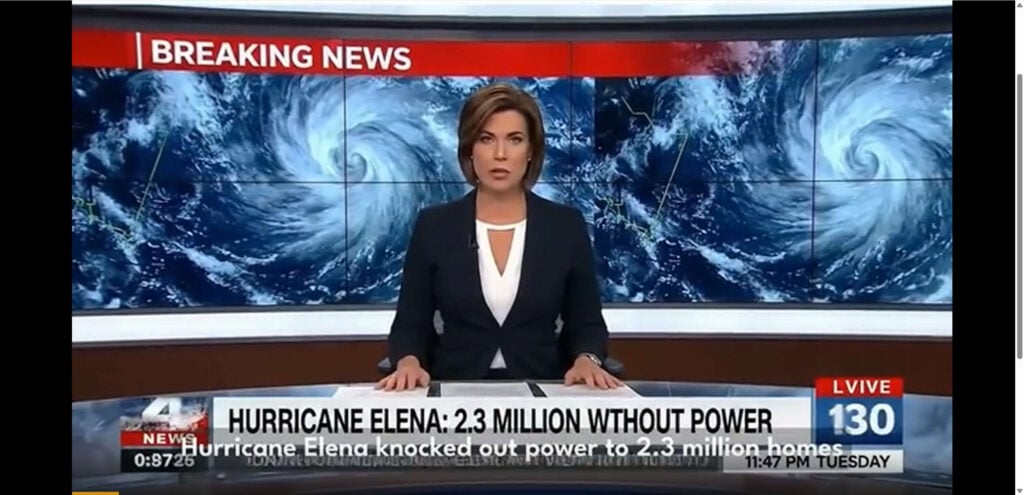
The ads often mimic legitimate news reports, complete with fake anchors and stock footage of storms, disasters, and power outages. The emotional goal is clear: make viewers feel scared about grid failures and desperate for a solution.
The Emotional Storytelling
Once you click the ad, you’re taken to a long video presentation (VSL – video sales letter) that runs 30 to 40 minutes. It is carefully designed to:
- Introduce a relatable character – often a retired engineer, janitor, or “ordinary grandpa” struggling with rising power bills.
- Create a crisis scenario – power outages caused by hurricanes, blizzards, or failing infrastructure.
- Introduce the “miracle” discovery – secret Edison blueprints found in an attic, hidden away after a fire at Menlo Park, or passed down by family.
- Frame utility companies as villains – claiming they have suppressed this invention to protect their profits.
- Promise salvation – a device anyone can build, at home, with just a few parts from Home Depot or Lowe’s, for under $50.
This is classic scam storytelling, blending just enough history with fantasy to sound plausible to someone who doesn’t fact-check.
The Fake Proof
To add credibility, the scammers insert fabricated elements:
- Fake news broadcasts – doctored footage with anchors reporting storms and miraculous houses that still had power.
- AI-generated reviews – supposed testimonials from families who “built the generator” and now live bill-free.
- Actors as experts – Fiverr performers pretending to be engineers, neighbors, or even descendants of Edison’s assistants.
- Overblown statistics – claims like “47,592 families have already switched to the Edison Generator” which are too oddly specific to be real.
The Actual Product
At the end of the 35-minute pitch, viewers are offered a set of downloadable PDF blueprints for anywhere between $39 and $79, sold through third-party payment processors such as ClickBank.
These PDFs contain nothing revolutionary. Typically, they are basic DIY instructions for assembling a cart with a battery, small solar panel, or wind turbine – technologies Edison never worked with (since solar panels and modern batteries didn’t exist in his time).
Instead of Edison’s lost invention, buyers get generic, impractical DIY projects that cannot power an entire house, despite all the claims.
Why It’s Dangerous
- Financial Loss – buyers spend money on worthless PDFs.
- False Security – people believe they have a backup energy plan when they don’t.
- Personal Data Risk – scammers collect names, emails, and payment info.
- Psychological Manipulation – victims are often elderly or vulnerable, targeted because they fear rising utility bills.
The Thomas Edison’s Secret Blueprints Scam is dangerous not only because it steals money but also because it preys on people’s hope for independence and security.
This scam has been also investigated by Pleasant Green on his YouTube channel, where he offers a detailed video on the subject. We recommend watching his content for a comprehensive understanding of the scam.
Next, let’s break down exactly how scammers carry out this scam from start to finish.
How the Scam Works
Understanding the scam step-by-step shows just how manipulative and polished it is.
Step 1 – The Hook
It begins with a clickbait ad. This ad often runs before YouTube videos or appears as a sponsored post on social media. It promises unbelievable savings:
- “Cut your power bill by 90% this week with Edison’s secret generator.”
- “Stop paying greedy utility companies.”
- “This $12 hardware store trick shocked energy CEOs.”
The ad pushes urgency – “Don’t buy solar panels until you see this!”
Step 2 – The Video Sales Letter (VSL)
Clicking the ad leads to a long video presentation, usually between 30 and 45 minutes. These videos are designed to hold your attention with suspense, dramatic music, and emotional storytelling.
Key elements include:
- Personal hardship story – often about a grandfather who nearly lost his granddaughter in a blizzard until he “built Edison’s device.”
- Historical drama – tales of Edison’s lab fire, secret inventions, and hidden files.
- Conspiracy angle – blaming greedy power companies for hiding free energy technology.
- Miracle moment – “the machine worked,” lighting up a house during a blackout.
- Promise of simplicity – “even a 10-year-old can build this generator.”
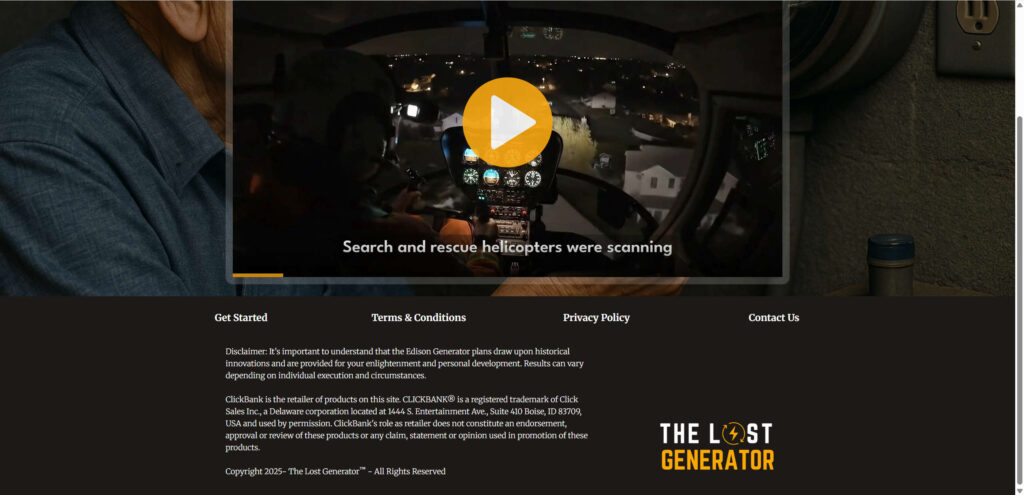
Step 3 – Social Proof (Fake)
To overcome skepticism, the scammers add fabricated credibility:
- Photos of families supposedly using the device.
- Clips of “survivors” during hurricanes saying the generator saved them.
- AI-written reviews on forums and blogs.
- Fake urgency counters (“only 23 blueprints left!”).
Step 4 – The Pitch
After priming viewers for nearly half an hour, the pitch arrives:
- For $39–$79, you can download Edison’s secret blueprints.
- Bonuses may be offered, like “off-grid living tips,” “emergency preparedness guides,” or “exclusive members’ portal access.”
- A 60-day money-back guarantee is dangled to reduce hesitation.
Step 5 – The Upsells
Once payment is made, buyers are often redirected to upsell pages offering:
- Advanced schematics.
- Video tutorials.
- “Premium” coaching or consultation.
This is called a sales funnel, designed to squeeze as much money as possible from each customer.
Step 6 – The Reality
When buyers finally download the “secret blueprints,” they discover:
- 40–60 pages of generic DIY instructions.
- Basic setups involving batteries, solar panels, and wind turbines.
- No resemblance to Edison’s era or inventions.
- Devices that cannot power more than a small light or radio.
In short, the product does not match the promises.
Step 7 – The Cover
If dissatisfied buyers request refunds, they are redirected to ClickBank support. While ClickBank does issue refunds in many cases, the scammers count on people giving up, feeling embarrassed, or missing deadlines.
Meanwhile, their email addresses and payment data may be harvested for future scams.
Why People Fall For It
- Fear of rising utility costs – bills keep climbing, so people are desperate for alternatives.
- Historical credibility – invoking Edison’s name makes it sound plausible.
- Authority bias – fake experts, actors, and news broadcasts trick the brain.
- Scarcity pressure – claims that only a few blueprints are left create urgency.
- Refund guarantee illusion – makes the purchase feel safe, even when refunds are difficult.
This scam is a textbook case of psychological manipulation, weaponizing hope, fear, and trust.
What to Do If You Have Fallen Victim to the Scam
If you’ve already purchased the so-called “Thomas Edison’s Secret Blueprints,” you are not alone. Thousands of people have been tricked by this scam. Here’s what you should do immediately:
1. Request a Refund
- If you purchased through ClickBank, go to their refund request page: clickbank.com/refund.
- Provide your order number and email address.
- ClickBank’s policy allows refunds within 60 days of purchase.
2. Contact Your Bank or Credit Card Company
- If the refund is denied, call your bank or card provider.
- Ask to dispute the charge as a fraudulent or deceptive transaction.
- Provide screenshots of the misleading ads and sales page.
3. Protect Your Personal Information
- If you entered your real name, email, and phone number, expect spam or scam follow-ups.
- Set up spam filters on your email.
- Be cautious of follow-up offers pretending to be “support” or “upgrades.”
4. Report the Scam
Reporting helps authorities crack down on these operations. File a complaint with:
- FTC (Federal Trade Commission): reportfraud.ftc.gov
- Better Business Bureau (BBB) if the scam listed a U.S. address.
- Your country’s consumer protection agency if outside the U.S.
5. Warn Others
- Share your experience on forums, Facebook groups, or scam-reporting websites.
- Leave a review on ScamAdviser, TrustPilot, or MalwareTips to warn potential victims.
6. Learn from the Experience
- Remember the red flags: too good to be true claims, fake news reports, suppressed inventions, and urgency tactics.
- Apply this knowledge to avoid falling for similar scams in the future.
Frequently Asked Questions (FAQ) About the Thomas Edison’s Secret Blueprints Scam
1. What is the Thomas Edison’s Secret Blueprints Scam?
The Thomas Edison’s Secret Blueprints Scam is a fraudulent online scheme that claims to sell hidden schematics supposedly created by inventor Thomas Edison. The scammers promise that these blueprints will allow you to build a small device, often called the Edison Generator or Lost Generator, that can slash your electricity bills by up to 90%. In reality, buyers only receive a low-quality PDF with generic DIY instructions that cannot generate the promised results.
2. Does Thomas Edison’s “lost generator” really exist?
No. Thomas Edison never created or patented a “secret generator” that could power entire homes using a few hardware store parts. The scam relies on a fictional story about Edison’s lab fire destroying his research, with one set of plans conveniently surviving in an attic. This narrative is pure fabrication designed to lure people into purchasing worthless digital files.
3. How do scammers promote the Edison Blueprints scam?
Scammers use aggressive online advertising campaigns to spread the scheme. Common tactics include:
- Fake news videos showing storms and blackouts where “one house still had power.”
- Actors pretending to be engineers or Edison’s descendants.
- AI-generated testimonials and reviews.
- Urgency tactics, such as “only 23 blueprints left” or “limited-time offer.”
These ads usually appear on YouTube, Facebook, and Google Display Network.
4. What do you actually get if you buy the Edison Blueprints?
If you purchase the so-called secret blueprints, you typically receive:
- A PDF file (40–60 pages) with instructions for building a cart holding a battery, a small solar panel, or a hand-crank turbine.
- Poorly written instructions that do not match the claims made in the ads.
- Upsell offers for more guides, memberships, or “advanced plans.”
The device described in the PDF cannot power a household and is not related to Edison’s real work.
5. Is the Edison Blueprints Scam dangerous?
Yes. While it may not directly install malware, it is still harmful because:
- Financial loss – you spend $40–$80 for worthless instructions.
- Data risk – your personal details (name, email, card info) may be collected for future scams.
- False security – you may believe you have an energy solution when you don’t.
- Psychological harm – scams like this target vulnerable people who are struggling with bills or worried about disasters.
6. How can I get a refund if I bought the scam?
Most of these products are sold through ClickBank, a digital marketplace. You can request a refund within 60 days of purchase by:
- Visiting clickbank.com/refund.
- Entering your order number and email address.
- Requesting a full refund.
If that fails, contact your bank or credit card company to dispute the charge as fraudulent.
7. How can I report the Thomas Edison’s Blueprints Scam?
You can report the scam to protect others. Recommended channels include:
- FTC (Federal Trade Commission): reportfraud.ftc.gov
- Internet Crime Complaint Center (IC3): ic3.gov
- Better Business Bureau (BBB) if the company lists a U.S. address.
- Consumer protection agencies in your home country.
Additionally, posting reviews on ScamAdviser, TrustPilot, or MalwareTips helps warn others.
8. How do I know if an online energy product is a scam?
Watch out for these red flags:
- Claims of “free energy” or “cut your bill by 90% instantly.”
- Mention of suppressed inventions by Edison, Tesla, or other famous inventors.
- Fake news reports and survival stories.
- Lack of real photos or videos of the product in action.
- High-pressure tactics, like countdown timers or limited stock claims.
If something sounds too good to be true, it almost always is.
9. Are there legitimate ways to reduce my electricity bill?
Yes. While there is no miracle $12 device, you can legitimately lower your electricity costs through:
- Energy-efficient appliances and LED lighting.
- Smart thermostats and better insulation.
- Government rebates for solar panel installations.
- Off-peak energy usage strategies.
These solutions may require upfront investment but are proven, safe, and supported by real science.
10. Why do people fall for scams like the Edison Blueprints?
People fall victim because the scam exploits psychological triggers:
- Fear of rising energy costs.
- Trust in historical figures like Edison.
- Hope for a simple solution to complex problems.
- Pressure from scarcity tactics (“only 23 left”).
- Misplaced trust in platforms like YouTube or Google, assuming ads must be legitimate.
Understanding these triggers helps you stay alert and avoid future scams.
The Bottom Line
The Thomas Edison’s Secret Blueprints Scam is nothing more than a modern repackaging of old “free energy” frauds. It preys on fear of rising electricity bills, distrust of power companies, and nostalgia for great inventors like Edison.
The truth is simple: if such a device existed, it would have changed the world long ago. No $12 trick from a hardware store can power your entire home.
What buyers actually get are generic, impractical PDFs worth far less than the money they spent. The scam thrives because of emotional manipulation, fake testimonials, and aggressive online marketing.
If you see an ad for Thomas Edison’s hidden generator, don’t click it. Don’t buy it. Warn others.
The only way to stop these scams is to spread awareness and prevent more people from losing their money and personal data.